The best super-automatic espresso machines are decided by two numbers nobody prints on the box
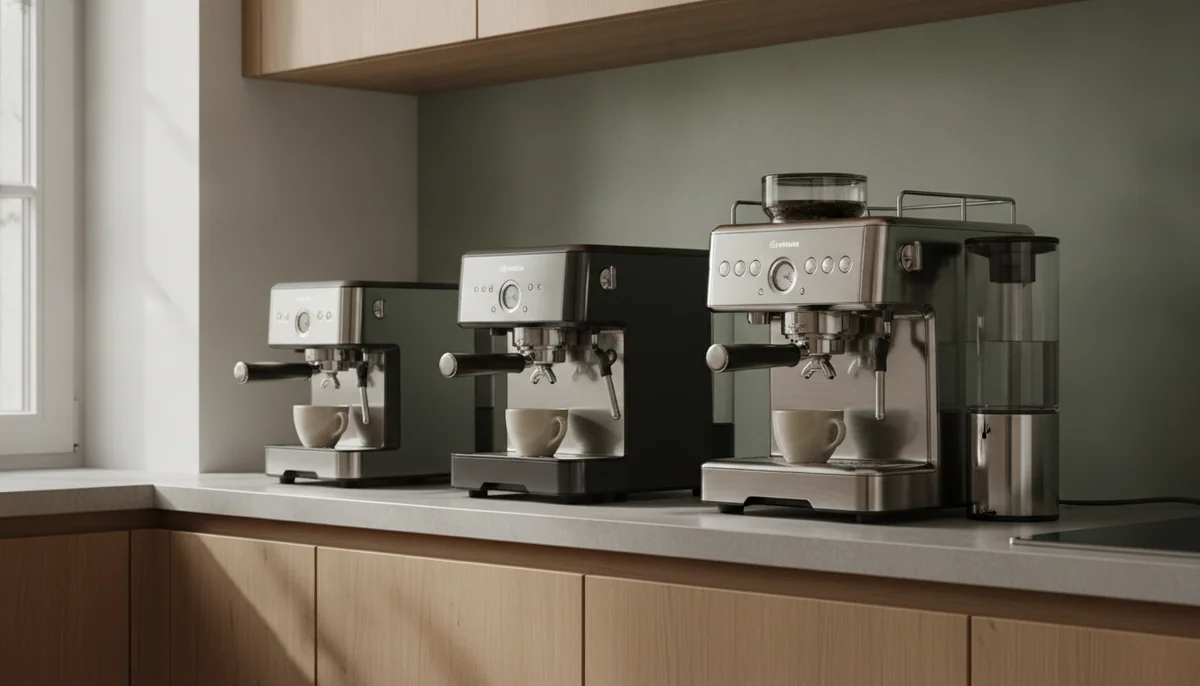
Every machine on this page grinds beans, tamps them, brews them and drops the puck in a bin. That is the whole category and it is not where they differ. What separates a machine somebody loves for eight years from one that goes back inside a month is a pair of facts that appear on no listing: how much coffee the grinder is allowed to deliver, and whether the milk arrangement is something you will keep up with in February.
Start with the dose, because it is the single most predictive number in this whole market. Philips's own support documentation puts the LatteGo brew unit at six to nine grams of ground coffee across its strength settings. Seattle Coffee Gear, weighing pucks from the same platform, recorded 6.1 grams at the lowest strength and 8.8 at the highest. A café double is sixteen to eighteen grams. Tom's Coffee Corner, working through De'Longhi's range, found the Magnifica line capped around ten grams while the Dinamica Plus and its relatives keep grinding to roughly fifteen. Home Coffee Expert puts KitchenAid's machines at about fifteen too. Nothing else on a spec sheet moves the cup as much, and no menu setting lifts a ceiling the software has already set. If your espresso comes out thin, this is usually why.
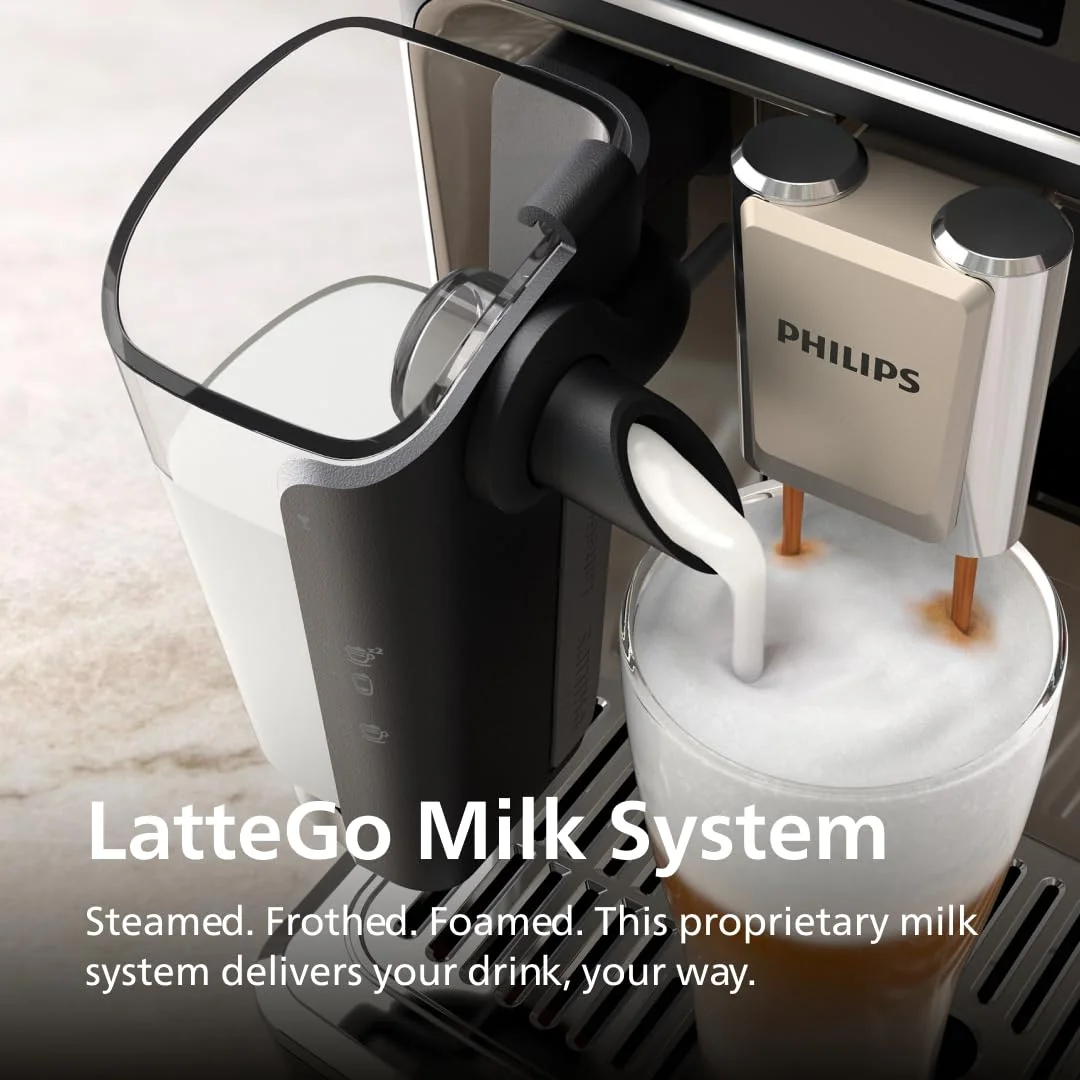
Then the milk. A carafe pours a cappuccino while you find your keys and then needs stripping and washing; a hose drops into whatever carton is already in the fridge and rinses itself into the drip tray; a wand hands you control over temperature and texture and asks for two minutes and a skill. Every one of those is a legitimate answer and the wrong one will quietly stop you using the machine, which is the argument in our comparison of the three. Foam quality follows the same fork: Coffeeness found the LatteGo carafe generous and consistent and warned against expecting silky microfoam for a flat white, which is true of almost every automatic frother here.
So the shortcut, before any of the thirty-three machines below. Milk drinks at a button, and cleaning you will not resent: a Philips 3300 LatteGo. Espresso with weight behind it: a De'Longhi Dinamica Plus. Black coffee only, and you froth milk elsewhere: a Jura E4. Two beans in one household: a Rivelia or a J8 twin. A kitchen where width is the constraint: a Café Affetto or a Jura ENA 4. The rest of this page is the working.
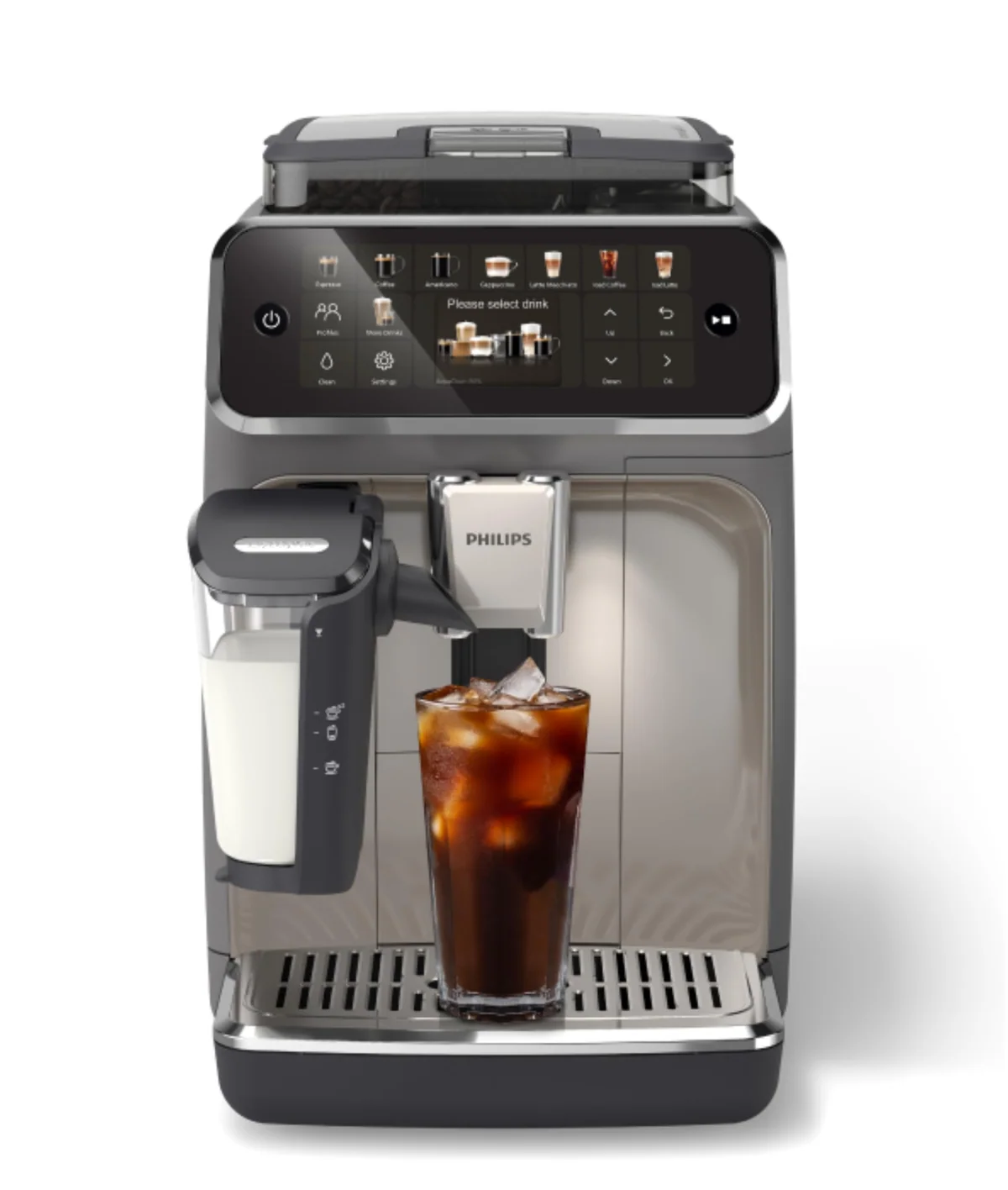
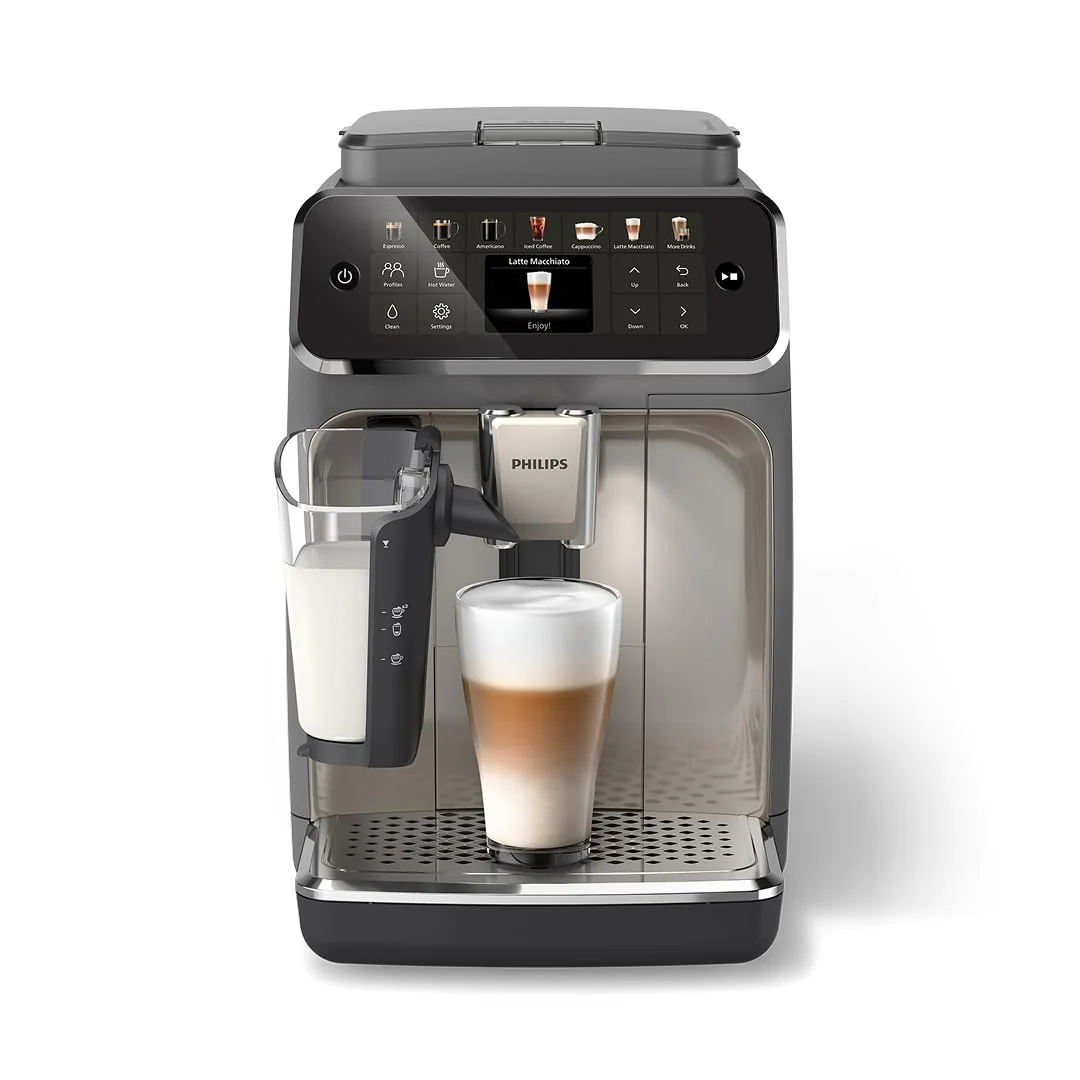
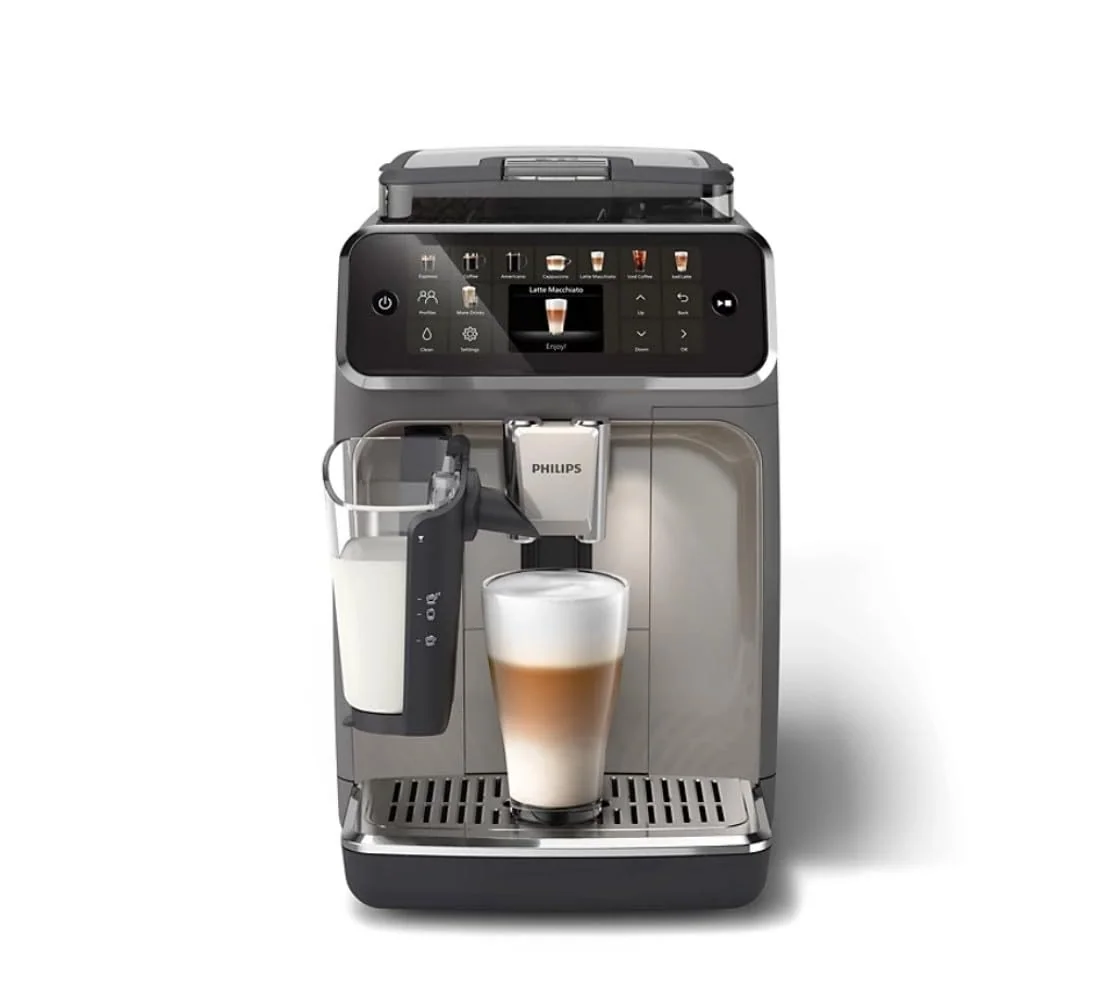
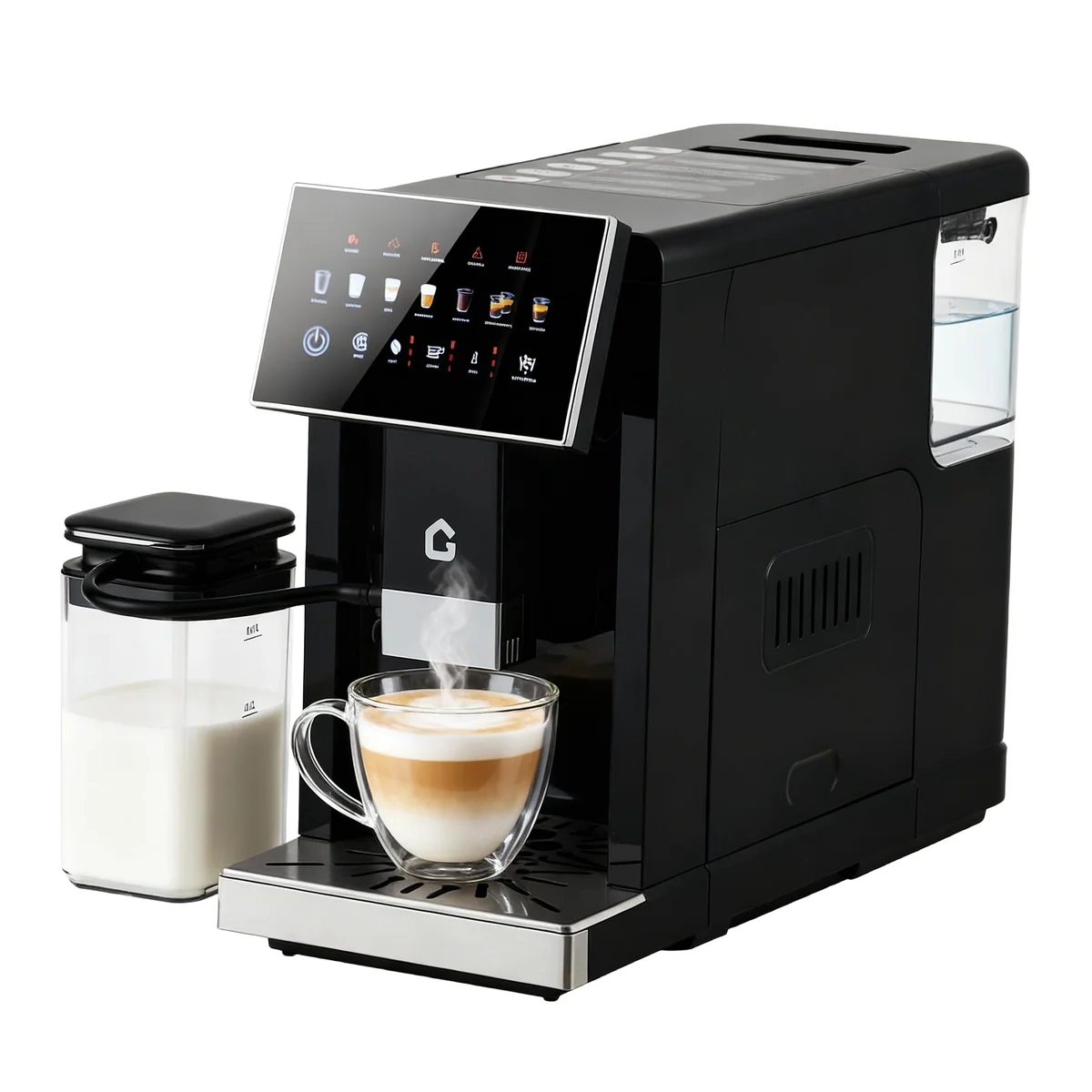
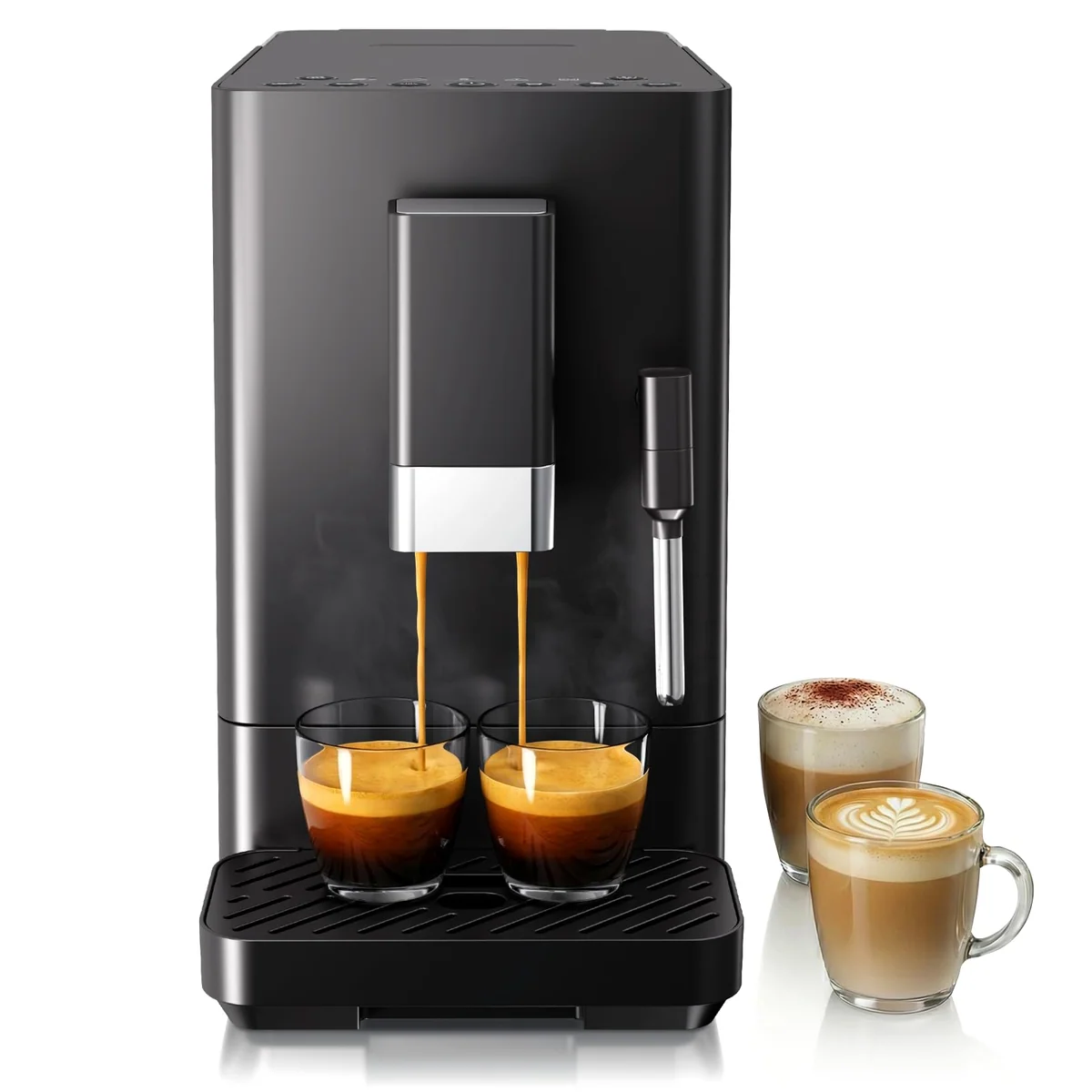
Quick Picks at a Glance
| Feature | Editor's Pick Philips 5500 Series Fully Automatic Espresso Machine, LatteGo Milk System, Integrated Grinder, 20 Hot & Iced Coffee Pre-Sets, Quick Start, SilentBrew, 15-Bar Pressure, Black Chrome (EP5544/94) | Philips 5500 Series Fully Automatic Espresso Machine - LatteGo Milk System, 20 Coffee Varieties, Intuitive Touch Display, SilentBrew, 100% Ceramic Grinder, AquaClean Filter (Grey Chromed) | Philips 5500 LatteGo Automatic Espresso Machine - 20 Coffee Varieties, Intuitive Touch Display, SilentBrew, 100% Ceramic Grinder, AquaClean Filter, Grey Chromed (EP5544/90) (Renewed) | Philips 5500 Series Fully Automatic Espresso Machine, LatteGo Milk System, Integrated Grinder, 20 Hot & Iced Coffee Pre-Sets, SilentBrew, 15-Bar, Black Chrome (EP5544/94) (Renewed) | Philips 4400 Series Fully Automatic Espresso Machine – 12 Hot & Iced Coffees, Quick-to-Clean LatteGo Milk System, SilentBrew, QuickStart, Ceramic Grinder, Black Chrome (EP4447/90) | Philips 4400 Series Fully Automatic Espresso Machine – 12 Hot & Iced Coffees, Quick-to-Clean LatteGo Milk System, SilentBrew, QuickStart, Ceramic Grinder, Black Chrome (EP4447/90) (Renewed) | Philips 3300 Series Fully Automatic Espresso Machine with LatteGo Milk System and integrated grinder, 6 Hot & Iced Coffee Pre-Sets, 40% Quieter SilentBrew, 15-Bar Pressure, Glossy Black (EP3341/50) | Philips 3200 Series Fully Automatic Espresso Machine, LatteGo Milk Frother, 5 Coffee Varieties, Intuitive Touch Display, 100% Ceramic Grinder, AquaClean Filter, My Coffee Choice, Black (EP3241/54) | Philips 2300 Series Fully Automatic Espresso Machine with LatteGo milk system and integrated grinder, 4 Coffee Pre-Sets & Hot Water, 40% Quieter SilentBrew, 15-Bar Pressure, Matte Black (EP2330/10) | Philips 2200 Series Fully Automatic Espresso Machine, Classic Milk Frother, 2 Coffee Varieties, Intuitive Touch Display, 100% Ceramic Grinder, AquaClean Filter, Aroma Seal, Black (EP2220/14) | Philips 1200 Series Fully Automatic Espresso Machine, Classic Milk Frother, 2 Coffee Varieties, Intuitive Touch Display, 100% Ceramic Grinder, AquaClean Filter, Aroma Seal, Black (EP1220/04) | De'Longhi Magnifica Evo Automatic Espresso & Coffee Machine with Auto Milk Frother, Built-in Grinder & Auto-Clean Function - For Latte, Cappuccino, Americano, Iced Coffee, ECAM29084SB , Silver | De'Longhi Magnifica Evo Espresso Machine with Automatic Frother, 7 Recipes, ECAM29084SB (Renewed) | De'Longhi Magnifica Start Automatic Espresso Machine with Manual Milk Frother & Built in Grinder - 3 One-Touch Recipes, Easy-to-Clean, Home Barista Coffee Maker for Lattes, Cappuccino, Iced Coffee | De'Longhi Rivelia Automatic Espresso Machine with Grinder & Milk Frother – All-in-One Coffee Maker, Hot & Iced Latte, Cappuccino, Bean Switch System, Burr Grinder, Compact Italian Design, White | De'Longhi Rivelia Automatic Espresso Machine, Grinder & Frother, Easy Bean Switching, Beige | De'Longhi Eletta Explore Espresso Machine with Cold Brew, Hot & Cold Milk Frother - 50+ Recipes, Built in Grinder, Smartphone Compatible with Bean Adapt Technology for Ideal Extraction, 3.8 Pounds | De'Longhi Dinamica Plus Fully Automatic Espresso Machine - Brew Personalized Coffee for up to 4 User Profiles, 24+ Recipes, Built in Grinder & Automatic Milk Steam Wand with 3 Frother Modes | De'Longhi Dinamica Plus Connected Espresso & Coffee Machine with Automatic Milk Frother, 18 Recipes, Built in Grinder, App Compatible, LatteCrema Technology for Ideal Milk Texture, Color Touch Display | Jura E4 Piano Black Automatic Coffee Machine | Jura E4 Piano White Automatic Coffee Machine | Jura ENA 4 Full Nordic White Automatic Coffee Machine | Jura J8 twin Diamond Black 15658 Automatic Coffee Machine | KitchenAid Fully Automatic Espresso Machine KF8 with Milk Attachment and Plant Based Milk Options, KES8558SX, Stainless Steel | KitchenAid Fully Automatic Espresso Machine KF7 with Milk Attachment, KES8557SX, Stainless Steel | KitchenAid Fully Automatic Espresso Machine KF6, KES8556SX, Stainless Steel | Bosch Fully Automatic Coffee and Espresso Machine - One-Touch Drinks, Barista Style, Double Cup Super Coffee Maker - Large Bean Capacity - Easy Clean, Maintenance - Silver- TIU20307 | Bosch Fully Automatic Coffee and Espresso Machine - 36 Drinks, Double Cup Barista Style Super Coffee Maker - Touchscreen, Large Bean Capacity - Easy Clean, Maintenance - Stainless Steel - TQU60703 | Bosch Fully Automatic Coffee and Espresso Machine - 35 Drinks, Double Cup Barista Style Super Coffee Maker - Touchscreen, Large Bean Capacity - Easy Clean, Maintenance - Black - TPU60309 | Cafe Affetto Automatic Espresso Machine & Milk Frother with Built In & Adjustable Espresso Bean Grinder, One-Touch Brew in 90 Seconds, Wifi & Smart Connected, Removable 1.2L Water Tank, Matte White | Gaggia Brera Super-Automatic Espresso Machine, Small, 40 fluid ounces, Silver | Automatic Espresso Machine with 20 Bar Pressure – One-Touch Coffee Maker, Built-in Grinder & Milk Frother, 6 Custom Recipes, 1.5L Water Tank, Auto Self-Cleaning, 120V for Home & Office (Grey) | Kndko Automatic Espresso Machine, 20 Bar Coffee Maker with Grinder and Milk Frother Steam Wand, All-in-One Grind and Brew Coffee Maker, Auto Self-Cleaning, Cappuccino & Barista-Style |
|---|---|---|---|---|---|---|---|---|---|---|---|---|---|---|---|---|---|---|---|---|---|---|---|---|---|---|---|---|---|---|---|---|---|
| Price Range | $500–$1,000 | $500–$1,000 | $500–$1,000 | $500–$1,000 | $500–$1,000 | $200–$500 | $500–$1,000 | $500–$1,000 | $200–$500 | $200–$500 | $200–$500 | $500–$1,000 | Under $200 | $200–$500 | $1,000–$1,500 | $1,000–$1,500 | $1,500–$3,000 | $1,000–$1,500 | Under $200 | $1,000–$1,500 | $1,000–$1,500 | $1,000–$1,500 | $3,000+ | Under $200 | Under $200 | $1,000–$1,500 | $500–$1,000 | $1,500–$3,000 | $1,500–$3,000 | $500–$1,000 | $500–$1,000 | $200–$500 | $200–$500 |
| Configuration | 8.3 kg | 8.3 kg | 20 Drink | 8.3 kg | 12 beverages | 12 beverages | 9.68"D x 17.04"W x 14.6"H | (EP3241/54) | 4 Beverages | Large | Aquaclean Sold Separately | Magnifica Evo with Automatic Milk Frother | Colored Touch Display | Magnifica Evo with Automatic Milk Frother | Rivelia White | Rivelia White | — | Pack of 1 | 13.7" | One Size | One Size | 1 | 1 | 2.2L With Plant Based & Milk Attachment | 2.2L With Milk Attachment | 2.2L | without Cup Warmer | 35+ drink options | Without Milk Container | 1.2 Liter | Small | 7.10"W x 12.40"D x 17.20"H | 1.5L |
| Finish | Black, chromed | Grey Chrome | Grey Chromed | Black, chromed | Black and Chrome | Black and Chrome | Glossy Black (Ep 3341/ 50) | Black | Matte Black | Black | Black | Silver | Silver, Black | Silver | Arctic White | Arctic White | Stainless Steel and Black | Silver | Titanium | Piano Black | Piano White | Nordic White | Diamond Black | Stainless Steel | Stainless Steel | Stainless Steel | Silver | Stainless Steel | Black | Matte White | Silver | Grey | Black |
| Items In Box | 1 | 1 | 1 | 1 | 1 | 1 | 1 | 1 | 1 | 1 | 1 | 1 | 1 | 1 | 1 | 1 | 1 | 1 | 1 | 1 | 1 | 1 | 1 | 1 | 1 | 1 | 1 | 1 | 1 | 1 | 1 | 1 | 1 |
| Check Price on Amazon | Check Price on Amazon | Check Price on Amazon | Check Price on Amazon | Check Price on Amazon | Check Price on Amazon | Check Price on Amazon | Check Price on Amazon | Check Price on Amazon | Check Price on Amazon | Check Price on Amazon | Check Price on Amazon | Check Price on Amazon | Check Price on Amazon | Check Price on Amazon | Check Price on Amazon | Check Price on Amazon | Check Price on Amazon | Check Price on Amazon | Check Price on Amazon | Check Price on Amazon | Check Price on Amazon | Check Price on Amazon | Check Price on Amazon | Check Price on Amazon | Check Price on Amazon | Check Price on Amazon | Check Price on Amazon | Check Price on Amazon | Check Price on Amazon | Check Price on Amazon | Check Price on Amazon | Check Price on Amazon |
Every machine here, and the person each one is for
Philips, where one brew group wears eleven badges
The most useful thing anyone can tell a Philips shopper is that the grinder and the brew unit do not change as you climb. Seattle Coffee Gear put a 3300 and a 5500 side by side and reported the same grinder, the same heating element, the same brew unit and coffee of very similar flavour. What the money buys is the interface, the drink count and the profiles. The carafe is the reason to be here at all: two pieces, no tubes, milk never enters the body of the machine, rinsed in seconds. The whole ladder is set out in our guide to which LatteGo to buy.
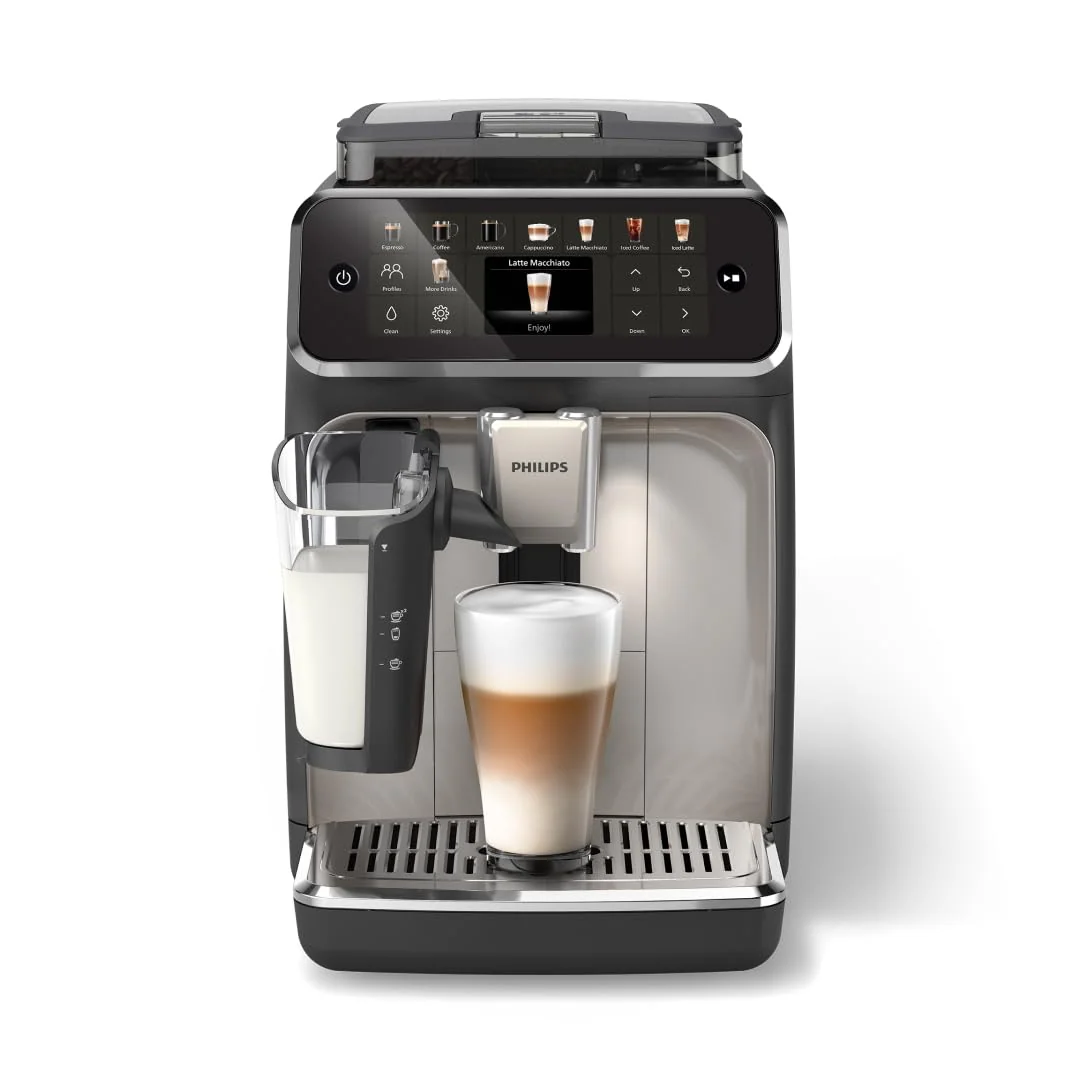
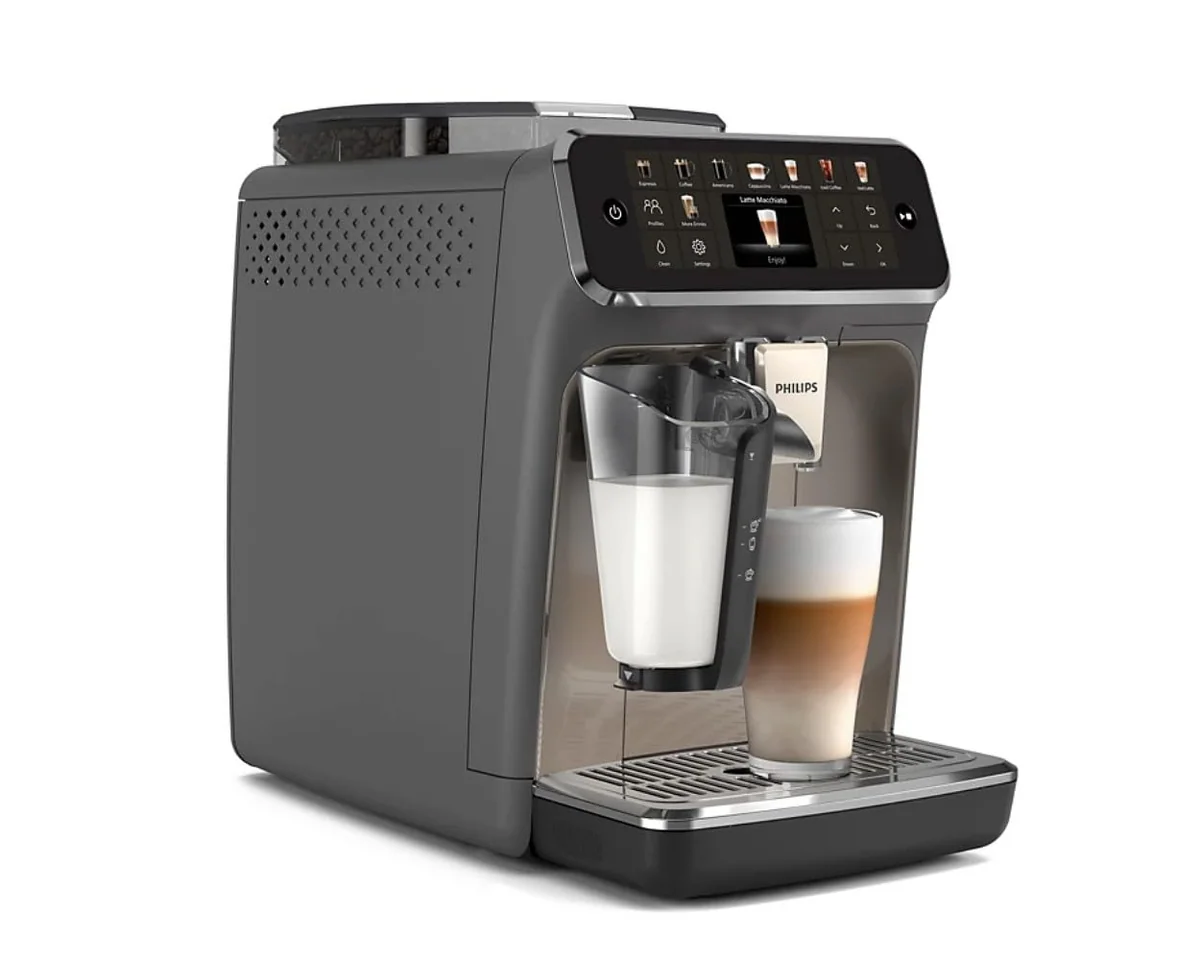
The full-fat 5500 in black chrome, for a household where three or four people each want their drink their own way.
Four saved profiles plus a guest slot, a colour screen that tells you what is wrong in words, a milk-froth-only option and Extra Shot on almost every drink make this the easiest LatteGo to share.
The brew unit doses somewhere around nine grams, roughly half a café double, and no setting on the machine lifts that ceiling.
Owners of that black chrome unit split cleanly along one line, and the split is about what they drank before: people arriving from pods call it transformative, while one buyer coming from a De'Longhi described the dosing as very shy and what landed in the cup as brown water rather than coffee. Both are describing the same machine accurately.
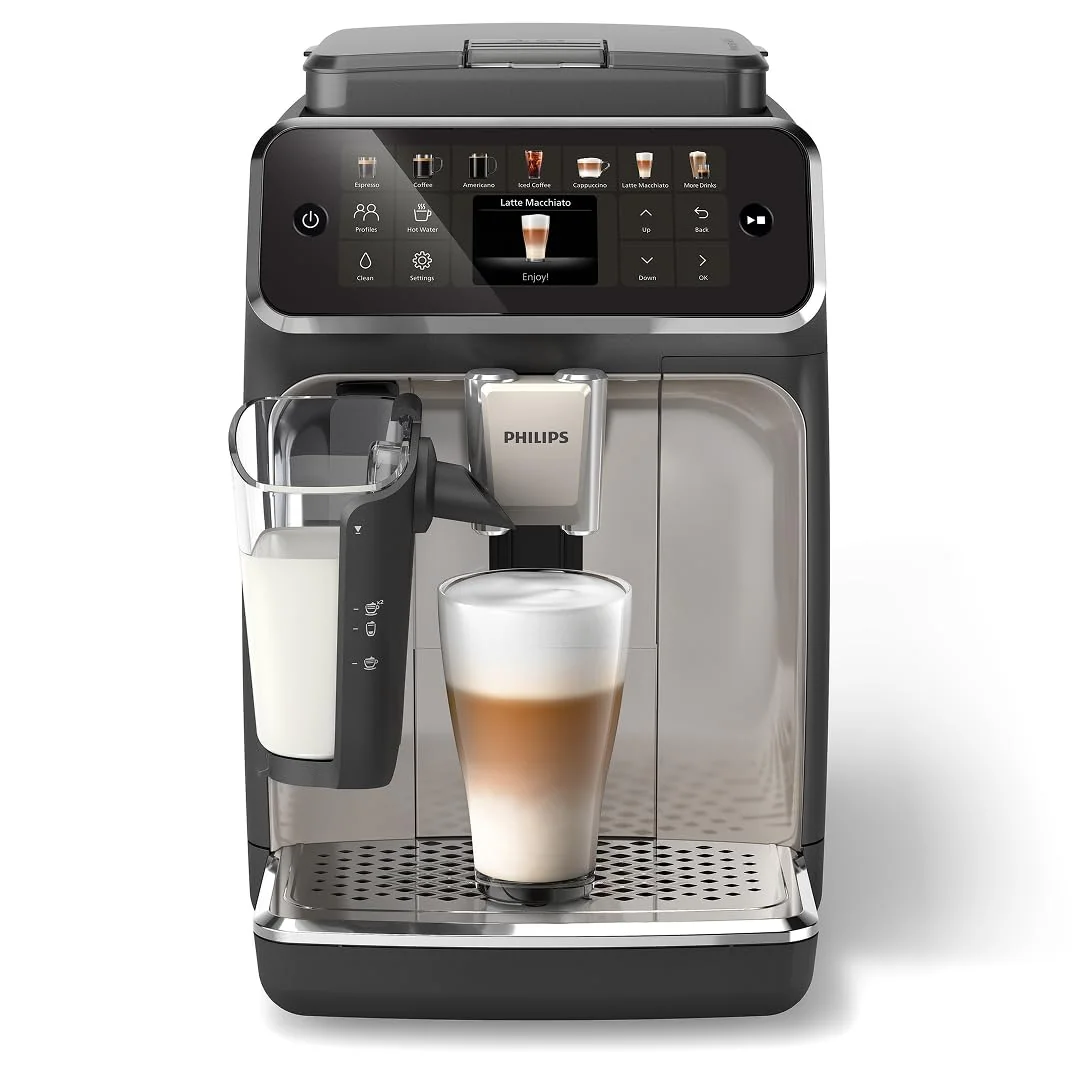
The same 5500 in grey chrome, differing from the black one in colour and nothing else.
Mechanically identical to the black chrome machine, so pick it purely because the grey suits your counter better.
Its listing claims two user profiles and a 230 W power draw, neither of which matches the machine Philips documents on its own product page.
That is not a small thing to notice on a listing at this money. The grey chrome page states two profiles and 230 W for a machine every spec sheet puts at four profiles plus a guest and 1500 W. The renewed black listing repeats the same two-profile line while the renewed grey one correctly says four, which means Philips's own copy for one machine contradicts itself three ways across four pages.
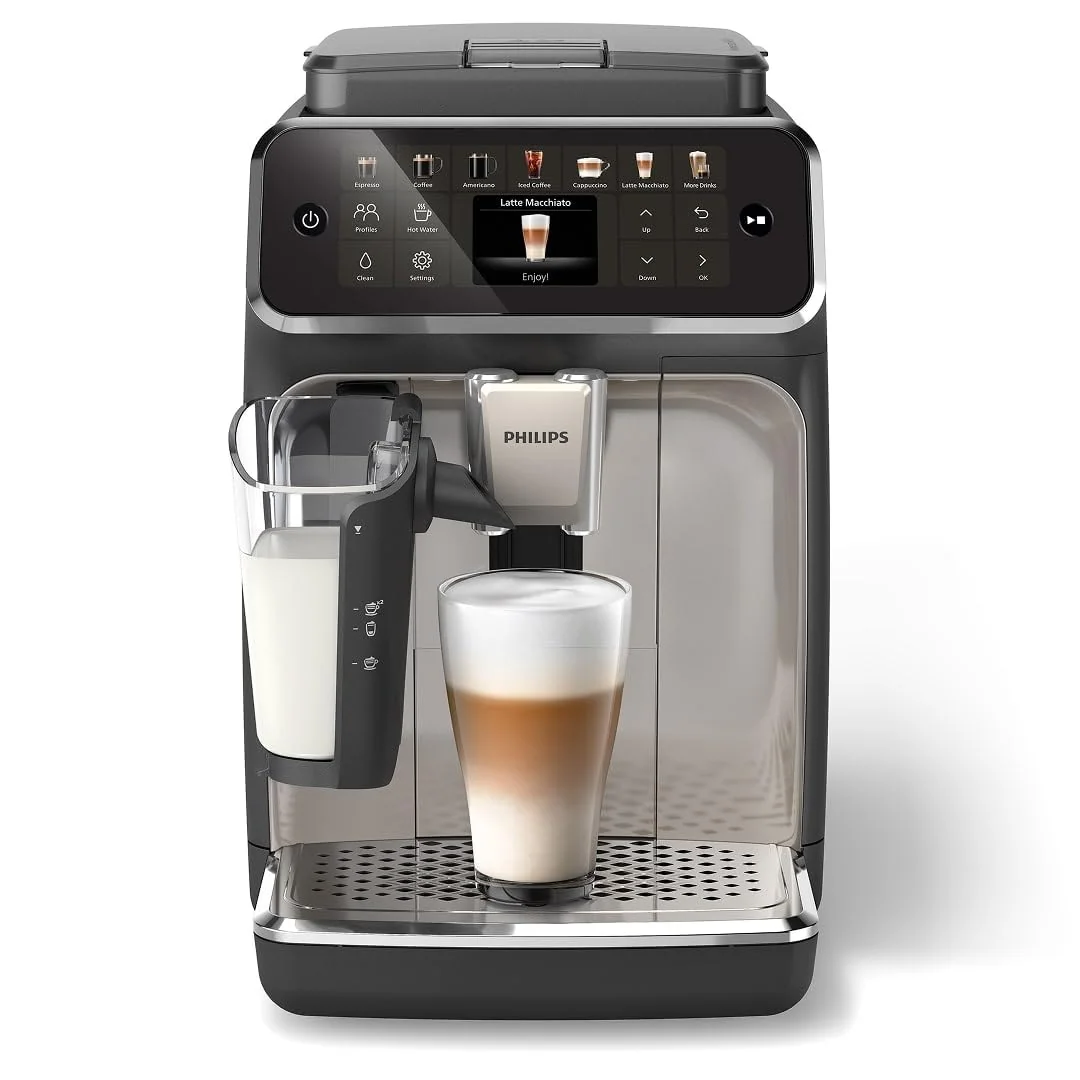
The renewed grey 5500, for anyone who wants the screen and the profiles at the smallest possible premium over a 3300.
Seven of the eight retained reviews on this listing describe a machine indistinguishable from new, with phrases like spotless, perfect condition and no signs of prior use.
The eighth arrived leaking, and a shortened warranty expires comfortably before the leaks and worn seals that owners actually report tend to appear.
The renewed 5500 in black chrome, the better of the two renewed listings when the discount against a new machine is genuinely large.
Same hardware, same carafe and the same twenty presets, at a price that changes the arithmetic against a new 3300.
Ninety days of cover is a fraction of the window in which a LatteGo frother leaking from the bottom, a fault Philips's own support index treats as routine, actually shows up.
Philips lists that leak alongside a drip tray that fills quickly and a grounds container reporting itself full when it is empty, which tells you what a used unit is most likely to arrive doing. Whether the saving is worth it generally is the argument in our piece on renewed and refurbished machines.
The 4400, for a mixed household that wants a colour screen and four iced presets without paying flagship money.
Five strength steps, two profiles, twelve drinks and a screen anybody can read make this the LatteGo people will operate without being taught.
It shares its ceramic grinder and Saeco brew group with the cheaper 3300, so none of the extra money reaches the cup.
Its owner reviews are the clearest illustration in this whole page of the break-in problem. One buyer two months and twelve hundred coffees in describes dry spent pucks and burn-your-mouth-hot coffee; another returned the machine under the heading of very expensive brown water after twenty-five cups. The gap between them is grind setting, temperature and volume, and it is the reason we tell people to dial in hard during week one rather than week four.
The renewed 4400, the cheapest route to the colour screen and the iced menu.
The same machine as the new listing at a real discount, with the same carafe and the same one-press americano.
Its listing advertises a colour touch screen and three saved profiles when the machine has physical buttons around a colour panel and two profiles plus a guest.
A listing that rounds up twice is a listing to read slowly, and this one also carries no description field at all, so capacities, dimensions and the real drink list are simply absent.
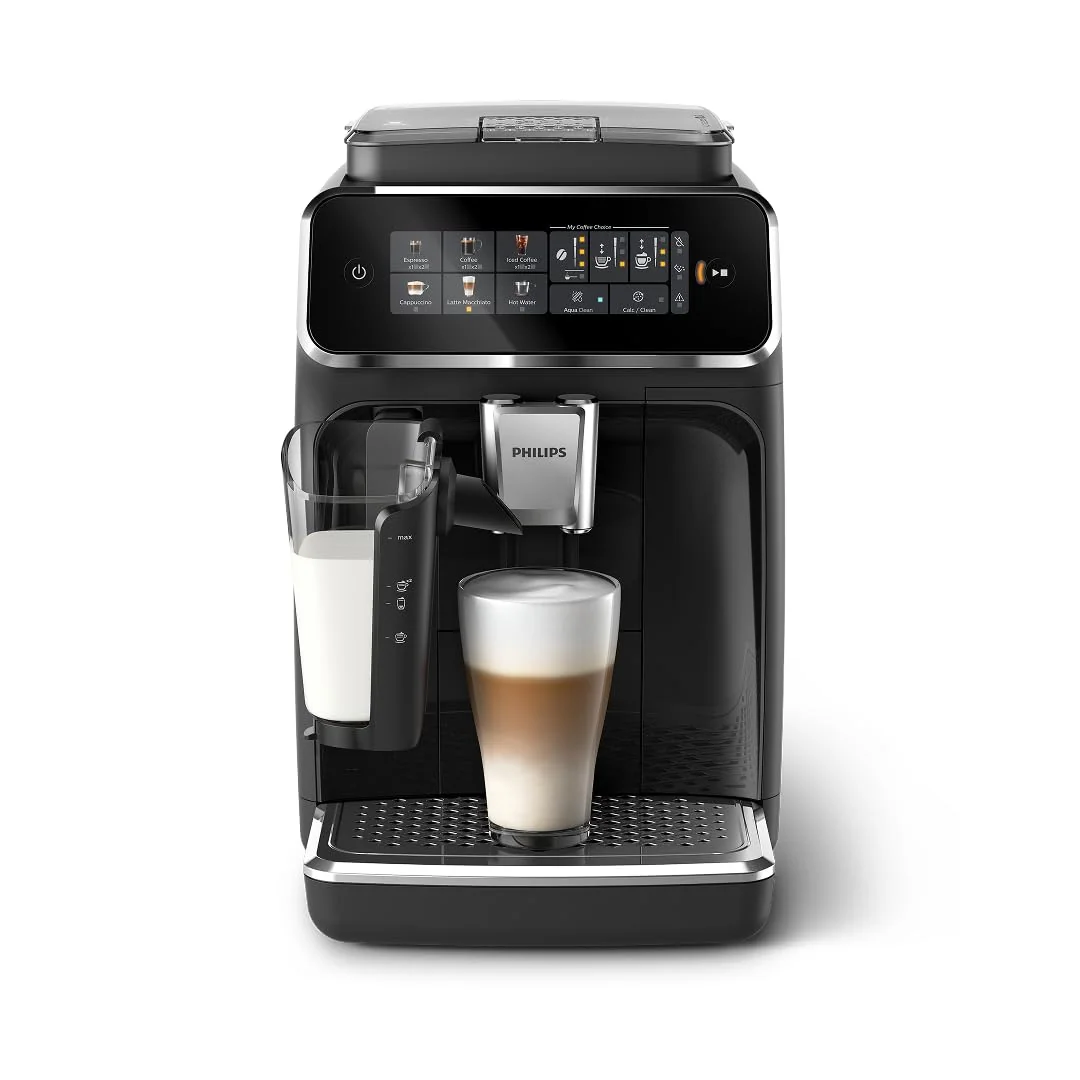
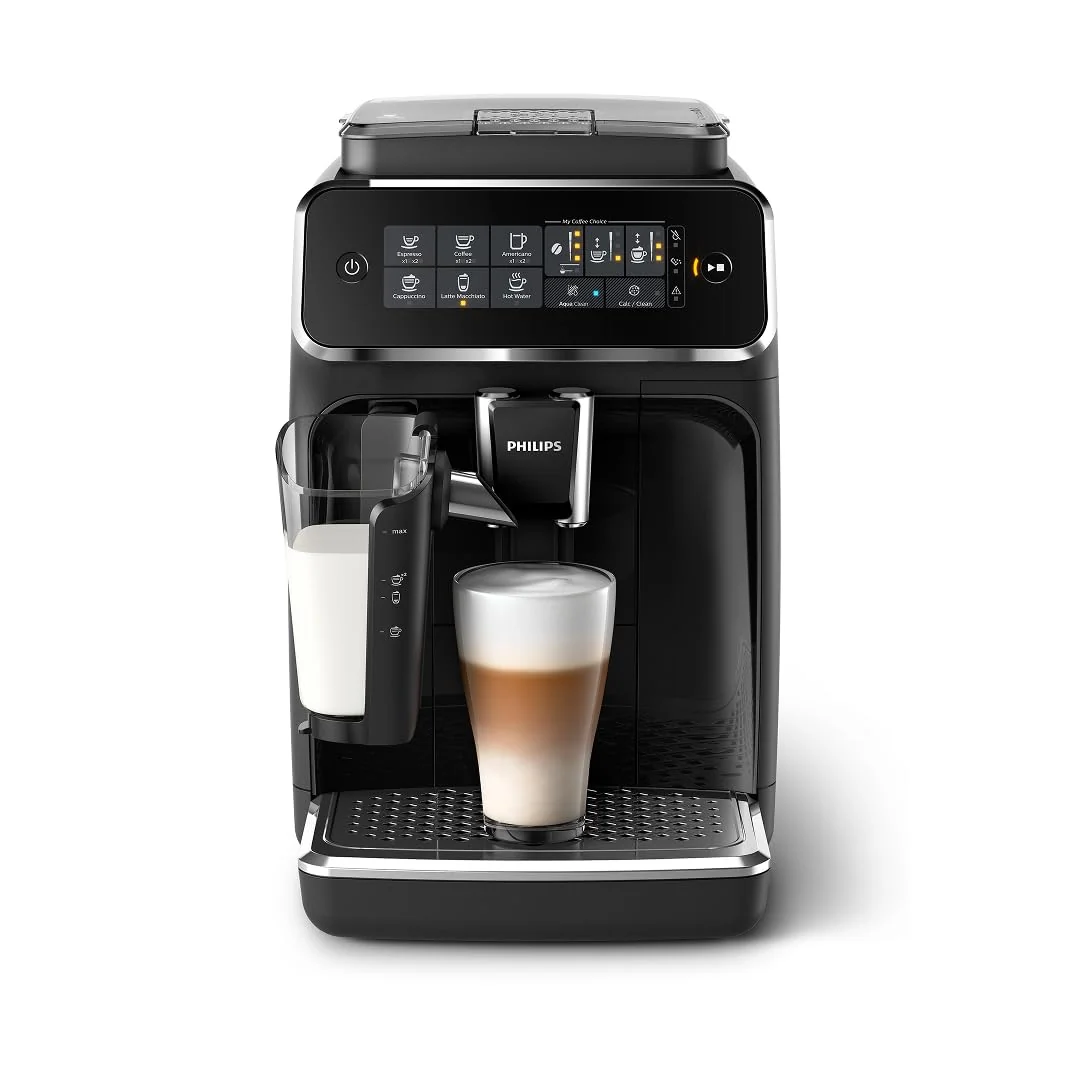
The 3300, which is the Philips most people should actually buy.
The same brew group and grinder as everything above it, the quietest grinder Philips has built, and the LatteGo carafe intact.
Weighed pucks top out around 8.8 grams, so the coffee is mild by design, and the first ten to twenty drinks are worse still.
The quiet is the one Philips marketing claim that survives independent measurement, and the mechanism is a gasket around the bean hopper rather than anything exotic, which means a lid that does not seat properly gives you the old machine back. The owner record on this listing also carries the fault worth knowing about: one buyer returned a three-week-old machine that was pouring warm water out of its underside during the brew cycle, bypassing the drip tray entirely. If silence is the whole point of the purchase, compare it against our quietest picks before committing.
The 3200, worth hunting only for the one-touch americano its successor traded away.
The five-drink panel keeps a dedicated americano button that the newer machines replaced with an iced setting, which is the better trade for anyone who drinks long black coffee.
It is the discontinued model, so it only makes sense when it is meaningfully cheaper than the 3300 that replaced it.
Its owners are unusually candid about what the machine does and does not do. One four-star review names the fault plainly, that the grind never gets fine enough and the espresso brews too light and too fast, and then recommends buying it anyway at its price. That is roughly Espresso Den's own position on the model.
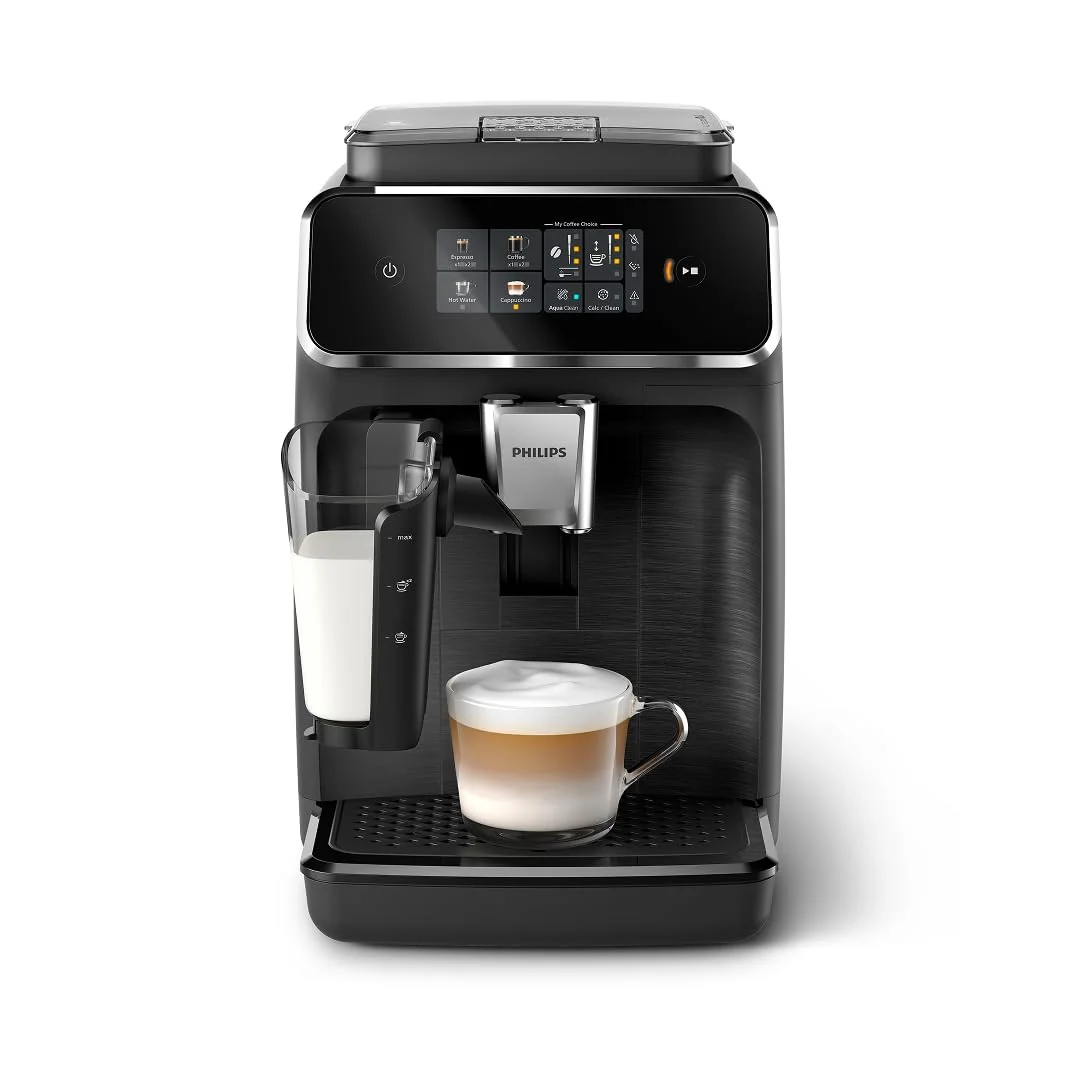
The 2300, for a kitchen where cappuccinos are the only drink anybody makes.
Four buttons, the same LatteGo carafe as the machines three times its price, and nothing else to learn.
There is no americano button and no comfortable way to lengthen a coffee, so black-coffee drinkers should start one rung up.
The other thing to plan for is water. One owner reports emptying the base roughly every second day for four drinks a day, because the machine purges through the coffee path at every power-on and power-off, and a second owner's machine leaked from the rear during the steam cycle and ruined a wooden counter before anyone saw it. Do not stand this one on bare wood.
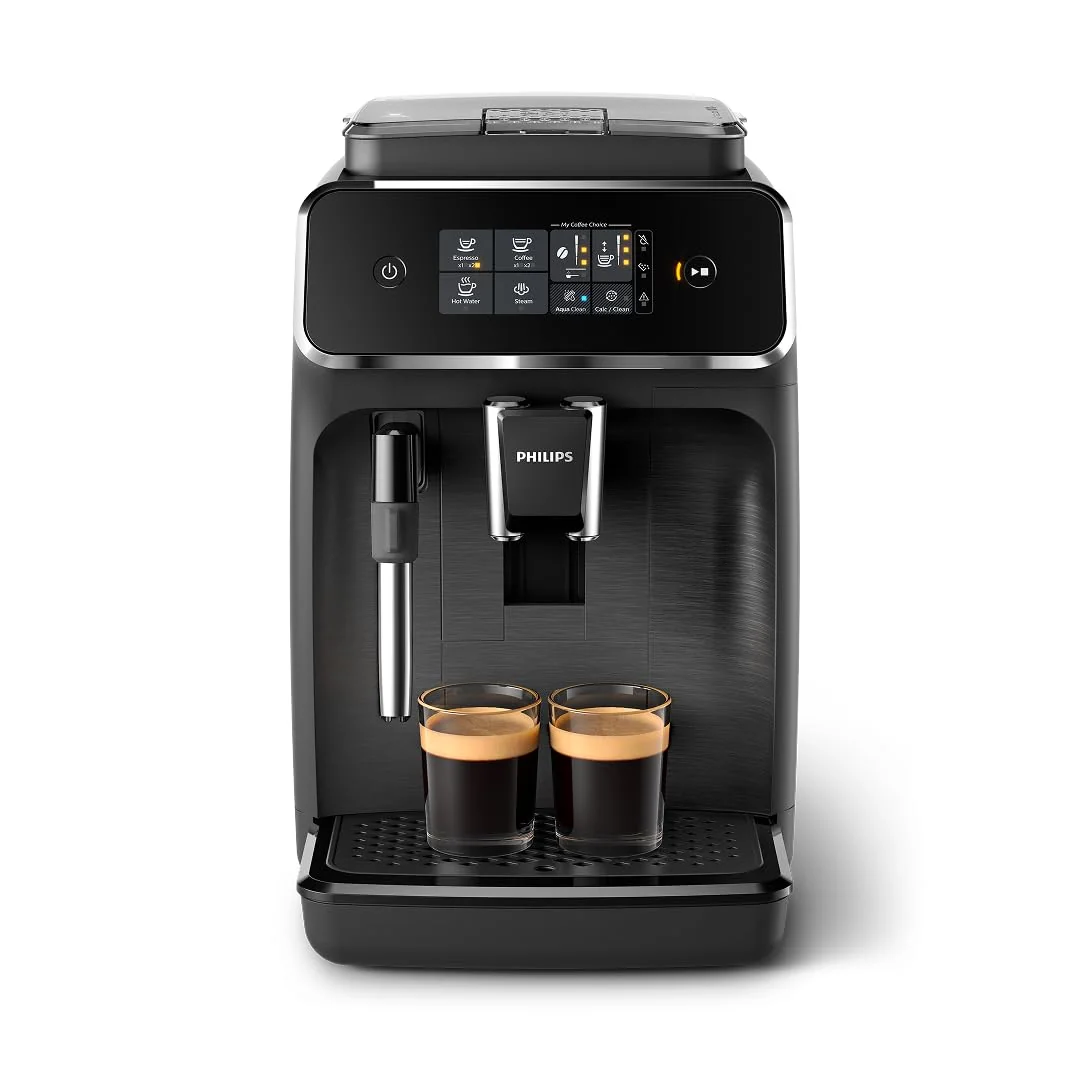
The 2200, the cheapest full-size Philips with a steam wand rather than a carafe.
Espresso, coffee and hot water from three buttons, and a genuinely good long-coffee machine once temperature goes high and volume goes short.
The plastic frothing sleeve on the wand produces bubbly cappuccino foam rather than microfoam until you pull it off and learn to steam by hand.
Note what the listing actually promises here, which is three presets and a classic milk frother rather than one-touch anything. That honesty is why the 2200 disappoints fewer people than the machines above it, and why it turns up on our budget shortlist.
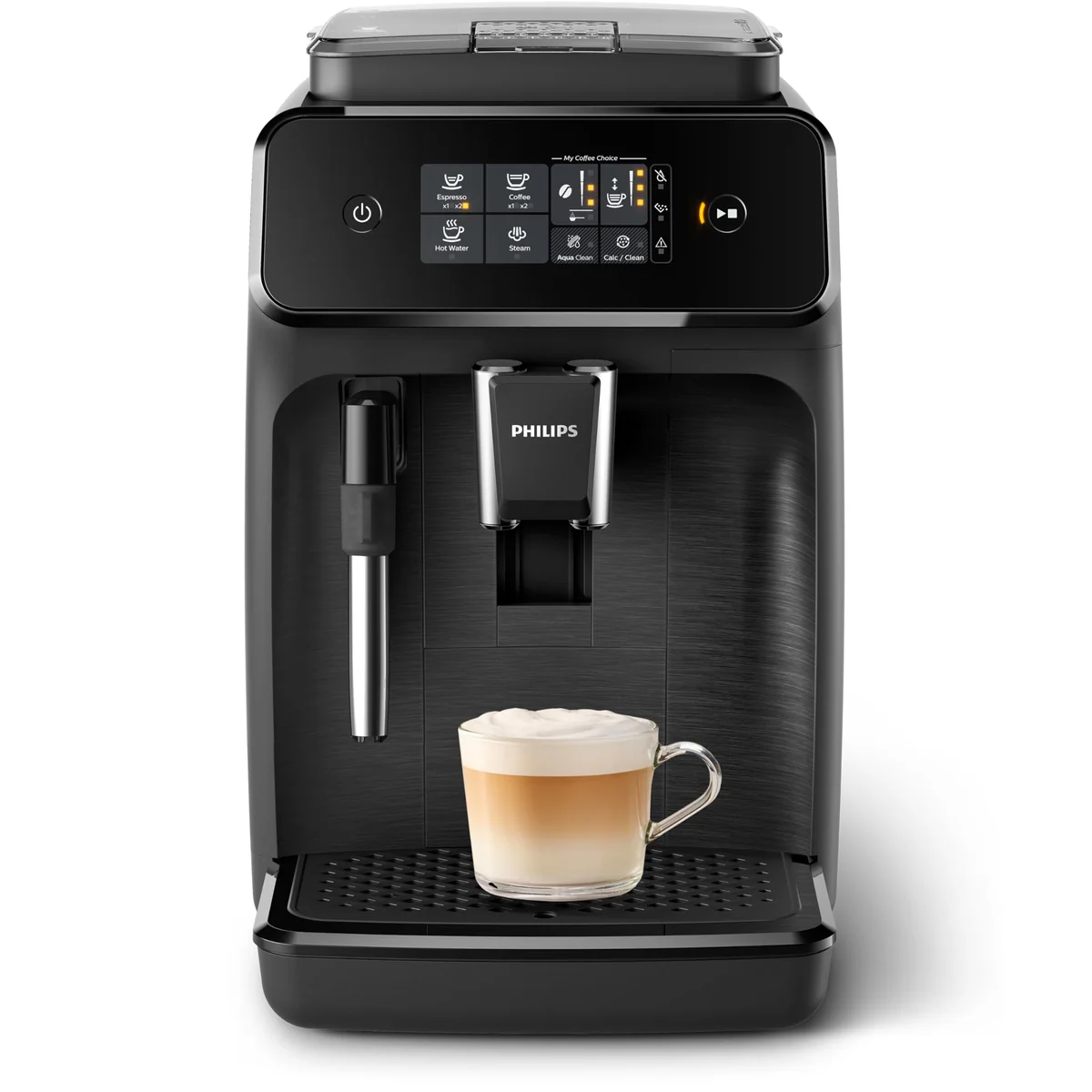
The 1200 Carina, the lowest price Philips charges for this brew group.
Fresh-ground espresso and coffee at one button press with a front-loading tank, which is a straightforward upgrade on any pod machine in both cup and running cost.
The AquaClean filter named in the product title is not actually in the box on the US EP1220/04, and the coffee setting stops around eight ounces.
Philips states the filter omission on its own specification page for this model, which is worth knowing before the five-thousand-cup claim in the bullets does any persuading, since that figure assumes eight filter replacements you buy yourself. Its owners are otherwise warm about it: one describes switching from an oily medium roast that produced sludge to a drier dark roast and getting solid pucks and rich coffee from the same machine on the same settings, which is the single most useful sentence written about any machine at this level. Bean choice matters more here than settings do, and our guide to what survives a bean-to-cup grinder covers the rest.
De'Longhi, where the dose is the ladder
De'Longhi shares a brew group and a steel conical burr across almost the whole range and separates the models by how long the software lets the grinder run. That makes the range unusually easy to shop once you know the rung you need, and our comparison of the line lays the rungs out.
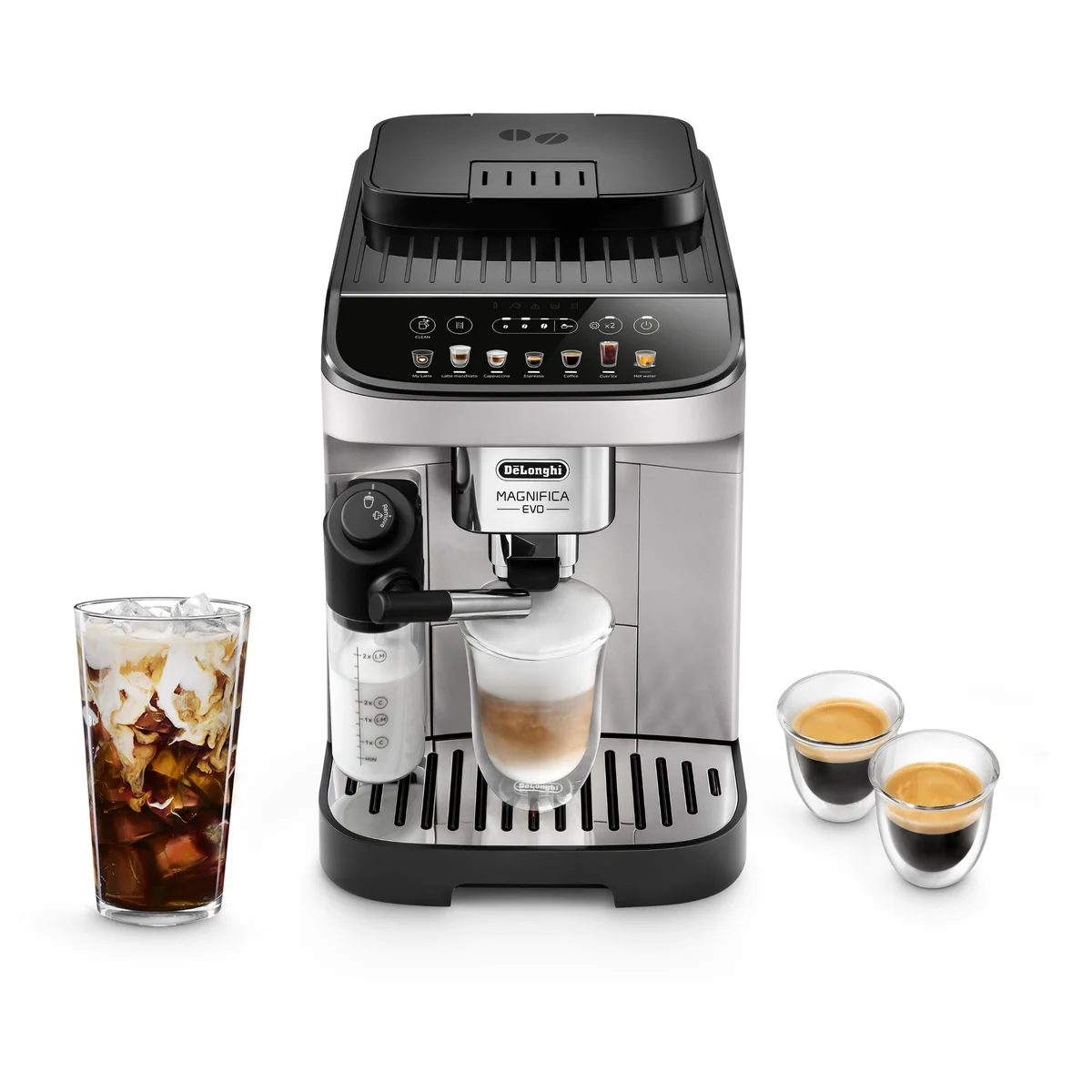
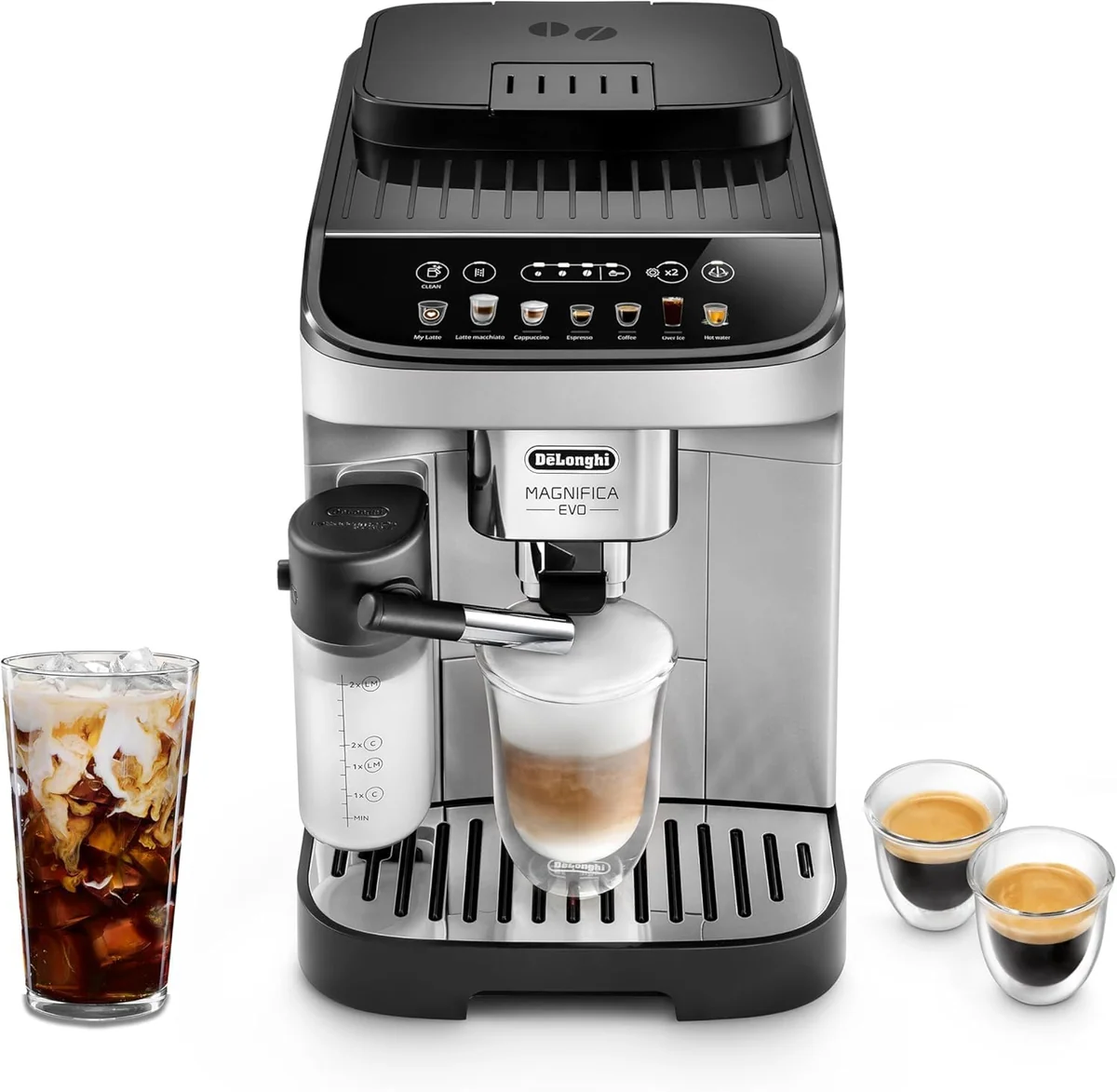
The Magnifica Evo, the cheapest honest route into De'Longhi's LatteCrema carafe.
The foam is thicker and better than anything Philips makes, and in one side-by-side test its fixed carafe out-textured the adjustable ones on two costlier De'Longhis.
The grinder is capped around ten to thirteen grams and the milk temperature cannot be adjusted at all.
The failure to know about is the carafe sensor. One owner reports the machine beeping when the frother goes in and then never recognising it, leaving the milk drinks unlit and unusable, and De'Longhi deleted that sensor entirely from the cheaper Magnifica Start. A manufacturer removing a part from the next machine is about as clear a verdict on it as you will get.
The renewed Magnifica Evo, worth taking when the gap against a new one is large.
The same LatteCrema machine and the same seven one-touch recipes for less money.
Ninety days of cover against the two to three years a new Evo carries, on a machine whose milk carafe is its most complained-about component.
The renewed listing's rating sits materially below the new one's, and Espresso Den could find no first-hand account of a renewed Evo anywhere, so treat that gap as a condition-and-warranty signal rather than a verdict on the design.
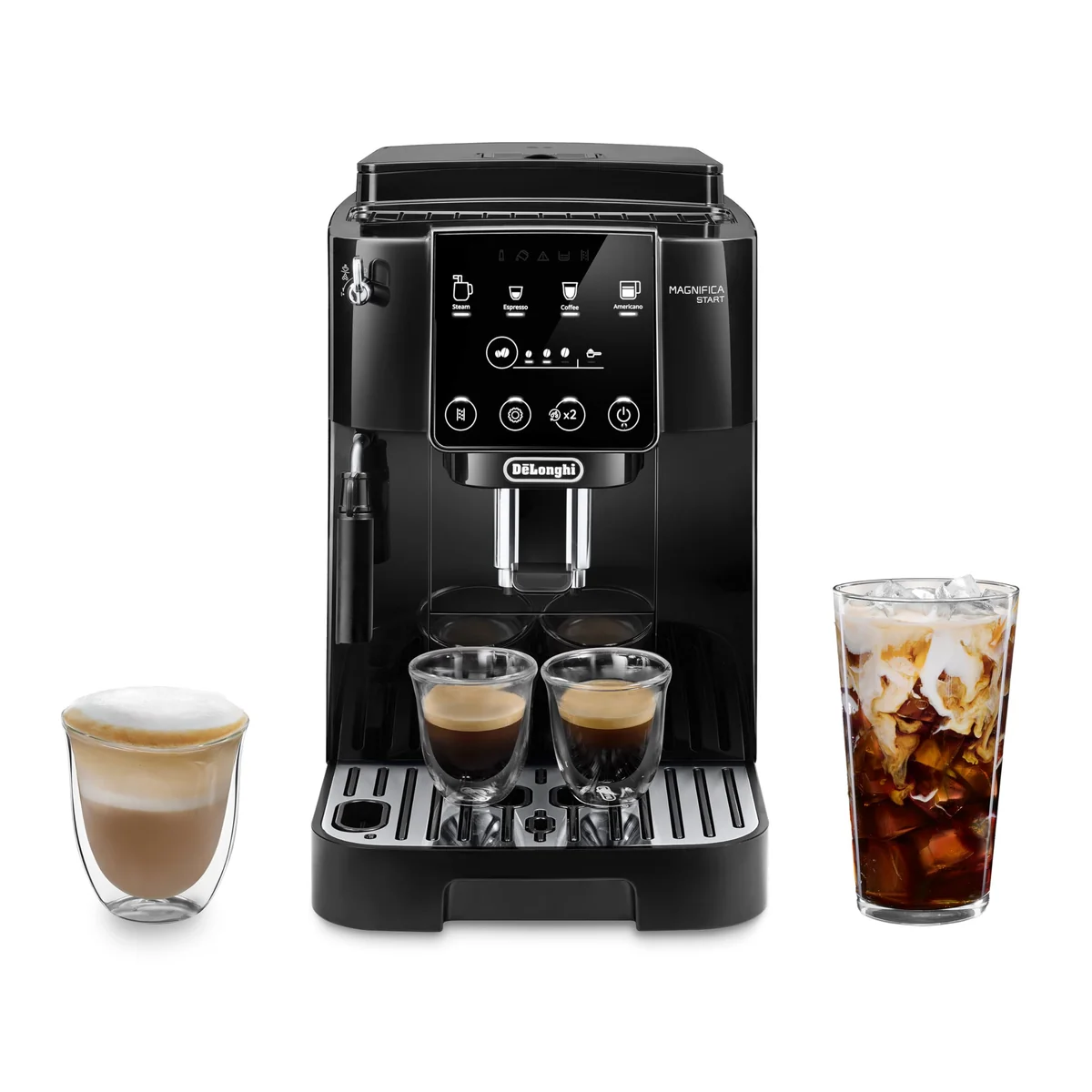
The Magnifica Start, the De'Longhi to buy if you are willing to steam your own milk.
It carries the same brew group and steel burr as machines well above it and deletes the automatic carafe along with the sensor that causes most of its siblings' complaints.
Its dose ceiling means long black coffees come out thin, and the panarello sleeve on the wand makes stiff foam until you remove it.
Coffeeness dissents from this recommendation and says outright that there is no reason to buy the manual-frother Start, which is the sharpest published objection to it and deserves quoting rather than burying. The reconciliation is price: judged against a carafe machine costing considerably more, the wand looks like a subtraction, and judged as the entry point to the range it looks like the version with fewer parts to fail.
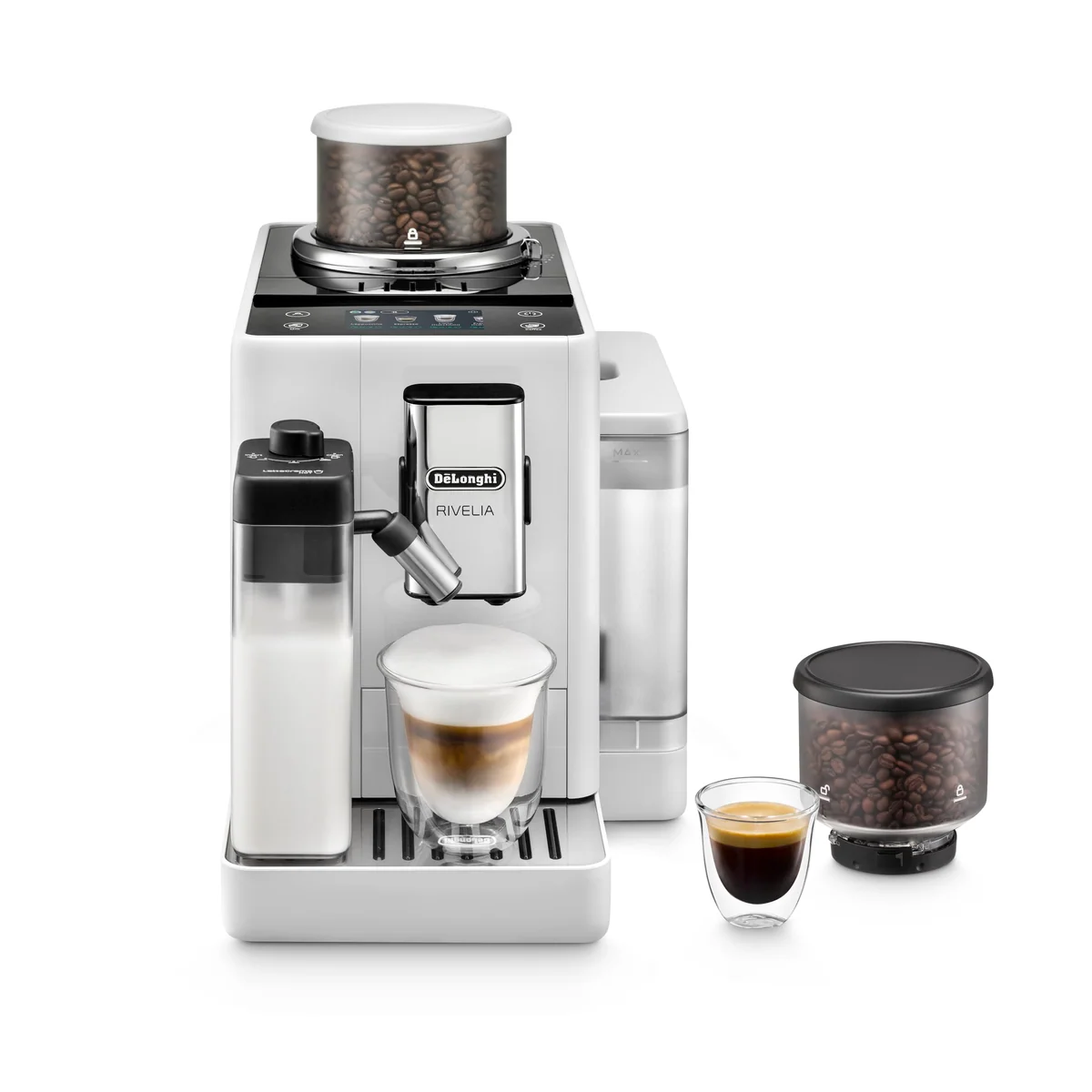
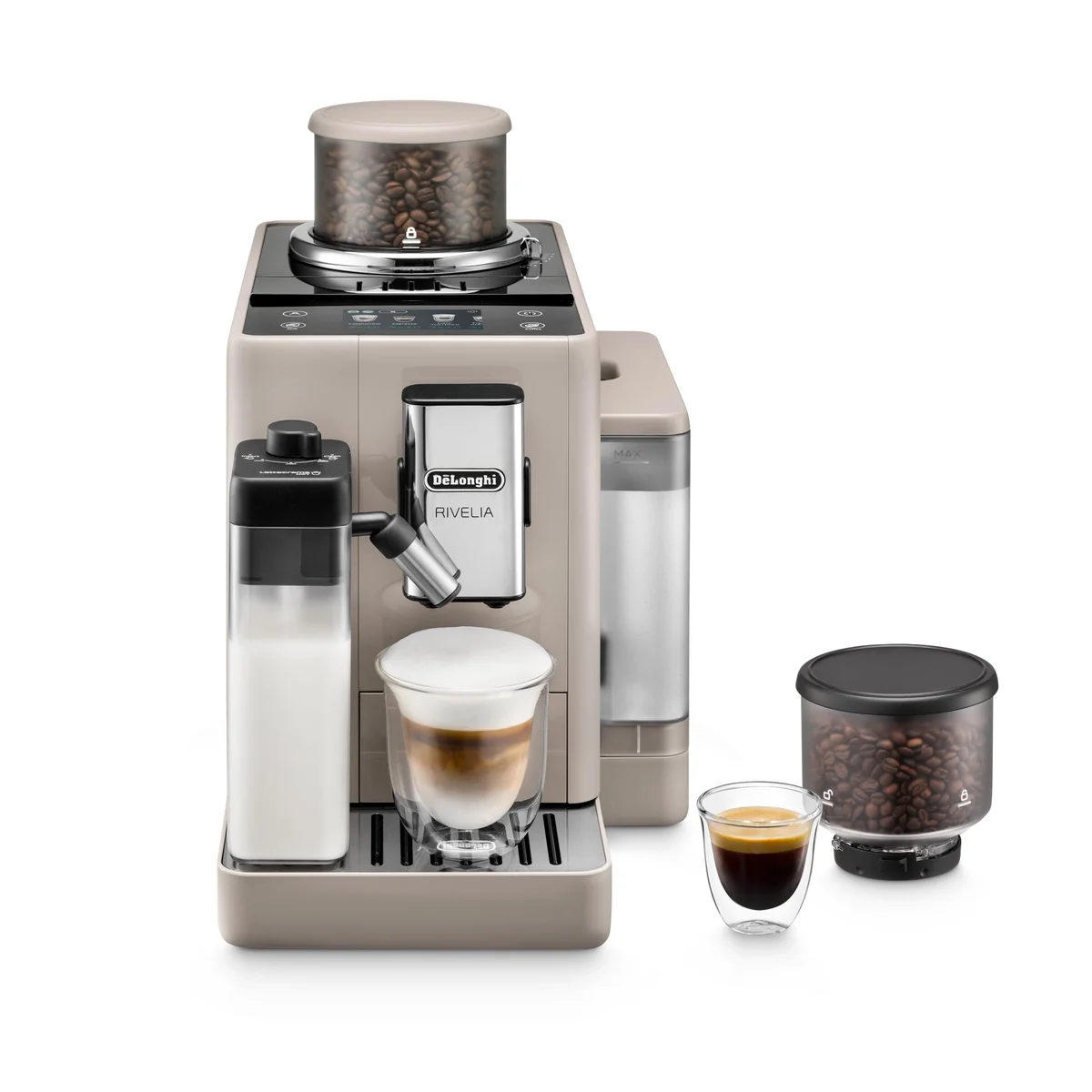
The Rivelia in arctic white, built around two removable bean hoppers with a grinder each.
Regular and decaf, or yours and theirs, can live in the same machine permanently, which is the only thing here no cheaper De'Longhi offers.
Milk arrives warm rather than hot, cup clearance stops around thirteen centimetres, and the cold recipes are hot coffee poured over ice you supply.
The Rivelia in sand beige, identical in every component to the white one.
Same touchscreen, same LatteCrema Hot carafe, same brew unit, so choose the finish and stop thinking about it.
Every hopper swap strands roughly ten grams of the previous bean in the grinder, which you either drink or bin.
The other Rivelia caveat is quieter and matters more: two hoppers do not mean two grind settings, so a dark blend and a light single origin cannot both be right at once, which narrows the real use case to two beans of similar roast. Owners also report the recurring complaint about large drinks, one of them describing an enlarged americano as murky water, which is the dilution problem this whole category has. If two beans is genuinely your problem, our page on decaf-and-regular households weighs the alternatives.
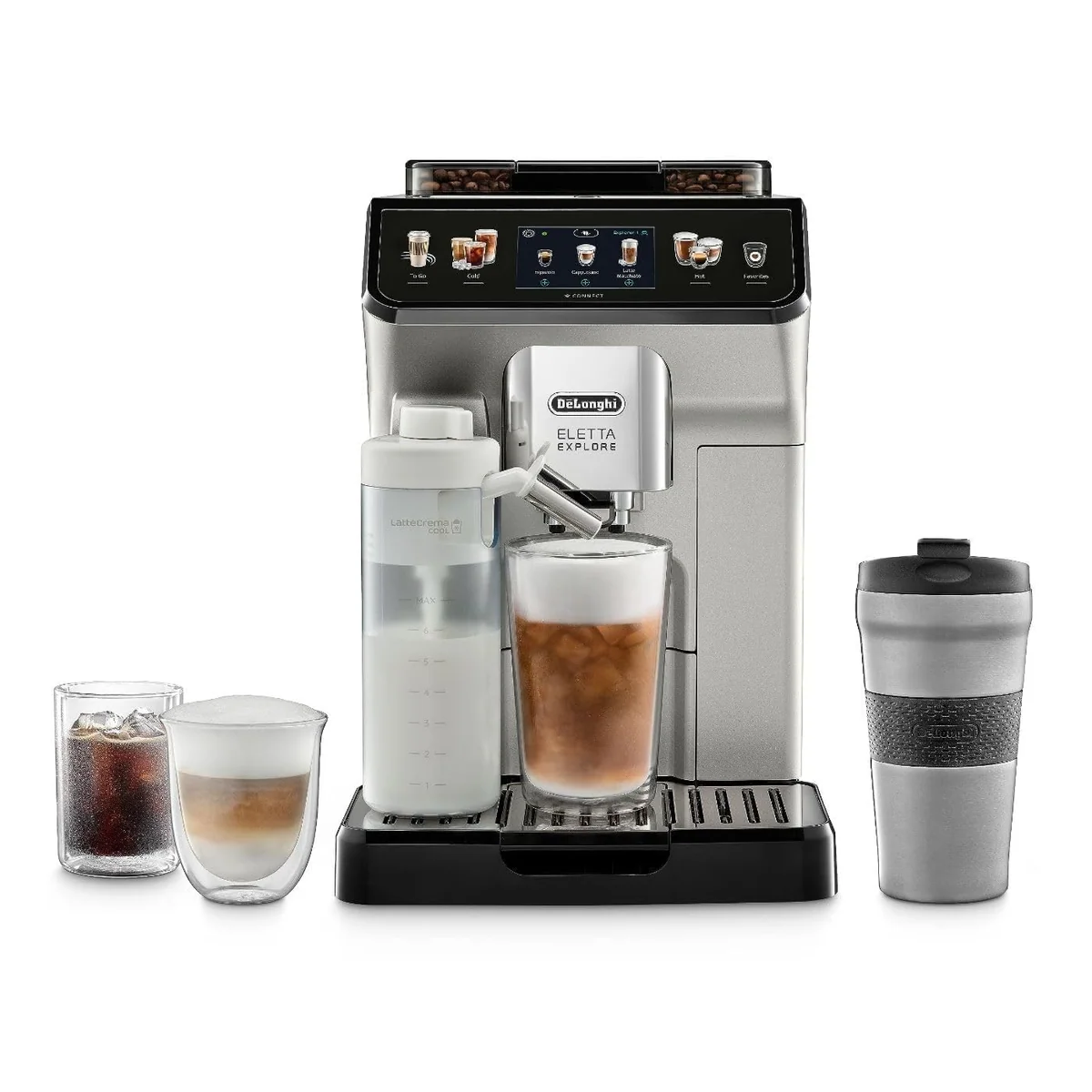
The Eletta Explore, the only machine on this page that genuinely brews cold.
Cold extraction leaves the spout at around 37 °C so the ice stops diluting the drink, and there is enough clearance under the spouts for a travel mug the rest of this list will not take.
An owner measured his flat white at 125 °F on two separate units after De'Longhi replaced the first one, and every cold-menu drink except the cold brew is hot coffee dropped onto ice.
That temperature figure is worth pausing on because the owner did the work properly: he called De'Longhi, followed their instructions including preheating the cup, sent a video, received a replacement machine, and measured the same 125 °F again. This is a design choice rather than a defect, and it is the reason lukewarm milk is the category's defining complaint. If iced drinks are the reason you are shopping, start here instead, and this explains what every other brand means by the word.
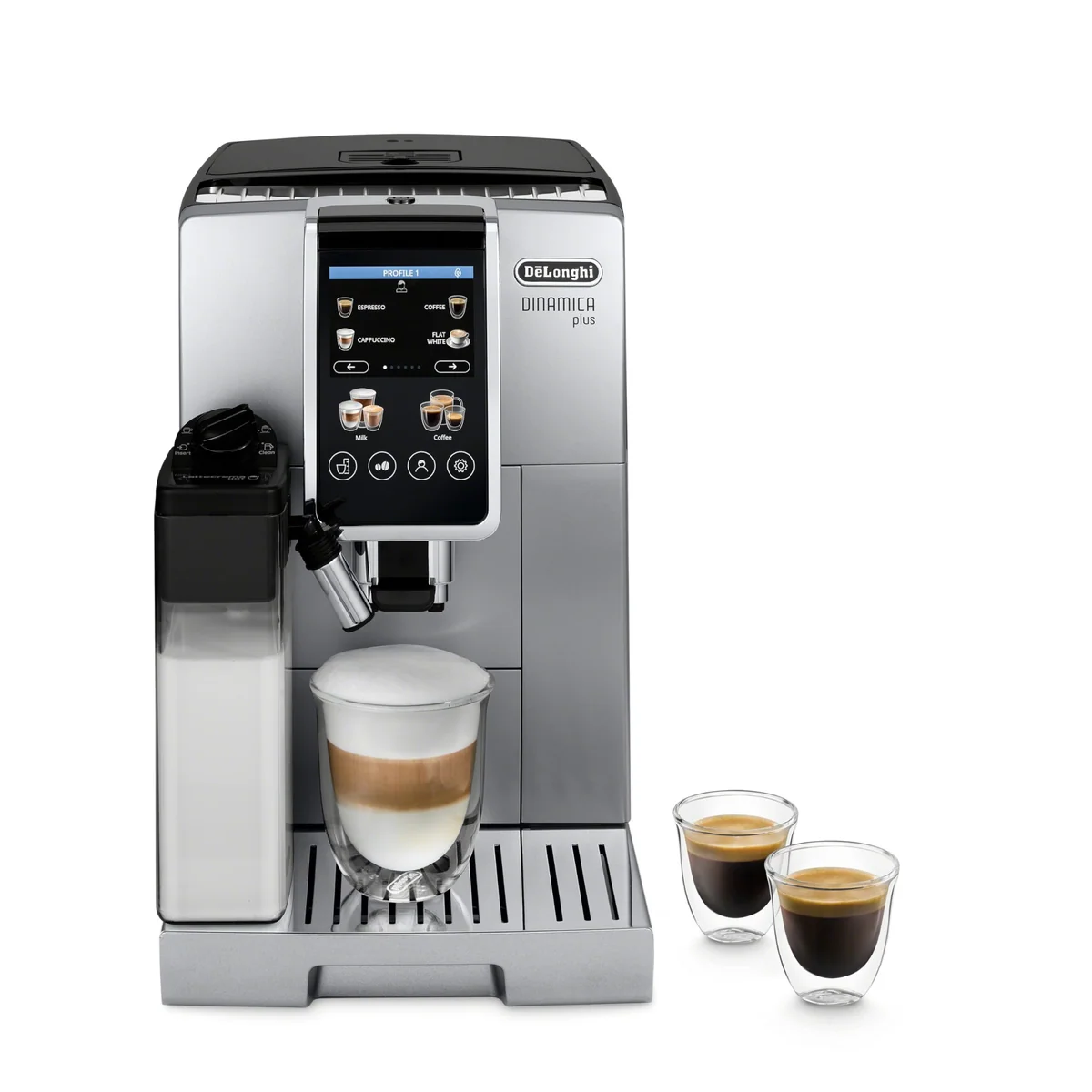
The Dinamica Plus, for anyone who has decided the espresso is the point.
Fifteen grams at maximum strength is the largest dose De'Longhi will grind and the single most reliable way to buy a stronger shot anywhere on this page.
The Doppio+ programme will not pour less than about eighty millilitres, so every proper double means standing there and pressing stop.
The other thing that dose buys is oat milk that actually works, which is why households that have gone dairy-free keep landing here rather than on the Evo, and the carafe port is stiff enough that owners describe pulling it off after a brew with more force than they are comfortable using.
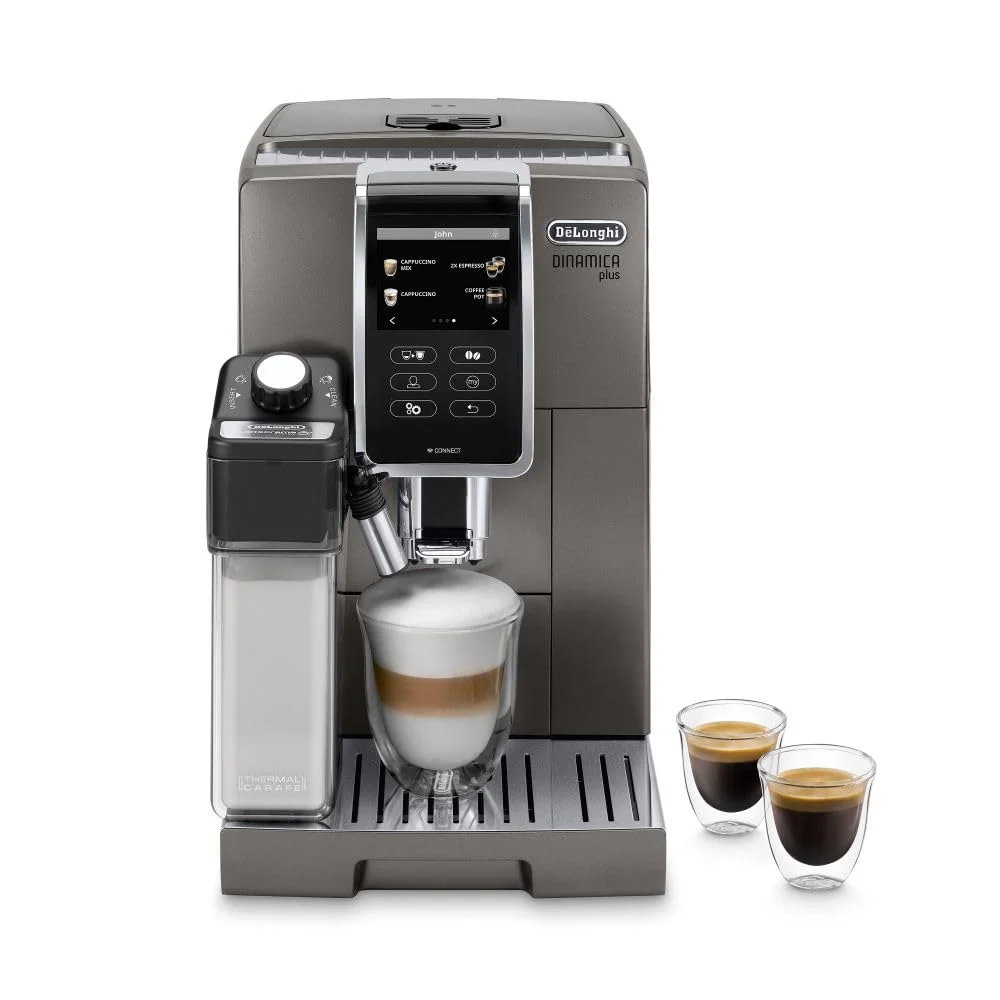
The Dinamica Plus Connected, worth the difference only if typing a volume in millilitres matters to you.
The Coffee Link app is the only route on this line to setting a drink size as a number rather than by hitting stop at roughly the right moment.
It is proximity Bluetooth behind a Wi-Fi-shaped icon, and its own listing promises eighteen recipes in the title and sixteen four lines later.
That contradiction sits in the same paragraph as a claim of three user profiles, while the newer non-connected model claims twenty-four drinks and four profiles instead. Neither machine's badge tells you which is newer, which is the whole problem with this pair and the reason we gave them their own page.
Jura, where you are buying a chassis rather than a menu
Jura's proposition is a sealed brew group, a Swiss build and a price that assumes you accept both. Nobody who owns one and has compared it against a KitchenAid claims the taste gap matches the price gap, which is worth knowing before you spend, and the range guide covers where the money actually goes.
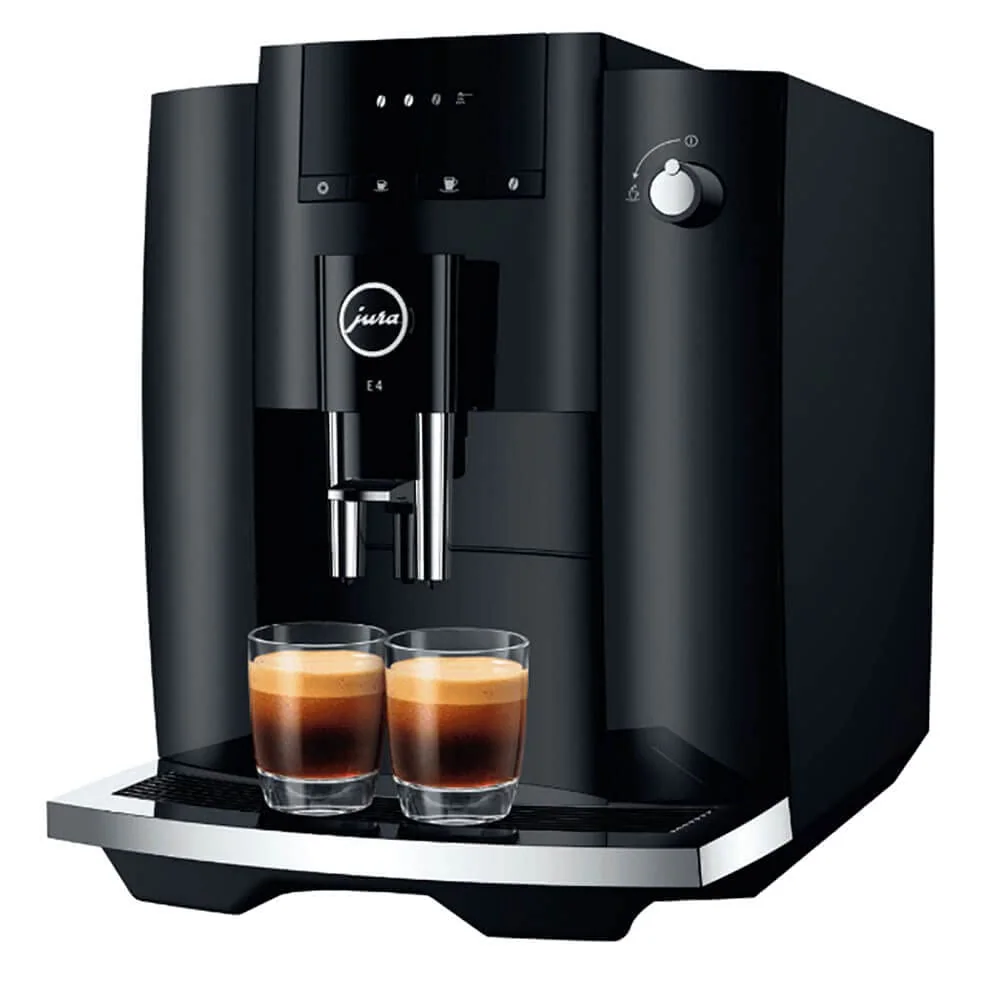
The Jura E4 in piano black, a full-size Jura with the milk system deliberately deleted.
A 1.9 litre tank, a full bean hopper, a hot water spout and five black-coffee presets make this the right machine for someone who drinks espresso and americanos and froths milk elsewhere.
The panel speaks only in symbols, and a single coffee tops out around eight ounces.
Read the listing's five specialties and every one of them is black: espresso, coffee, ristretto, Café Barista and Lungo Barista, with no cappuccino, no latte and no milk hardware inside the case. The other warning on this listing has nothing to do with the machine. One buyer discovered after a five-month failure that his third-party seller was not an authorised dealer and there was no warranty at all, and was quoted four hundred dollars for the repair. Check who is filling the order before you check the finish.
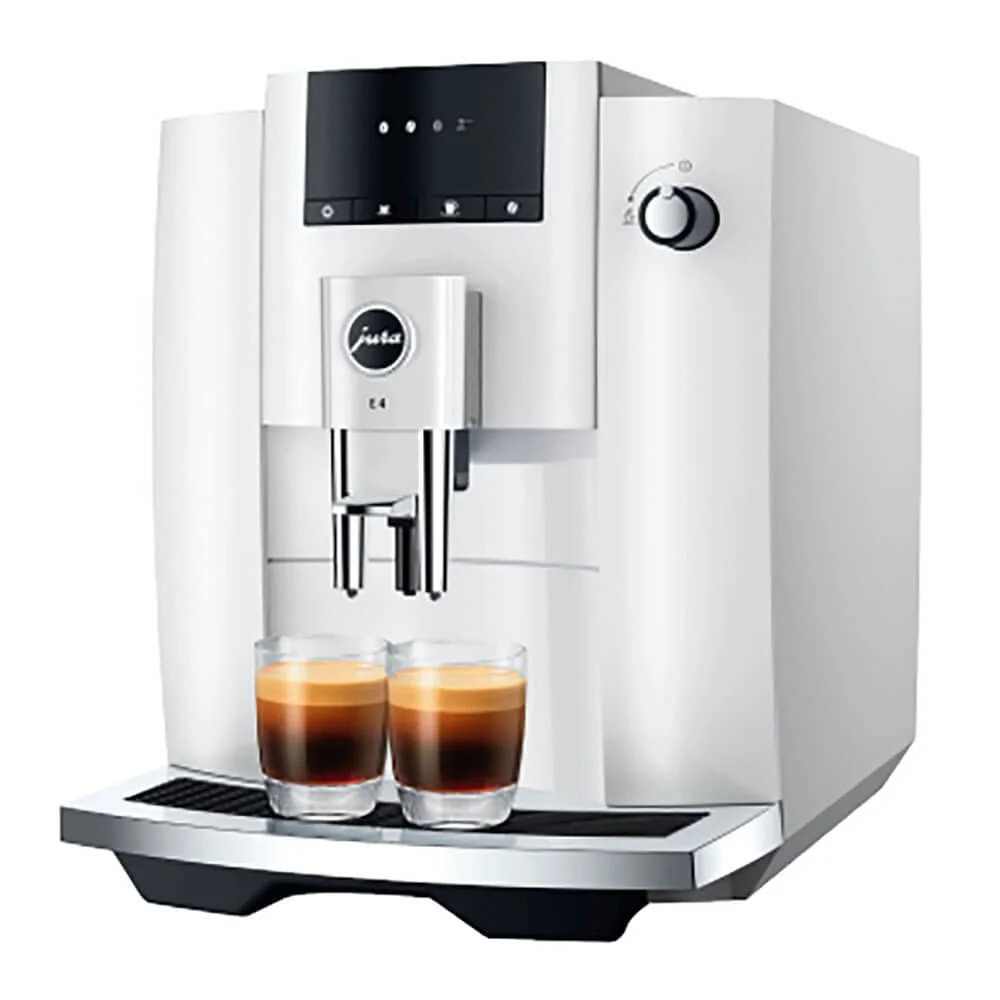
The Jura E4 in piano white, differing from the black machine in finish alone.
Same brew unit, same grinder, same five presets and the same 64 ounce tank, in the colour that suits your kitchen.
Its slightly higher star rating rests on a far smaller pool of ratings than the black listing's, so treat the gap between them as noise.
That is not a rhetorical point: the white listing's average is drawn from a fraction of the black one's ratings, which is exactly the situation where a handful of early buyers moves a number that then reads as a verdict.
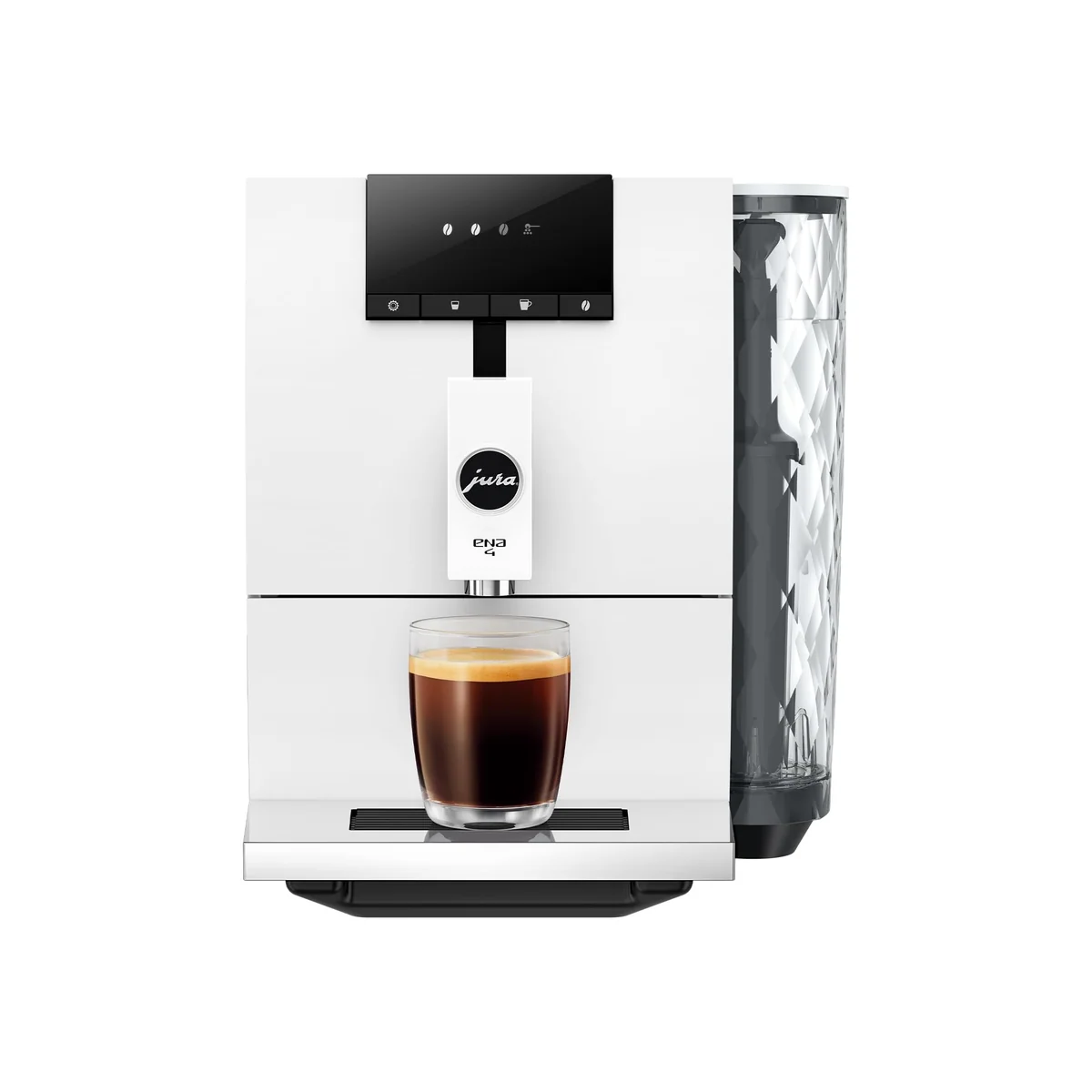
The ENA 4, the smallest Jura and the one to pick when counter width is genuinely the binding constraint.
Four presets of short black coffee from a narrow Swiss box, with the same one-button simplicity and none of the milk cleaning.
The brewing unit tops out near ten grams, beans bridge in the small hopper, and the spout will not clear a full-size American mug.
Owners report both of the last two unprompted, one describing having to swirl the beans after every cup so the grinder fills properly and joking that the Swiss must be laughing at his mug, and it is worth reading that alongside a listing that promises versatility from four black-coffee buttons.
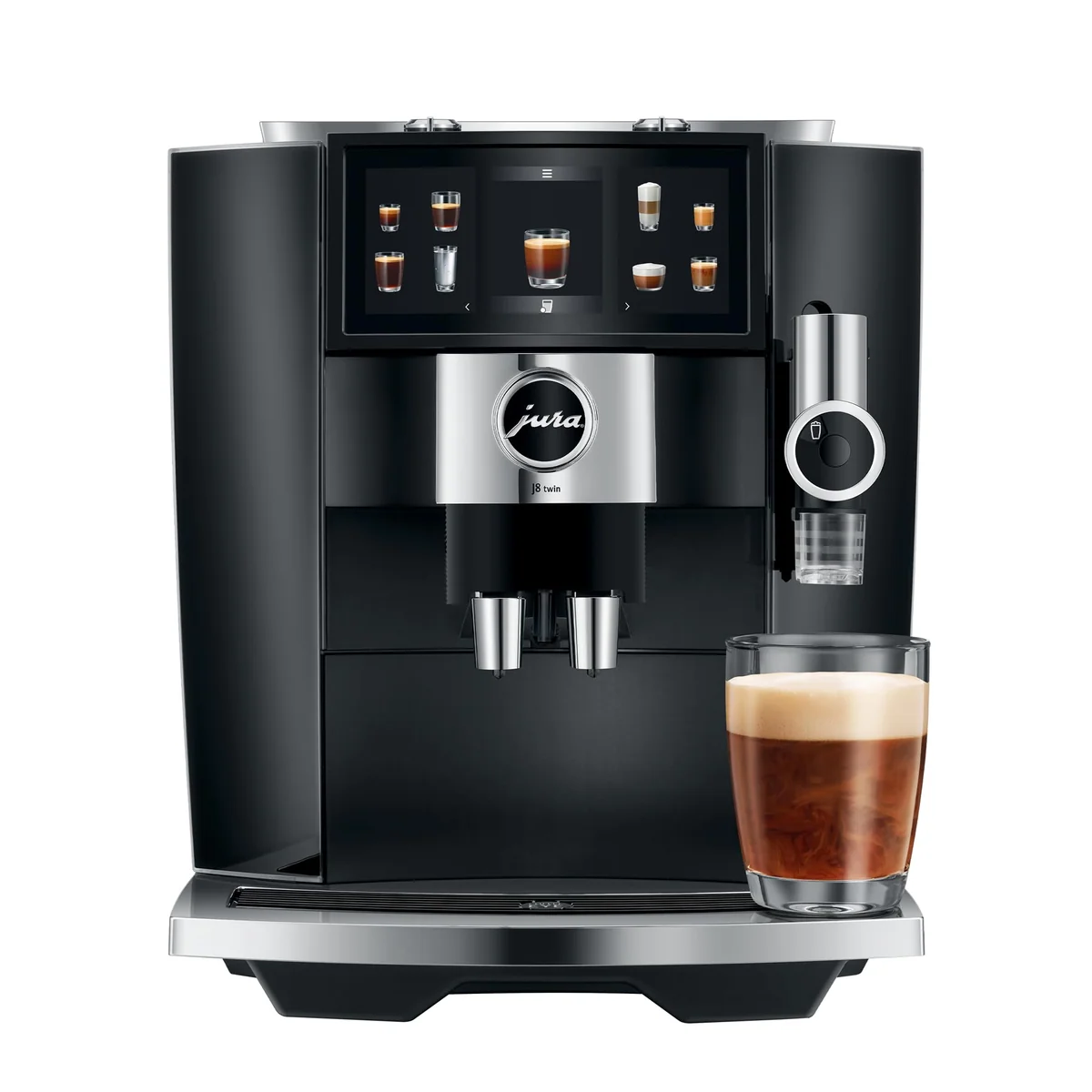
The J8 twin, which exists to end the decaf argument in a two-drinker kitchen.
Two 6.3 ounce hoppers with a grinder each, blendable per drink and individually renameable, plus the best screen Jura currently ships.
Milk lands around 141 °F by owner measurement, black coffee tops out near eight ounces per press, and the brew group is sealed.
Four of the eight retained reviews on this listing exist for the hoppers alone, one owner writing simply that she can have decaf while her sister has regular without emptying anything, and one is a flat report of a machine broken after a month of use with no detail on what happened next. The listing's headline of thirty-one options is arithmetic rather than capability, since it counts the same sixteen recipes again with sweet foam, again with an extra shot and again as two cups at once.
KitchenAid, which is a Swiss machine wearing an American badge
These three are built by the contract manufacturer behind Miele and Jura, they share a brew unit, a grinder and a dose across the range, and the differences are screen size and milk hardware. That makes the cheapest one unusually interesting, and our KF6 against KF7 against KF8 page works through the rungs.
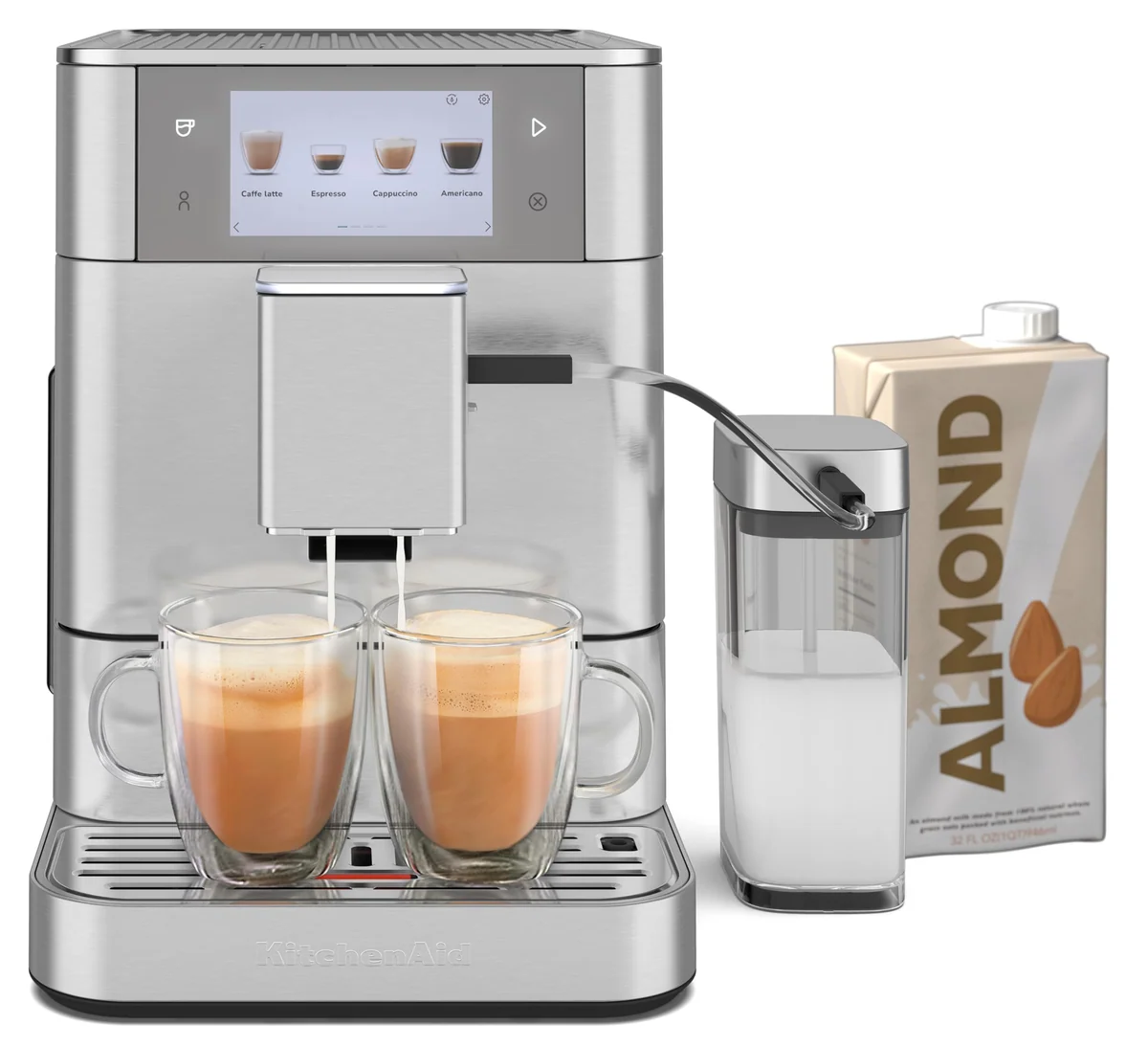
The KF8, the quiet one, with a hopper that twists off so you can change roasts in a minute.
Certified quiet, metal-clad, and carrying a removable bean hopper with a grinder purge that no rival in this class offers.
Its own automated cleaning cycle does not clear grounds out of the brew unit, and owners who skip the weekly hand rinse report clogging, a loud pop and steam venting from the side of the machine.
That diagnosis comes from a five-star owner rather than an angry one, who had a first unit replaced on one phone call and keeps the replacement healthy by pulling the brew unit and rinsing it in the sink every week; the same listing carries a mould report and two three-month failures. The forty-plus recipe count in the bullets is reached by counting each drink twice for dairy and plant milk.
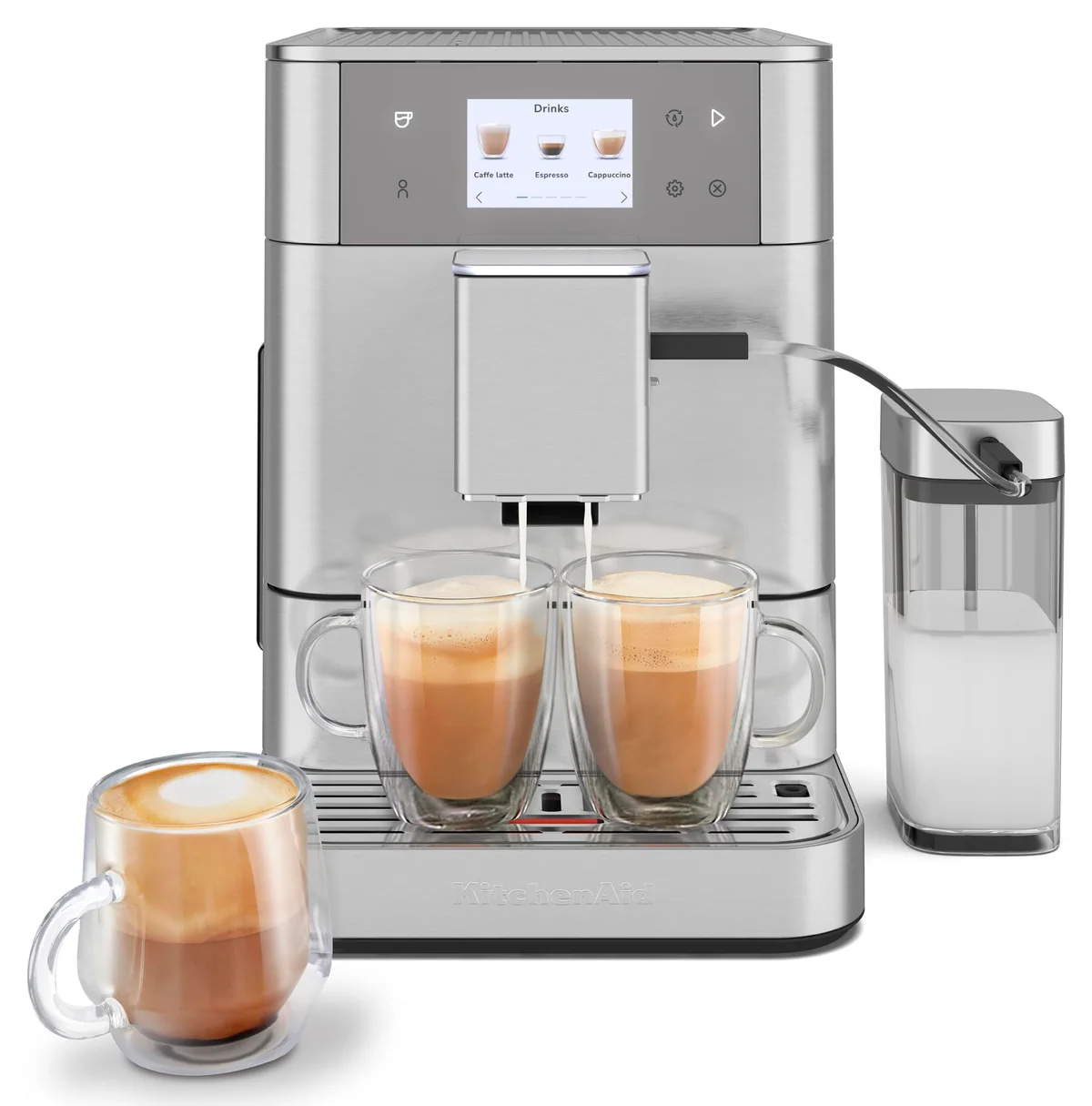
The KF7, the KitchenAid its own most knowledgeable advocates actually recommend.
The same brew unit, grinder and dose as the KF8 with the milk hose and the drink-order control, at less money.
Failure reports inside the first four months are frequent enough to notice, and one detailed warranty account runs to six weeks at a repairer and the same fault two days after the machine came back.
Note what the listing itself says about milk: you place the hose into a separate container of your choice, which is a graceful way of describing a machine that does not ship with a carafe and is also the arrangement most owners end up preferring.
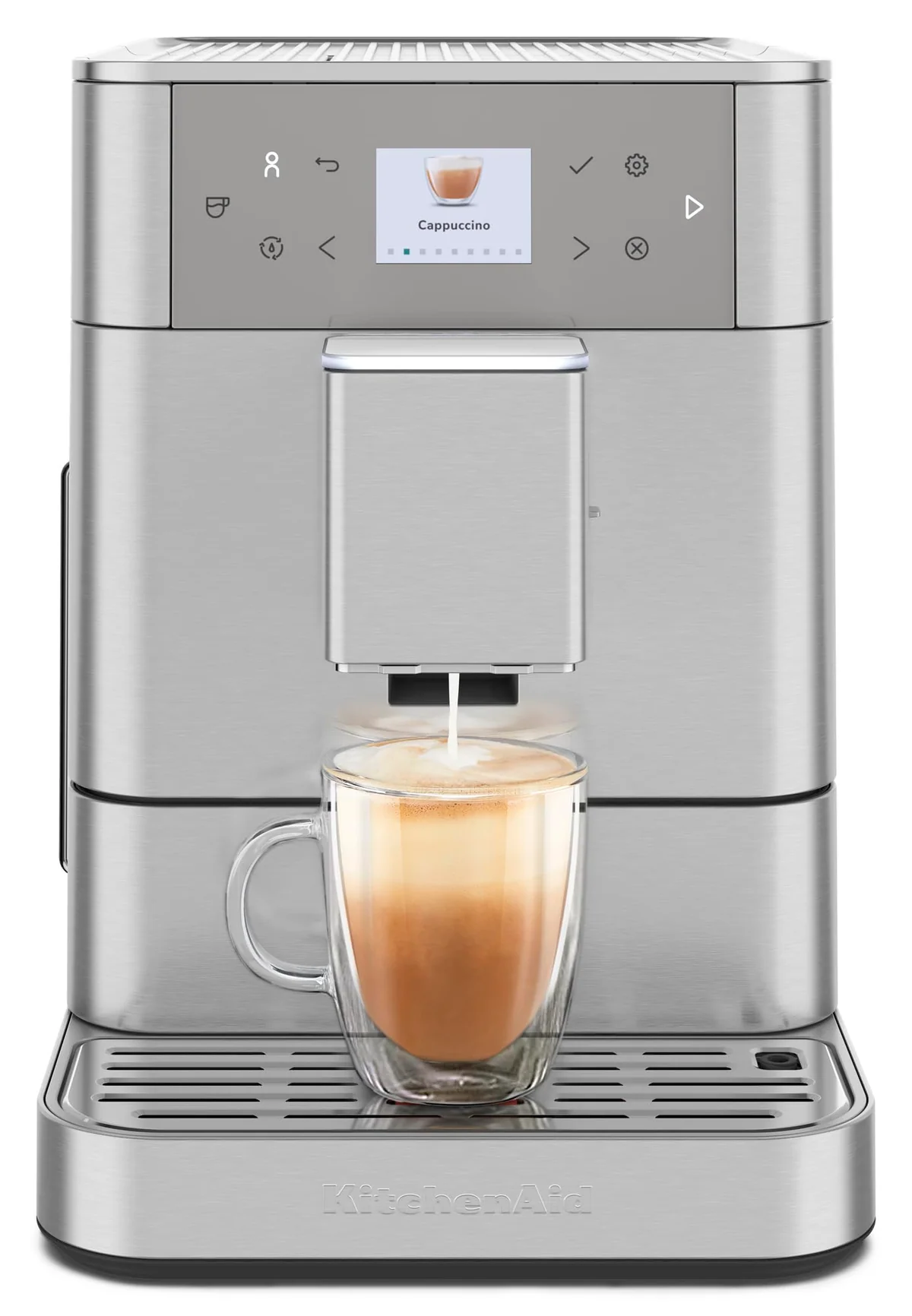
The KF6, the cheapest way to a fifteen-gram dose from a machine with a removable brew unit.
Same Swiss brewing hardware as its siblings, a removable hopper, and espresso that owners with manual gear on the same counter call genuinely strong.
No milk container is included, the milk temperature is fixed at a level KitchenAid says is deliberate, and the foam is too light for a proper cappuccino.
The listing is straightforward about the first of those, promising fifteen recipes and a milk hose you drop into your own container. Home Coffee Expert's testing put the maximum dose at fifteen grams and reached its best result at the second-finest grind with strength at maximum and volume short, which is the recipe worth stealing for any machine in this family.
Bosch, and one mislabelled milk system
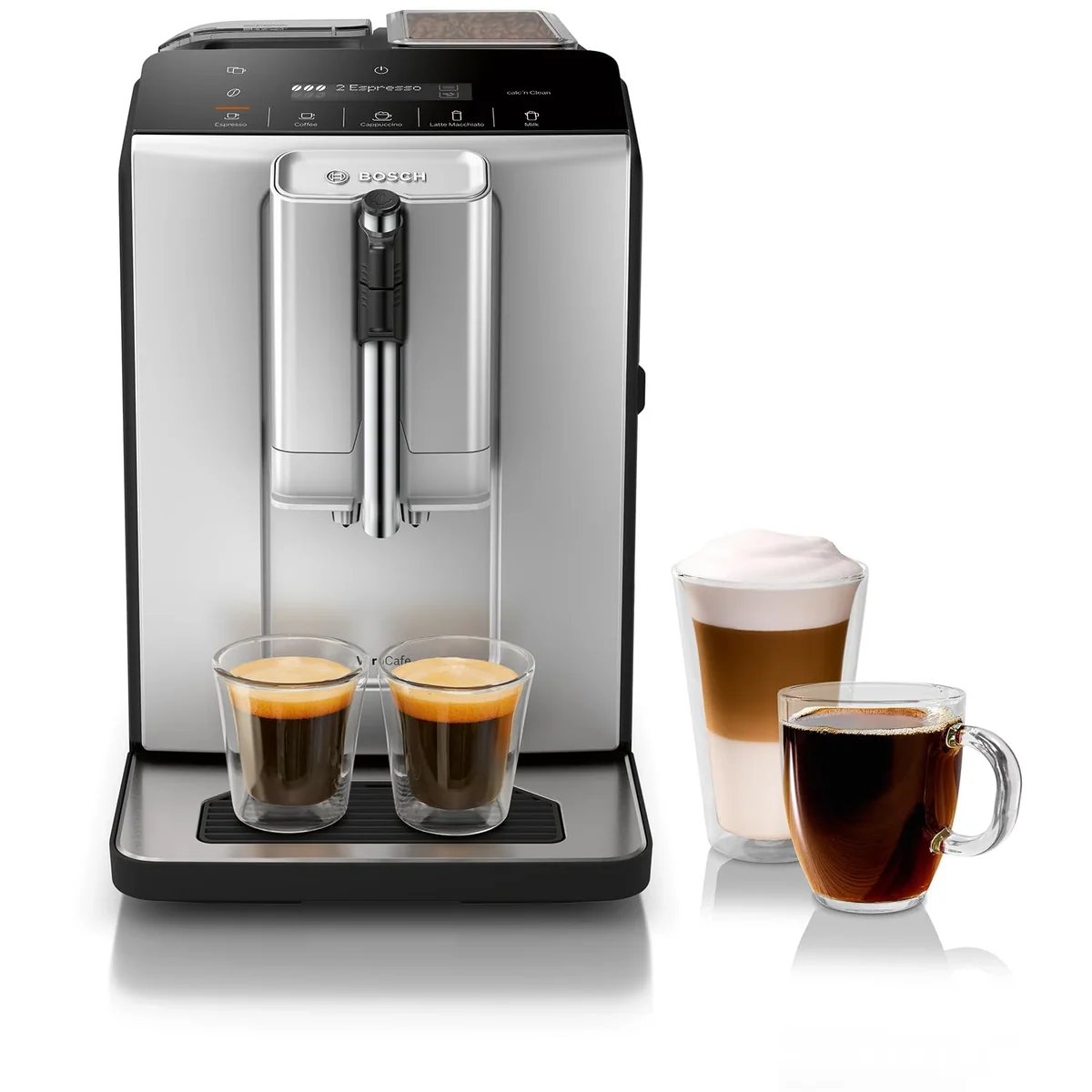
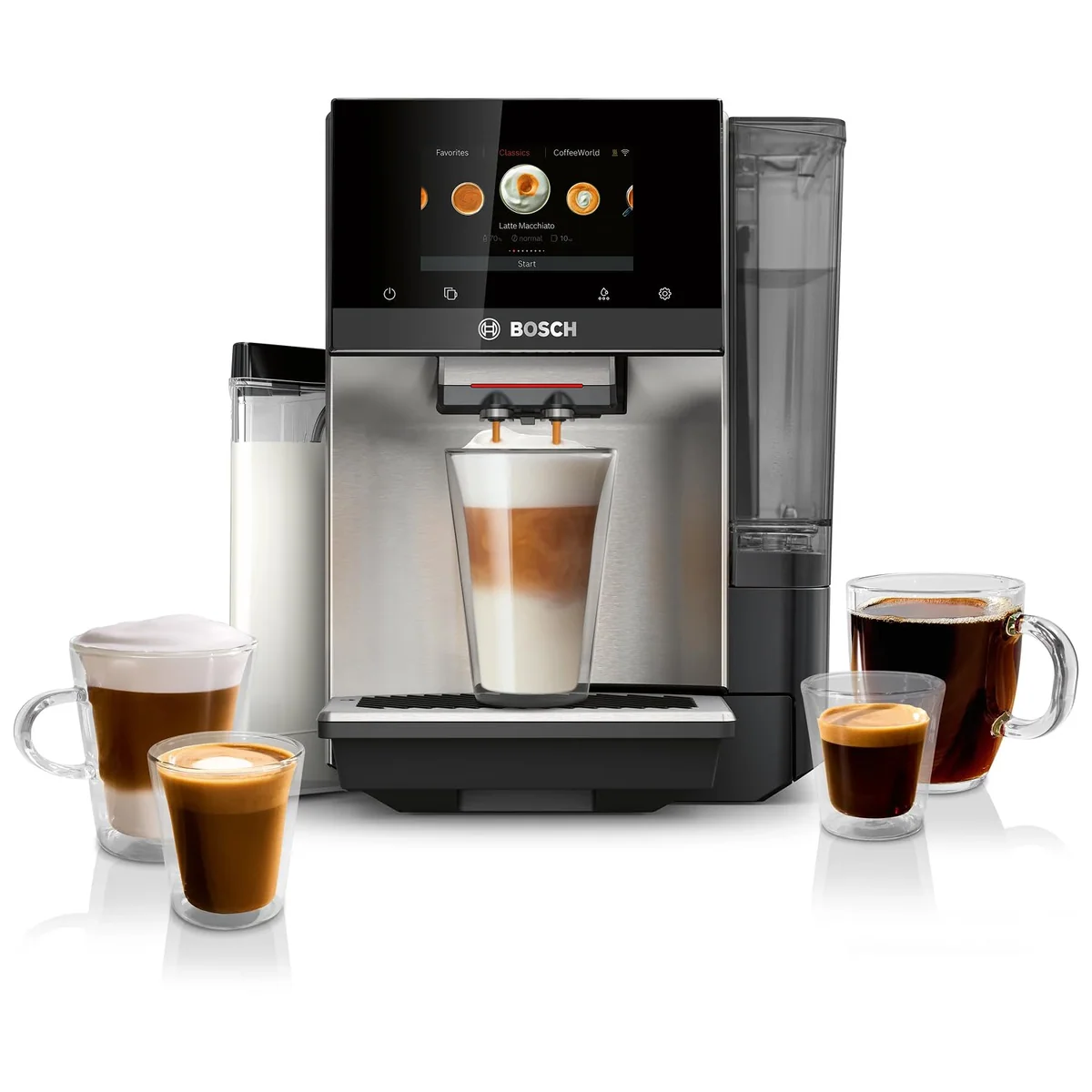
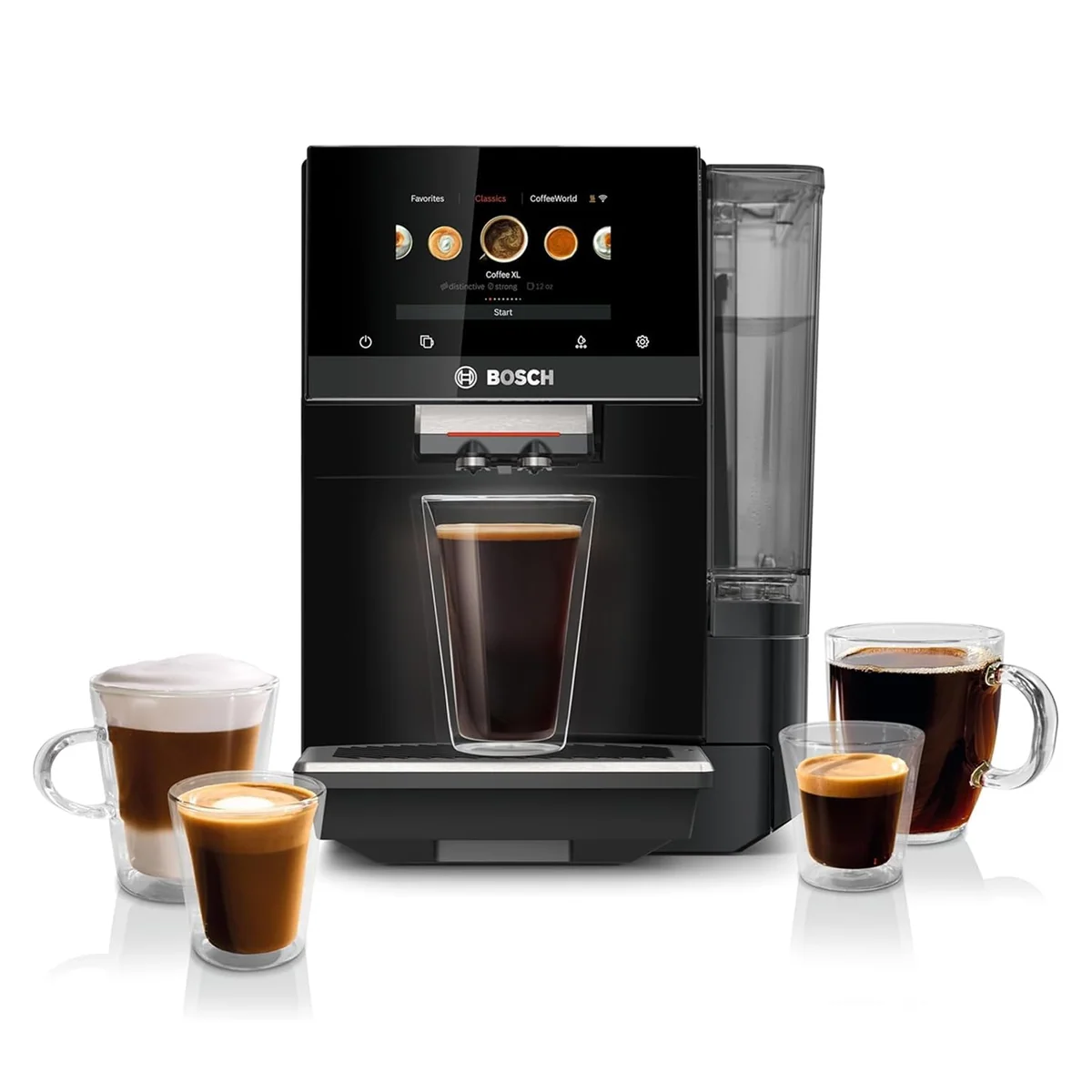
The Bosch 300 Series, a narrow four-drink machine that captures its grounds internally and asks nothing of you.
One-touch espresso, coffee, cappuccino and latte macchiato from a machine under ten inches wide, with a brew unit that pulls out of the front for rinsing.
The product title promises a steam wand while Bosch's own description underneath describes an in-cup frother, and there is no temperature setting anywhere on the machine.
Those two sentences sit on the same page: "Grinder and Steam Wand" in the title, "Milk Express in-cup frother" and "silky milk froth made directly in your cup" in the description. They describe different appliances for different buyers, and the consequence turns up in four separate owner reviews complaining that the milk is not hot enough, with one adding that they went back to a standalone frother for lattes.
The Bosch 800 Series in stainless, the version that ships with the integrated milk container.
This is the listing that includes the milk adapter and container, and adds a coffee pot function and a cup warmer the black machine does not list.
The pot itself is not in the box, and the owner sample behind its rating is small enough to be a rumour rather than a consensus.
The box contents are the real difference between the two 800s, and they are printed in the bullets if you look: adapter and integrated container here, a single connection hose on the black one.
The Bosch 800 Series in black, the machine to buy if the cup matters more than the fittings.
Owners who have run Philips, Jura and Saeco machines alongside it rate this one's coffee above all of them, and its bare milk hose drops straight into whatever carton is already in your fridge.
There is no bypass chute for decaf, so one afternoon decaf means emptying the hopper, and owners report warming their milk separately.
One buyer replacing a failed Jura Z8 says the coffee is stronger and better tasting on fewer beans, while another lists the temperature as her main gripe and now microwaves the milk first. Both accounts are on the same listing, which is a fair summary of this machine: excellent coffee, warm milk, and a bill that only makes sense on a promotion.
The rest, including two machines nobody has tested
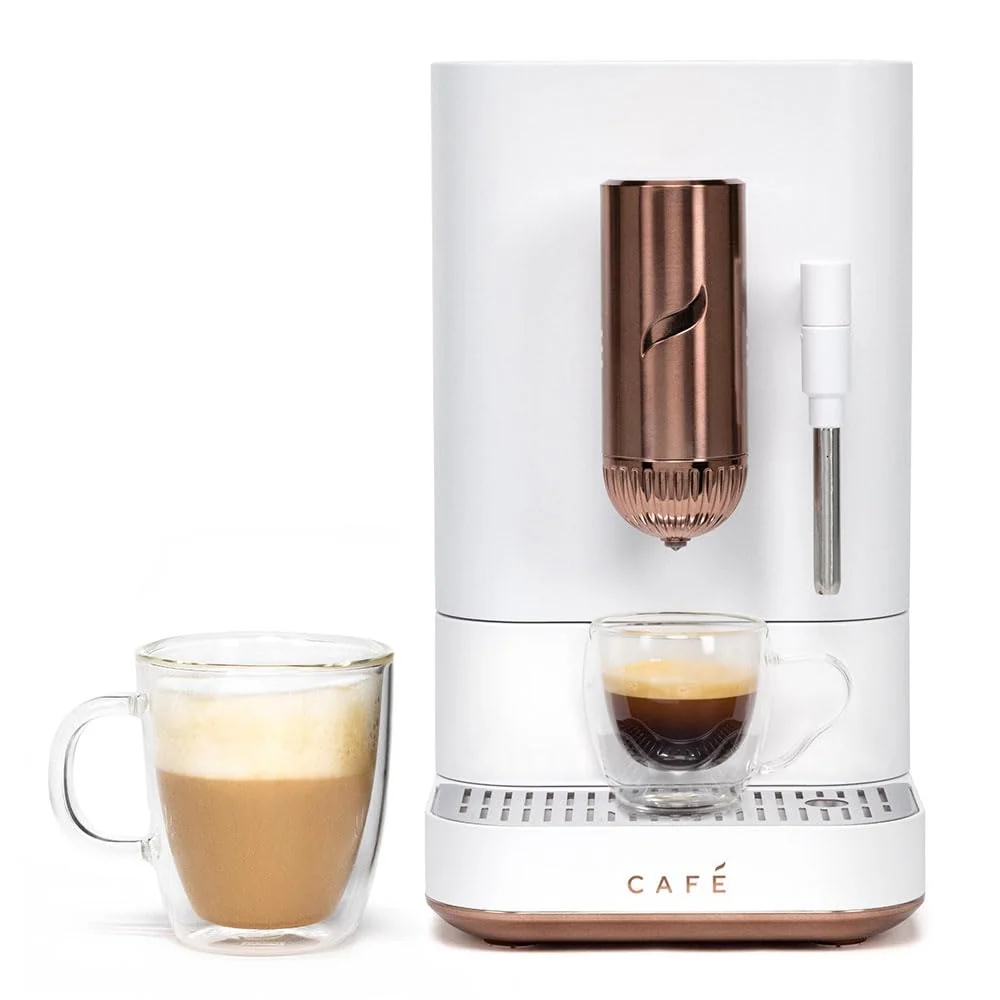
The Café Affetto, seven inches wide and app-tunable, for a pod drinker with no counter space.
A drink lands in under ninety seconds from a machine that barely takes more counter than a Nespresso, and an ex-Starbucks barista rates its shots once the grind is set.
Failure reports cluster at twelve to fifteen months, which is immediately after the one-year warranty ends.
The reviews on this listing include a machine dead at two days, an add-water light blinking on a full tank at five days, one that stopped working at seven months with no warranty in either country after a cross-border purchase, and one that broke down twice inside thirteen months. Set against that, a reviewer who put a brand-new one through its paces found the wand tilts only to the right and delivered milk that felt hot to the touch but arrived lukewarm, which is a design limit rather than a fault. Buy it on a discount with a multi-year protection plan, or buy something else.
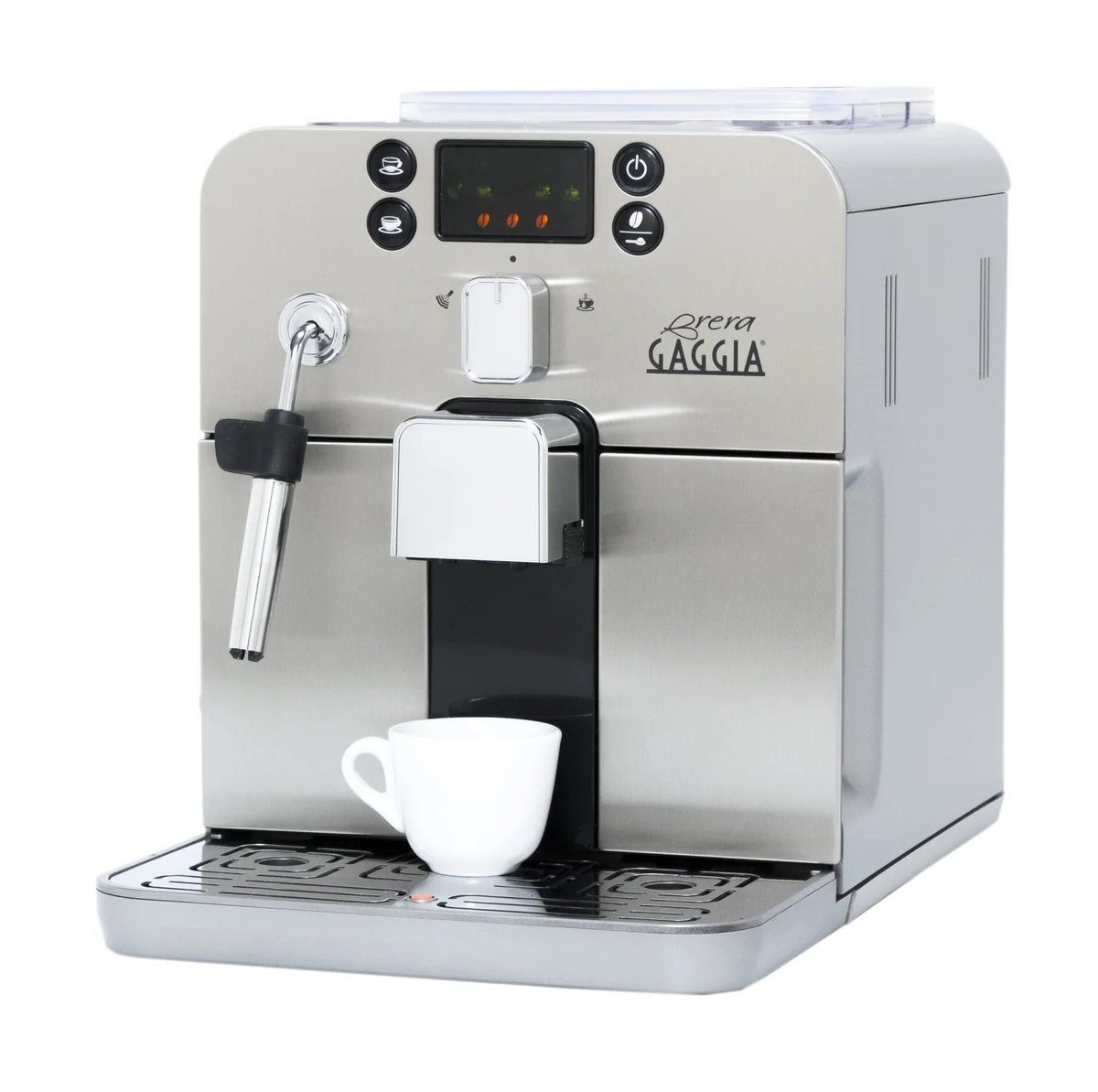
The Gaggia Brera, a fifteen-year-old compact design that still fits under a wall cabinet.
Genuinely small, front-loading, with a removable brew group and a huge installed base of owners and spare parts behind it.
Long coffees are made by pushing more water through the same puck, the wand is fully manual, and the warranty runs one year.
Its 3.8 average across more than fifteen hundred ratings is the most honest number on its page, and so is the cup clearance of 3.25 to 4.5 inches, which rules out most travel mugs. Whether it is still a buy depends entirely on what it is asking today, because everything good ever written about the Brera was written about a cheap machine.
The GarveeTech one-touch, a genuine bean-to-cup at the very bottom of the category's price range.
It has the thing that matters structurally, a removable brew unit, alongside six one-touch drinks and an adjustable grinder that owners say they got dialled to their taste.
There is no temperature adjustment at all, one of its eight written reviews is a milk frother that died within weeks, and nobody has owned one long enough to say how it ages.
The owner who lost the frother was fair about it, noting the machine works great if espresso is all you want, and a second owner names the missing temperature control as the reason a month of drinks came out inconsistent. The listing meanwhile repeats "20 Bar Pressure" ten times, which is a pump rating rather than the pressure at the coffee, and is the subject of our piece on what that number does and does not tell you.
The Kndko, a grind-and-brew with a real manual steam wand at a price where nothing else has one.
A genuine automatic brew group that feeds, presses, brews and ejects the puck, with milk temperature and texture handed back to you rather than fixed by a carafe.
It has a handful of ratings, no published dose, tank size or warranty length, and nobody outside Amazon has tested one.
Its listing also sells one-click cappuccino two bullets before describing the milk system as a wand you use yourself, and only one of those can be true. If the budget is what brought you to the bottom of this page, whether a cheap machine from an unfamiliar brand is a safe buy is the piece to read before you order.
How Espresso Den put this together
We have not had any of these thirty-three machines on a bench, and nothing above is presented as our own measurement. Every figure quoted here belongs to whoever produced it and is attributed where it appears: dose weighings from retailers and independent reviewers, temperature readings taken by owners with their own thermometers, and the manufacturers' own specification and support pages where those contradict the marketing.
What this page is built from is each product's listing read against itself, the customer reviews attached to those listings, and the long-form reviews and owner threads behind our individual verdicts on each machine. Where sources disagree, and on temperature, dose and foam quality they disagree constantly, we have printed the disagreement rather than the tidier number. Where a listing contradicts its own description, as the Bosch 300 and both Philips 5500 renewed pages do, we have said which half the owners describe.
Two things shaped the ordering. First, machines whose ratings rest on a handful of buyers are treated as unproven rather than good or bad, which is why the two newest budget entries sit where they do. Second, a machine's own review pool is weighted against the review pool of its siblings, because a brand-new listing with a dozen ratings tells you far less than the same brew group's record across several thousand. More about how the site works is on our about page, and the rest of our coverage sits in the resources index.
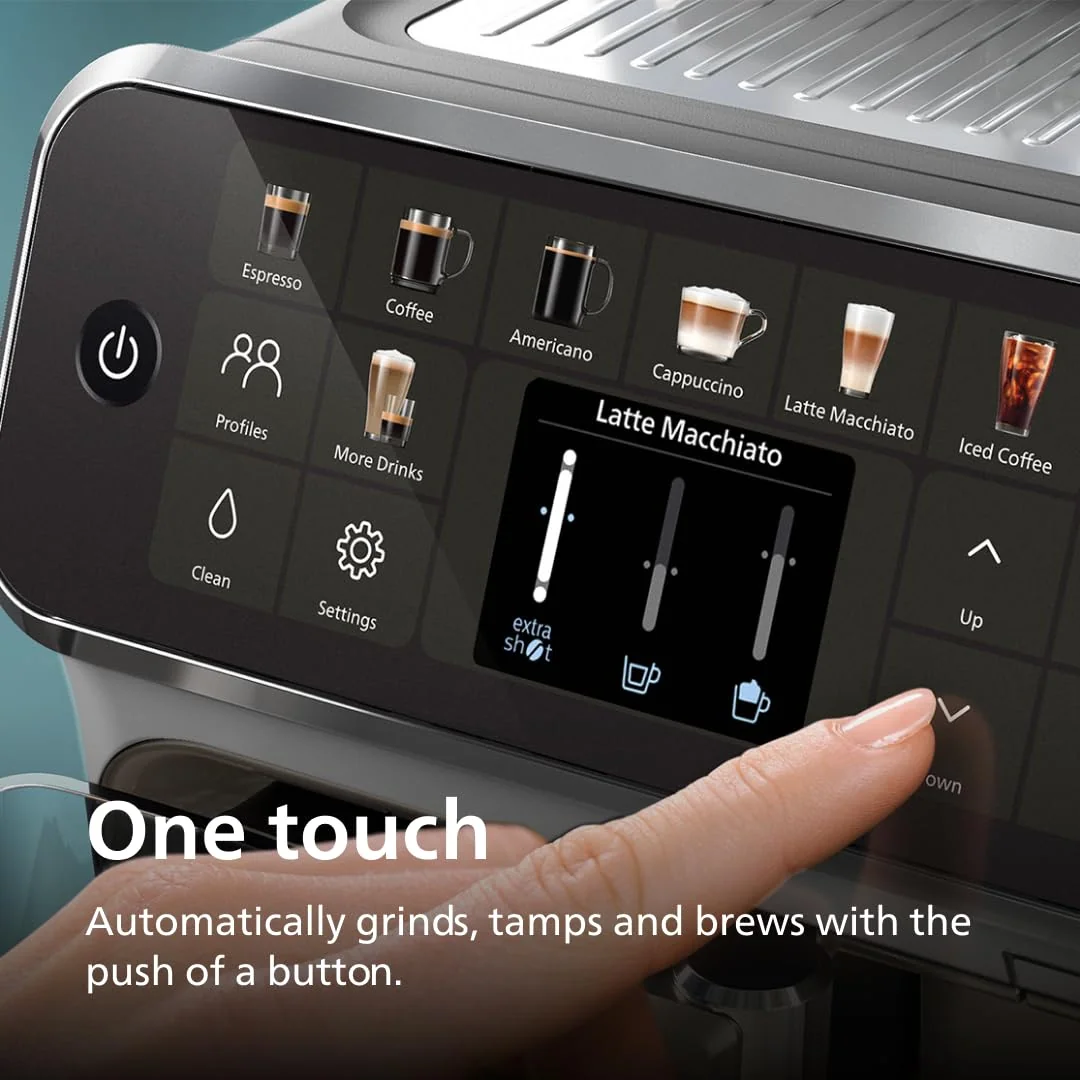
How to read a spec sheet in this category
Almost every number on a super-automatic box is either unfalsifiable or irrelevant. Bar pressure describes a pump rather than the coffee. Recipe counts are reached by counting the same drink twice with plant milk, or with an extra shot, or as two cups at once. Grind steps are the cheapest specification on earth to inflate, and a Jura at flagship money offers seven of them while a budget machine claims thirty. Here are the four things that actually decide what you get.
| Family | Reported maximum | What that means in the cup |
|---|---|---|
| Philips LatteGo, 1200 to 5500 | 6 to 9 g documented, 8.8 g weighed | Mild by design, and excellent under milk |
| De'Longhi Magnifica Evo and Start | around 10 to 13 g | Noticeably fuller than a Philips, still short of a café double |
| De'Longhi Dinamica Plus, Eletta, Rivelia | up to about 15 g | The strongest shots available on this page |
| KitchenAid KF6, KF7, KF8 | up to about 15 g | Owners with portafilter machines rate the espresso |
| A café double, for reference | 16 to 18 g | What none of these machines are doing |
The second decision is milk, and it is the one that determines whether the machine is still in use next winter.
| System | Machines here | The daily trade |
|---|---|---|
| Two-piece carafe | Philips LatteGo, De'Longhi LatteCrema | One-touch drinks, foam tuned for cappuccino rather than flat white, and a carafe to rinse |
| Hose into your own container | KitchenAid, Bosch 800 | Nothing to store, a flush into the drip tray, and no separate jug going off in the fridge |
| Manual steam wand | Philips 1200 and 2200, Magnifica Start, Kndko, Gaggia Brera | Full control over heat and texture, at the cost of two minutes and a skill |
| None at all | Jura E4, Jura ENA 4 | Nothing to clean, and you froth milk in something else or drink it black |
The third is temperature, and the honest answer is that this whole category runs cooler than the café you are comparing it to. Some machines let you raise the brew temperature and almost none let you raise the milk, so preheat the cup, put the temperature setting to its top step on day one, and read why the milk lands where it does before you conclude your unit is faulty.
The fourth is maintenance, and it is the one people skip. Every machine here wants its brew unit rinsed weekly, its grounds bin emptied before it grows anything, and a descale on a schedule set by your water hardness, which you should tell the machine during setup rather than leaving it to assume the worst. Our cleaning and descaling guide sets out the cadence, and how long these machines last covers what happens when you ignore it.
Two last practical notes. Buy where you can return the machine after six weeks rather than four, because it takes a fortnight to dial one of these in and several of the failures on this page arrived in month four. And if a mug of filter-style black coffee is what you actually drink, read what a bean-to-cup can and cannot do about that before you spend anything at all, because stretching a ten-gram puck across twelve ounces is the mechanism behind most of the disappointment in this market.
Frequently Asked Questions
What is a super-automatic espresso machine?
It is a machine that grinds, doses, tamps, brews and ejects the puck without you touching the coffee, which is set out properly in our explainer .
Are super-automatic espresso machines worth it?
They are worth it if you drink two or more milk drinks a day and would otherwise buy them out, and they are a poor trade if you enjoy the process, which is the argument in our piece on the question .
Why does my espresso come out watery?
Usually because a small dose is being stretched over too much water, so the fixes are maximum strength, the shortest volume, a finer grind adjusted while the burrs are turning, and a medium-dark bean that is not oily.
Which is the quietest super-automatic?
Philips's SilentBrew machines and KitchenAid's certified-quiet models are the two credible answers, and our quietest page puts measured figures against them.
How do I make decaf without emptying the bean hopper?
Most machines here have a pre-ground bypass chute that takes a single scoop, and the ones that do not, including the Bosch 800, leave you either emptying the hopper or buying a machine with two of them.
Which Philips LatteGo should I buy?
The 3300, because it carries the same brew group and grinder as everything above it and the quietest grinder Philips has made.
Is a Jura worth twice the price of a KitchenAid?
Nobody who owns both claims the taste gap matches the price gap, so the honest reasons to choose Jura are the chassis, the quiet and the service network rather than the cup.
Is a renewed or refurbished machine a safe buy?
It is safe when the discount is genuinely large and you test the milk system, the grinder and a full descale inside the return window, which is covered in our guide to renewed machines .
Do the iced settings actually brew cold coffee?
Only the Eletta Explore's cold extraction does, and every other iced preset here brews warm coffee that you pour over ice you supplied yourself.
Our Top Pick
The Philips 5500 LatteGo is our #1 recommendation — four listings, two colours and two conditions all wrap the same small brew unit, so the only question worth arguing about is what you are paying for the screen..
Check Price on Amazon: Philips 5500 LatteGoSources (9)
- Amazon listings and customer reviews
- Owner and reviewer video, 1 channel
- Philips — Article — us.home-appliances.philips
- Seattlecoffeegear — Article — www.seattlecoffeegear.com
- Tomscoffeecorner — Article — tomscoffeecorner.com
- Homecoffeeexpert — Article — homecoffeeexpert.com
- Coffeeness — Article — www.coffeeness.de
- Philips — Article — www.usa.philips.com
- Reviewed — Article — www.reviewed.com