The Café Affetto brews better than its price bracket suggests and breaks sooner than its price bracket allows.
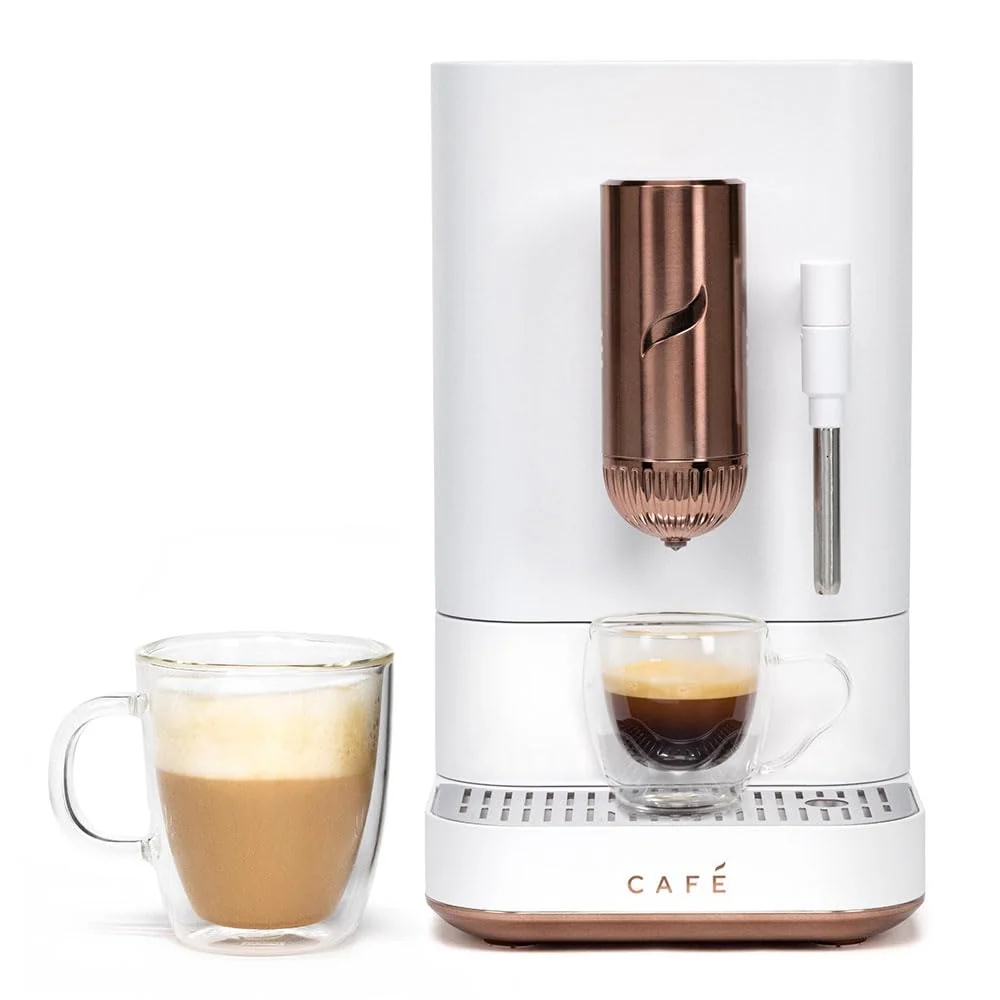
Buy the Affetto only if you are paying well under its usual sticker, you drink one shot at a time, and you add a cheap multi-year protection plan, because the coffee is good and the one-year warranty is not.
Based on 481 owner ratings, 6 owner discussions and 2 other sources. We have not tested this machine ourselves.
We earn a commission if you buy through our links, which does not affect what we say.
Read how this site works →
The bet, stated plainly
Every purchase of this machine is a wager that yours is one of the ones that reaches its second birthday, and the record says that wager is close to even money rather than a sure thing. What changes the odds is the price you pay and the plan you attach, which is why the recommendation is conditional rather than yes or no. Under five hundred, with a cheap multi-year protection plan, a bag of non-oily medium-dark beans, a tuned recipe in the app and the grounds bin emptied daily, the Affetto is a pretty, narrow, quick machine that makes coffee people are glad to drink. At the top of its range, with a single year of cover and a support line that has told owners it is not cost effective to help them, it is the wrong machine and there is a better-built one on the same shelf.
Buy the Affetto only if you are paying well under its usual sticker, you drink one shot at a time, and you add a cheap multi-year protection plan, because the coffee is good and the one-year warranty is not.
Best for: Café is GE Appliances, the machine is seven inches wide and genuinely good at a shot of espresso, and the owner record says the interesting things start happening around the month the warranty ends.
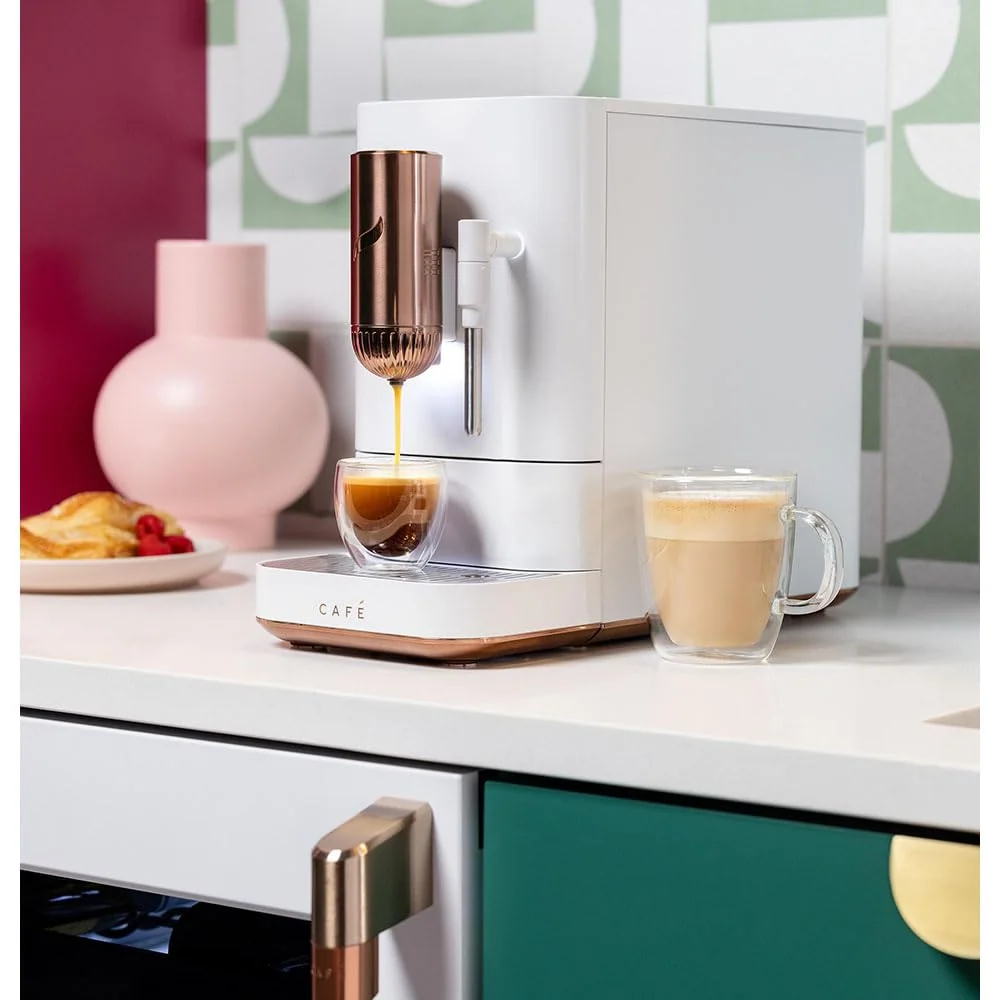
Start with the thing half the buyers do not know they are buying. Café is GE Appliances' design line, so the Affetto is a GE product, sold with GE's service policy behind it. One Amazon owner worked this out only after the machine died on day two: "Btw if you aren't aware the Cafe line is made by GE. I won't be buying anymore GE products after this let down." That is not a small detail, because when this machine goes wrong the answer you get depends entirely on whose repair network stands behind it.
Now the good news, and it is real. An owner who used to pull shots at Starbucks wrote that once you set the grind level on the machine itself, "the espresso is fantastic." Another, who also owns a Picopresso and a Capresso pump and therefore knows exactly what he is giving up, called the shots balanced and the machine "incredibly fit for purpose" at fifteen months of four-to-six shots every morning. A third put it in the terms most people actually shop in: good espresso drinks at home "with Keurig-like levels of ease." The Affetto is not a toy, and the people who love it are not easily impressed.
Here is the sentence this whole review turns on. The same enthusiastic five-star owner who recommends the machine also did the arithmetic against the Nespresso pods he stopped buying, and concluded: "It's about 15 months for a break even point." Fifteen months is also where the failure stories start piling up. Espresso Den put those two numbers side by side and could not unsee it: on this machine, the month you finish paying yourself back is roughly the month other owners say their control board, their spout or their water sensor gave out, and it is three months past the end of the warranty.
Key Specifications
Five buttons, five grind steps, one shot at a time
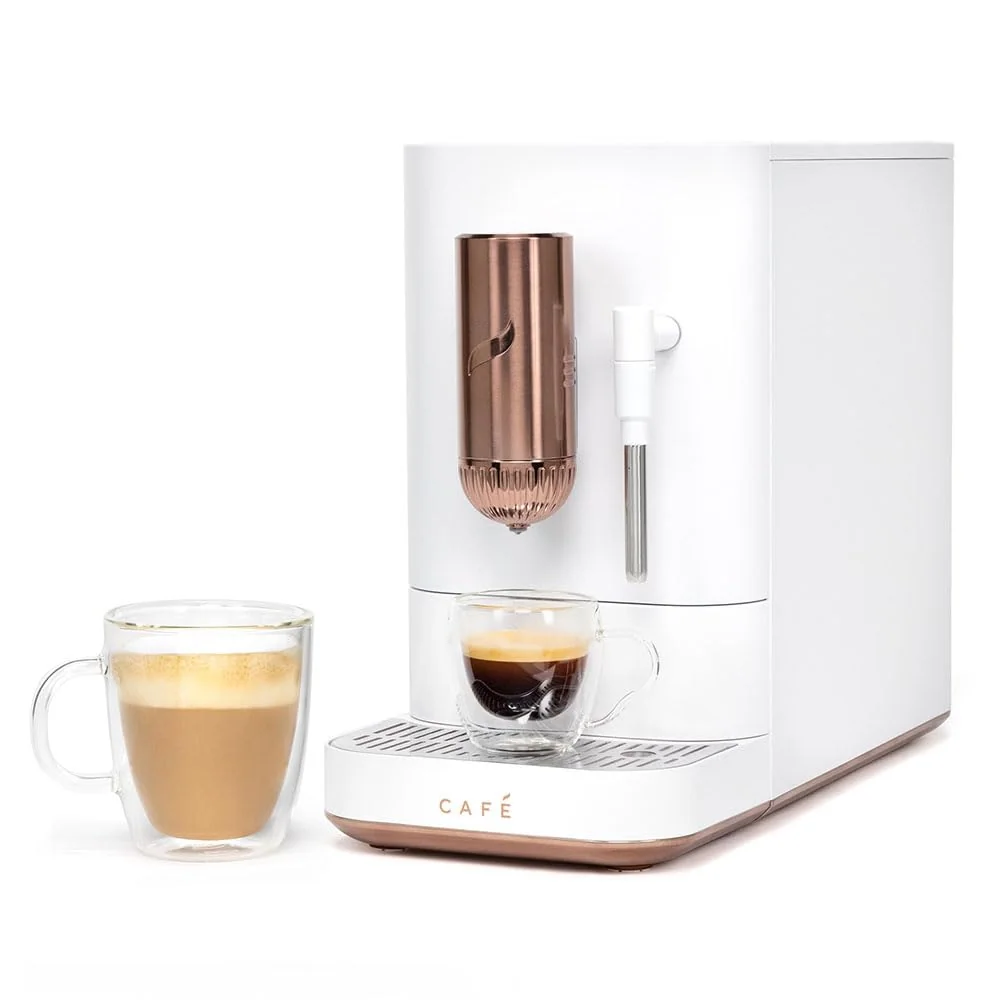
The Affetto's front panel offers espresso, Americano, lungo, My Cup, hot water and steam, and it will put a drink in front of you in under ninety seconds. My Cup is the programmable slot, defaulted to ristretto and switchable through the app to doppio, triple, lungo or a Red Eye. That is the entire menu. For context, a Philips 4400 offers twelve hot and iced drinks and the 5500 offers twenty, a De'Longhi Magnifica Evo does seven one-touch recipes, and a KitchenAid KF8 does forty-odd across six saved user profiles. The Affetto has no user profiles at all and no cold-extraction mode, though owners happily make iced lattes by pulling a shot over ice.
The grinder is a stainless conical burr with five grind steps, coarsest to finest. Five is thin. Philips gives you twelve on the same shelf and De'Longhi thirteen, and on this machine the owners who got it dialled in mostly just went to the finest setting and stayed there, which tells you how much of the range is usable. You adjust it while the burrs are running, which is normal burr-grinder practice and is what Café's own how-to video instructs.
The grinder also comes with a prohibition that matters more than the step count: no oily beans. Owners are unanimous on the consequence rather than the rule. One noted the machine "cannot handle any oily beans (which are usually the best kind of coffee)"; another, two years in, said darker than medium roast brews nicely but anything oilier "will surely gum up the grinder." If you buy shiny dark roasts by habit, read which beans actually work in a bean-to-cup machine before you buy the machine, because this restriction narrows the shelf you can shop from. The hopper is fussy too: one owner reports having to stir beans down into the grinder regularly or the machine complains it has none.
The structural limit nobody advertises is that this is a single-serving machine. It pulls one shot at a time, full stop. One owner who came from a machine that could pull two at once called it "kind of a pain if you have more than one coffee drinker in the house," and another drew the connection to lifespan directly: for people wanting two or three shots, "this machine is going to be slow, and it will wear out faster." Set that against the KitchenAid KF8, which will brew two milk drinks simultaneously, and you can see which end of the market the Affetto sits at.
The app, which is either fine or the whole problem
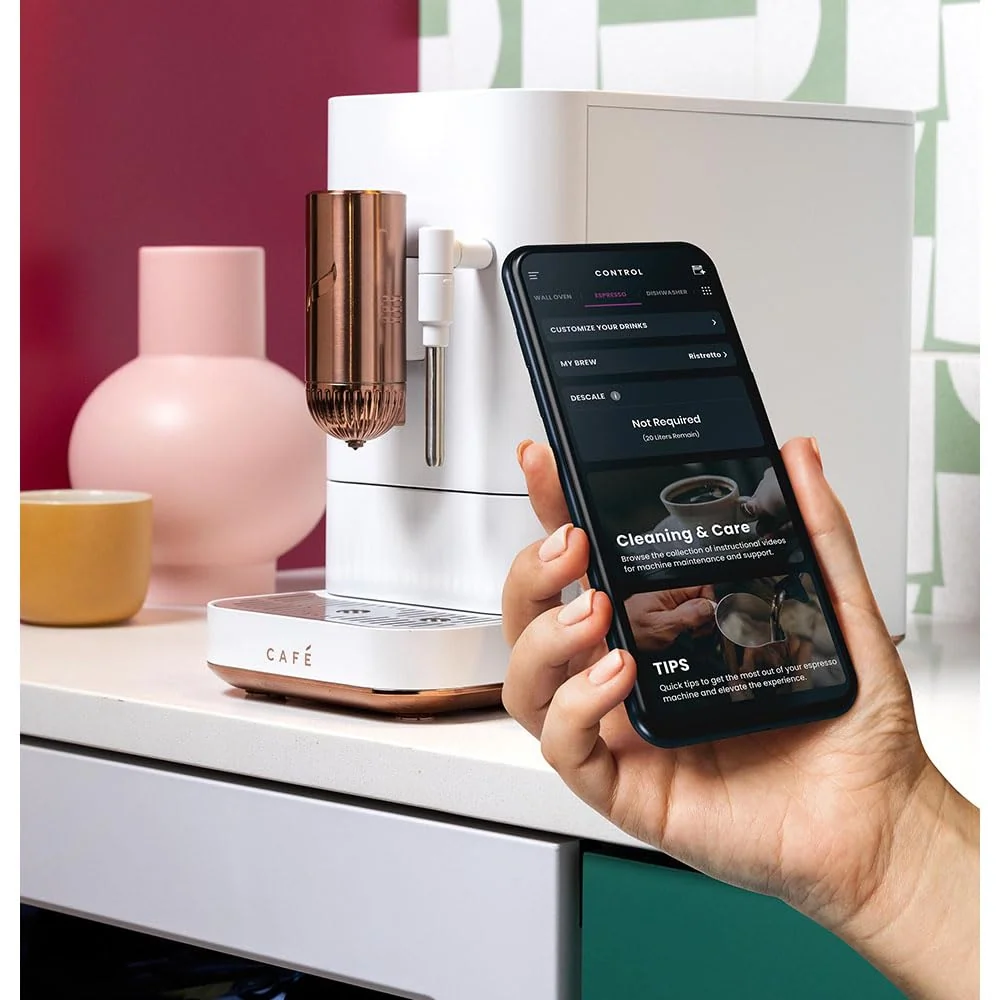
The Affetto connects to GE's SmartHQ app, which is where volume, strength, shot temperature and grind time live. Owner opinion splits harder here than anywhere else on the machine. Two years of daily use and "no problems with the app," says one. Another finds it works but would not want to need it every time. A third likes the control and lists two irritations: app updates that reset his presets to default, and a total disconnection after the machine was unplugged for a week during a move. A fourth returned the machine over it, and his complaint is the sharpest one available: "The app never worked. The whole selling point is you could customize your drink from an app."
One practical note that keeps rescuing people: the app does not find the machine over your network by itself. As one owner explains, you download it, enter manual setup, and type the code from the back of the unit. And it is worth knowing that the machine is not helpless without a phone, because Café's own instructions show you how to set a custom dispense volume on the appliance: hold any function button for three seconds until it beeps twice, stop the pour where you want it, press again for two more beeps. What you cannot reach from the panel is the finer tuning, and on this machine the finer tuning is not optional.
Strengths & Limitations
Strengths
- Tuned properly, it makes a balanced, satisfying shot that owners with manual gear on the same counter call very decent for a button press.
- A drink lands in under ninety seconds and the machine auto-rinses the spout and wand every time it wakes up.
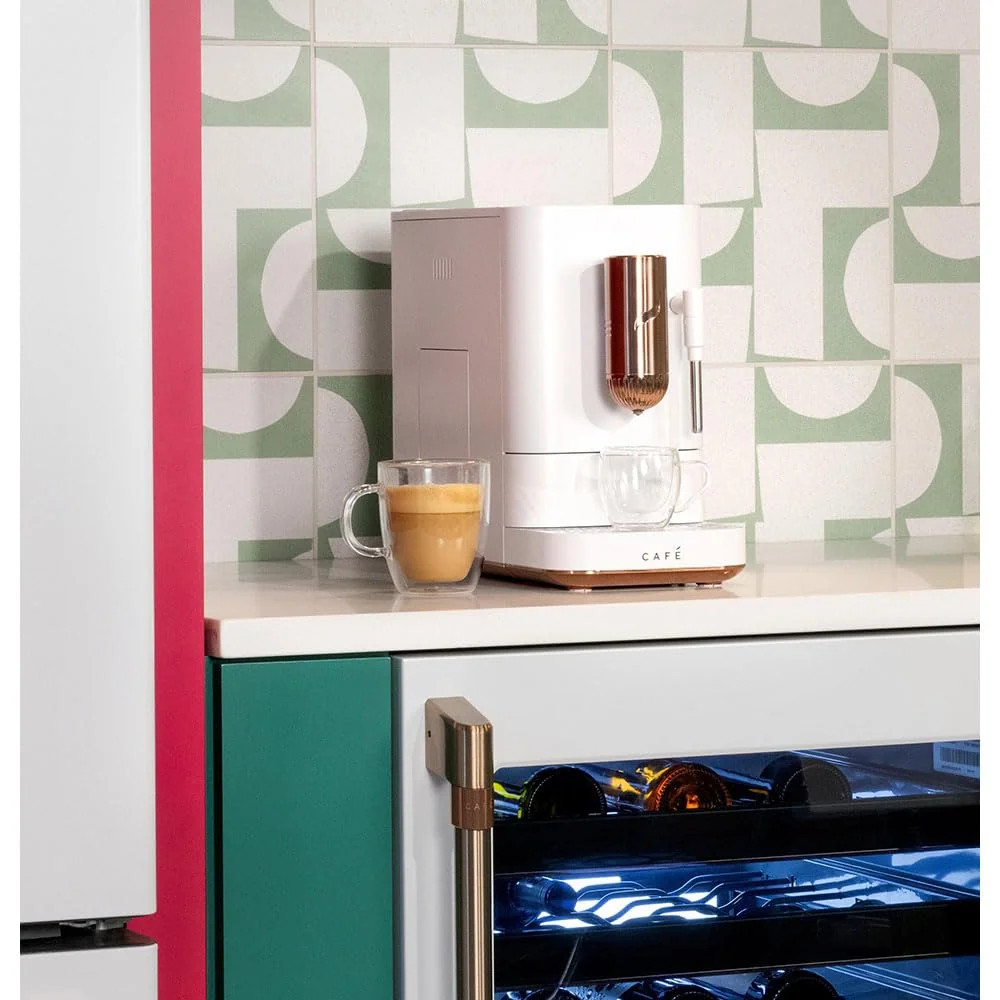
- At just over seven inches wide it barely takes more counter than a pod machine, which is why several owners bought it in the first place.
- The adjustable spout height and removable drip tray genuinely accommodate everything from a demitasse to a travel mug.
- The app exposes shot volume, grind time and brew temperature, which is more real control than most machines at this level hand over.
- People coming from Nespresso consistently describe the coffee as a clear step up.
Limitations
- Failure reports cluster at twelve to fifteen months, immediately after the one-year warranty ends, and owners describe GE as unwilling to service small appliances afterwards.
- A known water-sensor fault makes the add-water light blink on a full tank and blocks brewing entirely until you dry out a hidden hole in the tank housing.
- The shots are watery until you go into the app and rebuild the recipe yourself.
- The manual steam wand only tilts to the right, is too short for the supplied pitcher in some setups, and produces milk that owners call too inconsistent for latte art.
- The 1.2 litre tank loads from the top at the rear, which means sliding the machine out from under a cabinet every time it needs water or beans.
- It brews one shot at a time, which is slow for a two-coffee household and, by one owner's reasoning, harder on the machine.
- Only five grind steps, against twelve or thirteen on the Philips and De'Longhi machines it competes with.
- Oily dark roasts are off the menu because they gum up the grinder.
- Grounds spatter inside the waste bin and will grow mould if you leave them for a few days.
- It is loud enough that one tester heard it across the house and one owner read the noise as a sign of impending failure.
- Hot water dispenses from the steam wand, slowly and messily, rather than from the coffee spout.
The cup, the milk and the racket
Out of the box, the shots are weak. The most specific owner on this point is unambiguous: "The shots before customizing the well shot are very watery and half assed." His fix, which is the best recipe anyone has published for this machine, is to raise the temperature, increase the grind time and cut the volume to about three quarters of an ounce, which he says produces a full-bodied shot with real crema instead of something loose and thin. That is the crux of the app dependency, and it is why "balanced extraction" as a listing phrase is a description of what the machine can do rather than what it does on arrival. If your shots stay thin after tuning, the causes are usually generic to the format and we cover them in why bean-to-cup espresso comes out watery.
Tuned, the ceiling is real but respectable. The most experienced long-term owner describes it precisely: light roast will not give up much extraction, medium roast wants a higher brew temperature, darker than medium brews nicely, and his summary is the fairest sentence written about this machine by anyone. "It's not really espresso, but it's close enough for a tasty drink." An owner with manual gear on the same counter agrees from the other direction, listing as honest cons that it will not pull as much crema as other methods and that teasing out the tasting notes of a single origin will be tough. None of that is a scandal; it is the physics of the whole category, where the higher water-to-coffee ratios these machines prefer make a convincing ristretto very hard to reach even on expensive models. If you are new to this trade-off, what a super-automatic actually is lays out what you are handing over to the machine and what you get back.
The steam wand is the weakest thing here
The Affetto has a manual steam wand, not an automatic milk system, and that single fact causes more disappointment in the owner record than the reliability does. Buyers arriving from pods expect the machine to make the milk; one returned it saying plainly that "the milk steamer isn't automatic like my nespresso is." Nearly every rival at or above this price uses a carafe or a milk hose instead, and if you have not thought about which you would rather live with, the wand versus carafe question is worth settling before you spend anything.
Then there is how well the wand works, and here the evidence genuinely conflicts. The ex-barista found the steamer "just as good as the several thousand dollar espresso machines available." The February 2022 editorial tester found the opposite: the wand does not pull out of the machine and only tilts to the right, making the angle for a proper vortex hard to find, and worse, milk that felt hot to the touch as the manual instructs came out "room temperature or lukewarm at best" no matter how long the wand stayed in. Against that, an owner steaming for cortados reports heating around 300 mL to at least 150 degrees, which is a perfectly serviceable number. Espresso Den's reading is that this is technique-sensitive equipment sold to people who were told it was automatic, and it is the single most common way this purchase disappoints. If your milk is coming out cool, the causes are worth ruling out systematically, and we go through them in why the milk comes out lukewarm.
Two other wand notes, both from owners rather than the manual. If you are drowning in foam, removing the stainless sleeve from the wand reduces it, a tip that circulated on Reddit and that Café's own video confirms is a removable part. And the wand is short: one owner cannot fit the supplied pitcher under it for small lattes and uses a different vessel. On latte art, the verdict is settled and unkind: the milk is "too inconsistent. Forget learning latte art with this."
The hot water button is a genuine misfire. Water comes out of the steam wand rather than the coffee spout, slowly and messily, and the tester who tried it went back to a kettle after one attempt. The Americano program, which pours espresso and then water into the same cup automatically, works properly, so this only bites if you wanted plain hot water.
It is loud, and there is no number for how loud
Nobody has published a decibel figure for the Affetto, and Espresso Den is not going to invent one. What exists is consistent testimony. The 2022 tester wrote that the heating, grinding and rinsing carried across her house, that steaming set off "an incessant banging noise in the machine," and that the automatic shutoff makes a big, startling noise. One owner heard the transition from espresso to steam and bought an extended warranty on the strength of it, which is a telling reaction: the noise reads as a mechanical warning rather than an annoyance.
For scale, in a bench test of ten bean-to-cup machines with the microphone at 80 cm, the quietest grinder peaked at 66 dB with a 52 dB pump, on the KitchenAid KF8, and the loudest hit 74 dB. The useful lesson from that test is that decibels are only half the story, because two machines at the same level can differ enormously in how unpleasant they sound, and a high-pitched machine grates at any volume. Machines actually engineered for this exist: the KitchenAid KF8 carries a Quiet Mark certification, and Philips builds Silent Brew into the 4400 and 5500. If an early-morning kitchen with a sleeping household above it is your real constraint, start at our pick for the quietest super-automatic instead of here.
Living with it: the tank, the tray and the mould
The 1.2 litre reservoir loads from the top, at the back, and this is the most-complained-about design decision on the machine. "The water reservoir is actually on the back of the unit and you have to lift it out from the top so if it's under your cabinet you'll need to pull unit out to do so," writes one owner. The fullest account is grimmer: the machine's depth means it is "almost teetering at the edge of the counter before you have enough clearance to get to the water reservoir," beans require the same manoeuvre, and that owner ended up mounting it on a rolling cutting board to make daily use possible. KitchenAid solved the identical problem by putting its machine on wheels. Capacity compounds it, since 1.2 litres is small when a household pulls four to six shots a morning, and the tank itself is described as feeling flimsy.
The magnetic drip tray is charming until you knock it off the front of the machine repeatedly, which at least one owner did. The bigger cleaning issue is the internal waste bin: wet grounds spatter onto the inside walls, and "if you don't clean out the grounds for a few days, they will mold." Empty it daily and it is a non-issue; treat it like a pod bin and it is not. Everything is hand wash only, no part goes in the dishwasher, and the brew unit comes out through a side service door via two orange tabs. Café recommends a full descale monthly or more depending on water hardness, a thirty to forty minute two-stage process, which one owner dismissed as "a ridiculous waste of time" and which a heavy user quietly ignored, descaling three or four times in fifteen months with no reported ill effect. For what that routine really involves on any machine of this type, see our cleaning and descaling guide.
What it is worth, and who should actually buy it
The Affetto has been sold across an enormous spread, and owner satisfaction tracks that spread almost perfectly. Reports on Reddit range from a little over two hundred dollars at a big-box site to a buyer who put roughly six hundred and ten on the counter, with owners at three hundred and at three hundred and twenty-five in between, and the launch-era coverage quoted figures higher still. None of those are what it costs today and you should check for yourself, but the pattern in them is the review. The buyer at the bottom of that range, who also bought a three-year protection plan for thirty dollars after reading the reliability threads, is "very happy." The buyer at the top had a blinking add-water light on day five.
Three independent owners drew the same line without prompting. One who paid three hundred said that at that price he thought it was worth it, and that anyone facing the full sticker of five to six hundred might find better options elsewhere. Another was blunter: he would not pay full price for it, but under five hundred, "I'd do it. Plus it's cute!" Espresso Den will adopt that line, because we cannot find anyone who paid near the top of the range and stayed glad about it. Well under five hundred, this is a fair machine with a known fault you can fix with a paper towel. Near six hundred, you are shopping in a bracket where a professional-minded buyer on r/superautomatic will tell you not to go below a thousand at all, on the grounds that the brew group and grinder are where cheap machines economise.
The counter-argument to all of this is the payback maths, and it is not nothing. One owner reckoned fifteen months to break even against pods; another, at a year of ownership on a machine bought for three hundred, said they had comfortably beaten a daily café latte. The rebuttal came from the owner whose machine broke twice inside thirteen months, who worked out that he had ended up paying four hundred dollars for one year of a machine. Whether the savings arrive depends entirely on whether the machine reaches month eighteen, and that is the bet. We put the general version of this question to the test in whether super-automatics are worth it.
Buy it if this is you
One drinker, or two who drink the same thing. One or two drinks a day rather than six. Espresso, Americanos or an iced latte, made from medium-dark, non-oily, ordinary supermarket beans rather than a light single origin. A kitchen where seven and an eighth inches of width is the binding constraint, since almost nothing else in this category is that narrow and it barely takes more counter than a pod machine. Coming from pods rather than down from a Breville. Paying well under five hundred, and adding the cheap multi-year plan. That buyer gets a good-looking machine that makes a decent shot in ninety seconds, and the odds are reasonable that it lasts.
Do not buy it for latte art, for light roasts, for a household that wants two drinks at once, for an under-cabinet slot given how it loads, or if emptying the grounds bin every day or two is not going to happen. And if you are buying from a US listing into Canada, understand what one owner found the hard way: GE Canada would not honour it as an import, GE US would not help across the border, and the retailer's window had closed.
What to buy instead
The most credible substitute comes from an owner who returned the Affetto after two days and bought the Philips 3200 LatteGo, calling it "a better built machine that works well and has more customization capability for your coffee at the same price point." It brings twelve grind steps instead of five, a two-piece milk system that rinses in seconds instead of a manual wand, and a parts and service network that actually exists. The De'Longhi Magnifica Evo is the other obvious landing spot, with thirteen grind settings and seven one-touch recipes. The fifteen-month clog victim went shopping for the KitchenAid KF8. If width is genuinely why you are here, work through the best compact super-automatics first, and if the budget is the constraint, our shortlist of the best machines under five hundred is where this machine has to win or lose.
There is also a school of thought worth hearing before you commit to any grind-and-brew appliance. An r/espresso commenter running an office through its fourth machine put it as harshly as it can be put: "Bringing the grinder and tamper inside the machine is the kiss of death imo." That is a minority position rather than a consensus, and we weigh both sides in whether an all-in-one grind-and-brew is a good idea, but it is the sort of thing you want to have considered before month thirteen.
The twelve-month cliff, and the blinking light that gets there first
Most reviews of this machine were written on a new one. The most thorough editorial piece anyone published on the Affetto ran in February 2022, when the product was days old in the reviewer's kitchen, and it is warm, detailed and fair about everything a fresh machine can show you. It does not mention the water sensor fault, and it could not have, because that fault surfaces somewhere between day five and the first descaling cycle. The owner record is the only place this machine's second year exists.
"Add Water" on a full tank
This is the defect that dominates the Affetto's public record, and it is specific enough that owners reverse-engineered it themselves. The symptom is a blinking add-water warning with a full reservoir, and since the machine refuses to brew with a warning lit, that is the end of your coffee. One buyer hit it after five days. Another described the reservoir as "constantly needed to be refilled even when it wasn't empty." It shows up most often during or just after a descale, which is exactly when you are least inclined to troubleshoot.
An owner on r/superautomatic pushed Café's own support for an explanation and got the mechanism: the add-water light "can sometimes come on when water is detected outside the tank." He went looking, found a small hole in the corner of the tank housing, and dried it out. "I rolled a couple pieces of paper towel and stuck in there to remove any water, the first piece came out wet and the next few were pretty dry and voila." Several other owners in the same thread reported the trick working immediately. Before he found it, he had spent, in his words, eight hours descaling the machine trying to work out what was wrong.
A second owner opened the case, four screws at the back, and traced the sensor path: the hole connects to a tube that branches, one branch to an overflow, the other to a valve at the outlet of the main pump. His tubes were dry and the machine still threw the error, so he pulled the tube off the sensor and the machine worked. Espresso Den is repeating that because it is the most careful piece of diagnosis anyone has published on this appliance, not because it is advice: it disables a leak sensor, it certainly ends your warranty, and the person who did it warned that you must plug the tube or risk flooding the inside of the machine. Try the paper towel first, and know about it before you need it.
What owners report, arranged by how long the machine lasted
Reliability is the only question about this machine that matters, so here is the whole spread rather than the half that suits an argument. Every line is something an owner wrote about their own machine, on Amazon or on Reddit.
| Time in service | What the owner reported |
|---|---|
| 2 days, 8 cups | Waste-bin light stayed lit after cleaning, machine would not function, support told them to return it as defective. |
| 5 days | Add-water light blinking on a completely full reservoir, troubleshooting steps did nothing. |
| About 6 months | Almost daily use, espresso beans, espresso setting, no issues at all. |
| 7 months | Stopped working, and a cross-border purchase left the owner with no warranty in either country. |
| Just past 12 months | Control board "glitched out just a few months after the year warranty expired." |
| 13 months | Broke down twice, out of warranty by the second time. |
| 15 months | Spout clogged and liquid began spraying out of the mechanism, on filtered water and on-schedule descaling. |
| 15 months | Four to six shots a morning, still working, durability "well within expectations." |
| About 2 years | Two separate owners, one every other day and one almost daily, both trouble free. |
Read that honestly and two things are true at once. Plenty of these machines are fine, and the happy owners are not quiet about it. But the failures are not the usual scatter of bad luck, they bunch, and they bunch just past twelve months. The fifteen-month clog is the one that closes off the easy excuse: that owner used filtered water and descaled on time, ran four to eight shots a day, and got no help. "GE says once you go past 12 months it's sorry not sorry, we can't help." Another put it more bluntly, saying GE told him they do not service their small appliances because it is not cost effective, leaving him with nothing but a paperweight that had cost him five hundred dollars.
Aftersales is a running theme rather than an incident. Owners describe support as unhelpful during the fault, absent after the year, and impossible across a border, and one who took the machine apart concluded flatly that "GE service appears to be non-existent." Espresso Den's read is that the hardware is average for its bracket and the support is what makes an average failure permanent. If you want the general shape of what breaks on these machines and what a repair costs, we cover how long super-automatics last and what fails first separately, and the answer for most decent brands is considerably longer than this.
The most telling behaviour in the whole record is what buyers do about it unprompted. Three separate owners bought extended coverage: one paid about thirty dollars for three years at the retailer after reading the reliability complaints, one keeps an Asurion plan specifically to make good on the durability bet, and one bought the extra warranty at purchase because the machine's noises during the switch from brewing to steam worried him. When this many customers insure a product voluntarily, that is data.
Frequently Asked Questions
Who makes the Café Affetto?
Café is GE Appliances' design brand, so this is a GE product and GE's service policy is what stands behind it.
Why does the add-water light blink when the reservoir is full?
Café support has told owners the light can trigger when water is detected outside the tank, and drying the small hole in the corner of the tank housing with rolled paper towel has cleared it for numerous owners.
Does the machine need the app to work?
No, and you can set a custom dispense volume on the appliance itself by holding a function button for three seconds, but the temperature, grind time and shot-size tuning that fixes watery shots lives in the app.
Will my settings stay on the machine if it loses wifi?
Nothing in the owner record we read answers this, and the one owner who asked it publicly never received a reply.
Can it grind oily dark roast beans?
No, oily beans will gum up the burrs, which rules out a great many of the shiny dark roasts on the supermarket shelf.
Is this a quiet machine?
No, one tester heard it from across her house and described the steam cycle as an incessant banging, and the machines actually engineered for quietness sit elsewhere in the market.
Can it brew two coffees at once?
No, it pulls a single shot at a time, which makes it slow for a household of two or more coffee drinkers.
How often does it really need descaling?
Café recommends monthly or more depending on water hardness, a thirty to forty minute process, though one heavy user descaled three or four times in fifteen months and reported no ill effects.
Should I buy the extended warranty?
Three separate owners bought one unprompted, one of them explicitly after reading the reliability complaints, and given the twelve-month coverage limit that is the cheapest thing you can do to improve your odds.
Sources (4)
- Amazon listings and customer reviews — Cafe Affetto Espresso Machine
- Owner reports across r/superautomatic, r/espresso threads
- Owner and reviewer video, 5 channels
- Reviewed — Article — www.reviewed.com