Philips 3300 vs 5500 LatteGo: the flagship buys you a screen and four profiles, not a better shot
Buy the 3300 and spend the difference on beans, unless two or more people in the house each take their coffee differently, in which case the 5500's four profiles and its Extra Shot key are the step up worth paying for.
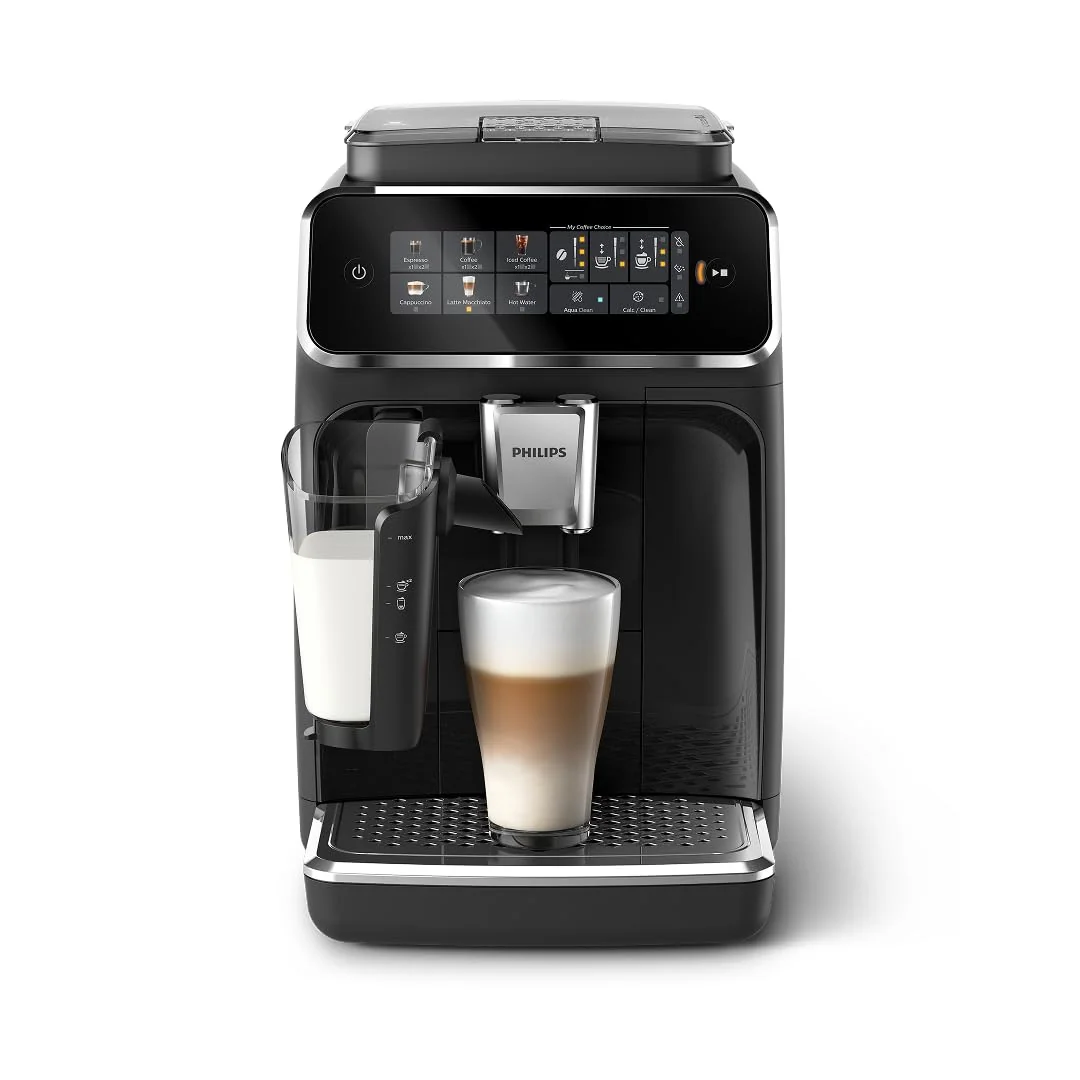
Philips 3300 LatteGo
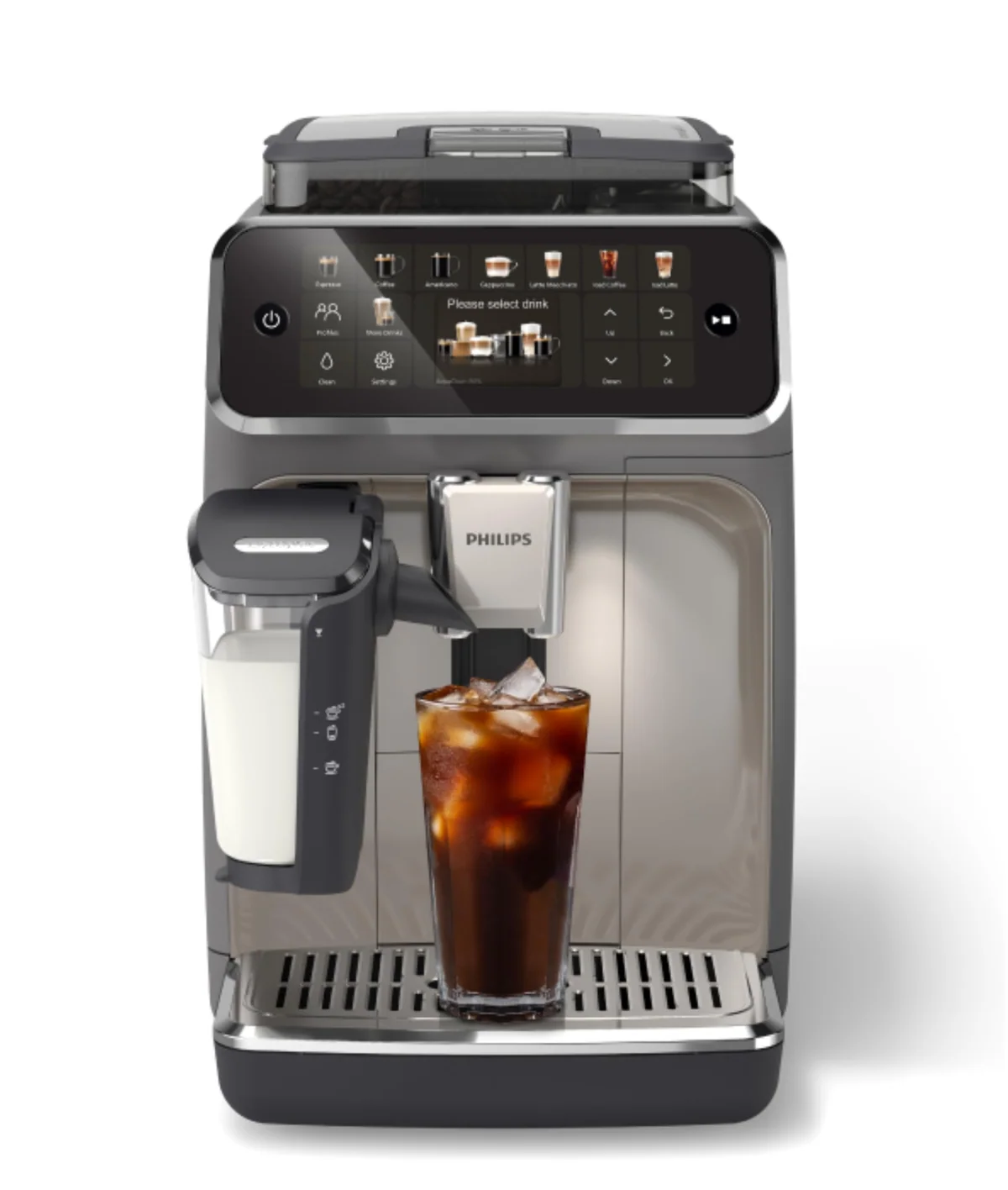
Philips 5500 LatteGo
The model numbers promise a ladder and the price gap promises a better shot. The retailer that sells both machines quietly demolishes the second promise. Seattle Coffee Gear put a 3300 and a 5500 next to each other and reported the same grinder, the same heating element and the same brew unit, with coffee of very similar flavour arriving in comparable time. Its own side-by-side walkthrough goes one step further and says the 5500's five strength settings do not get you more coffee than the 3300's three, only finer increments of the same ceiling.
That reframes the whole comparison. You are not choosing between a mild espresso and a strong one. You are choosing between a panel of backlit buttons with the useful settings hidden behind button-holds, and a colour screen that tells you what it wants in words, remembers four people and can double a shot without you pressing anything twice. Espresso Den has had neither machine on a bench, and nothing on this page is our own measurement; what follows is the two listings read against each other, the independent testers who weighed pucks and pointed sound meters, and the owners who have lived with these machines long enough to stop being impressed by them. Our fuller accounts of each are in the 3300 review and the 5500 review.
Before either machine earns your money, understand the number that governs both. Independent bench weighings of a 3300 puck put the maximum dose at 8.8 grams at the highest strength and 6.1 grams at the lowest; a second reviewer weighing pucks across the range landed at roughly 8.4 to 8.5 grams and got the same table from both machines. A café double is 16 to 18 grams. Dissolved-solids readings follow the dose down to around four or five per cent where a pump machine sits far higher. Neither of these machines is broken when the espresso reads mild. That is the design, on both of them, and the wider diagnosis of thin bean-to-cup espresso applies to each equally.
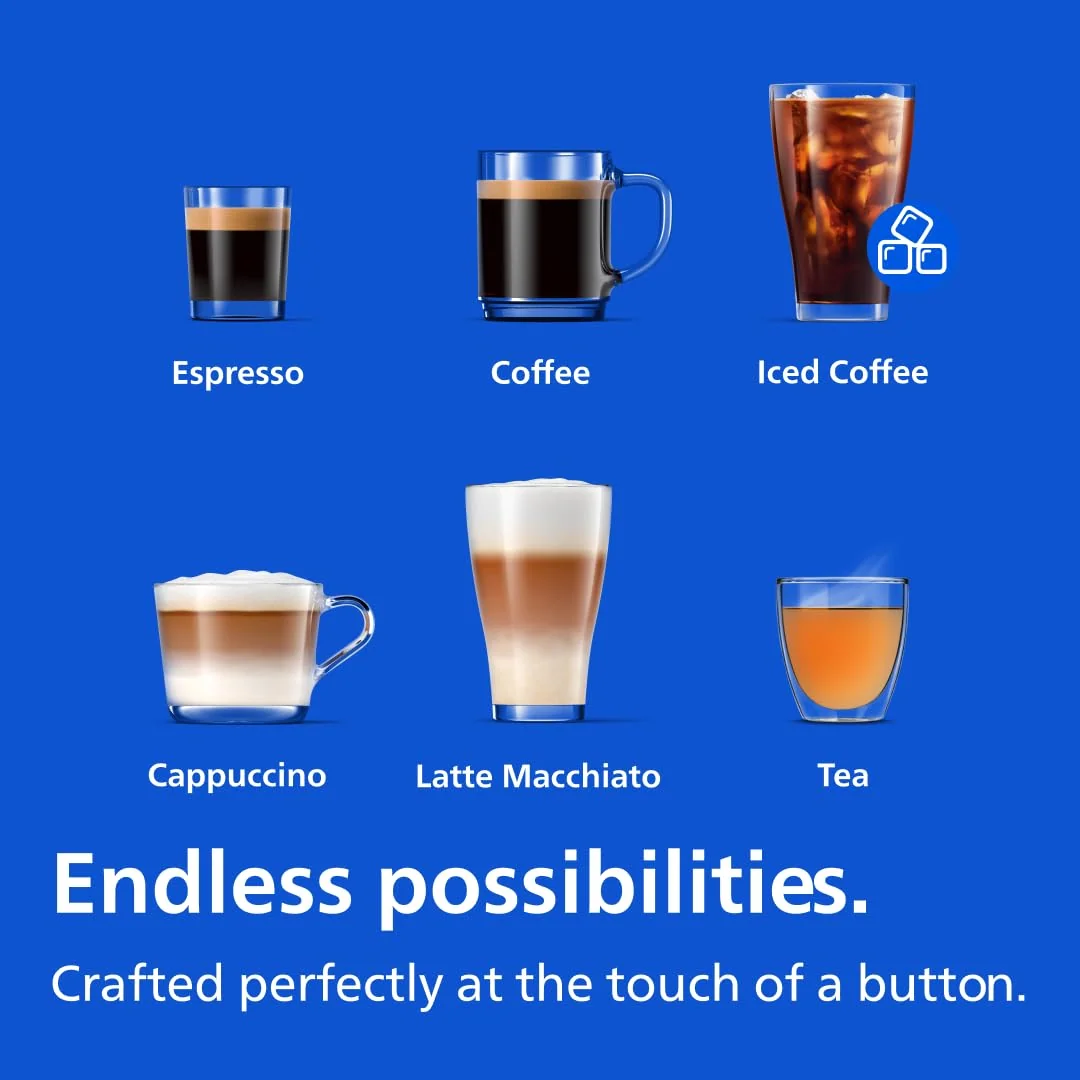
Philips 3300 LatteGo
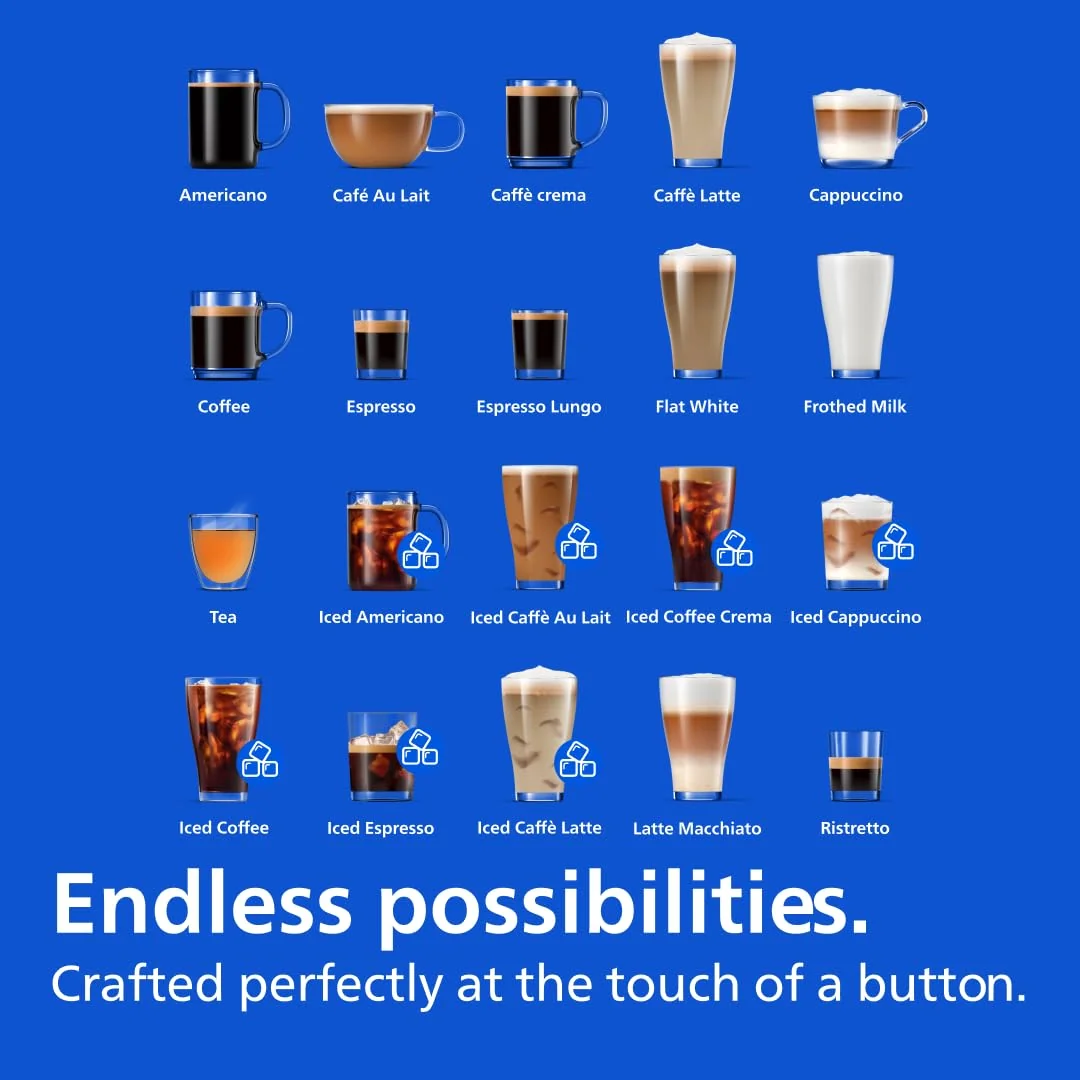
Philips 5500 LatteGo
At a Glance
| Feature | Editor's Pick Philips 3300 Series Fully Automatic Espresso Machine with LatteGo Milk System and integrated grinder, 6 Hot & Iced Coffee Pre-Sets, 40% Quieter SilentBrew, 15-Bar Pressure, Glossy Black (EP3341/50) | Philips 5500 Series Fully Automatic Espresso Machine, LatteGo Milk System, Integrated Grinder, 20 Hot & Iced Coffee Pre-Sets, Quick Start, SilentBrew, 15-Bar Pressure, Black Chrome (EP5544/94) |
|---|---|---|
| Price Range | $500–$1,000 | $500–$1,000 |
| Configuration | 9.68"D x 17.04"W x 14.6"H | 8.3 kg |
| Finish | Glossy Black (Ep 3341/ 50) | Black, chromed |
| Items In Box | 1 | 1 |
| Listed Since | 2025-06-02T00:00:01Z | 2025-08-05T00:00:01Z |
| Check Price on Amazon | Check Price on Amazon |
The part that makes the coffee does not change between them
Every owner complaint about either machine traces back to that brew chamber, and the accounts line up across both model numbers in a way that is hard to argue with. A 3300 owner upgrading from a 3200 noticed his new machine using less coffee per shot, producing a less dense puck and a slightly weaker cup, and solved it by adding a second espresso to his drinks. Two separate 5500 owners describe exactly the same correction from the other end of the range: one moved to a darker roast and now runs double shots as standard, another sets the finest grind and doubles nearly everything. A 5500 owner watching a friend's machine on its finest setting clocked shots finishing in eight seconds, well short of the twenty to thirty a properly resisted puck takes. The retailer's own written comparison concedes the underlying point without arguing about grams, describing the Philips brew chamber as relatively small and the shots as correspondingly smaller than commercial practice.
There is one test that proves the ceiling belongs to the grinder rather than the pump. Filling the pre-ground bypass chute, which physically holds about twelve grams, and brewing the same volume lifted dissolved solids from around five per cent to just over seven, with the brew group audibly straining to tamp the extra. The hardware can extract more. It is simply never given more. That is true of the 3300 and the 5500 in identical measure, which is why no amount of climbing the range fixes it, and why bean choice carries more of the result here than it does on machines that dose properly.
Both machines also arrive unrepresentative of themselves. Reviewers who set up a 3300 put the break-in at ten to twenty cycles; the same publication's 5500 review calls it at least twenty to thirty coffees and names Philips's silence about it as an outright fault, because it sends good machines back inside their return windows. An Amazon buyer who nearly returned his 3300 on the strength of the early cups says the espresso was excellent by roughly the twentieth. Whichever you buy, start the throwaway shots with cheap beans on day one rather than in the last week of the window.
What the extra money is actually buying
| 3300 LatteGo | 5500 LatteGo | |
|---|---|---|
| Brew unit and grinder | Ceramic burrs, twelve grind settings | The same unit and the same burrs |
| Strength steps | Three | Five, subdividing the same range |
| Display | Backlit buttons, settings behind button-holds | Colour screen that names the problem |
| Saved profiles | None worth relying on | Four, plus a guest slot |
| Extra Shot | Espresso, coffee and iced coffee only | Almost every coffee drink |
| Milk froth on its own | Start a cappuccino and cancel it | A drink in its own right |
| Presets | Six | Twenty, eight of them iced versions |
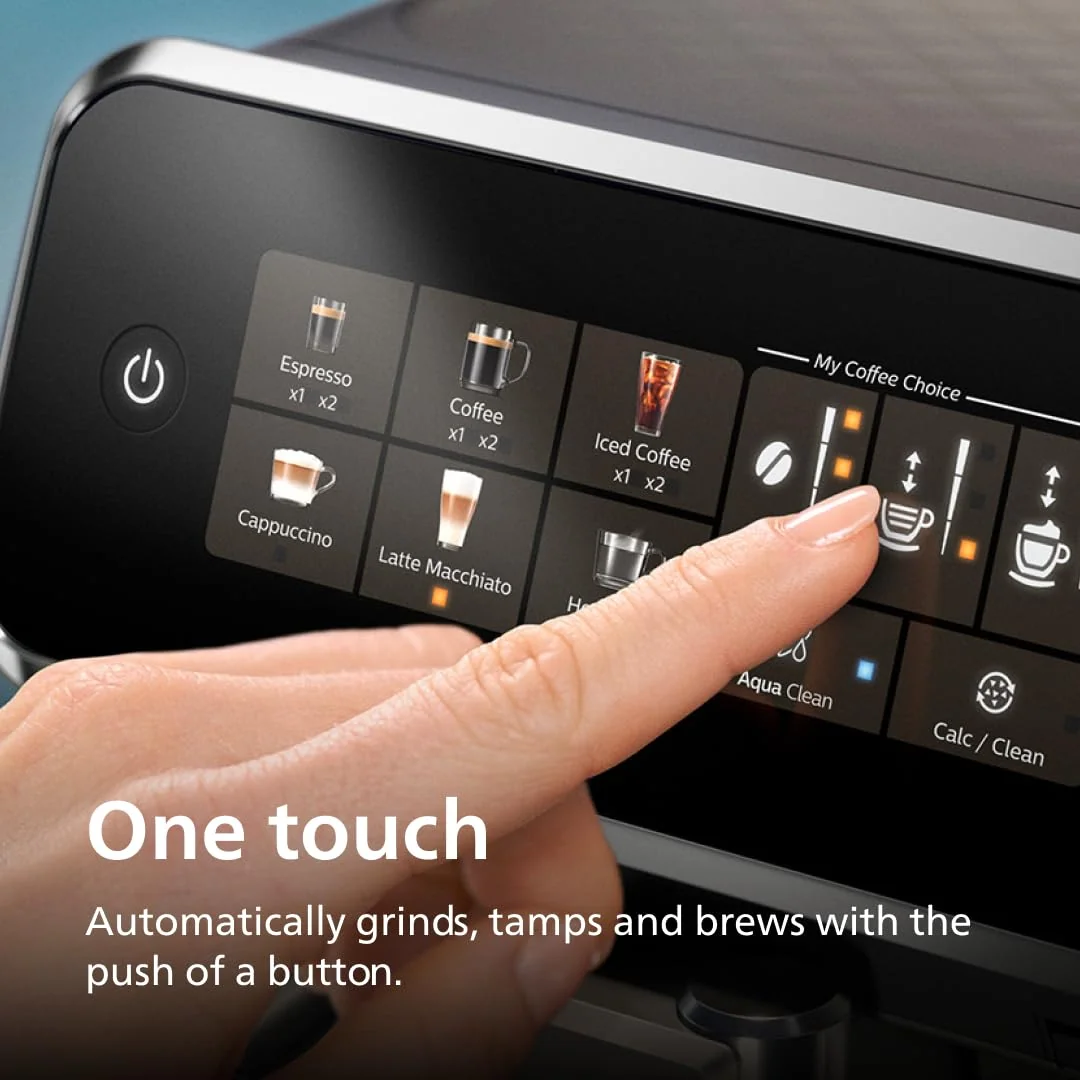
Take those from the top. The 3300's panel is not a touchscreen, whatever the listing's language about an intuitive full colour display implies, and the companion app is a library of manuals rather than a control surface. That matters more than it sounds, because the temperature setting, the one adjustment most likely to rescue a lukewarm cup, lives behind a button-hold sequence that owners routinely never find. If you buy the cheaper machine, read the hidden settings and warning lights first and treat it as part of the setup.
The profiles are the strongest argument for the flagship and the one the record actually supports rather than assumes. A 5500 owner singles out being able to save a profile per person, and to add a shot to her own latte macchiato, as the reasons the machine works in a household rather than for one drinker. On the 3300 there is nothing to protect your settings from the next person, so a shared kitchen means renegotiating the machine every morning. Extra Shot is the other one, and it is worth being precise about what it is: not a luxury, but the built-in correction for the dose. The retailer concedes that a 3300 owner can get the same result by brewing a second espresso by hand, so what the money buys is automation rather than capability. The corollary is a real running cost, since the reviewer who dialled a 5500 in properly ended up at twenty to twenty-two grams of beans per drink to do it.
Two smaller differences do more work than their spec-sheet weight suggests. There is no milk-only button on the 3300 at all, so hot frothed milk for a hot chocolate means starting a cappuccino and killing it before the coffee arrives; the 5500 simply has the option. And the cappuccino and latte presets on the cheaper machine pull one shot, which is the single most common reason owners conclude their milk drinks are weak. One owner spent weeks convinced something was wrong before discovering the preset behaviour and adding a second shot himself.
Against that, the twenty presets are padded and you should not price them. Eight are iced versions of drinks already on the list, hot water and milk froth are counted as coffees, and only about seven have a dedicated button on the machine at all; the rest live a menu down. And one question about the strength scale has never been answered by anyone with a set of scales: whether the fifth level on a 5500 grinds more than the third on a 3300. Owners have asked and nobody has produced a weighing, while the retailer selling both says plainly that there is no more coffee to be had. Espresso Den's reading is that the open question resolves the way the measurements point, and that anyone buying the 5500 for a stronger shot is buying a promise nobody has evidenced.
The faults you inherit either way
The iced presets are the claim most likely to mislead a buyer of either machine. Neither brews cold. A tester with a thermometer measured the 3300's iced setting arriving at 155°F, and another described it flatly as hot coffee that comes with an instruction to add ice. A reviewer who read the 5500's own operating instructions found them saying the coffee is prepared with warm water and is best brewed over ice cubes, which is not what the listing copy suggests. The lower temperature and slower flow do change the extraction, so it is not nothing, but if cold coffee is why you are shopping, read what these modes actually do before you choose on that basis.
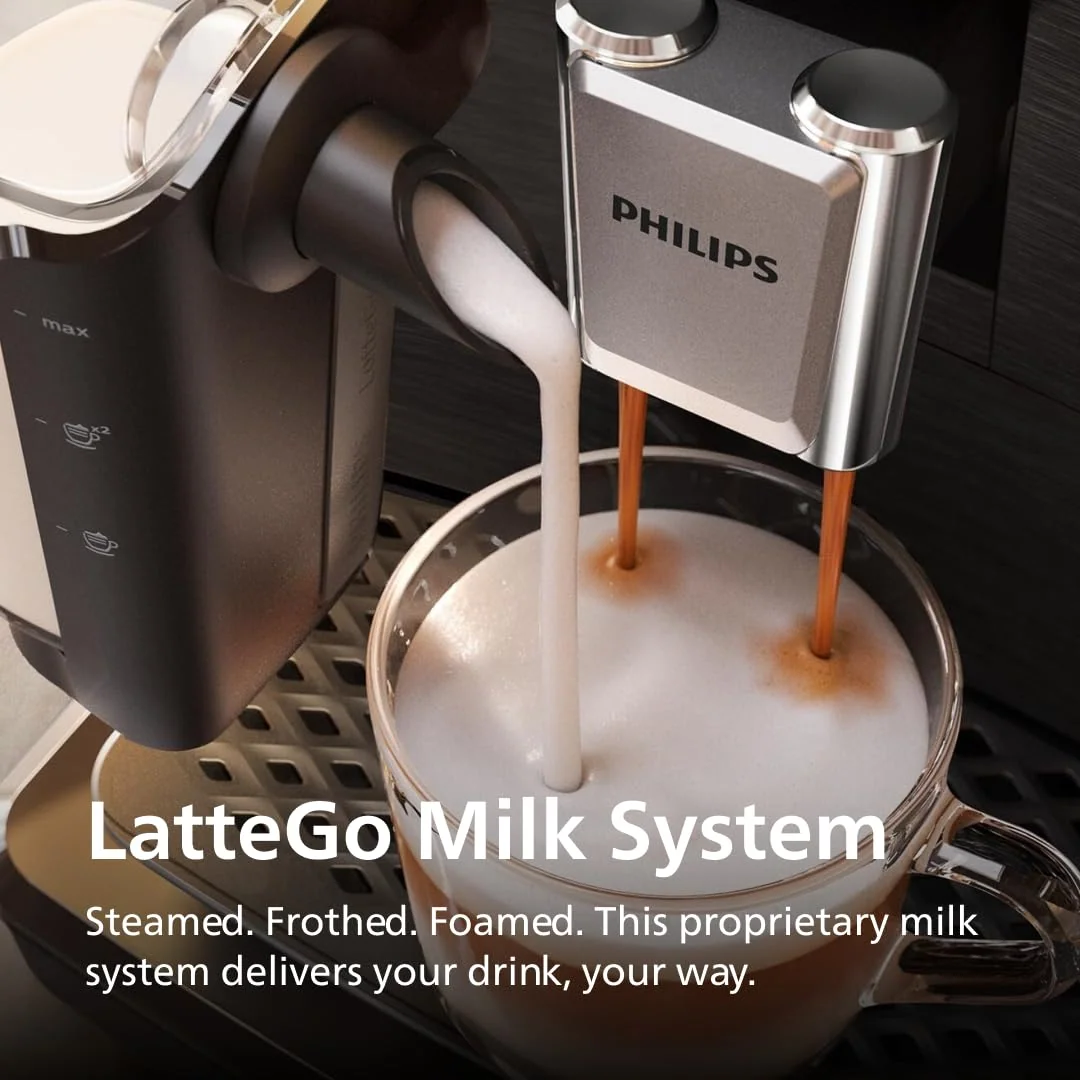
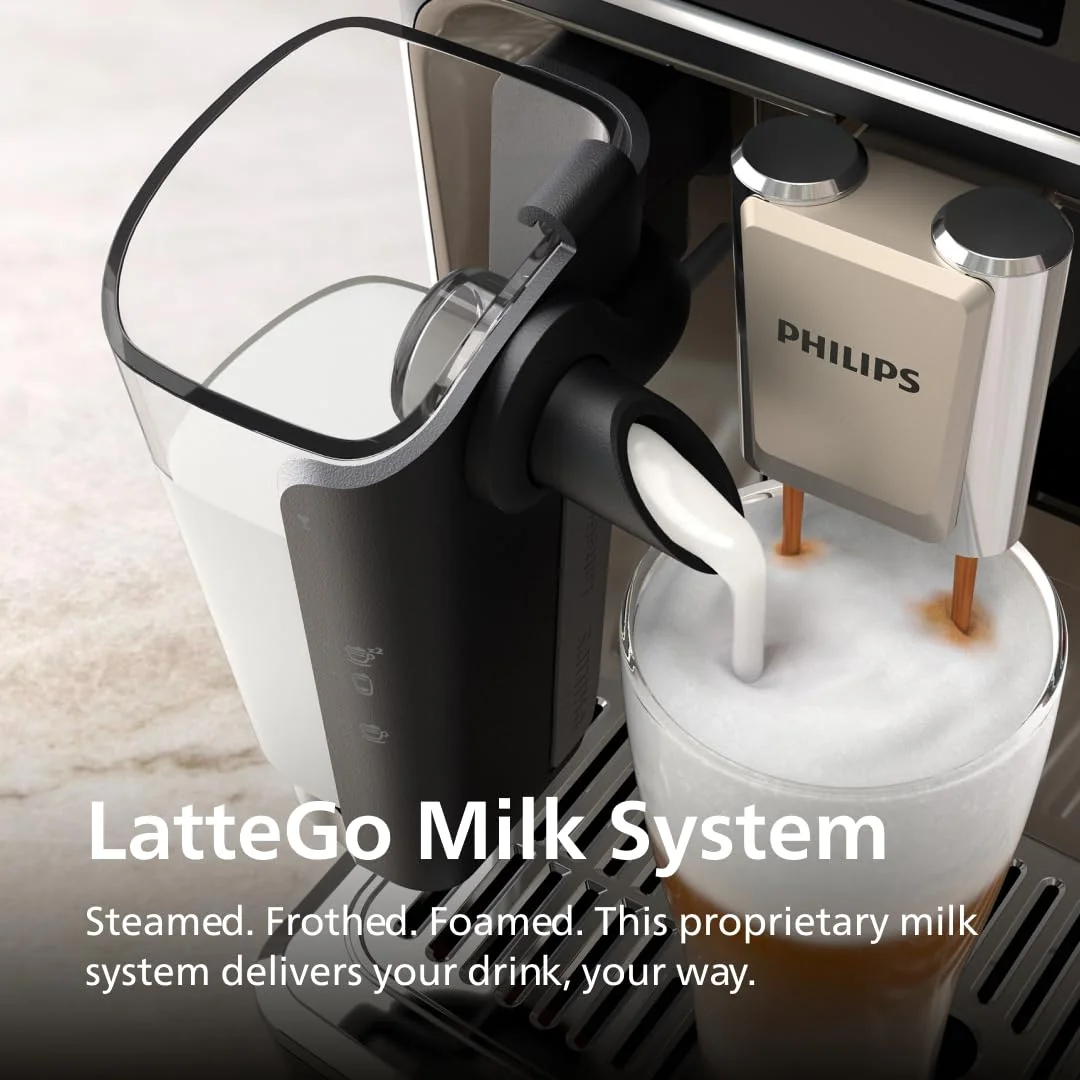
The milk is the same story twice. LatteGo is the best reason in the category to buy Philips at all, because there are no internal tubes and milk never enters the body of the machine, which is the strongest hygiene argument anybody makes for an automatic frother and the whole of what choosing between a wand and a carafe comes down to. What it produces is a thick, stable cappuccino foam rather than microfoam, on both machines: one reviewer lists flat white drinkers among the people who should skip the 3300 entirely, and another found the 5500's foam firm enough that even a cappuccino keeps visible layers. Latte art is out of reach on either. The milk spout angle is also fixed on the 5500, so the cup has to sit further forward than instinct suggests or milk runs down the outside, and the hopper fills from the top, which is worth knowing if the machine is going under a wall cabinet.
Noise is the one marketing claim that survives contact, with a caveat. A reviewer with a sound meter recorded a 3300 grinder at 63 decibels and called it the quietest Philips he had measured; another got 61 to 62 decibels with the hopper lid on and 72 to 73 with it removed, which tells you the improvement is largely a rubber gasket doing its job. The 40 per cent reduction the listings advertise acts on the grind and nothing else. A 5500 owner four months in put it exactly right: the grinding is quiet, the milk and brewing are very loud. If silence is the actual purchase reason, compare both against the quietest machines in the category rather than taking the badge at face value.
Two more shared liabilities. The five thousand cups without descaling carries a footnote in Philips's own small print saying it assumes eight AquaClean filter replacements made when the machine asks, which is a recurring cost described as an absence; our guide to living with AquaClean unpacks it. And leaks are a platform trait rather than a model one. A 3300 owner three weeks in reported warm water pouring from under the machine during the brew cycle, bypassing the drip tray entirely, and returned it; a 5500 owner had a brand-new machine collected for six days in its third week because a tube had come loose and it leaked while frothing. Both are recoverable if you buy where returns are generous. Neither is a reason to prefer one model over the other.
The grey listing, and why the star ratings mislead
There are two new 5500 listings on Amazon and they are the same appliance in different finishes, but they do not carry the same score, and the gap has nothing to do with the coffee. The grey chrome unit sits well below the black chrome one, and its copy is the least reliable of the three pages this comparison covers: it claims two user profiles for a machine the retailer selling it says holds four plus a guest, and it prints a power figure of 230 W, which is not a plausible draw for a machine heating water to 210°F on demand. Philips cannot keep the number straight even inside a single page, since the black listing's bullets promise four profiles while its own description underneath says two.
Espresso Den's advice is to treat the colour suffix as a colour suffix and to buy whichever finish is cheaper on the day, ignoring the star difference between them. The same logic extends to the renewed 5500 units, which score higher than either new listing and are covered in our 5500 review; the trade there is a much shorter warranty on a machine whose characteristic faults appear after a few months rather than a few weeks, which is the argument our piece on renewed machines makes at length.
Philips 3300 LatteGo
Philips 5500 LatteGo
Which one to buy
Count the drinkers in your kitchen. One person, or two who take their coffee the same way, does not need four profiles, a milk-froth button or the ability to double a latte macchiato without pressing anything twice, and one reviewer flatly calls the cheaper machine the best value in the entire Philips range for that reason. Three or four people with different tastes are the situation the flagship was designed for, and it is the only situation in which the money changes anything you can taste, indirectly, by stopping somebody else from changing your settings.
Price the gap honestly before you decide. Both machines list high and sell low, and the reviewers who recommend them and the reviewers who do not are largely arguing about which number they were quoted; the same publication that would not recommend the 5500 at Philips's list price calls the 3300 one of the better upgrades available from a pod machine at a discount. If the discount lands on the flagship and not the 3300, the calculus flips, because you are then buying the interface for very little. And if the gap between them is wide, note that an owner four years and roughly ten thousand coffees into a machine near the top of this range concluded that a cheaper LatteGo would have served him just as well, since mechanically they are no different.
The one to buy if the coffee is what you are paying for
It makes the same cup as the flagship through the same brew unit, with the quietest grinder Philips has shipped, for meaningfully less money.
It has no saved profile worth relying on, so a second drinker with different taste simply overwrites your settings, and its cappuccino and latte buttons pull one shot you have to top up yourself.
The one to buy if more than one person uses it every morning
Four profiles plus a guest slot, a screen that tells you what is wrong in words, and Extra Shot on almost every drink make this the easiest LatteGo to share, and it is the better-rated of the two new listings.
None of that lifts the dose, so the espresso underneath is the same mild shot the cheaper machine pours, and the iced presets are warm coffee you pour over your own ice.
The same flagship in grey, if the finish is what decides it
The hardware is identical to the black chrome unit, so the only honest reason to choose this one is that you prefer grey or it is cheaper on the day.
Its listing is the least trustworthy of the three, understating the profile count and printing a power figure that cannot be right, and it carries the lowest rating of any new 5500 despite being the same machine.
If neither answer fits, two doors lead off this page. The 4400 sits between them with five strength steps and two profiles but no Extra Shot, which is a narrower gap than the model numbers imply and is argued out in the 5500 against the 4400 and the 4400 on its own terms; the whole ladder from 1200 to 5500 lays out the rest of the rungs. And if you have read this far mainly worried about the dose, the honest move is sideways rather than up, because the machines owners migrate to grind finer and hold more coffee: the 5500 against the Dinamica Plus is that argument, and our pick for people who drink it black goes elsewhere for exactly this reason. Neither Philips is the wrong machine; buying the expensive one hoping for a different cup is the wrong purchase.
Frequently Asked Questions
Does the 5500 pull a stronger espresso than the 3300?
No, because the brew unit and the grinder are the same part and the flagship's extra strength steps subdivide the same range, so the only thing that raises the dose on either machine is brewing a second shot.
Is the cheaper machine the right call for one person?
Usually yes, since a single drinker never uses the saved profiles that are the flagship's strongest argument and can add a second espresso by hand whenever a milk drink comes out thin.
Can the 3300 froth milk on its own for a hot chocolate?
No, you have to start a cappuccino and cancel it before the coffee arrives, and that missing option is the one preset gap between the machines that genuinely irritates owners day to day.
Do either of them actually brew cold iced coffee?
Neither does, since both brew cooler and slower than usual and expect you to pour that over ice you supply yourself.
Is the grey 5500 a different machine from the black one?
No, the suffix is a colour code and the rating gap between the two listings reflects their review pools rather than the hardware.
Which of them is quieter in a shared kitchen?
Both grind at around sixty decibels thanks to the same gasketed hopper lid, and on both the milk system and the pump are the loud parts that the quiet-brewing claim never covered.
Is there any point buying either at full list price?
Not really, because both are routinely discounted and the reviewers who recommend them are consistently pricing them well below the sticker.
Ready to Choose?
Sources (9)
- Amazon listings and customer reviews — Philips 3300 Lattego and Philips 5500 Lattego
- Owner reports across r/superautomatic threads
- Owner and reviewer video, 5 channels
- Seattlecoffeegear — Article — www.seattlecoffeegear.com
- Tomscoffeecorner — Article — tomscoffeecorner.com
- Homecoffeeexpert — Article — homecoffeeexpert.com
- Coffeeness — Article — www.coffeeness.de
- Techradar — Article — www.techradar.com
- Philips — Article — www.usa.philips.com