Every Philips from the 1200 to the 5500 brews with the same parts, so the only question is which interface you want to pay for
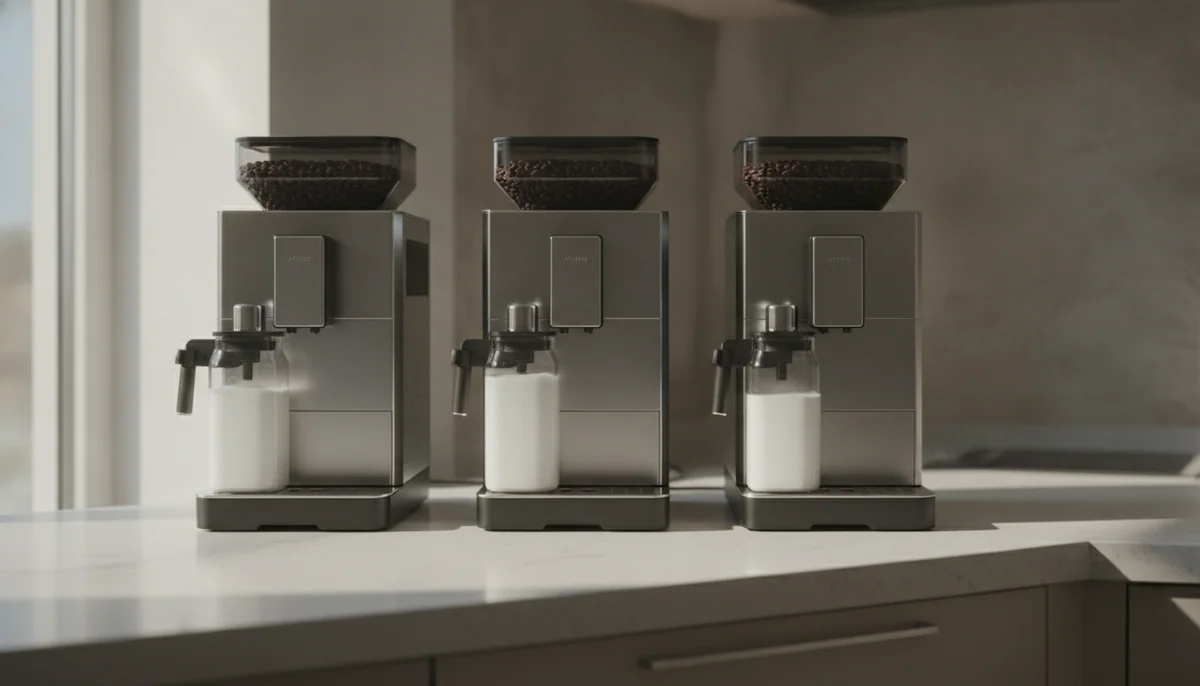
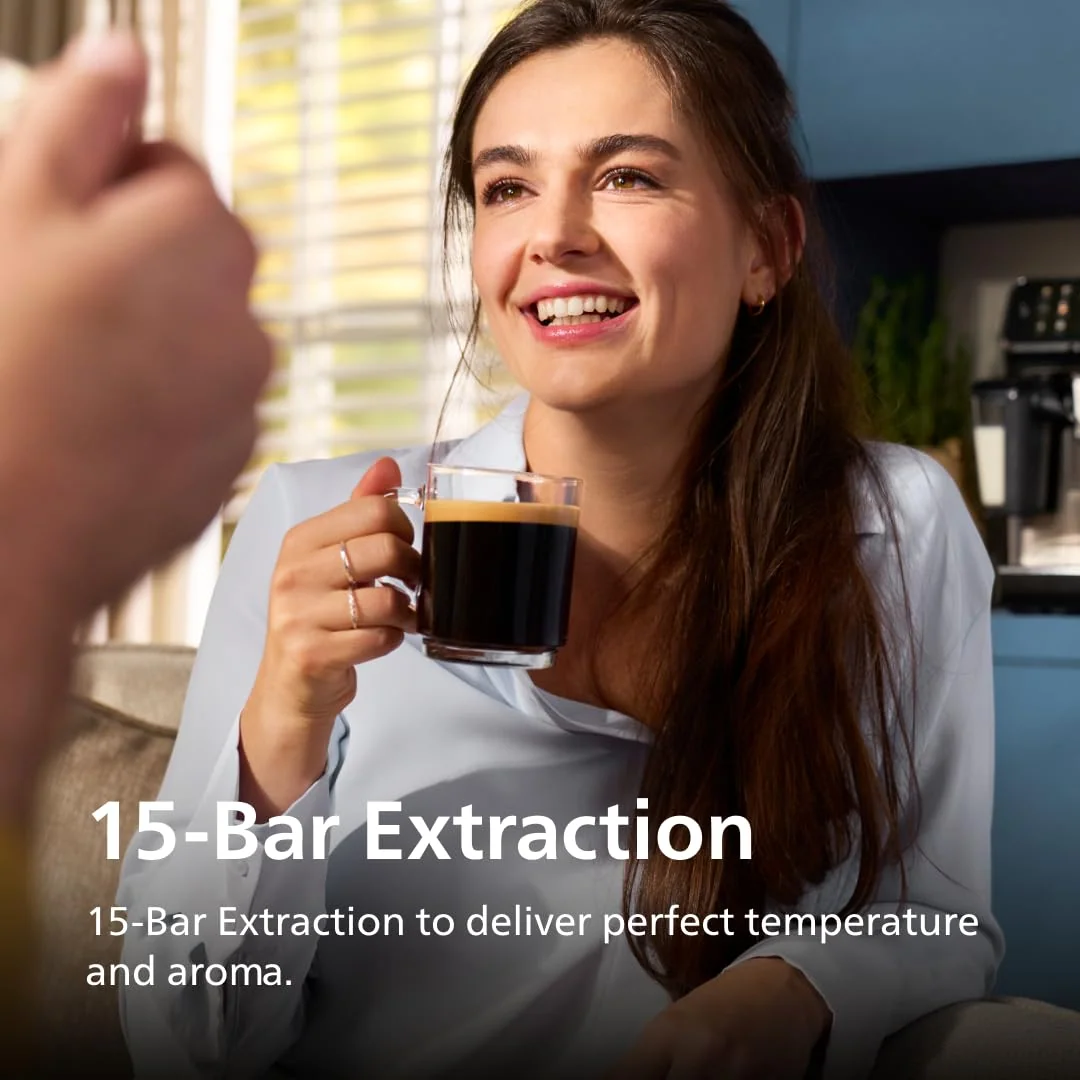
Philips would like you to read this range as a staircase, with the coffee getting better as the model number climbs. It does not. One reviewer lined up a 2200, a 3200 and a 5400, loaded the same beans, set the same grind, the same strength and the same volume on all three, and pulled a shot from each: thirty-seven grams, thirty-two grams and thirty-five grams into the cup, with no difference in taste or temperature he could identify. A retailer that sells both machines and had no reason to say so put the 3300 and the 5500 side by side and reported the same grinder, the same heating element and the same brew unit, adding that the flagship's five strength steps do not get you more coffee than the cheaper machine's three, only finer increments of the same ceiling.
That single fact reorganises the whole decision. You are not buying espresso as you go up. You are buying a milk system, then a screen, then saved profiles, in that order, and each of those has a rung where it arrives. Everything before that rung is money spent on trim.
It also means the range's honest drawback is the same drawback everywhere, and it is worth meeting it before you spend anything. The brew chamber is small, the shot runs fast, and the result is mild. Owners say this in almost identical language across listings that are hundreds of dollars apart: the buyer of a top-of-the-range 5500 who found the dosing shy, the puck small and the cup full of brown water, and the buyer of a 3300 who returned two separate units because what came out looked like dirty water to him. Neither of those people had a faulty machine. They had a Philips, and they had come to it from something that puts more coffee in the basket. If you are arriving from pods or a drip pot, you will very likely be delighted; if you are arriving from a portafilter, no rung on this ladder will fix what you are about to notice, and our piece on why bean-to-cup espresso runs thin explains why the settings menu cannot rescue it.
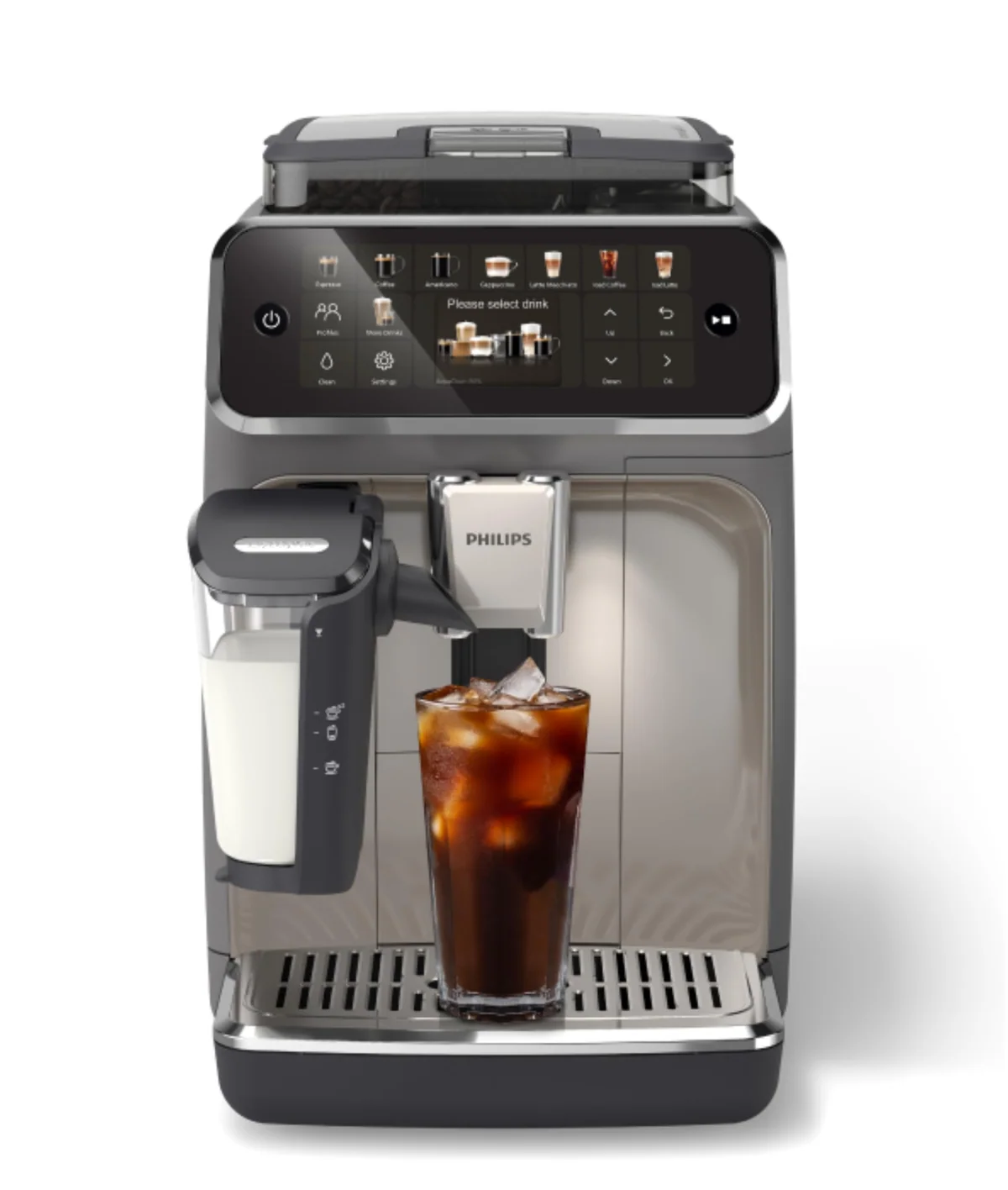
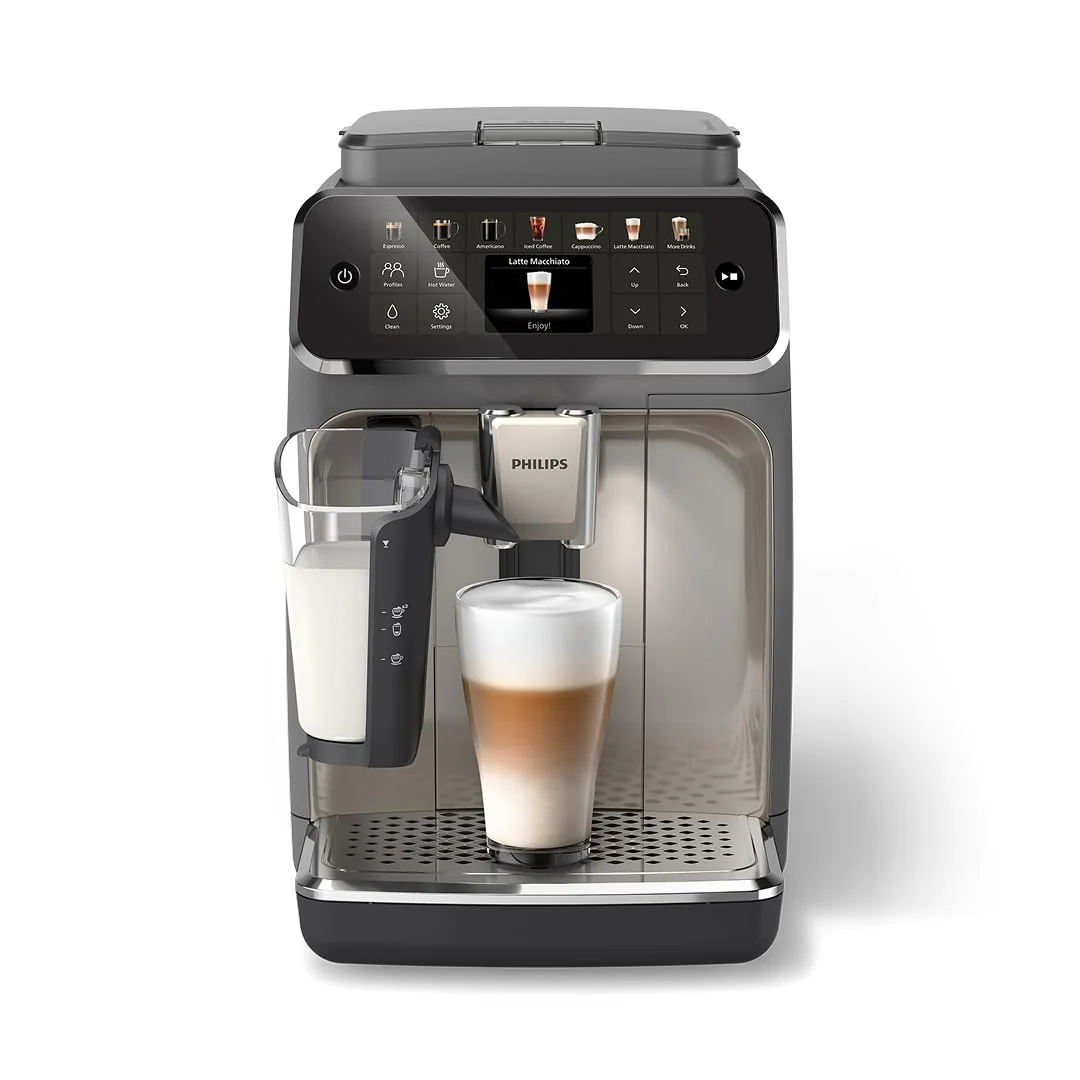
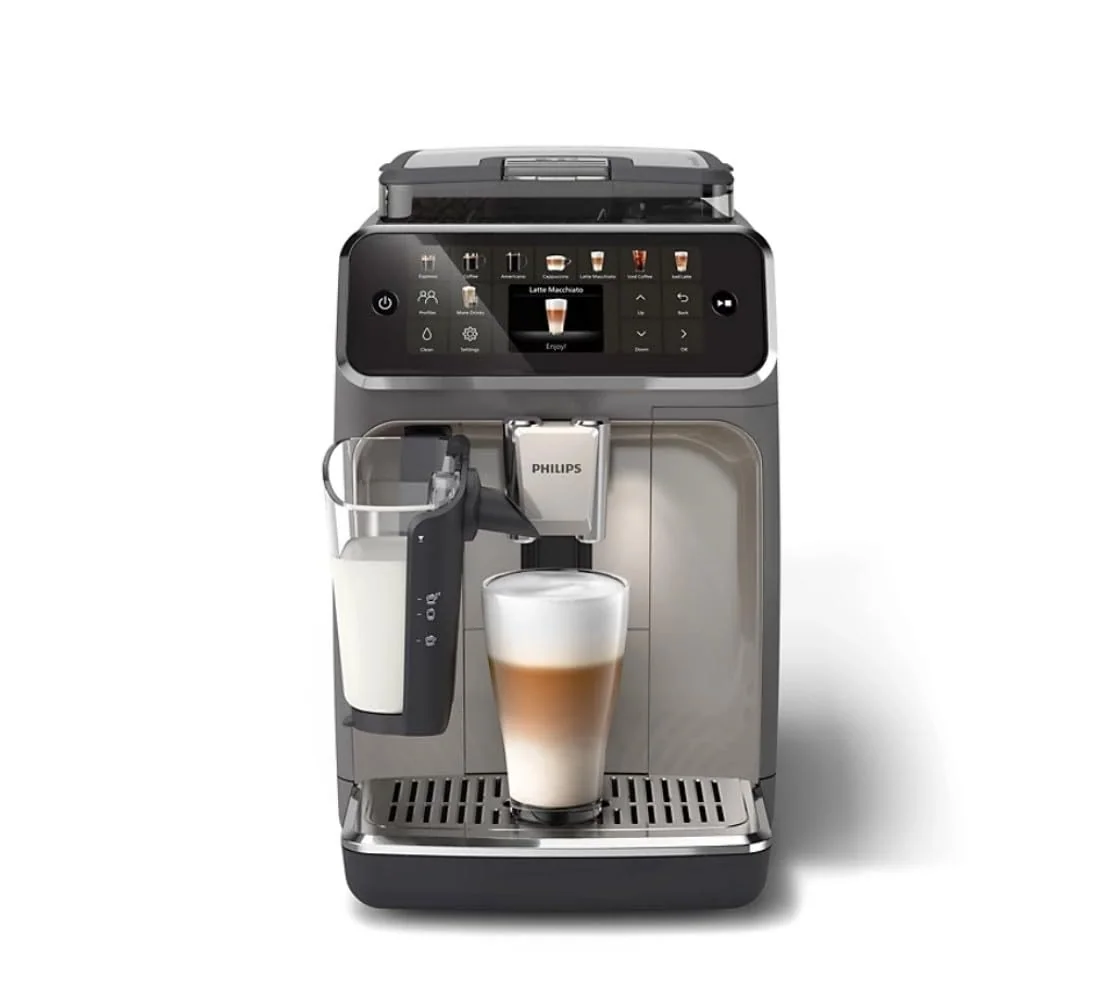
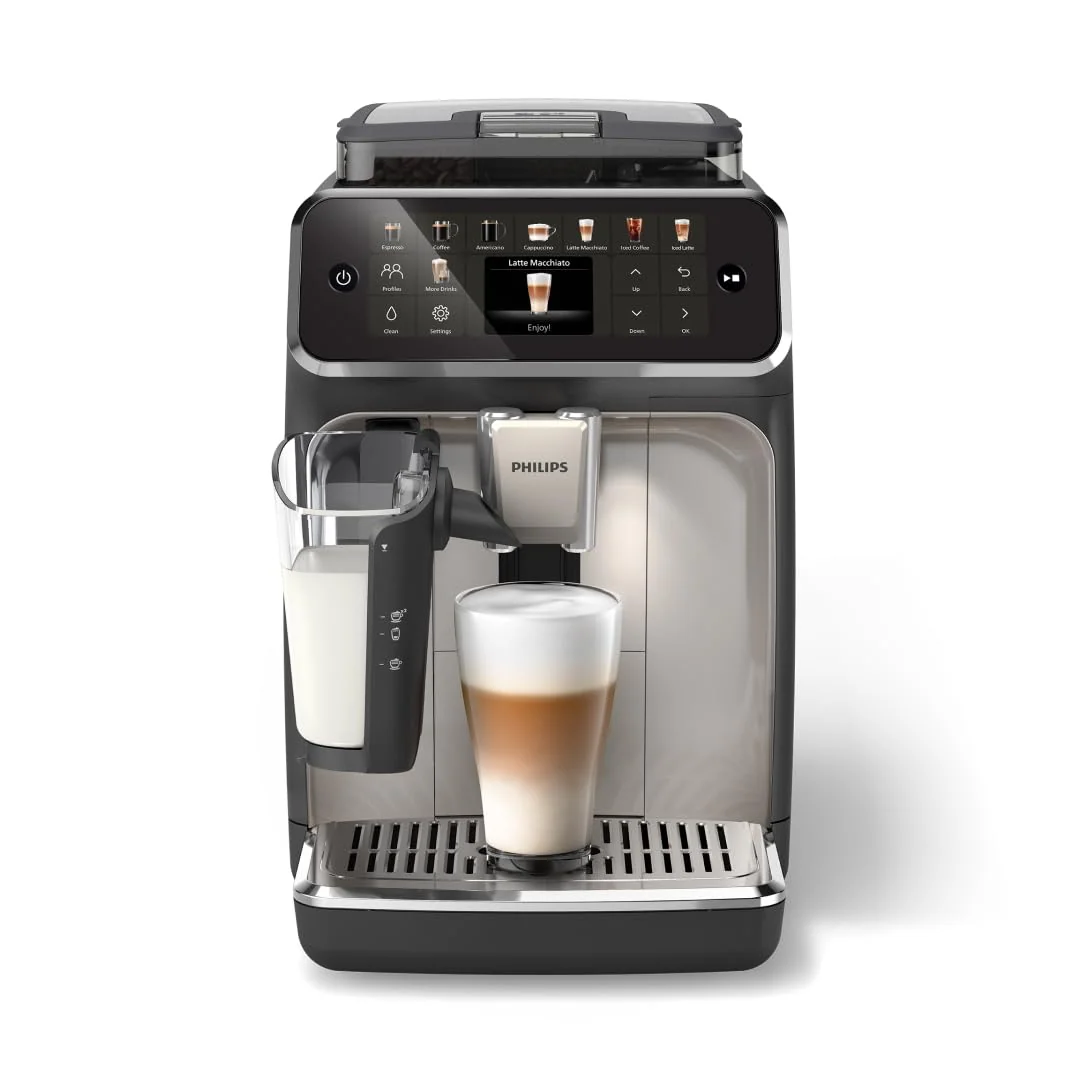
Quick Picks at a Glance
| Feature | Editor's Pick Philips 1200 Series Fully Automatic Espresso Machine, Classic Milk Frother, 2 Coffee Varieties, Intuitive Touch Display, 100% Ceramic Grinder, AquaClean Filter, Aroma Seal, Black (EP1220/04) | Philips 2200 Series Fully Automatic Espresso Machine, Classic Milk Frother, 2 Coffee Varieties, Intuitive Touch Display, 100% Ceramic Grinder, AquaClean Filter, Aroma Seal, Black (EP2220/14) | Philips 2300 Series Fully Automatic Espresso Machine with LatteGo milk system and integrated grinder, 4 Coffee Pre-Sets & Hot Water, 40% Quieter SilentBrew, 15-Bar Pressure, Matte Black (EP2330/10) | Philips 3200 Series Fully Automatic Espresso Machine, LatteGo Milk Frother, 5 Coffee Varieties, Intuitive Touch Display, 100% Ceramic Grinder, AquaClean Filter, My Coffee Choice, Black (EP3241/54) | Philips 3300 Series Fully Automatic Espresso Machine with LatteGo Milk System and integrated grinder, 6 Hot & Iced Coffee Pre-Sets, 40% Quieter SilentBrew, 15-Bar Pressure, Glossy Black (EP3341/50) | Philips 4400 Series Fully Automatic Espresso Machine – 12 Hot & Iced Coffees, Quick-to-Clean LatteGo Milk System, SilentBrew, QuickStart, Ceramic Grinder, Black Chrome (EP4447/90) | Philips 4400 Series Fully Automatic Espresso Machine – 12 Hot & Iced Coffees, Quick-to-Clean LatteGo Milk System, SilentBrew, QuickStart, Ceramic Grinder, Black Chrome (EP4447/90) (Renewed) | Philips 5500 Series Fully Automatic Espresso Machine, LatteGo Milk System, Integrated Grinder, 20 Hot & Iced Coffee Pre-Sets, Quick Start, SilentBrew, 15-Bar Pressure, Black Chrome (EP5544/94) | Philips 5500 Series Fully Automatic Espresso Machine - LatteGo Milk System, 20 Coffee Varieties, Intuitive Touch Display, SilentBrew, 100% Ceramic Grinder, AquaClean Filter (Grey Chromed) | Philips 5500 LatteGo Automatic Espresso Machine - 20 Coffee Varieties, Intuitive Touch Display, SilentBrew, 100% Ceramic Grinder, AquaClean Filter, Grey Chromed (EP5544/90) (Renewed) | Philips 5500 Series Fully Automatic Espresso Machine, LatteGo Milk System, Integrated Grinder, 20 Hot & Iced Coffee Pre-Sets, SilentBrew, 15-Bar, Black Chrome (EP5544/94) (Renewed) |
|---|---|---|---|---|---|---|---|---|---|---|---|
| Price Range | $200–$500 | $200–$500 | $200–$500 | $500–$1,000 | $500–$1,000 | $500–$1,000 | $200–$500 | $500–$1,000 | $500–$1,000 | $500–$1,000 | $500–$1,000 |
| Configuration | Aquaclean Sold Separately | Large | 4 Beverages | (EP3241/54) | 9.68"D x 17.04"W x 14.6"H | 12 beverages | 12 beverages | 8.3 kg | 8.3 kg | 20 Drink | 8.3 kg |
| Finish | Black | Black | Matte Black | Black | Glossy Black (Ep 3341/ 50) | Black and Chrome | Black and Chrome | Black, chromed | Grey Chrome | Grey Chromed | Black, chromed |
| Items In Box | 1 | 1 | 1 | 1 | 1 | 1 | 1 | 1 | 1 | 1 | 1 |
| Check Price on Amazon | Check Price on Amazon | Check Price on Amazon | Check Price on Amazon | Check Price on Amazon | Check Price on Amazon | Check Price on Amazon | Check Price on Amazon | Check Price on Amazon | Check Price on Amazon | Check Price on Amazon |
The eleven listings, rung by rung
Two machines on this page appear twice and one appears four times, which is worth understanding before you read the cards, because the duplicates are where the buying decision actually gets interesting.
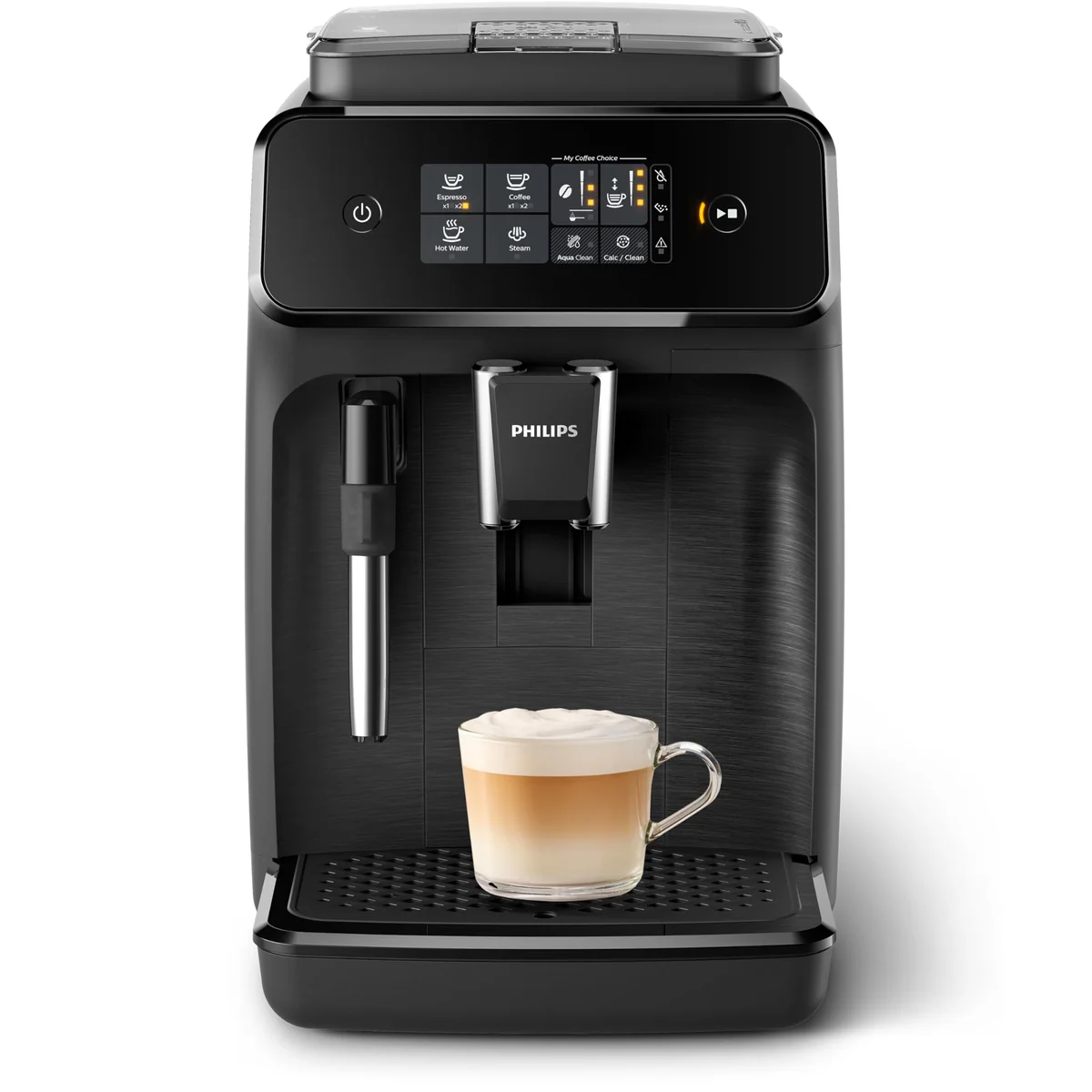
The cheapest way into a Philips brew group, if you are willing to steam your own milk.
It grinds fresh, rinses its own circuit on startup and shutdown, and hands you espresso, coffee and hot water at one press, which is the whole machine and genuinely enough for a lot of households.
The dose is small and the shot runs long, so the espresso is mild and short on crema no matter how fine you set the grind.
The 1200's Amazon reviews are the best free education available on this range, because they are bimodal in a way that predicts your own experience. The owner who came from a Keurig calls it a life changer; the owner who runs a Rocket as his daily machine made forty-five cups trying to get a solid puck out of it and gave up. Read our full review of the Carina if you want the anti-watery protocol before you buy.
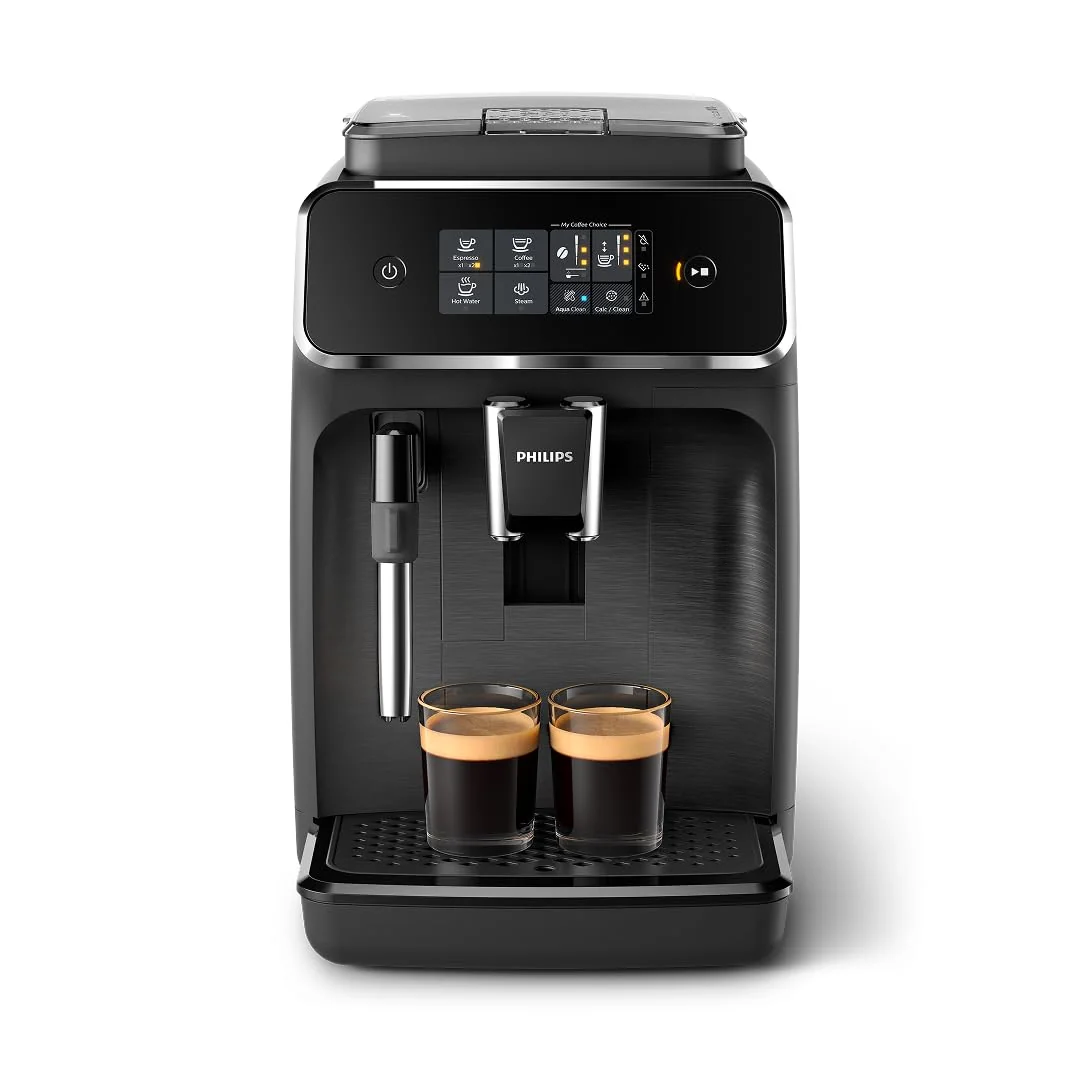
This is the same machine as the 1200 wearing better clothes.
You get the identical brew group, grinder and three drinks with chrome trim and a large sealed hopper that one owner refills only about every ten days.
Two separate owners report water pooling under a brand new machine, one of them across more than one unit of this exact model.
That leak pattern is the reason to unbox this one in front of a sink and brew immediately. Every one-star review retained on the listing is a hardware fault or a missing part rather than a complaint about the coffee, and one buyer who has ordered this model three times describes an internal leak on the first, four good years on the second and a dead unit on the third. Our 2200 review has the hidden-controls table that owners have to reverse-engineer when the box arrives without printed instructions.
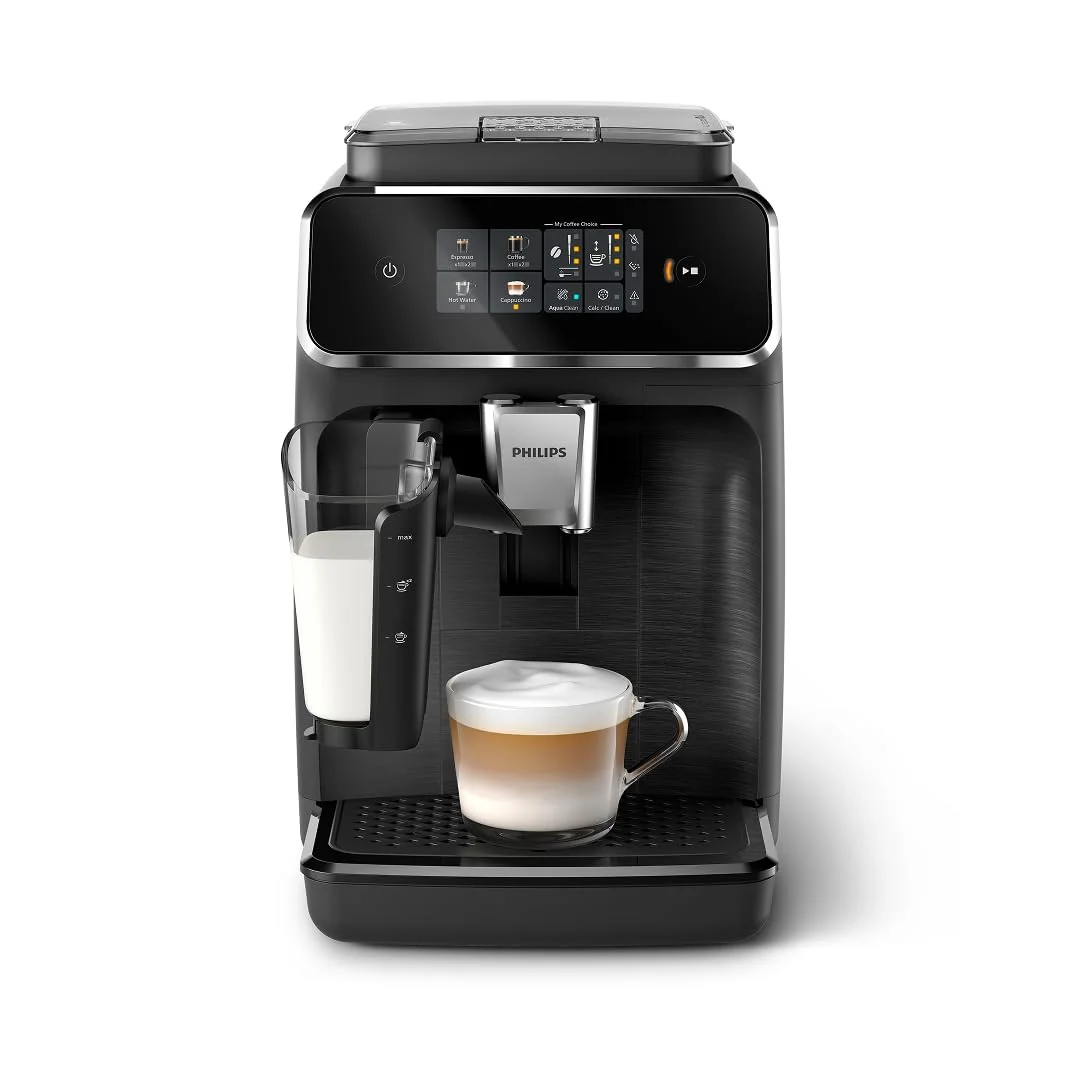
This is the first rung with the milk carafe, and the thinnest drink list on it.
It is the cheapest route to one-touch cappuccinos from a carafe that comes apart and rinses in about the time it takes to read this sentence.
There is no americano among its four presets, so a long black coffee means pulling a shot and then adding hot water yourself.
Both of the 2300's headline claims come straight off its own listing, which promises four presets and a milk system of three parts with no internal tubes. Its reviews carry the range's leak story in its most expensive form: an owner whose machine leaked from the rear during the steam cycle and again at the end-of-brew purge, past the drip tray entirely, and soaked through a rubber mat into a new wooden counter before anyone saw the water. Put something waterproof under and behind whichever of these you buy, and pull it forward once a week to look. The 2300 against the 3300 is where that americano button gets costed properly, and our review covers the rest.
This is the outgoing LatteGo that still has the button the 3300 traded away.
Five drinks including a genuine one-press americano, on the same carafe and the same brew group as the machines that replaced it.
Philips has superseded it, so its grinder is the loud pre-SilentBrew one and its panel is icons rather than the colour-lit display its successor carries.
The 3200 listing advertises espresso, coffee, americano, cappuccino and latte macchiato, and the americano is the one people actually miss when they move to the newer model. Its most useful owner review is not the most enthusiastic one but the one that itemises the chores: roughly four minutes daily for the grounds bin, drip tray and carafe, about ten minutes weekly with the brew group out under the tap, and coffee oil tablets monthly. That schedule is the price of admission on every LatteGo, and the old model against the new one is the page to read if you find both on sale at once.
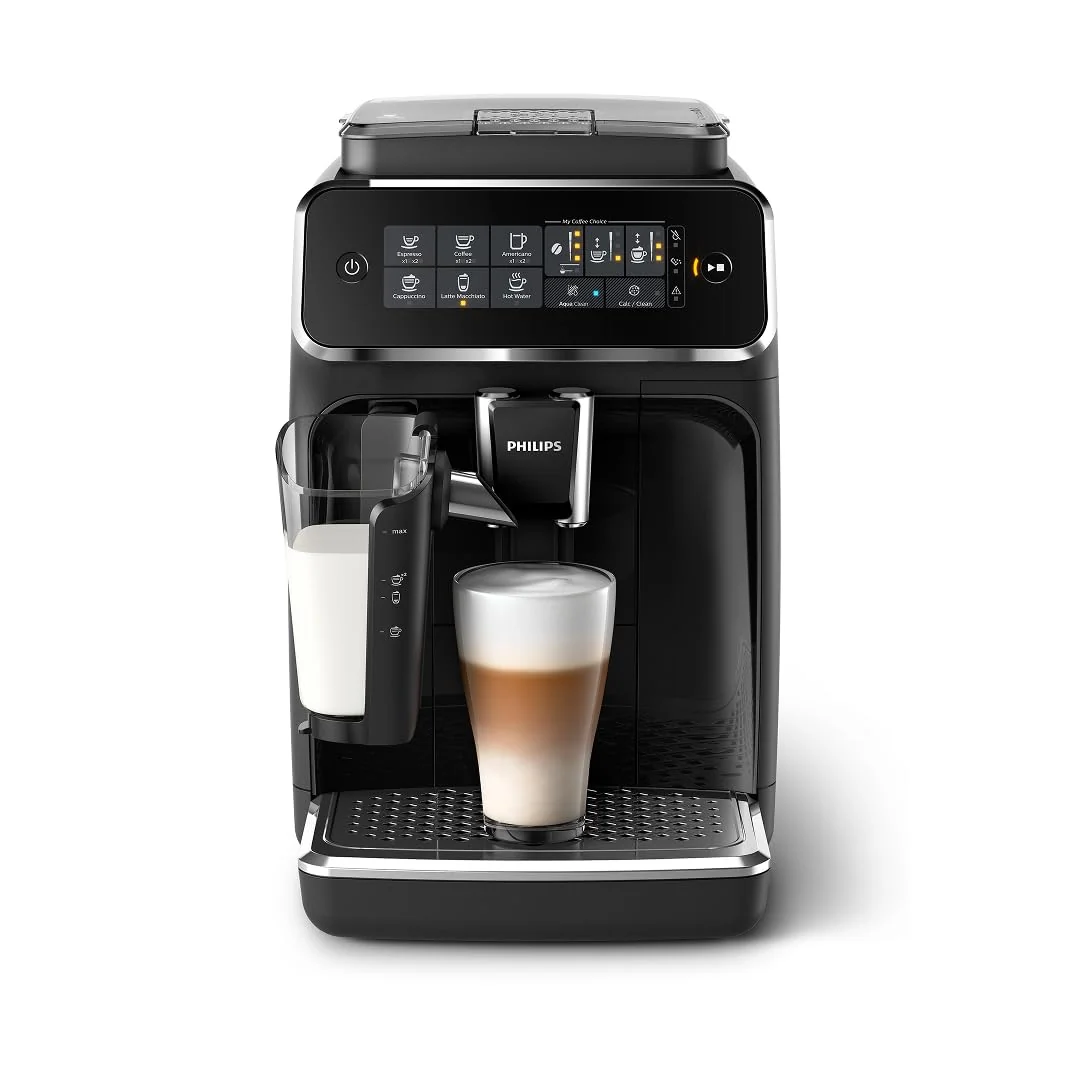
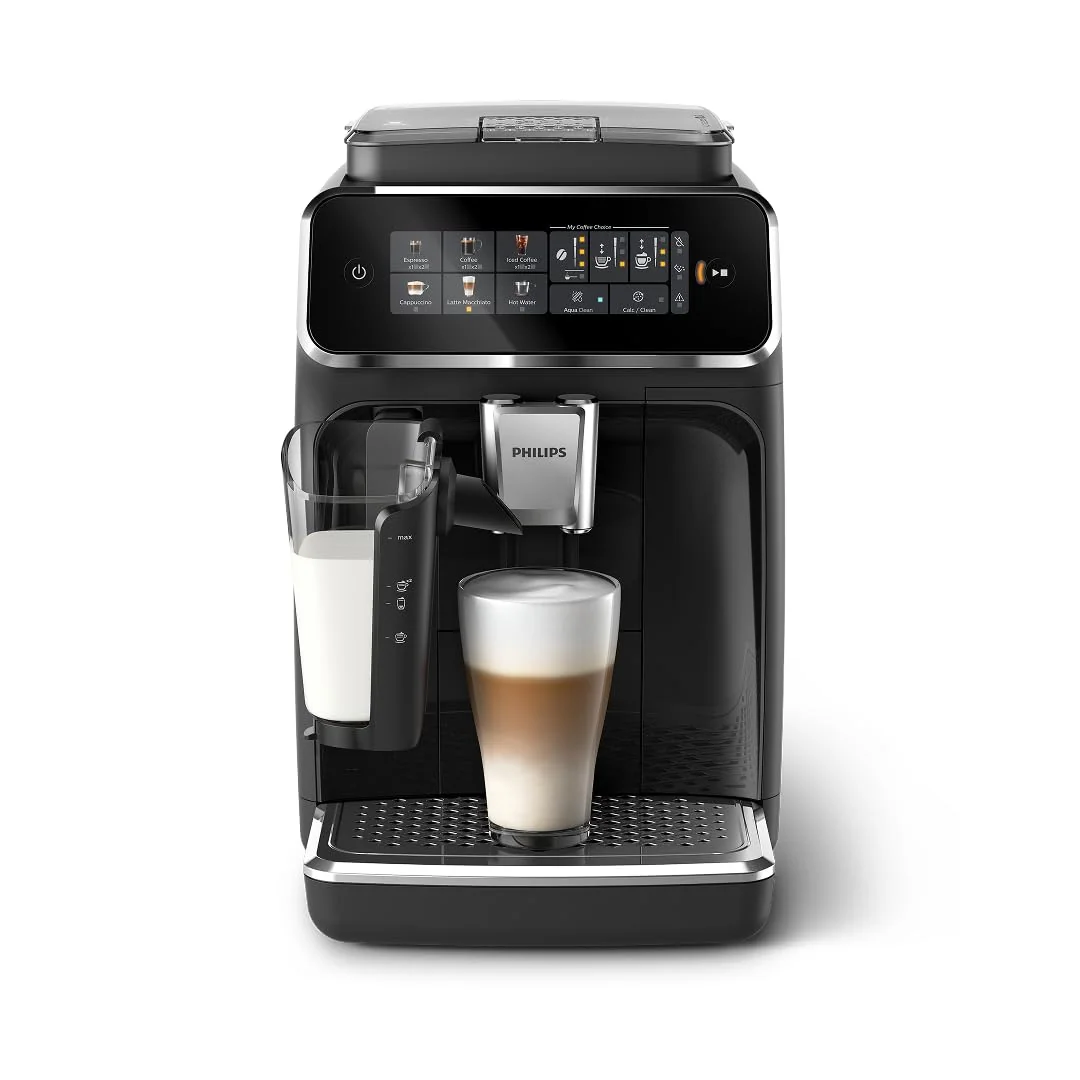
This is the rung to buy unless you can name the feature you would be missing.
It is the cheapest Philips with the quiet grinder, the milk carafe and an iced setting, and everything above it uses the same brew unit to make the same cup.
One owner three weeks in had warm water pouring from the underside of the machine during the brew cycle, bypassing the drip tray and reaching the counter.
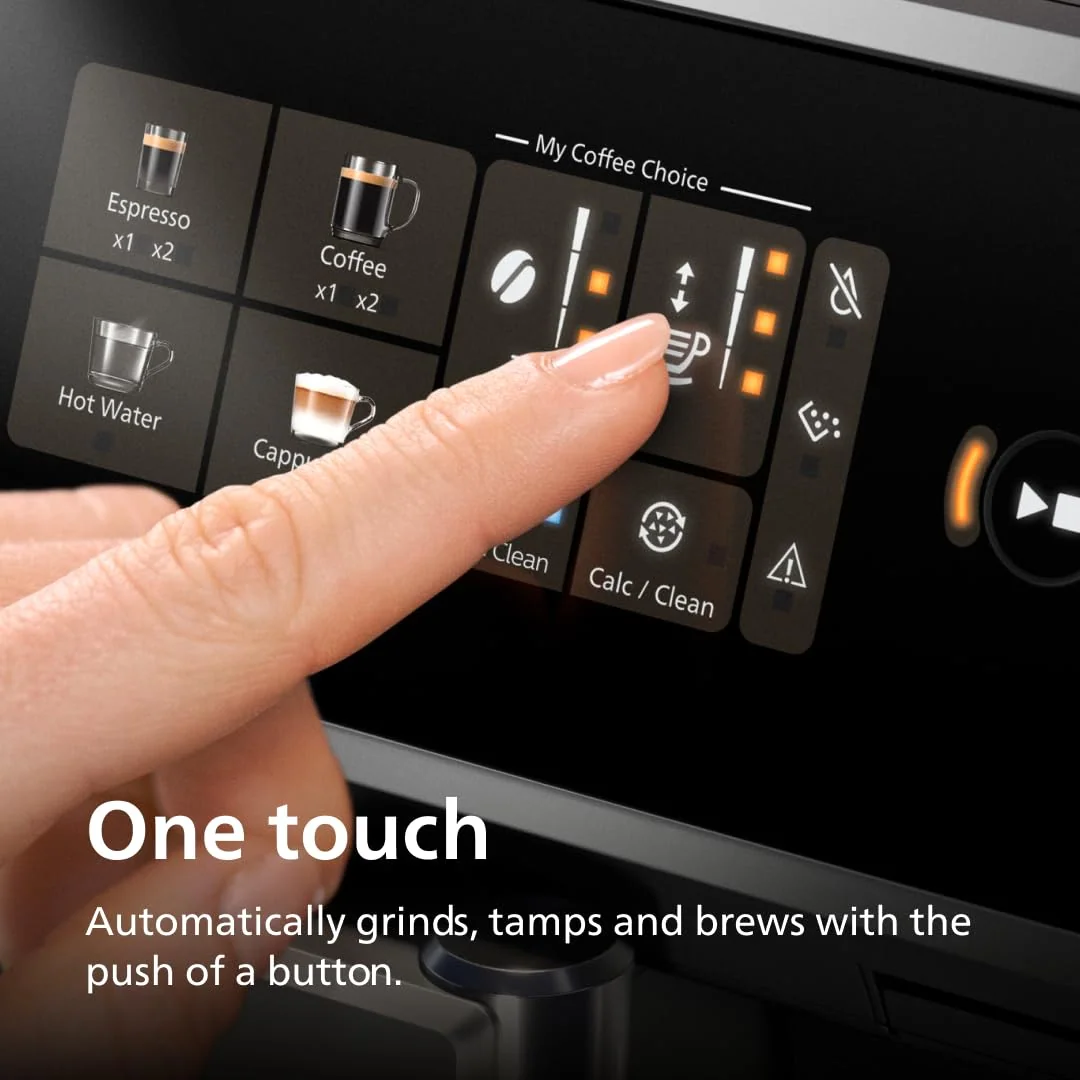
The 3300's listing counts six presets and claims a full colour display, which in practice means the usual capacitive buttons now backlit in colour rather than a screen you touch. That is the honest gap between this machine and the two above it, and it is a real one in a shared kitchen: a partner who will not decipher blinking icons is a legitimate reason to spend more. Our 3300 review and the 3300 against the 5500 take that decision apart.
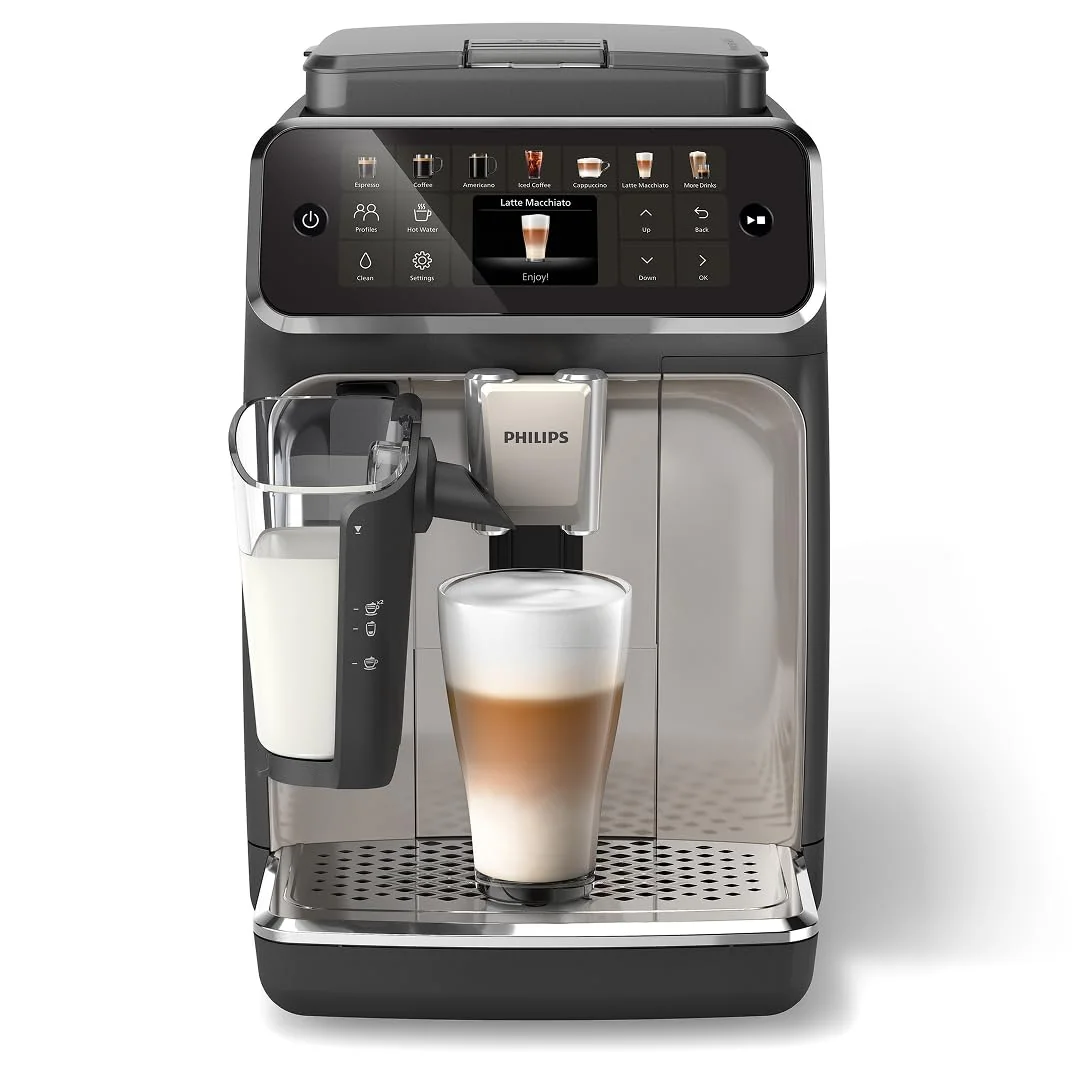
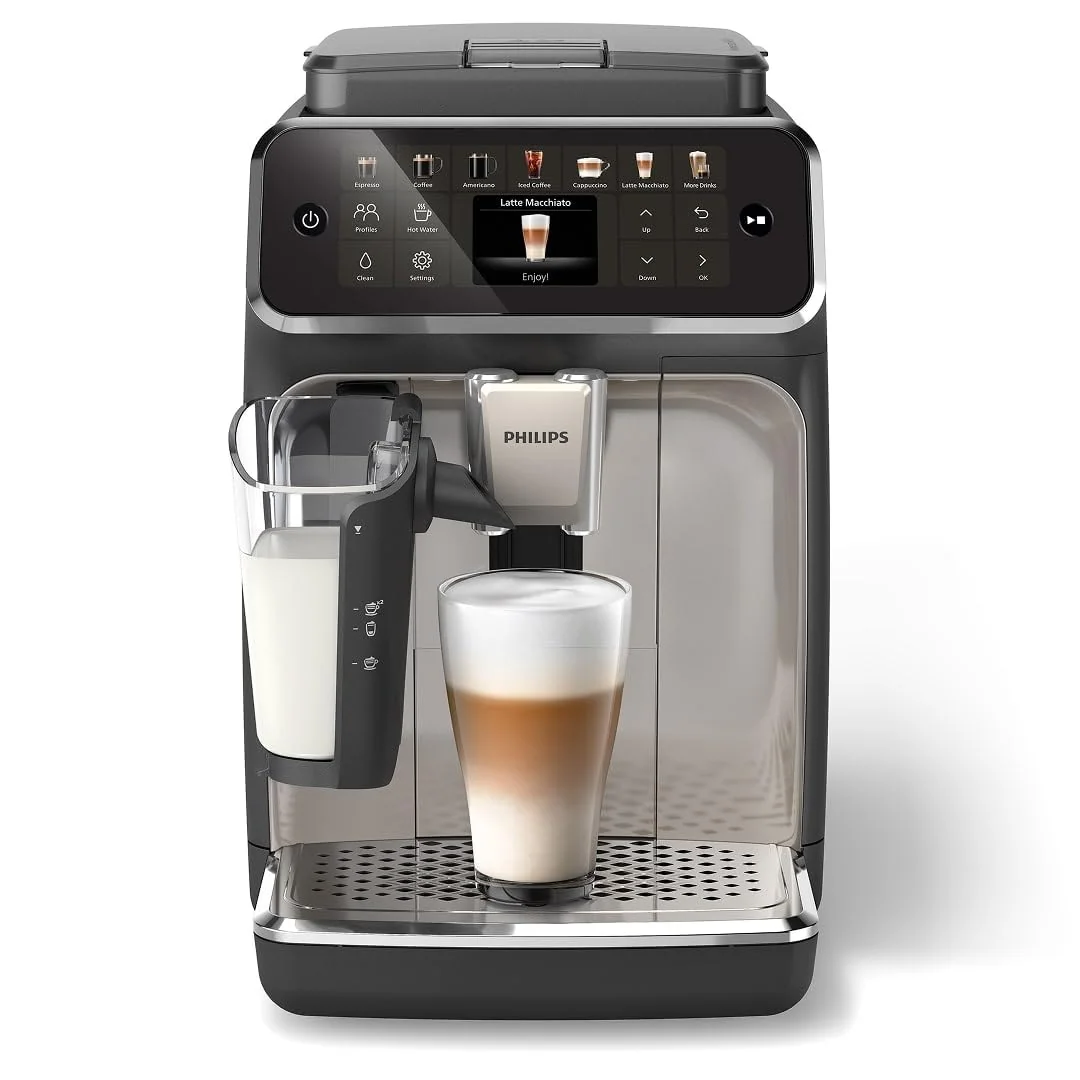
This is the one to buy when two people want different drinks without arguing about it.
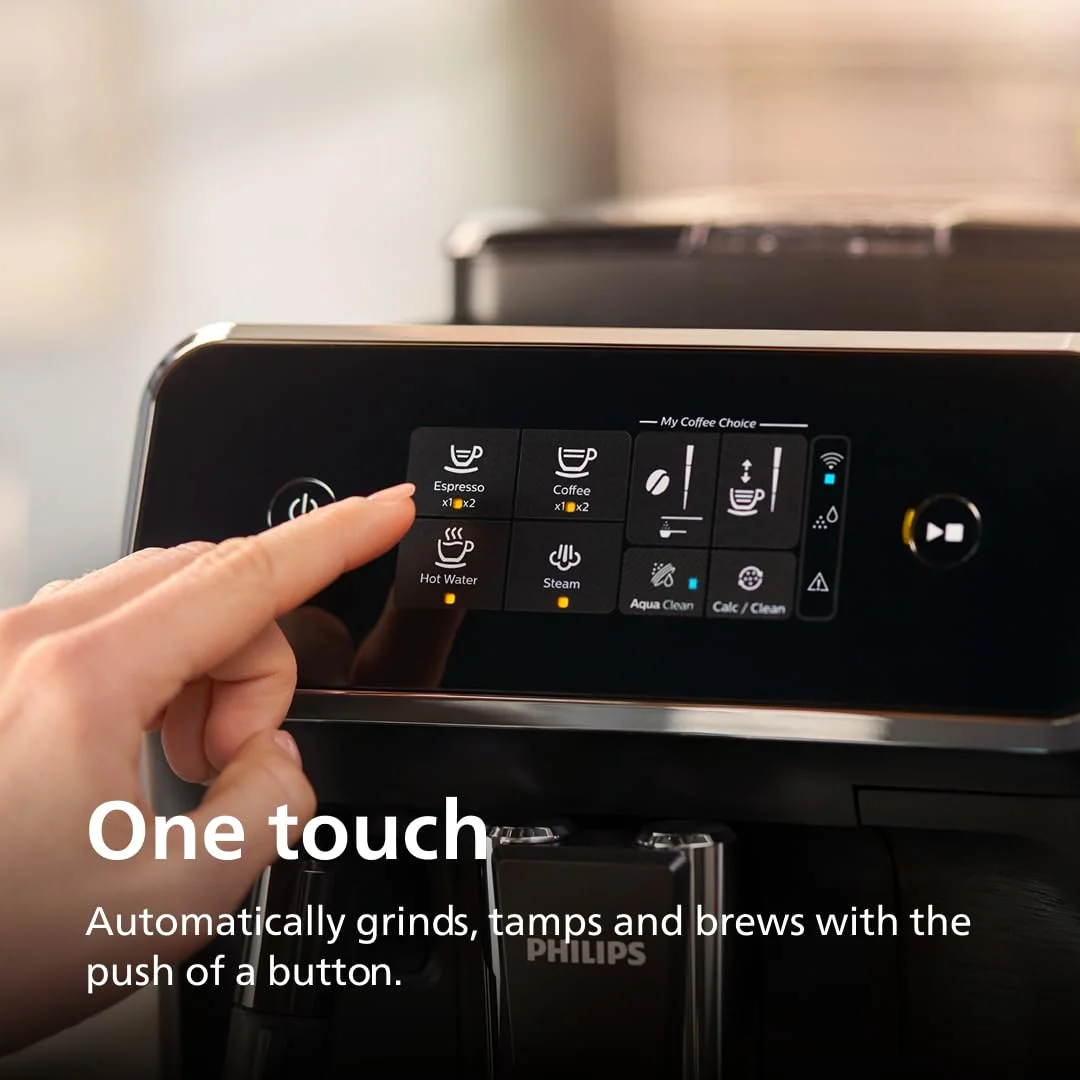
A colour screen with named drinks, five strength steps and two saved profiles turn this into the machine a household will operate unsupervised.
An owner measured the latte and latte macchiato presets topping out at 2.7 ounces, which means running two cycles for anything the size of a normal mug.
The 4400's listing counts twelve hot and iced recipes, four of them iced versions of drinks already on the list. Its most persuasive review is a happy one: an owner who loves the machine, broke it in properly, had no issues, and then volunteers that twelve drinks is more than he needed and that he could have got away with the 3300. When the satisfied customer says the headline feature was surplus, believe him, and read our 4400 review before paying for it.
This is the same 4400 with most of its warranty removed.
If the discount against the new listing is wide, this is the cheapest route to the colour screen and the saved profiles.
Its ninety days of cover expire well before the leaks and perished seals that owners of this platform actually report.
Read the renewed listing slowly, because it rounds up twice: it advertises a colour touch screen on a machine with physical buttons around a colour panel, and it says save up to three profiles where the real count is two plus a guest slot. Neither is a lie you would notice in use, and both tell you how much care went into the copy. The day it arrives, open the settings menu and read the product counter, which lists every drink the machine has ever made by type, and you will know immediately whether renewed meant open-box or meant a year of somebody's mornings. Our page on renewed machines covers the rest of that checklist.
This is the top of the range, and it earns the money on profiles rather than on coffee.
Four saved profiles plus a guest slot, a milk-froth-only option and an Extra Shot key on nearly every drink make this the most pleasant Philips to live with.
The twenty presets on the box are padded with iced versions of drinks already on the list, plus hot water and milk froth counted as coffees.
That padding is not our reading, it is Home Coffee Expert's, and the same review notes that only a handful of the twenty have a dedicated button while everything else lives a menu down. The Extra Shot key deserves better than a footnote, though: it grinds and brews a second puck, which makes it the only control on any of these machines that genuinely raises the dose, and it is why the 5500 is the rung that best answers a household that drinks its coffee black. The listing's own copy promises four profiles and twenty varieties.
This is the grey 5500, which is the black one in a different finish.
Nothing in the hardware changes between the two colours, so buy whichever of them is cheaper on the day you look.
Its own listing copy contradicts the machine it is selling, claiming two user profiles and a power draw of 230 watts.
Set the grey listing next to the black one and the discrepancy is plain: same model number, same twenty varieties, four profiles on one page and two on the other. The suffix is a colour code and nothing more, which is a thing owners have had to establish for themselves because the retailers could not explain it either. It is also the lowest-rated of the four 5500 listings, on a machine that is mechanically identical to the highest-rated one, which should tell you how much weight to put on a star average calculated across a few hundred people.
This is the renewed grey 5500, and it arrives looking new more often than not.
Seven of the eight retained reviews on this listing describe a machine with no visible signs of prior use, including one from an owner replacing a 3200 he had run into the ground over six years.
The eighth arrived leaking on Christmas Eve and went straight back, which is the risk you are being paid to take.
Those reviews are worth reading in full, because they are unusually specific about what a good refurbishment looks like: spotless, practically brand new, no signs of prior use. The listing itself makes the same twenty-recipe and two-part-carafe claims as the new one, so you are not buying a different specification.
This is the renewed black 5500, sold with ninety days of cover.
It is the same machine as the new black listing, provided the discount is worth the years of manufacturer warranty you are handing back.
Its copy says two user profiles where the machine has four, so read it as a rough guide rather than as a specification.
Judge any renewed unit against what the new one actually costs on the day rather than against the manufacturer's list price, which on this range bears little relationship to what anyone pays. If the gap is narrow, you are buying a shorter warranty on a platform whose characteristic faults arrive after the first few months rather than in the first few weeks, and our piece on what breaks first sets out that calendar. If the gap is wide, the renewed 5500s have the best review record of any listing on this page.
If none of this rung sounds right
The comparison that keeps coming up in owner threads is with De'Longhi, and it comes up for one mechanical reason: the machines people move to hold more coffee. If a dense shot is what you are buying and the milk carafe is not what sold you, the Magnifica Evo is the machine that wins those arguments, and we have put the two head to head. In the Philips column against it sit two real things: the americano is a single press from the 3200 upward, and nothing De'Longhi ships is as easy to clean as LatteGo.
How Espresso Den arrived at this order
We have not had any of these machines on a bench, and nothing on this page is presented as a measurement we took. This is a synthesis of the reviews we have already published on each model, which are themselves built from the listings and their marketing claims, the customer reviews Amazon retains for each one, Philips' own product and support documentation, and the independent testers who put scales, thermometers and sound meters on these machines and published the numbers. Every figure quoted here belongs to whoever produced it, and the citation says who.
The ranking is the order the listings arrive in rather than a merit order, so read the argument above rather than the sequence below it. Where the record disagrees with itself, and on this range it disagrees constantly about noise, about break-in and about whether the espresso is acceptable, we have shown the disagreement instead of picking the tidier answer. The one thing we have refused to do is average four different star ratings on four listings for what is demonstrably the same machine, because that number would describe the listings rather than the appliance.
Where to get off the ladder
| Model | Milk system | Presets | Interface | Saved profiles |
|---|---|---|---|---|
| 1200 (EP1220/04) | Panarello steam wand | Espresso, coffee, hot water | Backlit icons | None |
| 2200 (EP2220/14) | Panarello steam wand | Espresso, coffee, hot water | Backlit icons | None |
| 2300 (EP2330/10) | LatteGo carafe | Four | Backlit icons | None |
| 3200 (EP3241/54) | LatteGo carafe | Five | Backlit icons | None |
| 3300 (EP3341/50) | LatteGo carafe | Six | Colour-lit panel | None |
| 4400 (EP4447/90) | LatteGo carafe | Twelve | Colour display | Two plus a guest slot |
| 5500 (EP5544) | LatteGo carafe | Twenty | Colour display | Four plus a guest slot |
The first two rungs are not LatteGo machines at all
This trips up more buyers than anything else in the range. The 1200 and the 2200 have a classic steam wand wearing a plastic panarello sleeve, not the carafe, and their listings both promise espresso, coffee and hot water and nothing else. That is not a failing. A specialist site rated the 1200 well and reached the sensible conclusion about it, that it is excellent for beginners and wrong for anyone wanting café-level control, which is exactly the machine's job. But if you came here because you wanted one-touch cappuccinos, the ladder does not start until the 2300.
Between those two rungs there is almost nothing to decide. Coffeeness, reviewing the 2200, noted that the word display on the box means a panel of backlit touch buttons rather than a screen, and settled on grind level three of twelve as the useful setting. Everything it describes applies equally to the 1200, because they are the same appliance in different trim, and our 1200 against 2200 page exists mostly to say so at greater length. If you are choosing between them, choose on whichever is cheaper and on nothing else.
The jump that is actually worth money
It is the carafe. LatteGo is two pieces of plastic with no tube, no hose and no hidden channel, and milk never enters the body of the machine, which is why it survives every review anyone writes about it, including reviews by people who dislike the coffee. It is also the difference between rinsing the milk system now and finding it tomorrow. If you have been putting off a bean-to-cup machine because of stories about what grows inside a milk hose, our comparison of the three milk systems is the argument in full, and this is the rung where you buy your way out of it.
What the carafe will not do is texture. Home Coffee Expert, testing the 5500, lists foam that is too thick for flat whites as an outright reason to skip the machine, and the same carafe is on every rung, so that limitation is the range's rather than the model's. Cappuccinos and lattes are well served. Flat whites, cortados and latte art are not, and no amount of climbing changes it. If milk drinks are the entire point, weigh this against the machines we recommend for latte drinkers before you commit.
Quiet, iced, and two claims that need reading slowly
SilentBrew is the one piece of Philips marketing on this page that survives measurement, and it arrives at the 3300. Coffeeness put the grinder at sixty-one decibels and called it the quietest Philips yet. An owner who upgraded from a 3200 to a 3300 found the mechanism himself: a thick rubber seal around the bean hopper, which made grinding significantly quieter while leaving the frother making exactly the same racket as before. That is the honest shape of the improvement. It acts on the grind, not on the pump and not on the milk, so if silence is the whole reason for the purchase, check it against our quietest picks rather than the forty per cent on the box.
The iced presets need the same care. Coffeeness read Philips' own operating instructions for the 5500 and found them saying that the coffee is prepared with warm water and that for best results you brew it over ice cubes, which is a very different sentence from the one on the listing. It makes a decent drink and it is not cold extraction, a distinction we take apart in our piece on what these iced modes really do.
The other claim worth decoding is AquaClean's five thousand cups without descaling. Philips' own product page for the 1200 states in plain text that the filter is not included with the US EP1220/04, and its disclaimer says the five thousand figure assumes eight filter replacements. Eight filters, bought by you, on a machine that did not come with the first one. The filter is a genuine convenience and it does push descaling much further out than most rivals demand; it postpones the job rather than abolishing it. When the counter runs out, descale, and use the manufacturer's product, because Philips names sulfuric, hydrochloric, sulfamic and acetic acids as things that damage the machine, which puts vinegar out of the running. Our AquaClean page works through the arithmetic properly.
Two things to do on the day it arrives, whichever rung you bought
The first is to start throwing shots away immediately. Home Coffee Expert warns that you should expect at least twenty to thirty coffees before you get good results, that Philips explains this nowhere, and that the silence on it gets perfectly good machines returned early. A break-in period that runs a month against a return window that runs thirty days is a trap, so buy cheap beans, drink hard in week one, and make the keep-or-return decision before the window closes rather than politely after it.
The second is to move the settings off the factory positions. Temperature ships mid-range, the grind ships coarse, and the volume ships long, which between them account for most of the wateriness people report. Push temperature high, strength to maximum, volume to the shortest length you can drink, and bring the grind finer one step at a time while the burrs are actually turning. Then pick beans that suit the machine rather than fighting it: medium to medium-dark, not shiny with oil, as our beans guide sets out, and our settings and warning-lights page covers where each of those menus hides.
One physical thing to check before you clear a space. TechRadar's tester, an SCA-certified barista, found the milk spout angle fixed on the 5500, so the cup has to sit further forward than instinct suggests, and noted that you fill the hopper from the top, which means a machine under a wall cabinet has to be shuffled out to reload it.
Frequently Asked Questions
Is the 1200 or the 2200 a LatteGo machine?
Neither is, because both use a classic steam wand with a plastic frothing sleeve and the carafe does not appear until the 2300.
Does paying more get me a better espresso?
No, because the brew group and the ceramic grinder are shared from the bottom of the range to the top, and what the money buys is the milk system, the interface and saved profiles.
Which rung is the value pick?
The 3300, because it is the cheapest machine in the range with both the quiet grinder and the milk carafe, and the coffee above it is identical.
When is the 4400 or 5500 actually worth it?
When more than one person in the house takes their coffee differently, since saved profiles and a screen that names drinks in words are the only upgrades on those machines that change daily life.
Do the iced presets brew cold coffee?
No, they brew cooler and slower than the hot settings and expect you to pour the result over ice you have supplied yourself.
Can I make a proper flat white on any of these?
Not really, because the carafe produces one cappuccino-style foam that is too thick for the drink whatever the preset is called.
Does the AquaClean filter mean I never descale?
No, it defers descaling substantially on the condition that you buy and fit eight filters on the machine's schedule, and the 1200 does not even include the first one.
Is a renewed unit a safe buy?
The renewed listings on this page have the best review record of the eleven, but their ninety-day cover expires before the leaks and worn seals that owners of this platform typically report.
Why do my first cups taste like nothing?
The machine needs somewhere between twenty and a hundred drinks to settle, Philips does not warn you about it, and that window can outlast a thirty-day return period if you wait politely.
Should I be worried about leaks?
They are common enough across this range to plan for, so stand the machine on something waterproof and pull it forward weekly to check behind it.
Our Top Pick
The Philips 1200 Series espresso machine is our #1 recommendation — the carina grinds fresh, rinses itself and asks almost nothing of you, and it will hand you a pale, watery shot for the first fortnight unless somebody tells you exactly what to change..
Check Price on Amazon: Philips 1200 Series espresso machineSources (8)
- Amazon listings and customer reviews
- Owner and reviewer video, 1 channel
- Seattlecoffeegear — Article — www.seattlecoffeegear.com
- Home Baristas — Article — homebaristas.com
- Coffeeness — Article — www.coffeeness.de
- Homecoffeeexpert — Article — homecoffeeexpert.com
- Philips — Article — www.usa.philips.com
- Techradar — Article — www.techradar.com