The KitchenAid KF6 is the quietest machine here that a normal budget reaches, and the milk is what you pay for it
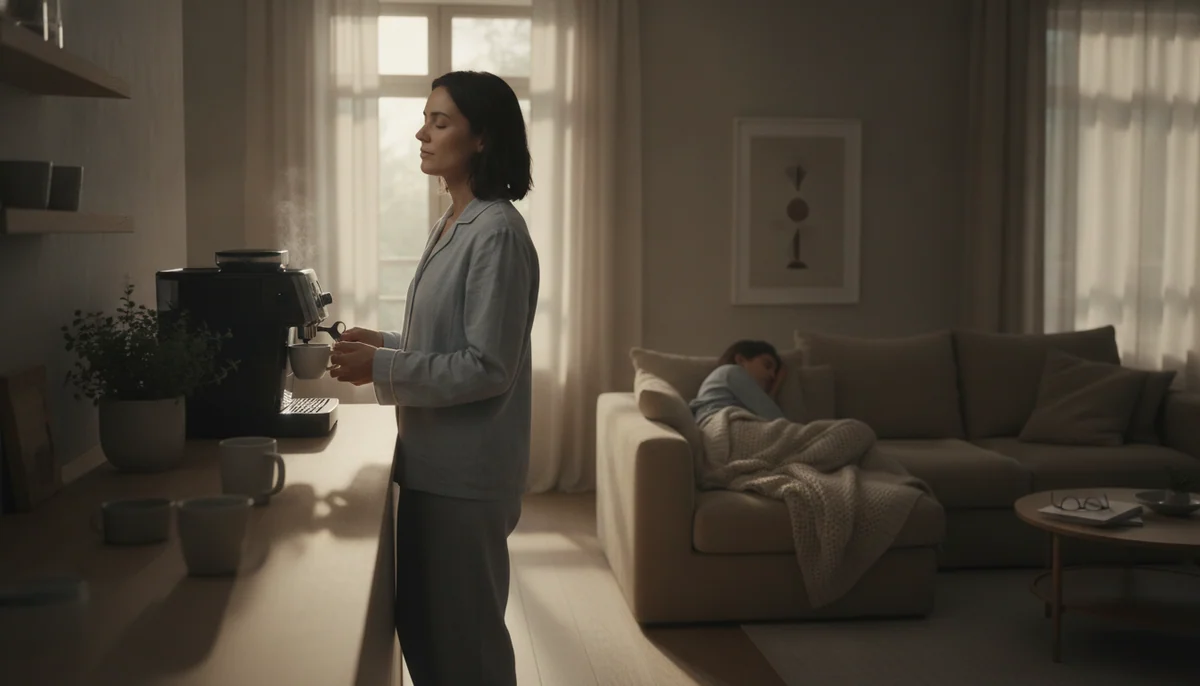
Nobody shopping for a hushed espresso machine is really shopping for a number. They are shopping for a specific thirty seconds: six in the morning, the kitchen open to the stairs, somebody asleep on the other side of a wall that was never built to be a wall. The trouble is that the appliance makes three separate noises at three separate moments, and the marketing describes one of them. Philips advertises forty percent less noise, and a reviewer with all four current LatteGo machines in front of him found the claim was real and also narrower than it sounds: the reduction acts on the grind, so during extraction you still hear the pump at around sixty decibels, and the milk system is untouched.
That is the single most useful thing on this page. On several of the machines below, the loudest event of the morning is not the burrs at all. It is the frother, which runs after you have already congratulated yourself on how quietly the coffee went in. A tester who put a meter on a Philips 5500 recorded the milk system peaking above 80 dB as frothing began, on a machine whose grinder sits around 61. An owner four months in put the same finding in plainer words: the grinding is quiet, the milk and the brewing are very loud.
Espresso Den has not put any of these machines on a bench, and this page does not pretend to have done. What follows is other people's measurements, taken on different days with different beans and different meters, which is why the table below is a set of readings rather than a league table. Two things it does establish. The KitchenAid platform, the Philips SilentBrew generation and the Jura J8 are the only machines here with figures anyone outside the manufacturer produced, and neither Bosch on this page has a published decibel number at all. And none of them is silent: an owner three months into a KitchenAid says flatly that it would still wake somebody sleeping in the next room.
Three noises, and the box only measures one
Take them in the order your kitchen hears them. The grind is five to ten seconds of high-frequency work, and it is the noise every quiet-mode claim and every certification badge describes. The pump is longer, lower and duller, running through the whole extraction, and one tester on a Philips found it more unpleasant than the grinder precisely because it lasts. The milk system is last and, on the automatic carafes, loudest. If you have not yet decided between a carafe, a hose and a wand, the trade is set out in our piece on which milk system you will actually live with, and noise belongs in that decision alongside cleaning.
Then there is the noise nobody counts. Most of these machines rinse themselves on power-on and again on shutdown, so switching one on is itself an event, and the Jura has no timer and no auto-on at all, meaning somebody has to walk into the kitchen and stand there before anything happens. The Bosch 800 is the one machine here that lets you dodge the startup rinse, by beginning the drink from the app with the cup already in place.
Two things you control for free. The hopper lid is doing more work than it looks: a tester measuring the same Philips with the lid seated and then removed found roughly ten decibels between the two readings, which is most of the improvement the generation is sold on. And oily dark-roast beans make a grinder labour, which is loud as well as bad for the burrs, a point we go through in our guide to beans that suit a bean-to-cup machine.
| Machine | Grinding | The rest of the cycle | Measured by |
|---|---|---|---|
| KitchenAid KF6 | Just over 60 dB | Mid-50s while brewing | A reviewer who ran it two months with a sound meter |
| KitchenAid KF8 | About 65 dB | Pump about 55 dB, frother 50 to 53 dB | A published review carrying third-party certification |
| Philips 3300 | About 63 dB, the quietest Philips that reviewer had measured | Pump around 60 dB during extraction | Coffeeness |
| Philips 4400 | About 58 dB, down from roughly 70 dB before | Frother unchanged | A reviewer with all four LatteGo machines |
| Philips 5500 | 61 dB with the hopper lid on | Milk system peaking above 80 dB | Coffeeness, and a separate tester with a meter |
| Jura J8, single-hopper version | About 62 dB maximum at ear height, the low end of a conversation | A retailer's own measurement | |
| De'Longhi Eletta Explore | Under 65 dB | Not measured | A reviewer who puts the category average at 68 to 70 dB |
| De'Longhi Magnifica Start | 75.9 dB, with a shrill note | Not measured | Coffeeness |
| Both Bosch machines here | No published figure exists that we could find, in either direction | ||
The machines, and what each one asks you to forgive
Start with the Swiss-built KitchenAids, because they are the only machines on this page where a genuinely low grinder figure sits under a dose big enough to make the coffee taste like something. All three share a brew unit, a grinder and a milk terminal, so the quiet is identical across them and the money buys screens, carafes and strength increments; our KF6 against KF7 against KF8 guide works through which rung to stop at. The house maintenance rule applies to all three: pull the brew unit and rinse it under the tap roughly weekly, because the clogging that generates this platform's angriest reviews is what happens when nobody does. Coffeeness, reviewing the KF7, rated it among the quieter machines it has used and was noticeably cooler about the foam than about anything else.
The quiet one to buy if espresso and americanos are what you actually drink
It carries the lowest independently measured figures on this page and a Swiss brew unit that doses roughly fourteen to fifteen grams, which is why the shots read as strong rather than thin.
Milk arrives at a fixed temperature KitchenAid confirms is around 57°C and cannot be adjusted, and three reviewers separately found the foam too light for a proper cappuccino.
The same hush, with the milk container and the touchscreen in the box
Identical hardware to the KF6 plus a carafe, milk-first ordering and a screen the rest of the household will use half asleep without a lesson.
The record carries a cluster of early failures, including one warranty case that spent six weeks at a repairer and threw the same fault two days after it came back.
The machine where the milk system is louder than the grinder
A dealer walking through it on camera noticed the thing that matters more than any decibel figure, which is that on this machine milk preparation makes more noise than grinding does.
You are paying the step-up over a KF7 largely for a plant-milk mode that its own most knowledgeable advocate believes is a menu label rather than different hardware.
The De'Longhi flagship is the awkward one. A reviewer with a meter put it under 65 dB while grinding and called it among the quietest she had tested, while the crew at the retailer selling it say you can hear the grinder from a room or two away and that in a small apartment everyone will know you are making coffee. Both are probably true, because the complaints are about pitch rather than volume, and a meter does not measure the frequency that sets your teeth on edge. Buy it for the cold extraction, which is real, and read our iced coffee guide if that is the whole reason you are here.
Quiet on a meter, and the machine people describe as high-pitched
Genuine cold extraction, a travel mug position and the best hot milk foam on this page make it the flagship to buy if iced coffee is a daily habit rather than a summer one.
Two reviewers name the grinder's pitch rather than its volume as the problem, one of them reporting it drives his migraine-prone wife out of the room.
Bosch publishes no figure for either 800 Series listing, so all we have is owners, and they are consistent in one direction: a buyer who came from an older super-automatic reports the Bosch grinder is much quieter than the machine it replaced. The two listings are not the same product in two colours. The stainless one ships with a milk container and a cup warmer; the black one ships with a hose, and owners are close to unanimous that the hose is the better arrangement.
The stainless one, which is the version with the carafe you probably do not want
This is the finish that arrives with the integrated milk container and the cup warmer, on a machine whose coffee owners repeatedly rate above whatever they traded in.
One owner abandoned the carafe entirely after finding the tube discharges warm milk back into the container, which is a spoilage problem dressed up as a design detail.
The black one, same machine, hose instead of a carafe
The flexible hose drops straight into whatever carton you are already using and cleans itself by sitting in the drip tray for two minutes, which is why owners recommend this listing over the stainless one.
There is no bypass chute at all, so one decaf at night means emptying the bean hopper, and every enthusiastic owner in the record bought theirs on a discount.
The Magnifica Evo is the counter-example that keeps this page honest, because it is the best-selling machine in the category and nobody calls it quiet. Owners raise the grinder in five-star reviews, one of them writing that it is noisy and asking who cares, another naming the noise level as the thing that seems a bit high. The renewed listing is the same machine with roughly a tenth of the warranty; our page on renewed and refurbished machines covers what that trade is worth.
The cheapest one-touch cappuccino here, and one of the loudest machines on the page
Its LatteCrema carafe produces thicker foam than the price suggests, and the renewed listing is worth taking only when the discount against a new one is genuinely large.
Owners raise the grinder noise even when they are giving it five stars, and ninety days of cover is short on a machine whose failure tail clusters at two to four years.
Philips is where the deliberate engineering is, and it is worth being clear about what it bought. Every LatteGo from the 2300 up shares one brew unit and one ceramic grinder, so the quiet is broadly the same all the way up the ladder and the money buys screens, profiles and drink counts. That makes the whole-range guide and the 3300 against the 5500 the two pages to read before spending anything, because the espresso does not improve as you climb. What does vary is how owners of the same listing hear it: on the 2300, one buyer calls the machine noisy and another calls it very quiet, in the same review pool. On the 4400, one owner checked whether the machine was grinding at all because it was so much quieter than expected, and another says the grinder is quiet while the frother is loud.
The quietest grinder Philips has built, at the sensible rung of the range
Measured around 63 dB against the seventy-plus of every earlier Philips grinder, it is the value point of a range whose upper models brew identical coffee.
The brew chamber tops out near 8.8 grams weighed, so the espresso is mild by design and no setting on the machine lifts that ceiling.
The least expensive route to LatteGo and the same quiet architecture
Four presets, a two-part milk carafe that rinses in seconds and a brew group you can pull out and inspect, for less than anything else on this page with those three things.
Owners of this exact listing flatly contradict each other on how loud it is, and there is no americano button, so a long black is two presses and a cup move.
The one where an owner checked whether the grinder was running at all
The measured drop from roughly 70 dB to around 58 is the clearest single improvement in this range, and this rung adds the colour screen and the saved profiles that stop two people overwriting each other.
Nothing you pay over a 3300 improves the cup, and the machine's own owners say so.
The quiet grind, four profiles, and the same small puck
Coffeeness measured its grinder at 61 dB and called it the quietest Philips yet, and the four saved profiles plus a guest slot are the honest reason to pay over a 3300.
The milk system is the loudest thing it does, peaking above 80 dB as frothing starts, which is the part of the morning you cannot skip.
The cheap Bosch is the surprise inclusion, and the evidence for it is one careful owner rather than a laboratory. A buyer who normally buys De'Longhi describes it as much quieter with fewer parts to break or go missing, while another notes the grinder is a bit noisy for the few seconds it runs. At under ten inches wide it also belongs on the shortlist for a small kitchen.
The narrow, cheap one that a De'Longhi owner found quieter than what she had
It grinds, brews and froths at one press in a body under ten inches wide, with the grounds captured internally so nothing lands on the counter.
There is no temperature setting at all, so the milk arrives warm, and the listing's title promises a steam wand where the machine has an in-cup automatic frother.
Then there is the machine that beats everything here and costs accordingly. A retailer measuring the single-hopper J8 clocked a maximum around 62 dB at ear height, and the most quoted owner line about the twin is that she takes phone calls while it brews without the other party noticing. An owner who runs a KitchenAid KF7 alongside a Jura gives the Swiss machine the quietness crown, while conceding the KitchenAid is close. Two hoppers and two grinders also settle the decaf question permanently, which is the argument in our page on two-bean households.
The quietest machine on this page, if you can justify what it costs
Two bean hoppers with two grinders, the best screen Jura currently ships and a noise floor low enough that an owner holds conversations over it.
The brew group is sealed, so you can never see or rinse the part that makes your coffee, and servicing it means booking a dealer or shipping the machine away.
The Magnifica Start is on this page as a warning and a recommendation at once. Coffeeness measured its grinder at 75.9 dB, several decibels above the older machine it replaces, and describes a shrill note on every cycle that would not survive a sleeping baby. It is also the best espresso per pound here, and its manual wand is the one milk system on this page whose temperature you control, which is worth knowing if lukewarm lattes are your real complaint rather than noise; we cover why the rest of them run cool.
The loudest machine here, and the best espresso for the money
It shares its brew group and steel burr with De'Longhis costing far more, deletes the automatic carafe that generates their complaints, and hands you control of the milk.
Its grinder was measured at 75.9 dB with a shrill note on every cycle, which is exactly the wrong machine for a bedroom on the other side of an open-plan wall.
Three renewed listings sit on this page, and the quiet is not the variable. A buyer of a renewed Philips singled out how quiet the grinder was, on a machine he says showed no sign of prior use. What you are trading is warranty length, on a platform whose characteristic failures are leaks and worn brew-unit seals that arrive after the first few months rather than in the first few weeks. Read the copy carefully too: the renewed 4400 listing advertises a colour touch screen and three profiles where the machine has a colour panel with physical buttons around it and two profiles plus a guest slot.
The grey renewed 5500, which is the cheapest honest route to this generation
Seven of the eight retained reviews on this listing describe a machine indistinguishable from new, with the same gasketed hopper and the same 61 dB grinder.
Its cover is far shorter than the window in which this platform's leaks and worn seals actually show up.
The same renewed machine in black chrome
Mechanically identical to the grey renewed unit and to the new one, since the suffix on a Philips 5500 is a colour code and nothing else.
Ninety days of limited warranty expires well before the faults owners report, so this is worth taking only when the saving against a new machine is genuinely large.
The renewed 4400, at a price that makes the screen easier to justify
Same SilentBrew grinder, same two-part carafe and same colour display as the new 4400, at a discount that narrows the gap to a 3300.
Its bullets round up twice, claiming a touch screen and three profiles the machine does not have, which is a listing to read slowly.
Last, the machine owners bought for one reason and then praised for another. Buyers who upgraded from a Magnifica report the Rivelia is much quieter at startup, grinding and shutdown, with one adding the caveat this whole page keeps returning to, which is that it is not silent.
Noticeably quieter than the Magnifica it replaces, and it holds two beans
Owners moving up from a Magnifica name the drop in noise unprompted, and the swappable hoppers let regular and decaf coexist without a bypass chute.
Milk drinks come out warm rather than hot, and both hoppers feed one set of burrs at one setting, so two beans that want different grinds cannot both be right.
Frequently Asked Questions
Which of these is genuinely the quietest?
On other people's measurements the KitchenAid platform and the Jura J8 sit lowest at roughly 60 to 65 dB while grinding, with the Philips SilentBrew machines within a decibel or two of them.
How loud is that compared with everything else in the kitchen?
The class norm one reviewer quotes is 68 to 71 dB while grinding, and the quiet machines here take five to ten decibels off that for the few seconds the burrs actually run.
Will one of these wake somebody asleep in the next room?
An owner three months into a KitchenAid says it is not silent and would still wake somebody sleeping next door, so treat these as quiet enough for an open-plan kitchen rather than quiet enough for a nursery wall.
Does SilentBrew actually do anything?
Yes, and a reviewer with all four current LatteGo machines measured the grinder falling from roughly 70 dB to around 58, but it acts on the grind rather than on the pump or the milk system.
Why has my machine got louder than it used to be?
Check the bean hopper lid is properly seated, because a tester measuring the same Philips with and without it found about ten decibels of difference, and check the beans, since oily dark roasts make a grinder labour.
Is the milk system really noisier than the grinder?
On several machines here it is, with one tester recording a Philips frother peaking above 80 dB as frothing began on a machine whose grinder sits around 61.
Can I skip the noisy startup rinse?
On the Bosch 800 you can, because starting the machine from the app leaves the rinse out, which is the single genuinely useful thing its connectivity does.
Are the renewed machines as quiet as the new ones?
They are the same hardware, and one renewed Philips buyer singled out the grinder noise as a highlight, so what you are trading for the discount is warranty length rather than performance.
Does a quiet machine mean a weaker cup?
Often, since several of the quietest here are also the smallest-dose machines, and the KitchenAid platform is the exception that pairs a hushed grinder with a dose in the region of fourteen to fifteen grams.
Our Top Recommendation
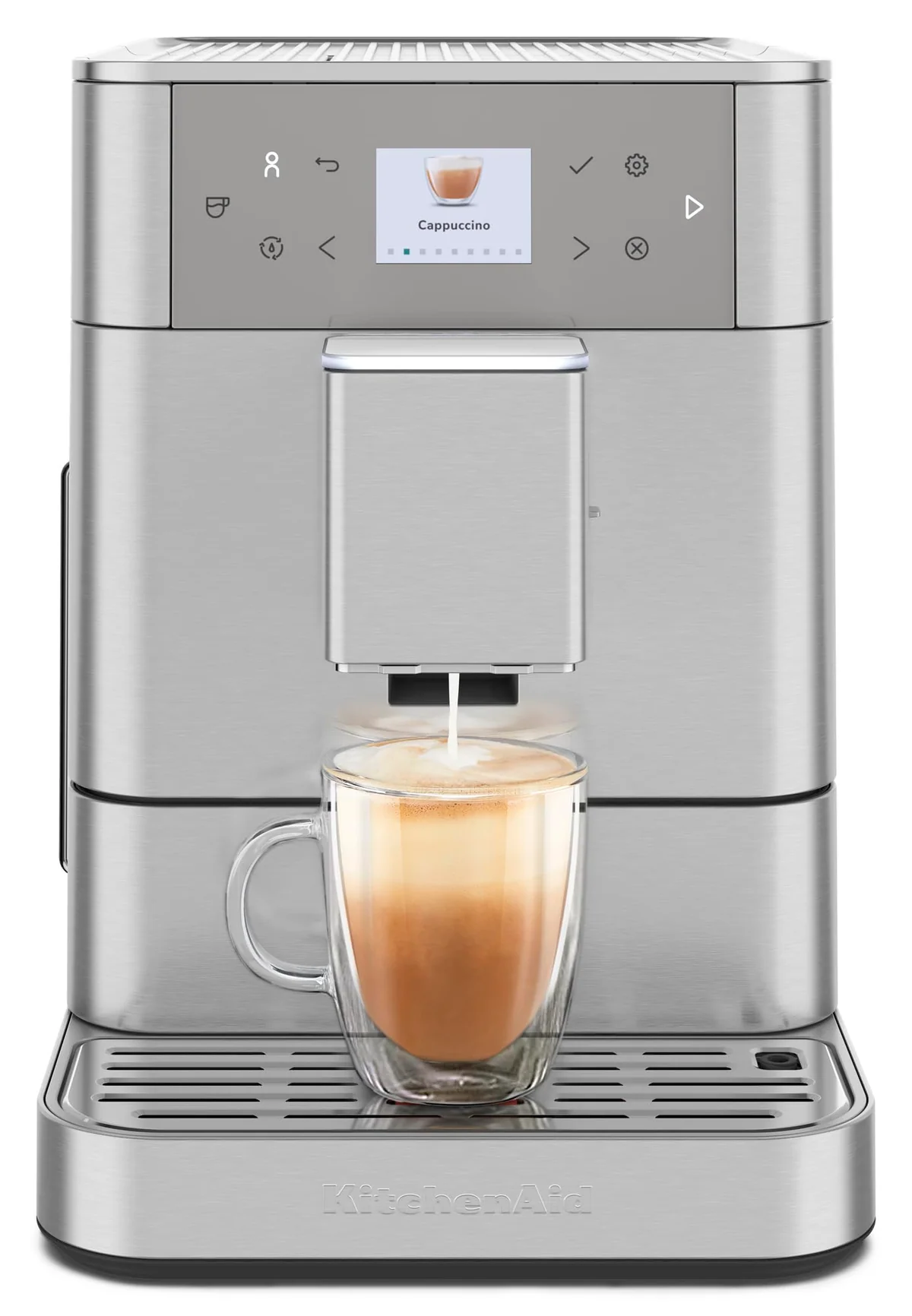
Based on our research, the KitchenAid KF6 is our top pick — it grinds quieter than almost anything else you can put on a kitchen counter and pulls a genuinely strong shot, but the milk is where the money stops working..
Sources (4)
- Amazon listings and customer reviews
- Owner and reviewer video, 7 channels
- Coffeeness — Article — www.coffeeness.de
- Lbtechreviews — Article — www.lbtechreviews.com