The Philips 2300 LatteGo is a cappuccino machine that happens to also make espresso
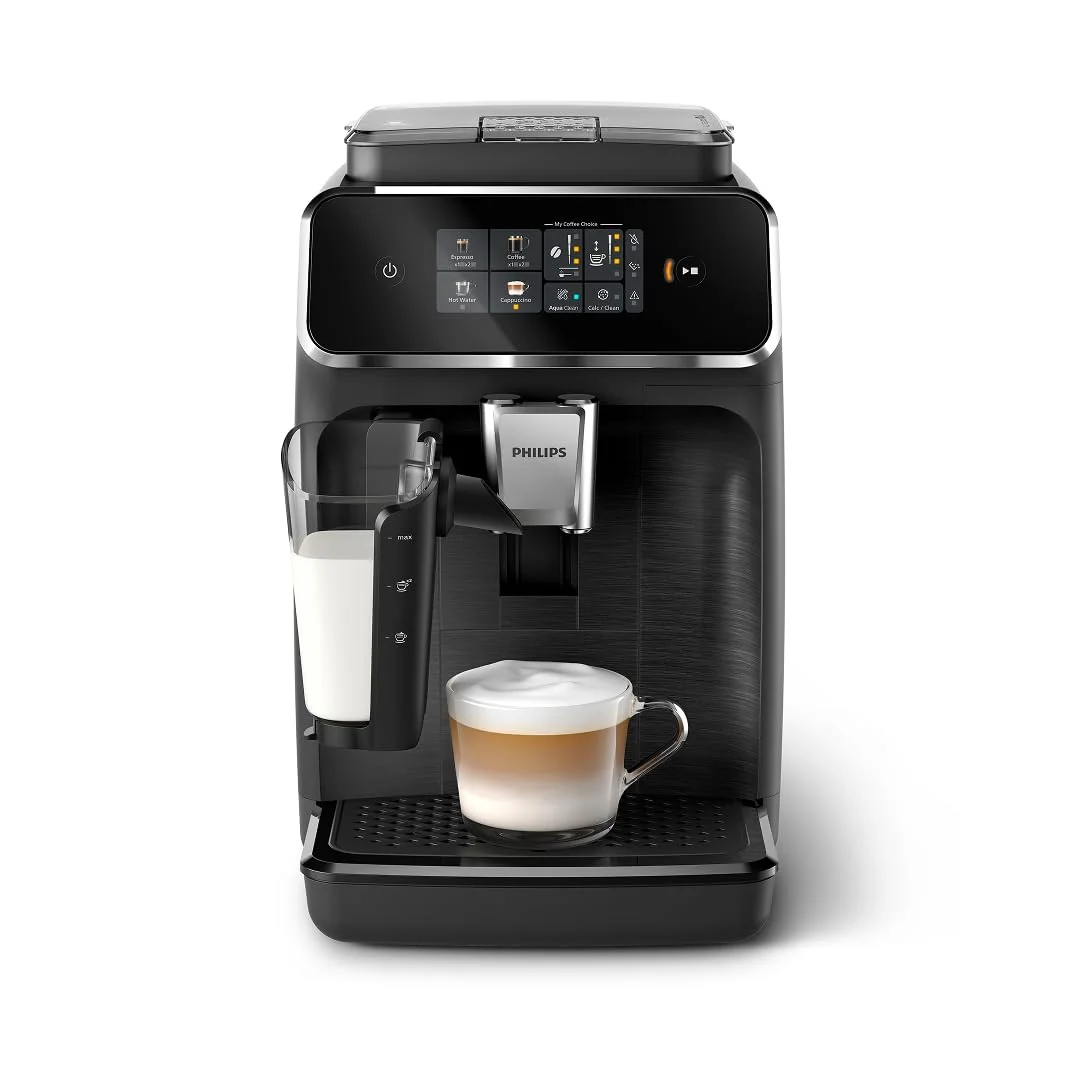
Buy the EP2330/10 if you drink cappuccinos, want one button, and will spend a bag of cheap beans getting the shot right, and buy something else if you drink your coffee black or long.
Based on 196 owner ratings, 18 owner discussions. We have not tested this machine ourselves.
We earn a commission if you buy through our links, which does not affect what we say.
Read how this site works →
Who should actually buy this
Buy it if you are one or two people who mostly drink cappuccinos, you are escaping capsules or a drip pot, you want a button rather than a hobby, and the thing that has been putting you off bean-to-cup machines is the cleaning. That buyer will be delighted, and the reviews bear it out. Set the temperature high, the strength to maximum, the volume to minimum, bring the grind two or three notches finer while the grinder is running, add a second shot to your milk drinks, and put something waterproof underneath. Do all of that in the first fortnight, not the second month.
Do not buy it if espresso on its own is your drink, if you want an americano or a long black on a button, if you want a latte in a travel mug, if you buy bright light-roast beans you love, or if you are not going to rinse a brew group every week. Those are not fussy objections; each one is a thing this machine physically cannot do or will punish you for skipping. The five-word version belongs to an owner five years in, and it is fair: easy to clean, reliable, and the coffee is the compromise. If the milk drinks are the point, that trade is a good one, and if they are not, it is a bad one.
Buy the EP2330/10 if you drink cappuccinos, want one button, and will spend a bag of cheap beans getting the shot right, and buy something else if you drink your coffee black or long.
Best for: The milk carafe is the best thing in its price class and the four-button drink list is the thinnest, and between those two facts sits every argument about whether this machine is worth owning.
Start with the number Philips would rather you skimmed past. This listing carries a rating of 3.7 out of five across a couple of hundred ratings, which is low for a super-automatic and low for Philips, whose LatteGo machines usually sit comfortably in the mid fours. The listing itself promises four presets, a milk system that rinses in ten seconds, a filter that defers descaling for thousands of cups, and a machine that pays for itself in about three months against a daily coffee-shop habit.
Espresso Den went through the reviews behind that 3.7 expecting a machine that was mildly disappointing across the board. That is not what is there. The distribution is bimodal: on one side people who use it every day for years, replaced a decade-old Gaggia with it and found more crema than they had before, or came off Nespresso and never looked back; on the other side a leak at two months, a blown seal spraying coffee out of the casing at seven, and one owner whose machine leaked from the rear during the steam cycle and soaked through a rubber mat into a new wooden coffee bar before anyone saw the water. The same reviewer, six months in, called the espresso it makes great and gave the machine one star anyway. That is not a machine people feel lukewarm about.
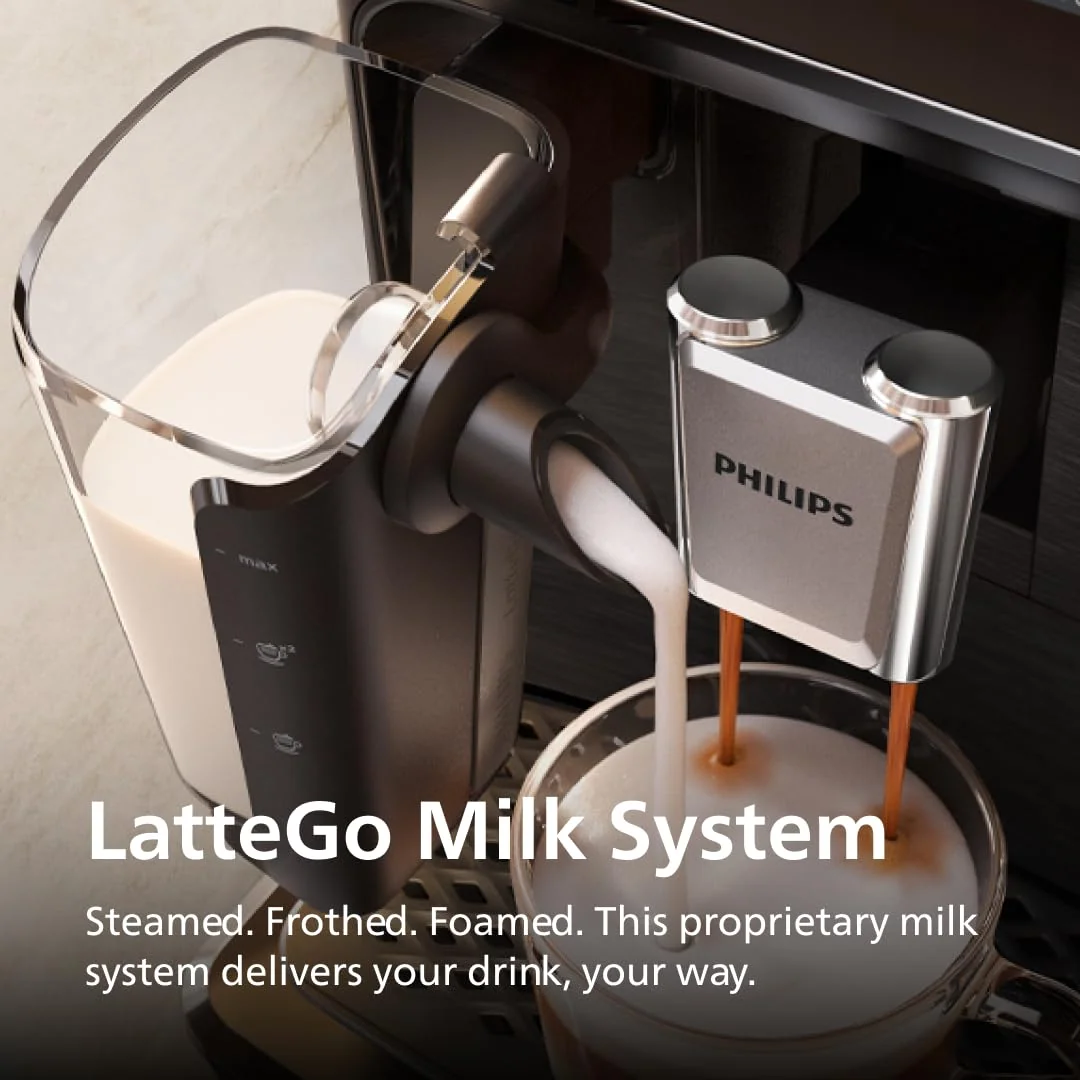
The reason the good half is so happy is the LatteGo carafe, and it deserves its reputation. There is no tube, no hidden milk path, no cleaning tablet ritual; it comes off the front of the machine, splits apart, goes under the tap for a couple of seconds and goes back in the fridge with the leftover milk still in it. Owners who dislike everything else about Philips still defend this part, and the people who make four cappuccinos for guests in two minutes are the ones who write the five-star reviews. If you have been avoiding bean-to-cup machines because of stories about mould growing in a milk hose, this is the direct answer to that fear, and it is worth understanding how the three milk systems actually differ in daily use before you decide.
Key Specifications
Four buttons, and the drink that is not on them
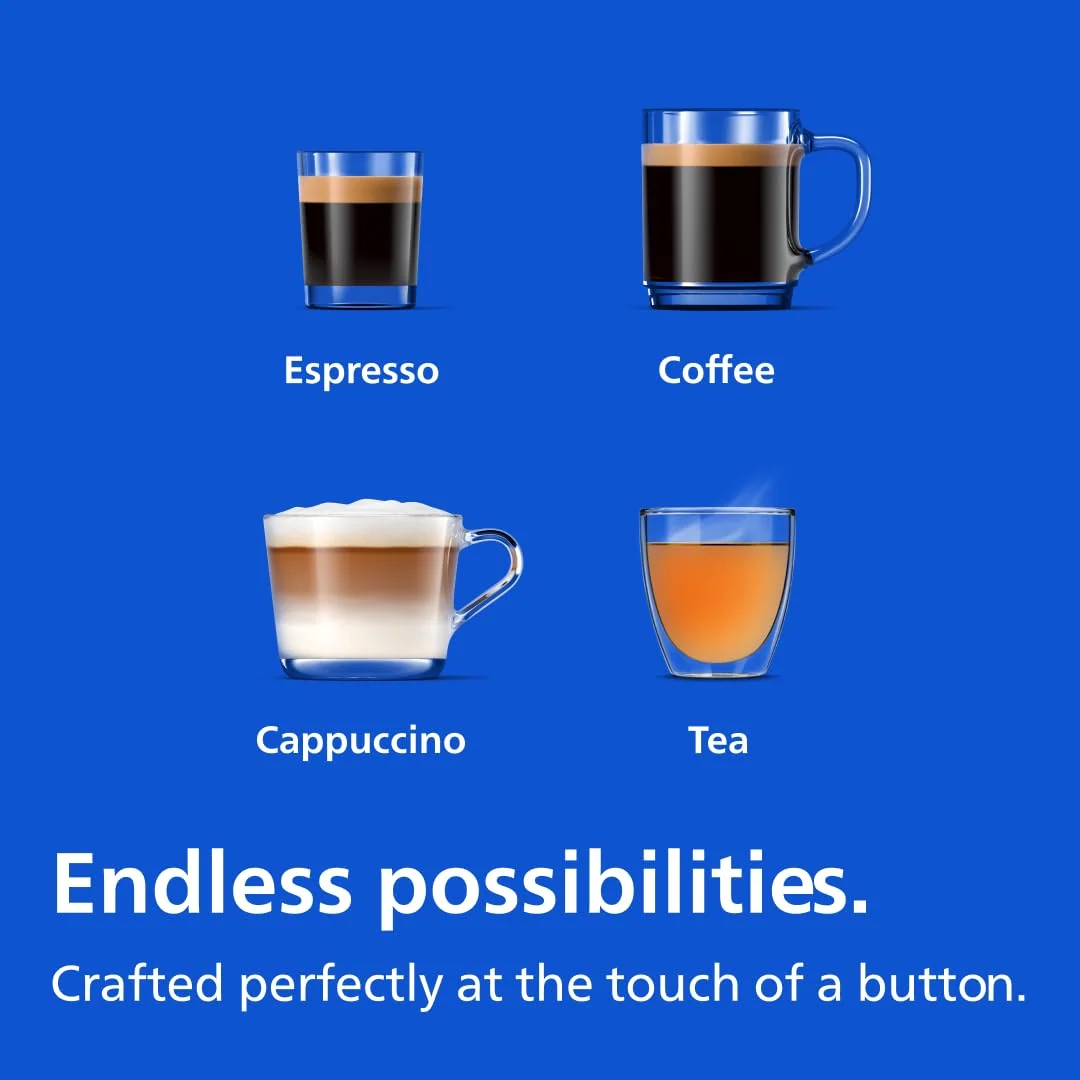
Espresso, coffee, cappuccino, hot water. That is the whole menu, and it is the shortest one in the LatteGo family. A 2300 owner posting on Reddit put the consequence more plainly than any spec sheet does: he loves the machine, uses it for espresso every day, and told someone else in the thread to buy the 3200 instead because that one has an Americano button and his does not. You can still get to an americano by pulling a shot and adding water from the hot-water setting, but you are pressing two buttons and moving a cup on a machine bought for pressing one. If long black coffee is the drink you make most mornings, read what we recommend for people who drink it black before committing to this one.
The second thing to understand about the drink list is that the LatteGo has exactly one milk texture. It is a steam chamber with a fixed behaviour, so the foam it produces is the foam it produces, and the extra drink names on pricier Philips machines are mostly the same milk dispensed for different lengths of time. Owners chasing a flat white on machines further up the range report the foam is too stiff for it, and the carafe will not give you plain hot milk either, because everything that passes through it gets textured on the way. Cappuccino is what this system is built around and cappuccino is what it does well.
There is a bypass chute for pre-ground coffee, which matters more than it sounds. It is the only way to run decaf without emptying the hopper, and in a household where one person wants decaf and the other does not, somebody ends up taking the scoop while the other keeps the button. Our guide to using pre-ground and decaf in a bean-to-cup machine covers the grind size problem that trips people up here.
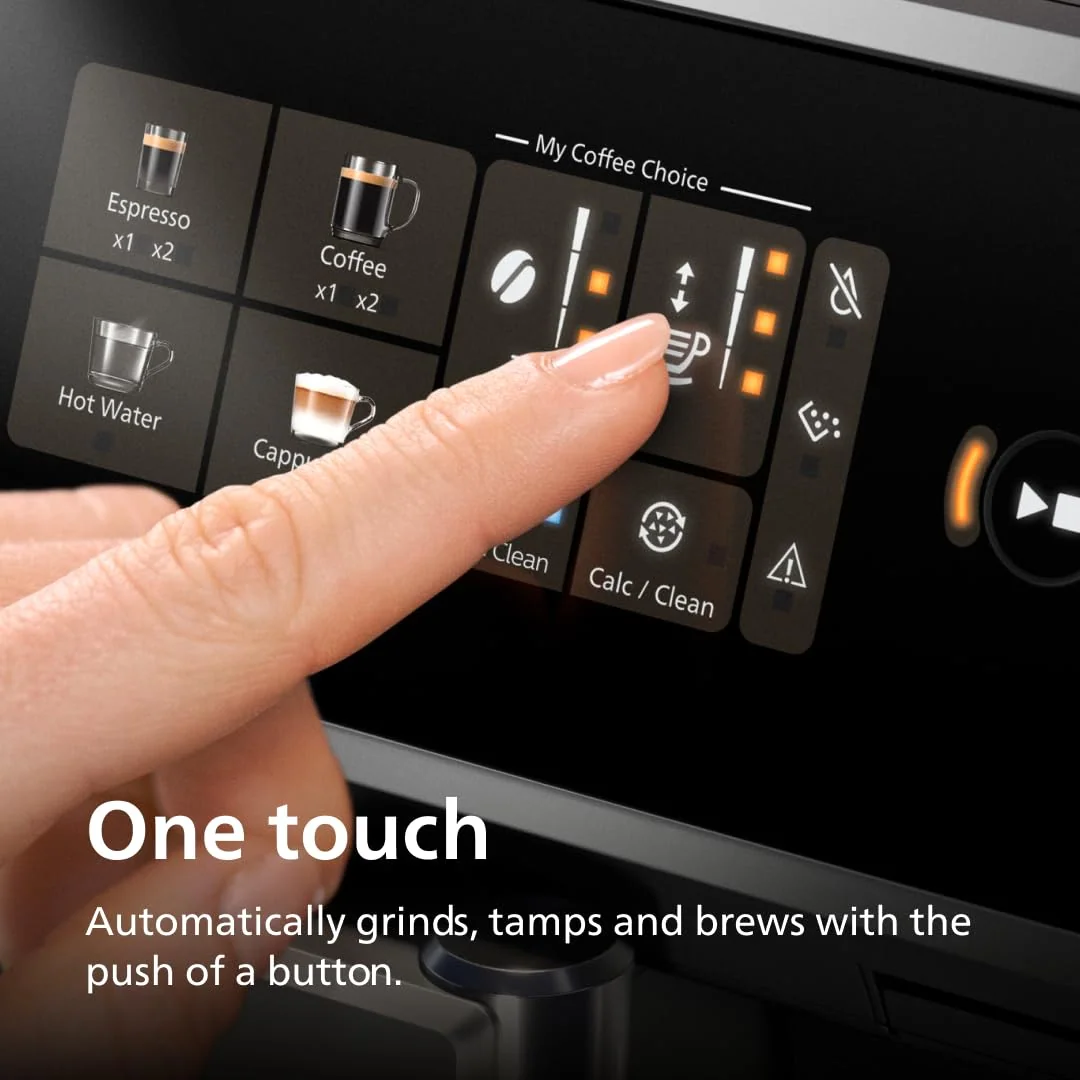
Finally, the interface. There is no colour screen at this rung of the ladder, which means maintenance prompts and faults arrive as illuminated icons and you look them up. The single most common false alarm in the whole Philips owner base is the AquaClean light, which stays lit by design and only flashes when the filter is spent; people read the steady light as a fault, cannot clear it, and get cross. The pictogram manual is not much help, and owners have said so repeatedly. Keep a translation of the Philips warning lights and hidden settings to hand for the first month.
Strengths & Limitations
Strengths
- The LatteGo carafe splits apart with no tube inside it, so cleaning the milk system is a rinse rather than a ritual.
- Grinding, tamping and brewing genuinely do happen on one press, which is the whole reason people leave pods and portafilters behind.
- The brew group pulls out of the front and rinses under a tap, so the dirtiest part of the machine is one you can actually reach.
- Owners who descale on prompt and change filters report units still working after five, eight and ten years of daily use.
- Spare seals, valves and even a replacement milk carafe are cheap and available, which is why long-term owners keep these machines running instead of replacing them.
- The bypass chute takes pre-ground coffee, which is the only practical way to run decaf without emptying the hopper.
Limitations
- Four presets is the thinnest drink list in the LatteGo family and there is no Americano among them.
- The dose is small by espresso standards, so a single shot tastes thin no matter what you do in the settings menu.
- Milk drinks pull one shot by default, which is why the cappuccino tastes weaker than the one you were copying.
- It ships with the grind too coarse and the volume too high, so the first cups are genuinely bad and fixing that costs a bag of beans.
- Owners report water leaking from the rear during steaming and purging, where the drip tray cannot catch it and you cannot see it.
- The brew group wants a weekly rinse and periodic greasing, which is maintenance a comparable De'Longhi does not ask of you.
- There is no screen, so every prompt and every fault arrives as an icon you have to go and look up.
- It will not fill a travel mug in one press, because the drink volumes are small and the coffee and milk come out of two separate points.

The first cup will be bad, and that part is normal
The complaint that follows every Philips super-automatic around, across every model in the range, is that the espresso is watery. It is not a rumour and it is not one bad batch. It has a physical cause, and the cause is dose. One owner of a sibling machine timed and weighed it: sixteen seconds from pre-infusion to finish, forty grams in the cup, and a puck that dried out at about 11.7 grams.
Roughly eleven grams is the ceiling people who have measured these machines keep landing on, against fourteen to sixteen in a De'Longhi or a Jura and eighteen for a double shot on a machine you tamp yourself. Nothing in the settings menu adds coffee that is not there. What the settings can do is stop you diluting the small amount you have, and that is the entire art of living with this machine.
| Control | Setting | The reason |
|---|---|---|
| Grind | Two to four notches from the finest, on the twelve-step dials these machines use | Going all the way fine starves the chamber and makes the shot worse, not stronger. |
| Strength or aroma | Maximum | It controls how much coffee is ground, despite the name suggesting flavour. |
| Volume | Lowest | Around 25 to 35 ml is where a small dose still tastes like espresso. |
| Temperature | Highest | Every owner who fixed a thin, cool shot changed this early. |
| Milk drinks | Press espresso again into the finished cup | The cappuccino button pulls a single shot, which is why it tastes weak. |
That last row is the single most useful thing in this review. An owner who spent days convinced his machine was broken worked out that his cappuccinos were weak because they contained one shot, not two, and that he had simply assumed otherwise; another reader of the thread said the same fix rescued theirs. Two mechanical rules go with the table. The grinder must only be adjusted while it is actually running, one step at a time, or you risk damaging it, and a grind change does not show up in the cup for two or three shots, so taste the third one and not the next one.
Then there is break-in, which is the most argued-about claim in the Philips world. Philips says the first cups will be watery while the system settles and tells you not to touch the grind for a stretch that owners variously report as 20, 50 or 100 drinks. Some owners swear the machine transformed at the end of the first month. Others ran five bags through and got nowhere, and one of the most experienced posters in the community calls the whole thing a myth: what is actually happening, on his account, is that the machine ships with the grind too coarse and the volume too high, and once you fix both you have a decent shot inside a dozen cups. Espresso Den's reading is that both camps prescribe the same medicine and disagree only about who is doing the adjusting. The practical danger is the same either way, and it is worth stating bluntly: a break-in period that runs a month overlaps a return window that runs thirty days, so judge this machine on a corrected recipe inside the first fortnight rather than waiting patiently past the point where you can send it back.
Beans matter more here than on a machine that grinds finer. The grinder cannot get fine enough to extract a light or bright roast properly, so third-wave single origins come out sour and thin, and very oily dark roasts gum up the hopper and the chute. Medium-dark to dark espresso roast, not shiny, is the window; we go through the whole problem in which beans work in a bean-to-cup machine, and why the shot comes out watery covers the diagnosis in more detail.
One expectation to reset before you buy, because it is the disappointment we saw most often. People leaving pods behind assume anything with a grinder in it must beat a capsule, and a meaningful number of them report the opposite at first: more body from the Nespresso than from the Philips, which feels absurd until you remember the dose. Dialled in, this machine comfortably beats a capsule and costs a fraction per cup to run. On defaults, it does not. The same physics applies to the milk, which owners describe as warm rather than hot; if that bothers you, preheat the cup and read why these machines run cool.
You are buying an interface, not a better shot
The single most money-saving fact about the Philips range is that the whole ladder shares the same brew group and grinder, the Saeco unit Philips has been using since it bought Saeco and Gaggia. An espresso from the top of the range is brewed by the same hardware as an espresso from the bottom of it. What the extra money buys is the interface, the drink count, user profiles and cosmetics.
That is not nothing. On the machines with a colour screen you set volumes in millilitres instead of low, medium and high, the machine walks you through filter setup and tells you what is wrong in words rather than blinking icons, and there are memory profiles so two people are not re-dialling each other's drinks. Whether that is worth the jump is a judgement, and we have made it in detail in the 2300 against the 3300 and across the whole range in which Philips LatteGo to buy.
There is one upgrade that is not cosmetic, though, and it is the one that matters most given everything above. Higher models add an extra-shot function that will automatically put a second dose into a milk drink; owners have bought up the range specifically because they worried the coffee would not be strong enough, and that feature is the factory-sanctioned fix for the small puck. On the 2300 you do it yourself by pressing espresso into the finished cappuccino, which takes twenty extra seconds and works perfectly well, but you did buy a one-touch machine.
Philips discounts this range hard and often, and the model above frequently goes on offer while the model below sits at list, so the ladder is not a straight line and it pays to look at the whole family before buying any rung of it. As for the promise on the box, the machine "pays for itself in about three months" only if you were genuinely buying a shop drink every single day, and that sum omits beans, milk, AquaClean filters and descaler. Two milk drinks a day at home really does displace a serious coffee habit for a few cents a cup; two coffees at the weekend never pays anything back.
If the four presets are the sticking point, the honest alternatives on this site are the 3300, which adds drinks and a proper display, the Bosch 300 Series, which trades the carafe for a steam wand at similar money, and the De'Longhi Magnifica Evo, which is the machine Philips owners most often move to when the shot is what they care about. Our roundup of the best super-automatics at the budget end of the market puts them side by side.
Plan for the leak
If there is one thing to take from the negative reviews of this listing, it is not the coffee. It is water in places it should not be. The pattern owners describe is a leak from the back of the machine during the steam cycle and again at the end-of-brew purge, which means the drip tray never sees it and you do not find out until the surface underneath is ruined. Espresso Den's advice is unglamorous and free: do not stand this machine on bare wood, put something waterproof under and behind it, and pull it forward once a week to look.
A repair technician posting in the same community names the usual suspects, and the specificity is useful: the two seals on the drainage valve wear and take extraction quality down with them, the big brew unit seal goes the same way, leaks usually trace to microcracks at a boiler connection, and solenoid valves block with limescale when the machine is not descaled often enough. His recommendation is to change the drainage valve seals annually. That one paragraph explains both the leak reports and the slow fade in coffee strength that owners often misdiagnose as bad beans.
The routine maintenance is heavier than the marketing suggests, and it is heavier than a De'Longhi of the same size. The brew group comes out of the front and rinses under the tap, which is a genuine design advantage, but it needs doing weekly and it needs food-safe grease periodically. There is a reason for that asymmetry rather than mere sloppiness: on the Saeco design Philips inherited, the transport mechanism lives in the piece you take out and wash, so rinsing it strips the lubricant every time, while De'Longhi keeps its transport mechanism inside the case where water does not reach it and grease is a service item rather than a chore. Skip the rinse for two or three weeks and owners report mould inside the machine. The drip tray also fills faster than you expect, because the machine purges water through the coffee path at every power on and power off, and one 2300 owner reports emptying the base every second day for four drinks a day. Our cleaning and descaling routine sets out the weekly and monthly work, and the AquaClean piece explains what the five-thousand-cup claim really depends on.
Now the good tail, because it is real and it is large. One owner of a sibling machine has documented four years and roughly ten thousand coffees on his, with a running ledger of what it cost him: a set of valve O-rings for a few euros at two years, the whole valve for about fifteen at four years, a replacement milk carafe at around thirty-five, and a grinder he had to nudge finer by hand once the dial ran out. Others report five, eight and ten years of daily service. The honest framing came from an owner who had thought about it hard: best case, four or five years and cheap parts; worst case, errors and leaks at four or five months. It is a gamble with good odds, not a certainty in either direction, and the wider picture on machine lifespan puts that in context.
Which makes the warranty the part you should get right on day one. Register it immediately, keep the receipt somewhere you will still have it after a house move, and buy from a retailer whose returns you trust rather than the cheapest listing you can find, because the return window is doing double duty as your dial-in window. The warranty on paper and the warranty in practice are not always the same thing: owners have reported weeks of unanswered support, repeated failed collections, and being routed to third-party repairers, alongside others whose claims were handled without fuss.
Frequently Asked Questions
Does the 2300 make an americano?
Not on a button, so you pull an espresso and then add water from the machine's own hot-water setting, which is one of the clearest reasons to consider the next model up.
Why does my espresso come out pale and taste like water?
Almost always because the volume is set too high and the grind too coarse for a small dose, so cut the volume to its lowest setting, put the strength to maximum, raise the temperature and bring the grind finer a single step at a time while the grinder is running.
How long before it makes good coffee?
Owners report anything from a dozen cups to a month, but you should get it drinkable inside a fortnight on corrected settings and treat continued failure after that as a reason to return it rather than a reason to keep waiting.
Will it fill a travel mug?
No, because the drink volumes are small and the coffee and the milk come from two separate spouts, so a tall narrow vessel cannot catch both and you would be pressing the button repeatedly.
Can two people drink decaf and regular from it?
Yes, but only by putting one person's beans in the hopper and giving the other the pre-ground bypass chute and a scoop, since there is a single hopper and no way to switch beans automatically.
Is it quiet?
Philips claims SilentBrew cuts machine noise by forty per cent against its previous models and owners of this listing flatly disagree with each other, one calling it noisy and another calling it very quiet, so treat it as quieter than older Philips grinders rather than as a machine you can run past a sleeping household.
Does the AquaClean filter really mean no descaling?
It defers descaling substantially, but only if you fit the filter at first setup and replace it every time the machine asks, and independent advice is that descaling eventually remains necessary regardless of what the filter claim says.
Is the milk hot enough?
Owners describe it as warm rather than hot, so preheat the cup or use a double-walled glass if you like your latte close to scalding.
Sources (2)
- Amazon listings and customer reviews — Philips 2300 Lattego
- Owner reports across r/Coffee, r/superautomatic, r/wootdaily threads