A super-automatic will fill your mug, but it fills it with diluted espresso, and that one fact decides how you should brew it
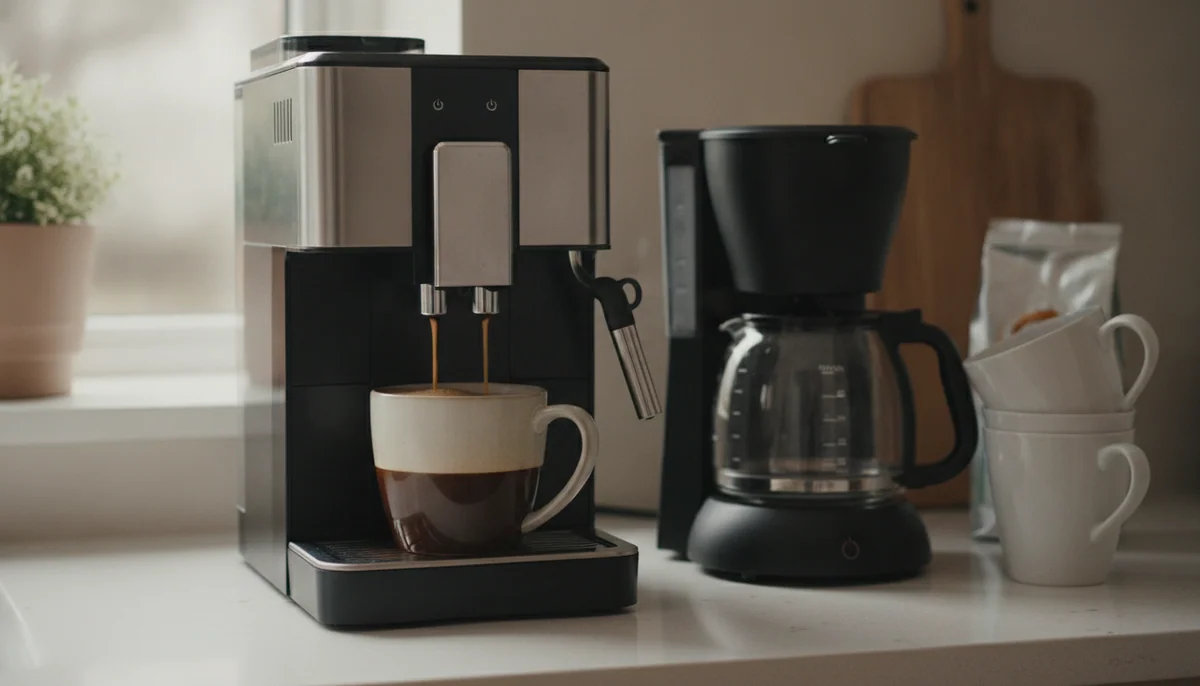
The question underneath this one is nearly always practical. Somebody owns a drip machine, wants espresso and milk drinks, and does not want two appliances competing for the same stretch of counter. So the useful answer is not yes or no. It is a description of what you will actually be drinking at seven in the morning, because it will not be filter coffee, and whether that matters depends entirely on which part of filter coffee you were attached to.
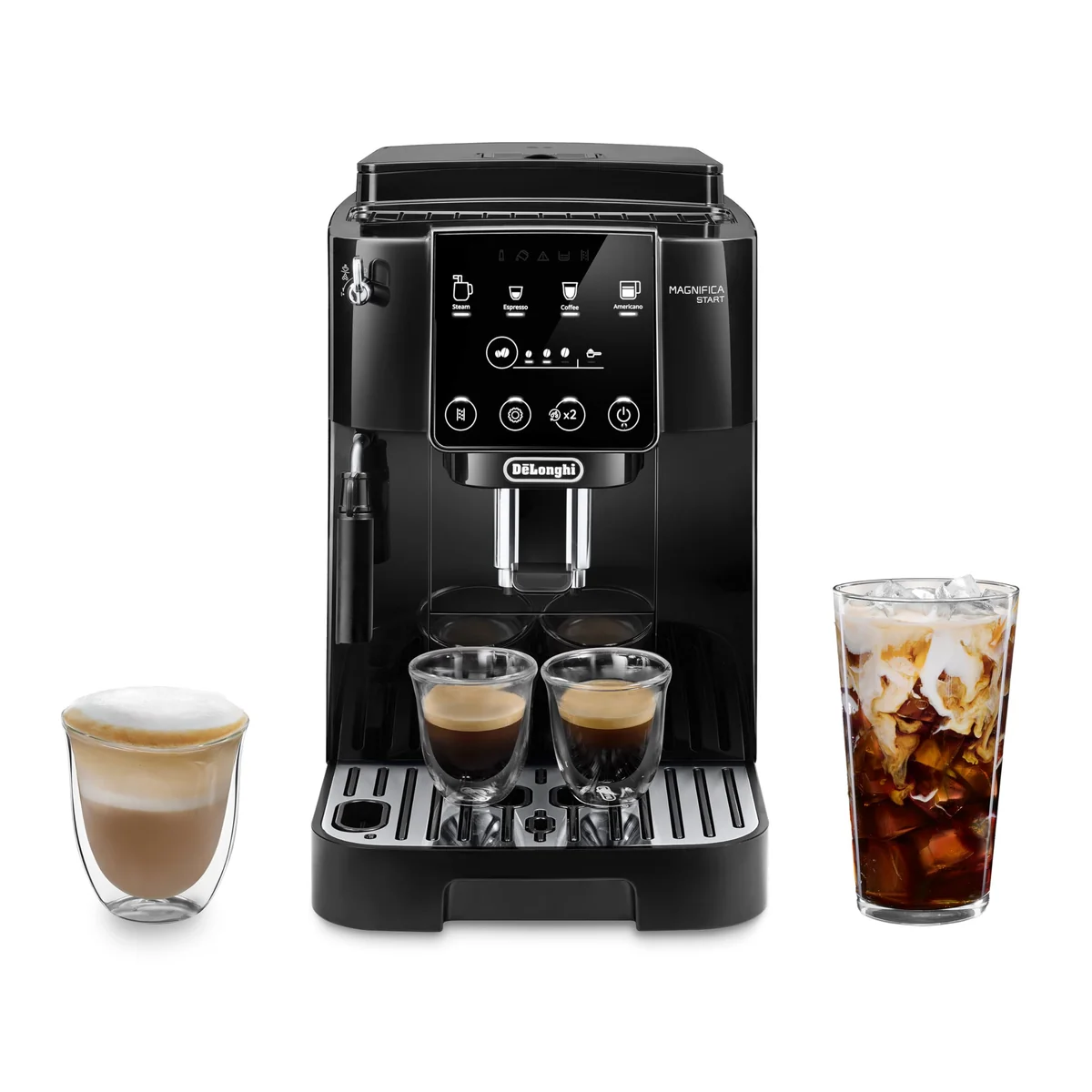
Every machine in this category works the same way. It grinds a small dose, compresses it into a puck, and forces hot water through that puck under pressure. There is no shower head, no paper, no slow percolation, and no basket big enough to hold a filter machine's worth of grounds. When a De'Longhi Magnifica Start offers you Espresso, Coffee and Americano on three lit icons, those are not three brewing methods, they are one method metered out in three volumes of water. When a Philips 5500 offers twenty presets, hot water and iced drinks among them, the same is true with a longer menu.
The clearest account of what goes wrong that Espresso Den found came from a buyer who had come off pods, wanted a 230 millilitre mug, and had settled on a hybrid of hot water plus two shots. He described the result as fine but somehow anonymous, and worse than the instant he had been drinking. The reply he got was blunt and correct: these machines make espresso and things built from espresso, so this might not be the machine for you.
Hold that next to the other half of the evidence, though, because it is just as real. One owner of the same De'Longhi family says he uses it mostly for coffee, gets consistent crema every brew and a smooth finish, and almost forgets to add milk. A Philips 5500 owner reports that the machine replaced four appliances at once, one of which was a plain coffee machine, and that the family has not gone back. Nobody in that group is drinking filter coffee either. They have simply landed on a long black drink they like, and the difference between them and the disappointed buyer is almost entirely dose, volume and expectation.
Pressure through a puck is not percolation, and the button names hide that
A filter brewer wets fifteen or so grams of coarse grounds and lets gravity take four minutes over them. A super-automatic wets around ten grams of fine grounds and drives water through in half a minute at pressure. Those two processes pull different compounds out of the same bean in different proportions, which is why a good espresso and a good filter coffee taste like relatives rather than twins. Nothing in a bean-to-cup machine can be configured into the first process, and no amount of dialling in changes that.
Once you accept it, the long-drink question becomes narrow and answerable. There are exactly two ways these machines get you a mugful, and they are not equally good. The first is to push a great deal of water through a single puck, which is what the coffee preset does. The first thirty millilitres or so carry most of what was soluble; everything after that is passing through grounds that have already given up their best, so you get dilution and a stripped, drying finish at the same time. The second is to brew a proper short shot and then add fresh hot water to it, which dilutes without punishing the grounds. That is an americano, and it is the closer relative of filter coffee.
Owners do not line up neatly behind that theory, which is worth knowing before you commit to one route. On a Magnifica Start, one owner found the espresso fine but the coffee button producing something watery with an off-putting taste, while another in the same conversation reported his coffee button was good once he set it to around eight ounces and thought the americano was the weaker of the two. Both had the same machine. The practical instruction is therefore to try both routes with your own beans in your first week rather than trusting either of us, and to judge them at the same cup size.
The whole argument comes down to grams in the puck
Everything else on this page is downstream of one number. Tom's Coffee Corner timed the grinder across De'Longhi's range and found the Magnifica Start's strongest setting topping out at roughly seven seconds, in the region of ten grams, where machines further up the line keep going to around fifteen; other testers on the same platform put the ceiling nearer twelve, so treat the figure as a range and the ordering as settled. On the Philips side, a reviewer who cut power mid-cycle and weighed the charge from a 5400, the 5500's near relative, got 8.6 grams against 12.7 from a De'Longhi Dinamica Plus on its double setting.
Now do the arithmetic that the marketing does not. Ten grams into a 30 millilitre espresso is a ratio of about one to three, which is exactly what that drink wants. The same ten grams stretched across a 250 millilitre mug is about one to twenty-five, roughly half the strength a filter brewer would give you from the same weight of coffee. That is not a taste failure, a bad bean or a broken machine. It is division.
It is also, word for word, the complaint that fills the one-star reviews. A Philips 5500 buyer put it as plainly as anyone: the dosing in grams is very shy, the puck is small, and what lands in the cup is brown water rather than coffee. He returned it and bought a De'Longhi. Two other owners of the same machine describe the identical problem and the identical workaround, one setting the finest grind and running double shots, the other moving to a darker roast bean and doubling every drink to get the flavour up. They are not fixing a defect. They are compensating for a small brew chamber, and they had to work that out on their own.
Buying further up a range does not rescue you either, which is the part the price ladders obscure. A side-by-side of the Philips 3300 and 5500 found the same grinder, the same heating element and the same brew unit in both, with the flagship's extra strength steps offering finer increments of the same ceiling rather than a higher one. You are paying for a screen, saved profiles and a milk system, all of which are worth money, and none of which put another gram in the puck.
How to get closest, in the order the steps actually matter
The single highest-leverage move is to stop asking one puck to do the whole job. On a Philips, that is the Extra Shot key, which grinds and brews a second charge and is the only control on the machine that raises the dose; treat it as the standard setting for anything mug-sized rather than an occasional indulgence. On the De'Longhi, resist the obvious button, because the 2x control does not add coffee, it adds water, so people pressing it for strength are diluting themselves further. Pull two separate espressos into the mug instead, then open the hot water knob and lengthen it to taste; owners describe that hot water tap as one of the machine's quietly good features.
Home Coffee Expert reached its best result on a 5500 with the second-finest grind, the highest temperature setting and a one-ounce volume, and was honest about what that costs: twenty to twenty-two grams of beans per drink, roughly half again what a machine with a bigger chamber would use. That is the real trade. A satisfying mug from one of these machines is two shots' worth of beans, and if your reason for buying was to spend less on coffee, build that into the sum before you buy.
| Target | Best route | What you are accepting |
|---|---|---|
| Roughly 175 ml, black | One shot at maximum strength, shortest volume, topped with hot water | Nothing much; this is the size these machines are genuinely built for |
| Roughly 250 to 300 ml, black | Two shots or Extra Shot into the mug, then hot water to fill | Double the beans per cup, and about ninety seconds of your morning |
| A 350 ml travel mug | Two shots, hot water, and a mug that fits under the spout | A drink that reads as a strong americano rather than as drip coffee |
| Two mugs at once | Brew them one after the other, both short, both topped up | The grounds bin fills twice as fast, and so does the drip tray |
Four smaller things decide whether the above works. Grind finer, two to four steps from the fine end, and change it only while the grinder is turning, one step at a time, judged three brews later once the old grind has cleared the chute; the very finest settings are close to decorative, because the pump cannot push through them and the coffee barely reaches the spout. Choose a well developed espresso-style roast rather than a bright filter roast, and never an oily or flavoured bean, because the grinder that struggles with light roasts is the same grinder that gums up on dark oily ones. Run a rinse into the mug before you brew, which flushes cooled water out of the lines and warms the cup at the same time, and matters far more for a large black coffee than for an espresso you drink in one go. And keep the tank filled, because at least one owner has found that a low water level does not stop the machine from starting a cup, it just produces a half-made one. Our fuller piece on why bean-to-cup coffee comes out watery covers the causes that are not about volume, and the beans guide is where to go before you buy a kilo of something expensive.
These two machines, judged only on the mug
The De'Longhi Magnifica Start is the better instrument for a black coffee drinker of the two, for one unglamorous reason: its puck is at the larger end of this class, and it gives you a genuine hot water tap and a dedicated americano preset to build on. Our full review of it calls it the De'Longhi worth buying if you will steam your own milk, and that verdict holds here. The drawback is unmissable and we will not soften it: the coffee preset on this machine is where buyers get burned, one owner on the listing reports it delivering six ounces, and the listing's reviews are pooled with an automatic-frother sibling, so the star average describes two different machines. If a mug of black coffee is the main event in your house, this machine can serve it, but only on the two-shot route, and only at a size you may consider small.
The Philips 5500 arrives at the same drink from the other direction. Its single puck is smaller, but Extra Shot is available on almost every coffee drink, so the correction is one key rather than two separate brews, and the machine has hot water on the menu already. Coffeeness, testing with fresh medium-roast beans, found both the coffee and the espresso really good and full-bodied. The honest drawback is that its cup is mild by design and it takes twenty to thirty cups before it is even representative of itself, which Philips does not tell you anywhere and which gets perfectly good machines returned inside the window. There are two physical catches for mug drinkers as well: the spout height suits small and medium travel mugs rather than large ones, by an owner's own account, and TechRadar's tester found the fixed milk spout forces the cup much further forward than you expect. Measure your favourite mug before you decide. Our review of the 5500 goes through the rest of it, and the two machines set against each other is the comparison people actually search for.
One more note in the Philips column, since it cuts both ways: the same small dose that disappoints black coffee drinkers is barely noticeable under milk, which is why the LatteGo machines rate so well with latte and cappuccino households and why our latte pick goes where it does.
When the honest answer is to keep the drip machine
If black mug coffee is eighty per cent of what your household drinks, buying a super-automatic to replace a filter brewer is the wrong trade, and no configuration on this page rescues it. You would be spending several hundred dollars, doubling your beans per cup, and taking on a daily rinse and a monthly descale in order to make a drink the machine was not designed for, while the drink it was designed for goes unused. The counter space argument loses to the taste argument here, and it loses badly.
The arrangement that actually works, and the one plenty of owners land on, is to let each machine do its own job: the bean-to-cup for espresso, cappuccinos and the strong americano that stands in for a mug, and a cheap filter brewer for the mornings when you want half a litre of something light. If that is not on the table, start from the machines we would pick for black coffee drinkers, which favours dose over drink counts, and read our piece on whether these machines are worth it at all before you spend. If you are new to the category and some of the above assumed knowledge you have not got yet, the explainer on what these machines are is the right place to start.
And a note on heat, since a big black coffee is the drink that exposes it. A mug of espresso and hot water has a great deal of surface area and a long drinking time, so it will go lukewarm faster than any drink these machines are optimised for; if that is already your complaint, our piece on why they run cool has the settings and the mitigations. The same applies in reverse to the iced presets, which pour warm coffee over ice you supply, as the iced coffee explainer sets out.
Frequently Asked Questions
Does the button marked coffee make filter coffee?
No, it pushes more water through the same small espresso puck, which is why it tends to arrive both weaker and drier-tasting than the espresso from the machine next to it.
Is an americano the same thing as a mug of filter coffee?
It is the closest drink these machines make, but it is a shot diluted after brewing rather than a slow gravity extraction, so it reads as a lighter espresso rather than as drip coffee.
How large a mug can I fill before it tastes thin?
Around 175 millilitres from one shot and around 300 from two, which is why the two-shot routine is the whole trick rather than an optional extra.
Will grinding finer fix a weak mug?
It helps up to a point and then stops helping, because the finest settings on these grinders choke the pump instead of extracting more.
Can I put my usual light filter roast in the hopper?
You can, but a bean-to-cup grinder cannot go fine enough to extract a light roast properly, so a developed espresso-style roast is the safer choice for anyone chasing body in a long drink.
Should I press the double button to make it stronger?
On a De'Longhi the 2x control adds water rather than coffee and will make things worse, while on a Philips the Extra Shot key genuinely grinds a second puck and is the correct button.
Would a more expensive machine in the same range solve this?
Not within a range that shares its brew unit, because the extra money buys screens, profiles and milk systems rather than a bigger dose.
Will my travel mug fit under the spout?
Small and medium travel mugs generally do on both of these machines once the dispenser is raised, but tall ones often will not, so measure before you buy.
Sources (7)
- Amazon listings and customer reviews
- Owner reports across r/superautomatic threads
- Owner and reviewer video, 5 channels
- Tomscoffeecorner — Article — tomscoffeecorner.com
- Homecoffeeexpert — Article — homecoffeeexpert.com
- Coffeeness — Article — www.coffeeness.de
- Techradar — Article — www.techradar.com