Almost every iced setting on a bean-to-cup machine brews warm coffee and leaves the cooling to your ice
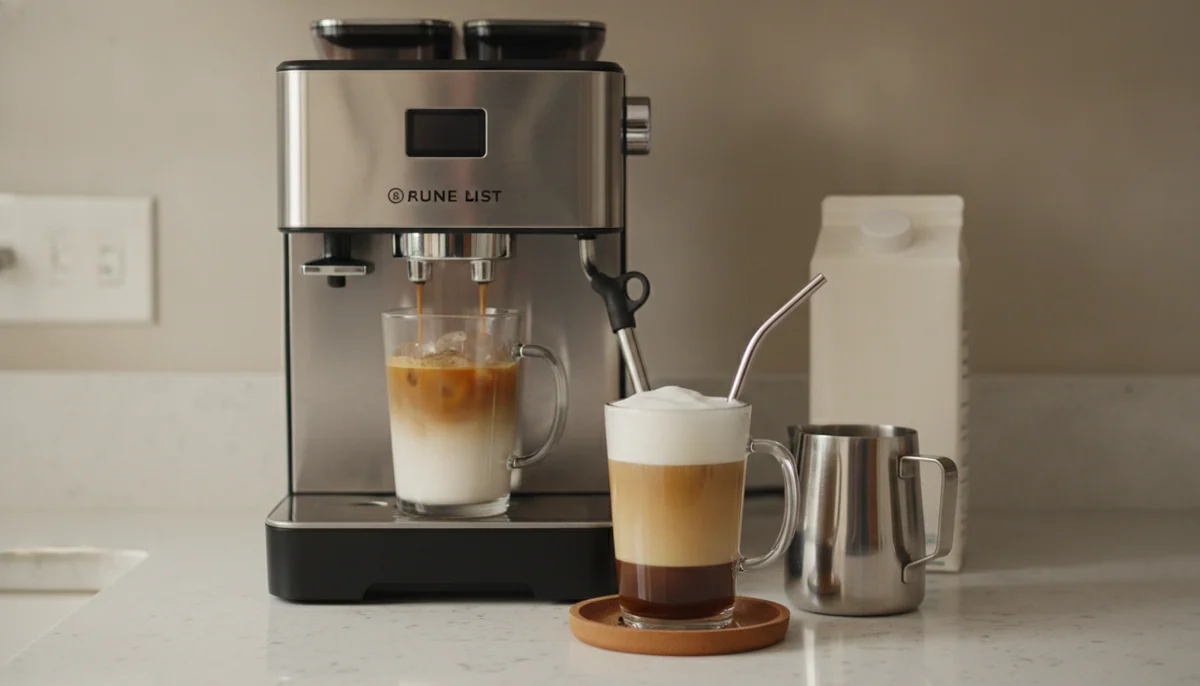
The word iced has spread across this category in about two years, and it now means two entirely different things depending on which box you are looking at. On one machine it describes a plumbing change: cold water, a fine grind, very low pressure, a long slow trickle, no heating element involved. On every other machine on this page it describes a recipe. The pump runs cooler and slower than usual, the coffee lands in your cup somewhere in the region of a hot bath rather than a kettle, and the temperature drop that turns it into an iced drink comes from the ice cubes you put in the glass thirty seconds earlier.
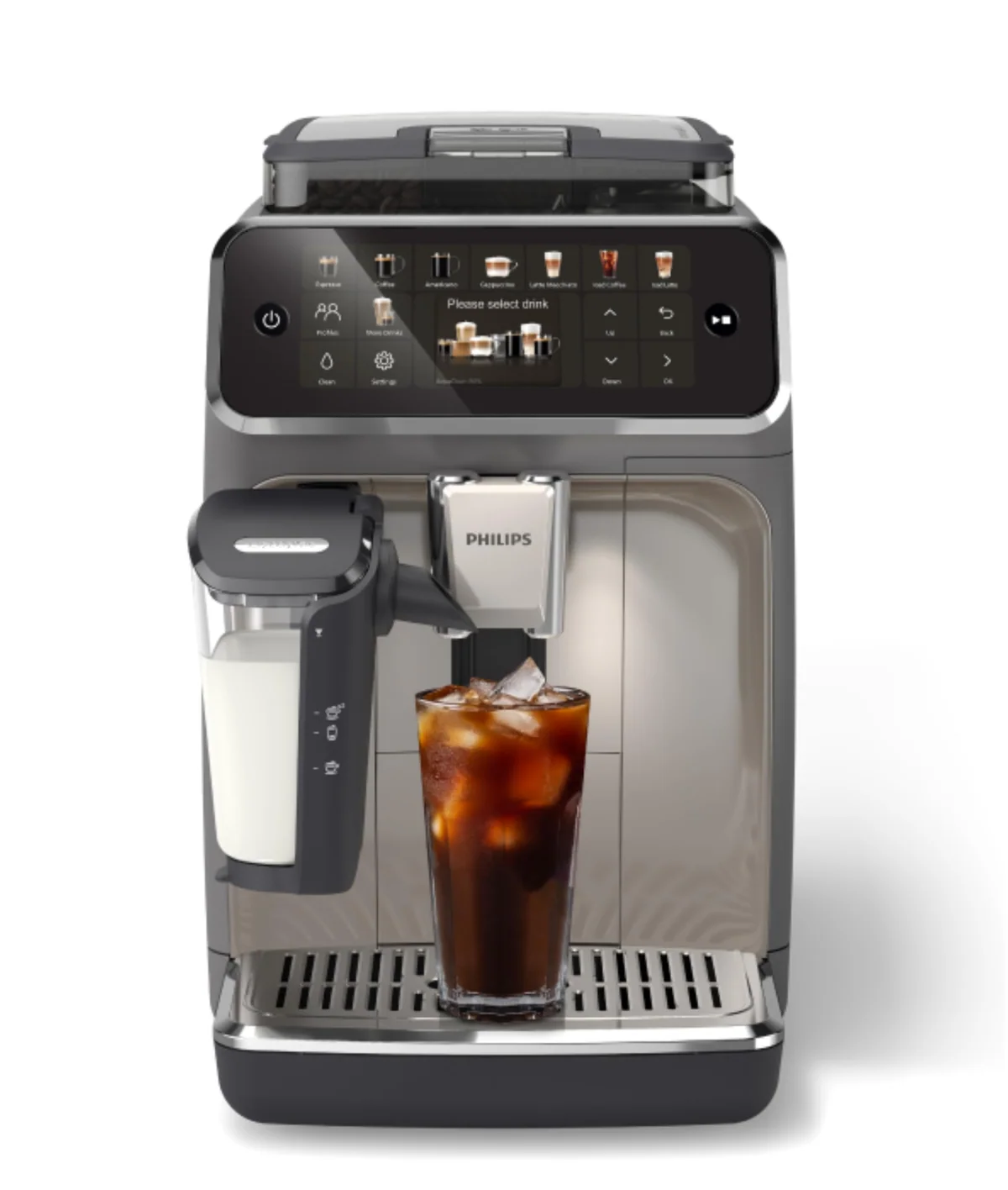
Neither of those is a scandal. The second one makes a perfectly good drink, and a good number of owners prefer it to what they were doing before. It becomes a problem only because of the way it is sold. Philips's listing copy for the 5500 offers twenty presets running from hot espressos to what it calls cool iced coffees. The renewed listings for the same machine go further and state that the brewing system has been calibrated so iced coffees deliver the same rich flavour as hot drinks. Read that as a buyer and you will reasonably conclude the machine has solved something. Read the operating instructions for the same machine, as Coffeeness did, and you are told that the coffee is prepared with warm water and that for best results you should brew it over ice cubes, which is a different sentence about a different appliance; the reviewer docked the machine half a star for the gap between the two.
Espresso Den's position is that the mechanism matters more than the label, because the mechanism is what determines whether your drink is still coffee at the bottom of the glass. What follows is who does which, and what each of these machines is actually worth to somebody who drinks cold coffee most days.
The number that settles the Philips argument
Two independent testers have put instruments on this and one retailer has not. A tester running the 5500 drink by drink with a meter measured the iced setting delivering coffee at roughly 60 °C, against the 80 °C the machine gives you on its ordinary hot programs, and concluded that the ice in the glass is doing both the cooling and a fair amount of the diluting. A retailer demonstrating the same model claims the opposite, that the water bypasses the heating element altogether and arrives at room temperature. When a measurement and a sales demonstration disagree, the measurement wins, and in this case the manufacturer's own instructions are standing behind the measurement.
Sixty degrees is a useful number to hold onto because it explains the drink. It is cool enough that the coffee is not scalding the ice on contact, which is why the iced presets genuinely are better than pressing espresso and pouring it over cubes yourself. It is also far too warm to survive a full glass of ice without losing volume to melt, which is why an iced drink from any of these machines arrives longer and lighter than the hot version of the same recipe. If your complaint about these machines is that the hot drinks are not hot either, that is a separate and much more common problem, and we go through it in why bean-to-cup machines run cool.
The presets themselves are also thinner than the count suggests. Home Coffee Expert, working through the 5500's twenty recipes, found that eight of them are iced versions of drinks already on the list, which is how a machine gets to twenty in the first place. The 4400 does the same arithmetic on a smaller scale, listing iced coffee, iced americano and iced espresso among its twelve, with the promise that every drink brews at the ideal temperature. The renewed 4400 listing leads on the same twelve hot and iced drinks. None of those claims is false. They are just describing a program, not a refrigeration circuit.
What owners say when nobody is selling them anything
The best single sentence in the whole record belongs to a buyer of a renewed grey 5500, six years into owning a Philips and writing about his replacement: for the iced options, he says, it just pours lukewarm coffee that needs ice added to make it real iced coffee, and he adds, generously, that Philips seems to have calibrated it well enough to get good aroma out of a lukewarm brew. That is the honest version of the marketing claim. The system has been tuned to extract decently at a lower temperature. It has not been tuned to hand you cold coffee.
Two more things worth noticing about owner evidence here. Across the thirteen retained reviews on the black 5500 listing, not one of them mentions the iced presets at all, in either direction, which tells you something about how much of the twenty-recipe pitch converts into daily use. On the 4400, by contrast, iced drinks are a live reason people buy: one owner says outright that he chose the 4400 over the older model because the iced coffee has a shortcut on the screen, and rates the iced drinks as good. Another buyer on the same listing, a lifelong hot-coffee drinker, drew his line in the sand at cold coffee and bought the 4400 anyway because he was never going to press that button. Both of those are rational. The feature is worth real money to one of them and nothing at all to the other.
Cold extraction is a different machine, not a different button
De'Longhi's Eletta Explore is the only machine on this page that changes the physics rather than the recipe. Its cold extraction runs cold water through a fine grind at carefully limited flow and pressure, using contact time to do the work that heat normally does, and De'Longhi describes it in exactly those terms on the listing: measured water flow, measured pressure rates and specific extraction temperatures rather than a hot brew served cold. Reviewers who have tested it at length treat it as the machine's defining feature and the reason it costs what it costs, rather than as a menu entry. Our own Eletta Explore review has the measured temperatures and the timings, including the fact that the listing's under-three-minutes claim is optimistic once the machine's cooling rinse is counted.
The practical difference is not really about flavour theory, it is about melt. Coffee that arrives already cold does not attack your ice, so the drink you taste in the first mouthful is the drink you taste in the last one. Coffee that arrives at 60 °C spends its first minute in the glass turning cubes into water. Owners of the Eletta describe the cold brew as a genuine summer habit rather than a novelty, one calling the cold brew latte a fantastic summer drink and another listing the cold capability as the thing that has stopped him buying coffee elsewhere.
Two honest qualifications. It is not overnight cold brew from a jar, and nobody who has tasted both pretends otherwise; it is fresher, lighter and less concentrated than a twelve-hour steep, with the compensating advantage that a bad batch costs you five minutes instead of a night. And the Eletta's cold section is not uniformly cold. Only the cold brew is brewed cold; the iced espresso, iced cappuccino and the rest are brewed hot and dropped onto the ice cubes the screen counts out for you, which is precisely the same trick the Philips machines are playing, sitting on the same menu as the thing that is not a trick at all.
The Rivelia is the machine this distinction was invented for
De'Longhi's Rivelia has iced coffee and espresso over ice on its touchscreen, and its listing points you to the LatteCrema Cool accessory, sold separately on De'Longhi's own site, for the cold foam experience. Read that carefully, because it is easy to misread as an upgrade to cold brewing. It is not. The accessory buys you cold milk foam; the coffee underneath it is still brewed hot and poured over ice. An owner of the white Rivelia flagged exactly this in her review, noting that the cold drinks the listing advertises are not there out of the box and that what you can do without the accessory is hot coffee over ice.
The most useful witness on this page is the owner who bought both machines. Writing on the beige Rivelia listing, he says plainly that the Eletta gets closer to a true cold brew, adding in the same breath that even the Eletta is not literally cold brew, and that having paid for the Rivelia's cold carafe he would not recommend it, because the resulting cold drinks are simply worse than the ones the Eletta makes. Owners weighing the two against each other keep arriving at the same fork. We take that decision apart properly in Rivelia against Eletta Explore, and the short version is that the Rivelia's real selling point is its two swappable bean hoppers, not its cold menu.
And one machine that does not pretend at all
The De'Longhi Magnifica Start with the manual frother offers three one-touch recipes: espresso, coffee and americano, with no iced anything in the bullets or the description. There is a wrinkle worth knowing if you are reading that listing's reviews to make up your mind, because Amazon pools them with an automatic-frother sibling: one enthusiastic five-star review praises an iced coffee setting that the black manual-frother machine does not have. Discard it, along with anything else in that pile describing a milk carafe. What is left is an honest little machine that makes espresso and things built from espresso, which is exactly the argument we make in our Magnifica Start review.
Where this leaves each machine
| Machine | What the iced setting is | The drawback to weigh |
|---|---|---|
| De'Longhi Eletta Explore | Real cold extraction on the cold brew recipe, plus hot-over-ice on everything else in the cold menu, and a second carafe for cold foam | Two milk carafes means two cartons of milk going off in your fridge, and the milk drinks land cool by design |
| Philips 4400 LatteGo | Four of twelve presets are iced, brewed cooler and slower onto ice you add | The dose is small and the first twenty to a hundred cups are pale while the machine calibrates itself |
| Philips 5500 LatteGo | Eight of twenty presets are iced versions of drinks already on the list | The brew unit doses around nine grams, so an iced long drink is a small dose stretched twice over |
| De'Longhi Rivelia | Hot coffee over ice, with cold foam only if you buy the LatteCrema Cool carafe separately | Milk drinks arrive warm rather than hot, and every hopper swap strands about ten grams of the previous bean |
| De'Longhi Magnifica Start | Nothing, and the listing does not claim otherwise | Three recipes, no profiles, and a maximum dose small enough that long black drinks come out thin |
So the buying rule is short. If cold coffee is a daily habit between May and September, the Eletta Explore is the machine on this page that was actually engineered for it, and it is worth reading our iced coffee pick before you spend that money to see what it is competing with. If cold coffee is an occasional thing and milk drinks are the real reason you are buying, the Philips LatteGo carafe is the best argument in the category and the iced presets are a bonus rather than a reason, which is the case we make for the 5500 and the 4400. If you want the Rivelia, want it for the two bean hoppers described in our review, not for its cold menu.
One note on the renewed listings, since two of the machines here are refurbished units. Renewed does not touch the iced behaviour, because the firmware and the hydraulics are identical; what changes is the warranty, and on this platform the characteristic faults are leaks and worn seals that turn up after the first few months rather than in the first few weeks. That trade is set out in full in our piece on renewed and refurbished machines.
Making a hot-over-ice drink that is actually good
Assume you have bought a machine whose iced setting is a warm brew, which describes most of this page. The drink is still recoverable, and the recoveries are all about concentration, because the ice is going to add water whether you like it or not.
- Choose the shortest, strongest version of the drink you can, then let the melt lengthen it, rather than ordering a long drink and watching it dissolve. On a Philips, that means maximum strength and the smallest volume, plus Extra Shot on the models that offer it.
- Fill the glass with ice before you brew, not after. A cube dropped into warm coffee melts almost entirely; a glass packed with ice takes the heat out of the liquid fast enough that most of the cubes survive.
- Use big cubes, or freeze coffee into cubes. This is the single cheapest fix on the list and nobody's marketing department will mention it.
- Do not chase the temperature with a finer grind. Under-extraction and dilution taste similar in the glass but have different causes, and our piece on watery bean-to-cup espresso covers which is which.
- Pick a medium to medium-dark roast rather than something bright, because acidity that reads as lively when hot often reads as thin and sour when cold. Our guide to beans for these machines covers what the grinder will and will not cope with.
Do all five and a warm-brewed iced coffee from a LatteGo is a genuinely pleasant drink. It is not cold brew, it never becomes cold brew, and no setting in the menu will make it one. That is the whole finding, and it is why the machine we send iced-coffee drinkers to is not the one with the most iced presets on the box.
Frequently Asked Questions
Does any machine on this page brew coffee that is genuinely cold?
Only the De'Longhi Eletta Explore, whose cold extraction runs cold water slowly through a fine grind at low pressure rather than heating it at all.
How cold is the coffee from a Philips iced preset before the ice goes in?
One independent tester measured it at roughly 60 °C against the 80 °C the same machine pours on its hot programs, so it is warm rather than cold.
Why does the Philips manual say something different from the Philips listing?
Because the listing is describing the intended result and the manual is describing the process, which it states as preparing the coffee with warm water and brewing it over ice cubes.
Is an iced preset any better than just pouring an espresso over ice myself?
Yes, modestly, because the machine runs cooler and slower and adjusts the volume for the recipe, which is why iced drinks from these machines hold their flavour against melt better than a hot shot dropped into a glass.
Does buying the Rivelia's cold accessory turn it into a cold brew machine?
No, the LatteCrema Cool carafe adds cold milk foam while the coffee underneath it is still brewed hot and poured over ice.
Does a renewed machine still have all the iced presets?
Yes, since renewed units run the same firmware and the same hardware, and the meaningful difference is a warranty far shorter than the window in which leaks and worn seals usually appear.
Can I make proper cold brew with a machine that has no cold setting?
Not in the machine, so use it to pull a short, strong drink onto a full glass of ice, or steep coarse grounds in a jug in the fridge overnight and keep the machine for hot drinks.
Will an iced drink from one of these taste watery?
It will if you order the long version, because the same small dose is being stretched by both the recipe and the melting ice, so the fix is to brew short and strong and let the ice do the lengthening.
Sources (5)
- Amazon listings and customer reviews
- Owner reports across r/superautomatic threads
- Owner and reviewer video, 2 channels
- Coffeeness — Article — www.coffeeness.de
- Homecoffeeexpert — Article — homecoffeeexpert.com