Which De'Longhi to buy: the whole range is one brew unit, five names and two real decisions
De'Longhi sells more of these machines than anyone else and names them in a way that tells you almost nothing. Magnifica Start, Magnifica Evo, Magnifica Plus, Dinamica, Dinamica Plus, Dinamica Plus Connected, Rivelia, Eletta Explore. The listing photographs are close to interchangeable, the bullet points all promise a conical burr and one-touch recipes, and the prices run from the cheapest bean-to-cup worth owning to about five times that. Nothing on any of those pages tells you what the extra money does.
Here is the thing that makes the range legible, and it comes from the people who have bought several of these with their own money and run them side by side: the brew unit and the steel conical burr are shared from the Magnifica Evo all the way up to the Eletta Explore, and what separates the models is what the software permits and what the front panel looks like. You are not climbing a ladder of better espresso hardware. You are buying, in this order of importance, a dose ceiling, a milk system, a screen, and in one case a genuinely cold brew.
The dose ceiling is the only upgrade in this range you can taste
The row of coffee-bean icons on a De'Longhi is labelled strength, and what it really controls is how many seconds the burr spins. Tom's Coffee Corner published the mapping after timing it across the line: about five seconds at one bean, rising to roughly ten seconds at five beans, which is somewhere around 7.5 grams at the bottom and 15 grams at the top. The cheap machines are locked out of the top two rungs entirely, and the Start and the Evo sit in the same row of his chart because on the numbers that matter they are one machine in two shells.
Fifteen grams under a fine grind is the difference between a shot that tastes of coffee and a shot that tastes of hot brown water wearing crema. Ten grams is a perfectly good ratio in a 30 ml cup and a thin one the moment you stretch it across a mug, which is the mechanical reason behind almost every complaint about weak De'Longhi coffee, and the reason our page on watery bean-to-cup espresso keeps coming back to grams rather than settings.
| Machine | Dose ceiling | Milk | Controls | Cold coffee |
|---|---|---|---|---|
| Magnifica Start | About 10 to 12 g, three strength steps | Manual panarello wand, you hold the jug | Three lit icons, no screen | None on the panel |
| Magnifica Evo | About 10 to 13 g, three strength steps | LatteCrema carafe, foam density fixed | Touch panel, no screen | Over Ice, brewed hot |
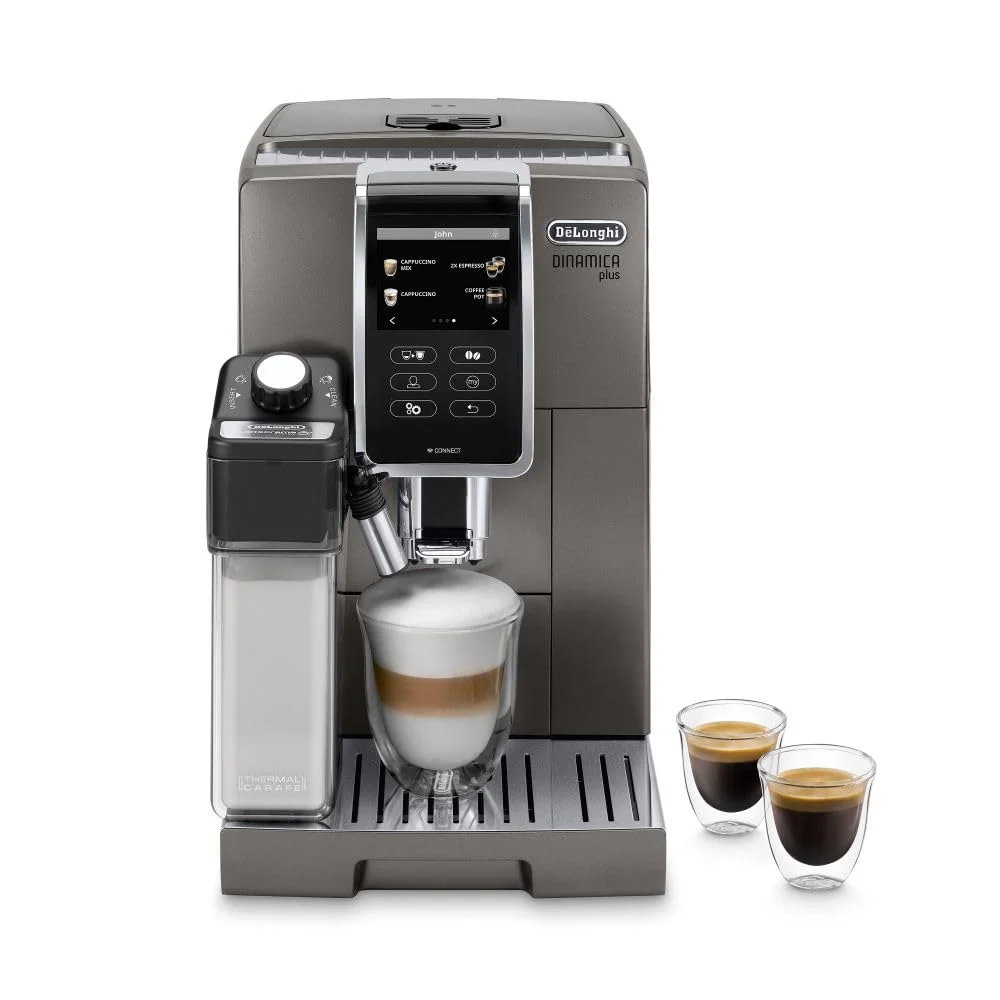
| Dinamica Plus | About 15 g, five strength steps | LatteCrema Hot, three foam settings | 3.5 in colour screen | Brewed cooler, poured over ice |
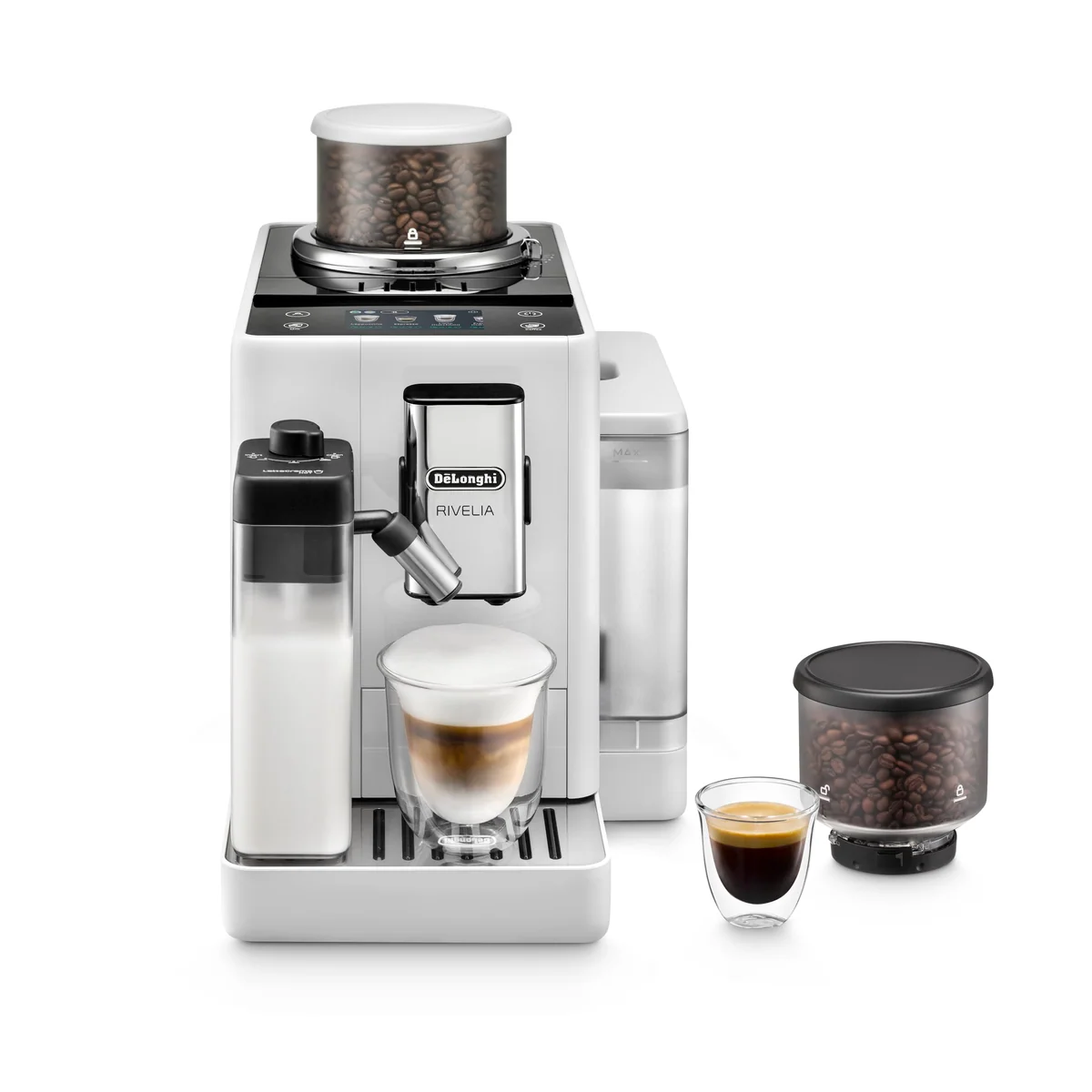
| Rivelia | About 15 to 16 g, five strength steps | LatteCrema Hot, three foam settings | 3.5 in touchscreen on the roof | Hot over ice, cold foam sold separately |
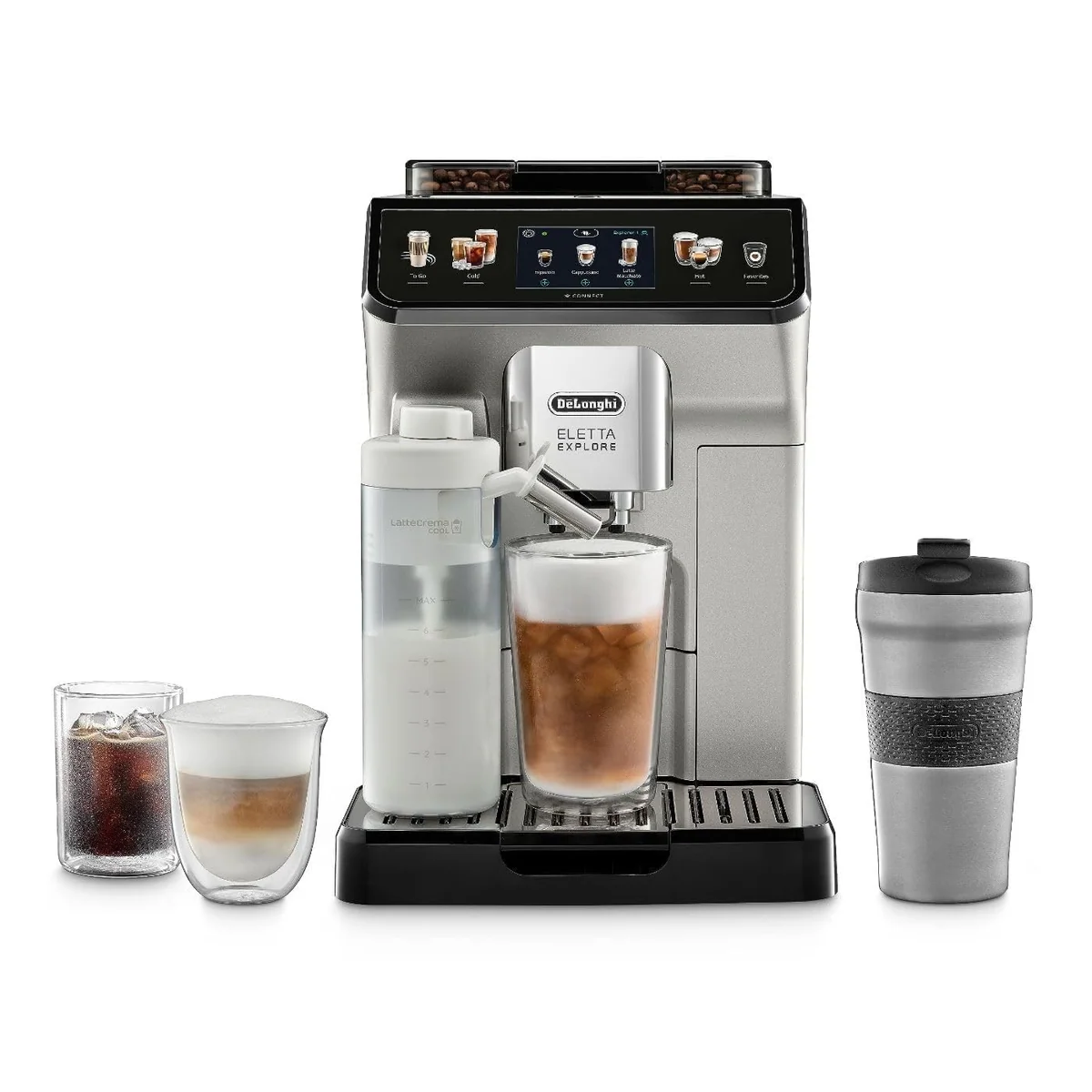
| Eletta Explore | About 8 to 15 g, five strength steps | Two carafes, hot and cold | 3.5 in touchscreen | Real cold extraction |
Treat the grams as indicative and the ordering as settled. Testers who put the same machine on a set of scales get different answers depending on the bean, the grind and which run they weighed, and Espresso Den is not going to average four people's readings into a number nobody actually observed. What nobody disputes is that the Start and the Evo stop three rungs short of the Dinamica Plus, the Rivelia and the Eletta Explore, and that no amount of dialling in moves that ceiling.
The second axis is milk, and it is a genuine fork rather than a ladder. The Start gives you a steam pipe under a plastic sleeve and makes the temperature and texture your problem, which is a real cost every morning and real control every morning. Everything above it gives you a carafe that lives in the fridge and does the job at a button. Our guide to choosing between a wand, a hose and a one-touch carafe is the honest version of that decision, because it is the one buyers most often get wrong in both directions.
One complaint follows the entire range and it is worth hearing before you spend anything: the milk comes out warm. An Eletta Explore owner measured a flat white at 125 °F with a calibrated thermometer, called De'Longhi, was eventually sent a replacement machine, and measured the replacement at 125 °F as well. A reviewer with a probe put Dinamica Plus milk near 59 °C against 64 °C from the newer Magnifica Plus. Rivelia owners raise it in five-star reviews, alongside the fix that actually helps, which is to set drink temperature to maximum on day one and preheat the cup. This is design rather than defect, it is the same across the line, and our piece on why these machines run cool covers what you can and cannot do about it. The one machine in this range that dodges it is the Start, because on a wand the milk is as hot as you decide to make it.
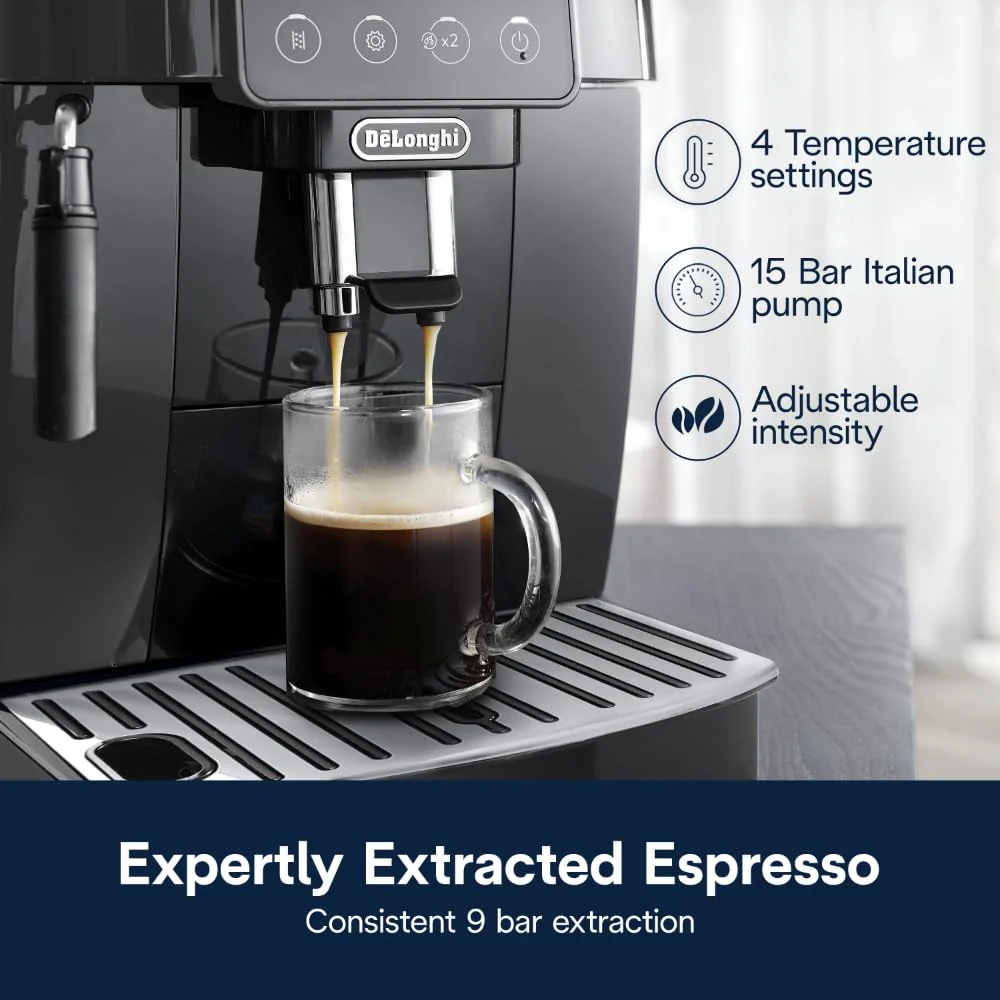
Quick Picks at a Glance
| Feature | Editor's Pick De'Longhi Magnifica Start Automatic Espresso Machine with Manual Milk Frother & Built in Grinder - 3 One-Touch Recipes, Easy-to-Clean, Home Barista Coffee Maker for Lattes, Cappuccino, Iced Coffee | De'Longhi Magnifica Evo Automatic Espresso & Coffee Machine with Auto Milk Frother, Built-in Grinder & Auto-Clean Function - For Latte, Cappuccino, Americano, Iced Coffee, ECAM29084SB , Silver | De'Longhi Magnifica Evo Espresso Machine with Automatic Frother, 7 Recipes, ECAM29084SB (Renewed) | De'Longhi Dinamica Plus Fully Automatic Espresso Machine - Brew Personalized Coffee for up to 4 User Profiles, 24+ Recipes, Built in Grinder & Automatic Milk Steam Wand with 3 Frother Modes | De'Longhi Dinamica Plus Connected Espresso & Coffee Machine with Automatic Milk Frother, 18 Recipes, Built in Grinder, App Compatible, LatteCrema Technology for Ideal Milk Texture, Color Touch Display | De'Longhi Eletta Explore Espresso Machine with Cold Brew, Hot & Cold Milk Frother - 50+ Recipes, Built in Grinder, Smartphone Compatible with Bean Adapt Technology for Ideal Extraction, 3.8 Pounds | De'Longhi Rivelia Automatic Espresso Machine with Grinder & Milk Frother – All-in-One Coffee Maker, Hot & Iced Latte, Cappuccino, Bean Switch System, Burr Grinder, Compact Italian Design, White | De'Longhi Rivelia Automatic Espresso Machine, Grinder & Frother, Easy Bean Switching, Beige |
|---|---|---|---|---|---|---|---|---|
| Price Range | $200–$500 | $500–$1,000 | Under $200 | $1,000–$1,500 | Under $200 | $1,500–$3,000 | $1,000–$1,500 | $1,000–$1,500 |
| Configuration | Magnifica Evo with Automatic Milk Frother | Magnifica Evo with Automatic Milk Frother | Colored Touch Display | Pack of 1 | 13.7" | — | Rivelia White | Rivelia White |
| Finish | Silver | Silver | Silver, Black | Silver | Titanium | Stainless Steel and Black | Arctic White | Arctic White |
| Items In Box | 1 | 1 | 1 | 1 | 1 | 1 | 1 | 1 |
| Check Price on Amazon | Check Price on Amazon | Check Price on Amazon | Check Price on Amazon | Check Price on Amazon | Check Price on Amazon | Check Price on Amazon | Check Price on Amazon |
The eight listings, and which of them is the one you want
These are the machines in the order De'Longhi's own price ladder puts them, which is also, roughly, the order in which they stop being about coffee and start being about convenience. Every one of them shares that brew group, so read the limitation on each card as the thing that will actually annoy you rather than as a warning about the cup.
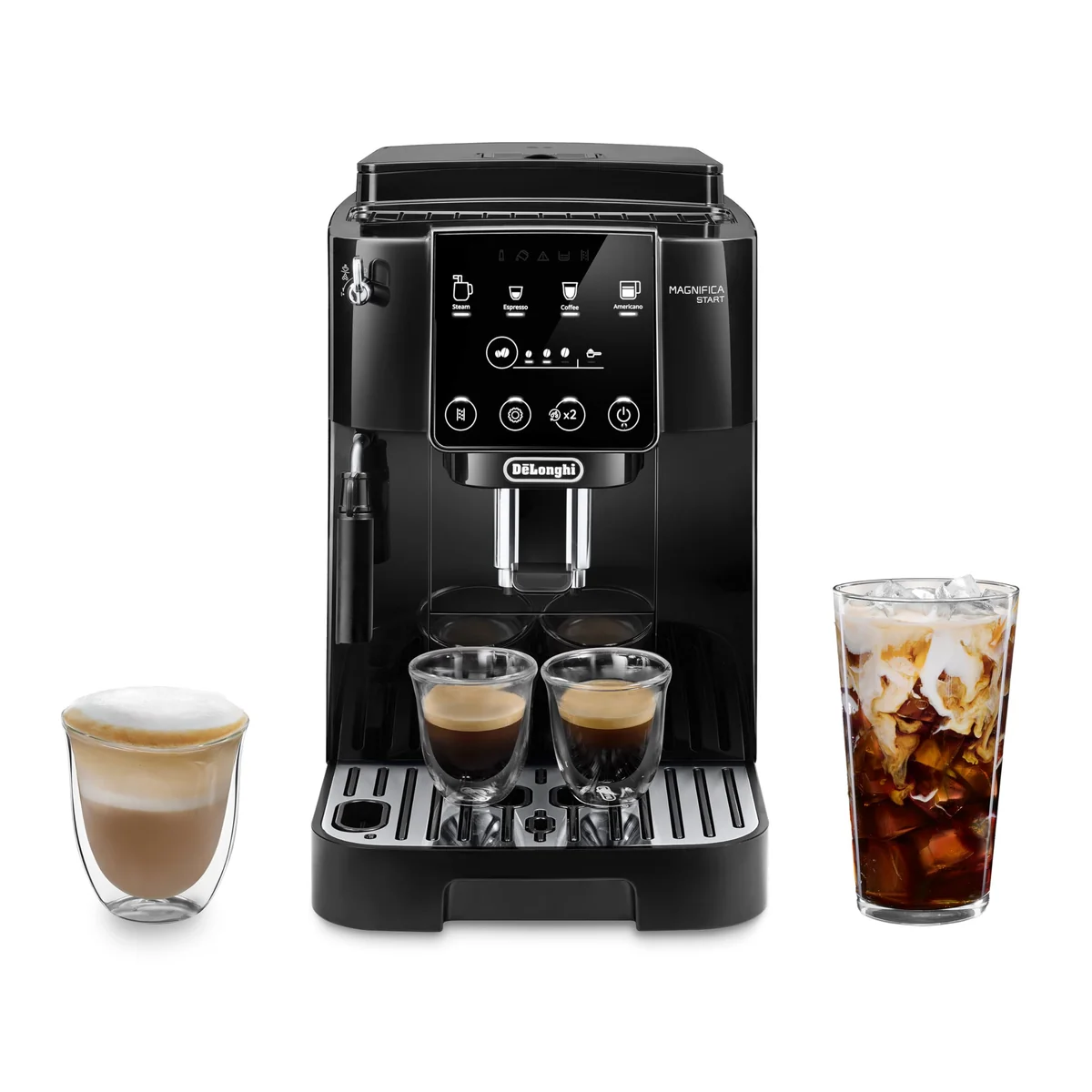
Start at the bottom, because the bottom is better than it looks. The Magnifica Start is three lit icons for espresso, coffee and americano, thirteen grind steps on a conical burr, and a traditional frothing wand you work with a knob. There is no carafe, no touchscreen, no app, no profile and no timer. What there also is not, and this is the point, is the optical milk sensor that its siblings use to confirm the carafe is seated, a part De'Longhi deleted when it built this machine. Not everyone agrees it earns its place: Coffeeness wrote flatly that there is no reason to buy the manual milk frother version, which is the sharpest dissent aimed at this exact configuration and deserves quoting rather than burying. That reviewer was judging it against a carafe model costing a good deal more. Judged as the entry point to the range, it is the version with fewer parts to fail.
The one to buy if you will steam your own milk
It runs the same brew unit and steel conical burr as the machines above it, so the only thing the low price costs you is the automation around the milk.
Its dose tops out around ten to twelve grams, which is a good ratio in a small cup and a thin one the moment you stretch it across a mug.
Two things about living with it that the box will not tell you. The reviews pooled on that listing describe two different machines, so several of the most enthusiastic entries praise an automatic frother and a self-cleaning milk nozzle this model does not have, and one one-star review complains about a milk detection fault on a carafe it was never fitted with. Read the words and discard anything mentioning a carafe. And the grinder is the loudest in the range on the only published measurement, at 75.9 dB with a shrill note on every cycle, so if a quiet kitchen is a hard requirement rather than a preference, the quietest machines we know of are a different shortlist entirely. The full case is in our Magnifica Start review, and the Evo against the Start is the comparison this range most needs.
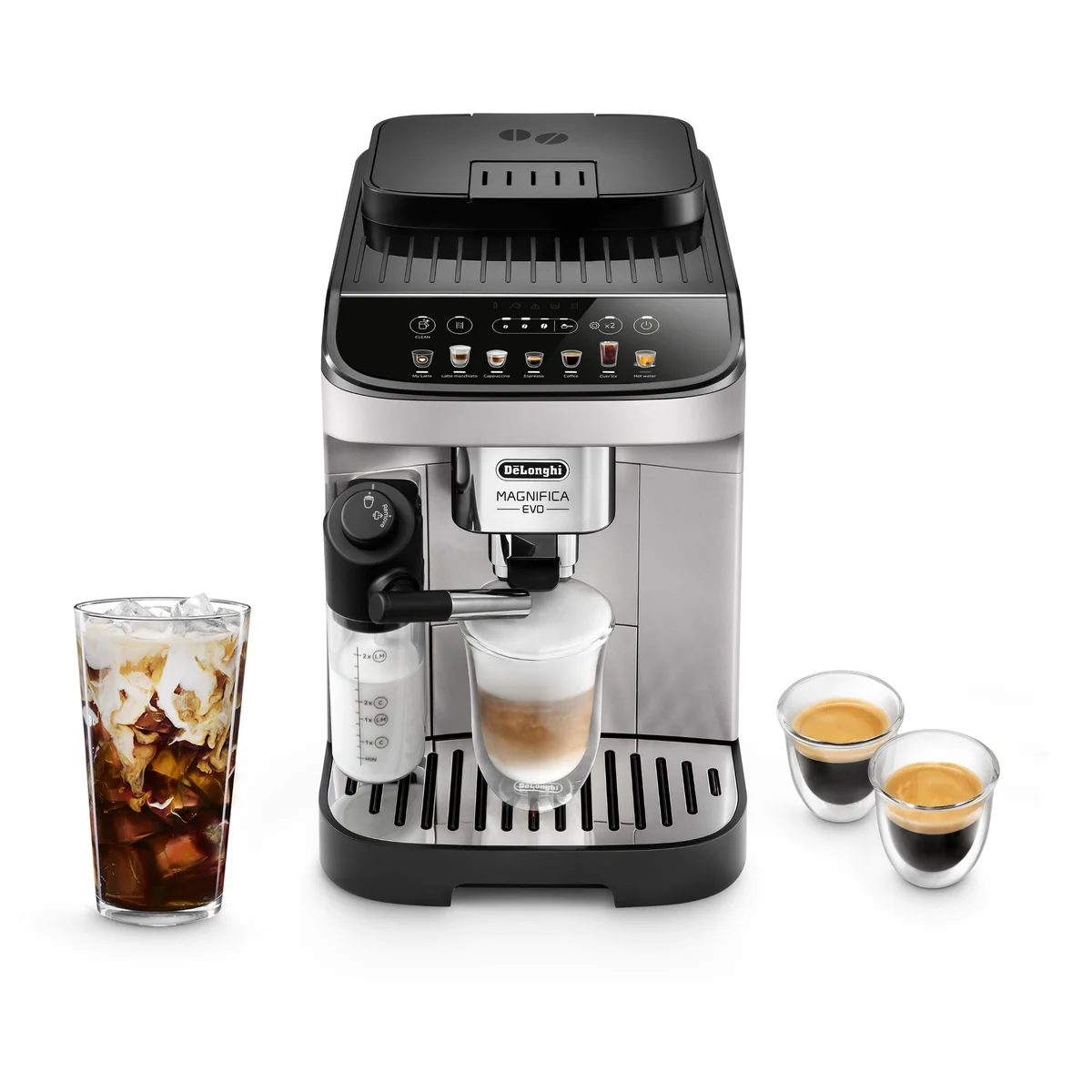
One rung up, the Magnifica Evo is the cheapest honest route into De'Longhi's one-touch milk carafe, which is exactly why it is the best-selling machine in the category and why it carries a rating well below the machines it outsells. Seven recipes on the panel, of which one is hot water, a LatteCrema carafe that textures dairy and plant milk, and an Over Ice programme that adjusts the dose. The foam is the reason to buy it, and in a side-by-side test against two costlier De'Longhis the Evo's fixed carafe produced the thickest milk of the three. The sag in its rating comes from a specific kind of buyer, the one who wanted straight espresso at café strength, and from a carafe seating sensor that periodically refuses to see a carafe that is right there.
The cheapest honest route to a one-touch cappuccino
Its LatteCrema carafe produces better foam than the adjustable carafes on two machines above it, which is the whole reason this listing outsells the rest of the category.
The carafe is confirmed by an optical sensor that regularly refuses to recognise it, a part De'Longhi deleted when it built the cheaper Start.
Everything we found on the Evo is set out in our Magnifica Evo review, and if your shortlist has drifted across brands, Philips LatteGo against the Evo is the fight worth reading, since De'Longhi tends to win on dose and Philips wins comfortably on carafe cleaning.
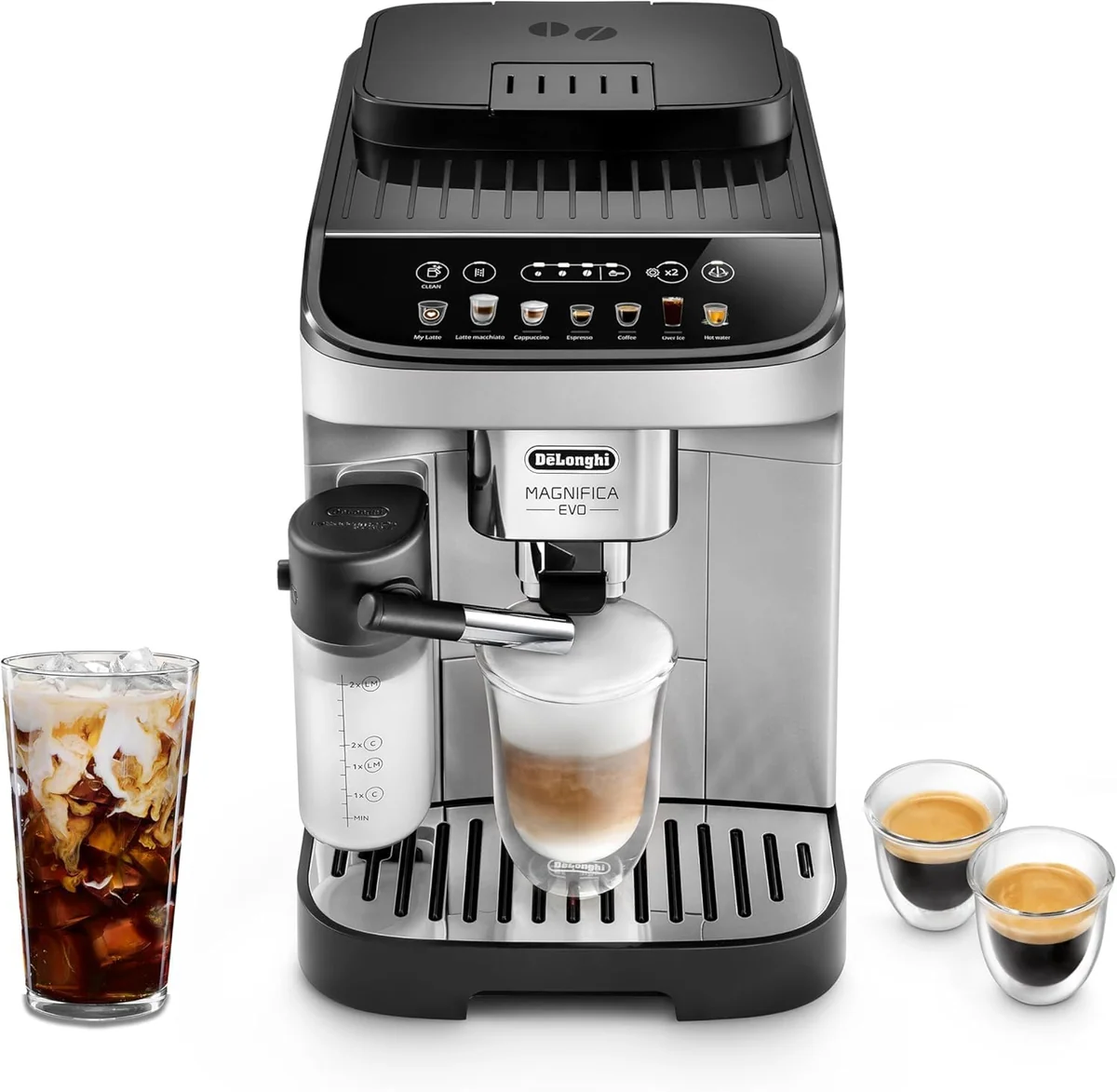
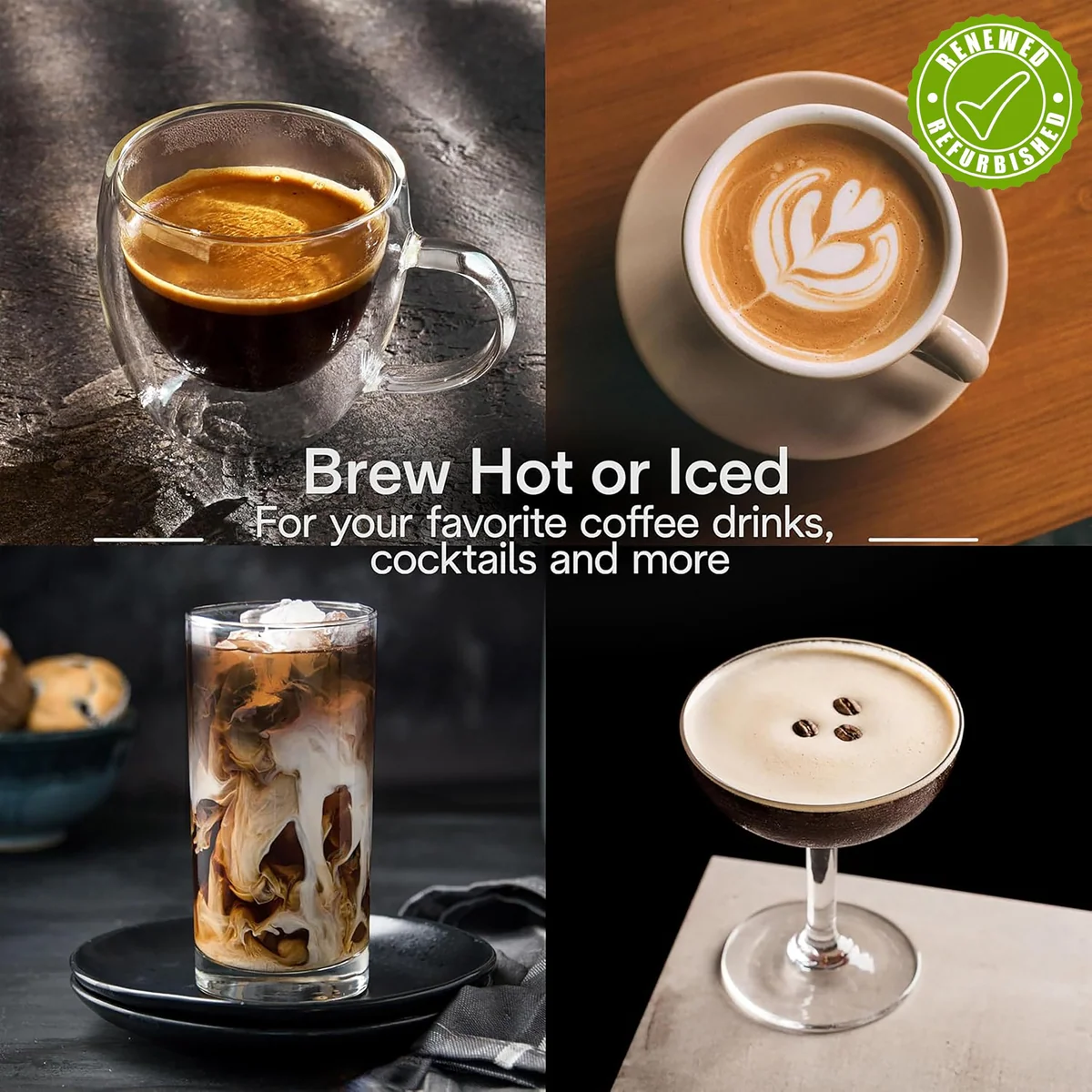
The renewed Evo is the same machine and a different transaction, and it deserves its own reckoning rather than a footnote. The listing carries the identical bullet points and the identical LatteCrema hardware. What changes is the cover: ninety days, against two years from De'Longhi on a new unit and a third year widely reported for registering it. On a device with a boiler, a pump and a gearbox inside a plastic shell that has now been shipped at least twice, that is a short window in which to discover a seal.
The same Evo for less, if the discount is genuinely large
Nothing inside it differs from the new machine, so a real saving makes it a sensible way into the LatteCrema carafe.
Ninety days of cover is roughly a tenth of what a registered new unit carries, on a platform whose seals and milk systems tend to fail in year two.
If you take it, use the ninety days deliberately: prove the carafe sensor sees the jug on day one, run the grinder through its full range while it is turning to prove the adjuster is not seized, and run a descale early so a previous owner's scale becomes your problem while you can still send it back. Our page on whether renewed bean-to-cup machines are a safe buy goes through the grading language properly.
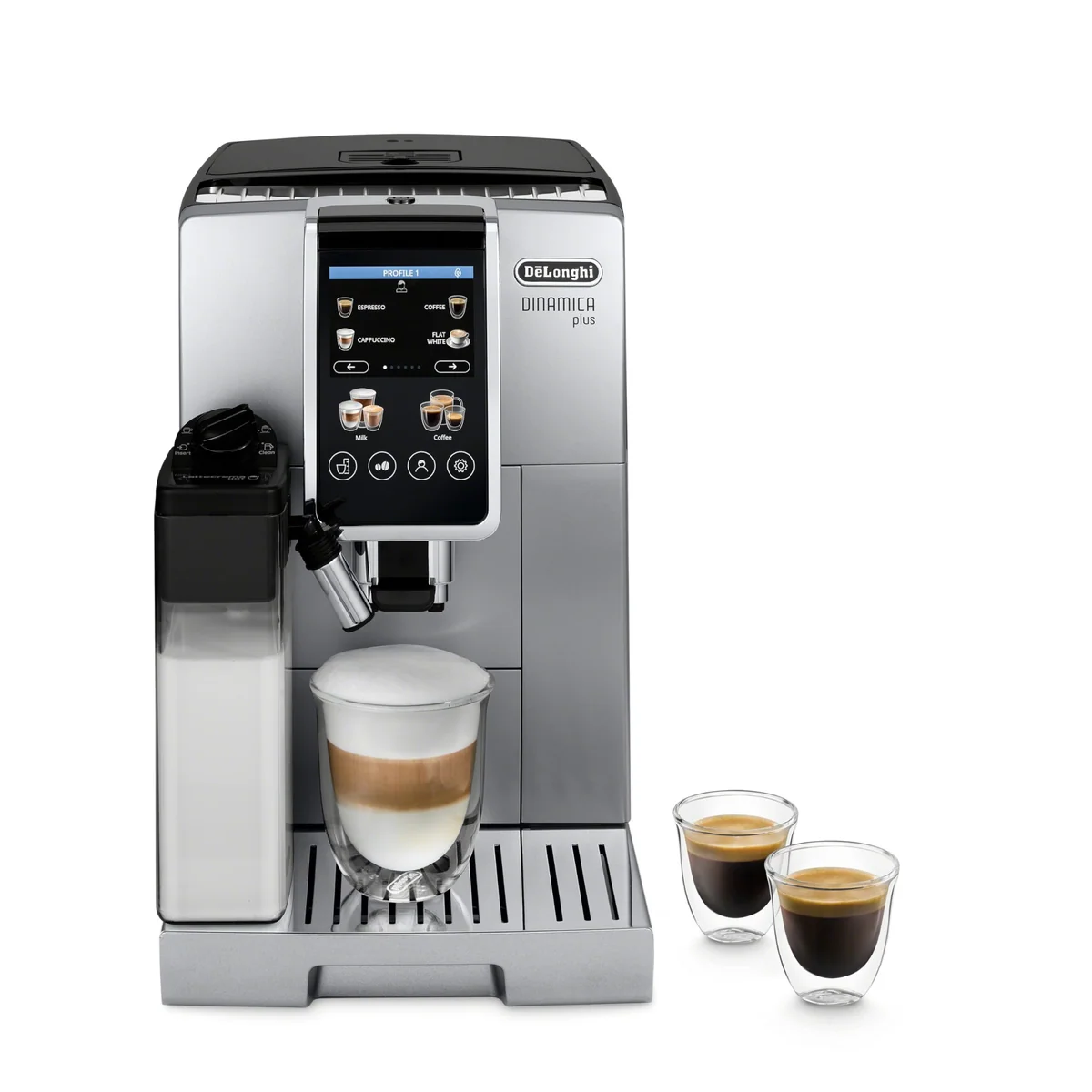
Then comes the step that actually changes the coffee. The Dinamica Plus is the cheapest De'Longhi that grinds a fifteen-gram puck, and the grinder goes fine enough that the pump can struggle against it, which is the compliment that matters most in this category. The silver ECAM38085SB is the version De'Longhi now presents as the Dinamica Plus: twenty-four drinks, four user profiles, three milk foam settings on a dial rather than dictated by the drink, and a 3.5 in colour touchscreen. Editorial reviewers who have tested it land on the same milk criticism, which is that the foam is firm rather than truly fine, so the flat white on its menu is a flat white in name only.
The cheapest De'Longhi that grinds a fifteen-gram puck
Two more seconds of grinding than the Evo is the one upgrade in this range you can taste, and this is the version that gets it without an app you will abandon.
Milk peaks near 59 °C, so anything larger than a cappuccino arrives warm unless you preheat the cup and reprogram the ratio.
Two ownership notes. The machine rinses on power-up, after drinks and on shutdown, which is why owners keep a spare glass permanently on the tray and warn that without one you get a drip tray of dirty water instead; the same constant flushing is why nobody in the research found mould inside one. And the milk carafe port can seize tight enough after a brew that owners describe expecting to snap the connector every time they take the jug back to the fridge. The whole picture is in our Dinamica Plus review, the money question against the tier below is settled in Dinamica Plus against Magnifica Evo, and the cross-brand version is Philips 5500 against the Dinamica Plus.
The older titanium Connected model is the same machine with a Bluetooth app bolted on, three profiles instead of four, and a recipe count that argues with itself. There is exactly one thing the app does that nothing else on this line does: it lets you set a drink volume as a number in millilitres, where the standard machine makes you brew and press stop with a mug in the way. Owners who defend it defend it on that ground and no other, and the fairest summary in the whole record came from a buyer who wrote that you do not buy this machine for the app, you buy it for good coffee.
The Dinamica for people who would rather type a number than press stop
Its Coffee Link app is the only route on this line to a drink volume set precisely rather than guessed at with a cup in the way.
That app is Bluetooth only behind an icon that looks like Wi-Fi, takes about a minute to connect, and closes itself often enough that the reviewer who liked the machine most stopped opening it after setup.
Register whichever Dinamica you buy on the day it arrives, because the third year of warranty is free and takes a few minutes, and De'Longhi's own product page confirms it. If the two boxes have you stuck, we take them apart side by side.
The Eletta Explore is the top of the mainstream range, and the temptation with a flagship is to assume the coffee at the top is better than the coffee below it. It is not. What the premium buys is three specific things: a cold extraction mode that trickles cold water through a fine grind and leaves the spout at around 37 °C, so the ice stops melting into the drink; a second carafe dedicated to cold foam; and enough clearance under the spouts for a travel mug, with a To Go mode that grinds twice so a large cup gets a proportioned drink rather than what one owner called a tiny sad coffee in a huge cup. The hot milk foam is also the best in the range, creamy rather than airy, which reviewers who have handled the whole line say without much hedging.
The only one of these that actually brews cold
Cold extraction leaves the spout at roughly 37 °C so the ice never dilutes the drink, and the flip-up grille clears a travel mug no other machine here will take.
Milk drinks measured 125 °F on two separate units, including a warranty replacement, which is a design choice rather than a fault and no more pleasant for that.
Two carafes also means two cartons of milk slowly going off in your fridge if your household drinks both hot and cold, and the listing's promise of cold brew in under three minutes did not survive a stopwatch. Our Eletta Explore review has the measurements and the model-number trap worth checking before you order.
Which leaves the Rivelia, sold on a single idea and honest about it. Two 8.8-ounce hoppers sit on the roof; you lift one off, drop the other on, and the machine asks whether to clear the old beans out of the grinder. Regular in the morning, decaf after four, your beans in one and your partner's in the other. Owners who bought it for that describe it the way people describe a dishwasher after years of washing up. The limitation is quiet and important: two hoppers do not mean two grinders, both feed the same burrs at the same hand-set position, so pairing a dark Brazilian with a light Ethiopian guarantees one of them extracts badly. Every swap also strands about ten grams of the previous bean in the chute, which you either bin or drink.
The one for a kitchen where two people want two different beans
Swapping hoppers takes seconds and works exactly as advertised, which is something no cheaper machine in this range will do at all.
Both hoppers feed one set of burrs at one grind setting, so a light filter roast and a dark espresso roast can never both be right.
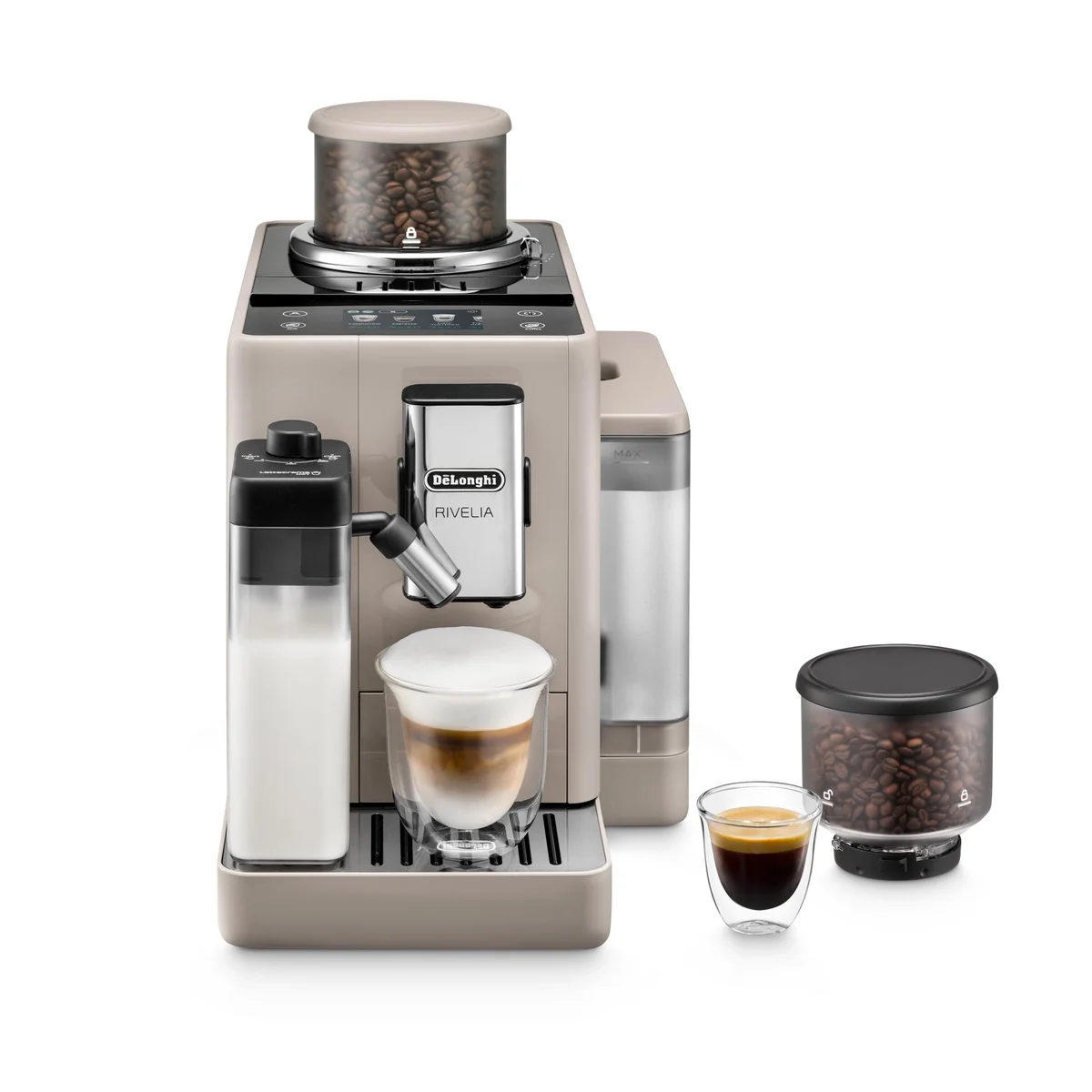
The beige listing is the same machine in a warmer colour, carrying identical bullet points and identical components, and its customer reviews read as one continuous conversation with the white one. Choose on your counter and stop thinking about it.
The same Rivelia in the colour that suits a warmer kitchen
Component for component it is the Arctic White machine, so the decision here is entirely about what sits well next to your cabinets.
It inherits the white model's cool milk and the roof-mounted screen, which a shorter owner cannot read from a standard-height countertop.
Two cautions before you commit to either colour. Reviewers who tested the Rivelia hands-on rate the cheaper Magnifica Plus above it on coffee alone, which tells you how much of the price is the hinge rather than the cup. And the failure reports that exist are ugly rather than numerous: in one owners' group a machine used for around ten coffees a week was declared unrepairable at roughly ten weeks, and the replacement then refused to engage either hopper, which is a hard thing to read about the one feature you paid for. Our Rivelia review holds both halves of that picture, and owners weighing it against the flagship in the same thread reach a near-unanimous conclusion, which is that if you will not swap hoppers you should buy the Eletta. We put that fork on its own page in Rivelia against Eletta Explore.
How Espresso Den put this in order
Nobody here has had one of these machines on a bench, and nothing above is presented as our own measurement. This page is assembled from the eight Amazon listings and the customer reviews retained on them, De'Longhi's own specification sheets and manuals, the published reviews from outlets and video reviewers who weighed doses, timed grinds and put thermometers into milk, and the owner threads and groups where people report back at three months, nine months and two years. It is also built on our own reviews of every machine on it, and where this page and one of those disagrees, the review is the longer argument and this one is the summary.
Two editorial rules shaped it. Where sources disagree, and on dose weights and milk temperature they disagree loudly, we have reported the disagreement rather than picking the tidier number, which is why the doses in the table above appear as ranges. And where a fact comes from a sibling machine rather than the exact listing, we have said which machine, because this range shares a brew group and a grinder but not a milk system, and the milk system is where most of the complaints live. How the site pays for itself is set out on our about page.
One thing worth flagging about the evidence itself: several of these listings pool their star ratings across configurations, and the retained reviews skew heavily positive while the critical tail lives on forums and in owner groups. That is why a page like this leans as hard as it does on the people who bought three of these machines themselves and compared them, and on the reviewer who set out to answer which one in the range is actually right for a given buyer.
Four questions, and then the range collapses to one machine
Will you hold a milk jug? If yes, stop at the Magnifica Start and spend the difference on beans, because you are getting the same espresso hardware in the least decorated box De'Longhi makes and giving up a carafe that generates most of the complaints on its siblings. If no, you are buying a LatteCrema machine and the only question left is which one.
What do you actually drink? Espresso, cortado, cappuccino: the ceiling matters and the Dinamica Plus is the cheapest machine here that clears it. Milk-heavy lattes: the ceiling matters less, because milk hides a multitude of sins, and the Evo does that job for a great deal less money. Large mugs of black coffee: none of these is a comfortable answer, the long-coffee programmes on the Evo and the Dinamica grind the same short dose as each other, and you should read what we would pick for black coffee drinkers before you spend.
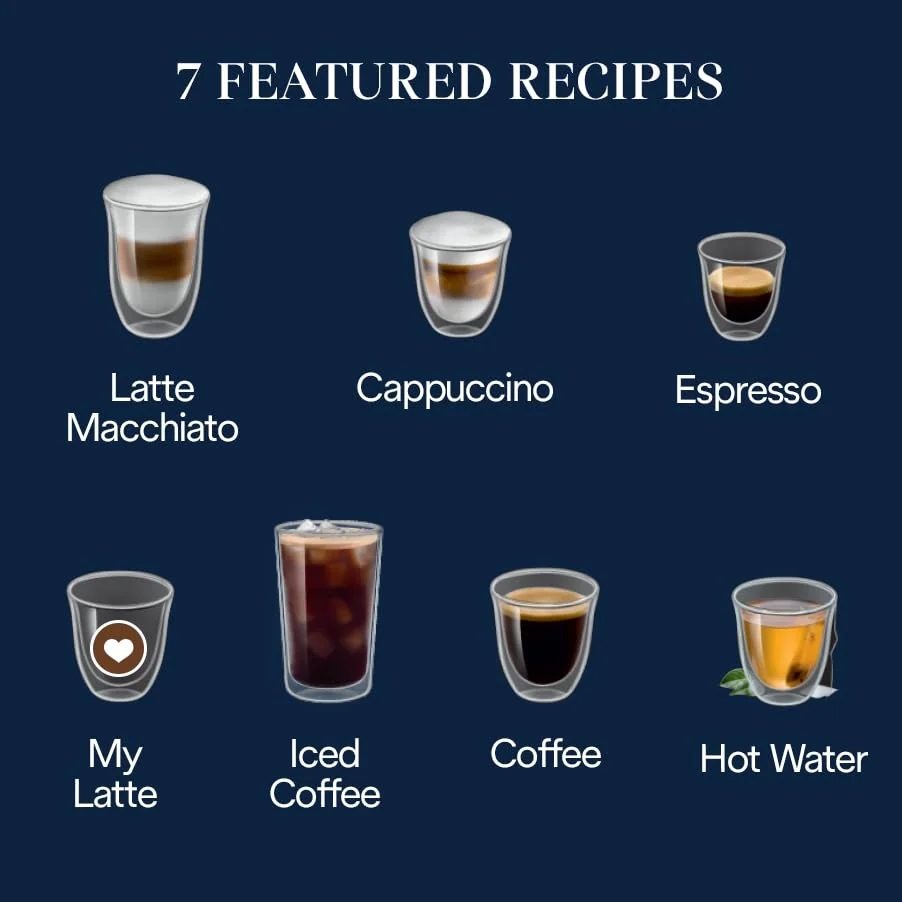
Do you drink cold coffee? Only the Eletta Explore brews cold. Everything else on this page, including the Rivelia's iced menu and the Evo's Over Ice, brews hot coffee at a somewhat lower temperature and drops it onto ice cubes you added yourself, which is a perfectly nice drink and not cold brew. Our explainer on iced modes covers what every brand means by the word, and the iced coffee shortlist is where to go if that is the whole reason you are shopping.
Are there two beans in the house? Regular and decaf, yours and theirs, caffeine that has to stop at lunchtime: that is the Rivelia, and it is the only machine in the range that solves it with two fresh whole-bean hoppers rather than a bypass chute full of stale grounds. If the honest answer is that you would keep one bean in it, you are paying a premium for a hinge you will never open.
| Your morning | The machine |
|---|---|
| Espresso and short milk drinks, and you will learn a wand | Magnifica Start |
| One-touch cappuccinos and lattes for the least money | Magnifica Evo, or its renewed listing at a real discount |
| Espresso you would serve a guest, at a button | Dinamica Plus |
| Two beans, two drinkers, one counter | Rivelia, and see our decaf-and-regular page |
| Cold brew weekly and a travel mug daily | Eletta Explore |
| You would rather not wash a milk carafe every day | A Philips LatteGo, whose two-part carafe is the easiest in the category |
| A very small counter and one bean | See the compact machines we rate |
What the recipe counts on the boxes are worth
Nothing, and it is worth saying plainly because these numbers are the loudest thing on every listing. The Eletta Explore advertises more than fifty recipes, which is arrived at by counting the hot, cold and to-go versions of the same drink as three drinks; reviewers who sat down and counted the actual beverages got nowhere near the headline. The Rivelia promises eighteen presets, and De'Longhi's own specification table enumerates five black coffee recipes, eight milk recipes and three cold ones plus hot water, three of which need a carafe sold separately. The Dinamica Plus Connected claims eighteen in its title and sixteen four lines into its own description. And De'Longhi's US specification sheet for the Dinamica Plus answers "Ability to create your own recipes" with a flat No, which rather undercuts a decade of app marketing.
Every long-term owner in the research had settled on one or two drinks and ignored the rest. Choose on dose, milk and cold, and let the menu length be somebody else's problem.
Frequently Asked Questions
Which De'Longhi should I buy if I just want good espresso?
The Dinamica Plus, because it is the cheapest machine in the range whose software allows a fifteen-gram puck and a grind fine enough to strain the pump.
What is the real difference between the Magnifica Start and the Magnifica Evo?
They pour the same coffee from the same brew group, and the Evo adds a one-touch milk carafe while the Start deletes the milk sensor that causes trouble on its sibling and hands the jug to you.
Is the Dinamica Plus worth roughly twice a Magnifica Evo?
For espresso and milk drinks yes, because of the dose ceiling, and for long black coffee no, because the long programmes grind the same short dose on both machines.
What does the Connected version of the Dinamica Plus give me?
A Bluetooth app that sets drink volumes as numbers rather than by pressing stop, at the cost of a user profile and of an app most owners open once and never again.
Does any De'Longhi here make genuine cold brew?
Only the Eletta Explore, whose cold extraction really does brew cold, while every other iced setting in the range is hot coffee poured over ice you added yourself.
Why is the milk never properly hot on any of them?
Because the LatteCrema system targets sweetness rather than heat and brushes the milk past steam instead of steaming it, so the only complete fix is a machine with a manual wand.
Which one should I buy for big mugs of black coffee?
None of them comfortably, because a puck of ten to fifteen grams stretched across half a litre will always taste thin no matter which button produced it.
Is the renewed Magnifica Evo a safe buy?
It is the same machine with roughly a tenth of the warranty, so it is worth taking only at a real discount and only if you test the carafe, the grinder adjuster and a full descale inside the ninety days.
Do the recipe counts on the boxes mean anything?
No, because they count hot, cold and to-go versions of one drink separately, and in one case a machine's own description contradicts its own title.
Which of these is quietest?
None of them is quiet, though owners who moved from a Magnifica to a Rivelia consistently report a real drop, and the loudest published figure in the range is the Start's grinder at 75.9 dB.
How much cleaning do these actually need?
Set the water hardness on day one, empty the grounds bin every few days, wash any milk carafe by hand every couple of days, rinse the brew group under the tap monthly, and expect a descale every two to six months depending on your water, which is the routine our cleaning guide sets out in full.
What beans should go in one?
A fresh medium roast that looks matte rather than glossy, because oily beans coat the grind chutes and cause the blockages that eventually look like a broken machine, as our beans guide explains.
Our Top Pick
The De'Longhi Magnifica Start is our #1 recommendation — it shares its brew group and steel burr with de’longhi machines well above it, deletes the automatic milk carafe that generates most of their owner complaints, and asks for a fortnight of dialling in that nobody warns you about..
Check Price on Amazon: De'Longhi Magnifica StartSources (9)
- Amazon listings and customer reviews
- Owner reports across r/superautomatic threads
- Owner and reviewer video, 3 channels
- Tomscoffeecorner — Article — tomscoffeecorner.com
- Homecoffeeexpert — Article — homecoffeeexpert.com
- De'Longhi — Article — www.delonghi.com
- Coffeeness — Article — www.coffeeness.de
- Espressorabbithole — Article — espressorabbithole.com
- Facebook — Article — www.facebook.com