The Dinamica Plus wins the shot, the Philips 5500 wins the sink, and only one of those happens every single morning
Buy the De'Longhi Dinamica Plus if the espresso itself is the reason you are spending the money, and buy the Philips 5500 LatteGo if what will actually decide whether you use the machine daily is how much washing-up it creates.
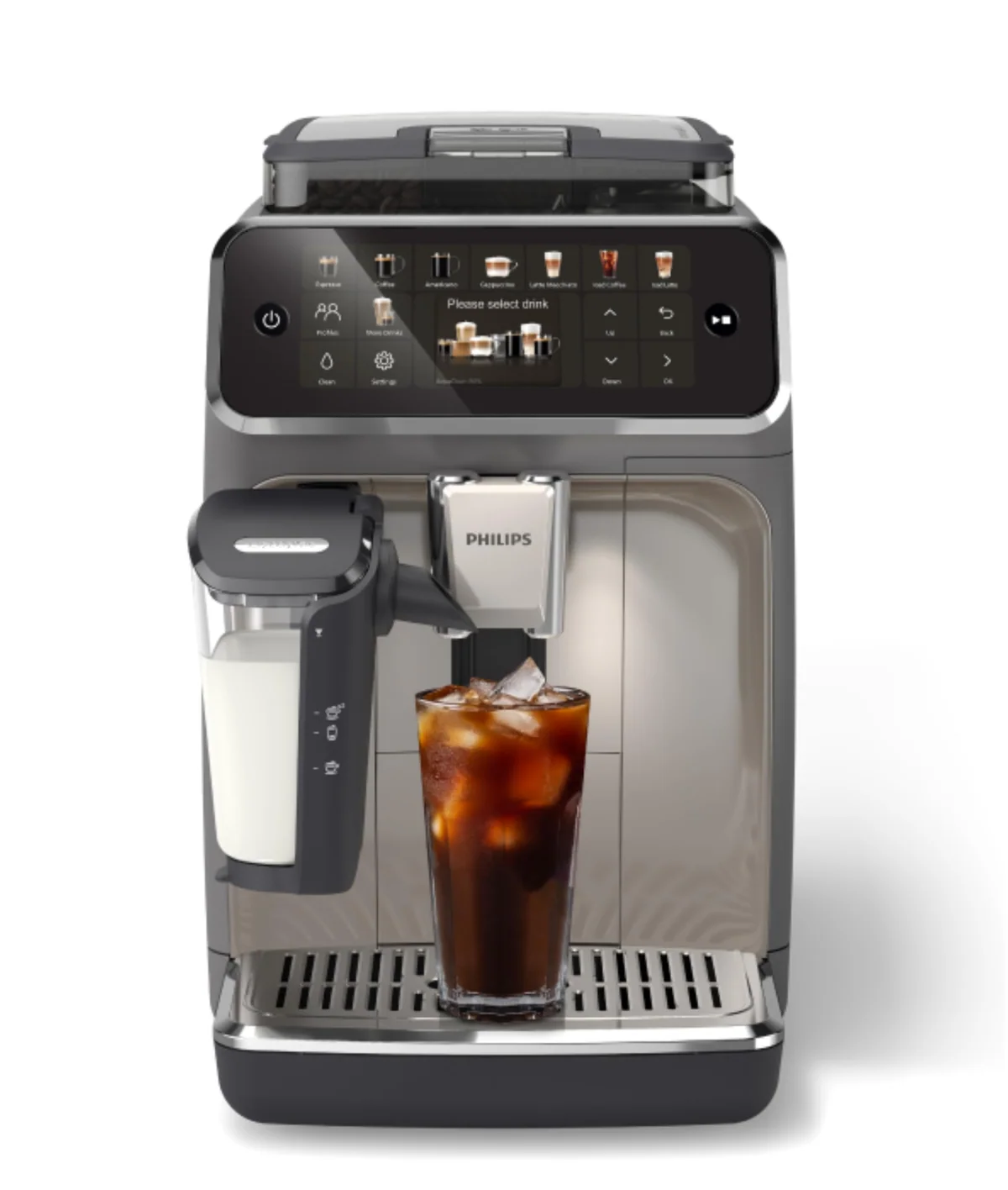
Philips 5500 LatteGo
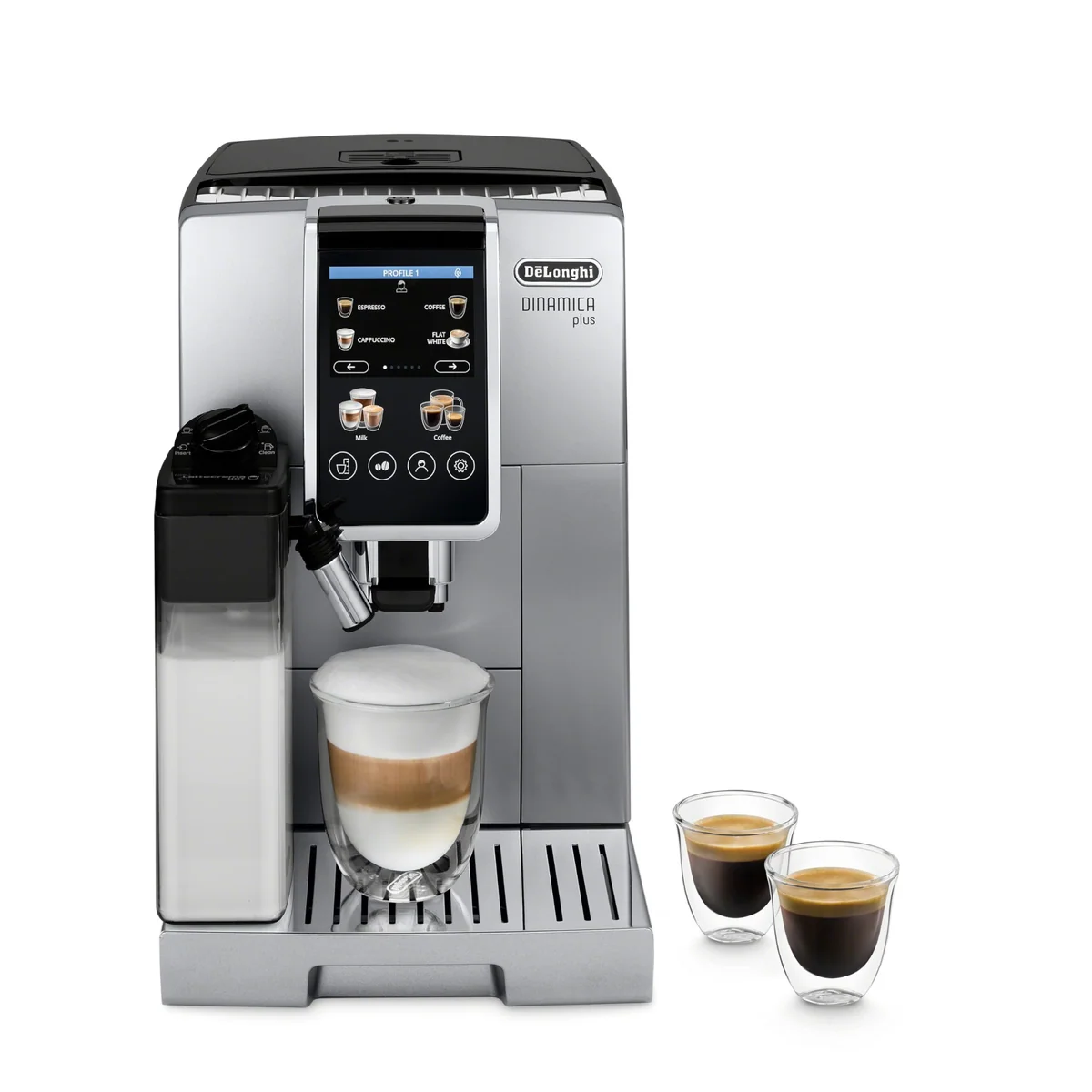
De'Longhi Dinamica Plus
Both of these machines grind, tamp, brew and froth at one button press, both hold four user profiles, both put a colour screen in front of you and a removable brew unit behind a door. On paper they are the same appliance at two different prices. They are not. The thing that separates them is a number neither box prints: how much ground coffee ends up in the puck. Weighed by independent testers, the Philips lands somewhere between eight and a half and ten and a half grams depending on who is holding the scale, while the De'Longhi at full strength is published at fifteen and was measured at 12.7 grams on its double setting in a side-by-side against a Philips of this same generation. Everything else on this page follows from that gap.
Espresso Den has not had either machine on a bench and nothing below is our own measurement. What this comparison is built from is the three Amazon listings and their customer reviews, De'Longhi's own specification page, and the independent reviewers who weighed pucks, put thermometers in cups and pointed sound meters at the grinders. Where they disagree, and on milk temperature and foam quality they disagree loudly, the disagreement is reported rather than averaged into something tidier.
One orientation note before the argument, because the shelf is confusing. Two of the three listings here are the same Philips EP5544 in two finishes, black chrome and grey chrome, sold at two different ratings. The De'Longhi is the newer ECAM38085SB, the Dinamica Plus without the app, which claims twenty-four one-touch recipes and four profiles on Amazon and which De'Longhi's own product page rates at fifteen bar with thirteen grind settings while answering "Ability to create your own recipes" with a flat No. If the Bluetooth version is also on your list, we take those two apart in the Connected against the non-connected Dinamica Plus.
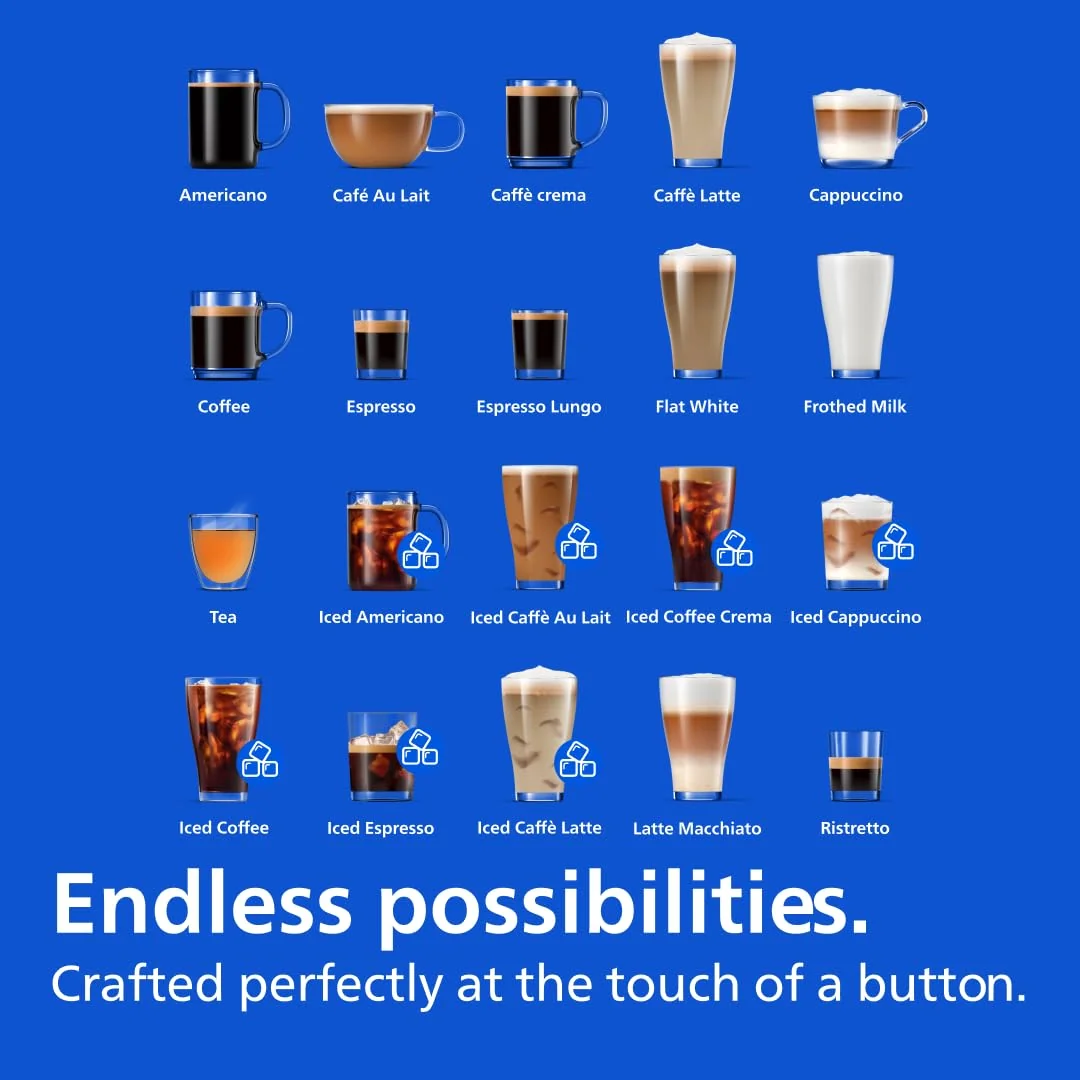
Philips 5500 LatteGo
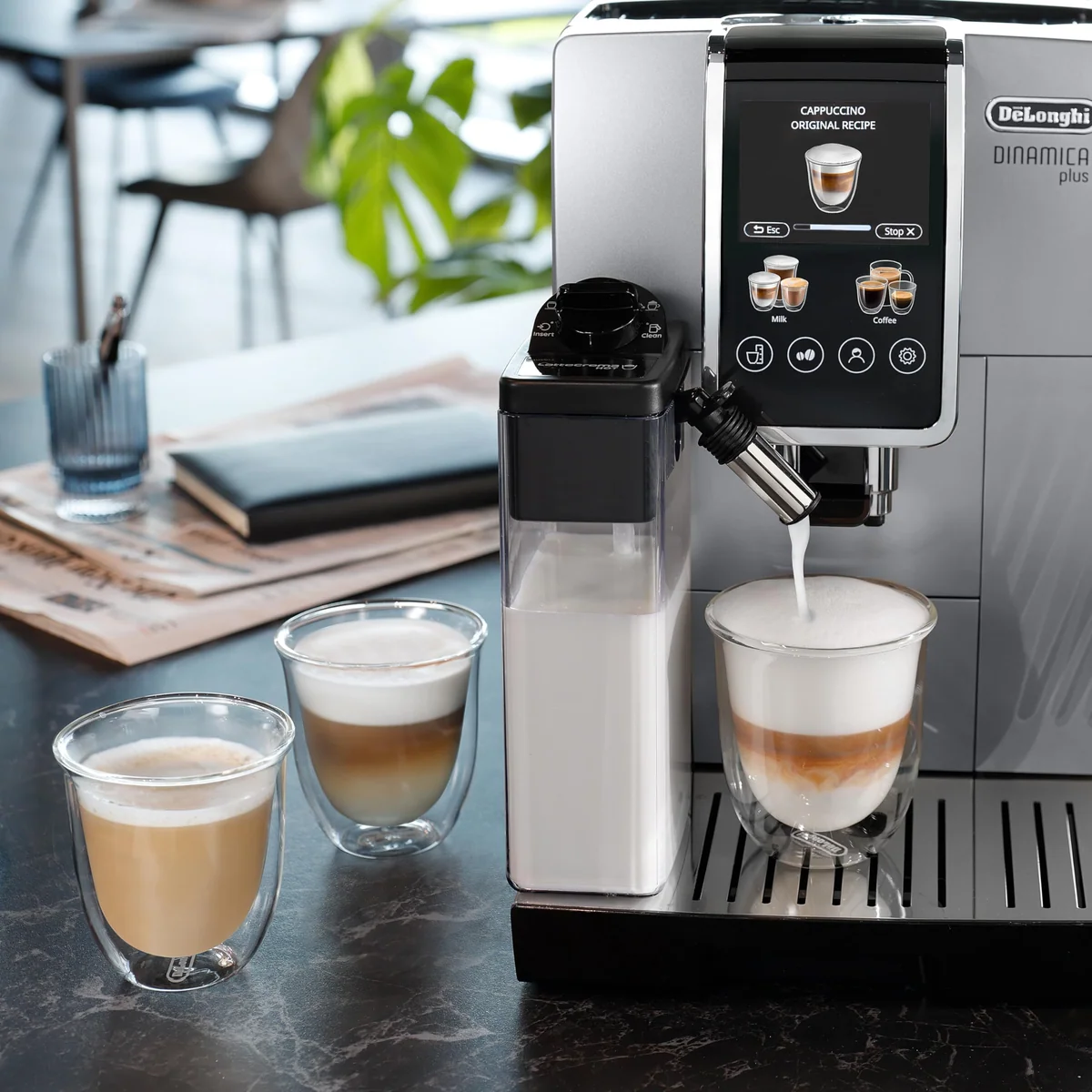
De'Longhi Dinamica Plus
At a Glance
| Feature | Philips 5500 Series Fully Automatic Espresso Machine, LatteGo Milk System, Integrated Grinder, 20 Hot & Iced Coffee Pre-Sets, Quick Start, SilentBrew, 15-Bar Pressure, Black Chrome (EP5544/94) | De'Longhi Dinamica Plus Fully Automatic Espresso Machine - Brew Personalized Coffee for up to 4 User Profiles, 24+ Recipes, Built in Grinder & Automatic Milk Steam Wand with 3 Frother Modes |
|---|---|---|
| Price Range | $500–$1,000 | $1,000–$1,500 |
| Configuration | 8.3 kg | Pack of 1 |
| Finish | Black, chromed | Silver |
| Items In Box | 1 | 1 |
| Listed Since | 2025-08-05T00:00:01Z | — |
| Check Price on Amazon | Check Price on Amazon |
Nine grams against fifteen
On a De'Longhi, the row of bean icons you press is not an abstract strength scale. It is a timer for the burr, and the published mapping is specific enough to argue with.
| Setting | Grind time | Approximate dose | Reachable on the Dinamica Plus? |
|---|---|---|---|
| 1 bean | 5 s | 7.5 g | yes |
| 3 beans | 7 s | 10 g | yes, and this is where a Magnifica Evo stops |
| 4 beans | 8.5 s | 12.5 g | yes |
| 5 beans | 10 s | 15 g | yes, and this is the whole reason it costs what it costs |
Treat the grams as indicative rather than gospel, because owners who weigh their own grounds bin find real doses wandering with the beans and the grind. The ceiling is what matters, and the Philips has no equivalent. Its five strength steps are finer increments of the same small charge rather than a route to a bigger one, which is exactly what Seattle Coffee Gear found when it put a 3300 and a 5500 side by side and got the same puck weights out of both. The single most useful piece of footage in this whole comparison is a reviewer killing power mid-cycle on both brands and lifting out the pucks: the De'Longhi's comes out as a disc, the Philips crumbles.
The consequence is measurable and it is also completely predictable. Caffè Lusta put extraction on the 5500 at 4.5 to 5.5 per cent and described coffee that lacked intensity and body, on roughly a one-to-four ratio of grounds to yield where an espresso wants something nearer one-to-two. That is a mild cup, not a bad one, and whether mild reads as pleasant or as failure depends almost entirely on what you drank before. The Amazon record for the black 5500 shows both camps in the same review pool: one owner four months in reports the coffee strength on the weaker side and has settled on the finest grind plus a double shot as standard, another had to switch to a darker roast and pull doubles because the machine grinds less per shot than she was used to, and the buyer who was angriest about it went and bought a De'Longhi. If you want the mechanics behind that rather than this particular machine's version of them, our piece on watery bean-to-cup espresso is the fuller explanation.
The Philips does have a real answer, and it is worth being fair about. Extra Shot grinds and brews a second puck onto the first, and it works on almost every coffee drink on the 5500. It is also not a luxury feature but a correction, and using it as standard costs you twenty to twenty-two grams of beans per drink, which is roughly what the machine's whole running-cost advantage over pods was made of. The De'Longhi gets there in one pass. That is the trade in a sentence.
The milk swaps one flaw for the other
This is the part most buyers get backwards, because the marketing on both sides describes silk. Neither machine produces it, but they fail in opposite directions.
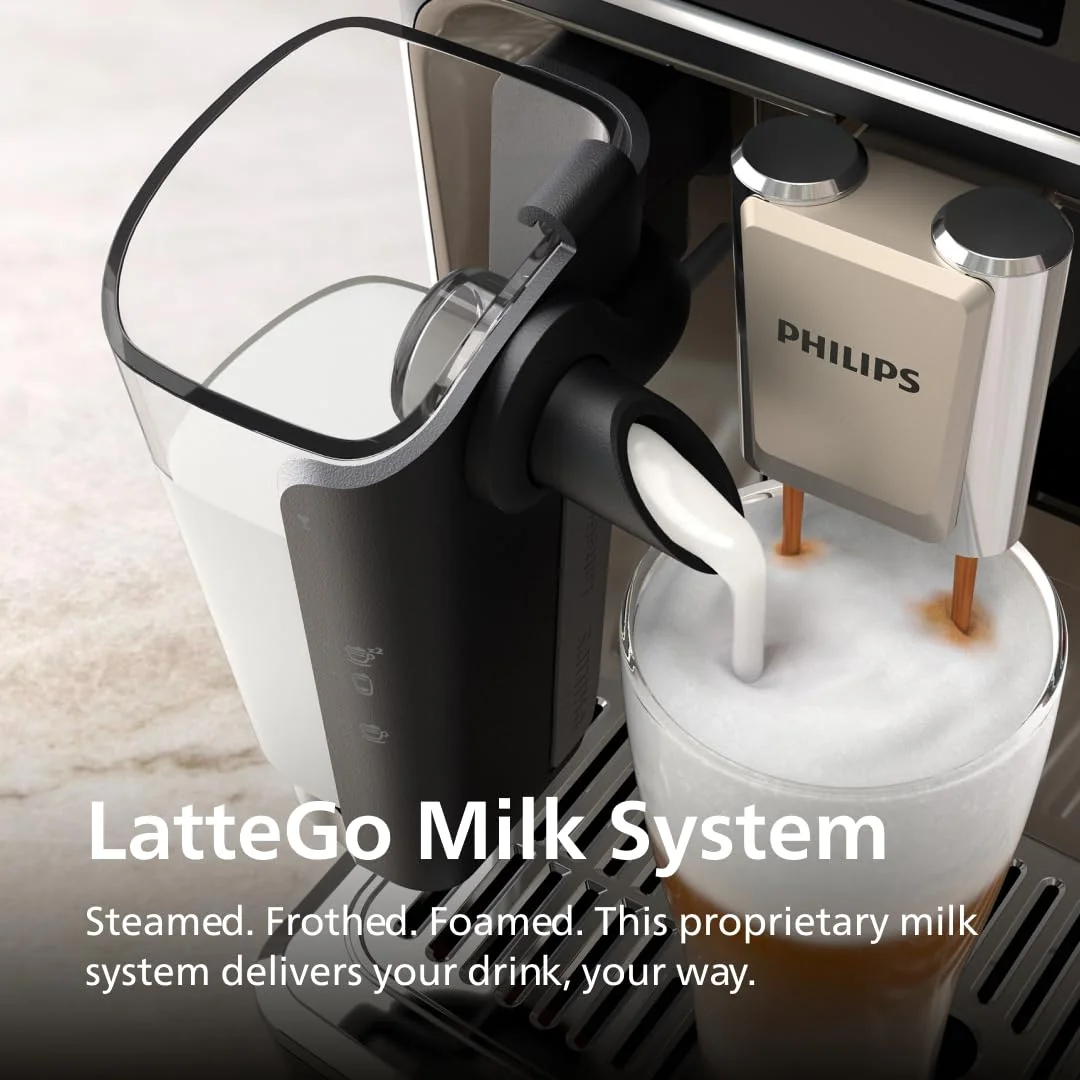
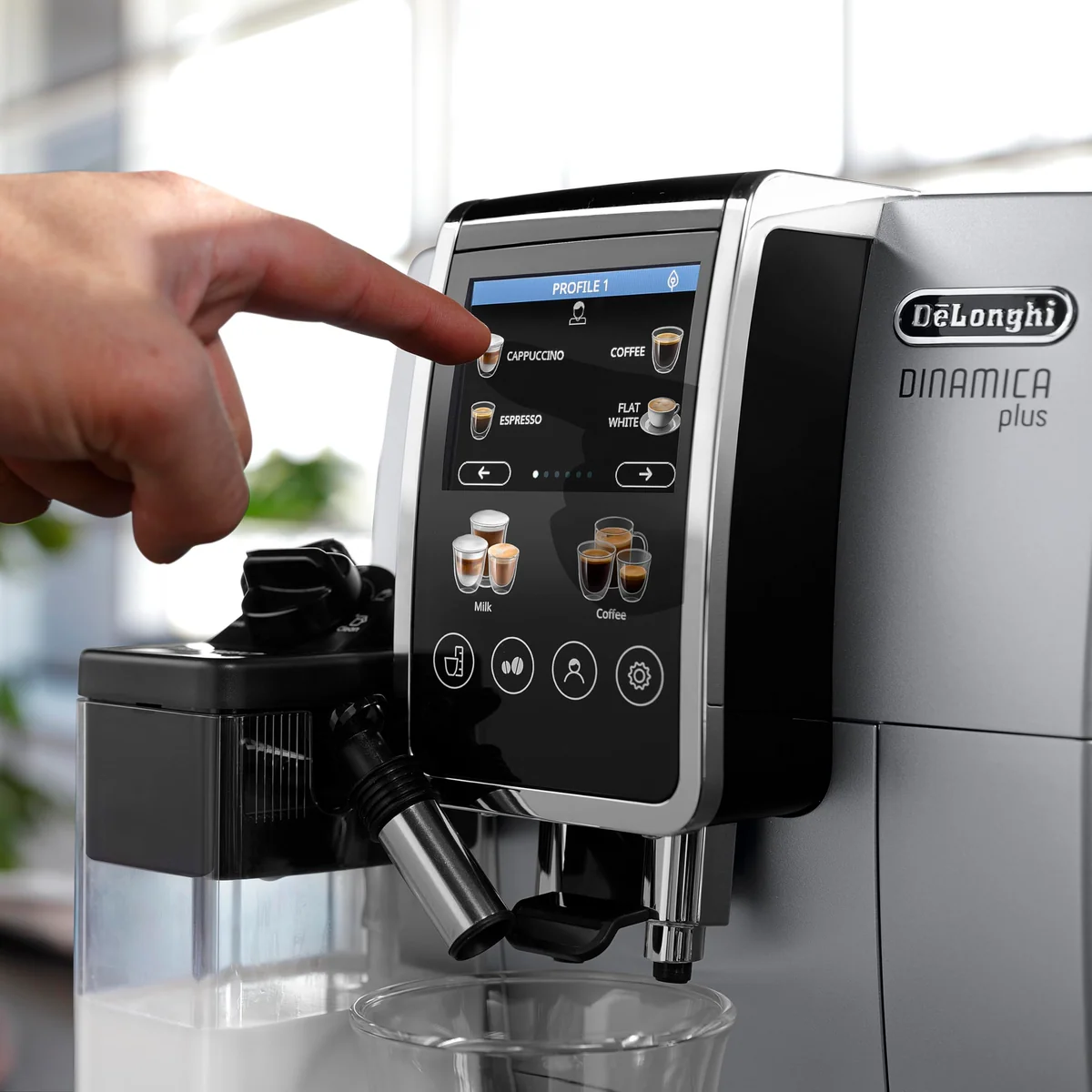
The LatteGo carafe is generous, consistent and genuinely hot: one tester measured milk arriving in the cup at around 75 °C and called the bubbles frankly large in the same breath. Coffeeness found the foam firm enough that a cappuccino keeps its layers, and warned specifically against expecting microfoam from it; Home Coffee Expert lists milk that is too foamy for flat whites as an outright reason to skip the machine. The LatteCrema carafe on the De'Longhi is the closest thing to hand-steamed milk available at a button press, with texture set on a dial rather than dictated by which drink you chose, and it froths oat, almond and cashew properly rather than merely tolerating them. The independent reviews of it still stop short of calling the foam true microfoam, so the flat white on that menu is a flat white in name only too.
Then temperature, where the ranking inverts. Our Dinamica Plus review reports hot milk from the LatteCrema stalling near 59 °C on a thermometer, which is invisible in a cortado, noticeable in a latte and dreadful in anything over twelve ounces. That is not a defect so much as the category norm, and it is the single most repeated complaint across De'Longhi owner reviews: on an owner-review aggregate for a sibling Dinamica the lukewarm-milk grievance dominates the page, along with the fix that actually works, which is to stop using the presets and program your own ratio. Owners of this exact silver listing who say their drinks are properly hot are the ones who went into the settings and raised the temperature, and at least one says so explicitly. Why these machines run cool covers the physics. If milk drinks are most of what you make, our latte-focused guide weighs both against everything else on the shelf, and the case for a wand over a carafe is worth reading before you accept either compromise.
And then the sink, which is where the Philips earns its keep
The LatteGo is two pieces that snap together with no internal tubes and no hidden channels, milk never enters the body of the machine, and the assembly rinses under a tap in seconds or goes in the dishwasher. Testers who prefer other brands on taste still call it the easiest and most hygienic milk system on the market. Owners of the black 5500 describe everything coming apart quickly and going back together the same way, and one who replaced four separate appliances with it puts the ease of cleaning above the coffee in her reasons for keeping it.
The De'Longhi asks for more, and the asks are specific rather than vague. The carafe dial goes to Clean after every milk drink and back before the next one. The rinse cycle fires on power-up, after drinks and on shutdown, and the owner who wrote the most detailed five-star review on that listing keeps a glass permanently on the counter to catch it, warning that without one you get a tray full of dirty water. And the carafe port itself is a genuine irritant: the same owner says the fit is snug enough after a brew that he expects to snap the connector every time he pulls the jug off to put it back in the fridge, which with lattes is several times a day.
The Philips has one hidden chore of its own that nobody mentions until it bites. The brew group comes out weekly for a rinse under a warm tap, and every couple of months its rails want a thin line of the supplied food-grade grease; one tester named brew-group maintenance as his only real criticism of the machine, and at least one buyer found the grease tube missing from the box and had to buy it separately. Skip the greasing and a machine that was fine at four months starts refusing to pour. The full rhythm for either brand is in our cleaning and descaling walkthrough, and the Philips filter story in particular is unpicked in the AquaClean piece.
The whole comparison on one screen
| Philips 5500 LatteGo | De'Longhi Dinamica Plus | |
|---|---|---|
| Puck at maximum strength | 8.6 g weighed on a 5400, 9.5 to 10.5 g weighed on a 5500 | 15 g published, 12.7 g weighed on a double |
| Grinder | Ceramic burrs, 12 steps | Conical burrs, 13 steps, fine enough to strain the pump |
| Route to a stronger cup | Extra Shot, which brews a second puck | A bigger first puck |
| Milk temperature | Around 75 °C measured in the cup | Near 59 °C, per our own review of it |
| Foam | Generous, hot, visibly bubbly | Closer to hand-steamed, still not microfoam |
| Milk wash-up | Two parts under a tap in seconds | Dial to Clean, back to the fridge, and fight the port |
| Profiles | 4 plus a guest slot | 4 |
| Characteristic failure | Leaks and worn seals, typically after the first few months | Water circuits dead or unprimed out of the box |
That last row deserves its own sentence, because the two brands fail on different timetables and that changes what a return window is worth. The most repeated complaint in the Dinamica Plus review pool is arrival condition: one buyer went through two units, a renewed one that leaked internally and a new one that would not prime, and returned both. That is a fault you find on day one, which is the best kind to have. The Philips faults arrive later. One owner of the black 5500 had a problem at about six months and got the machine collected for repair, another says his simply stopped working at eight months despite following every cleaning instruction. If a renewed listing is tempting you on either side, our piece on buying renewed applies here with force, and how long these machines actually last sets both records against the category.
Two Philips listings, two ratings, one machine
The black chrome EP5544/94 and the grey chrome EP5544/90 are the same hardware in different finishes, and they do not carry the same score: 4.1 from 354 ratings against 3.7 from 159. Nothing in the coffee explains that, and the listing copy does not inspire confidence in either direction. The grey one's description promises two user profiles and describes a machine coming with 230 W of power; the black one's bullets correctly offer four profiles and then its own description, four lines further down, says two. Buy on whichever colour is cheaper on the day and ignore the profile count printed on both, because the machine has four plus a guest slot.
What neither machine will do for you
Neither one brews cold. Both sell iced presets, and on the Philips a tester with a thermometer measured that setting delivering coffee at roughly 60 °C rather than the usual 80 °C, which you then pour over ice you supplied yourself; Coffeeness read the operating instructions and found them saying the same thing in plainer words than the marketing did. The De'Longhi's iced mode works the same way. If cold extraction is what you came for, our explainer on which machines actually brew cold will save you the money, and our iced pick goes elsewhere for a reason.
Neither one is representative of itself out of the box, either. Home Coffee Expert treats this as a headline fault on the Philips: expect at least twenty to thirty coffees before you get good results, run cheap beans through them, and note that Philips explains this nowhere, which the reviewer believes gets perfectly good machines returned early. The De'Longhi wants a similar settling period, and one Amazon owner puts the learning curve at about two weeks before the machine felt like his. Bean choice does more work than any setting on either machine, which is the argument of our guide to what survives a bean-to-cup grinder.
And neither is built around your mugs. TechRadar's tester, an SCA-certified barista, named the Philips's fixed milk spout as her single biggest complaint, because the cup has to sit much further forward than you expect and a narrow one will have a spout miss it entirely, and she flagged that the bean hopper fills from the top, so a machine parked under a wall cabinet has to be shuffled out to reload. Owners add that the water tank could stand to be larger and that tall travel mugs are a squeeze. The De'Longhi is the physically larger appliance of the two, which is the trade for the bigger brew group behind the door.
Philips 5500 LatteGo
De'Longhi Dinamica Plus
So which one, honestly
If you drink espresso, cortados and cappuccinos, if the shot itself is the point, and if you have ever tasted something out of a super-automatic and thought it was thin, buy the De'Longhi. Fifteen grams under a grind fine enough that the pump has to work is the only thing on this page that produces a shot you would serve to somebody who orders espresso on purpose, and no amount of dialling in moves the Philips onto that ground. Accept in exchange that your milk will be warm rather than hot unless you go into the settings and reprogram the ratio, and that the carafe is a daily ritual rather than a rinse.
If you are leaving pods or drip behind, if you drink lattes and cappuccinos in that order, if two to four people in the house each want their own settings, and if the honest predictor of whether the machine gets used on a Tuesday morning is how much washing-up it makes, buy the Philips. It is quieter, it is easier, its milk is hotter, and the LatteGo carafe remains the best single reason in the whole category to choose Philips over anybody. The published head-to-heads between these two brands keep landing on the same split, and it is the right one: ease on one side, intensity on the other.
There are two ways to spend less without giving up what you actually came for. If it is the De'Longhi shot you want and you can live with a twelve-gram ceiling instead of fifteen, the Magnifica Evo makes the same milk with the same carafe technology, and we argue that one out in Dinamica Plus against Magnifica Evo. If it is the LatteGo you want, the brew unit does not change anywhere in the Philips range, so the 3300 against the 5500 and the 5500 against the 4400 are both really arguments about screens and profiles rather than coffee, and our guide to the whole LatteGo ladder maps the rest. If two people in the house drink different beans, the Rivelia with its swappable hoppers solves a problem neither machine here answers well; the full De'Longhi ladder covers where it sits. And if reading a paragraph about puck weights made you want to touch a portafilter, you want a Breville Barista Touch instead and you should stop reading about super-automatics.
The three listings on this page
The grey 5500, which is the black one wearing a different coat
Mechanically this is the identical EP5544 in grey chrome, so it makes sense only on the days when grey is the cheaper of the two Philips listings.
It carries the lower rating of the two by a clear margin, and its own description promises two user profiles for a machine that has four plus a guest slot.
The Philips to buy if you are buying a Philips
This is the better-rated 5500 listing and the one with an owner record long enough to read, and it does the milk-drink-and-quick-clean job better than anything De'Longhi sells at any price.
Owners arriving from a De'Longhi or a portafilter consistently call the coffee thin, and the fix, running Extra Shot on everything, roughly doubles the beans you get through.
The one to buy if the espresso itself is the reason you are spending the money
A fifteen-gram puck under a grind fine enough to strain the pump is the only thing on this page that reliably produces a shot with body rather than a shot with crema on top of water.
Milk from the LatteCrema carafe arrives warm rather than hot, the carafe port grips hard enough that owners fear snapping the connector, and water circuits that leak or refuse to prime are the most repeated out-of-box complaint in its review pool.
Frequently Asked Questions
Is the De'Longhi's espresso really that much stronger, or is that just marketing?
It is real and it is mechanical: the Dinamica Plus grinds for ten seconds at full strength where the Philips brew unit tops out around nine or ten grams however you set it, and testers who weighed pucks from both got a disc from one machine and crumbs from the other.
Can I fix the Philips espresso with settings?
You can improve it a lot by running maximum strength, the shortest volume you can drink, the highest of the three temperature settings and Extra Shot on every drink, but none of that lifts the dose ceiling and all of it costs you roughly twice the beans.
Which one is easier to live with day to day?
The Philips, comfortably, because the LatteGo carafe is two parts with no internal tubes that rinse under a tap in seconds where the De'Longhi carafe needs a clean cycle after every drink and a firm pull to get it off the machine.
Does either one make a proper flat white?
No, because the Philips foam is hot but visibly bubbly and the De'Longhi foam is closer to hand-steamed but still not fine enough to be microfoam, so the flat white preset on both is a name rather than a technique.
Which one gets the milk hotter?
The Philips, by a wide margin, with milk measured arriving in the cup at around 75 °C against the De'Longhi carafe stalling near 59 °C.
Do the iced drink settings on either machine brew cold?
No, both brew cooler and slower than their hot programmes and expect you to supply the ice, which one tester measured on the Philips as coffee arriving at roughly 60 °C rather than the usual 80 °C.
Which is quieter?
The Philips grinder has been measured at around sixty decibels with the hopper lid properly seated, but nobody has published a comparable reading for the Dinamica Plus, so this is the one comparison on the page that cannot honestly be settled.
Can I run decaf without emptying the bean hopper on either machine?
Yes, both have a pre-ground bypass chute and owners use it exactly for that, though on both machines reaching the scoop setting takes several button presses every single time and no profile will default to it.
Is the extra spend on the De'Longhi justified?
Only if you drink espresso rather than milk drinks, because the money buys a bigger puck and almost nothing else that reaches a cappuccino, and the Philips wins on cleaning, milk temperature and quiet on the same day.
Ready to Choose?
Sources (8)
- Amazon listings and customer reviews — Philips 5500 Lattego and Delonghi Dinamica Plus
- Owner and reviewer video, 4 channels
- Tomscoffeecorner — Article — tomscoffeecorner.com
- De'Longhi — Article — www.delonghi.com
- Homecoffeeexpert — Article — homecoffeeexpert.com
- Coffeeness — Article — www.coffeeness.de
- Au — Article — www.productreview.com.au
- Techradar — Article — www.techradar.com