The best Jura is usually the cheapest one carrying the milk system you actually need
The most useful thing anyone can tell you about Jura's range is that it is far more one machine than the price ladder suggests. An ex-dealer who spent his days doing warranty checks on these describes the E line as a single platform: the brew unit is basically the same, the grinder is the same, and the same amount of coffee goes into every shot, with the differences between models coming down to software options, the second spout, the frother and the expensive ceramic valve that steers water and steam between them.
Read that sentence twice, because it reframes the whole shopping trip. You are not climbing a ladder of better coffee. You are climbing a ladder of milk hardware, screens and menu length, with the same espresso underneath. That is why black-coffee drinkers who ask a room full of Jura owners whether to buy the flagship keep getting talked back down the range, and why an E8 owner in one of those threads wrote that his only regret was not buying the version without the cappuccino option, because the milk system is enough of a chore to clean that he avoids using it.
So the real question is not which Jura is best. It is how much milk plumbing you want to own, rinse and eventually pay to have serviced. An ENA 4 buyer put the opposite side of that decision plainly: she already has a milk frother on the counter, so she bought the model with no milk system at all and gets less cleaning than a built-in frother or a milk hose would have given her. Both of those people made a good decision. Neither of them bought the machine at the top.
Some things are true of every machine here, and it is fairer to say them once than to repeat them under each product. Espresso Den has not had any of these on a bench, so nothing below is a reading we took. A super-automatic cannot grind as fine as a portafilter machine without choking, so the whole category brews coarser than a barista would; one reviewer who tried hard to force a thick Italian shot out of a Jura concluded you will not get a one-to-two ratio out of any of them and should aim instead at a short, strong, well-balanced long shot at nearer one-to-four.
And the crema, which is the first thing people photograph, is partly manufactured. In a six-machine test by an independent reviewer who bought all of them himself, the Jura poured the best-looking shots of the group, and he explained why: the machine aerates the crema, so what you are admiring is closer to foamed coffee than to the classical article. He still rated the cup at or near the top of the six. Both halves of that matter, and it means crema on a Jura is not evidence that you have dialled anything in.
Quick Picks at a Glance
| Feature | Editor's Pick Jura E4 Piano Black Automatic Coffee Machine | Jura E4 Piano White Automatic Coffee Machine | Jura ENA 4 Full Nordic White Automatic Coffee Machine | Jura J8 twin Diamond Black 15658 Automatic Coffee Machine |
|---|---|---|---|---|
| Price Range | $1,000–$1,500 | $1,000–$1,500 | $1,000–$1,500 | $3,000+ |
| Configuration | One Size | One Size | 1 | 1 |
| Finish | Piano Black | Piano White | Nordic White | Diamond Black |
| Items In Box | 1 | 1 | 1 | 1 |
| Check Price on Amazon | Check Price on Amazon | Check Price on Amazon | Check Price on Amazon |
The four Juras this site will put its name to
Jura sells more machines than these, and the ones missing here are missing because we cannot send you to buy them, not because we dislike them. What follows is ranked the way we would actually spend the money, starting with the machine that suits the largest number of people who arrive at this page.
The default answer for anyone who drinks their coffee black
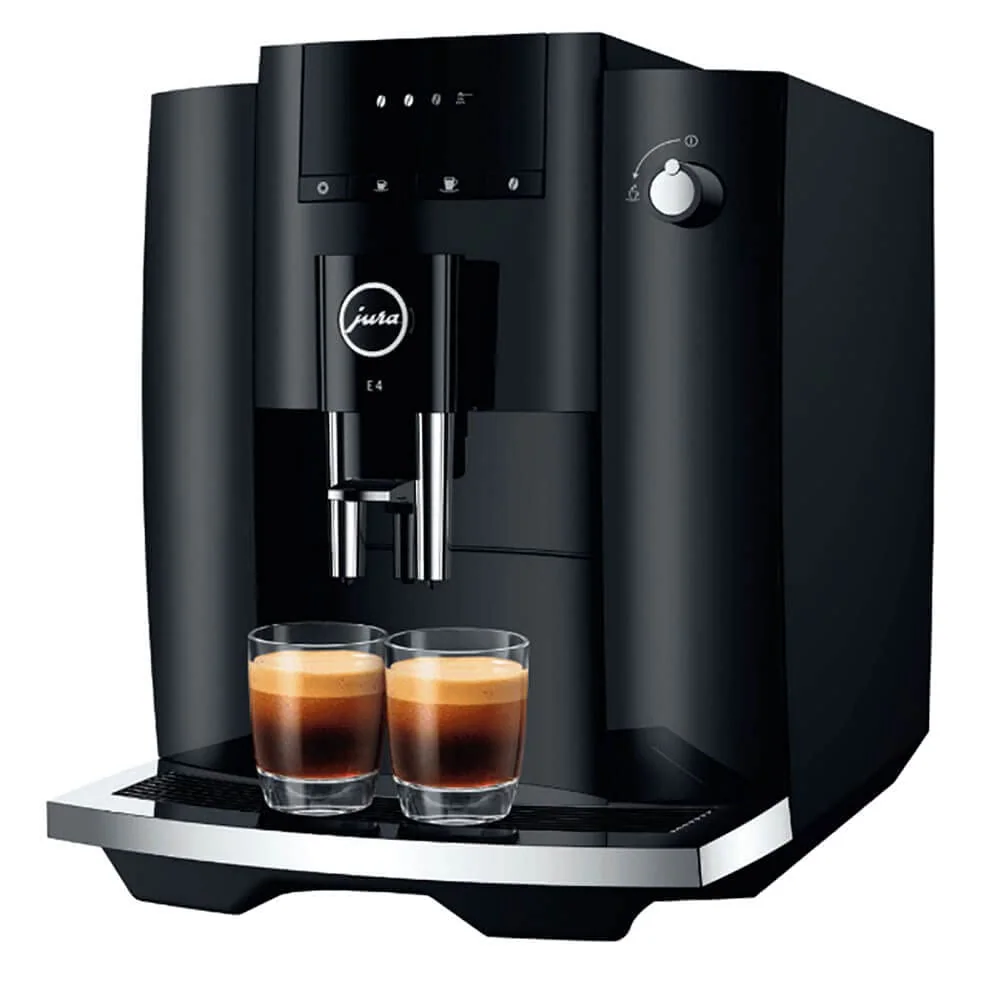
This is a full-size Jura chassis with the milk system deleted rather than a shrunken entry machine, so you get the big tank, the big hopper, a genuine hot water spout and the brewing hardware from machines several rungs up.
The front panel speaks only in symbols, and a five-year owner on the brand's own enthusiast forum still reaches for the manual before cleaning or descaling.
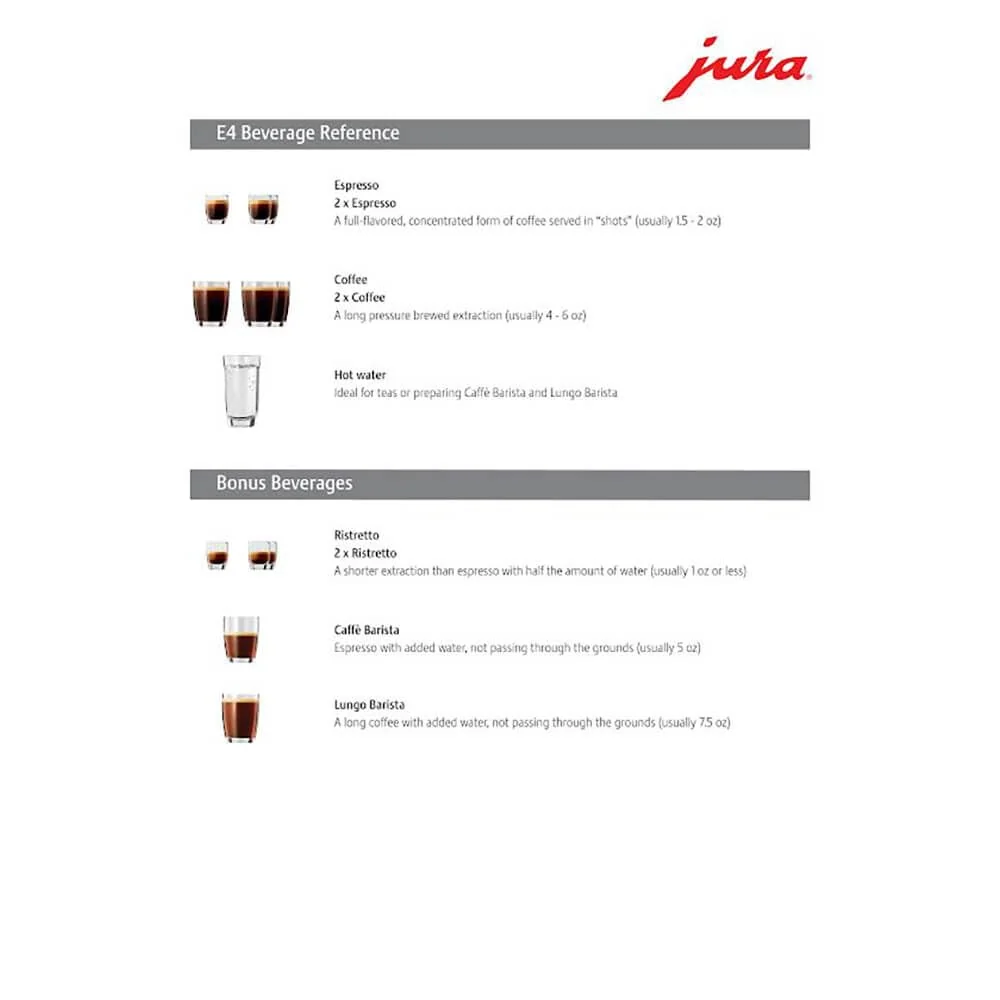
The listing promises five barista quality specialties at a touch, and the word barista appears twice in one line, so read the five before you get excited: espresso, coffee, ristretto, Café Barista and Lungo Barista. Every one of them is black, and there is no milk hardware inside the case at all. The description underneath does say so, calling the machine especially suitable for black coffee specialties, but nobody reads the description.
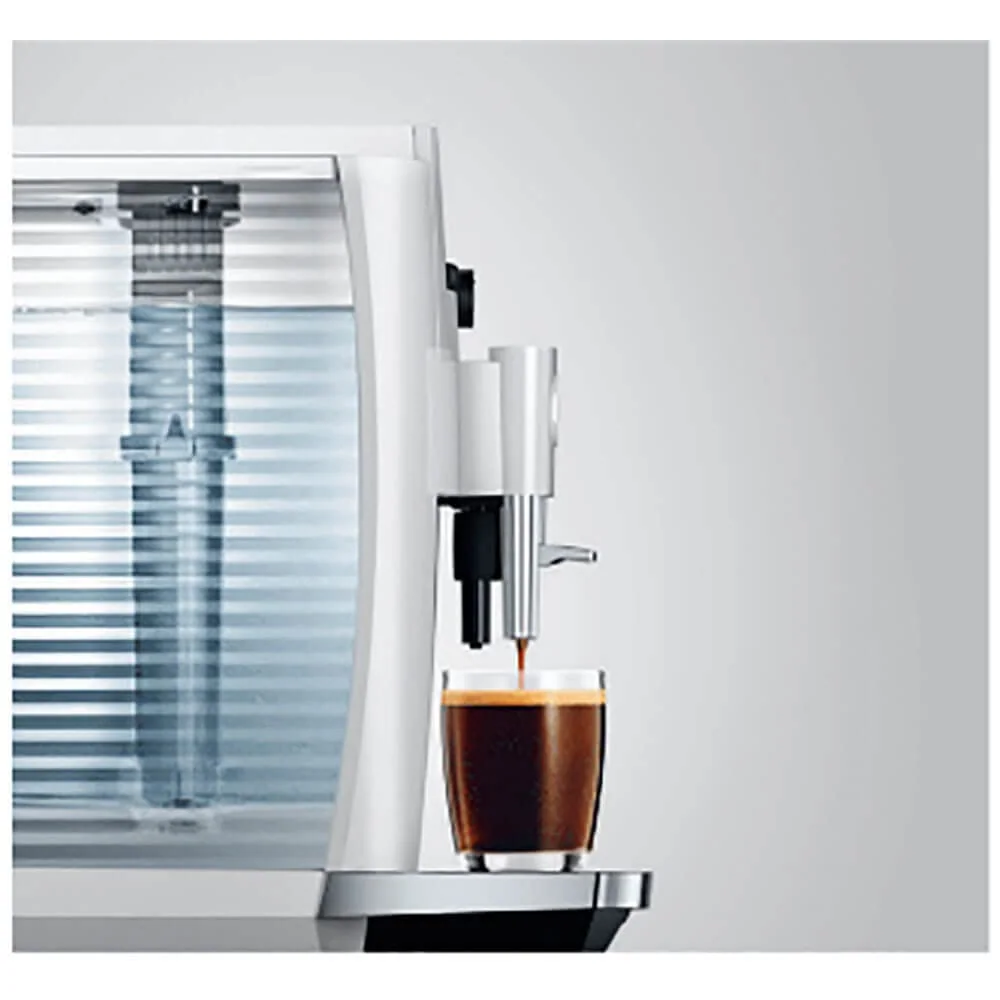
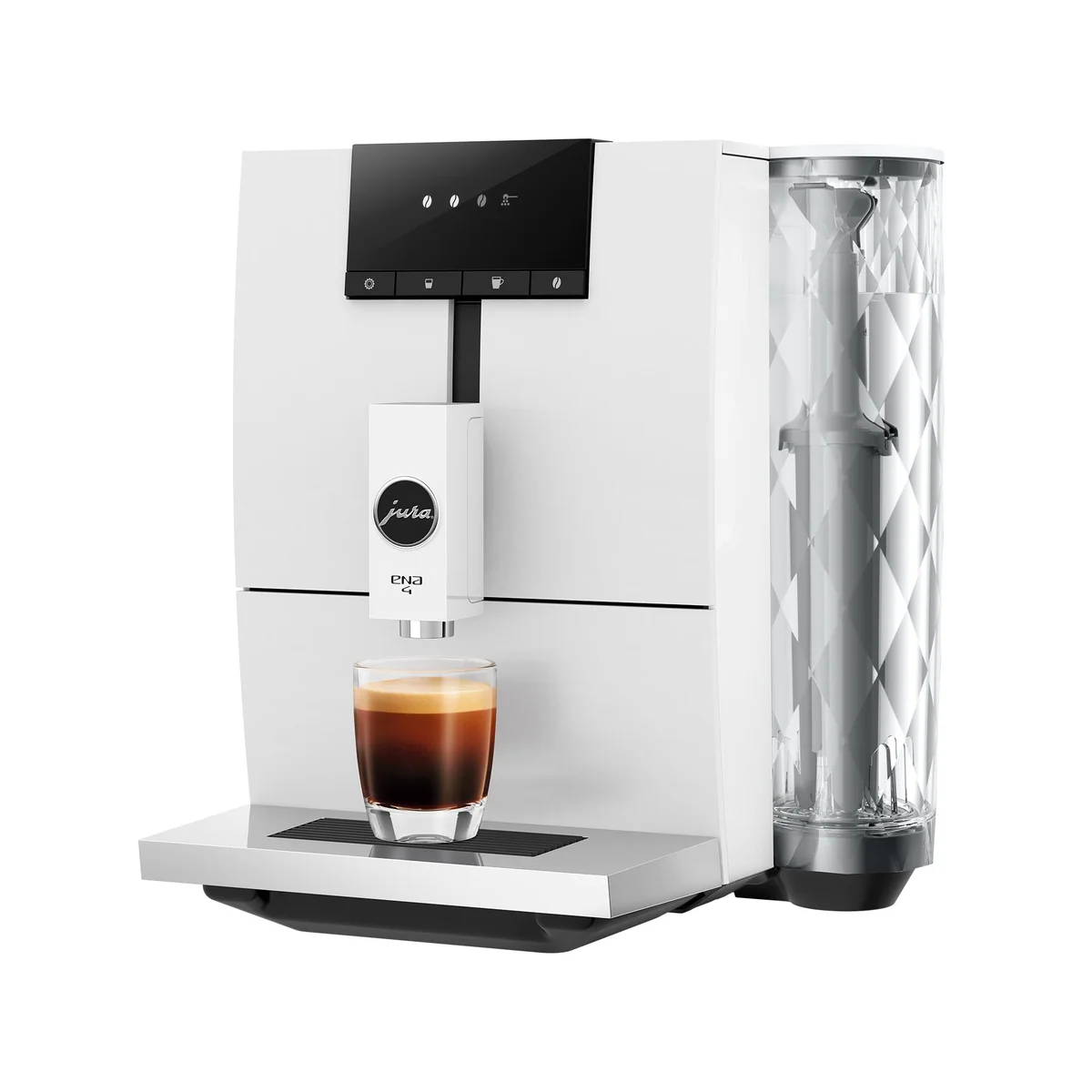
What makes it the pick is the capacity that comes with the full-size body. A dealer walking the range groups the ENA 4 and the E4 together as the two machines that only make coffee, then separates them sharply: the ENA gets a small tank and a small hopper suited to one or two drinks a day, while the E4 gets the 1.9 litre tank, the full bean container, the big rear drip tray, the hot water outlet and the ability to pull two espressos at once.
The owners who love it are precise about why. One buyer, a year in, writes that it makes fantastic espresso, coffee and Americanos, that her husband drinks nothing but plain coffee and Americanos and is very pleased, and that anyone wanting fancier drinks should simply buy a different Jura. Another wanted a machine with no frother on it at all, on the grounds that frothers stop working, pumps wear out and cleaning them is a nuisance. Those are not people settling for less machine, and the full E4 review goes through the rest of the case, including the owners who dislike the espresso it makes.
The same machine, if a black box is wrong for your kitchen
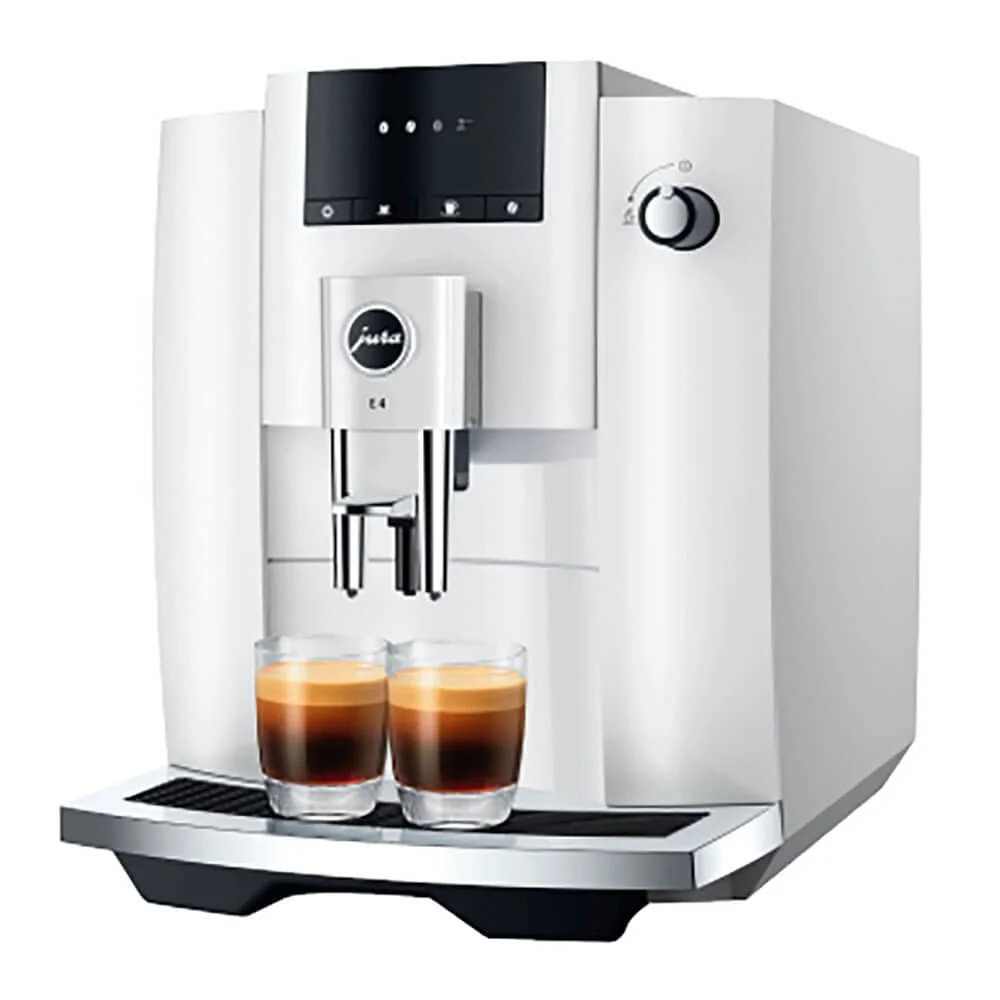
Piano White is mechanically identical to Piano Black, so choosing on looks here costs you nothing at all in capability.
Its slightly higher star rating rests on a much smaller group of buyers than the black listing's, so treat the two scores as the same score.
That is the whole difference, and it is worth saying clearly because colourways usually hide a specification change. Here they do not: the white listing carries the same 64 ounce tank, the same 10 ounce bean container and the same symbol display as the black one. Espresso Den found no source that has tested the piano lacquer for marks or wear on either finish, so if you have a view about fingerprints on gloss, that view is as good as anyone's.
The narrow one, for a kitchen where width decides everything
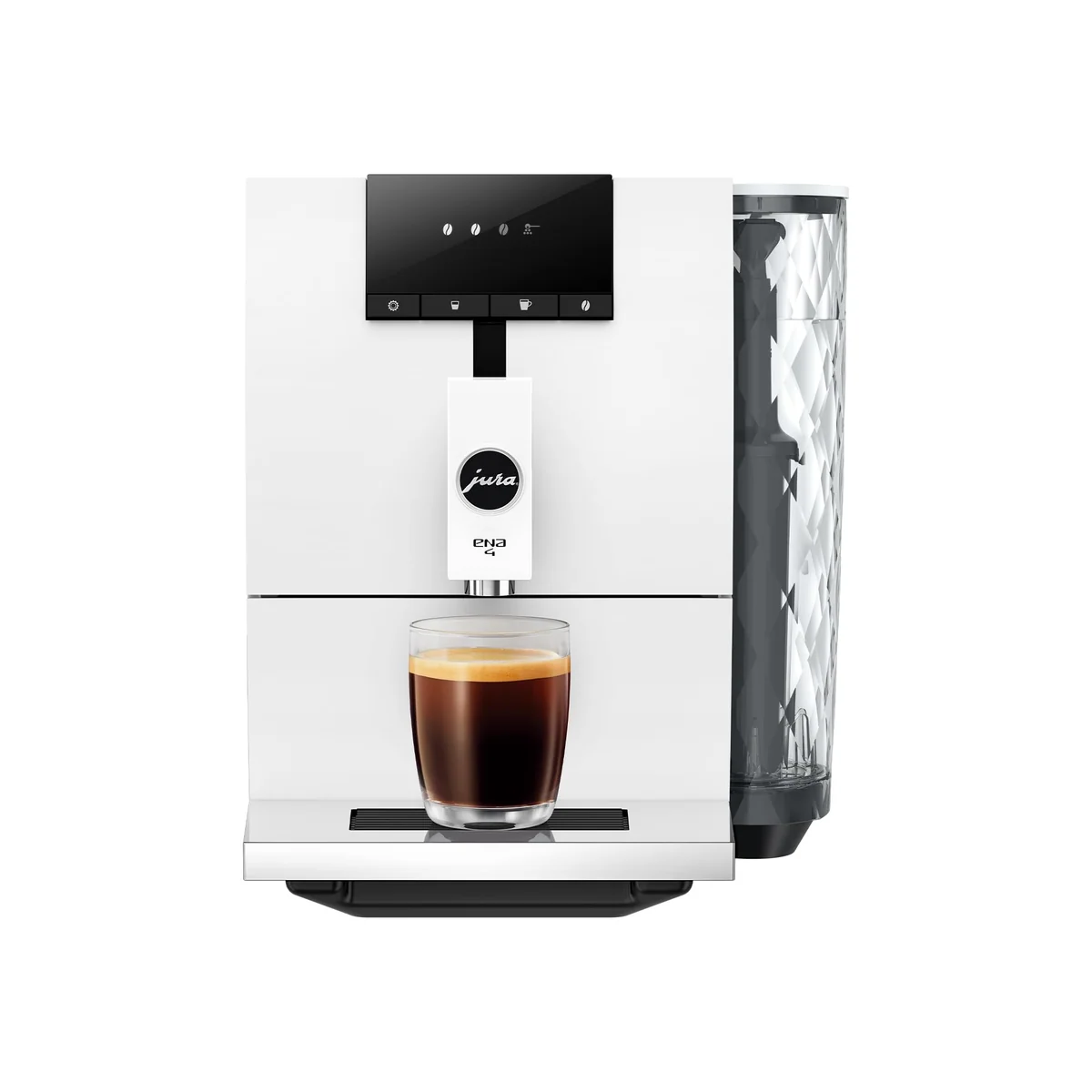
It is the machine people choose when the counter, the wall cabinets or the look of the thing matter more than capacity, and owners who drink short black coffees describe it as consistent and excellent once the beans settle.
The brewing unit tops out near ten grams of coffee, so anything longer than a short cup thins out no matter what you set, and this listing also carries the lowest star rating of the four machines here.
Ten grams is roughly what sits inside a single espresso pod, and the machine is built to turn that much coffee into one properly extracted drink. Keep the water proportional and it does that well. Ask that puck for mug volume and you get exactly what physics predicts. One heavy Jura user with several machines behind him was acid about the trade: he could not imagine dropping to the small dose from a full-size machine, and buying the compact one struck him as buying the badge.
He is right about the engineering and wrong about the buyer. The ENA earns its keep on presence rather than performance, and the listing's own word for it, versatile, is the one claim that does not survive contact with the product, because four presets of black coffee is a specialism. Our ENA 4 review also has to report the pattern in its customer reviews honestly: of the thirteen retained there, five concern a machine that arrived broken, dirty or dead, with the water tank and the grinder recurring. That is not a failure rate anyone can calculate from a sample that size, but it is not nothing either. If space is genuinely the constraint, weigh it against the other compact machines we have looked at, and if you are torn between the two coffee-only Juras, we have set them side by side.
The one that ends the decaf argument permanently
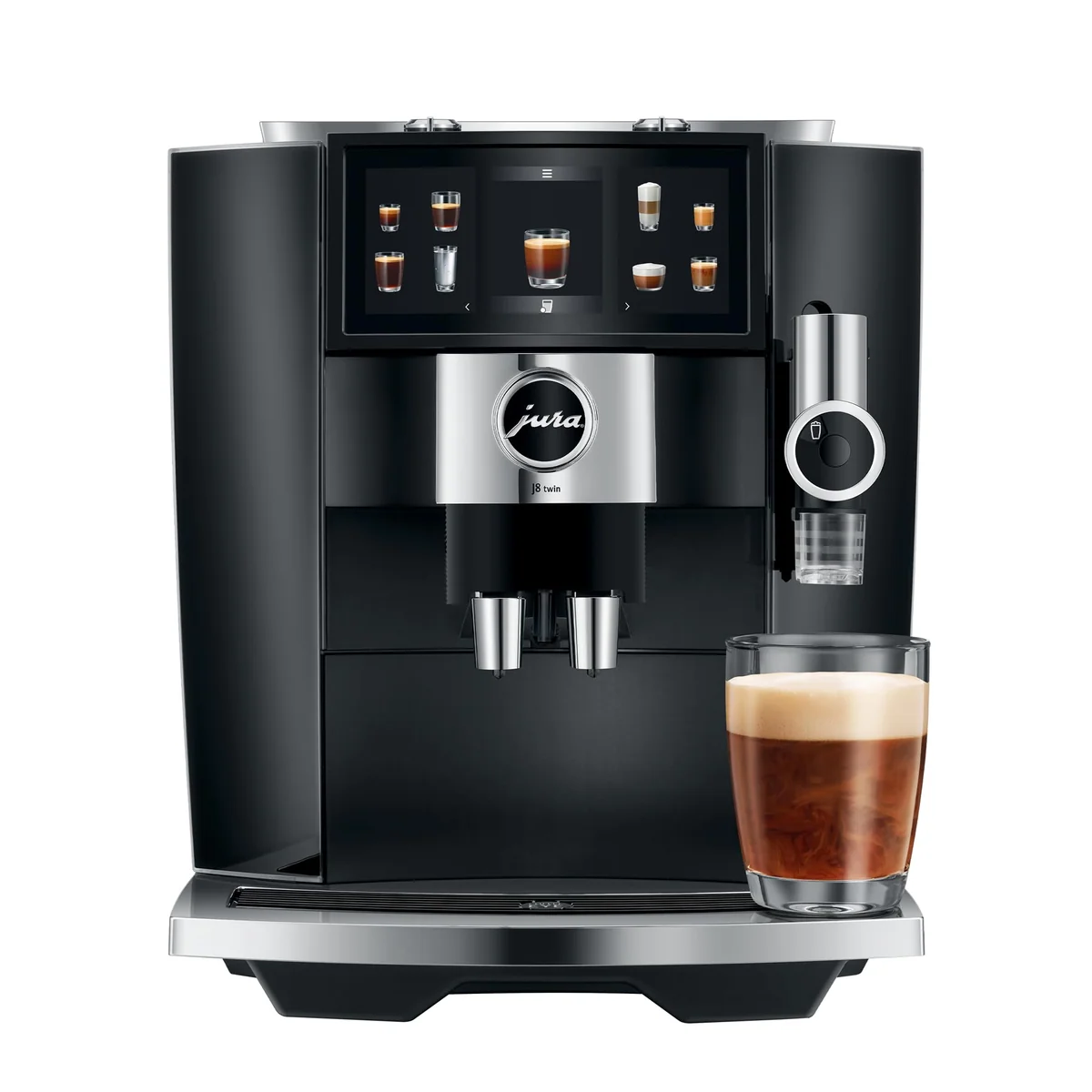
Two bean containers, each with its own conical grinder, in a body about the size of a family air fryer, which is the only thing on this machine you cannot get more cheaply elsewhere in Jura's range.
Black coffee tops out around eight ounces per press, and two owners here admit the twin function turned out to be something they barely use.
The listing leads on thirty-one specialty drinks, printed ahead of the screen and ahead of the grinders themselves. Sixteen recipes actually live on the panorama panel; the rest are those sixteen counted again with sweet foam, again with an extra shot, and again as two cups at once. It is not a lie, it is arithmetic performed on a menu, and the two 6.3 ounce hoppers underneath it are the honest headline.
Four of the eight customer reviews Amazon shows exist for that reason alone, each saying the same thing in different words: one person drinks decaf, another drinks regular, and nobody tips beans out of a hopper any more. The same reviews contain the warnings. One owner set the machine up, decided the twin function was not for her, returned it inside the window and bought the Z10 instead for its cold brew. Another reports the machine broken after a month. And the eight ounce ceiling is daily rather than occasional: a Venti-sized Americano is about two and a half cycles, and large travel mugs do not fit comfortably under the coffee spouts. The J8 twin review works through the rest, and if two beans in one kitchen is your whole reason for shopping, start at our page on decaf-and-regular households, where the cheaper answers live.
How Espresso Den arrived at these four
Nobody here has had a Jura on a bench, taken a temperature reading from one or weighed a puck out of one, and nothing above should be read as though we had. This page is assembled from each machine's listing copy, every customer review retained on those listings, the owner threads that exist in public, published hands-on testing of these machines and their siblings, and our own reviews of each product, which were written first and which this page does not contradict.
Two limits are worth stating rather than papering over. The first is that Jura sells machines we discuss here but do not rank, notably the E6, E8, S8 and Z10, because they are not on this page to buy; where they appear it is as context for what the money buys, not as a recommendation. The second is that the evidence thins out badly at the top: the J8 twin's listing carries a couple of dozen ratings and eight retained reviews, which is not a sample anybody can turn into a reliability judgement.
That thinness has been filled by other people with nonsense, and it is worth naming. Two videos presenting themselves as reviews of the J8 twin describe an automatic capsule system, sixteen user profiles, a five year warranty and the ability to queue two different milk drinks at once. Jura does not sell capsules, every source that mentions cover reports two years, and every Jura source agrees milk drinks come one at a time. Those scripts were never near the machine, and published reviews of these machines disagree with each other often enough without synthetic ones being added to the pile. Where our sources contradict each other, we have said so rather than picking the version that reads better.
What the money actually buys as you climb
Here is the shape of the coffee-only corner and the first rungs above it, in the terms that change your morning rather than the terms on the box.
| Machine | Milk | Hot water spout | Display | What it is for |
|---|---|---|---|---|
| ENA 4 | None | No | Symbols | Small kitchen, small cups, one or two drinks a day |
| E4 | None | Yes | Symbols | A household that drinks black coffee and already handles milk |
| E6 | Manual switch frother | Yes | Screen | The same idea as the E4 with milk attached and words on the panel |
| J8 twin | One-touch, hose fed | Yes | 6.7 inch touchscreen | Two bean types living side by side, permanently |
The row that decides most purchases is the E6, which shoppers have described as a few hundred dollars for foam. If you own a standalone frother and like it, that gap buys you nothing. If you do not, it buys the other half of the drinks menu along with a screen that uses actual words, which the five-year E4 owner quoted earlier would tell you is not a trivial upgrade. Settle it honestly with our guide to the milk systems you have to live with rather than with a spec sheet, and note that Jura's newest compact coffee machine, the C3, drops the hot water line entirely, so every drink there pours through the coffee.
The cup ceiling, and the temperature everyone argues about
Two limits run the length of the range and neither is fixable by dialling. Owners put the E4's single black coffee at four to eight ounces, and one of them running his at seven said that was already pushing it towards watered down, advising five ounces run twice instead. The J8 twin's owner reports the same eight ounce ceiling from the other end of the price list. If you arrived wanting a large American mug of black coffee, that is a genuine mismatch, and the workarounds are in our piece on getting a normal mug out of these machines.
Temperature is the second. Published testing of the J8 twin puts the milk in the same region every Jura source reports, around 60 degrees Celsius, and an owner elsewhere who took the question to a Jura repair centre was told the machine was in specification and had been from day one. Baristas will tell you that is correct and that hotter milk scorches; anyone raised on chain café drinks will call it lukewarm. The hot water is the sharper complaint on the coffee-only machines, where even a promotional video for the E4 concedes it is not as hot as you might expect for some teas. Fine for Americanos, marginal for tea, keep a kettle. The pattern is the same one we untangle in why these machines run cool.
A platform note worth having before you spend at the top: on the J8 twin a sensor watches the central spout and refuses to start a milk drink if your cup is sitting in the wrong place, milk drinks come one at a time, and the grind can be adjusted whenever you like rather than only mid-grind.
The bills that arrive after the box does
Jura's water filter carries a chip and the machine reads it, which is sold as convenience and is also a lock: an unrecognised cartridge can leave the filter warning showing or drop the machine into descaling. A long-time owner puts the chipped filters at around twenty dollars each, changed every couple of months, with no third-party or refillable cartridge recognised by current machines, and an otherwise happy Amazon buyer docked a star purely because the E4 asks for a new one far too often for his usage. None of that is ruinous. All of it is permanent, and it is the reason we keep a running account of what a Jura costs to run.
The bigger number is service. Out of warranty you are inside Jura's own economy, with owners reporting a minimum charge north of four hundred dollars to send a machine in for small repairs. The single negative E4 review on Amazon is exactly that story: something broke internally at five months, a piece of white plastic turned up in the collection tray, and the quote was four hundred dollars. What turned it into a one-star was the second half, because he had bought from a third-party seller who was not an authorised dealer and therefore had no warranty at all. An ENA 4 buyer hit the same wall from the other direction, told there was no cover because Amazon is not a certified dealer and quoted five hundred to fix it, while a second buyer on that same listing had a defective machine replaced by Jura without difficulty. Dealers describe two years of comprehensive parts and labour across the range. Check who is actually shipping the box before you press buy, because on these listings the warranty is a property of the seller rather than of the product.
The sealed brew group, and the beans that decide its life
You cannot open a Jura brew group. It is fixed inside the machine, cleaned by a tablet dropped through the same chute that takes pre-ground coffee, and there is no point at which you get to look at it. This is the most common unpleasant surprise in the whole brand: one buyer returned an E8 almost immediately over it despite saying the machine made excellent espresso, because he had cleaned the brew group weekly on every machine he had owned. His useful admission was that he did his research and still had no idea a sealed brew group existed until he opened the box.
The evidence for the defence is better than the anxiety suggests. A reviewer who has tracked the brand for years reports a fellow obsessive who used a Jura daily for a year, then dismantled the brew group to see what was in there and found it spotless. The internal cleaning works when it is run. What it does not survive is neglect or oily beans, and dark oily roasts are the one thing every source in this file agrees you must keep out of these grinders, because the failure mode on a fixed brew unit is gumming up internals you cannot reach. We have the full argument in can you clean a Jura brew group and the bean side of it in which beans work in a bean-to-cup machine.
Longevity claims for this brand should be read by era rather than by badge. The fifteen and twenty year stories are mostly about older machines, and a dealer technician has noted a ceramic valve leak affecting the 2023 machines in the range, revised the following year, which is a reason to prefer current production over old inventory. The most sober published estimate is that a well-maintained Jura should last at least ten years, and the operative words are the last three; the wider picture is in how long these machines last and what breaks first.
Two habits that decide whether you like your purchase
Every experienced owner says the factory defaults are wrong. One dialling guide that other owners then replicated on different Jura models ended at a mid-range grind with strength at maximum, and its author reported the first coffees on default settings were dreadful. Two habits are worth stealing: throw away the two shots after any grind change, because old grounds sit in the chute, and build long drinks by pulling an espresso and adding hot water yourself rather than leaning on the long presets. If your shots are thin, work through what actually causes watery bean-to-cup espresso before you conclude the machine is at fault.
Give it time as well. Owners report a break-in period before the cup settles, with estimates ranging from twenty drinks to two hundred, and a good deal of the first-week disappointment posted online turns out to be an unsettled machine and a bag of beans nobody liked. That collides with a thirty day return window, so unbox on the day it lands and run it hard in week one rather than saving the dialling-in for when life is calmer.
Before you spend, go and drink one
The pressure on Jura from outside the brand is real and we are not going to hide it. In the same conversations where these machines get recommended, so does KitchenAid, at meaningfully less money, by people who have tasted both; one shopper walked into a store intending to buy the Jura flagship and walked out with a KitchenAid, reasoning that the Jura made better coffee but not that much better coffee. In the same thread a buyer who had gone and tasted both preferred the Jura's latte, went back a week later to check, and got the same answer, prompting the best reply in the whole file from somebody who had already ordered blind: it had never occurred to him that he could go to a shop and drink the coffee first. Jura dealers and department stores will make you a drink. Twenty minutes of a Saturday against this much money is not a close call. If the cheaper answer is where you are heading, we take it seriously in Jura against KitchenAid and in the KF8 review.
One last honest warning, from a parent who sold a well-regarded manual machine for a Jura, called it a huge mistake in public and asked the internet to help him get back to basics. If you love the process, no button will replace it, and the same outlay on a grinder and a portafilter machine will beat any of these on taste if you are willing to do the work. The counterweight is the reason this category exists at all, conceded even by the brand's critics: it is hard to beat stumbling downstairs half awake at six in the morning, pressing one button, and getting a good shot. Which of those two sentences describes you is the actual decision, and it is worth settling before you spend.
Frequently Asked Questions
Which Jura should I buy if I only ever drink black coffee?
The E4, because it carries the full-size tank, hopper and hot water spout with none of the milk hardware you would be paying for and cleaning.
Is the ENA 4 just a smaller version of the E4?
No, it also brews a smaller dose, which is why its long drinks thin out in a way the E4's do not.
Do any of these machines make a cappuccino at the touch of a button?
Only the J8 twin, since both E4 finishes and the ENA 4 have no milk system of any kind inside them.
What is the difference between the Piano Black and Piano White E4?
The finish, and nothing else about the machine.
Can I run decaf without emptying the bean hopper?
Yes, either by dropping a scoop of ground decaf into the E4's side chute or, if that ritual sounds tiresome, by buying the J8 twin and giving decaf its own grinder.
Do I have to use Jura's own water filters?
In practice yes, because the machine reads a chip in the cartridge and an unrecognised filter can leave the warning showing or push the machine into descaling.
Can I take the brew group out and clean it?
No, it is sealed inside every machine in the range and your only access is a cleaning tablet dropped through the ground coffee chute.
Will one of these fill a large travel mug in a single press?
No, owners put the ceiling around eight ounces on both the E4 and the J8 twin, so a big mug means two passes and a top-up.
Which beans should I keep out of them?
Dark, oily roasts, which are the one thing every source here agrees will eventually clog a grinder and a brew unit you cannot open.
Does it matter which Amazon seller ships the machine?
Yes, and more than anything else on this page, because buyers of both the E4 and the ENA 4 were told they had no warranty at all once their seller turned out not to be an authorised dealer.
Our Top Pick
The Jura E4 is our #1 recommendation — piano black or piano white, this is the machine jura built for people who drink their coffee black, and the honest question is whether swiss money is worth spending on a machine that talks to you entirely in pictures..
Check Price on Amazon: Jura E4Sources (6)
- Amazon listings and customer reviews
- Owner reports across r/superautomatic, r/espresso threads
- Owner and reviewer video, 9 channels
- Maxhug — Article — www.maxhug.com
- Coffeeness — Article — www.coffeeness.de
- Homecoffeeexpert — Article — homecoffeeexpert.com