If you drink lattes, buy the milk system and let the espresso follow it.
Almost every buying guide for this category argues about espresso. That is the wrong argument for the person this page is written for. If four drinks out of five leave your machine with milk in them, the shot is doing maybe a third of the work and the milk is doing the rest, and the milk is where these machines differ most violently. Two machines with the same grinder and the same brew group can produce a drink you are delighted by and a drink you quietly stop making, purely because of what happens between the fridge and the cup.
So here is the shape of the decision before any model names appear. There are three ways a machine can get milk into your latte. A sealed carafe you clip on and press a button, which is what Philips and De'Longhi sell. A hose that draws milk out of a jug, which is Jura's approach. Or a steam wand you hold a pitcher under yourself, which is what the cheap Philips machines, the De'Longhi Magnifica Start, the Bosch 300, the Café Affetto and the Gevi all give you, and what the Breville machines automate without removing. Espresso Den's view is that this single choice will decide whether you still love the machine in month six, and it is worth reading the full case for each milk system before you spend anything.
The second thing to settle is temperature, because it is the complaint that follows this entire category around and no listing will warn you about it. A reviewer comparing three Philips machines on identical beans measured cappuccino milk landing in the glass at roughly 53 to 55 degrees Celsius. A thermometer on a De'Longhi Dinamica Plus stalled around 59 degrees where its newer sibling reached 64. Rivelia owners describe the drinks as good and the foam as cooler than they expected, and the ones who are happy are the ones who pre-warm the mug and run the hot water function first. A one-touch carafe brushes milk past steam rather than steaming it properly, and none of these machines will match the scalding latte from a chain café. If that is a dealbreaker rather than an annoyance, you want a wand you control, and our piece on why these machines run cool explains the rest of the mechanism.
The third thing is a trap rather than a specification. On most of these machines the cappuccino and latte buttons pull a single small shot, and the dose behind that shot is not large: independent weighings put a Philips puck somewhere around eight to eleven grams, where a De'Longhi Dinamica Plus will grind up to about fifteen. Put eight grams of coffee under six ounces of milk and the drink tastes like warm milk with a rumour of coffee in it. The fix is trivial once you know it exists, which is to brew a second espresso into the same cup, or to use the extra-shot key that the dearer machines put on the panel and the cheaper ones do not.
What a milk machine actually has to get right
Four things, in this order: the texture of the foam, the temperature it arrives at, how many shots go underneath it, and how long you spend at the sink afterwards. Nothing else on a spec sheet matters as much as any one of these, and the drink count printed on the box matters least of all, because most of those recipes are the same milk poured for a different number of seconds.
| System | Foam it makes | What you give up | Cleaning |
|---|---|---|---|
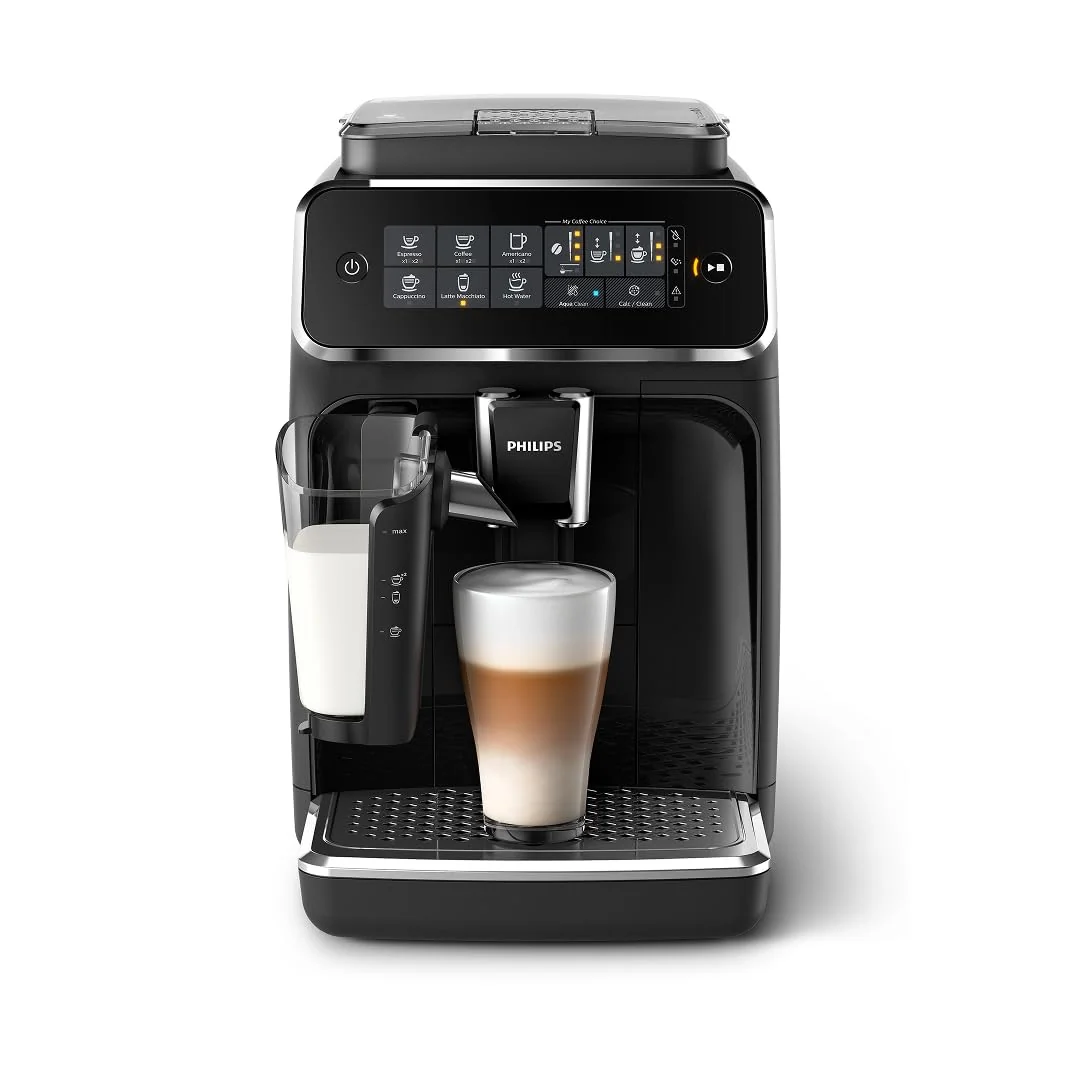
| Philips LatteGo carafe | Thick, stable cappuccino foam at one press | Microfoam, a flat white, and any control over milk temperature | Two or three parts, no tubes, rinsed in seconds |
| De'Longhi LatteCrema carafe | The closest a carafe gets to hand-steamed, with a texture dial on the dearer models | Heat, and a carafe that lives in the fridge and comes apart to be washed | Several parts, daily, dishwasher-safe |
| Steam wand, manual or automatic | Whatever you are good enough to make, up to real latte art | Convenience, and a jug to wash on every drink | A wipe and a purge, immediately, every time |
Foam texture is where the money actually goes
LatteGo is the best-liked cleaning story in this whole category and the weakest foam. Reviewers who tested the flagship 5500 describe foam firm enough that a cappuccino keeps its layers and explicitly warn against expecting the silky microfoam a flat white needs, with another listing milk that is too foamy for flat whites as an outright reason to skip the machine. A reviewer who weighed and tasted his way through a Philips 3200 called the result medium rather than microfoam. None of that makes it bad; it makes it a cappuccino system sold with flat whites on the menu, and if cappuccinos and lattes are what you drink, you will never notice the ceiling.
The automatic steam wands are the other end. A trained barista who fully expected to beat Breville's auto wand with his own technique admitted on the record that he could not. A reviewer of the Oracle Touch opened by saying no serious barista would stick a wand in a jug and walk away, then conceded that it simply works, with no ifs. The reason those wands beat every carafe here is that they let you set a number: a five-year Barista Touch owner runs soy at 130 degrees Fahrenheit, oat at 140, almond at 130 and dairy at 150, which is not tuning a machine so much as tuning a milk. No carafe on this page offers that.
Plant milk is worth its own sentence, because it separates these machines more than the marketing admits. Owners froth oat successfully on a Philips LatteGo, with the caveat that the carafe draws less of it because it is thicker, so a large drink means running the cycle twice. De'Longhi's LatteCrema handles oat, almond and cashew and is the system dairy-free households keep landing on. And one Rivelia owner who bought specifically for plant milk tried three alternatives, was sent a replacement carafe free of charge, got the same result and ended up buying a standalone frother, which is the one first-hand test anybody has published on that particular claim.
The washing-up is the thing that decides whether you keep using it
Every milk system is pleasant in week one. What matters is the version of it you will still do at seven in the morning in February. LatteGo wins that argument outright and its own critics concede as much; owners who dislike the coffee still defend the carafe, and one Philips owner with a steam wand said flatly that a milk carafe would be a nightmare to clean by comparison, which tells you how much the two-part design is worth to the people who have lived with the alternative. LatteCrema is more parts and more time and buys you better foam. A wand is the fastest of all to clean and the slowest to use, because you are also washing a pitcher. Whichever you choose, the brew group still wants its weekly rinse, and the real cleaning schedule for a bean-to-cup machine is worth reading before you commit.
Two smaller things that catch latte drinkers specifically. Cup height: several of these machines are built around four-ounce European cups, and a tall latte glass or a travel tumbler will not fit under the spouts. And volume: one Philips 4400 owner measured the latte and latte macchiato presets topping out at 2.7 ounces, rang Philips to ask how to increase it, and was told that was the maximum. If your latte lives in a large mug, budget for pressing the button twice on almost everything here.
The machines, and who each one is genuinely for
These are ordered as the site ranks them rather than as a countdown, so read the pairing of verdict and limitation on each rather than the position. Broadly: the Philips machines are the easy-cleaning cappuccino answer and the whole ladder from 2300 to 5500 shares one brew group, so paying more buys the screen and the profiles rather than a better drink, a point we take apart in our guide to which LatteGo to buy. The De'Longhis pour better foam and ask more of you at the sink. The Brevilles make the best milk in this list and are not push-button machines at all, which is worth understanding through what Breville actually automates. And the wand machines at the bottom of the price range are a different proposition entirely, closer to the semi-automatic side of the line than the listings suggest.
The cheapest LatteGo carafe worth owning, for cappuccinos you will still be making on a wet Tuesday.
Two plastic parts, no tube and no hidden milk path, which is the single reason most people choose Philips over anybody else.
The cappuccino and latte macchiato buttons pull one small shot each and cannot be set to double, so the drink tastes mild until you brew a second espresso into the same cup.
For the household that wants café milk without anyone in it learning to steam.
The self-purging automatic wand textures milk to a temperature and foam level you choose, and reviewers with years of hand practice concede it beats them.
It is a portafilter machine underneath, so every latte still involves locking in a basket, dialling in a grind and knocking out a puck.
A steam wand you work yourself, at the cheapest honest price on this page.
Slide the plastic frothing sleeve off the wand and the bare steam tip makes milk one reviewer rated as nearly comparable to a proper espresso machine's, silky enough to pour a heart into.
As it ships, that sleeve produces large-bubbled foam rather than microfoam, and there is no one-touch milk drink on the machine at all.
The small one, for a counter that has already decided this purchase for you.
It is genuinely compact, grinds and brews behind one button, and its Pannarello wand doubles as the hot water spout for americanos and tea.
Cup clearance stops at four and a half inches, which rules out most latte glasses and every travel mug you own.
The best automatic foam here, attached to an app you will open once and then forget.
LatteCrema sets milk texture on a dial rather than by which drink you pressed, and it froths oat, almond and cashew properly rather than merely heating them.
Milk peaks around 59 degrees Celsius on a thermometer, so a sixteen-ounce latte arrives warm rather than hot unless you preheat the cup and cut the milk ratio.
The one to buy if a flat white, not a cappuccino, is the drink you actually order.
Milk temperature is adjustable to the degree across a wide range and texture runs to eight steps, which is why plant milks behave on this machine and merely survive on the others.
You tamp every shot and pour every jug yourself, and the temperature sensor behind that automatic wand is the component owners most often report failing after the first year.
The cheapest route into fresh-ground milk drinks, with all the milk work left to you.
Espresso, coffee and steam at one press each from a machine narrow enough to live under a wall cabinet with the tank still pulling out of the front.
Push the frother's silver sleeve on too tightly and it blocks the air hole so nothing froths at all, which reads exactly like a dead machine until somebody tells you.
The cheapest LatteCrema carafe, and the thickest foam of three De'Longhis in one side-by-side test.
One-touch cappuccinos and lattes with foam better than the price suggests, plus a custom slot that froths every drop you pour into the jug and stops when it runs dry.
Foam density is fixed and there is no flat white on the menu, so you get the machine's idea of a milk drink rather than yours.
The same adjustable milk wand, with six months of cover instead of two years.
Buyers describe these refurbished units as indistinguishable from new, and one who already owned a Barista Touch called the replacement better than new when it arrived.
Its warranty expires well before the thermistor fault owners most commonly report, which tends to surface somewhere after the first year.
Milk drinks with almost no technique, from a machine its own maker has already replaced.
Grinding, dosing, tamping and milk texturing all happen without you, and the quality of that milk is the least contested thing anyone says about it.
Breville's own US page now lists it as discontinued, and its milk defaults to a temperature chosen for latte art rather than for a drink you want scalding.
Narrow enough for a galley kitchen, with a manual wand the listing calls automatic.
Just over seven inches wide with a real steam wand and a burr grinder inside it, which is an unusual combination at any price.
Owner failure reports cluster at twelve to fifteen months, immediately after the one-year warranty ends, and the wand only tilts one way so finding a proper whirlpool is awkward.
The quietest grinder Philips makes, wrapped around exactly the same milk carafe.
It is the value point of the LatteGo range and the one most cappuccino drinkers should buy before considering anything above it.
There is no milk-only option, so hot chocolate means starting a latte macchiato and cancelling it before the coffee arrives.
A cappuccino machine with the shortest drink list on this page.
Four buttons, the LatteGo carafe and nothing whatsoever to learn, which is the whole pitch and a fair one.
There is no americano preset, and owners report water leaking from the rear during the steam cycle where the drip tray cannot catch it.
The LatteGo with a screen the rest of your household will actually read.
A colour display with named drinks, two saved profiles and iced presets, sitting on top of the same easy two-part carafe.
Its latte presets pour a small European serving, so filling a normal mug means running the cycle twice and combining them.
The LatteGo to buy when three people want their milk drink three different ways.
Four saved profiles plus a guest slot, a milk-froth-only option the cheaper models lack, and an extra shot available on almost every coffee drink.
It uses the same small brew unit as the machines far below it, so the extra money buys the interface rather than a better cup.
The best milk on this page, including on the drink that exposes weak frothers.
Jura's foam handles a flat white properly, and two hoppers with two grinders end the decaf argument permanently in a two-drinker kitchen.
Owners measured a latte macchiato at around 141 degrees Fahrenheit, which a Jura service centre confirmed is within specification rather than a fault to be repaired.
A one-touch cappuccino from the narrowest machine in this list.
Under ten inches wide, noticeably quiet, and it delivers frothed milk straight into the cup with a frother arm that clips off magnetically for rinsing.
There is no milk temperature setting at all, and the steam wand promised in the title is an in-cup frother rather than a wand you texture milk with.
De'Longhi's real espresso hardware with the milk deliberately left in your hands.
It shares its brew group and steel conical burr with machines well above it, and you decide how hot the milk gets rather than accepting a carafe's ceiling.
Its plastic frothing sleeve produces stiff, bubbly foam until you take it off and learn to steam on the bare tip.
The same 5500 in grey, worth buying purely on whichever colour is cheaper that day.
Identical hardware, identical carafe and identical drink list to the black one, so the finish is the only real decision.
Its listing copy claims two user profiles and a power figure that no specification sheet for this machine supports, so read the manufacturer's own page rather than the bullets.
The Dinamica to buy if you will set your drinks once and never touch them again.
The same fifteen-gram dose and the same LatteCrema carafe as its connected sibling, with a fourth profile and a longer menu instead of an app.
Without the app you size drinks by brewing and pressing stop, and the carafe port grips hard enough that owners describe fearing they will snap the connector.
The cheapest route to four profiles and a milk-froth button.
Buyers repeatedly describe these renewed units as spotless, with no visible sign of prior use.
The faults owners actually report on this platform, leaks and worn seals, tend to arrive well after a renewed warranty has expired.
The black renewed 5500, worth taking only when the gap to a new one is genuinely large.
It is the full LatteGo experience with the screen and the profiles, in the finish most buyers ask for, for less money.
Ninety days of limited warranty is a fraction of what a new one carries, on a machine whose characteristic failures show up later than that.
The milk machine for a house where one of you has stopped drinking caffeine after lunch.
Good foam with three selectable textures, and two removable bean hoppers so decaf and regular coexist without anybody resorting to a pre-ground chute.
Owners consistently describe the milk as warm rather than hot, and cold foam needs a second carafe sold separately.
The whole setup, machine and grinder together, for somebody escaping pods on a small counter.
Its steam wand draws praise from nearly every owner who mentions it, and the two boxes contain everything you need including glasses and a pitcher.
The bundled grinder will not reach espresso-fine, so what lands under your milk is a long shot rather than a proper espresso.
Two patterns are worth naming before you choose. The people happiest with the De'Longhi carafes are the ones who bought them for cappuccinos and cortados rather than for big mugs, and Magnifica Evo owners describe the foam as thick, creamy and genuinely café-like when the drink is small. The people happiest with a wand are the ones who wanted the control: the ex-barista who bought a Café Affetto rated its steamer against machines costing thousands, and Gevi owners bought their machines after a trip to Italy specifically to make cappuccinos at home. And on a machine with no temperature control at all, such as the Bosch, the workaround owners find is to lengthen the frothing time and use less milk, which is a partial answer rather than a setting.
If none of these fit, the honest alternatives on this site are elsewhere: the machines built for a tiny counter, the ones we rate for a kitchen where somebody is still asleep upstairs, the two-bean households, or the budget end of the category if the milk carafe is the only thing you were paying extra for. If you are weighing the two big carafe philosophies directly, LatteGo against the Magnifica Evo is the comparison that settles most of these purchases, and the individual verdicts sit in the 3300 review, the Dinamica Plus review and the Barista Touch review. If you are buying a renewed unit rather than a new one, read what a renewed listing actually commits the seller to first. And whichever machine you land on, medium to medium-dark beans that are not visibly oily will do more for the drink than any setting on the panel, which is the argument in our guide to beans for bean-to-cup machines.
Frequently Asked Questions
Which of these makes a proper flat white?
Realistically only the Breville machines with an adjustable automatic wand and the Jura, because every carafe on this page produces cappuccino-style foam that is too airy for the thin, glossy layer a flat white needs.
Why does my cappuccino taste weak when the espresso from the same machine tastes fine?
Because the milk-drink presets on most of these machines pull a single small shot, so the fix is a second espresso brewed into the same cup or the extra-shot key on the models that have one.
Is the milk actually hot enough for a latte?
For a cortado or a cappuccino yes, and for anything over twelve ounces it will read as warm rather than hot, which is a property of the whole category rather than a fault in one machine.
Does any of them froth oat milk properly?
De'Longhi's LatteCrema is the most reliable with oat, almond and cashew, Philips LatteGo will froth oat but draws less of it because it is thicker, and Breville's adjustable wand is the only route to setting a temperature per milk type.
Which milk system is genuinely least work to clean?
Philips LatteGo, without much argument, because it is two or three parts with no tube and no hidden channel and milk never enters the body of the machine.
Can I pour latte art with any of these?
Only with a steam wand, either a manual one with the frothing sleeve removed or one of Breville's automatic wands, since no one-touch carafe here makes microfoam fine enough.
Will a tall latte glass or a travel mug fit under the spouts?
Frequently not, because several of these machines are built around small European cups, so measure your favourite glass against the stated cup clearance before you order.
Are the Breville machines on this page bean-to-cup machines?
No, they grind, dose and texture milk for you but you still tamp the coffee, lock in a portafilter and pour the jug yourself.
Our Top Recommendation
Based on our research, the Philips 3200 LatteGo is our top pick — it carries the easiest milk carafe on any bean-to-cup machine bolted to a grinder that doses roughly half a café shot, and almost every argument about this machine traces back to that one fact..