The Kndko grind-and-brew has a real steam wand, a made-up pressure number, and no track record at all
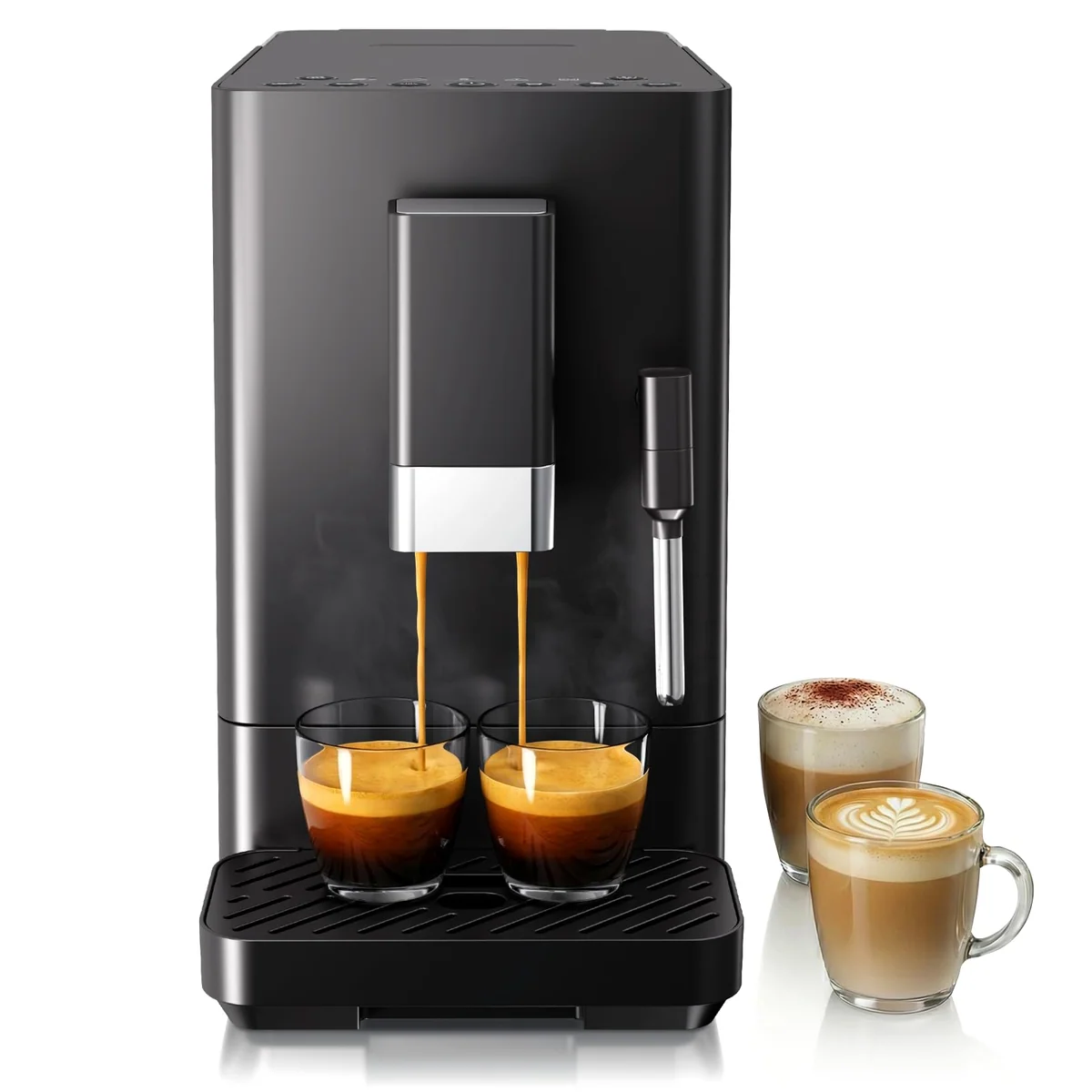
Buy the Kndko only if you drink milk drinks, actively want a manual steam wand rather than a milk carafe, and accept that you will be among the first people to find out how it ages.
Based on 10 owner ratings, 16 owner discussions and 3 other sources. We have not tested this machine ourselves.
We earn a commission if you buy through our links, which does not affect what we say.
Read how this site works →
If you buy it, buy it on a clock
The strongest advice in this whole category for an unknown brand bought online is about the return window, not the machine: a month sounds generous until you realise it takes a week or two just to find the machine a home and learn its habits, and once the window closes you are stuck with whatever you have. So treat week one as the test that nobody else has run. Everything below is measurable at your kitchen counter with a scale and a thermometer, and every one of these is a number Kndko has not published.
| Check | How | What to compare it to |
|---|---|---|
| Dose per shot | Weigh the puck dry after ejection, or weigh the hopper before and after | Four-figure machines dose 9 to 16.5 g; a café double is 18 to 20 g |
| Brew ratio | Weigh what lands in the cup against that dose | Anything past 4:1 is long coffee, not espresso |
| Coffee temperature | Thermometer in the cup, then again in a pre-warmed cup | Pre-warming recovers around 10 °F on machines that have been measured |
| Milk temperature | Thermometer in the jug as you steam | Automatic frothers land near 150 °F; your wand should beat that if you want it to |
| Grind retention | Switch beans and see how many shots taste of the old ones | The listing claims no residual powder at all |
| Puck delivery | Watch where the ejected puck lands | Half-missing the knock box and landing in the tray is a common class fault |
| Brew group access | Try to remove it and rinse it in your hand | Sealed brew groups are the maintenance complaint that never goes away |
| Noise | Grind a shot at the hour you actually brew | Nobody has published a figure for this machine; see our quietest machines page for context |
| Pre-ground bypass | Look for a chute and try a decaf scoop | Absent one, see using pre-ground and decaf |
Use a dark or medium roast while you are testing, because no super-automatic grinds fine enough to do justice to a light single origin, and a bean that is too oily will gum the chute. Our list of beans that work in these machines saves a bag or two of learning.
The verdict has not moved: this is a plausible, cheap, honestly-shaped milk-drink machine with the best milk system a wand-sceptic could be persuaded into, sold by a brand that has told you almost nothing about it and proved nothing at all. If your morning is lattes and your budget stops here, that is a defensible gamble taken with your eyes open. If you want a machine you can still get a seal for in five years, the money is better spent on a name with a parts diagram behind it.
Buy the Kndko only if you drink milk drinks, actively want a manual steam wand rather than a milk carafe, and accept that you will be among the first people to find out how it ages.
Best for: It is a genuine bean-to-cup machine sold at the very bottom of a category that barely has a bottom, and the honest problem is that nobody outside Amazon has ever tested one.
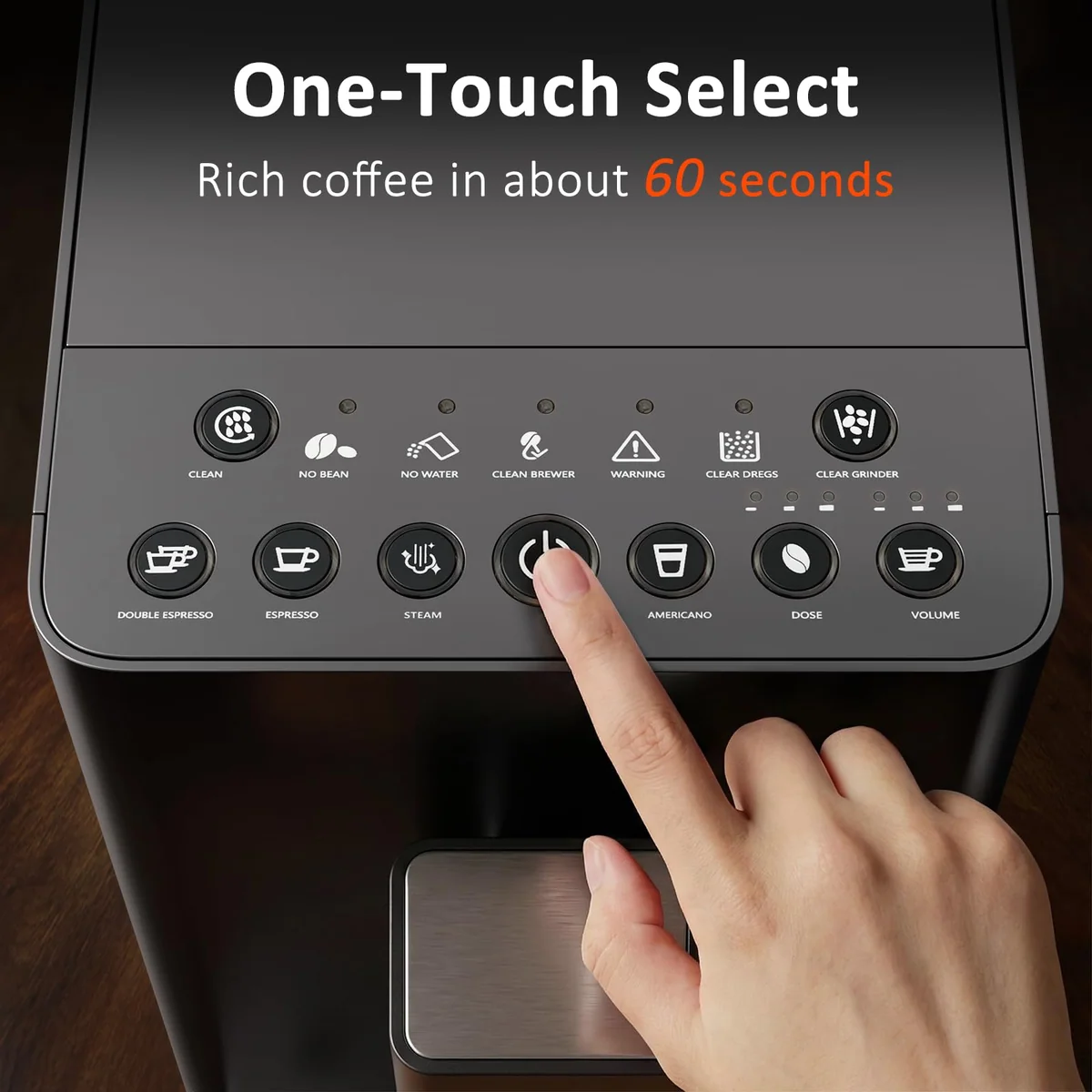
Start with what the machine mechanically is, because that part is not in doubt. Kndko's own listing describes a brew group that feeds ground coffee, presses it, brews it and ejects the spent puck "in a straight line", which is the defining mechanism of a super-automatic and not something a portafilter machine does. It grinds from whole beans through a conical burr with a knob for fineness, it has four one-button drinks on the panel, and its milk system is a wand you hold under a jug yourself. If you are not sure what separates that from the machine you tamp by hand, our explainer on what a super-automatic actually is is the shorter road than this review.
Now the part that decides how you should read everything below. The listing carries a 4.3 star rating drawn from ten ratings, a sample so small that a single disappointed buyer moves it by roughly three tenths of a star. Beyond that, the published record on this specific model is three videos. One is an AI-narrated comparison that recites the Amazon bullets back at you and pronounces the brand three different wrong ways in the same script. One is a two-minute unboxing of a gifted Kndko that is a manual portafilter machine, not this one. The third is an affiliate spec-read of a Kndko with thirty grind levels and PID temperature control, features this listing never claims. That is the entire corpus.
Espresso Den has not had this machine on a counter, and as far as we can find, neither has anyone who published about it. So this page does the only useful thing left: it holds the listing's claims against what the super-automatic category demonstrably does at every price, names the specific things Kndko refuses to disclose, and gives you a first-week checklist so that you can be the tester, inside the window where being wrong is free.
Key Specifications
What the listing promises, and where it argues with itself
Read the five bullets in order and the machine reads coherently until bullet four, when it stops. Bullet two sells one-click espresso, cappuccino, ristretto and Americano. Bullet four describes the milk system as a steam wand you use yourself to make "silky, slightly frothed milk". Those two claims cannot both be true in the sense a buyer will read them, because a machine with a manual wand cannot make a one-touch cappuccino. It can pour the espresso at one touch and then wait for you to steam the milk. That is a perfectly good machine and a much cheaper one to build, but the word cappuccino sitting in a list of one-click drinks is doing work it has not earned.
The same gap runs through the title. "Auto Self-Cleaning" appears in the product name and is never explained anywhere in the bullets; the only cleaning the listing actually describes is a reminder that tells you the brewer needs attention. In this category, a self-clean routine almost always means an automatic water rinse of the brew path, which is the part that stays reasonably clean anyway, and never the milk path, which is the part that goes foul.
The reminder list itself is the most quietly informative thing on the page. Kndko says the machine alarms for the brewer, the residue tray, the brewing door and the grinder knob "not installed properly". Four separate misassembly alarms tells you which four things owners routinely put back wrong, and it is more useful than a generic error code would be.
| What Kndko says | What that means in practice |
|---|---|
| Powder feeding, pressing, brewing and slag removal in a straight line | A real automatic brew group that doses, tamps and ejects a puck |
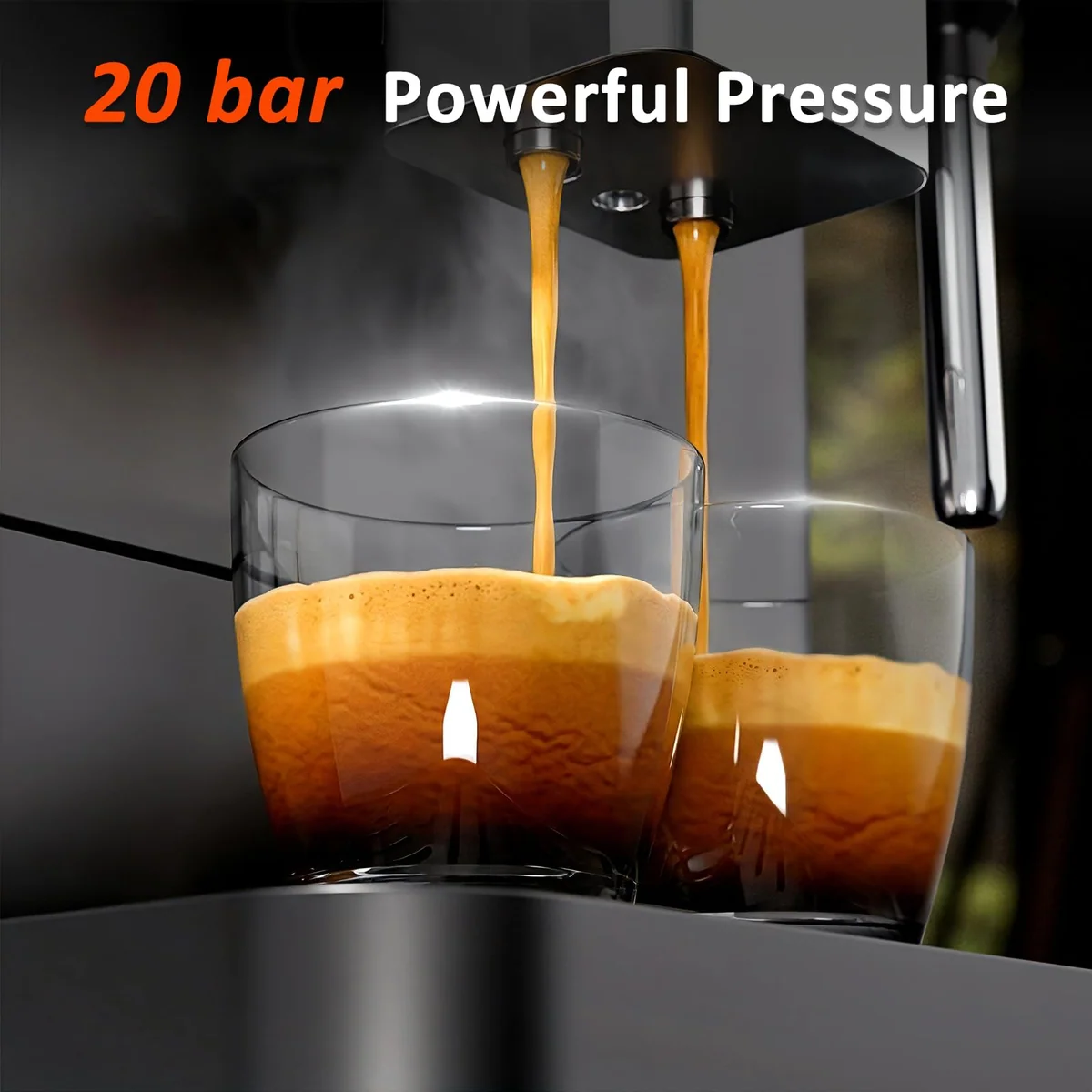
| 20-bar brewing system, professional-quality extraction | A pump's maximum rating, which is not the pressure that reaches the coffee |
| One-click espresso, cappuccino, ristretto, Americano | Four programmed pours, with the milk for the cappuccino done by hand |
| Milk frother steam wand, doubles as hot water | Manual texturing, and a hot water outlet for americanos and tea |
| Straight-drop powder channel with no residual powder | A low-retention grind path, and a falsifiable claim you can check with a light and a torch |
| Adjustable cone grinding system, knob-turned | Conical burrs with stepped fineness, count unstated |
Then there is the silence. Kndko publishes no dose in grams, no wattage, no water tank capacity, no bean hopper capacity, no dimensions, no weight, no warranty length, no boiler arrangement, no word on whether brew temperature is adjustable, no word on whether the brew group comes out in your hand, and no count of grind settings. For scale, a KitchenAid super-automatic publishes something like thirty-five specification fields, down to the descale interval in brew cycles and the fact that its milk system will not froth non-dairy. None of that is proprietary information. A manufacturer that has measured its own machine can print the numbers.
The grind-setting count is the small comedy in all of this. One affiliate video says fifteen, another Kndko video says thirty, and the listing says neither. It is worth knowing that a KitchenAid at several times the money offers seven grind steps, and a current Jura offers seven as well. Grind steps are the cheapest specification on earth to inflate, and on a machine that cannot demonstrate it holds temperature or dose, more of them buys you very little. Our note on whether a built-in grinder is a good idea at all goes further into what the burr actually decides.
Strengths & Limitations
Strengths
- The listing describes a genuine automatic brew group that doses, tamps, brews and ejects the puck, not a portafilter dressed up as automation.
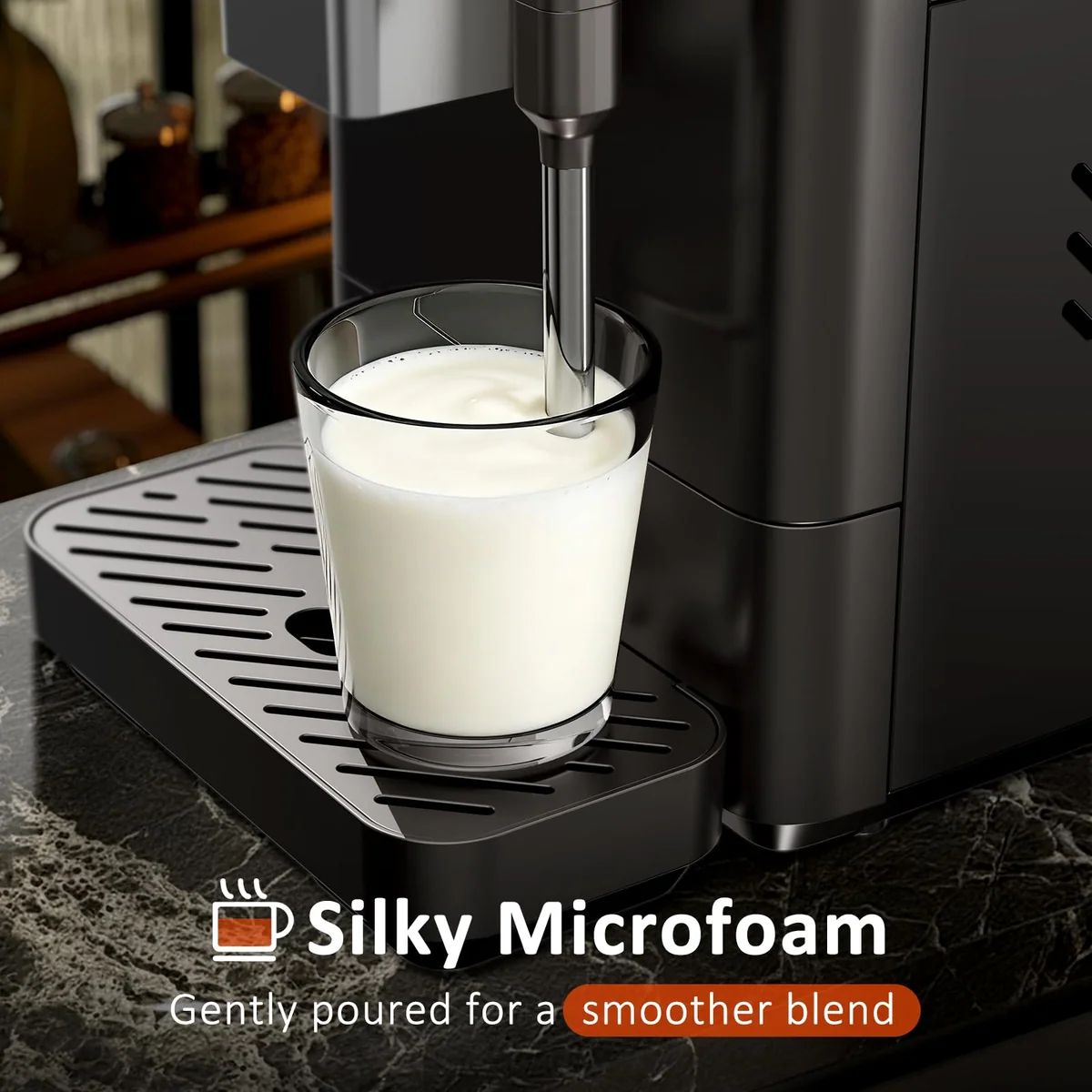
- The milk system is a manual steam wand, which means milk temperature and texture are your decision rather than a carafe's compromise.
- The wand doubles as a hot water outlet, a feature some machines several times the price omit and get criticised for.
- A wand is materially less to clean than a milk carafe, with no hoses, no fridge-stored container and no milk left to sour.
- Grind fineness adjusts by knob on conical burrs, which is the one control that most changes what a bean-to-cup machine puts in the cup.
- The alarm list names the four specific parts that get reassembled wrongly, which beats a numbered error code you have to look up.
- If your daily drink is a latte or a cappuccino, milk forgives most of the extraction faults this class is criticised for.
Limitations
- The listing sells one-click cappuccino and a manual steam wand two bullets apart, and only one of those can be true.
- The star rating rests on ten ratings, a sample one unhappy buyer can move by three tenths.
- No independent reviewer has published a test of this model, so its reliability is not merely unproven but unexamined.
- Kndko publishes no dose, wattage, tank or hopper capacity, dimensions, weight, warranty length or grind-setting count.
- The pressure figure in the product name is a pump rating rather than brew pressure and tells you nothing about the coffee.
- The self-cleaning claim in the title is never explained anywhere in the bullets, which describe only a cleaning reminder.
- Nothing on the listing suggests brew temperature can be adjusted, and this class runs cool at factory settings.
- Kndko is a multi-category house brand with no coffee lineage, and no visible answer to who supplies parts in three years.
- A manual wand means the cappuccino is a two-stage job, which is the opposite of why most people buy an automatic machine.
The cup you should expect, and why the pressure number will not tell you
Twenty bar is the headline and it is the weakest thing on the box. James Hoffmann's six-machine bean-to-cup test never mentions bar pressure once across the whole comparison; what he measures is dose, grind fineness, brew ratio, temperature and extraction percentage, and every machine that failed in that test failed on one of those. Pressure only becomes interesting when there is far too little of it, as with the cheap pressurised makers one owner memorably called "a pressure cooker for coffee" at three to five bar. Above nine bar or so the pump has to dump the surplus somewhere, and the number stops meaning anything. We wrote the long version in what a 20 bar rating actually tells you.
The number that would tell you something is the dose, and Kndko does not publish it. Here is why that matters, using the only good measured set available.
| Machine | Where it sat on price | Max dose |
|---|---|---|
| De'Longhi Dynamica Plus | second cheapest | about 9 g |
| Gaggia Academia | lower middle | about 9.5 g |
| Siemens EQ9 | upper middle | about 12.8 g |
| Melitta Barista TS | cheapest of the six | about 16.5 g |
| Jura Z10 | second dearest | about 16.5 g |
| Miele CM7750 | dearest of the six | shorted the requested dose by 8 to 9 g |
A café double is eighteen to twenty grams. A machine costing four figures putting nine grams into a cup is not making a two-to-one espresso; it is making a long coffee at four-to-one or worse, because weak automated puck prep forces a coarser grind, and a coarser grind forces a longer ratio to reach any extraction at all. Nothing about a cheaper machine improves that chain. This is the mechanism behind the complaint people bring to us as watery espresso, and we have unpicked it properly in why bean-to-cup espresso comes out thin.
Calibrate accordingly. A super-automatic costing four figures had its espresso described by a specialist retailer as "a little thin in comparison to like a hand-pulled shot", missing "that extra unctuousness". That is the ceiling of the class, not the floor. Two related things follow. First, thick crema on a super-automatic shot proves nothing, because several expensive machines manufacture it by aerating the drink on the way out, which looks superb and tastes like foam. Second, in that same test the factory temperature setting on one machine produced cups that tasted "incredibly dull" until the temperature was raised. Kndko does not say brew temperature is adjustable, and where a listing is silent, assume the answer is no. If the coffee lands lukewarm, our guide to cool cups covers the tricks that remain, chiefly warming the cup first, which recovers roughly ten degrees Fahrenheit on machines that have been measured.
Now the good news, and it is real. The steam wand is the best thing about this machine, and it is best precisely because it is not automated. The best automatic milk systems in that four-figure comparison scored around seven out of ten for foam quality and most sat between four and six and a half, with the recurring faults being big bubbles, thin texture and milk that arrives merely warm. A wand hands all of that back to you: you decide the temperature, you decide the texture, and you stop when you like. Long-running super-automatic owners choose this deliberately. One Saeco owner of four years put it bluntly, that they would not take an auto frother, that microfoam control is the whole point, and that using the steam function alone "significantly reduce[s] cleanup needed". That last part is not a small thing: a carafe system means hoses, a milk container that congeals in the corners, and leftover milk going off in the fridge. Our comparison of the three milk systems is the piece to read before you decide which annoyance you would rather own.
The honest counterweight is that a super-automatic's wand is usually a compromised wand, thinner steam and less of it than a dedicated machine, and it demands a skill the rest of the machine was bought to avoid. It also means the cappuccino is a two-stage operation at seven in the morning.
Which brings us to the reason a machine like this can still be a good buy. Milk hides extraction faults, comprehensively; if your daily drink is a latte or a flat white, the thinness that would ruin a straight espresso mostly disappears under the foam. Judge the Kndko as a milk-drink machine, because that is what it is. The instructive failure story here comes from a neighbouring cheap Amazon-native machine whose owner listed four faults in a row: airy fake crema, drinks that were never hot, choking on any fine grind, and, most usefully, the realisation afterwards that every positive review they had watched had demonstrated only milk drinks, which are forgiving. Hold that thought against the Kndko's own marketing imagery and against a ten-rating star average.
There is no bottom rung in this category, and Kndko is trying to build one
A specialist retailer's own framing of the category puts its price range at four hundred to five thousand dollars and says plainly that a super-automatic "is for a person that needs one", meaning someone short of counter space, short of time, or uninterested in learning a skill. Kndko sits at the absolute floor of that range. The figure Espresso Den recorded when it captured the listing sat right at the bottom of that band, and it was a snapshot taken on one day rather than anything you should expect to see today.
What happens at that floor is that the buying community stops making recommendations. In a first-machine thread this year, the cheapest suggestion anyone offered was around five hundred dollars and most sat between six hundred and eighteen hundred, refurbished units included. In the durability forums, four hundred dollars is described as roughly the minimum for a real espresso machine of any kind, with no automation attached. And the standing advice in the enthusiast buyer guides is harsher still, that the money between five hundred and a thousand dollars is a no-man's-land where you should either step down to something simple or step up to something serviceable. That is the wall the Kndko has walked into: it offers a grinder, an automatic brew group, a wand and a control panel for the price of one decent component of a semi-automatic setup, and something has to give.
The saving grace is that in this category, price predicts the cup much less than you would expect. In that six-machine test, the dearest machine was the weakest brewer of the group and one of the cheapest was the best value, and the tester's own conclusion was that the Jura, near the top of that range, was not twice the machine. So paying less here does not cost you as much cup as it would in a semi-automatic. It costs you build, disclosure, support and lifespan instead. That is the trade, stated straight, and our longer treatment of it lives in whether a cheap espresso machine is worth buying from a brand you have never heard of.
The Kndko's real competition, once discounts are in play, is a De'Longhi or a Philips. The Magnifica Start is the closest match philosophically, a bean-to-cup with a manual frother and no milk carafe. The Magnifica Evo gets you one-touch milk, and a specialist reviewer's honest note about it is that the workflow is button-based and you rinse the brew unit by hand, framed as acceptable rather than damning, which is exactly the Kndko's profile too. The Philips 3200 LatteGo answers the cleaning question best, since its two-piece milk system rinses under a tap. Worth knowing that machines at that level are not immune either: weak espresso drove one buyer to return a Philips 4400 outright, and quietness is a live concern for anyone brewing before a partner is awake, with no noise disclosure from Kndko at all. We keep a running list of what is actually worth buying under five hundred dollars, and if the budget is the binding constraint, a renewed name-brand machine is the option this page would not want you to overlook.
Two practical filters from people who have bought in this category and lived with the result. Buy the machine whose milk parts come apart easily, because that is the part that becomes annoying fastest. And buy the drinks you actually drink rather than paying for twenty presets you will never press. On both counts the Kndko's four buttons and bare wand look better than they read. If you are shopping the same shelf, our reviews of the Gevi 20 Bar machines, the GarveeTech all-in-one and the UDI 20 Bar cover the same corner of Amazon.
Year three is the real question, and nobody can answer it
An all-in-one is a machine with more to break and bespoke fittings to break it with, and when the manufacturer stops making that unit, the owner is out of options. That is the structural argument against every grind-and-brew, and it lands hardest on a brand with no parts history. The most experienced advice on this in the super-automatic forums is not about reliability at all, it is about repairability: check that exploded diagrams exist and that parts are actually available, because a machine running water at pressure through moving parts will wear out, and the difference between brands is whether wearing out is a repair or a bin. A Breville owner who destroyed a grinder washer twice got two replacements shipped free by the manufacturer, which is the safety net an Amazon storefront does not obviously have.
The template for judging a newcomer fairly already exists in this category. When buyers assess a contract-manufactured brand with no coffee lineage, the objection that sticks is not that the coffee will be bad; it is that warranty coverage is inferior to the established names and that unresolved faults have nowhere to go. Espresso Den could not determine Kndko's warranty length from anything it publishes. Our own probes also show what Kndko is: a multi-category Amazon house brand better known for nugget ice makers and portable air conditioners, whose owners are visibly searching for cleaning instructions and manuals for those products. That is not disqualifying, since plenty of good appliances come from brands with no heritage. It is specifically a documentation, parts and firmware unknown, and on a machine with four misassembly alarms it is a documentation unknown that matters.
What breaks first on cheap automated machines is usually the automation, not the boiler or the burrs. The clearest recent case is the Ninja Auto-Barista, where owners returned two consecutive units because the automatic calibration routine kept demanding to re-run and wasting beans, while other owners in the same thread reported two flawless years on the same model. Two honest people, opposite experiences, one product: that is unit-to-unit variance, and what makes it survivable is a support operation that replaces machines without argument. There is no evidence either way about Kndko's. Elsewhere, an office running super-automatics reported four machines in succession, with the built-in grinder and tamper named as the reason.
For a benchmark, owner-reported lifespans for the established brands run roughly four to ten years with maintenance: a Krups at about five, a Philips Saeco past four and running, a De'Longhi that did ten across two owners. The maintenance that buys those years is unglamorous and specific, one owner's cadence being a weekly internal rinse, grounds dusted out twice a week, descaling every six weeks and the brew engine oiled every nine months. If a machine sits unused for weeks with old milk and coffee oil inside it, it seizes, and that is true of every price. We set the whole routine out in what cleaning and descaling really involves, and the lifespan evidence in how long these machines last and what breaks first. Kndko has no place in either data set yet.
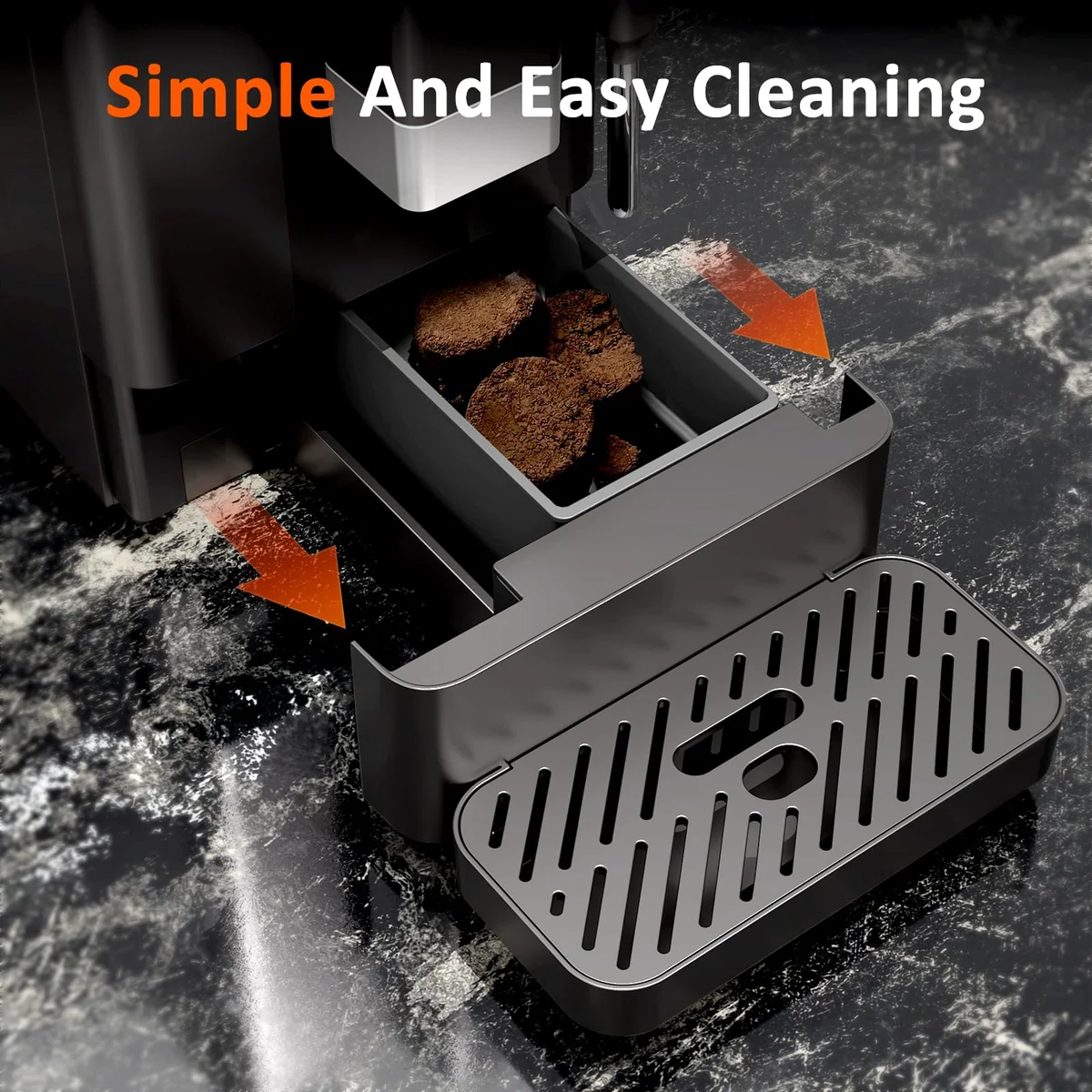
One small, concrete thing to expect from any machine at this end: the drip tray and grounds bin will need emptying more often than you think, because the machine dumps rinse water into the tray on its own schedule, and a neglected tray goes mouldy and a neglected grounds bin smells.
Frequently Asked Questions
Is this a true bean-to-cup machine, or one of those where you still fill a portafilter?
The listing describes an automatic brew group that feeds, presses, brews and ejects the puck, which is a true bean-to-cup mechanism, and Kndko sells a separate portafilter model that is easy to confuse with this one.
Does 20 bar of pressure make better espresso than 9?
No, because that figure is the pump's maximum rather than the pressure that reaches the coffee, and the tests that actually measure cup quality never record it.
Can it make a cappuccino at the touch of one button?
Not in the way the phrase implies, since the espresso pours automatically but the milk is steamed by hand on a wand you hold.
Is a manual wand a downgrade from an automatic milk carafe?
It is a trade rather than a downgrade: you lose the walk-away convenience and gain control over temperature and texture plus considerably less cleaning.
Will the espresso taste like what a café serves?
It will not, because super-automatics at every price dose light and brew long, which yields a thinner drink that milk hides well and a straight espresso does not.
How long should a machine like this last?
Established brands are reported by their owners to run roughly four to ten years with regular cleaning and descaling, and there is no lifespan evidence of any kind for Kndko.
Should I buy this instead of a De'Longhi Magnifica Start or a Philips 3200 LatteGo?
Buy the Kndko only if the manual wand is a feature you actively want and the saving matters, because the alternatives cost more and bring a repair network, published specifications and thousands of owners with them.
Can I trust the star rating?
Not yet, since ten ratings is too small a sample to mean anything and free-product reviews are common on new listings from unfamiliar brands.
Sources (4)
- Amazon listings and customer reviews — Kndko Espresso Machine
- Owner reports across r/IndiaCoffee, r/superautomatic, r/Coffee and 2 more threads
- Owner and reviewer video, 9 channels
- Coffeeness — Article — www.coffeeness.de