Philips 1200 vs 2200: the extra money buys a different badge, not a better cup
Buy whichever of the two is cheaper on the day, because the EP1220/04 and the EP2220/14 share the brew group, the ceramic burr grinder, the 15 bar pump and the classic steam wand, and the gap between the model numbers buys trim rather than coffee.
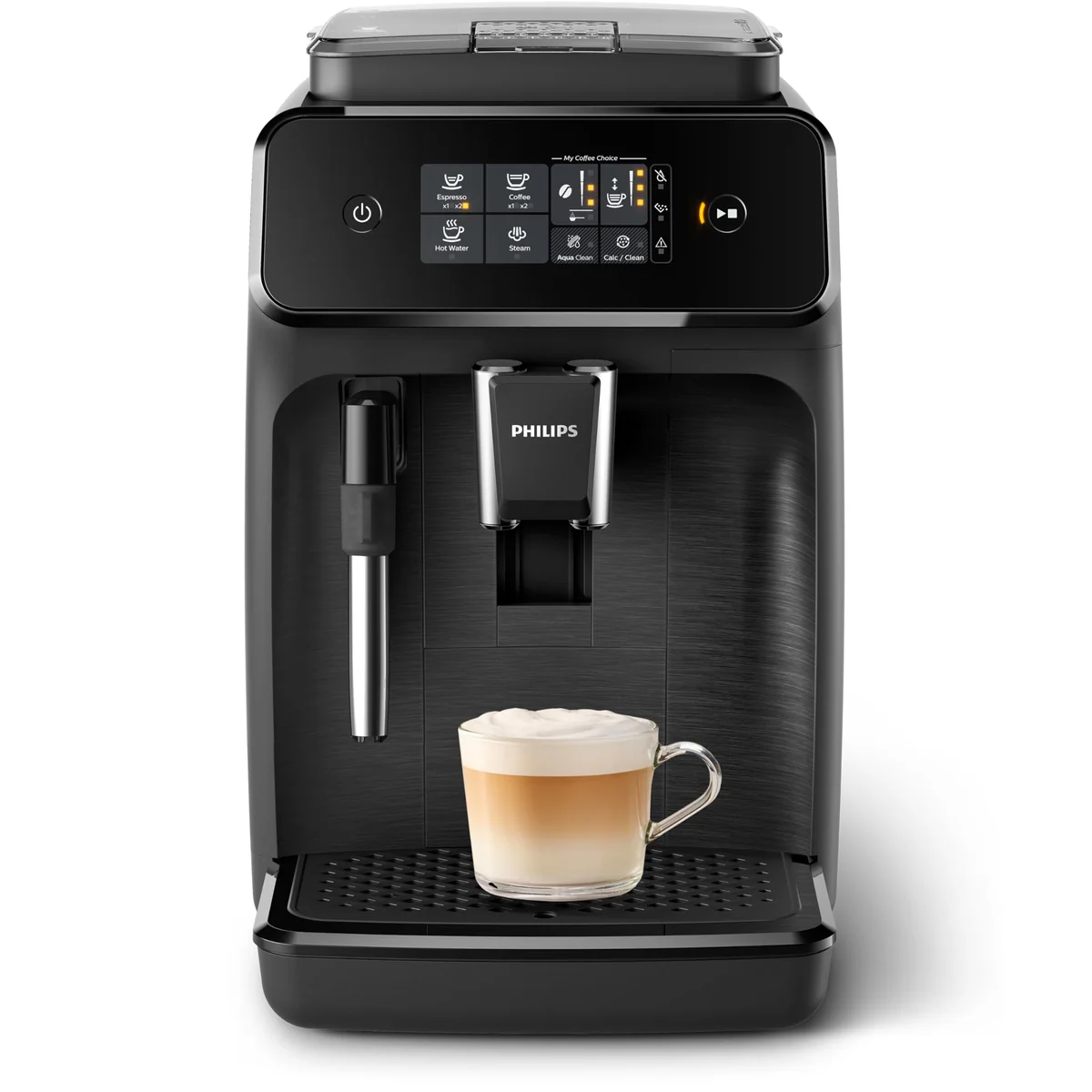
Philips 1200 Series espresso machine
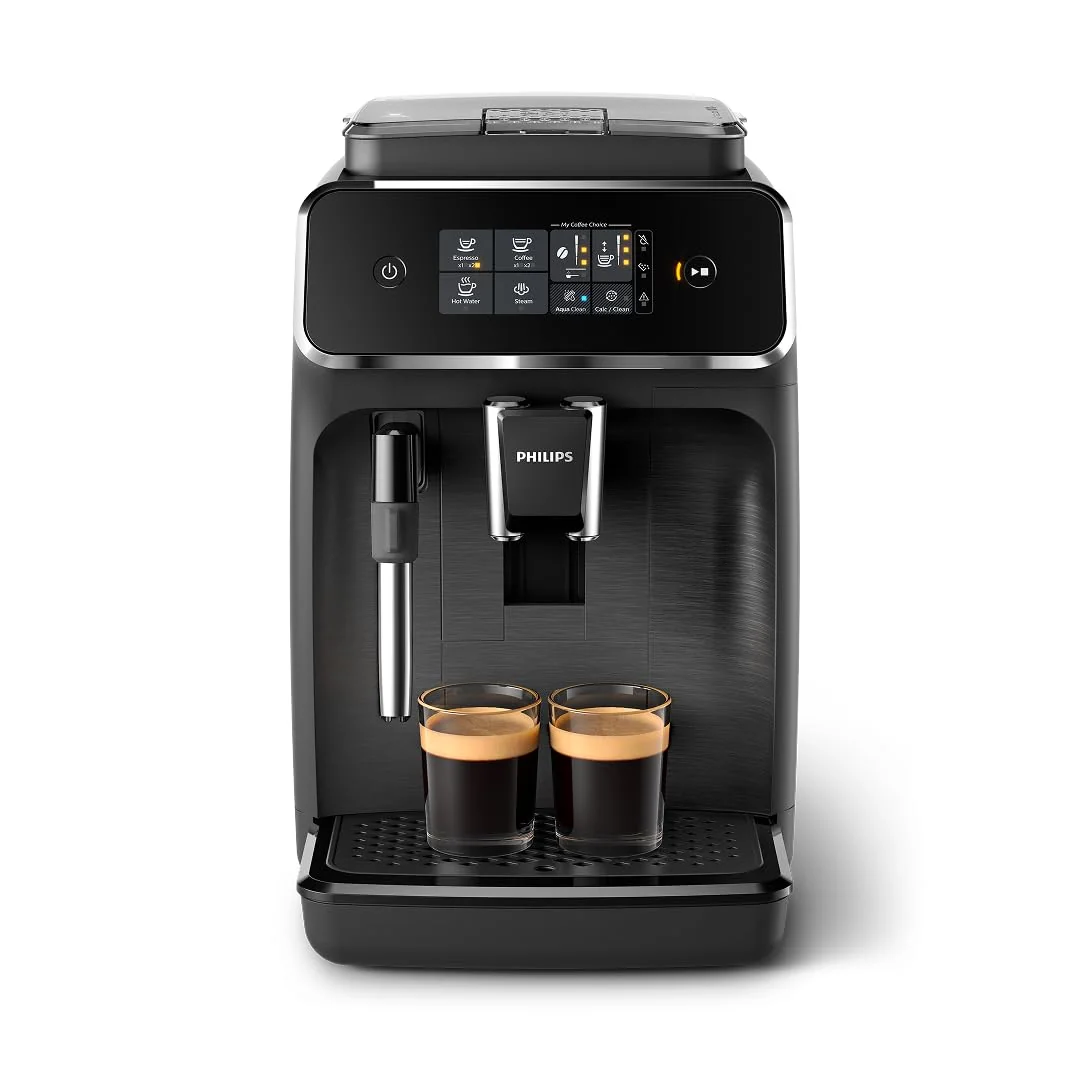
Philips 2200 Series espresso machine
The numbers imply a ladder, and there is no ladder here. The most useful test anyone has run on this family put a 2200 next to a 3200 and a 5400, set all three to the same grind, the same strength and the same volume with identical beans, and pulled shots that came off at 37, 32 and 35 grams with no identifiable difference in taste or temperature. If a machine three rungs up cannot beat the 2200 in the cup, the 1200 sitting one rung below it is not losing to anything either, which is what owners on r/superautomatic say bluntly: an espresso or an Americano tastes the same out of a 1200 as it does out of the flagship, because it is the same brewing unit and the same heater doing the work.
Philips barely bothers to hide it. Both product titles list the same equipment in the same order: classic milk frother, two coffee varieties, touch display, 100 percent ceramic grinder, AquaClean filter, Aroma Seal. The 1200's own description then wanders off and calls the machine the 2200 Series halfway through its second sentence about the grinder. The 2200's listing works harder, promising the number one super-automatic in the US and Canada combined and a machine that pays for itself in about three months, which is arithmetic that requires you to buy a six dollar coffee every single day without a break and counts no beans, no milk, no filters and no descaler.
Espresso Den has not had either machine on a counter, and nothing below is presented as our own measurement. This page is built from the two reviews we have already published, on the 1200 Carina and the 2200 EP2220/14, and from the reviewers who put scales and thermometers on these machines and published the numbers. Where those numbers disagree, and on the dose they disagree sharply, this page shows the disagreement.
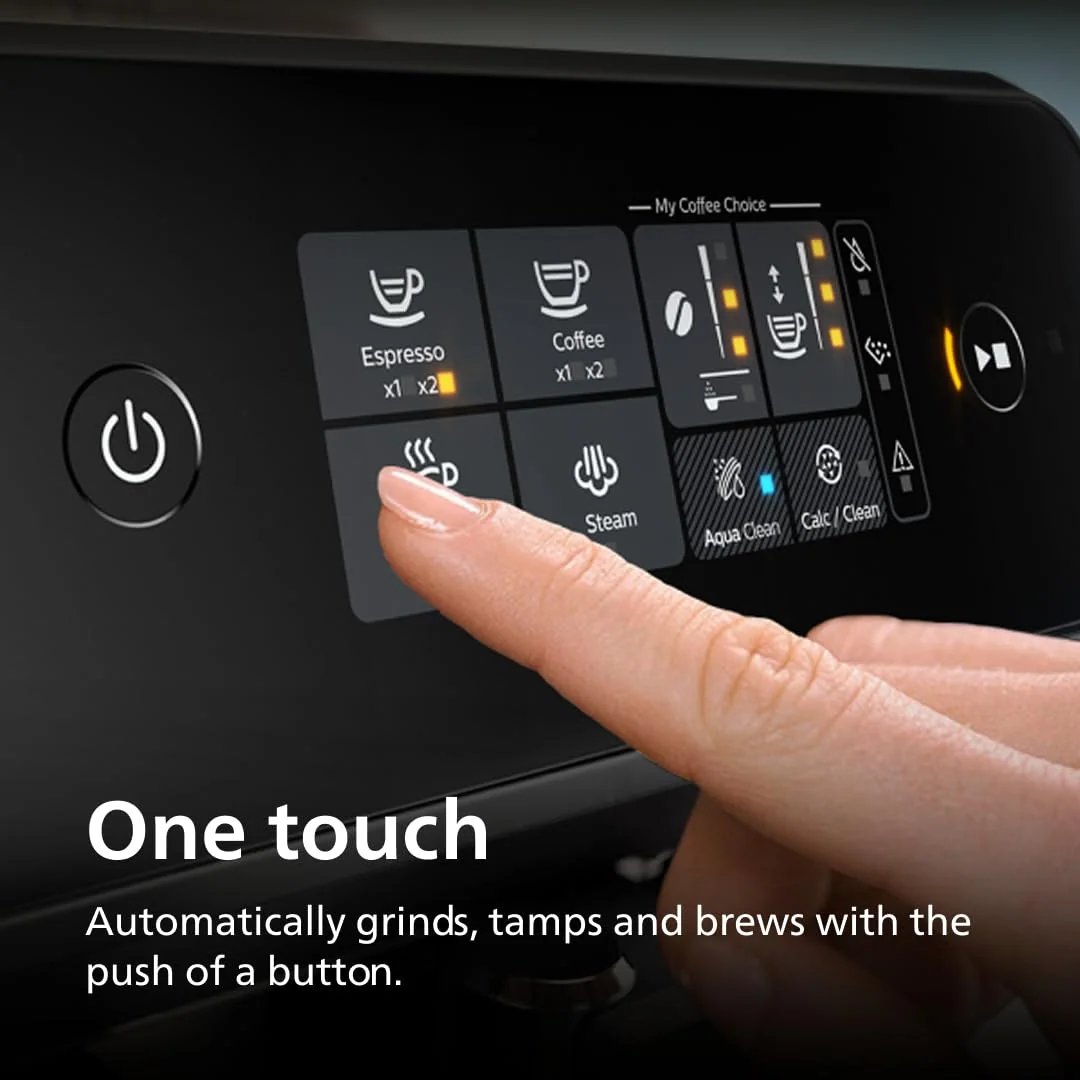
Philips 1200 Series espresso machine
Philips 2200 Series espresso machine
At a Glance
| Feature | Philips 1200 Series Fully Automatic Espresso Machine, Classic Milk Frother, 2 Coffee Varieties, Intuitive Touch Display, 100% Ceramic Grinder, AquaClean Filter, Aroma Seal, Black (EP1220/04) | Philips 2200 Series Fully Automatic Espresso Machine, Classic Milk Frother, 2 Coffee Varieties, Intuitive Touch Display, 100% Ceramic Grinder, AquaClean Filter, Aroma Seal, Black (EP2220/14) |
|---|---|---|
| Price Range | $200–$500 | $200–$500 |
| Configuration | Aquaclean Sold Separately | Large |
| Finish | Black | Black |
| Items In Box | 1 | 1 |
| Listed Since | — | 2025-06-02T00:00:01Z |
| Check Price on Amazon | Check Price on Amazon |
What the badge actually changes
Here is every difference the record supports, set against everything the two machines hold in common.
| EP1220/04 | EP2220/14 | |
|---|---|---|
| Brew group and burrs | Removable by hand, no tools, 100 percent ceramic burrs with twelve grind steps | The same unit and the same burrs, shared up the range as far as the 5400 |
| Drinks from the panel | Espresso, coffee, hot water | Espresso, coffee, hot water |
| Strength settings | Three | Three |
| Milk | Classic frother with a panarello sleeve | Classic frother with a panarello sleeve |
| Materials | Plastic throughout, no heated cup shelf | Plastic throughout, down to the drip tray cover, no heated cup shelf |
| Water tank | Pulls out from the front | Pulls out from the front, 1.8 litres |
| Bean hopper | Sealed, tinted Aroma Seal lid | Sealed Aroma Seal lid, 270 grams, refilled about every ten days by one owner |
| AquaClean filter in the box | Philips' own specification page says it is not included | At least one owner writes about the filter that came with theirs |
| Amazon rating when captured | 3.9 from 1,276 ratings | 3.8 from 1,463 ratings |
The specifications in that right-hand column come from a published teardown of the 2200, which also notes something in the machine's favour that nobody advertises: the water tank is moulded in a slightly yielding grade of plastic that would probably survive a drop where most tanks splinter. The absence of a heated cup shelf on either machine is worth registering, because both make small drinks that cool fast. And the twelve grind steps on the 1200 are the ones its owners count in the hopper, not a figure lifted off a box.
Two rows there matter more than the rest. The filter row is the only documented difference in what you get for your money, and it runs the wrong way for the cheaper machine: Philips states in plain text on its own product page that the AquaClean filter named in the 1220/04's title is not included, and its disclaimer adds that the 5,000 cups without descaling assumes eight filter replacements bought by you. Nothing equivalent is documented for the 2220/14, and one owner of it refers casually to the filter that came with the machine and annoys them enough that they use filtered water instead. Treat that as a reason to check the box contents on whichever listing you are looking at rather than as a guarantee. The rating row is the tidier point: the machine with the higher number in its name scores fractionally lower across a larger sample, which is noise, and noise is exactly what you would expect from two badges on one machine.
The rung that is worth climbing is the next one, not this one
Philips does eventually start charging for real things. Above these two, the 3200 adds an americano, a cappuccino and a latte macchiato at a button, and the LatteGo carafe that makes them, and the machines above that add drink counts, profiles and a metal drip tray. That is a purchase with a mechanism behind it. Moving from the 1200 to the 2200 is a purchase with a fascia behind it. If the milk routine on these two sounds like more work than you want on a Tuesday morning, the honest next step is the 2200 against the 3200 rather than a lateral shuffle, and our walk up the whole Philips range marks where each rung stops paying for itself.
The shot they both pull, and the settings that change it
Because it is the same brew group, it is the same espresso problem. One reviewer stopped the cycle after the grind and weighed the charge: roughly 6 grams on the low strength setting and about 7 on the high, with volumes out of about 30 millilitres at the shortest setting, 40 in the middle and 65 at the longest, which puts the factory middle position at something like 1:6. A second weighed pucks across settings and beans and got 8 to 11 grams; a third dehydrated spent pucks at maximum strength and got 11 to 12. Nobody lands near the 18 or 19 grams a conventional double uses, and the three of them disagree by enough that you should not trust any single figure, but they agree on direction. The dose is light, the shot runs long, and what comes out is a mild lungo wearing an espresso's clothes.
Which means the settings are worth more to you than the model number is. Everyone who ends up happy converges on the same corner of the adjustment range.
| Control | Where to put it | Why |
|---|---|---|
| Temperature | Maximum, set by holding the cup volume button for about three seconds with the machine switched off | Hotter water pulls more out of a small dose, and there is no menu, so it is a press and hold on both machines |
| Strength | Maximum, or one step below | It is a dose control rather than a flavour profile, and dose is the thing you are short of |
| Volume | Minimum | The same flavour concentrated into 30 millilitres beats it stretched across 65 |
| Grind | Two or three of twelve, moved one step at a time and only while the burrs are actually turning | A hopper full of beans jams the knob solid and forcing it damages the mechanism |
| Beans | Dark and matte, never oily and shiny | Oily beans produce sludge instead of a puck, and are the single most common cause of a watery first week |
That protocol is what the happy owners describe, not our invention. One Amazon buyer of the 1200 started on an oily medium roast, got nothing but sludge and weak brew, switched to a darker and less oily roast, and reported solid puck discs and rich coffee from the same machine on the same settings. The rest of the hidden controls are press and hold too, including water hardness and the pre-ground bypass, and our guide to operating a Philips super-automatic collects them. If the drink is still thin after all that, the reasons are in the watery-espresso explainer; if it is fine but tepid, that is a separate problem with a separate fix, and the numbers you are working against are around 68 to 70 degrees Celsius for a short shot and about 72 for the long coffee. The bean question is worth settling before you buy either machine, and our guide to which beans survive a bean-to-cup grinder is the short version of an expensive lesson.
Take the sleeve off before you judge the milk
Both machines ship with a panarello, the plastic sleeve that drags air in through a pinhole and froths for you. It produces a great deal of large-bubble foam and nothing anyone would call microfoam, which is why several reviewers of both models report that latte art is off the table. Then one of them pulled the sleeve off, steamed on the bare single-hole tip with the wand to the side of the pitcher to get a whirlpool going, called the result nearly comparable to a normal espresso machine and poured a heart with it on camera. That is the highest-value thing on this page and it costs nothing: the weakest advertised feature on both machines becomes the good one the moment a piece of plastic comes off. The price is that you are now steaming by hand, in bursts, with a single boiler that makes you wait between brewing and steaming, which is the real question in our piece on which milk system you will actually live with. One 2200 owner is emphatic about which side of it they are on, saying the wand pops off and rinses in seconds where a milk carafe would be a nightmare to clean.
The failure records, which is the one place they genuinely read differently
Neither record is clean, and they are ugly in different ways. On the 2200 listing, every single one-star review is a hardware fault or a missing part rather than a complaint about coffee. One reviewer has bought that model three times: the first arrived with an internal leak, the second ran about four years before developing one, and the third arrived dead, producing no coffee, no puck, and water under the machine and in the used-grounds bin. A Spanish-language reviewer describes the same symptom independently, water escaping from underneath on the day of delivery, confirmed as defective by Philips after they sent video. That is two people describing the same day-one fault, and it is the reason to unbox in front of a sink, brew immediately and look underneath.
The 1200's one-star reports skew toward the dial-in rather than the plumbing: the owner who runs a Rocket as their daily machine made forty-five cups chasing a solid puck and gave up, and another jammed a bean in the grinder, found Torx fasteners in the way and had to modify a screwdriver to get inside. Longer term, though, both machines end up in the same place. Owner reports on the 1200 include two failures at four and five years with a specific, repeated complaint about a rear leak near the boiler, against one Philips owner reporting eight years at six espressos a day, and the 2200 owner above lost their working unit to an internal leak at about four. That is a spread, not a lifespan, and our piece on how long these machines last and what breaks first puts it in context. The redeeming fact applies to both: a European parts specialist catalogues well over two hundred spares for this family, down to the pump, the flow switch, the grinder motor and the brew unit seals, so neglect rather than age is what actually kills them.
The upkeep is identical, and it is not nothing
Philips' own maintenance sequence for both machines is the same: rinse the frother after every use, rinse the brew group weekly, do a deeper clean of it monthly, and grease it periodically with the tube that comes in the box. One 2200 owner of a year's standing rates the coffee far above the design and makes the sharpest observation in either review corpus, that a steam vent passes the grinder, wets any lingering grounds and lets residue cake inside over time. The general schedule, on either machine, is in our cleaning and descaling guide, and the AquaClean claim gets unpacked properly in our piece on Philips descaling. One diagnostic is worth carrying away before you conclude a wand is dead: a frother that has stopped producing foam is very often a machine that has not been descaled, and one reviewer's neighbour's machine steamed normally again after a proper descale.
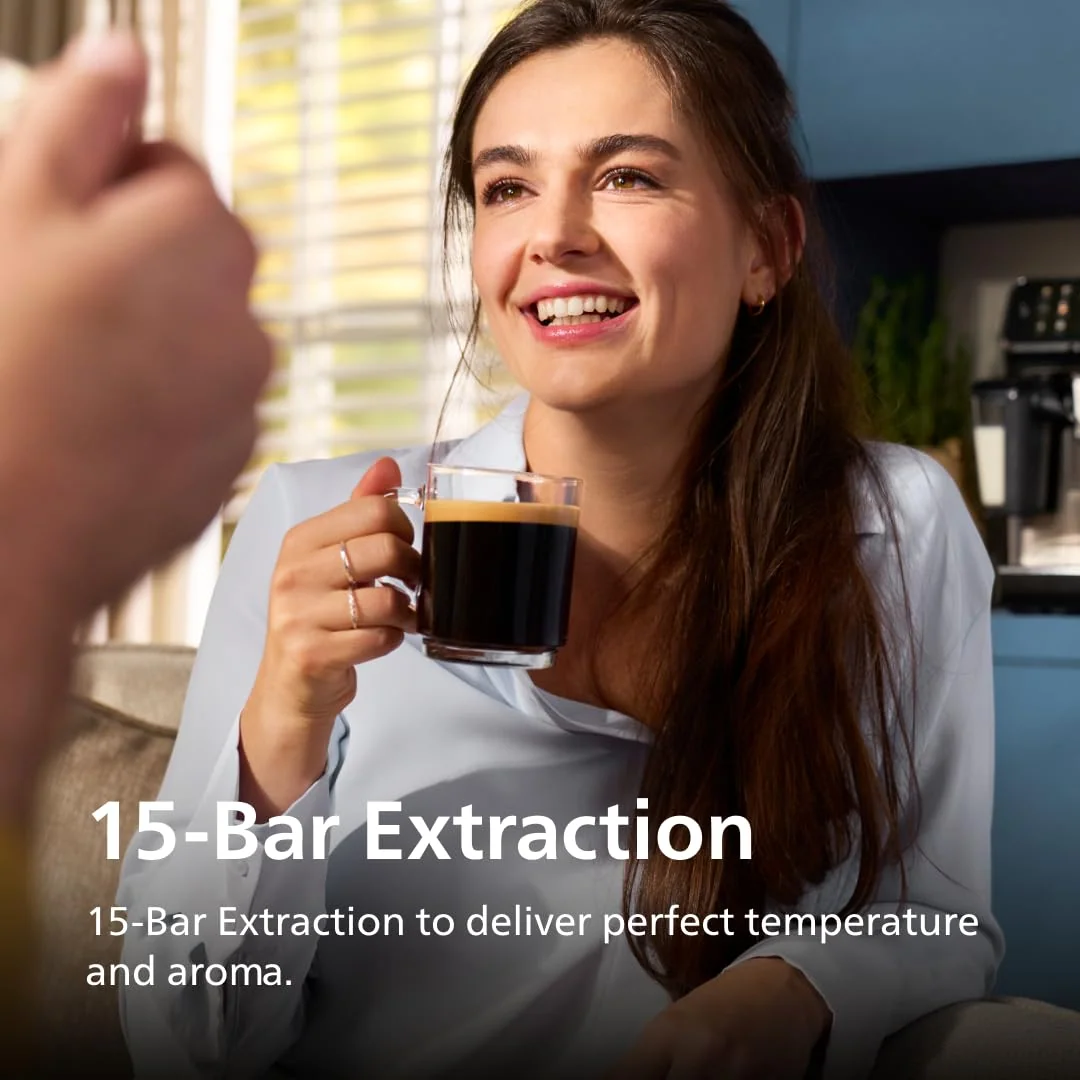
Philips 1200 Series espresso machine
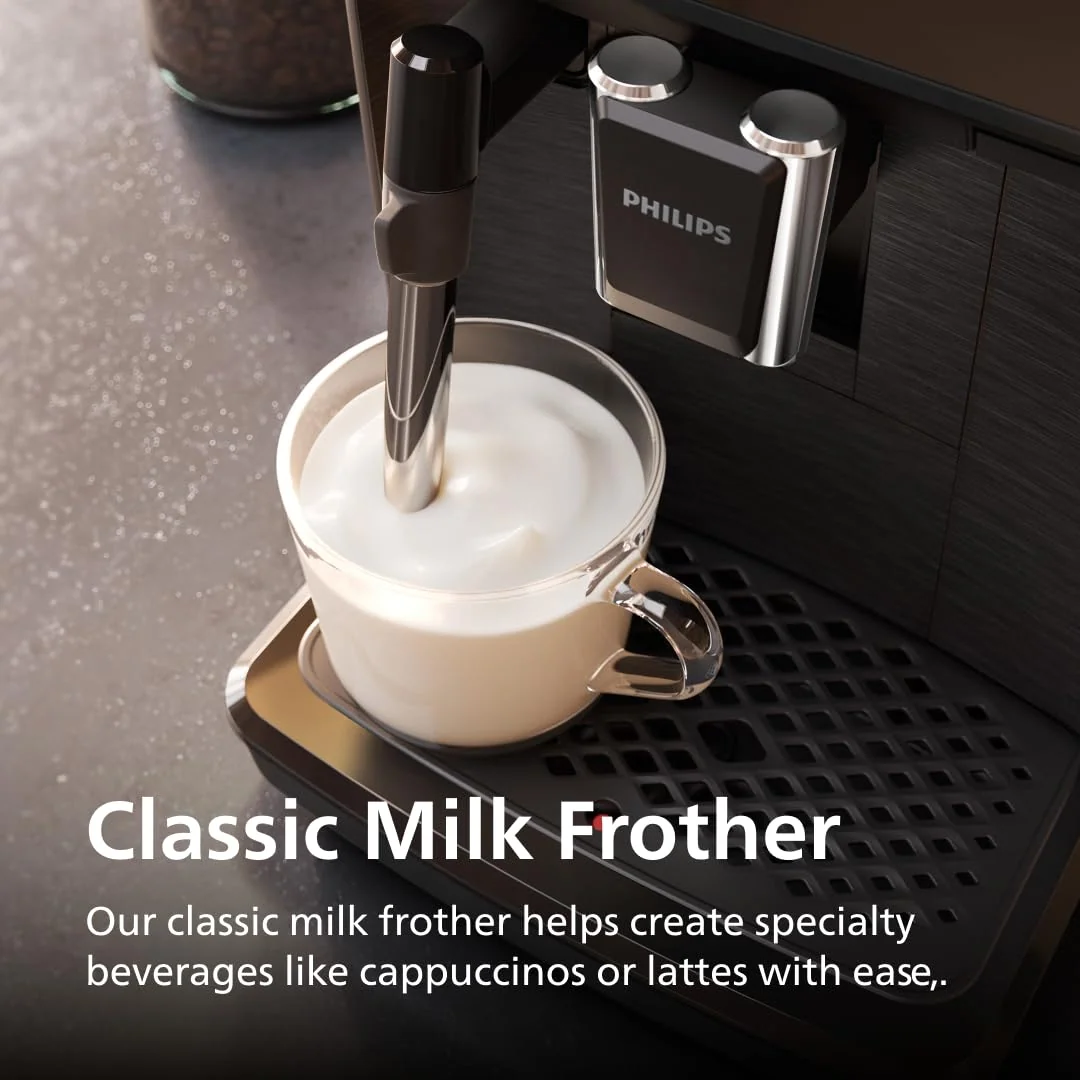
Philips 2200 Series espresso machine
Which one to put on the counter
Since the coffee is a tie, the tiebreakers are what is in the box, what the listing has done to other buyers, and what you pay. Both cards below assume you will spend twenty minutes on the setup table above, because a machine set the way it leaves the factory is the machine people write the one-star reviews about.
The cheaper door into a Philips brew group, whenever it is genuinely the cheaper one
It grinds fresh, tamps, brews, ejects the puck and rinses its own circuit on both power cycles, the tank comes out of the front so it never has to be shuffled off the counter, and the shot it pulls is the same shot the machines above it pull.
Philips' own specification page says the AquaClean filter named in this product's title is not in the US 1220/04 box, and the rear leak near the boiler that killed two of these at four and five years is reported specifically against this model number.
The same machine with the tidier fascia, worth taking when it undercuts the 1200
Espresso, coffee and hot water from a 1.8 litre front-loading tank and a sealed 270 gram hopper one owner refills about every ten days, with the panarello off and the volume set short it makes milk and a drink that no reviewer has been able to distinguish from machines costing far more.
The one-star reviews on this listing are almost entirely hardware rather than taste, including two owners who found water pooling under a brand-new machine on the day it arrived, and several US boxes have turned up with no printed instructions and a QR code that lands on an empty page.
If neither appeals, the two honest directions are up and sideways. Up means the 3200 with LatteGo, where the money buys a milk carafe and three more buttons instead of a different colour of plastic. Sideways means De'Longhi, and the fork is real: owners who moved to a Magnifica Evo describe better espresso body and better foam from day one on the same beans, while an owner of both brands counters that De'Longhi's brew unit clogs at its finest grind settings, so if you want dark, fine-ground, strong black shots the Philips is the one that will actually grind there. Our Philips against the Magnifica Evo lays that out, and if the budget is the hard constraint, start with the cheaper end of the category.
Frequently Asked Questions
Is the 2200 actually the better machine?
Not in the cup, since it is the same brew group, the same burrs and the same three drinks behind a different fascia, so the sensible move is to take whichever listing is cheaper when you are ready.
Is the 800 Series sold through the warehouse clubs a third machine?
Owners treat it as this same machine with a steam wand, built for that channel, and at least one buyer chose it over the 1200 purely because that retailer's returns policy makes a machine with mixed reviews a safer bet.
What is the difference between the EP1220/04 and the EP1220/00, or the EP2220/14 and the EP2220/10?
The digits after the slash are market and packaging codes rather than different machines, which is why the parts catalogues list this family under suffixes you will never see on Amazon, though what is in the carton can differ, and the US /04 is the one Philips documents as shipping without the AquaClean filter.
Where do I find the manual if my box did not have one?
Philips publishes both on its support site and it is worth going there directly, because owners have reported the printed QR code leading to an empty page and the web address funnelling them through filter offers in several languages instead.
Do I still have to descale if I keep an AquaClean filter fitted?
Yes, just far less often, at roughly once every eighteen months with the filter always replaced on time against roughly every three months without one.
Can I descale with vinegar and save the cost of the Philips solution?
No, Philips explicitly names acetic acid alongside sulfuric, hydrochloric and sulfamic as damaging to the machine and ties the warranty to its own descaler.
Why does the machine insist the grounds bin is full when I have just emptied it?
Because it only registers the reset if the bin comes out while the power is on, so switch the machine on and remove the empty bin again.
Does the two-cup button give me a double shot?
No, it runs two complete grind, brew and rinse cycles back to back, so aiming both into one cup gives you a cooler, weaker drink than one properly sized shot.
Ready to Choose?
Sources (6)
- Amazon listings and customer reviews — Philips 1200 Series Espresso and Philips 2200 Series Espresso
- Owner reports across r/superautomatic threads
- Owner and reviewer video, 9 channels
- Coffeeness — Article — www.coffeeness.de
- Philips — Article — www.usa.philips.com
- Fixpart — Article — fixpart.co.uk