Cheap espresso machines are worth buying more often than the internet admits, once you know which corner got cut
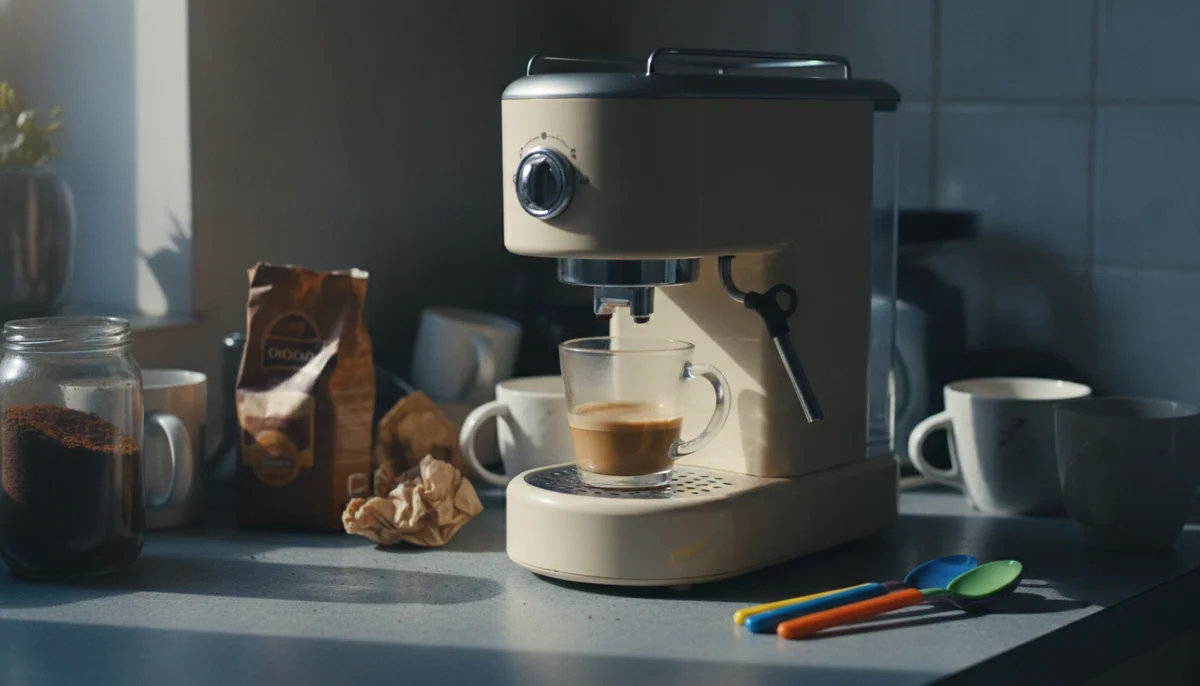
Two questions are usually bundled together and they deserve separating, because only one of them is worth your anxiety. The first is whether cheap coffee gear is a false economy. The second is whether a brand with no history, no press coverage and a name that sounds like it was generated rather than chosen is a scam. The second question is mostly the wrong worry. These machines arrive, they work on the day they arrive, and the people who bought them are not being defrauded. What the low price buys you is a set of very specific engineering compromises, and what an unfamiliar brand costs you is not honesty but paperwork: a parts diagram, a gasket you can order, somebody who replies.
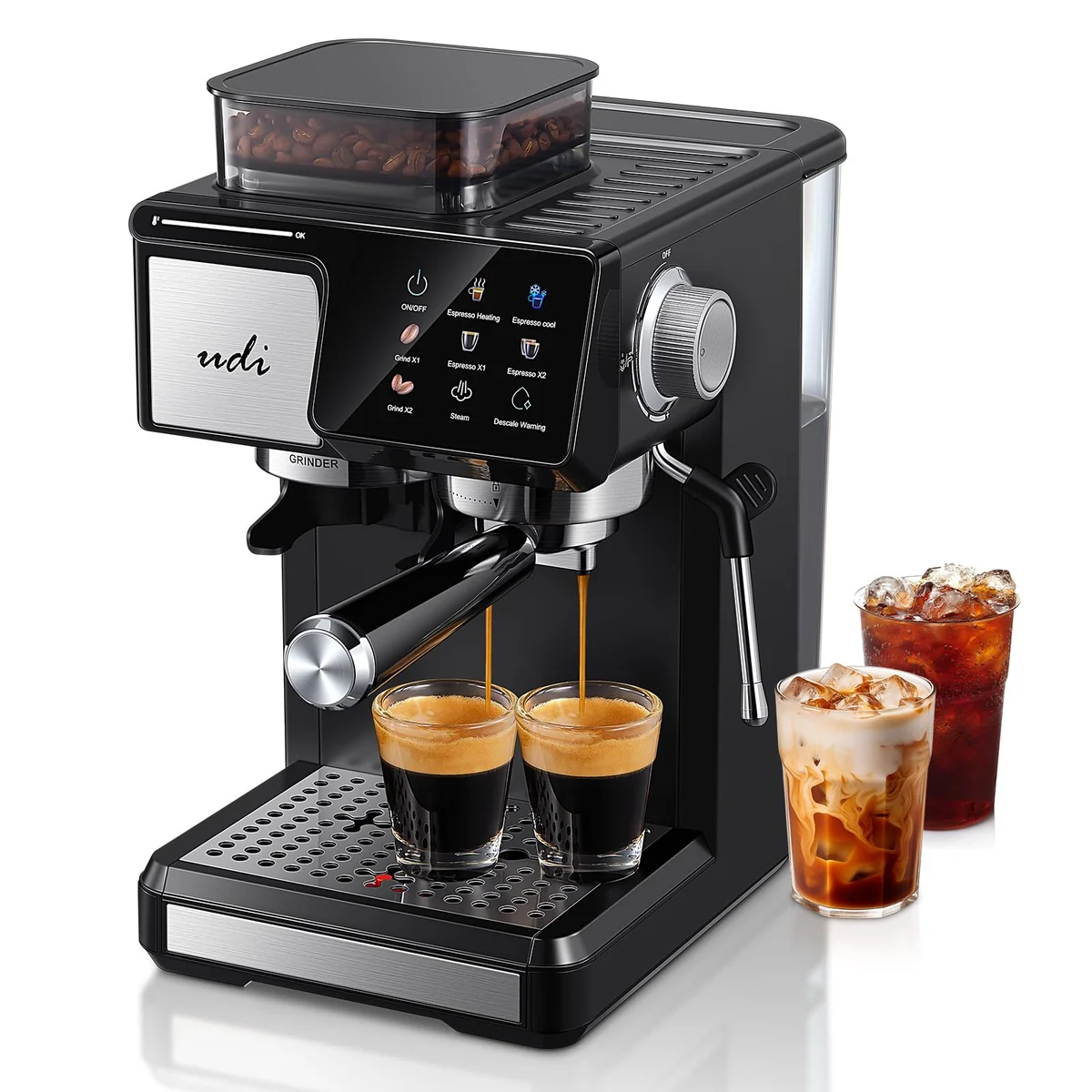
Start with how little of a footprint these names have. UDI's own listing describes the company as having spent "decades" as "the silent architects of exceptional espresso" and as "a specialized manufacturer of premium espresso machines", and the description then breaks off partway through a sentence. Espresso Den is not calling any of that untrue, only unverifiable, which for a buyer amounts to the same thing. Search the brand token and you will find an AI music service, a disc golf app, a gluten-free bakery and an Italian football club long before you find anything about coffee.
The rest are house brands with an even clearer tell: they sell across unrelated categories. Kndko's other products are nugget ice makers and portable air conditioners. GarveeTech sells air conditioners, mini splits, rooftop cargo boxes and inflatable kayaks. Gevi is a broad appliance brand with lawn mowers in the range. None of that is disqualifying, because plenty of good appliances come from companies with no heritage in the thing they are selling you. It does mean nobody in the building has a decade of warranty claims teaching them where their own machines fail, and it means that when a seal perishes in year three there is currently nowhere to buy one.
Everything cheap in an espresso machine gets cut in the same three places
The first cut is heat, and it is the one that ruins the most cups. The most careful reviewer on the UDI listing put a thermometer in it and reported brew water reaching a high of 140°F, "142º at best", with a finished milk drink peaking near 160°F before dropping to 150°F and below. Espresso wants water at the puck around 195 to 205°F. A separate owner of the same machine reached the identical conclusion by a completely different route, writing that the espresso is cold by the time the milk is warmed, and returning it. An owner of the stainless Gevi says the brew temperature could be warmer and another has given up on its steam wand because it does not heat milk much.
Nothing on your side of the counter fixes an undersized thermal system, which is why the standard advice for a machine that will not serve a hot drink comes down to pre-warming the cup and drinking faster. Worth noting what the manufacturers already know: UDI's own manual carries troubleshooting steps for weak coffee and for water that is not hot enough, and the reviewer who followed them reports that nothing changed. A troubleshooting entry is a maker conceding a symptom before you have unpacked the box.
The second cut is the shot itself, and here the number on the front of every one of these machines is actively misleading you. Twenty bar is what a pump can generate against a closed valve, not what the coffee experiences. As one r/espresso regular put it to somebody with an unbranded 20 bar machine, "Are you actually getting 20 bar? The pressure is determined by the puck resistance (grind) and the pressure drop across the portafilter. I suspect you are less than 10." The target for espresso is around nine bar and higher is not better: "You don't need 15-20 bar espresso machine. 9 bar is fine," runs the plain version. We have taken the whole argument apart separately.
What that rating actually signals is a pressurised basket, a design with a small hole underneath that manufactures back-pressure so the coffee does not have to. It is forgiving of a bad grind, it produces thick-looking crema from almost anything including supermarket pre-ground, and it caps how good the drink can ever get. The best measurement anyone has published on any of these machines belongs to a Gevi combo owner who bought a scale: the portafilter holds 14 grams, a proper double should weigh about 28 grams out, and what they got instead was 72 grams. Cutting the pour at 28 grams did not fix it, it just made the coffee bitter, which is exactly what happens when you truncate an under-extracted shot. That is a lungo, and they said so themselves.
This is the mechanism behind the complaint people arrive with, and why the coffee comes out thin is a design decision here rather than a defect. It also explains the sharpest disagreement you will find on any of these listings, where one owner reports "a nice, thick crema every time" and another reports weak coffee even at three stacked shots. Both are telling the truth. The foam is aerated by the basket rather than emulsified by extraction.
Which brings the single most useful lens anyone has offered on this whole category. An owner of a comparable Amazon-brand 20 bar machine explained that if they had only ever drunk milk drinks it "honestly would've been fine", but they preferred plain espresso, and the machine "basically made coffee with an airy foam 'crema' on top, and it was never hot though. It struggled with finer grinds." Then the observation that should reframe every video you have watched about these products: the positive reviews they had seen were all demonstrating milk drinks, which are forgiving, and none of them were testing the thing that fails.
The third cut is the one that arrives late. On the Gevi combo listing, one owner's grinder stopped grinding four months in, they wrote to the seller and got nothing, wrote to Gevi and got nothing, and posted the review saying so. One of the eight written GarveeTech reviews is a milk frother that stopped working within a few weeks, and that machine went back. Set against that, two owners of the stainless Gevi had hardware replaced under warranty after sending video, one of them describing no hassle at all. Support at this end of the market is not a brand property. It is a lottery you enter per listing, and you find out the result on the day you need it.
Read the number under the stars, not the stars
A four-star average means one thing on a listing with two thousand ratings and something close to nothing on a listing with ten. Three of these five have review pools small enough that a single disappointed buyer moves the average by a visible fraction of a star, and on one of them a quarter of the entire written record is a machine that did not work.
| Listing | Ratings behind the average | What the written record actually contains |
|---|---|---|
| UDI CM5530 | 22 | Eight written reviews, two of them a machine that never worked or went straight back, and the most thorough five-star review states that it rounded up |
| Kndko 20 Bar | 10 | No independent test published anywhere, and no dose, wattage, tank capacity or warranty length published either |
| GarveeTech grey | 25 | Eight written reviews, none of them from an owner past a few months |
| Gevi grinder combo | 1,901 | Eight retained reviews spanning one owner nine months in with nothing wrong and one dead grinder at four months with no reply |
| Gevi stainless | 566 | Eight retained reviews including two warranty claims on the pressure system, one at eleven months |
The copy is evidence too, once you learn to read it as a document rather than as a pitch. GarveeTech repeats "20 Bar Pressure" in all five of its bullets and manages to argue that 1350 watts makes the machine quiet, which is not a thing wattage tells you. Kndko sells one-click cappuccino in bullet two and describes a steam wand you hold under a jug yourself in bullet four, and only one of those can be true in the sense a buyer will read it. Gevi's combo listing promises a "relatively quiet grinding experience" while two of the eight retained owners call the grinder loud, and both of them forgive it. A listing that argues with itself is a listing nobody senior read.
One more thing to check before the average persuades you: Amazon's Vine tag, which marks a review written in exchange for a free product. On a listing with a review count in single or double figures, disclosed samples can be most of what you are reading. The Vine reviewer on the UDI listing was the most rigorous voice on the page, gave numbers, photographed the manual, and then wrote the line that ought to be on the box: recommended for the casual user, but "if you're a real stickler for near-perfect espresso and lattes, look elsewhere."
Which of these five is worth buying, and for whom
Start with the one Espresso Den would actually hand to a first-time buyer. The Gevi 20 Bar grinder combo arrives as a complete working setup rather than a machine you then have to spend again on: espresso machine, separate conical burr grinder, portafilter, baskets, tamper, pitcher and glasses in two boxes. Owners escaping pods describe it doing exactly what they bought it for, one of them nine months into daily use with nothing gone wrong. Its drawback is structural and permanent: the bundled grinder on its finest setting will not reach espresso-fine, so the usual upgrade path of fitting a bottomless portafilter is closed to you, and the machine's native drink is the long one. Buy it for cappuccinos and Americanos and you will be pleased. Buy it to chase a ristretto and you will be filing a return.
The stainless Gevi with the automatic frother is a narrower proposition, and the "automatic" is a sleeve over a steam wand rather than a carafe doing the work. It looks better than its price suggests, heats fast, and its shot volumes can be reprogrammed to whatever you actually drink, which fixes the most common complaint about it. The drawback decides households: it makes one drink, then wants three to five minutes before it will brew again, and when an owner rang to ask why, Gevi's own support desk told them the machine is not professional despite that word sitting in the listing title. If two people want coffee at the same time, this is the wrong machine.
The GarveeTech grey one-touch is the only machine on this page with a removable brew unit, which is a feature owners treat as a quality marker on machines costing several times as much, and it is a genuine bean-to-cup: beans in the hopper, a picture on a touch panel, six drinks including plain hot water. Its drawback is that there is no temperature adjustment of any kind, and the owner who spent a month chasing consistent drinks concluded that temperature control was precisely what he lacked. That, plus a frother failure inside a few weeks on one of eight reviews, makes it a defensible two-year appliance for a light drinker and a poor ten-year one.
The Kndko is the most interesting machine here and the least knowable. It is a real automatic brew group with a manual steam wand, which is an unusually honest shape: you get walk-away brewing and you keep control of milk temperature and texture, with none of the hoses and souring milk containers that a carafe brings. The drawback is total absence of evidence. Kndko publishes no dose, no wattage, no tank or hopper capacity, no dimensions, no warranty length and no grind-setting count, nobody outside Amazon has tested one, and ten ratings is not a sample. Buy it only if the wand is a feature you actively want and you accept that you will be the first person to find out how it ages.
The UDI CM5530 is the one we would send almost everybody past. Its grinder is genuinely good and the shield that keeps grounds off the counter while it runs is a real piece of design thinking, but the fault owners report is thermal, and no amount of patience, technique or fresh beans raises the temperature of the water. It is also a portafilter machine you dose and tamp by hand, sold on the super-automatic shelf, which is not what a large part of its audience is shopping for. On the evidence available it is a three-star machine with a five-star grinder bolted to the front.
| Machine | What it is under the marketing | The fault that decides it |
|---|---|---|
| Gevi grinder combo | Semi-automatic plus a standalone burr grinder in the same purchase | The grinder cannot reach espresso-fine, so 14 g in gave one owner 72 g out |
| Gevi stainless | Semi-automatic with a frothing sleeve, filed by Amazon under super-automatics | Three to five minutes of cooldown before a second drink |
| GarveeTech grey | Genuine one-touch bean-to-cup with a removable brew unit | No temperature control at all, and one frother failure in eight written reviews |
| Kndko | Genuine bean-to-cup with a manual steam wand | No published specification of any kind and no independent test |
| UDI CM5530 | Portafilter machine with a built-in grinder, also on the super-automatic shelf | Brew water measured at 140 to 142°F by the listing's most careful reviewer |
If any of that surprised you, the category label is doing damage: three of these five sit under a heading that promises a machine which grinds, doses, tamps, brews and dumps the puck behind a closed door, and only two of them do it. The difference between the two categories is worth five minutes before you spend anything.
The two things that beat all five
If what you want is genuine push-button coffee that you can still get a seal for in five years, the honest answer is to spend more, and the cheapest route there is not a new machine at all. A renewed unit from a known brand puts a parts diagram, a service network and a decade of owner reports behind the same money, and our list of what is worth buying at the bottom of the real category is where those machines start. The Philips 1200 is the smallest true bean-to-cup we would recommend and the De'Longhi Magnifica Start is the closest thing to the Kndko's shape from a company with a repair path.
If what you want is espresso proper, spend the money on the grinder instead. The near-universal advice in the espresso world is that the grinder decides more than the brewer, and a machine paired with pre-ground supermarket coffee wastes the machine. That is also the deepest reason the Gevi combo has a ceiling: the bundled grinder is the limiting component, and buying a better one later means paying twice for the same function. Our longer treatment of whether a grind-and-brew all-in-one is a good idea covers when the convenience wins anyway.
None of this makes a cheap machine a mistake by definition. A machine you actually use every morning beats a better machine you resent, and starting cheap makes an eventual upgrade cheaper rather than more expensive, which is the same argument we make at greater length about whether the automated category is worth it at all.
If you buy one, buy it on a clock
Nobody at Espresso Den has pulled a shot on any of these five machines, put a thermometer in a cup or timed a cooldown, and every number on this page belongs to somebody who did. That cuts both ways, because it also means you can settle in one week what no publication has settled at all, inside the window where being wrong is free. A return window closes faster than a fault appears, and the two lowest-rated reviews on the GarveeTech listing are the two from the owners who had the machine longest.
So run the tests nobody else has run. Weigh the dry dose and weigh what lands in the cup, because anything past roughly four parts liquid to one part coffee is a long drink rather than an espresso. Put a thermometer in the cup, then again in a cup you warmed first. Make two drinks back to back at the hour you actually drink them and see whether the second one arrives. Try to steam a jug of milk to a proper texture, remembering that on this class of machine one report described the steam as not being that strong and slow to build. Set the grinder to its finest step and see whether the shot chokes at all, because a grinder that cannot choke a machine cannot feed an unpressurised basket either. And pull the brew unit out, if it comes out, and look at the gasket.
Use a dark or medium roast while you are testing, because none of these grind fine enough to do justice to a light single origin and an oily bean will gum the chute, which is the practical half of choosing beans for a machine like this. Then keep it alive: the routine in cleaning and descaling decides more of the lifespan than the badge does, and what usually breaks first is worth knowing before you find out.
The verdict has not moved. Cheap is not the problem, and an unfamiliar name is not the problem either. The problem is that at this price the corner that gets cut is heat and extraction, both of which land entirely on the drink you would have bought a real espresso machine for. Drink milk, and four of these five are a reasonable gamble taken with your eyes open. Drink it black, and no pressure figure on the front panel is going to change what comes out of the spout.
Frequently Asked Questions
Is a budget espresso machine a false economy?
Not by itself, because a machine you use every morning beats a better one you resent, but it becomes one the moment you expect it to serve a hot, concentrated shot rather than a milk drink.
Can you trust a machine from a brand you have never heard of?
You can usually trust it to arrive and work, and what you cannot trust is the paperwork behind it, meaning parts, service documentation and somebody answering when a component dies out of warranty.
Does a 20 bar pump make better coffee than a 9 bar one?
No, because roughly nine bar at the coffee is the target and the larger figure describes a pump maximum the puck never sees, which mainly signals a pressurised basket underneath.
Why does the coffee from these machines come out lukewarm?
The thermal system is undersized for the job, which is why one owner measured brew water at 140 to 142°F and why the manufacturer's own troubleshooting steps changed nothing for them.
Are the machines on Amazon's super-automatic shelf really super-automatics?
Several of them are not, since two of the five covered here have a portafilter you dose and tamp yourself despite sitting in that category.
Would a renewed machine from a known brand be a better buy?
Usually yes, because the same money then buys a repair network, published specifications and thousands of owner reports instead of a new unit with none of those.
Will one of these still make a decent latte?
Probably, because milk hides thin extraction comprehensively, though you should expect the finished drink to be warm rather than genuinely hot.
Which one would you buy first?
The Gevi grinder combo, because it arrives as a complete setup with a well-regarded steam wand and its ceiling only frustrates people who weigh their shots.
Sources (2)
- Amazon listings and customer reviews
- Owner reports across r/espresso, r/IndiaCoffee, r/JamesHoffmann threads