The Jura ENA 4 does one job properly and charges like a machine that does twelve
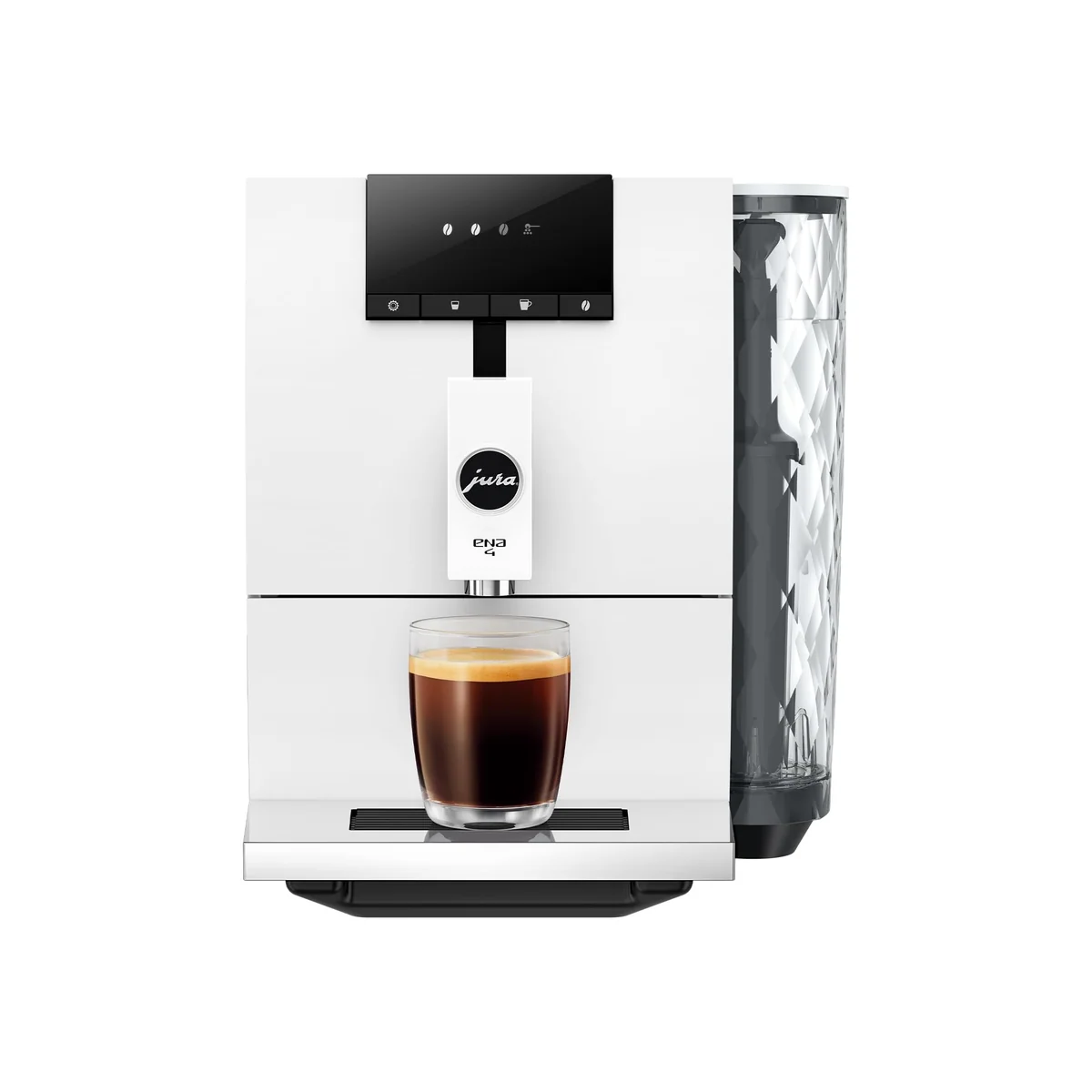
Buy the ENA 4 if you drink small black coffees, already deal with milk yourself, and want a narrow Swiss box that does that one thing for years; if you drink mug-sized coffee, or you are stepping down from a 16 g Jura or a portafilter, this is the wrong machine at this money.
Based on 296 owner ratings, 10 owner discussions and 1 other source. We have not tested this machine ourselves.
We earn a commission if you buy through our links, which does not affect what we say.
Read how this site works →
Who should actually own one
Buy it if you are one or two people who drink espresso and black coffee, if milk is either irrelevant to you or already handled by a frother on the counter, if you are leaving a pod machine rather than a portafilter, and if the machine has to look like it belongs in the kitchen rather than being tolerated in it. Owners in that description do not merely accept this machine, they stop buying coffee out. That is what the ENA 4 is for, and within those lines it is very good.
Do not buy it if you drink from mugs, if there is a sixteen-gram Jura or a decent manual setup in your past, or if you were hoping a compact Swiss machine at this price would do everything a larger one does in less space. It does not, and the ten grams is why. When you order, look at who is filling the order before you look at anything else, and use the first week hard rather than the fourth.
Buy the ENA 4 if you drink small black coffees, already deal with milk yourself, and want a narrow Swiss box that does that one thing for years; if you drink mug-sized coffee, or you are stepping down from a 16 g Jura or a portafilter, this is the wrong machine at this money.
Best for: Ten grams of coffee per shot explains nearly everything owners love and nearly everything they complain about, and the rest of the risk sits in the seller box rather than in the machine.
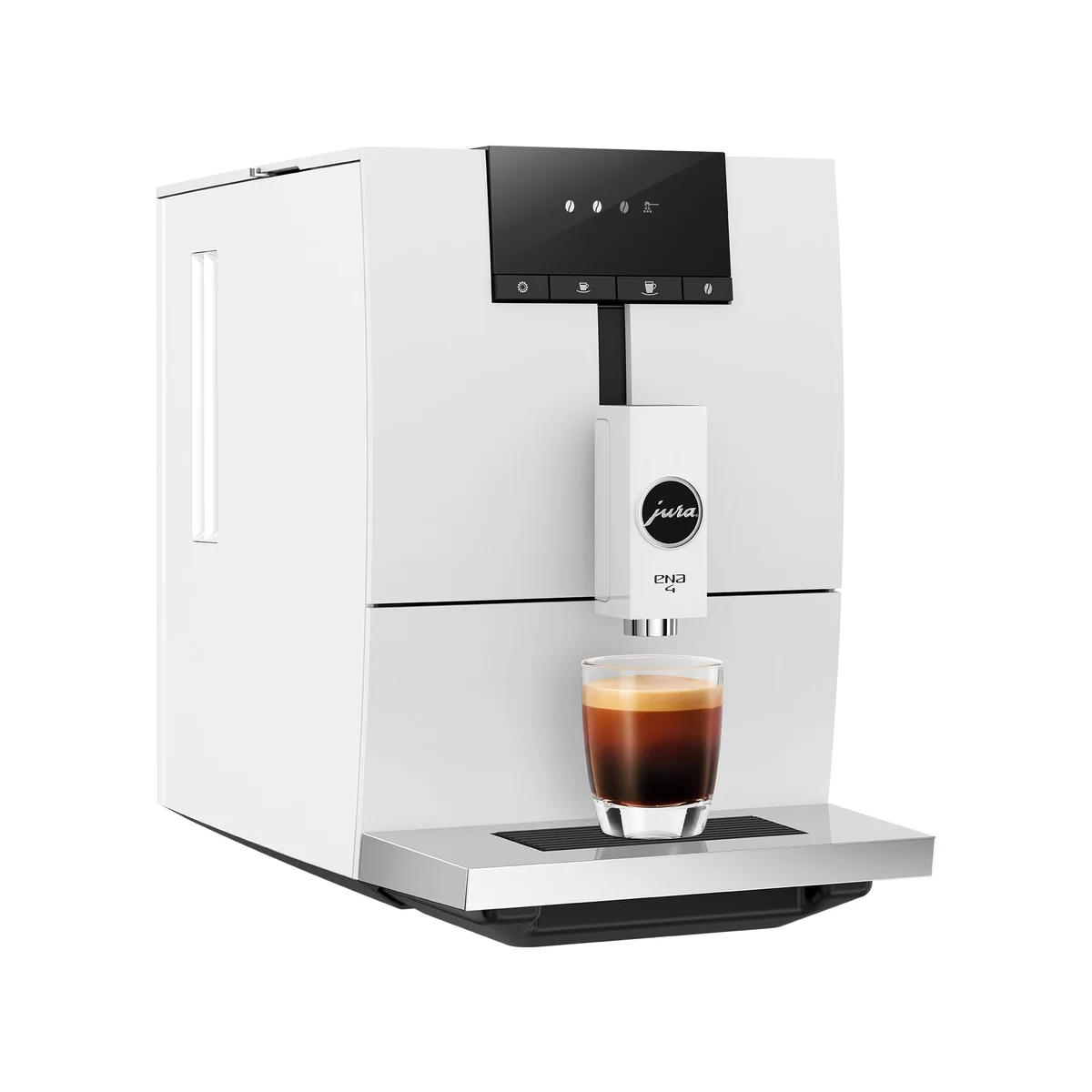
Jura sells this machine on five claims: a compact machine for the espresso and coffee connoisseur, a symbol display, programmable strength and volume, a Professional Aroma Grinder, and a Pulse Extraction Process that lets short drinks be prepared with intensity and aroma like never before. The number that actually decides whether you will like the ENA 4 is on none of those bullets, and Jura has no commercial reason to print it.
The ENA brewing unit takes at most about ten grams of ground coffee. Jura's E line takes sixteen. Owners who have compared the two on paper put the ENA at roughly six to ten grams against the E4 at five to sixteen, and in the same thread somebody had to ask outright what the grams even referred to before another owner explained that it is simply how much coffee goes into each shot. That is the whole design decision. Ten grams is about what sits inside a single espresso pod, and the machine is built to turn that much coffee into one properly extracted drink.
Keep the water proportional to the dose and the result is a genuinely good short coffee at a button press. Ask a ten-gram puck for mug volume and you get exactly what physics predicts, which is a thin brown drink that reviewers keep describing in disappointed terms. One owner of larger Juras put it as bluntly as anyone: he could not imagine dropping to a ten-gram dose from a full-size machine, because the larger dose is the point of the brand, and buying the small one is like buying a badge on an economy car. He is not wrong about the engineering. He is wrong about who the machine is for.
Key Specifications
Ten grams, and everything that follows from it
The most useful ownership tip Espresso Den found in the entire record is not about beans or grind. It is that the double-shot function is not an occasional treat on these machines, it is the setting you live on. An owner of the milk-capable sibling, which uses the same brewing unit, said the drinks are all small by default because of the ten-gram dose, so he makes most of his americanos and iced lattes manually on the doppio button for a full twenty grams. The cost is patience: on a ten-gram machine a doppio means waiting through a second grind, where a full-size Jura simply grinds once.
The Pulse Extraction Process on the listing is real and it is also narrower than the sentence reads. It is described as the thing that makes short specialty coffees intense, and an owner of the sibling model reports that only espresso and doppio actually use it. Read the two together and the marketing tells you the truth by omission: the clever extraction technology is aimed at exactly the drinks the small dose is already good at, and it says nothing about the long ones, which is precisely where this machine thins out.
There is no milk system. Not a poor one, not a fiddly one, none. The listing calls the machine versatile, which is the one word on it that does not survive contact with the product, because four presets of black coffee is not versatility. It is a specialism, and for a specific buyer it is the reason to choose this over anything else Jura makes. One owner bought it precisely because she already has a milk frother and wanted less cleaning than a frother or a milk attachment involves; another describes it as a good machine for making just espresso, no milk based drinks. A cross-shopper ruled out the E6 because the cleaning routine for the milk part looked, in his word, insane, and a shopper choosing between this and a rival was looking exclusively for a machine with no milk attachments at all. If that is not you, the honest advice is to stop reading this page and go and look at the machines built for milk drinks, or work out first which milk system you would actually live with.
The display speaks only in symbols. Buyers call the machine easy to set up and use and easy to clean, and that is fair for daily operation. It is also true that unlabelled icons cost sales in this category: one shopper preferred the taste of a rival machine but balked because its icons were not labelled. On the ENA line you can customise the presets but you cannot rename them, which an owner of the sibling names as the one thing he would change.
One specification is genuinely contested, and Espresso Den is not going to pretend otherwise. The listing says Professional Aroma Grinder. One owner insists the ENA 4 carries the older Aroma G3 while the E4 has the newer grinder, and cites blind tastings from a comparison article to argue the difference is audible in the cup; another owner in the same thread says the grinders were different at one point and are now the same across the range, without being able to date the change. Current production almost certainly matches the listing. Older stock in circulation may not, which is worth holding in mind if you are looking at a renewed or refurbished unit, and it means anybody comparing the two Juras on grinder alone is probably working from stale information in one direction or the other.
Strengths & Limitations
Strengths
- Short black coffee at one button press, which owners who stuck with it describe as consistent and excellent once the beans are settled.
- No milk system means there is nothing to strip, soak or rinse after a drink, which removes the biggest daily chore in this category.
- The footprint and the finish are the reasons people choose it over Jura's own larger machines, and owners raise it unprompted.
- One shot uses roughly the coffee in a single espresso pod, which is exactly what makes the case against a capsule habit add up.
- The double-shot function gives you around twenty grams when you want a drink with body behind it.
- Servicing is a real route rather than a dead end, with owners sending decade-old Juras away and getting them back rebuilt.
Limitations
- The brewing unit tops out near ten grams, so anything longer than a short drink thins out no matter what you set.
- The spout sits too low for a full-size American mug.
- Beans bridge in the small hopper, and a grinder that underfills hands you a weak shot you will wrongly blame on the machine.
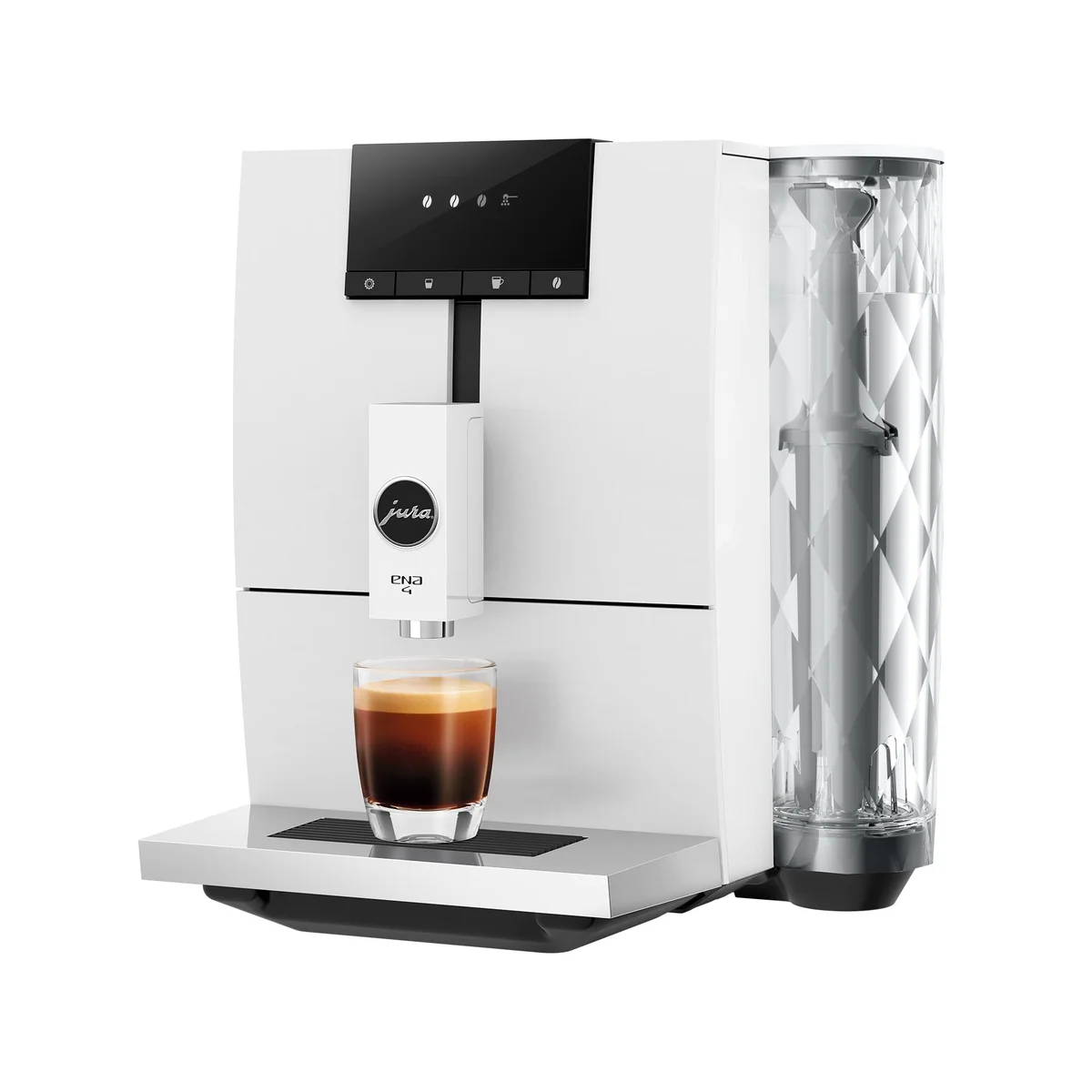
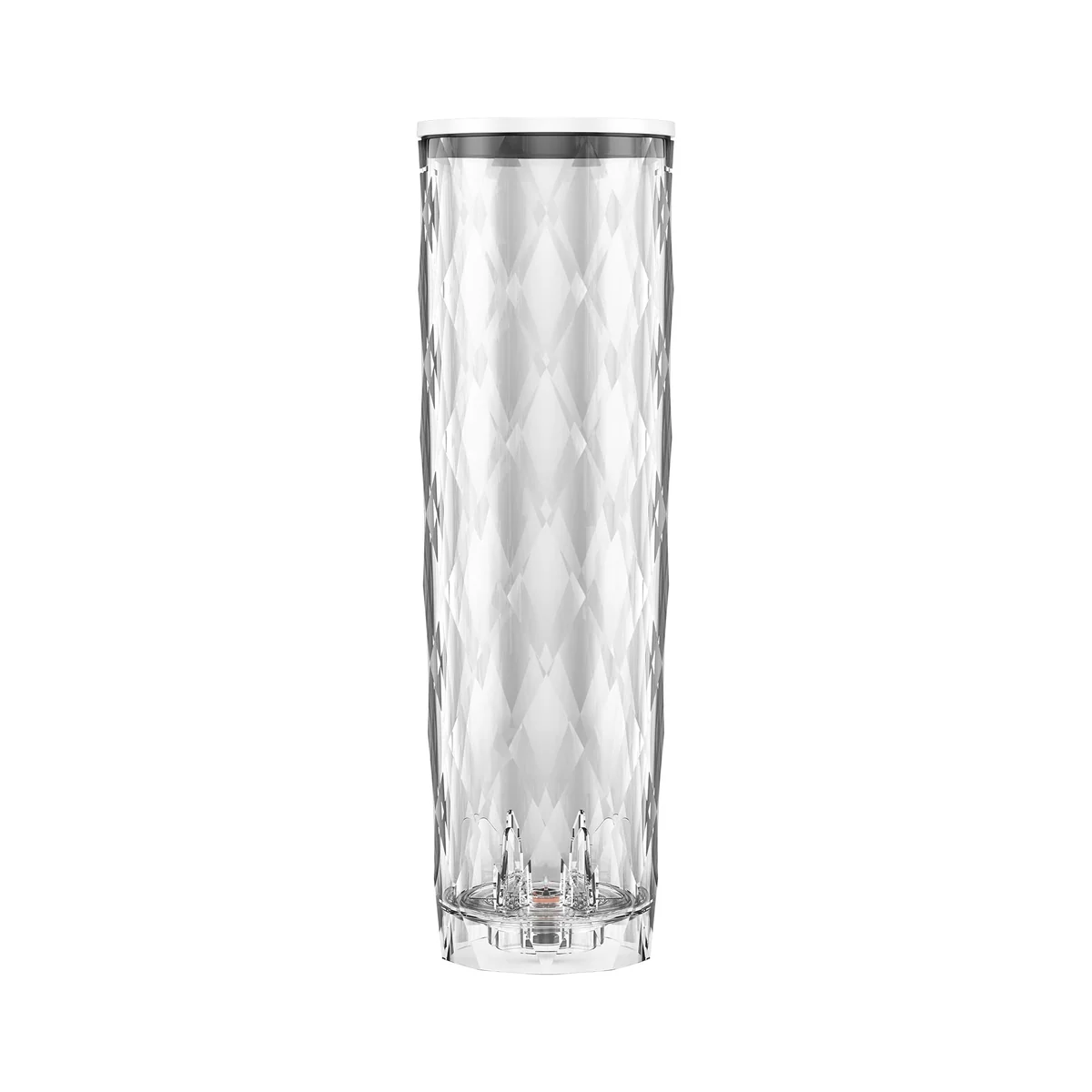
- The water tank is small enough that owners of the same system complain about constant refilling, and two buyers here received one cracked or leaking.
- You cannot remove the brew group yourself, which turns internal maintenance into a shipping job rather than a Sunday task.
- The warranty you actually get appears to depend on which seller fills the order, and one buyer was quoted a repair bill in the hundreds on that basis.
- The thirty-day return window is shorter than the week or two owners say the machine needs before it starts performing.
- The display speaks only in symbols, and presets you customise cannot be renamed.
Why one owner gets espresso and the next gets a weak americano
The reviews on this machine do not split into good and bad so much as into what the buyer owned before. The harshest verdict in the record comes from someone who makes espresso on a Gaggia Classic and also owns a Rancilio: he splurged on the Jura for lazy espresso, found it tasted closer to an americano than to espresso even at the finest grind and maximum strength, and added that a cheap super-automatic he had bought his mother made better coffee. A one-star buyer on the listing ran the same experiment inside one household, using the same beans in the ENA 4 as in their Jura Impressa J9, and found the ENA brews weak and lacking the flavour they expected. Both of those comparisons are against machines with a bigger puck or a human doing the work.
Now the other side. An ENA 4 owner several months in reports consistent, excellent espresso, notes that the ratio is adjustable through three strength settings and an adjustable water volume, and says she is glad she did not go for a semi-automatic and grinder instead because this takes less space, time and hassle. On the listing itself the enthusiasts are unambiguous: best coffee one buyer has ever had, superior coffee from a repeat purchaser on his second unit, great coffee from a buyer who also likes the look of it, and a four-star owner who replaced a Miele that died after eight years and got the strength dialled in with time.
Three things reconcile that gap, and none of them is taste being subjective. The first is a break-in period that owners describe repeatedly: one says it took a week or two before the sibling machine began to perform, and suggests working through five or six beans and roasts. The second is that beans move this machine more than settings do. The same owner was lukewarm on his coffee while running Lavazza, found it generic, switched to Stumptown Hairbender and says his drinks now taste like his favourite third-wave shops. The standing advice from the wider group is to avoid oily beans and to check how much water you are pushing through, which is worth reading alongside what actually works in a bean-to-cup hopper.
The third is the most interesting, because it means some share of the weak-coffee verdicts on this machine are not about the dose at all. Two separate owners on the listing, both otherwise happy, report that beans do not reliably fall into the grinder. One says the bean container thinks it is empty when it is not, and notes that his parents' higher-end Jura does not do this. The other has developed a habit of swirling the beans after every cup to reset things, and explains exactly why: it is not worth making a cup with too few beans in it because the grinder did not fill properly. An underfilled grinder produces a weak shot that looks and tastes identical to a dose problem, and a buyer who has never been told to tap the hopper will blame the machine. If you are chasing that symptom generally, the causes of watery bean-to-cup espresso are worth walking through before you conclude you bought a lemon.
Set the ceiling honestly. A Jura owner who likes his machine says a super-automatic cannot quite match a good manual setup but gets you eighty to ninety per cent of the way there very conveniently. Another owner, comparing the whole category, offers the sharpest single line in the record: Jura is supposed to be the best super-automatic, but only in its sixteen-gram machines. That is the fairest description of the ENA 4 anyone has written. It is a Jura, and it is the small-dose one.
Two practical notes. On noise, an owner calls it about as loud as an espresso machine, so not horrible, and an owner of the sibling who upgraded from a decade-old De'Longhi says his is quiet enough to make coffee in the middle of the night. Quiet for a machine with a grinder inside it, then, rather than silent; if that is the deciding factor, compare it against the machines chosen specifically for early mornings. On cups, an owner reports he cannot fit an American-sized coffee mug under the spout and jokes that the Swiss must be laughing at him, and the taller E4 maxes out at 4.4 inches, which is already the better of the two numbers.
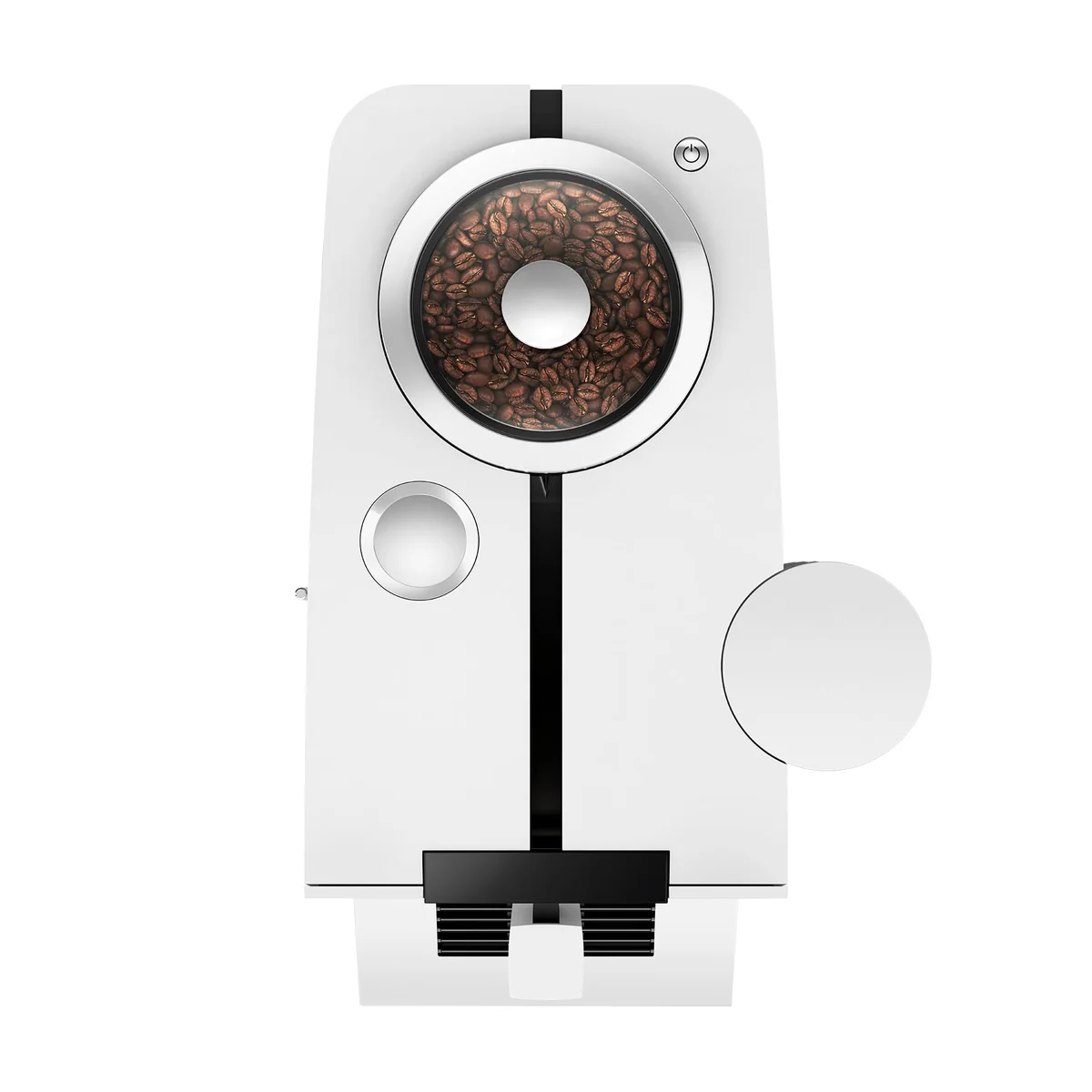
What this machine is actually competing with
The comparison that matters most is not against another brand. It is against Jura's own E4, which sits one rung up and is the machine most people considering an ENA end up weighing it against. Here is what owners who compared the two say you give up, in their figures rather than ours.
| What changes | ENA 4 | E4 |
|---|---|---|
| Coffee per shot | About 6 to 10 g | About 5 to 16 g |
| Water tank | Around 37 oz | Around 64 oz |
| Bean hopper | Small; one measured fill on the sibling ENA 8 came to 135 g, about 13 shots | Owners put it at roughly double |
| Spout height | Lower, and short of a full-size mug | Tops out at 4.4 in |
| Hot water spout | Not fitted | Fitted |
| Size and weight | 10.7 x 12.7 x 17.5 in, 19 lb | 11 x 13.8 x 17.6 in, 22 lb |
Read the last row against the first. The owner who assembled that comparison concluded that the size difference is negligible, and on those numbers he is right: you are surrendering six grams of dose and nearly half the water tank to save about an inch of width and three pounds. If the compact form is genuinely the constraint in your kitchen, that trade is defensible, and it is the trade the full comparison between the two exists to help you make. If it is not, the E4 is the machine most owners in this record would point you at, and the rest of the range goes up from there.
The ENA does win something real for the money, and it is not performance. It is presence. One shopper said the ENA was the only machine that did not look like it was trying to annex his tiny New York kitchen; another owner calls the proportions of the range a chefs kiss; a listing reviewer leads with attractive, stylish design before mentioning the coffee. In a category of machines people apologise for keeping on the counter, that is worth paying something for, and it is why the ENA keeps turning up on shortlists for small kitchens and under wall cabinets.
The direction this machine wins from is pods, decisively, and the ten-gram dose that the enthusiasts hate is exactly what makes the arithmetic work. An owner of the sibling machine laid it out: one Nespresso pod is about the same ten grams of coffee, so a kilo of supermarket espresso beans replaces roughly a hundred pods, and the few dollars a day his household stopped spending paid for the machine inside a year or two. Listing reviewers arrive at the same place from instinct rather than spreadsheets: no more pods, no more burnt drip coffee, a good value compared to a pod or capsule habit with better coffee; and, from another, the pleasure of making a single cup with no extra plastic and no bean ecosystem to be locked into. If you are still deciding whether the whole category earns its keep, that argument is worth having first.
The direction it loses from is a portafilter. Advising an ENA 4 shopper directly, one commenter argued for a semi-automatic with automated steam instead, on the grounds that it would give significantly better results at a similar price, and when pressed he gave the real reason: on a super-automatic you have little or no control over ratio, grind, tamp pressure, water temperature or pre-infusion. That is honest, and if the argument lands, the machine he named is on this site too. The counter-argument came from the ENA 4 owner in the same thread who consciously chose space, time and hassle over control, and from the broader consensus among espresso people that the best coffee is the coffee you actually like drinking and there is nothing crazy about buying convenience. The cautionary case is the new parent who sold a good manual machine for a Jura, called it a huge mistake in public, and was told by the top reply to buy the old machine back. Coming down from good gear is the single most reliable predictor of hating this purchase.
One last cross-shop, because it clarifies something. Owners weighing the ENA 4 against a fashionable rival at the same money were told to take the Jura, on the grounds that the rival brand is not known for consistent quality or customer service. Note what the rival is accused of in that same thread, though: coffee that goes weak the moment you ask for more than two ounces, closer to a capsule machine than to espresso. That is the identical complaint made against the ENA 4, for the identical reason, and Espresso Den is not going to sell you the Jura as immune to a fault it shares. It handles the small drink better. It has the same ceiling.
The bills that arrive after the box does
You cannot pull the brew group out of a Jura, and that single fact shapes the ownership. An enthusiast who rebuilds these machines for fun confirms the brew unit is not removable for servicing, which is why Jura recommends sending the machine in every couple of years, and he frames that as an investment because the whole thing gets gone over while it is there. When somebody suggested a Jura service is really just a couple of o-rings, he gave the most detailed account in the record: the brew unit comes apart into around thirty pieces, needs eight to ten o-rings, gets a new membrane regulator and a rebuilt or replaced over-pressure valve because both leak in time, plus a grinder clean and a burr replacement, and it takes him most of a day and about a hundred dollars in parts to do himself. A friend of his sent a seventeen-year-old machine in and had it back in ten days. If you want the whole picture before committing, we keep a running account of what a Jura costs to run and a separate piece on whether a sealed brew group is really a hygiene problem.
Day to day it is cheaper than the reputation suggests, and owners split on one decision. Cleaning tablets worked out at roughly forty-five cents per clean for one owner who priced a bottle against the number of cycles it covered. On water, a listing reviewer uses Jura's filter specifically so she does not have to descale and considers it worth the money; an owner of the sibling reached the opposite conclusion, that filters are tied to how much water passes through and add up, and that descaling every couple of months is easy and cheap instead. Both work. The filter is a convenience purchase rather than a requirement, and knowing that is worth real money over five years. The cadence otherwise is undramatic: a cleaning cycle roughly monthly, a service check every year or two. One repeat buyer sums the whole thing up as requiring diligent maintenance service. The general week-by-week cleaning reality of these machines applies here with the milk chores struck out, which is a substantial saving of your time.
Lifespan evidence is genuinely wide and Espresso Den will not average it into a number. On one side: a seventeen-year-old Jura sent away for refurbishment, a five-year-old ENA in a friend's kitchen that has never been serviced and never given trouble, and a rebuilder who says that if the ENA line were routinely troublesome it would have been discontinued long ago, because some machines are just lemons. A shopper elsewhere reports buying a Jura refurbished and getting over ten years out of it. On the other side, a listing reviewer did all the prescribed maintenance and the machine still broke inside a year. Both of those are true at once, which is the honest answer to how long these machines last.
The risk that is not really about the machine
Of the thirteen customer reviews retained on this listing, five concern a machine that arrived broken, dirty or dead. One buyer received it dusty, wet and dirty, cleaned it himself, and then found it defective and unable to complete water-hardness setup, while noting that he has used one of these at his barbershop and thinks it is superb. One returned it because the water tank arrived cracked. A four-star buyer received it with the tank half broken and leaking, and the leak later stopped on its own. One called out a technician who confirmed the grinder was broken, and by then the return window had expired because the machine had arrived while the buyer was away. One arrived defective and needed a warranty replacement. Thirteen retained reviews out of a rating count in the hundreds is not a sample anyone can turn into a failure rate, so treat this as recurring rather than common, and note which parts recur: the water tank and the grinder.
Then there is the warranty, where two buyers on this same listing got opposite answers. One had a defective unit replaced and describes Jura's warranty process as "a breeze". The other was told that because Amazon is not a certified dealer there was no warranty at all, and quoted a repair bill in the hundreds, adding that a local shop would have given two years. Espresso Den cannot resolve that from the outside, and will not pretend to. The variable is almost certainly which third-party seller fills the order and whether that seller is an authorised Jura dealer, which means on this product the warranty is a property of the seller box rather than of the listing. Read it before you order.
Which leads to the most specific buying warning on this page, and the one nobody else will give you. Owners say the machine takes a week or two of bean and setting experiments before it starts performing. The standard return window is thirty days. A shopper elsewhere spotted the trap before buying anything, reasoning that it would take him one to two weeks just to set the machine up and decide, and that if he went past thirty days he was stuck. A listing reviewer made the same argument after the fact, that the clock should not start until the buyer has a functional product. If you buy this machine, unbox it the day it lands, run it hard in week one, and do not save the dialling-in for when life is calmer.
Frequently Asked Questions
What goes wrong with the Jura ENA 4 most often?
Owners report beans bridging in the small hopper so the grinder underfills, a grounds-container warning that appears to run on a shot count rather than on how full the container is, a spout too low for a full-size mug, long drinks that thin out because only about ten grams of coffee is ever in the puck, and, in a handful of cases here, a water tank that arrived cracked.
Is this a fully automatic machine or a super-automatic one?
Both labels describe the same thing here, a machine that grinds, doses, tamps, brews and ejects the puck without you touching the coffee, and this particular one simply leaves milk entirely to you.
Can it make a latte or a cappuccino?
No, it has no milk system whatsoever, which is exactly why buyers who already own a separate frother choose it and why anyone wanting milk drinks at a button should be looking at a different machine.
Will a normal coffee mug fit under the spout?
One owner says flatly that an American-sized mug does not fit, and the taller E4 only reaches 4.4 inches, so expect to brew into a small cup and pour up if you drink from a mug.
Is the coffee weak?
It is short by design rather than weak, and it goes thin when you ask a ten-gram dose to fill mug volume, so the fixes are to hold the coffee-to-water ratio, treat the double-shot button as your normal setting, and make sure the hopper is genuinely feeding the grinder.
Does buying it on Amazon affect the warranty?
Espresso Den cannot tell you that from the outside, because one buyer on this listing had a defective machine replaced by Jura without difficulty while another was told there was no warranty at all because the seller was not a certified dealer, so check who is filling the order before you commit.
How long should one of these last?
Owners describe Juras running for five, ten and even seventeen years with servicing, alongside one buyer here whose machine failed inside a year despite following the maintenance prompts, so treat longevity as a product of upkeep and luck rather than a promise.
Sources (3)
- Amazon listings and customer reviews — Jura Ena 4
- Owner reports across r/superautomatic, r/espresso threads
- Owner and reviewer video, 1 channel