Weak bean-to-cup espresso is almost always a ratio problem, and the ratio is set by a puck half the size of a café shot
The complaint arrives in the same words on every listing Espresso Den reads. A Philips 5500 owner called what came out of his machine brown water and said the dosing in grams was very shy. A Philips 4400 buyer titled his review "Very expensive brown water" and returned it. A Café Affetto owner wrote that the shots before customising were watery and half done. A Rivelia owner said that no matter what settings the household tried, a large coffee always appeared too weak.
Those are four different brands at four different prices, which is the first clue that the problem is structural rather than personal. It is not a defect and it is usually not your beans. It is arithmetic. A bean-to-cup machine grinds a small charge of coffee, tamps it lightly, and then pours whatever volume you asked for through it. Ask for a big drink from a small puck and you get exactly what physics promises.
The second clue is that the people who fixed it all did the same things. A Philips 4400 owner went from the factory grind setting of six down to two, turned the temperature up and reprogrammed the volume, and reported that the difference was huge. A Bosch 800 owner spent days getting watery coffee before discovering that each drink has its own customisation screen, and landed on extra strong, double shot and a 1.5 ounce cup for espresso. A Café Affetto owner raised the temperature, lengthened the grind time and cut the volume to three quarters of an ounce, and described the result as full bodied with real crema instead of something loose and thin.
The number nobody prints on the box
A café double uses sixteen to eighteen grams of coffee and pours roughly twice that weight in liquid. Almost no domestic bean-to-cup machine comes close to the first half of that sentence, and the machines are sold on drink counts and milk systems rather than on the one specification that decides how the coffee tastes.
| Machine | Coffee per shot | Who measured it |
|---|---|---|
| Philips LatteGo range, 1200 through 5500 | roughly 8 to 11 g, against about 30 ml out on the shortest espresso setting | Two reviewers weighing the charge and the yield |
| De'Longhi Magnifica Evo | ceiling around 10 to 12 g at its highest strength | A reviewer timing and weighing each bean setting |
| De'Longhi Dinamica Plus | about 15 g at five beans, where the grinder runs a full ten seconds | The same reviewer, comparing the ladder across the range |
Read that table as a ratio rather than a dose and the whole complaint resolves itself. Nine grams into a forty millilitre cup is roughly one to four, which is a lungo wearing an espresso's name. The reviewer who weighed the Philips concluded that the result was closer to a capsule machine than to a café shot, and he meant it as a description of the design rather than an insult.
Two consequences follow, and both are worth knowing before you spend another weekend adjusting things. The first is that the machines inside a single manufacturer's range mostly share this ceiling: pulling shots from a Philips 2200, 3200 and 5400 with identical beans and settings produced 37, 32 and 35 grams in the cup and no difference anyone could taste, because they share a brew group and a grinder. Paying more inside that family buys a screen, not a stronger shot. The second is that the ceiling can be moved a little by settings and not at all by hope.
The fix, in the order that actually works
| Change | Where to put it | Why it works |
|---|---|---|
| Volume | The shortest setting the machine offers | This is the single biggest lever, because you are concentrating the same coffee into less liquid instead of stretching it |
| Strength or aroma | Maximum | Despite the flavour-sounding name it is a dose control, and the dose is the thing you are short of |
| Temperature | Highest available step | Most machines ship in the middle, and hotter water pulls more out of a small charge |
| Grind | Two or three steps finer, one step at a time, only while the grinder is actually turning | A finer bed resists the water instead of letting it run straight through |
| After any grind change | Discard two drinks | The previous grind is still sitting in the chute, so the change you just made is not in the cup yet |
| Long drinks | Pull a short shot and add hot water yourself | Running extra water through one puck dilutes and over-extracts at the same time |
Two warnings go with the grind row, because getting it wrong is expensive. Turning the adjuster with the burrs stationary and a full hopper is how people damage grinders. And finer is better only up to a point: one reviewer working through the Philips scale found that the very finest position can restrict flow so far that extraction stalls or the funnel clogs, which produces a different bad drink rather than a good one. If the sequence of button holds needed to reach any of this defeats you, our guide to the hidden settings and what each warning light means is the translation for that brand, and if the drink is thin and lukewarm at once, the temperature problem has separate causes worth ruling out.
One machine in this category has no temperature control at all, and its owners feel the absence. A GarveeTech buyer reported a month of what he called funky tasting drinks and concluded that temperature adjustment was exactly what he needed to settle them. If your machine offers you only grind and volume, you have two levers rather than four, and you should expect a narrower window.
The button that is lying to you
A meaningful share of watery-coffee reports are not settings problems at all. They are people pressing a control that adds water when they wanted coffee, and no manual explains the difference in language anyone reads.
The clearest case in the record belongs to a Gaggia Brera owner who posted a photograph of a shot that started fine and then turned, in her words, watery with horrible flavour. She had cleaned the brew group, adjusted the grinder and run cycle after cycle. The top reply told her she was using the lungo button, that a lungo is simply more water through the same coffee, and that a real double means pressing the shot button twice so the machine grinds and brews twice. The thread treated it as user error. Espresso Den would call it a control scheme that failed a motivated owner.
The same trap has several shapes. On a Philips, the cappuccino and latte macchiato buttons pull a single shot and cannot be set to double, which is why owners describe milk drinks as weaker than the espresso from the same machine, and one owner spent three days convinced his was broken before working out that his old café cappuccino simply contained twice the coffee. On many machines the large coffee or americano preset stretches one puck rather than grinding a second. And on a Dinamica Plus a button appears near the end of a brew that looks like an extra shot and only adds water.
The rule that covers all of them: if a control makes the drink bigger without making the grinder run again, it is diluting you. Where a machine offers a genuine extra shot or a two-cycle long coffee, use it. Where it does not, brew a short drink and top it up yourself, which is also the honest answer to getting a normal mug of coffee out of one of these.
Read the spent puck, because it is a diagnosis
Open the grounds bin. A puck that lifts out as a firm, dry disc means the machine compressed the coffee and the water met resistance. Wet slush with no formed edge means it did not, and that is worth more than any amount of tasting notes.
Slush has three common causes and they are not mutually exclusive. The grind is too coarse for the amount of coffee present. The brew basket lets water through faster than it extracts, a mechanism one reviewer inspected on a Philips rather than assumed. Or the brew group is stiff and not tamping properly, which an owner proved by pulling the unit out, working the mechanism by hand until the action smoothed, and getting a firm puck on the very next shot. That last one is the cheapest fix in this entire article and almost nobody tries it.
It is also how you tell a settings problem from a buying mistake. A De'Longhi Dinamica Plus owner explained that he had tried a Philips first, found the pucks came out like wet sand with a lot of water in the drip tray, adjusted the grind with no effect, and returned it inside three days rather than live with a machine that behaved that way from new. A grind change that moves the puck from slush to disc is a machine you can fix. Forty cups of no change at all is a machine to send back while you still can.
Beans are the third lever, and the one people get wrong twice
Two failure modes here, in opposite directions. Very oily dark roasts gum the chute and the burrs, and the cup goes thin because the grinder is not delivering what the display thinks it is. A Philips 1200 owner started with an oily medium roast, got nothing but sludge in the pucks and weak, watery brew, switched to a darker but drier roast, and reported solid puck discs and rich coffee from the same machine on the same settings. A Jura owner passed on the same advice from a relative who has made more than thirty thousand cups on hers: keep the oily beans out and you keep the clogs out.
Light, bright, third-wave roasts fail from the other end, because these grinders cannot go fine enough to extract them properly and the result is sour and thin rather than mild. Medium to medium-dark, matte rather than shiny, is the window, and our guide to which beans survive a bean-to-cup grinder covers the rest.
One mechanical bean problem is easy to miss. Beans bridge in small or steeply-sided hoppers, so the grinder runs and delivers less than it should. A Jura ENA 4 owner got into the habit of swirling the beans after every cup, and put the reason plainly: it is not worth making a cup with too few beans in it because the grinder did not fill properly. A Philips 4400 owner reports the same with oily beans. If your machine produces one good drink and one weak one at random, look in the hopper before you look anywhere else.
When it is the machine rather than you
Some of it is not a setting. A brand-new machine genuinely does need a run of drinks before it settles, and estimates from owners range from a handful to a hundred, which is wide enough to be an unfalsifiable excuse if you let it. The practical danger is that a break-in longer than your return window is a trap: run twenty throwaway drinks on cheap beans in the first week rather than the fourth, and judge it while you can still send it back.
Then there are the faults that look like weak coffee. Scale restricts flow and eventually the machine gives you less than you asked for, which is the whole argument for keeping to the descaling schedule. Worn brew-unit seals let water take the easy path around the puck instead of through it. A Magnifica Evo owner flags a subtler one: if the tank is low, his machine will still attempt the drink and hand him a half-made cup rather than stopping. And as machines age the grinder drifts, which is why owners several years in report having to move the dial finer than they ever needed to before; our piece on what wears out first covers the pattern.
If you have done all of that and it is still thin, you bought the wrong machine
This is the part most articles will not tell you. Settings move the cup within a range set by the hardware, and if that range does not include the drink you want, no amount of dialling in will get you there. The honest split runs like this.
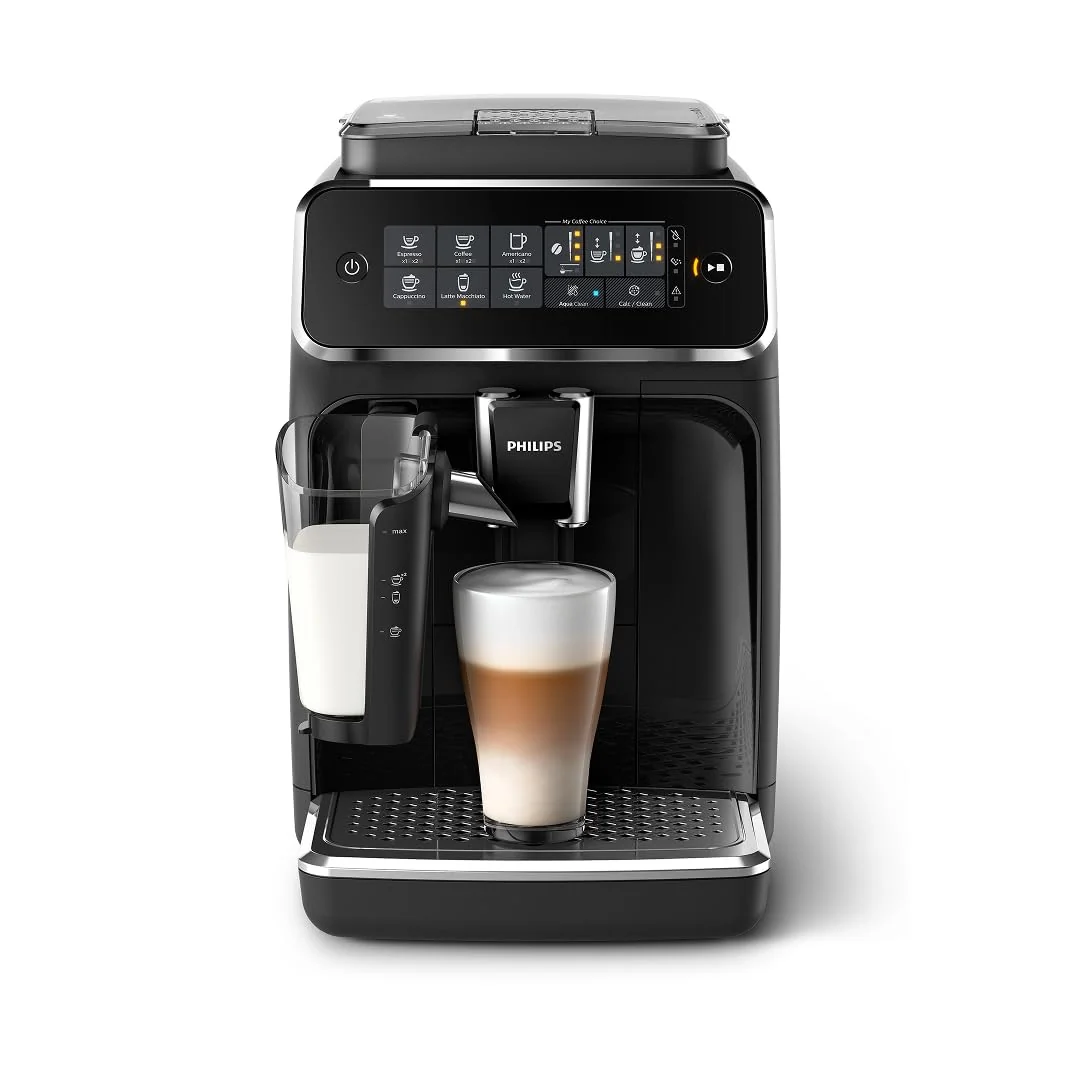
If milk drinks are the point and mild black coffee is acceptable, the Philips LatteGo machines are genuinely likeable: the carafe is two pieces with no tubes and it rinses in seconds, which is why people actually clean it. The drawback is the one this whole page is about, that the dose is roughly half a café shot and no setting lifts it, so the espresso underneath the milk stays mild by design. That is set out in full in our 3200 LatteGo review, and the whole ladder from 1200 to 5500 explains why spending more inside the range does not change the coffee.
If you want more coffee in the cup for sensible money, the De'Longhi Magnifica Evo is the usual answer and the reason its rivals keep losing forum arguments: a larger charge and a grinder that goes finer produce a shot with more behind it, which is exactly why one thread's top reply on Philips against De'Longhi was that it is not even a debate. Its drawback is real and worth stating: the dose still tops out around ten to twelve grams, so straight espresso lands closer to a short lungo than a café double, and the milk arrives warm rather than hot. A tester who reviewed it put the buyer plainly, that it suits somebody graduating from a capsule machine rather than somebody chasing a specialty single origin. We cover it in the Magnifica Evo review and set it directly against the Philips in that head to head.
If thin espresso is the specific thing that has driven you to this page, the De'Longhi Dinamica Plus is the cheapest machine here that grinds a genuinely large puck, roughly fifteen grams at maximum strength, and that single specification is what separates a shot you would serve a guest from one you would apologise for. Its drawbacks are that milk peaks around the temperature of a warm bath rather than a café latte, and that its double espresso programme insists on a minimum volume that overflows an ordinary cup, so you stand there and press stop. The Dinamica Plus review has the rest, and the De'Longhi ladder shows which rungs actually change the dose.
If you drink your coffee black and short, a full-size Jura E4 is built for exactly that, with a proper hot water spout so an americano is espresso plus fresh water rather than a long flush through the grounds. The drawbacks are that it speaks entirely in icons, that the brew group is sealed so you cannot inspect or hand-work it, and that a single cup tops out around eight ounces, which rules out the big mug some buyers arrive wanting. Our E4 review and the wider black-coffee shortlist take that further.
If the machine has to be operable by a household rather than an enthusiast, the KitchenAid KF7 pairs Swiss brewing hardware with the friendliest interface in the category, and one instrumented review put its extraction above average for a bean-to-cup while still a step below a portafilter machine with a real wand. The drawbacks are that its americano will not go below a fixed minimum of water, its coffee tops out well short of an American mug, and early-failure reports cluster uncomfortably close to the end of the warranty. That is all in the KF7 review.
And if you own a Gaggia Brera and arrived here from a thin lungo, the machine is very likely fine: it remains a genuinely small, one-button bean-to-cup that a household will use, and its real limitations are a manual frothing wand, a short warranty and long coffees made by diluting a single puck. The Brera review explains which of those you can work around.
The last honest option is to leave the category. A Magnifica Evo buyer who came from a Breville wrote that the machine works well and is easy to clean, but that the espresso does not taste nearly as strong as the shots he used to pull himself, and he took it back. Nothing on this page would have saved that purchase, because he did not want a different setting, he wanted a different machine. If that sounds like you, what a super-automatic hands over and what it takes away is the piece to read before you buy anything else.
Frequently Asked Questions
Is a thin, pale shot a sign that my machine is broken?
Rarely, because the same complaint appears across every brand at every price, and it usually means the dose is small, the volume is set long and the grind is still on the factory setting.
What should I change first?
The volume, dropped to the shortest setting the machine offers, because concentrating the same coffee into less liquid is a bigger single improvement than anything you can do to the grinder.
Why does the grind adjustment seem to do nothing?
Either it was moved while the burrs were stationary, which on most machines does not properly seat the change, or you tasted the next drink instead of the third one and the previous grind was still in the chute.
Should I just set the grinder to its finest position?
No, because at the very finest settings the flow can restrict far enough to stall extraction or clog the funnel, which gives you a different bad drink rather than a strong one.
Why does the double-cup or lungo button make things worse?
On many machines those controls add water rather than coffee, so they enlarge the drink and dilute it, and a real double means the grinder has to run twice.
My cappuccino tastes weaker than my espresso from the same machine, so what is wrong?
Nothing is wrong, because a lot of milk presets pull a single shot regardless of strength setting, and the fix is to build the milk drink and then run a separate espresso into the same cup.
What does the used puck tell me?
A firm dry disc means the coffee was compressed and the water met resistance, while wet slush with no formed edge points at a coarse grind, a fast-draining basket or a brew group that is not tamping properly.
Can beans really cause this?
Yes, in both directions: oily dark roasts gum the grinder so the machine delivers less coffee than it thinks, and light roasts are too dense for a grinder that cannot go truly fine, which is why medium to medium-dark and matte is the safe window.
How long should I wait for a new machine to settle before judging it?
Run twenty throwaway drinks on cheap beans in the first week rather than the fourth, because a break-in period longer than your return window is a trap rather than a feature.
Will spending more money on the same brand fix it?
Usually not, since machines within one manufacturer's range often share a brew group and grinder and produce shots that testers could not tell apart, so the extra money buys a screen and more presets rather than a stronger cup.
Sources (6)
- Amazon listings and customer reviews
- Owner reports across r/superautomatic, r/Coffee threads
- Owner and reviewer video, 4 channels
- Tomscoffeecorner — Article — tomscoffeecorner.com
- Homecoffeeexpert — Article — homecoffeeexpert.com
- Coffeeness — Article — www.coffeeness.de