Renewed, refurbished and certified remanufactured: the machine is usually fine, and the ninety-day guarantee is the problem
Almost everybody researching this question is asking the wrong one. The worry is that a refurbished machine will arrive broken, and that does happen, but it is the one failure mode you can see, test and return inside a fortnight. The genuine risk sits somewhere else entirely. Super-automatics do not usually die of anything dramatic. They die of rubber: an o-ring that has gone hard, a gasket in a steam valve, a seal on a brew unit, a temperature sensor that has been cycling to ninety-five degrees twice a day for three years. None of that is visible, none of it makes a noise on day one, and none of it is covered by ninety days.
The reassuring half of the evidence first, because it is real. On the renewed Philips 5500 in grey, seven of the eight retained customer reviews describe a machine indistinguishable from new, in words like spotless, perfect condition and no signs of prior use, including from a buyer who had run a Philips daily for six years and knew exactly what wear looks like. A buyer of a Jura E4 sold as used-like new reported it arrived in like-new condition with no sign of prior use at all, the only shortfall being one small accessory missing from the box. Refurbishment, done properly, works.
The other half is equally real and it clusters in one place. Five of the thirteen retained reviews on the Jura ENA 4 listing concern machines that arrived broken, dirty or dead, one of them dusty and wet out of the carton, another with a grinder a technician confirmed was already broken. A Bosch 800 buyer ordered the same open-box grade twice, received the wrong model the first time and a unit frozen on its own progress screen the second. A Philips 1200 buyer put it in five words that should be printed on every marketplace listing: it was not cleaned or checked.
So the arrival lottery is genuine, and it is also the easy part. What the rest of this page is about is the harder part: what a discount actually buys you, what it takes away, and which of these machines can be made to confess its own history before your window closes.
Three words that are not synonyms
The vocabulary on these listings is deliberately soft, and the differences between the words are worth more than the words suggest.
| The word | Who did the work | Cover on the listings covered here |
|---|---|---|
| Certified remanufactured | The manufacturer, to its own standard | Six months on Breville's remanufactured Barista Touch, which states limited or no wear and all original accessories |
| Renewed | A seller or third-party refurbisher working to a marketplace grade | Ninety days on the renewed Magnifica Evo, the renewed Philips 4400 and the renewed Philips 5500 in black |
| Factory refurbished, direct | The brand, through its own service channel | Varies by brand and is worth getting in writing before you pay |
| Open box, used, like new | Nobody in particular | The retailer's return policy, which is not a warranty |
Breville's is the strongest promise on this page and the listing says so plainly: limited or no wear, all original accessories, six months of Breville limited warranty from the date of purchase. Set that against what a new Barista Touch carries, which is two years. That is the whole trade in one line, and whether it is a good trade depends entirely on the next section.
The clock that matters runs longer than the guarantee
Read enough owner accounts of a single machine and the failures stop looking random. They arrive on a schedule, and the schedule has two clusters. The first is dead on arrival or dead within weeks, which is annoying and which any return policy absorbs. The second is the one that decides whether renewed was a good idea.
| Family | Reported at | What went |
|---|---|---|
| De'Longhi Magnifica | Out of the box, and at ten days | A dead unit needing warranty work, and one that never completed its first setup |
| Bosch 800 Series | About three weeks | Warm water instead of coffee, traced to a broken part loose inside the machine |
| Jura E4 | Five months | Something internal, announced by a fragment of white plastic in the tray |
| Philips LatteGo | Months to a couple of years | Leaking milk carafes and perished brew-unit seals |
| Breville Barista Touch | Around three years | The thermistor behind the automatic milk wand, throwing an E05 code |
| Breville Oracle and Dual Boiler | Any age, and worse with hard water | Cracked o-rings weeping onto components below them |
Take the Breville case, because it is the cleanest. The single most informative review on the certified remanufactured listing comes from a man whose own Barista Touch was three years old when it threw an E05 thermistor code, and who bought the refurbished machine as a stopgap while the replacement part shipped from Australia. He is telling you two things at once. The refurbished unit was excellent, and the fault he was working around lands at roughly year three, which is two and a half years past the six months the refurbished machine carries. On the new Barista Touch listing an owner had one stop dead at seven months and rated it one star not for the fault but for the silence that followed, while another had a defective machine replaced quickly and cheerfully. The same company, two opposite experiences, and only one of those buyers had a warranty in force.
Philips is the same shape with different parts. Its own support material for the 5500 treats a LatteGo frother leaking from the bottom as a routine enquiry rather than a freak event, which is exactly the fault that put the eighth of those otherwise glowing renewed reviews into the return pile. Espresso Den's reading is not that renewed machines leak more. It is that leaks are what these machines do eventually, and ninety days is a very small slice of eventually. Our page on how long these machines last and what breaks first lays the whole curve out.
Buy the machine that keeps a diary
Here is the argument nobody makes on this subject, and it should be the deciding one. Some of these machines record their own history, and on a second-hand purchase that is worth more than any amount of cosmetic grading.
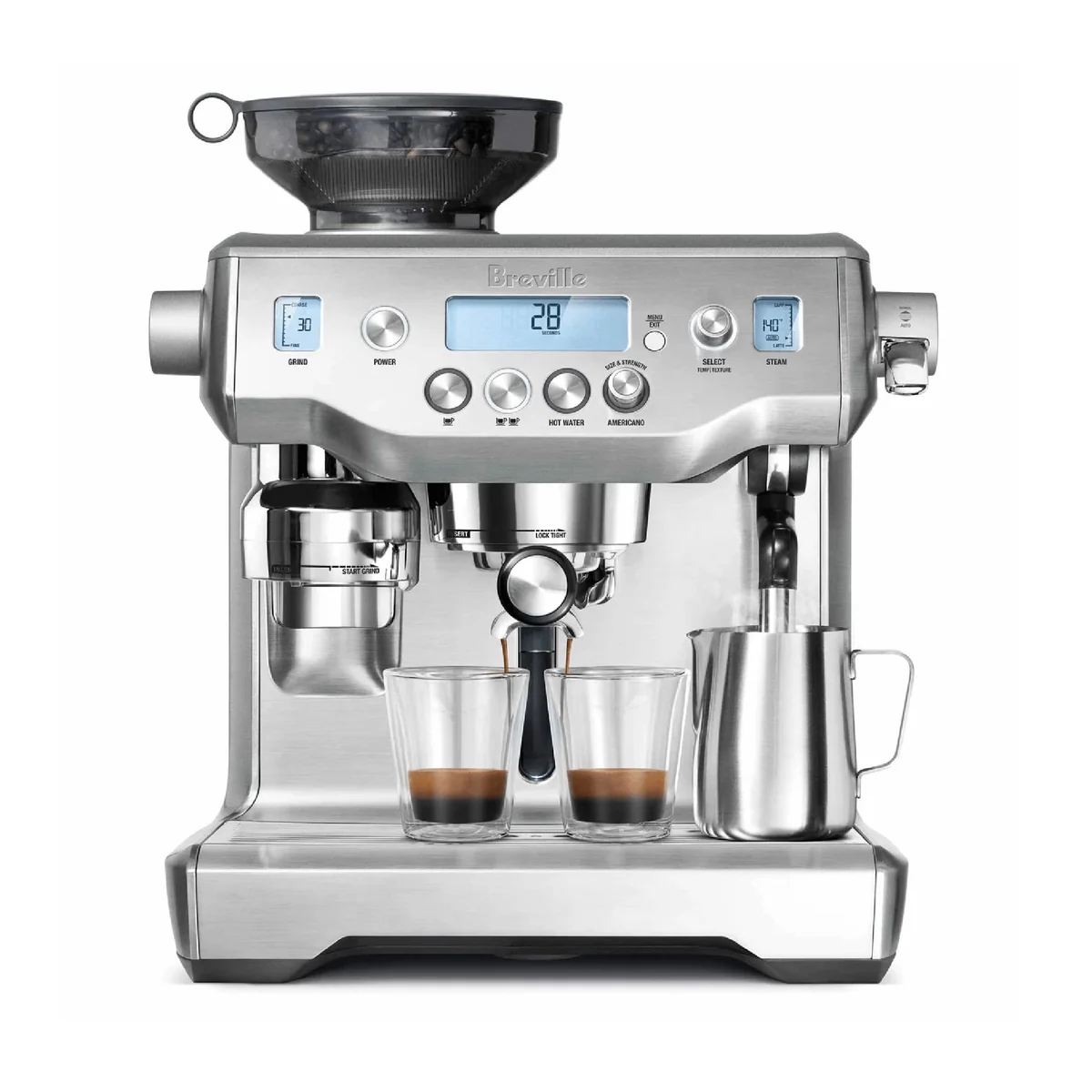
The Breville Oracle has a hidden service menu that reports espresso shot count, hot water uses, minutes steamed, calcium level, descale cycles, cleaning cycles, filter changes and stored error codes. Read that on a stranger's machine and you know whether you are buying a lightly used demonstrator or eleven years of a café habit, whether the previous owner ever descaled, and whether the machine has been quietly logging faults. Almost nothing else in this category offers that much provenance, and Espresso Den would rather have those eight numbers than a photograph of an unmarked case. Philips machines keep a comparable product counter in their settings menu, listing every drink made by type, which answers the only question that matters about a renewed unit: whether renewed meant open box or meant a year of somebody else's mornings.
Pair the diary with the one physical inspection that pays for itself. On the Oracle and the plain Dual Boiler, experienced owners recommend taking the top cover off periodically and looking for water or calcification around the fittings, because a weep caught early is an o-ring and a weep left alone drips onto electrics. One buyer of a used machine had to change o-rings immediately, because the leak was tripping his household breaker. Ten minutes with a screwdriver before money changes hands is a better inspection than most people manage on a used car.
At the other end sits Jura, where the brew group is sealed inside the machine and there is no point at which you get to look at it, which is why the question of what grows in there follows the brand around. A used Jura is a machine you are buying on trust, and the appropriate response is to buy it from Jura's own refurbishment channel rather than from a stranger, and to accept that a service visit is a real line item rather than a remote possibility.
What actually turns up in the box
Two things go wrong on arrival, and only one of them is a fault. The first is missing pieces. The Jura E4 that arrived in like-new condition was missing the accessory for adding pre-ground coffee, which its buyer shrugged off because he only uses beans. On a Bosch that omission would be structural rather than cosmetic, because the stainless 800 Series ships a milk adapter and an integrated milk container that the black one does not, and the stainless listing gives a different model number in its box list than the catalogue does elsewhere. Before you accept any renewed machine, find the manufacturer's own list of box contents and count against it, because a missing carafe is not a small part.
The second is grime, and it tells you something the star rating will not. A Philips 3200 bought used in good condition arrived with no manual and needed cleaning before first use, which its new owners did without much complaint. The Philips 1200 that arrived uncleaned and dead did not get the same forgiveness. The instructive image, though, comes from a repair shop that photographed an EP1220 brew group so caked with baked-on coffee oil that the technician's caption was that this is not a barbecue, adding that the owners had said they would bring it in when it stopped working. That is what a neglected machine looks like on the inside while looking entirely respectable on the outside, and it is the single best argument for pulling the brew group out and smelling the cavity beneath it before your window closes. What the routine should have been is worth knowing so you can judge whether it happened.
One specific case deserves naming because it is the most common second-hand scenario after a straightforward sale. A Gaggia Brera owner asked what to do about a machine brought back into service after nineteen months in storage, and the honest answer for any machine in that state is the same: treat it as a full descale, a fresh water circuit and a documented priming sequence before you trust it with beans, rather than assuming that a machine which powers on has woken up properly.
The seller decides whether you have a warranty at all
This is where money is actually lost, and it has nothing to do with condition. A Jura E4 buyer discovered after five months and an internal breakage that the marketplace seller he had bought from was not an authorised dealer, which meant no warranty, a repair quote of four hundred dollars, and a machine he had paid full retail for. An ENA 4 owner hit the same wall from the other side, told that because the retailer was not a certified dealer the five-hundred-dollar repair was hers, and that a local shop would have given her two years. Neither of those machines was refurbished. Both buyers were uncovered for a reason nobody mentions at checkout.
Gaggia states on its own listing that the one-year warranty is handled by Gaggia directly rather than through the retailer, which is worth knowing before you buy a Brera from a marketplace seller, because it means the paperwork you will need is a proof of purchase the brand will accept. The general rule that falls out of all of this is short. On a renewed machine, the guarantee is the refurbisher's rather than the manufacturer's, so establish who that is and how you contact them before you need to, and on a new machine from a marketplace, establish that the seller is authorised before you press buy rather than after something snaps.
Your return window is worth more than the guarantee, and Philips can eat it
Every buyer on this page who came out ahead did so by using the return period aggressively. The clearest example is a Jura J8 twin buyer who set the machine up at home, decided the second grinder was not something she would use, and returned it inside thirty days for a full refund, having first ordered a second machine so she could stand them side by side on her own counter. Her observation is the useful part: Jura dealers will demonstrate a machine and will not take one back once the box is open, and the marketplace return policy was the only reason a real comparison was possible.
Which brings up the trap. Philips machines need a break-in before they represent themselves, and the numbers people give are alarming: independent testers put it at twenty to thirty coffees before you get good results, and note that Philips does not explain this anywhere, which is why perfectly good machines get returned in week one. Owners quote figures from ten to a hundred and fifty. Whatever the true number, it collides directly with a thirty-day window and a ninety-day guarantee. If you buy a renewed Philips, run cheap beans through it hard in the first week rather than easing into it, set temperature high, strength to maximum and volume short, and make your keep-or-return decision early and rudely. Our piece on why bean-to-cup espresso comes out thin covers what to change, and which beans behave in a hopper covers what not to feed a grinder whose history you do not know.
| When | What to do | What it tells you |
|---|---|---|
| Day one | Count the box contents against the manufacturer's own list; read the service menu or product counter | Whether anything is missing, and how much use the machine has really had |
| Day one | Run water and a milk cycle, then look underneath the machine and at the base of the carafe | Leaks, which are the documented fault on Philips and Breville alike |
| First week | Pull the brew group out, rinse it, and smell the cavity it came from | Whether the previous owner ever did this |
| First week | Take the grinder through its full range while it is actually running | Whether the adjuster is seized or has been driven to an extreme |
| First week | Run a full descale, and set water hardness afterwards | Makes somebody else's scale your problem while you can still hand it back |
| Before the window shuts | Make forty or fifty drinks, not five | Whether you have a settling-in period or a dud |
Which of these are worth buying renewed
Five machines on this page are sold in a renewed or remanufactured condition, and they are not equally good bets.
The Breville certified remanufactured Barista Touch is the strongest of them, because the manufacturer did the work and stands behind it for six months, and because the one detailed account of a refurbished unit describes it as beautiful and better than new on arrival. The drawback is precise rather than vague: six months against two years on a machine whose best-documented fault is a milk-wand thermistor that tends to appear somewhere between eighteen months and three years. Buy it only after checking what the new one is going for that week, because Breville discounts this model heavily enough that the gap sometimes closes to nothing, and read our full review for what you are getting either way. Two of the eight reviewers on that listing docked stars purely because they had not registered that the machine was refurbished, which is a startling thing to miss in a title that says so, and a reminder to read the words rather than the stars.
The renewed Magnifica Evo gives you the same LatteCrema machine for less, and every published hands-on review of that model was carried out on a new unit, so the renewed listing's weaker score is a signal about the transaction rather than the design. The trade is stark: ninety days on the listing, against two years from De'Longhi on a new machine, extended to three if you register it. Use those ninety days deliberately, and use them on the milk system in particular, because the carafe's seating sensor is this machine's most reported fault and a one-star owner describes precisely that failure, a machine that beeps when the frother goes in and then refuses to light the milk drinks. Our Evo review goes through the rest.
The two renewed Philips 5500 listings, in black and in grey, are the same machine in two colours and they carry the best renewed evidence on this page, with seven of eight retained grey reviews describing units that looked untouched. Two drawbacks travel with them. The first is that leaks are the documented Philips fault and ninety days will not reach them. The second is the one nobody mentions: the 5500 shares its grinder, its heating element and its brew unit with the much cheaper 3300, so the money buys the colour screen, the profiles and the milk-froth button rather than a better shot. A renewed 5500 and a new 3300 frequently land in the same territory, and only one of them comes with a full warranty; the comparison and the 5500 review take that apart properly.
The renewed Philips 4400 is the one to read most carefully, and not because of the machine. Its listing advertises a colour touch screen when the 4400 uses a colour display with physical buttons around it, says you can save up to three profiles when the real count is two plus a guest slot, and carries no description field at all, so capacities, dimensions and the actual drink list are simply absent. None of that would be noticed in daily use, and a listing that rounds up twice is still a listing to read slowly. The machine itself is a genuine interface upgrade over the cheaper LatteGo models at a discount, and its honest drawback is that the parts which fail on this platform are cheap, buried gaskets that are invisible when perished, and nothing in the listing says whether anybody replaced them. Our 4400 review covers the rest, and the AquaClean page explains why the filter counter on a second-hand machine tells you something too.
The rest of these machines, on the second-hand market
| Machine | Why it is worth considering | The drawback you take on |
|---|---|---|
| Breville Oracle BES980XL | The easiest machine here to vet, because its service menu reports shot count, steam minutes, calcium level, descales and stored error codes | Weeping o-rings are the platform's signature fault and can drip onto electrics, and the built-in grinder is the part long-term owners replace first |
| Breville Oracle Touch BES990BTR | Repairable, parts-rich, and cheaper second-hand than it has ever been new | Breville's own US page lists it as discontinued, and its steam-probe and milk air-pump faults surface long after any warranty |
| Breville Barista Touch BES880BTR, new | The one to take when the remanufactured saving turns out to be thin on the day | Its grinder doses by time rather than weight, and Breville's support has been fast for some owners and silent for others |
| Gaggia Brera | Close to the ideal used candidate: a fifteen-year production run, a brew group that comes out under a tap, and a very large installed base | Milk is entirely manual, cup clearance stops at 4.5 inches, and the warranty runs one year handled by Gaggia rather than the retailer |
| Philips 3200 LatteGo | A sane used buy, and the LatteGo carafe is two pieces with nothing hidden inside it to have been neglected | The dose is roughly half a café shot, so the espresso is mild whatever the previous owner did to the settings |
| Philips 1200, EP1220 | The most repairable machine here, with spares down to the pump, flow switch, grinder motor and every seal sold individually | The shot is long and thin by design, and one buyer's used unit arrived uncleaned, dead and difficult to send back |
| Jura E4, Piano Black and Piano White | Jura's own refurbished channel has produced machines a buyer could only identify as refurbished from the label | The brew group is sealed and cannot be inspected, and a machine from a seller who is not an authorised dealer has no warranty at all |
| Jura ENA 4 | The simplest Jura on this page, with no milk circuit for a previous owner to have neglected | Five of the thirteen retained reviews on its listing describe machines that arrived broken, dirty or dead |
| Jura J8 twin | Two grinders end the decaf argument permanently, and a marketplace will take an opened one back when a Jura dealer will not | You are paying a flagship premium for a second hopper and a screen rather than a better cup |
| Bosch 800 Series, stainless and black | The best cup in its class by our reading, and the black hose version avoids the carafe entirely | Do not buy either open box, and check the model number, because the two colours do not ship the same box |
| De'Longhi Magnifica Start | Fewest parts to fail of any De'Longhi here, because the automatic milk carafe is simply not fitted | Two buyers had one die inside ten days, so a second-hand one deserves a hard first week rather than a gentle one |
Two smaller notes that will save somebody a bad order. If you are buying parts rather than a machine, the Oracle's 980XL is the 110 V unit and the 980 is the 230 V one, so while a great deal interchanges, nothing on the mains side does. And a used machine that squeals whenever water runs through the group head, with the portafilter in or out, and that sometimes produces nothing at all, is describing scale rather than a mystery, which is the fault a second-hand buyer of unknown provenance is most likely to inherit.
How Espresso Den reached this
We have not bought a renewed machine for this page, taken one apart, or measured anything on one, and nothing above is presented as our own testing. What this is built from is the listings themselves and their stated warranty terms, the customer reviews attached to each of them, manufacturers' own product and support material, independent reviewers who weighed doses and counted decibels, and the owner threads where faults get named and occasionally solved. Where the record is thin, and on renewed units it is very thin, that is said rather than smoothed over: the renewed listings here carry samples of a few dozen ratings each, which is a rumour rather than a verdict, and no published hands-on test of a renewed unit of any of these machines appears to exist. How this site works covers the rest.
The verdict does not move. Renewed is usually a sound purchase and occasionally an excellent one, and Espresso Den would take a certified remanufactured machine over a marketplace unit of unknown provenance every time. What you are buying with the discount is a shorter runway, on appliances whose characteristic failures land after that runway ends. Use the window you have rather than the guarantee you were given, buy the machine that will tell you about its own past, and be sure the saving is genuinely large on the day you look rather than measured against a sticker price nobody pays. If none of that appeals, the wider question of whether these machines earn their keep and our roundup of the field are the better places to start.
Frequently Asked Questions
Is a renewed super-automatic espresso machine safe to buy?
Usually yes, because the reported failures on renewed units cluster at arrival where a return policy covers you, but the guarantee is short enough that you are self-insuring against the seals and sensors that fail later.
What is the difference between renewed and certified remanufactured?
Certified remanufactured means the manufacturer did the work to its own standard and warrants it, while renewed is a marketplace grade that can be a seller or a third-party refurbisher.
How long is the warranty on a renewed machine?
Ninety days on the renewed De'Longhi and Philips listings covered here, against six months on Breville's certified remanufactured unit and two years or more on the same machines bought new.
Should I buy an open-box unit instead?
No, because open box is a condition rather than a promise, and the two open-box orders documented on this page arrived as the wrong model and as a dead machine.
How can I tell how many coffees a second-hand machine has already made?
On a Breville Oracle the hidden service menu reports shot count, steam minutes, calcium level, descales and stored error codes, and Philips machines keep a product counter in their settings listing every drink by type.
Does buying from a marketplace seller void the manufacturer's warranty?
It can, because two Jura owners on this page discovered after a failure that their seller was not an authorised dealer and were quoted four and five hundred dollars for repairs they expected to be covered.
Is a machine that sat unused in storage still worth buying?
It can be, provided you treat it as a full descale, a fresh water circuit and a proper priming sequence before you trust it with beans rather than assuming that powering on means it woke up correctly.
What should I check on the very first day?
Count the box contents against the manufacturer's own list, read the machine's own usage counter, and run water and a milk cycle while looking underneath the machine and at the base of the carafe for leaks.
Why should I judge the coffee at fifty cups rather than five?
Because Philips machines in particular need twenty to thirty drinks before they represent themselves, and that break-in can consume most of a thirty-day return window if you take it slowly.
Which machines are the worst bets bought used?
Anything with a sealed brew group you cannot inspect and no usage counter to read, because you are then buying entirely on the seller's word about maintenance you have no way of verifying.
Sources (7)
- Amazon listings and customer reviews
- Owner reports across r/espresso, r/superautomatic, r/BrevilleCoffee threads
- Owner and reviewer video, 2 channels
- Breville — Article — www.breville.com
- Philips — Article — www.usa.philips.com
- Homecoffeeexpert — Article — homecoffeeexpert.com
- Seattlecoffeegear — Article — www.seattlecoffeegear.com