The Jura J8 twin buys you a second grinder, not a better cup of coffee
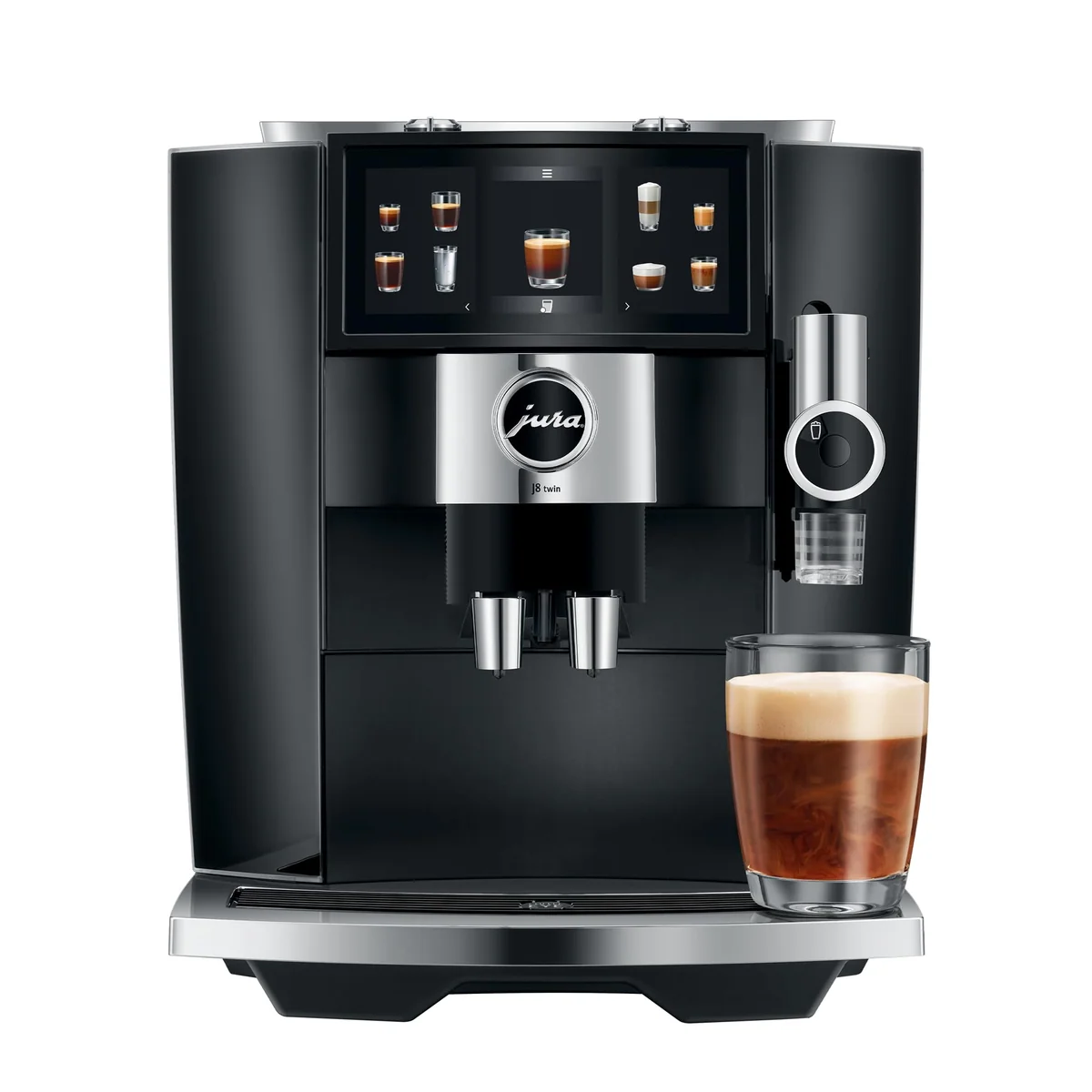
Buy the J8 twin if a decaf drinker and a caffeine drinker share your kitchen and you want that argument to end permanently, because the second grinder is the only thing on this machine you cannot get more cheaply somewhere else in Jura's own range.
Based on 34 owner ratings, 11 owner discussions and 2 other sources. We have not tested this machine ourselves.
We earn a commission if you buy through our links, which does not affect what we say.
Read how this site works →
Who should buy it
Buy it if two people in your house drink different coffee and one of them drinks decaf. That is not a narrow recommendation; it is most households with a coffee machine after about eight in the evening. The J8 twin is the least expensive route in Jura's own range to two beans, two grinders and no compromise, and it arrives with the best screen the company currently ships and a milk system that will outperform your expectations and disappoint your expectations of temperature in the same cup. Everything else on the listing is either true and secondary or true and counted twice.
Do not buy it because of sweet foam, do not buy it if your coffee lives in a sixteen ounce travel mug, and do not buy it if the thought of a brew group you can never see is going to sit at the back of your mind for the next decade. Do not buy it, either, on the strength of a twin function you suspect you will use twice a month; two owners in these threads said out loud that they hardly use it, and one of them returned the machine.
And if you can get to a shop that will pull you a drink from one, go, taste it, and taste the cheaper machine standing next to it on the same beans. Espresso Den's honest reading of every owner in this evidence base is that the Jura is better and not proportionally better. Whether the gap is worth what the gap costs is a judgement only your own tongue can make, and it is free to make it in a showroom.
Buy the J8 twin if a decaf drinker and a caffeine drinker share your kitchen and you want that argument to end permanently, because the second grinder is the only thing on this machine you cannot get more cheaply somewhere else in Jura's own range.
Best for: Two hoppers end the decaf argument in a two-drinker kitchen, and almost everything else on the spec sheet is the same Jura you can buy for a great deal less.
Every super-automatic at this level is sold on a number. Jura's number for the J8 twin is thirty-one specialty drinks, printed first in the listing, ahead of the screen size and ahead of the grinders themselves. A reviewer who sat down with the machine and counted what was actually on the panorama panel found sixteen. The other fifteen are the same sixteen recipes counted again with sweet foam in them, counted again with an extra shot, and counted again as two cups at once. It is not a lie. It is arithmetic performed on a menu.
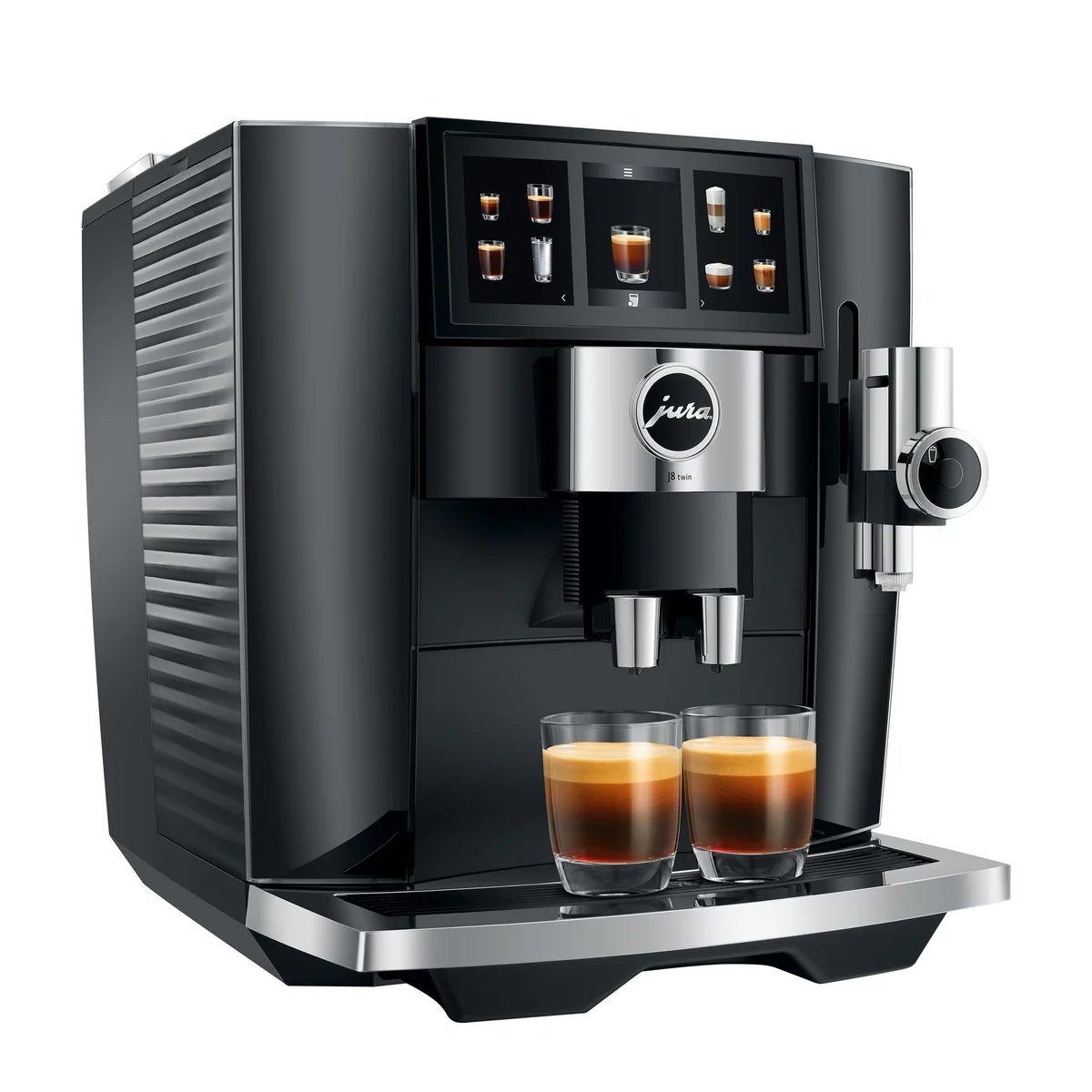
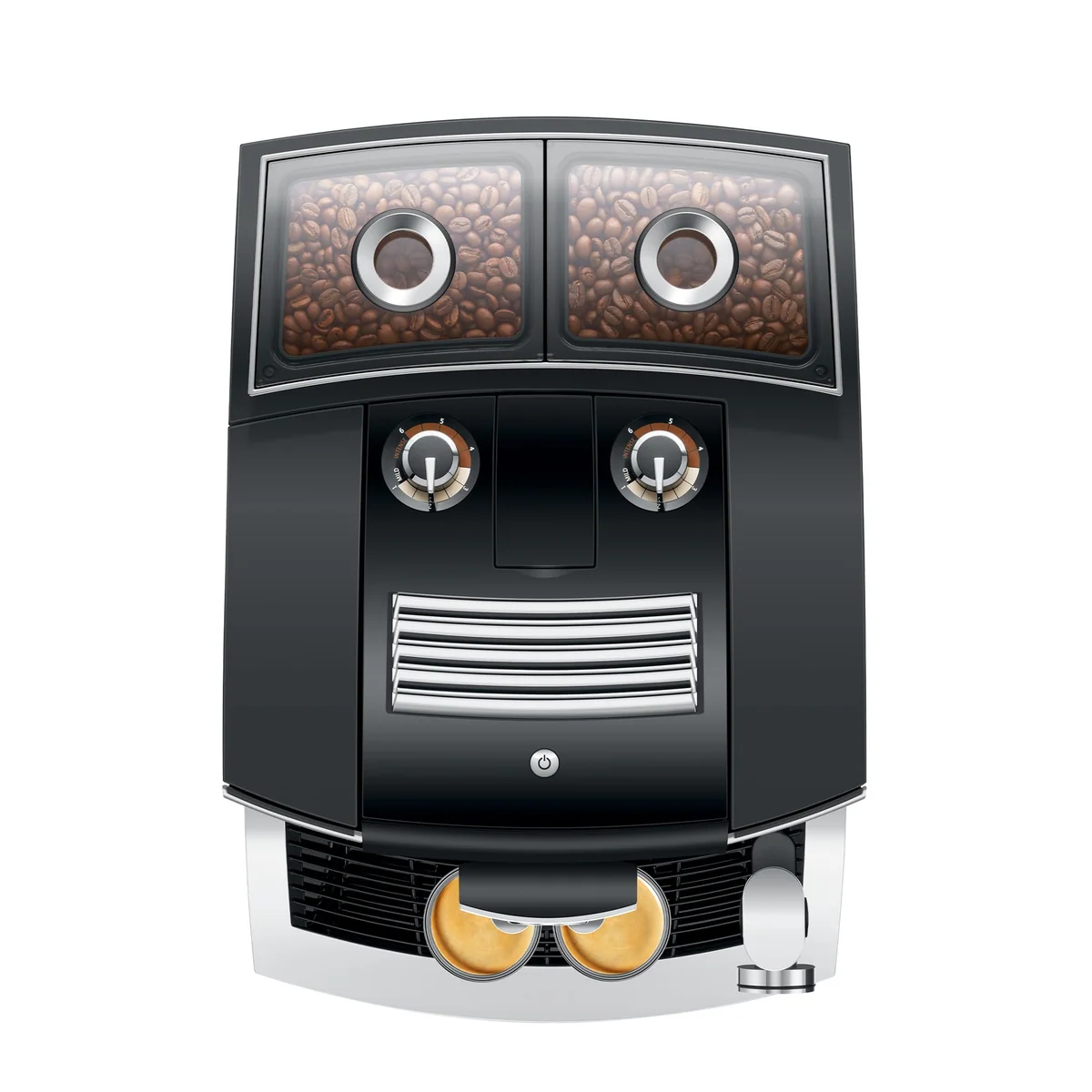
Under that marketing, though, sits a genuinely unusual machine, and the unusual part is the boring-sounding one. Two bean containers, each with its own conical grinder, in a body about the size of a family air fryer. That is the whole product. It is why four of the eight customer reviews Amazon shows exist at all, and every one of those four says the same thing in different words: one person drinks decaf, another drinks regular, and nobody has to tip beans out of a hopper any more.
So the honest way to review this machine is not to ask whether it makes good coffee. Owners across a decade of Jura threads agree that it does, and they agree with roughly equal force that it does not make coffee proportional to what it costs. The question is narrower and much more useful: is your household the one that needs two grinders, and do you understand what you are signing up for when you buy a machine whose brew group you will never see?
Two things you should know before the story starts, because they are the two most common reasons people return this class of machine. The maximum coffee it will pour in one press is about eight ounces, so a large Americano means pressing that beautiful touchscreen two or three times and topping up. And large travel mugs do not fit comfortably under the coffee spouts, which one owner solved by brewing into spouted espresso cups and decanting into her husband's mug every morning. Neither is a defect. Both are daily.
Key Specifications
What the second grinder actually buys, and what it costs you
Each hopper holds 6.3 ounces, each has its own grinder, and Jura calls the mechanism the P.A.G.3+. On screen you can set any drink to draw from one side, the other, or a fixed blend: 100/0, 75/25, 50/50, 25/75, 0/100. You can also rename the grinders, which sounds like a trinket until you realise the alternative is remembering which of two identical black lids has the decaf under it. Name one of them Decaf and the ambiguity disappears.
Here is the part nobody in the owner threads says out loud. Two 6.3 ounce hoppers is less capacity per bean type than a single-hopper Jura gives you, and the low-use hopper is the problem. If the decaf side gets touched three times a week, those beans sit in an open container going stale while the machine sits there certifying that they were freshly ground. Whole beans stale slowly, but they stale, and a lidded hopper is not a storage vessel. Keep both sides shallow and refill them more often than feels necessary, which is exactly the opposite of what the second hopper's convenience tempts you into. If you are buying primarily to run two roasts, our guide to which beans survive a bean-to-cup machine matters twice as much here.
The screen is better than the flagship's, and that is not a small thing
The 6.7 inch panorama panel is the best interface Jura currently puts in a domestic machine, and one owner comparing it against the pricier Z10 was blunt about being blown away by the difference. The explanation from a knowledgeable commenter in the same thread was simply that the J8 twin is newer, and carries the same screen as the range-topping Giga 10. That is a rare situation in a product ladder: the cheaper machine has the newer interface. Espresso Den would take that trade over the Z10's older panel without much hesitation.
Wi-Fi is in the box rather than sold as a dongle, which is worth flagging because on the E8 it is not, and the reviewer who bought an E8 with his own money was openly irritated about paying extra to connect a machine that already cost what it cost. The app is genuinely useful for the second cup of the day. It is not useful for the first, because there is no auto-on and no timer: somebody has to walk over, switch the machine on and put a cup under the spout before anything can be ordered from a phone. One owner's workaround is to leave what she calls an emergency cup sitting under the spout all day.
Coffee Eye sounds like a gimmick until you make the mistake it prevents
A sensor watches the central spout. Put your cup there and the machine will refuse to start a milk drink, telling you to move it, because milk comes out of a different spout. The reviewer of the E8, which has no such sensor, describes doing precisely this on his first go: cup in the wrong place, coffee somewhere else, big mess, do not do that. That is the entire justification for the feature and it is a good one. It can be switched off in the settings if it annoys you.
Sweet Foam: what it is, and why it is the first bullet
A syrup cartridge clips onto the milk dispenser so the flavour runs through the foam instead of pooling at the bottom of the cup. It works. The limits are that it wants thin syrups, not chocolate or caramel sauces, and that the one editorial reviewer who assessed the single-hopper J8 listed the syrup function in his cons, on the grounds that it pushes the price up for something nobody needs. An owner five months in put it more kindly: he drinks black coffee, his partner makes tea with it, and the sweet foam is very nice when people come over and want something different. It is a party feature. Price it as one.
| What the box says | What is behind it |
|---|---|
| 31 specialty drinks | 16 recipes on the panorama screen; the rest are the same recipes counted again with sweet foam, with an extra shot, or as two cups at once |
| Two grinders | Real, and the reason to buy this machine over any other Jura below the Giga |
| One-touch Americano | Real, via a third hot-water spout at the back, but the cup ceiling is about eight ounces |
| Intelligent preheating | Jura's own claim, made in Jura's own video; no independent test of it exists that Espresso Den could find |
Strengths & Limitations
Strengths
- Two hoppers with two grinders means decaf and regular coexist permanently, with per-drink blends from 100/0 through to 0/100 and the ability to name each grinder so nobody guesses.
- The 6.7 inch panorama screen is newer and better than the one on Jura's own flagship, sharing its panel with the Giga 10.
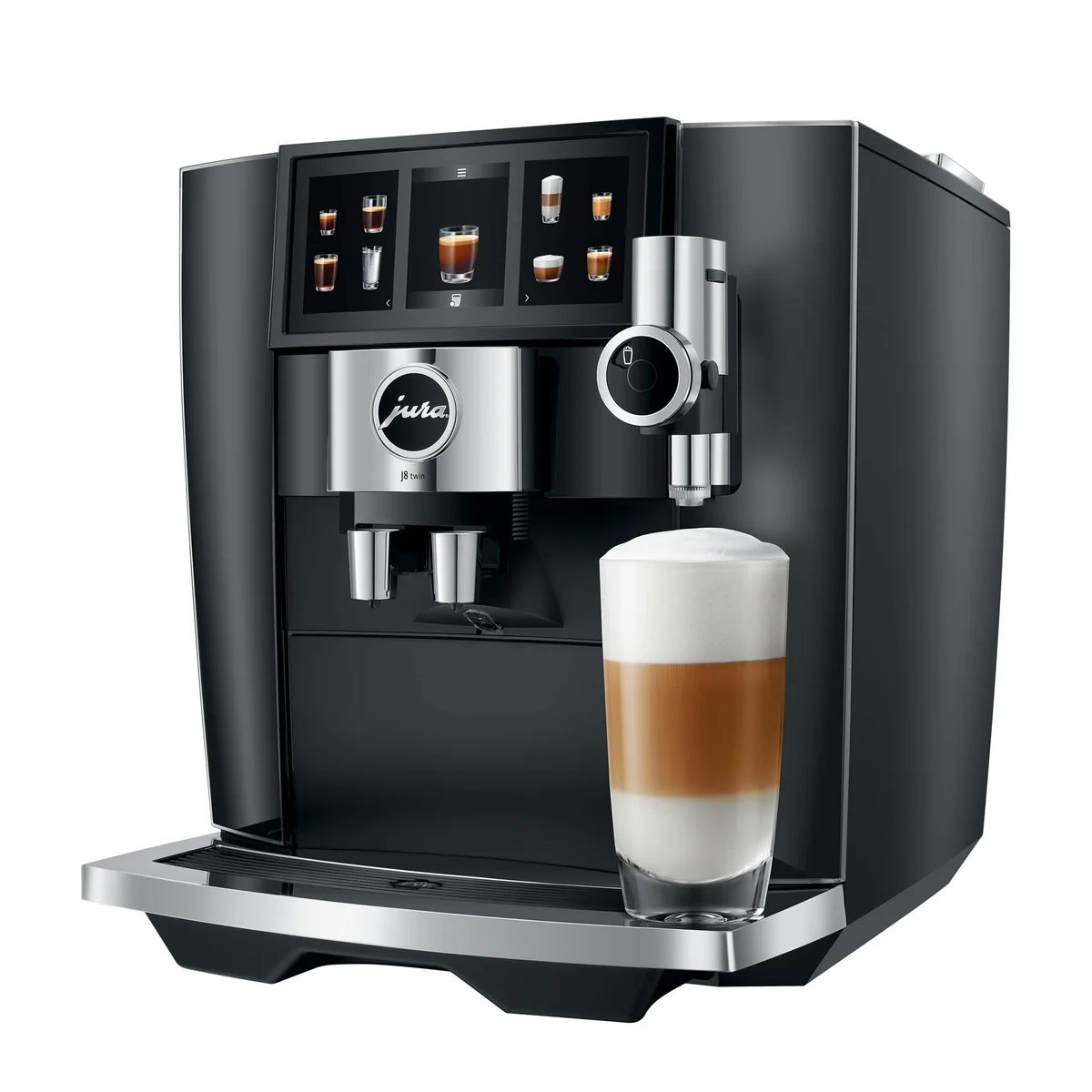
- Milk foam is first-class by super-automatic standards, including on a flat white, which is the drink that catches weaker frothers out.
- It is genuinely quiet, quiet enough that an owner takes phone calls while it brews.
- Coffee Eye refuses to pour a milk drink into a cup sitting in the wrong place, which prevents the exact mess reviewers of sensorless machines describe making.
- Wi-Fi is included rather than sold as a separate dongle the way it is further down the range.
Limitations
- Black coffee tops out around eight ounces per press, so a large Americano is two or three cycles and a top-up.
- Large travel mugs do not fit comfortably under the coffee spouts, which is the side you would most want the clearance on.
- Milk arrives around 141°F, correct by Jura's specification and lukewarm by chain-café expectations, and you are warned not to fix it by running the frother at maximum temperature.
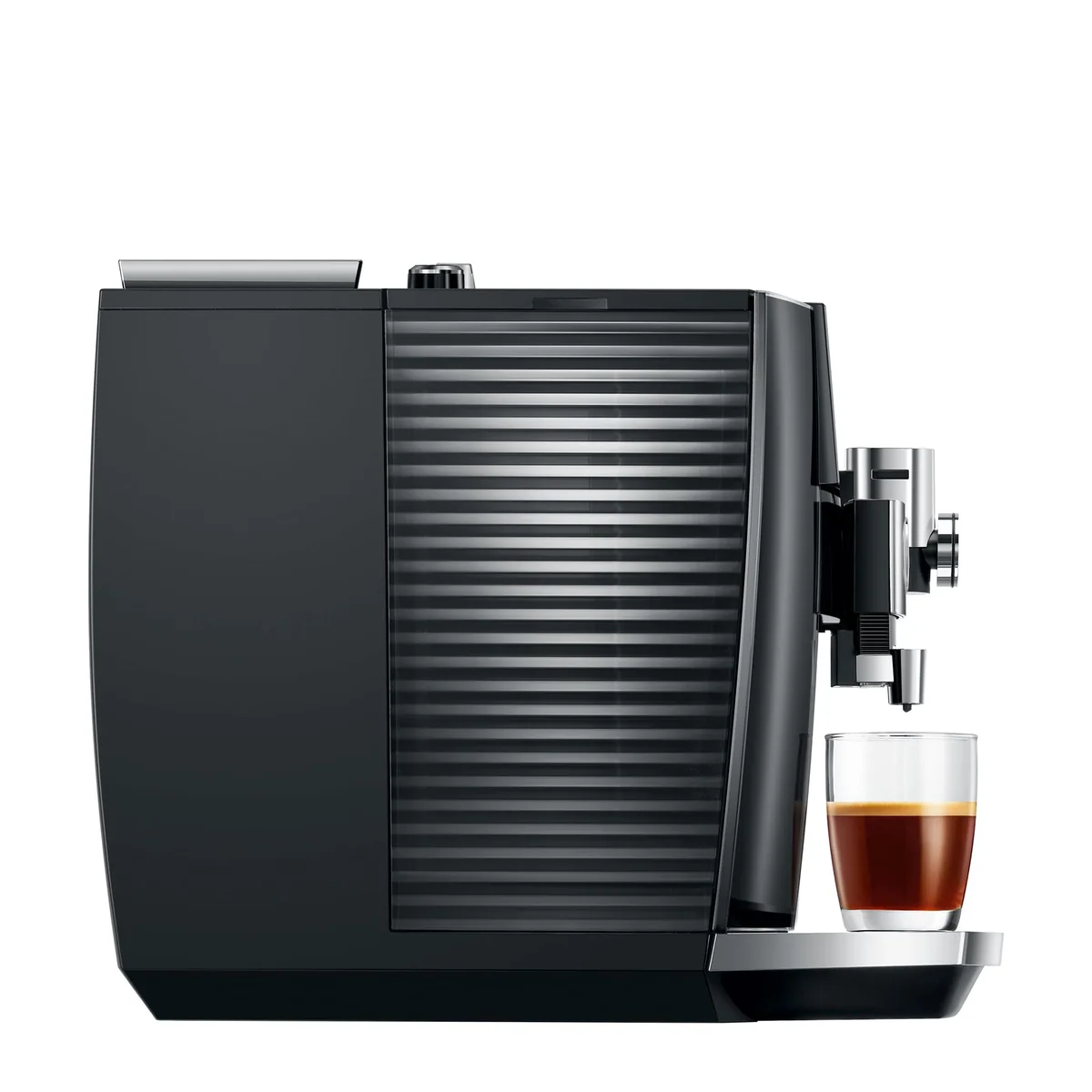
- The brew group is sealed, uninspectable, and serviced only by sending the machine away or booking a dealer clean.
- There is no auto-on and no timer, so the first cup of the day cannot be ordered from bed no matter what the app suggests.
- Sweet Foam leads the marketing and gets used, by owners' own accounts, mainly when guests are over.
- Each hopper is smaller than a single-hopper machine's, so the seldom-used side sits half full of slowly staling beans unless you keep it shallow.
- Nobody who owns one, including the people who love it, claims the coffee is better in proportion to what it costs.
The coffee is very good; the temperature is an argument you should understand before you buy
Start with what is not in dispute. Jura's milk foam is the best of any mainstream super-automatic, including on a flat white, which is the drink that exposes weak frothers. The espresso is not real espresso from a lever machine and no honest reviewer claims it is, but it gets closer to the real thing than the strong-coffee-with-crema most bean-to-cup machines pour, and that matters more than espresso drinkers realise, because espresso is the base of every drink the machine makes. Grind can be adjusted at any time on this platform rather than only mid-grind, which is unusual and useful, and almost nobody ever bothers.
Now the argument. Milk on this platform lands around 140°F, and two J8 twin owners independently measured a latte macchiato at about 141°F, against 149°F from the pricier Z10. A retailer measuring the single-hopper J8 got in-cup coffee in the 170s and steamed milk a hair over 140°F, with the brew itself happening at a proper 195 to 205°F inside the machine.
| Drink | Reading | Who |
|---|---|---|
| Latte macchiato, J8 twin | ~141°F | Two owners, separately |
| Latte macchiato, Jura Z10 | ~149°F | An owner who has had both |
| Steamed milk, J8 | Just over 140°F | Retailer measurement |
| Coffee in the cup, J8 | 170s°F | Retailer measurement |
| Hot water spout, J8 | ~190°F | Retailer measurement |
The numbers agree across every source. What people disagree about is whether they are right. One camp, including the reviewer who bought his own E8, says 60°C milk is correct and anything hotter scorches it. The other camp owns a J8, drinks a cappuccino that looks to them like coffee with cream in it, and microwaves the milk first. The tiebreaker is the most useful sentence in this entire body of evidence, and it comes from an owner who took his machine to a Jura repair centre to ask: he was told the temperature is in specification, and that it had been that way from day one. This is not a fault to be repaired. It is a design choice you either like or do not, and it is why we keep a separate page on why these machines run cooler than the chain cafés.
One thing you must not do about it: an owner who moved from a J8 to a Z10 reports that running the milk frother at maximum temperature causes frothing problems over time. The safe levers are preheating the cup, setting drink temperature high for espresso and lower for long drinks, and using whole milk. Preheating alone is worth a few degrees.
The cup-size ceiling is the real everyday limitation
Milk drinks are one at a time, black coffee tops out around eight ounces per press, and a Venti-sized Americano is roughly two and a half machine cycles. If you drink a small, strong, hot cup, this is a superb machine. If your idea of coffee is a sixteen ounce mug you carry to the car, you will fight it every morning, and you should read what we say about getting a normal mug of coffee out of a bean-to-cup machine before you spend anything. There is also no cold brew here: one buyer set this machine up, decided the twin function was not for them, returned it inside the Amazon window and bought a Z10 specifically because it does cold drinks and this does not.
Quiet, genuinely
An owner reports taking phone calls while it brews without the other party noticing, and a retailer measuring the single-hopper J8 clocked a maximum of about 62 decibels at ear height, which is the low end of a conversation. That is a real strength in an open-plan kitchen and it puts this machine in the same conversation as our pick for the quietest super-automatic.
Everyone who owns one says the same sentence about the money
Read enough owner threads and you notice the identical judgement arriving in different vocabularies. A KitchenAid KF8 owner comparing his machine to a J8 says you cannot go wrong at a third of the price, and tells you flatly not to lie to yourself that Jura's drinks taste better by the size of that gap. Another owner, having tried both: the Z10 was a little better, "but not 3x the price better." Espresso Den has not found a single owner of any machine at this tier who claims the taste gap matches the price gap, and that includes the people who bought the Jura and love it.
What complicates the sneer is that the KF8's known weakness is milk that is not hot, which is the same complaint people level at the Jura, only worse. If you want that fight properly, we run it on its own page: Jura versus KitchenAid, and there is a full KF8 review if the cheaper answer is where you are headed.
So where does the twin's premium go? Not into the shot. A well-informed commenter's summary of the range is that Jura's models share a brew unit and a grinder, dose the same amount of coffee, and differ mainly in software, spouts and milk hardware; drink black coffee from a cheap Jura and an expensive one and you are drinking the same coffee. The premium goes into the second grinder, the screen, the profiles and the specialties. Judge it on those and the maths becomes answerable rather than emotional.
On the second grinder specifically, the alternatives are instructive. When an office of twenty wanted a machine that would accept more than one bean type, the thread's consensus recommendation was the Giga 10, and the reason given was the dual bean hoppers. That is a considerably more expensive machine. Below the Jura line, De'Longhi's answer is a swappable hopper feeding one grinder, which works but wastes beans on every switch; our Rivelia review covers how that plays out day to day, and if two-bean living is the whole reason you are here, start at our page on machines for decaf and regular households. The J8 twin is the middle answer, and being the middle answer is a legitimate reason for its price in a way that sweet foam is not.
Two owners will also tell you they did not need it. One returned the machine after setup, having realised the twin function was something they would hardly use. Another, who owns one and likes it, wrote that decaf "was a nice to have for us but we rarely use it." Be honest with yourself about which household you are. If the second hopper is aspirational rather than daily, buy a cheaper Jura and put the difference in beans; our guide to the Jura range and the E4 review both exist for that reader.
The counterweight, and it is a fair one, is the arithmetic against café spending. An owner working it out for himself put a good bag of beans at around twenty cents a cup against roughly eighty for a capsule, and concluded that every daily cup you brew at home rather than buy takes a couple of hundred dollars a year off the machine's real cost. Three drinks a day is a different calculation from one, and it is the calculation that makes machines like this rational rather than indulgent.
One last piece of advice, free and better than anything else here: Jura dealers and stores like Williams Sonoma will make you a drink from these machines before you buy. A buyer who did exactly that found he preferred the Jura's latte to the KitchenAid's, went back a week later to check, and got the same result. The reply underneath, from someone who had already bought, was "Goddammit. I just bought. It never occurred to me I could go to a store and drink the coffee." Go and taste it. Twenty minutes of your Saturday against this much money is not a close call.
The sealed box, and what it costs to open it
You cannot remove the brew group. You cannot inspect it. The reviewer with the most mechanical curiosity in this whole body of evidence took the sides and the top off his Jura specifically to reach it, cleaned the grinder while he was in there, and still could not get to the brew unit. He calls it a big negative and says Jura simply expects you to call them, with the phone numbers printed on the side of the machine. It is the single most repeated criticism of the brand, and the cleanest statement of the trade came from an owner of a rival machine: if you are unwilling to get your hands dirty, Jura's sealed approach is a feature, and if you want to put your hands on the brew group and satisfy yourself it is not festering, it is a dealbreaker.
The evidence for the defence is better than sceptics expect. One long-suffering owner tore his old Jura apart intending to junk it and found it shockingly clean inside, twice saying so, and ended up repairing it instead. We keep a longer piece on this exact worry at whether mould really grows inside a sealed Jura, because it is the question that stops more people buying than any other.
What service actually costs, as owners report it
These are figures relayed by owners and by dealers in owner threads rather than a published tariff, and they were reported at a moment in time, so treat them as an order of magnitude. A commenter who checked put J-line service starting in the mid hundreds of dollars, with one-way shipping adding a further sum in the low hundreds, and added that Jura pays one direction even out of warranty and inspects the whole machine rather than only the fault you sent it in for. A local Jura service centre quoted another owner a double-digit sum for a cleaning, with a recommendation of every two to three years if you follow the machine's own maintenance prompts and yearly if you do not. The spread between those numbers is the difference between a dealer clean and a factory rebuild, and it is worth knowing which one you are being quoted. Our fuller accounting sits at what a Jura really costs to run.
Consumables are a real line item and a real lock-in. The filter carries an RFID chip so the machine knows when you have changed it, and Jura's promise is that with the filter used as directed you never descale at all. Pull the filter, as one owner did because his house water is already filtered, and you have quietly opted back into descaling without being told. The reviewer who bought his own machine goes further, noting that Jura's manuals state you can lose warranty cover by using other brands' cleaning products, and observing drily that he would not be surprised if the maintenance business earns more than the machines.
Beans can kill the grinder, and this is the machine with two of them
The most alarming owner report on the J8 platform is a man on his second dead machine in fifteen months, the first having failed at around two months, who says it plugs up on dark roast and espresso beans from a well-known roaster. The community response was not sympathy but a correction: Jura tells you not to use dark, oily beans, and oily beans will clog most grinders. Both things can be true. Either way, the practical instruction is the same and it is non-negotiable on a machine you cannot open.
How long they last
The spread here is genuinely wide and you should see both ends. Owners routinely report six to ten years and beyond, some of them a great deal beyond, and Jura's guidance is a service every two to three years. Against that, one owner went through three sends-back in under seven years while doing every piece of recommended maintenance, another had a machine fail just outside warranty where the repair approached the price of a new one, and there are people in these threads who love the brand and still say the older machines were built better. On the specific machine on this page the sample is thin: 34 ratings averaging 4.4, and of the eight reviews Amazon shows, seven are five stars and one is a flat "broken after just a month of use" with no detail on what happened next. One failure out of eight is not a failure rate. It is also not nothing, and it rhymes with what happened to the man with two dead J8s. Our page on how long these machines last and what breaks first is the wider context.
Two smaller notes from owners that will save you a phone call. Machines can arrive with drinks already on the counter, one owner finding fourteen on a new unit, which is almost certainly factory testing rather than a returned box. And Jura sells factory-serviced units, which an owner in the same thread bought and considered a risk worth taking for the saving; if that is tempting, read our take on renewed and refurbished machines first.
Daily life with it
The milk system needs a real clean, not just the automatic rinse, on any day you have made milk drinks, and it takes about five minutes with the supplied two-chamber container and one dose of detergent. You can walk away while it runs. Owners describe this as a five minute job they do every day without resenting it, and one adds that the machine will not let itself be shut down without cleaning the milk system, which is the kind of nagging that keeps a machine alive. If you have not decided whether you want a hose-fed system at all, steam wand versus automatic frother is the decision underneath this one.
Two owner-discovered practicalities worth stealing. Casters under the machine, so you can pull it out to refill the hoppers instead of wrestling it under a cabinet. And a small warning if you plan to run everything from your phone: one owner loved the profiles, spent real time setting them up, then found the app occasionally wiped his preferences and stopped using it.
Frequently Asked Questions
Can it really pour decaf for one person and regular for the next without swapping beans?
Yes, and that is the entire reason this machine exists, with each hopper feeding its own grinder and any drink assignable to one side, the other, or a fixed blend of both.
Will it make a sixteen ounce mug of black coffee in one press?
No: an owner puts the ceiling at roughly eight ounces per press, so a large Americano means going back to the screen two or three times.
Is the milk actually hot?
It comes out around 141°F, which a Jura repair centre confirmed to one owner is within specification rather than a fault, and which will read as correct to a barista and lukewarm to anyone used to scalding chain-café drinks.
Can you take the brew group out to clean it?
No, and one reviewer removed the machine's side and top panels and still could not reach it, which is why Jura's answer to a suspect brew group is a service booking rather than a screwdriver.
Does the J8 twin make cold brew?
No, and one buyer returned this machine inside the return window and bought a Z10 specifically because the cold brew option was the feature they wanted.
What is the difference between this and the plain J8 or an E8?
The second grinder and hopper, plus a larger and newer screen, on a platform whose brew unit and shot quality are broadly shared across Jura's range.
Are there beans it cannot handle?
Dark, oily beans are the recurring grinder-clogging failure mode across Jura owners and the one thing you should genuinely avoid in a machine you cannot open.
Sources (4)
- Amazon listings and customer reviews — Jura J8 Twin
- Owner reports across r/NinjaLuxeCafe, r/superautomatic, r/Coffee threads
- Owner and reviewer video, 7 channels
- Coffeeness — Article — www.coffeeness.de