Two beans, one counter: which machine ends the decaf swap and which one only hides it
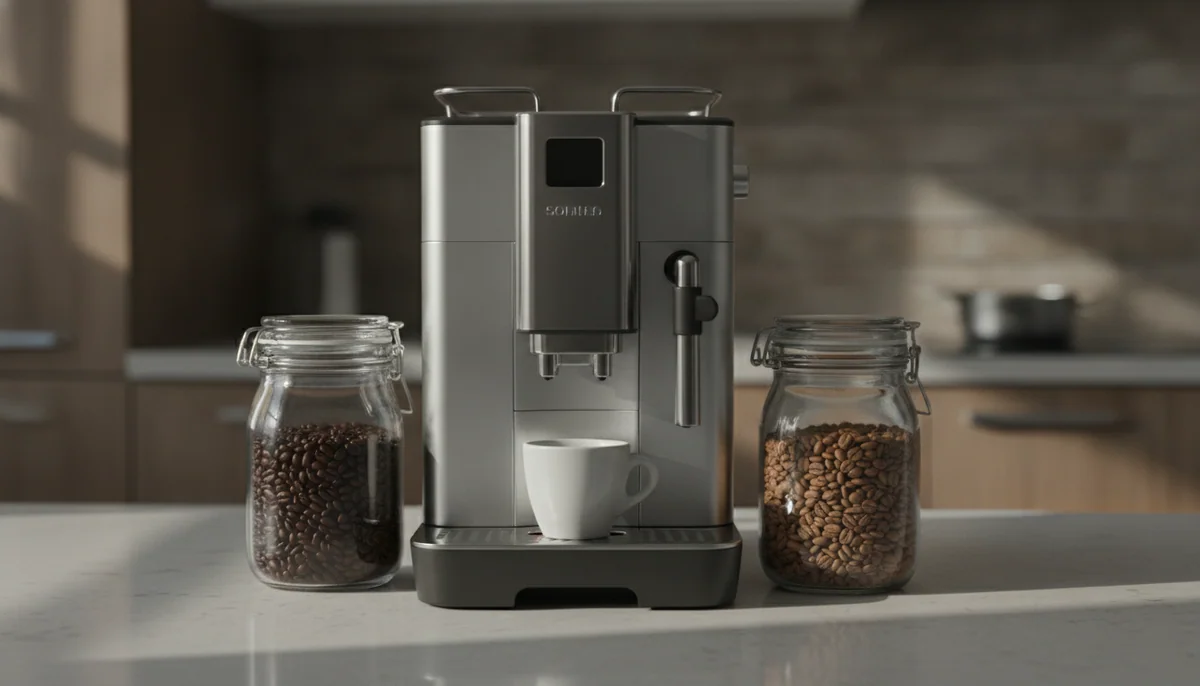
There are exactly three ways a bean-to-cup machine can serve a house that drinks two different coffees, and the gap between them in money is far wider than the gap between them in convenience. It can carry two grinders. It can carry one grinder and two hoppers you exchange. Or it can carry one hopper and a small chute you drop a spoonful of pre-ground into, which is what the large majority of machines in this category offer and what all three Philips listings here offer.
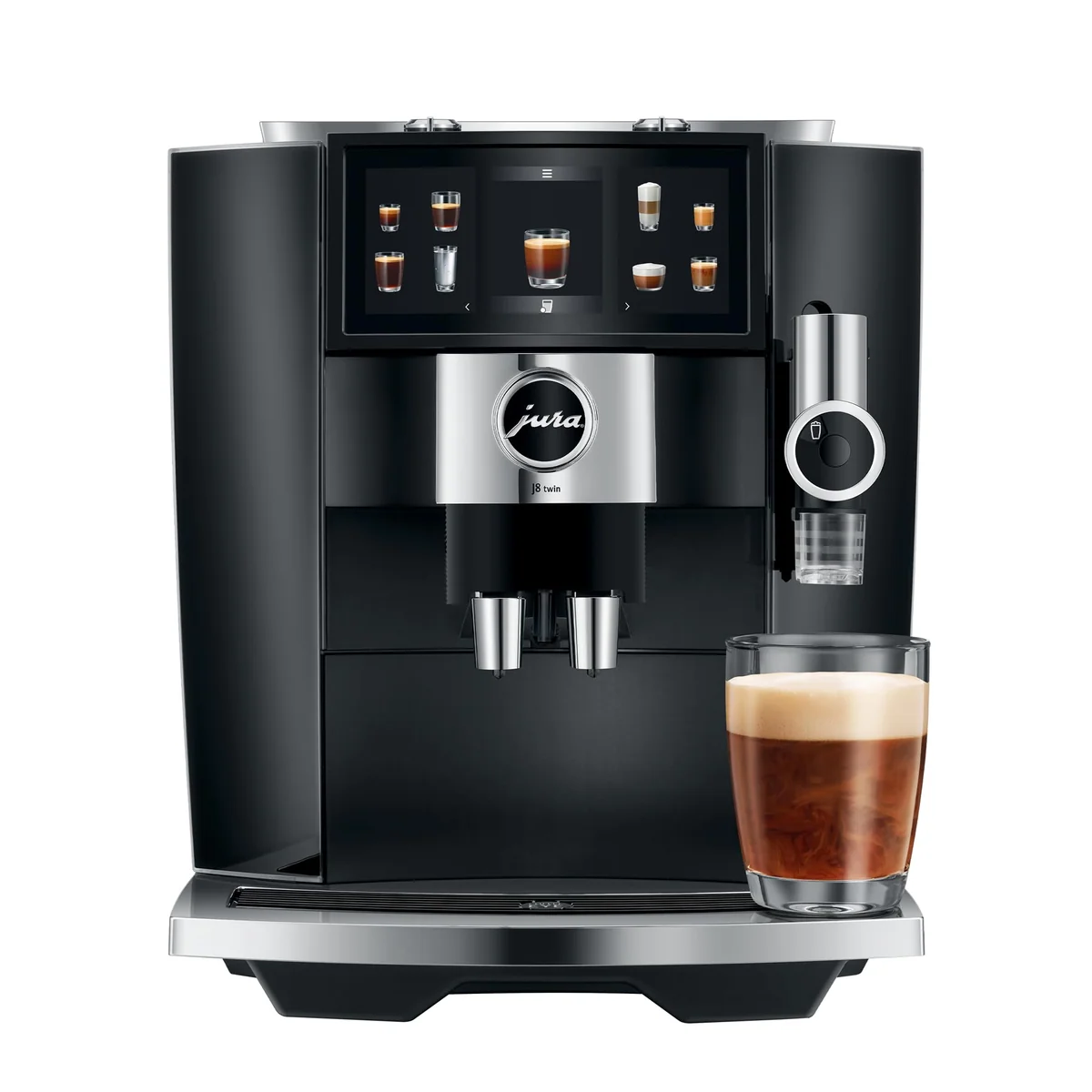
Jura's answer is the literal one. Two 6.3-ounce bean containers, each with its own conical grinder, in a body about the size of a family air fryer. That single design decision is why the machine exists, and it is why half of the retained owner reviews on the listing are variations of the same short story: one person drinks decaf, another drinks regular, and nobody empties a hopper any more.
De'Longhi's answer is cleverer and cheaper. Two 8.8-ounce hoppers, one grinder, and a lid you lift off and replace in a few seconds while the screen asks whether you would like the old beans cleared out first. Owners who bought it for that reason describe it the way people describe a dishwasher, and one of them puts it in the plainest terms available: he cannot tolerate caffeine after a certain hour, so the second hopper simply lives full of decaf.
Philips does not compete on this at all, and it is worth being blunt about that before anybody spends money on the assumption that twelve or twenty recipes implies two coffees. What a LatteGo machine gives you is a bypass chute, a scoop, and a sequence on the screen you have to get right before the grounds go in. It works for some people. One owner of the 4400 on this page reports the opposite in a single sentence, that if you use coffee grounds this is not the machine for you, because he could not get the function to work.
What the second bean actually asks of the machine
Every design here has a tax, and none of the listings mention theirs. On a shared-grinder machine the tax is residue: beans are already sitting in the chute when you swap, and you either purge them into the grounds drawer or brew them as a drink. Owners who dislike waste have worked out the sequence that costs nothing, which is to unlock the hopper before your own coffee, brew the leftovers as your cup, and only then change over and make the decaf. An owner of this exact machine shrugs it off as a few cents of beans on an expensive appliance, and that is a fair reading if you switch twice a day rather than twice an hour.
The subtler tax is grind. Two hoppers do not mean two grind settings, and the Rivelia's thirteen-position burr set serves both sides at whatever number you last turned the dial to. Pair a light filter roast with a dark espresso roast and one of them will always be wrong, which narrows the machine's real brief to two coffees of broadly similar roast: the same roaster's caffeinated and decaf, or two medium blends that will share a compromise setting. Reviewers who weighed and timed shots on it also found the factory grind too coarse and the factory strength too low, so plan on dialling in once and then leaving it alone. Our guide to which beans survive a bean-to-cup grinder matters twice as much when you are buying two bags at a time.
Then there is the hopper nobody opens. Decaf that gets touched three times a week sits in a vented container going quietly flat while the machine certifies that it was freshly ground. Whole beans stale slowly, but a lidded hopper is not a storage jar, and both machines here split their capacity in half to give you the second one. Keep the low-use side shallow and refill it more often than its size invites you to.
One last confusion worth clearing before the money moves. User profiles are not bean profiles. The Philips 5500 saves four people plus a guest, and the 4400 saves two, and every one of those slots remembers a drink rather than a coffee. If your household problem is that two people want different strengths of the same bean, profiles solve it completely and this page is not for you.
| Architecture | How the second coffee gets in | The tax |
|---|---|---|
| Two grinders (Jura J8 twin) | Both loaded permanently, chosen on screen per drink | The price, and two smaller hoppers than a single-hopper machine |
| Two hoppers, one grinder (Rivelia) | Lift one hopper off, drop the other on | A few seconds, and the beans stranded in the chute |
| One hopper, bypass chute (Philips) | A level scoop of pre-ground, confirmed on screen first | Stale ground coffee, a fussy sequence, and the least reliable function on the machine |
The four machines, and what each is really selling
The order below runs from the machine that solves this problem most completely to the machines that only work around it, which is not the same as running from best value to worst. Read the first two closely and the last three only if the bypass chute is genuinely acceptable to you.
The Jura is the least compromised answer in the category short of buying two machines. Each hopper feeds its own grinder, any drink can be set to draw entirely from one side, entirely from the other, or at fixed ratios in between, and you can rename the grinders so that nobody has to remember which identical black lid has the decaf underneath it. It is also genuinely quiet, with a retailer measuring about 62 decibels at ear height on the single-hopper version and an owner taking phone calls while it brews. The premium is real and so are its limits: milk lands around 141 degrees, which two owners measured independently and which a Jura service centre told a third is within specification rather than a fault, so read why these machines run cooler than the chains before you decide that is a defect. The brew group is sealed and uninspectable, which one owner of a rival machine calls a feature if you never want to touch it and a dealbreaker if you do. Full detail sits in our J8 twin review, and the running costs in what a Jura actually costs to keep.
The only machine here that never asks anyone to swap anything
Two hoppers with a grinder each, assignable per drink from one side, the other, or a fixed blend, which is why so many of its owner reviews are simply people reporting that the evening decaf question stopped coming up.
Black coffee tops out around eight ounces per press and large travel mugs do not fit comfortably under the spouts, so a big Americano is two or three cycles and a decant.
Before you conclude that two grinders are obviously worth it, note that two owners in the evidence said out loud that they were not. One returned the machine inside the window after setup, having decided the twin function was something they would hardly use, and another who kept it wrote that decaf was a nice-to-have they rarely reach for. Be honest about whether the second bean is a daily habit or an aspiration; if it is the latter, a cheaper machine in the same range makes more sense. Worth knowing too that when an office wanted a machine that would take more than one bean type, the recommendation that came back was a considerably more expensive Jura still, so the twin is the affordable end of this idea rather than the extravagant one.
The Rivelia is where most of this page's readers should end up. The swap takes seconds, the screen walks you through it, and the machine is noticeably quieter than the Magnifica many owners upgraded from. The honest costs are the ones the listing will not print: milk arrives warm rather than hot, and while raising the temperature setting to maximum on day one helps a great deal, it does not make it a scalding latte machine. Large black coffees taste thin until you learn which button adds a second puck rather than more water. And the reliability tail is not empty: a one-star owner on this listing describes a machine that would not stop insisting the grounds needed emptying, and a support process he found disjointed enough to cost him the Amazon return window. Our full Rivelia review holds both hands of that.
The two-bean machine most households should actually buy
Lift one 8.8-ounce hopper off, drop the other on, and the machine offers to clear the grinder for you, which is the entire feature and it works exactly as sold.
Both hoppers feed one set of burrs at one grind setting, so a light roast and a dark roast cannot both be right, and the milk drinks come out warm rather than properly hot.
The beige listing is the same machine with a different shell, and the reviews attached to it repeat the same findings from a different set of owners, including a short buyer's complaint worth having before delivery: the display lives on the roof, so a tall counter and a short person is a genuinely awkward combination. The most useful review on either listing is the one that recommends something else, from a buyer who owns both this and an Eletta Explore and prefers the Eletta for water capacity, hotter drinks and better cold ones. That is also the consensus of the owner thread where somebody asked which to buy: if you are not going to swap hoppers, do not pay for the hinge. We run that fork properly at Rivelia against Eletta Explore and across the range at which De'Longhi to buy.
The same machine for a kitchen that does not want a white appliance
Identical brew unit, identical LatteCrema carafe, identical bean switch, so the only question this listing asks you is a decorating one.
The touchscreen sits on top of the machine, which an owner on this listing found unusable on a standard-height counter without moving it somewhere lower.
Which leaves the three Philips listings, and a different argument entirely. Nothing in the LatteGo range holds two beans, and nothing in it changes the coffee as you climb, because the grinder and brew group are shared from the bottom of the ladder to the top. What you are buying is the bypass chute plus a milk carafe that comes apart into two pieces and rinses in seconds, which is the strongest argument in the category for actually cleaning your milk system rather than meaning to. The chute wants a level scoop, and the sequence on the screen has to be right before the coffee goes in or the dose drops straight through to the waste tray. Our page on running pre-ground and decaf through a bean-to-cup machine is the one to read before you commit to this route, and why these shots come out thin covers the complaint that dominates the 4400's own review page, including the buyer who titled his return "very expensive brown water".
The cheap route to two coffees, if the second one can be a scoop of pre-ground
You get a decaf without emptying the hopper, plus the easiest milk system in the category to clean, for a fraction of what a two-hopper machine costs.
The bypass chute is the least dependable function on the machine, and one owner of this listing reports flatly that he could not get the ground-coffee route to work at all.
The 5500 is the same coffee with a better cockpit: twenty recipes, four saved profiles and a guest slot, and a colour display that tells a reluctant housemate what is wrong in words. On this renewed listing, seven of the eight retained reviews describe machines indistinguishable from new, one of them from a buyer replacing a 3200 he had run into the ground over six years. The eighth arrived leaking on Christmas Eve and went back, which is the whole renewed gamble in one review. If that trade interests you, read what renewed actually buys and costs, and the 5500 against the 4400 for whether the extra profiles matter in your kitchen.
More screen, more profiles, and still one hopper
Four profiles plus a guest slot suit a house where two people want two different drinks, and the renewed units in this listing's own reviews mostly arrive showing no signs of prior use.
It answers the who-drinks-what question and not the which-bean question, and one of the eight retained reviews here is a machine that arrived leaking and was sent straight back.
The renewed 4400 is the cheapest way into the chute route, and the listing deserves reading slowly rather than quickly. It promises a colour touch screen where the machine has a colour display with physical buttons, and three saved profiles where the real count is two plus a guest, and it carries ninety days of limited cover. Ninety days is the number to think hardest about, because the faults owners of this platform report are perished gaskets, leaks and sensors, and they tend to arrive after month four rather than in week one. Our piece on how long these machines last and what breaks first sets out that calendar, and the 4400 review covers what to check on day one.
The same 4400 with the warranty traded for a discount
If the scoop-of-pre-ground route is the one you want, this is the least expensive way into it and renewed Philips units generally arrive in better condition than the word suggests.
Ninety days of cover expires well before the leaks and perished seals this platform is known for, and the listing's own bullets overstate the machine twice over.
So: if two coffees are a daily fact in your house and the budget can carry it, the Jura ends the question outright and you will spend the rest of your ownership arguing about milk temperature instead. If two coffees are a daily fact and the budget is normal, buy the Rivelia, set the temperature to maximum, grind finer than the factory setting, and accept a few seconds and a few grams per switch. If the second coffee is an occasional evening thing for one person, a Philips and a jar of pre-ground decaf is a rational answer rather than a defeat, so long as you have read what that chute is actually like. Espresso Den has not had any of these machines on a bench, and every number above belongs to whoever produced it: an owner with a thermometer, a retailer with a sound meter, a reviewer who weighed what came out. The wider field is at our main roundup.
Frequently Asked Questions
Can one machine really keep decaf and regular loaded at the same time?
Only the two-hopper machines can, and even then the Jura grinds each side separately while the Rivelia keeps both loaded but grinds them one at a time.
What happens to the beans already in the grinder when you swap a Rivelia hopper?
The machine offers to purge them into the grounds drawer, or you can brew them as a drink first, which is what owners who dislike waste do.
Can two beans that need different grind settings share one machine?
Not properly, because both hoppers feed one set of burrs at one setting, so the pairing that works is two coffees of similar roast such as a roaster's regular and its decaf.
Is decaf through a Philips bypass chute a real substitute for a second hopper?
It is workable if you accept ground coffee and a strict sequence on the screen, but it is the least reliable function on the machine and at least one 4400 owner could not make it work at all.
Will decaf go stale in a hopper we only open in the evening?
Whole beans stale slowly rather than overnight, but a vented hopper is not a storage jar, so keep the low-use side shallow and refill it more often than its capacity invites.
Does the Jura twin only do one bean or the other, or can it mix them?
Both, since any drink can be set to draw entirely from one side, entirely from the other, or at fixed ratios in between.
We are two drinkers but one coffee, so does any of this apply to us?
No, and you should choose on milk system, dose and screen instead, because saved user profiles solve two people wanting two drinks and have nothing to do with two beans.
Our Top Recommendation
Based on our research, the Jura J8 twin is our top pick — two hoppers end the decaf argument in a two-drinker kitchen, and almost everything else on the spec sheet is the same jura you can buy for a great deal less..
Sources (4)
- Amazon listings and customer reviews
- Owner reports across r/superautomatic threads
- Owner and reviewer video, 7 channels
- Homecoffeeexpert — Article — homecoffeeexpert.com