Philips 3200 vs 3300: the replacement is quieter, and that is most of what changed
Take the 3300 unless the outgoing 3200 is discounted by enough to matter to you, because the newer machine's one genuine gain is a much quieter grinder, its one genuine loss is the americano button, and the coffee in the cup is the same mild coffee either way.
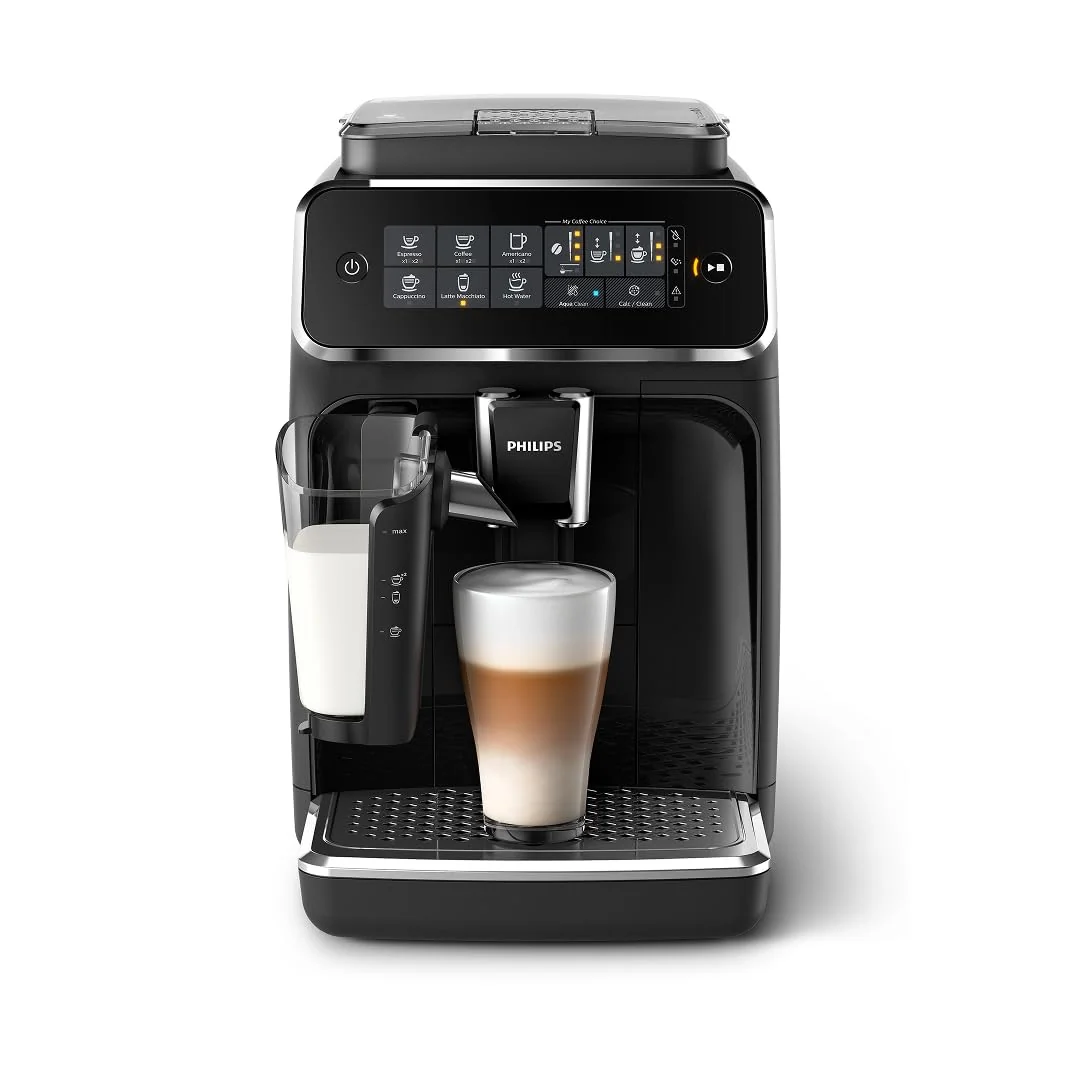
Philips 3200 LatteGo
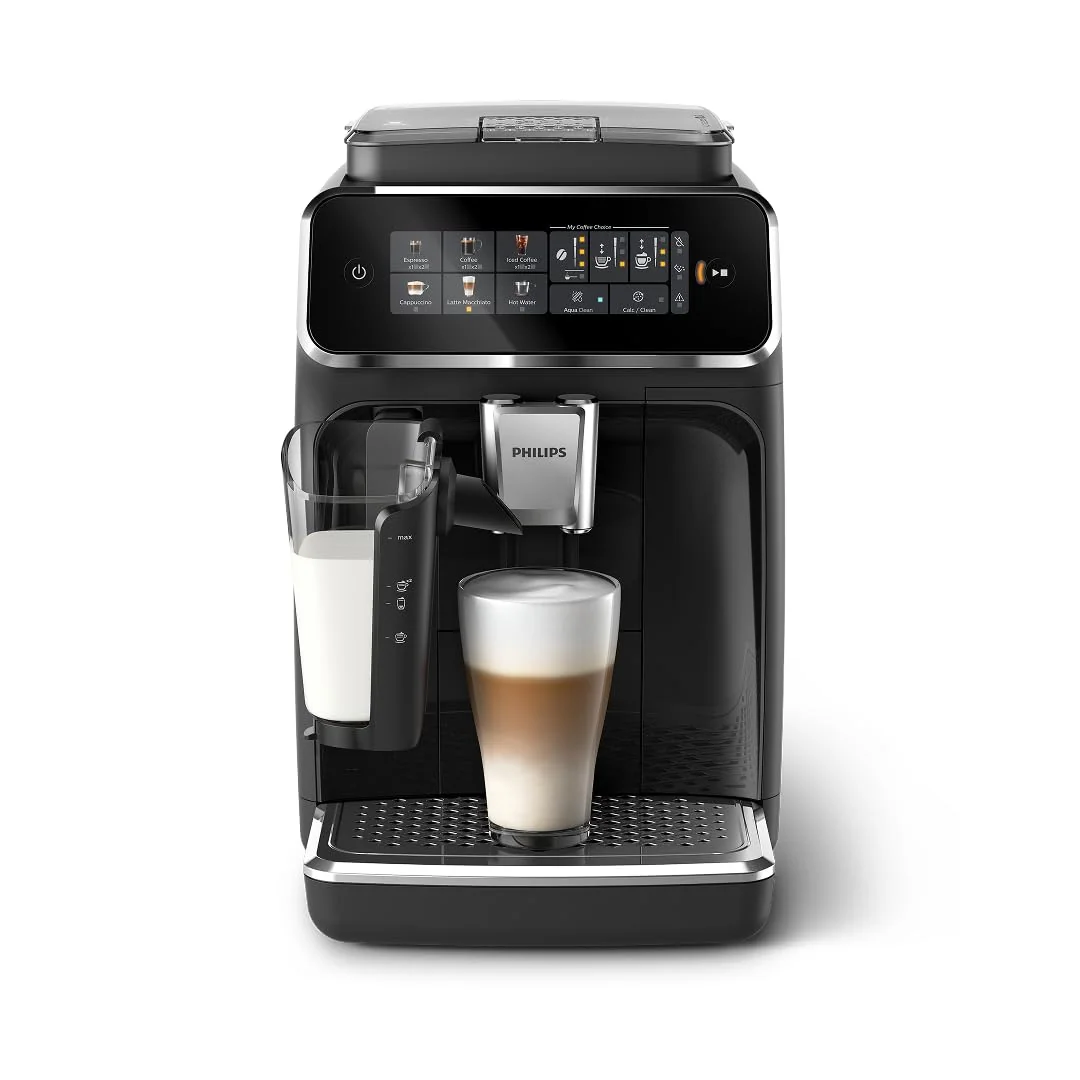
Philips 3300 LatteGo
Philips replaced the 3200 LatteGo with the 3300 LatteGo, and the model numbers tell you how big a replacement it was: EP3241 became EP3341. That is a middle digit. Read the two listings side by side and you would think otherwise, because the newer one arrives with SilentBrew, a full colour display, six presets and a payback calculation, while the older one is still selling five drinks and an intuitive touch display in the same brand voice it used years ago.
Espresso Den's reading of both records is that exactly one of those new claims survives contact with a measuring instrument, and it happens to be the one that matters most to people who make coffee before anybody else in the house is awake. The grinder is quieter. Everything else is either the same part in a different colour or a marketing word doing work the hardware does not support.
That makes this an unusually clean decision, which is rare in a range where most upgrade questions are muddy. You are not choosing between two coffees. You are choosing between a quieter machine that makes an iced setting you probably will not use, and an older machine with a one-touch americano that some households press every single morning. Our full review of the 3200 and our full review of the 3300 reach the same verdict from opposite directions, and neither of them found a reason to describe the newer machine as an upgrade in the cup.
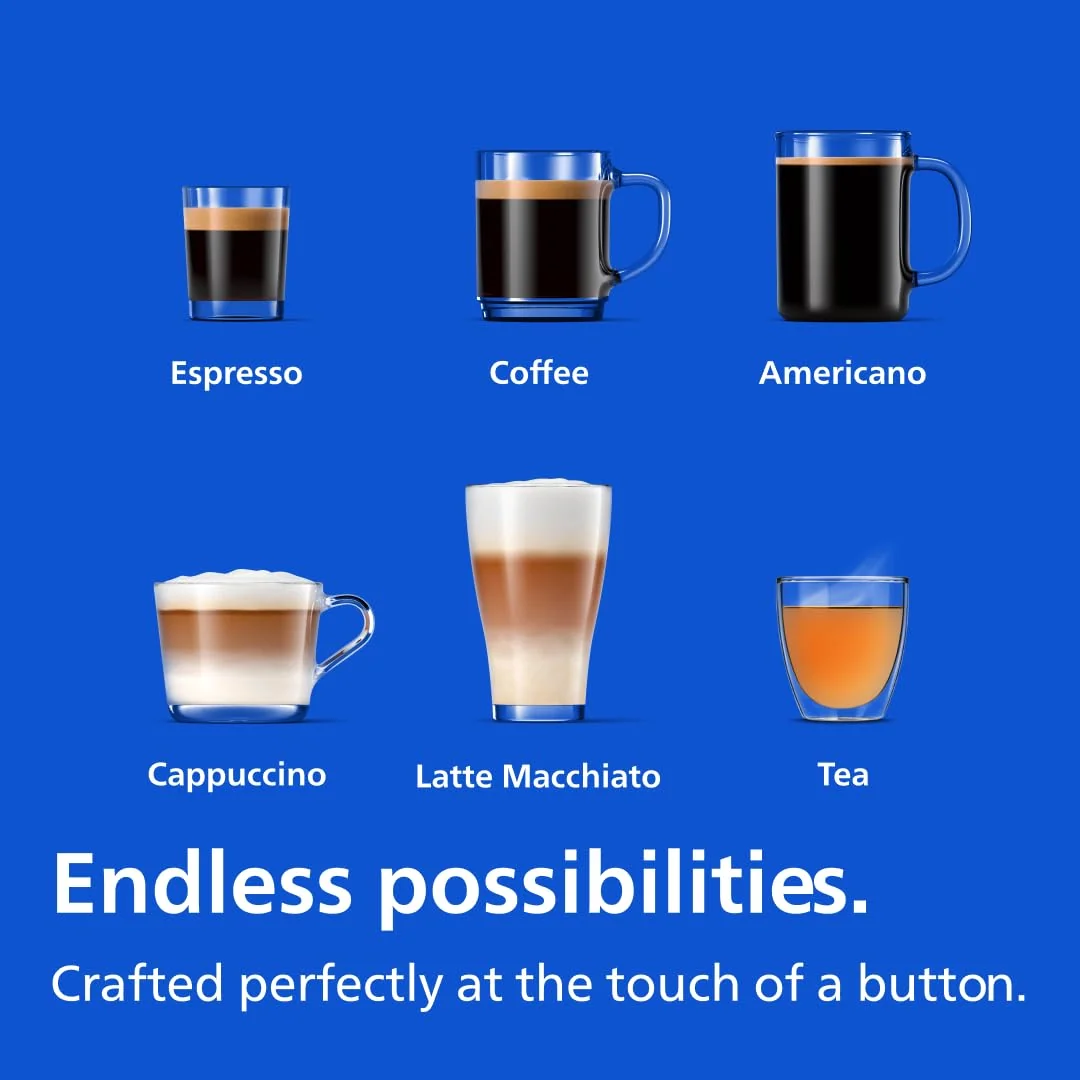
Philips 3200 LatteGo
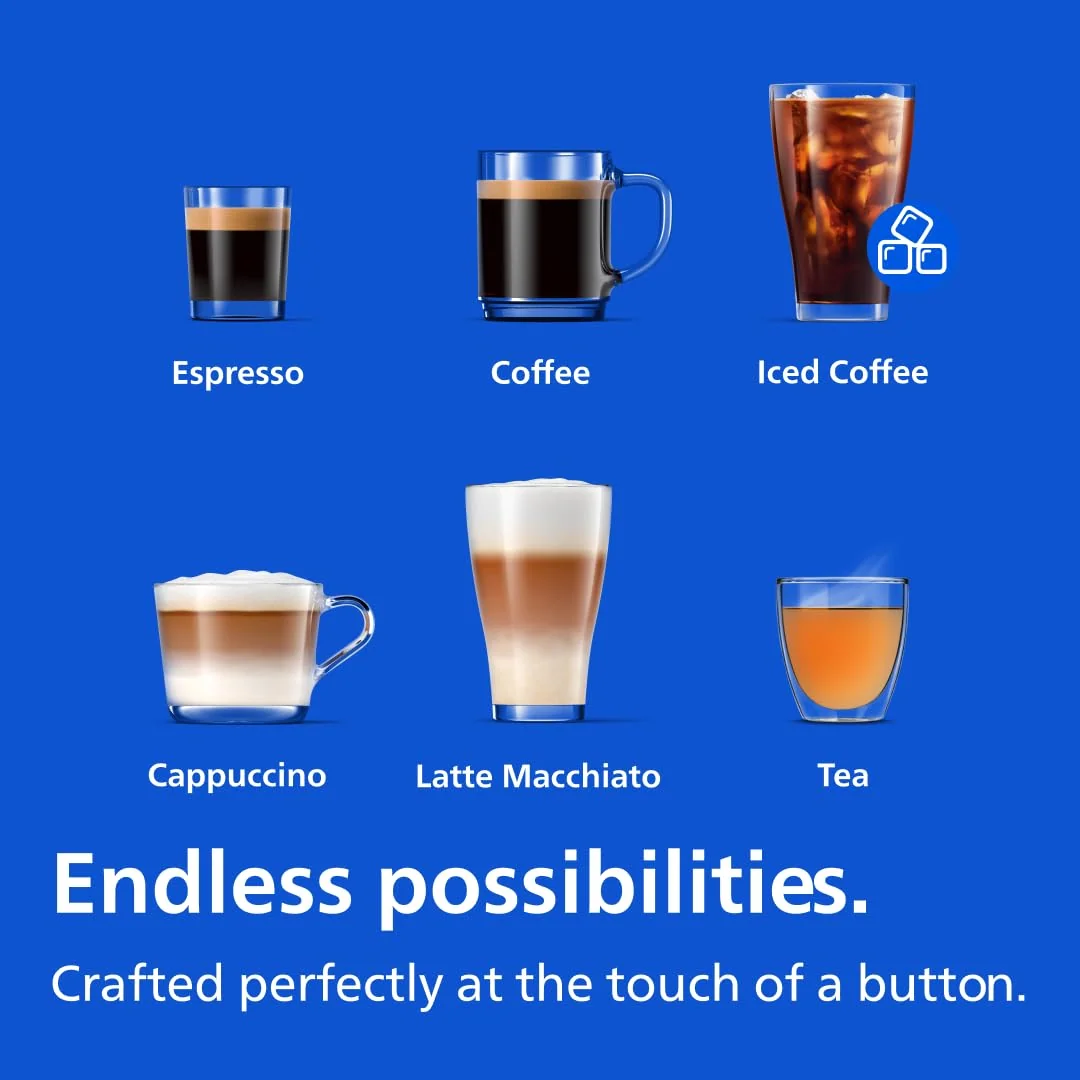
Philips 3300 LatteGo
At a Glance
| Feature | Philips 3200 Series Fully Automatic Espresso Machine, LatteGo Milk Frother, 5 Coffee Varieties, Intuitive Touch Display, 100% Ceramic Grinder, AquaClean Filter, My Coffee Choice, Black (EP3241/54) | Editor's Pick Philips 3300 Series Fully Automatic Espresso Machine with LatteGo Milk System and integrated grinder, 6 Hot & Iced Coffee Pre-Sets, 40% Quieter SilentBrew, 15-Bar Pressure, Glossy Black (EP3341/50) |
|---|---|---|
| Price Range | $500–$1,000 | $500–$1,000 |
| Configuration | (EP3241/54) | 9.68"D x 17.04"W x 14.6"H |
| Finish | Black | Glossy Black (Ep 3341/ 50) |
| Items In Box | 1 | 1 |
| Listed Since | — | 2025-06-02T00:00:01Z |
| Check Price on Amazon | Check Price on Amazon |
What actually changed between them
Start with the parts that did not change, because they are the majority of the machine and they are the reason both models taste the way they do. The same ceramic flat burr grinder with twelve settings. The same removable brew group you pull out and rinse under the tap. The same two-piece LatteGo carafe with no tubes and no milk path inside the body. The same three strength levels, three volume levels and three temperature levels, all of them set by holding buttons rather than by reading a menu. This is the Saeco-derived platform that runs from the bottom of the LatteGo range to the top of it, which is why a reviewer who pulled and weighed shots from three different Philips models could not separate them in the cup.
| What you are choosing | 3200 (EP3241/54) | 3300 (EP3341/50) |
|---|---|---|
| Grinder noise | Loud enough that a teardown author called it one of the loudest consumer devices he had heard | Measurably quieter, thanks to a thick rubber gasket around the bean hopper |
| The button you gain or lose | One-touch americano | One-touch iced coffee, which is warm coffee brewed slower and cooler |
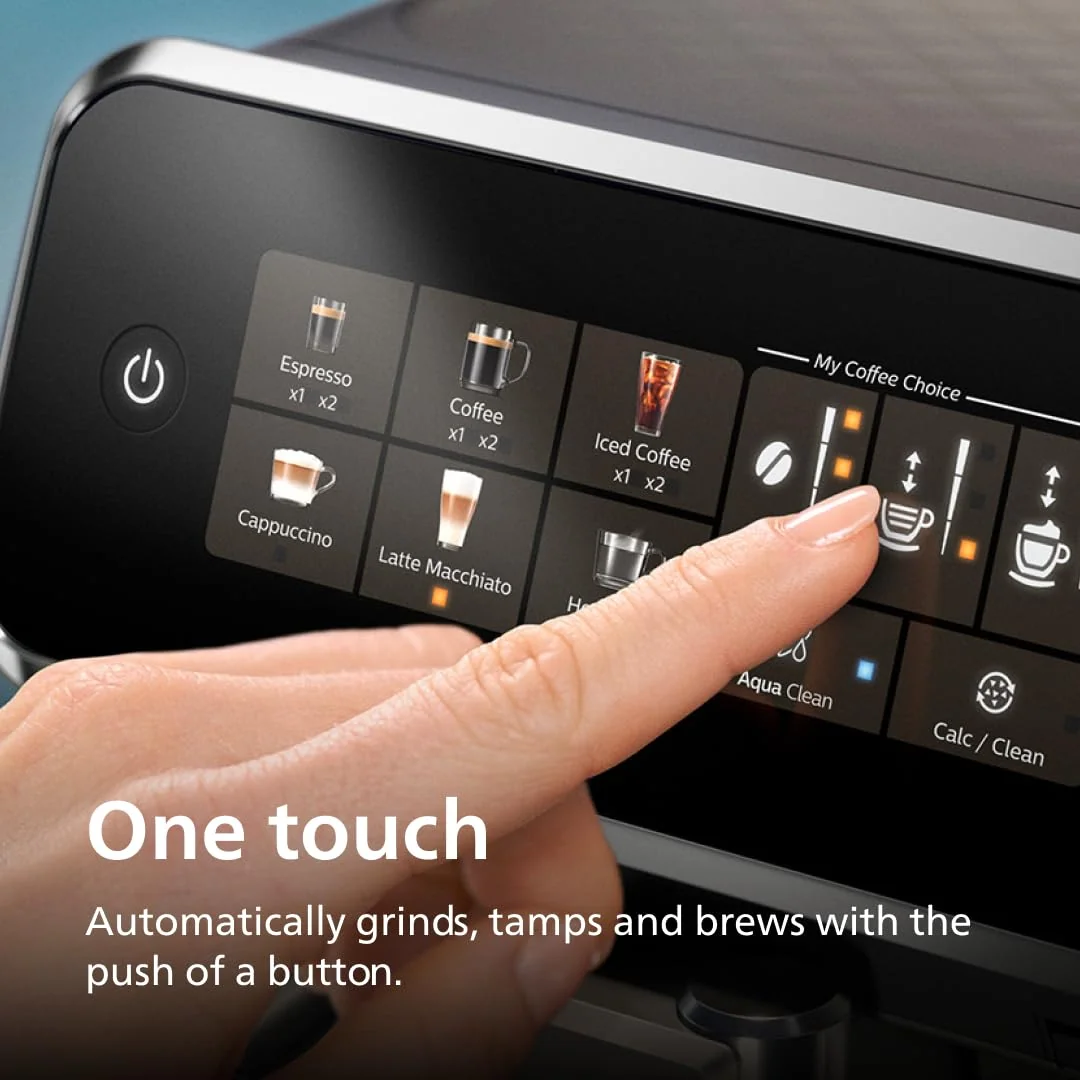
| Panel | Backlit icons and blinking lights | Backlit icons in colour, still not a touchscreen and still not a menu |
| Milk system | LatteGo, described as two parts | LatteGo, described as three parts, same carafe geometry and same foam |
| Water use per drink | Startup and shutdown rinses fill the tray faster than new owners expect | An owner of both says the newer machine goes through noticeably more |
| Labels and paperwork | Ordinary peel-off stickers, per an owner who had both | Adhesive that two separate owners had to soak and scrape off, and no printed manual |
The quiet is real, and it is smaller than it sounds
SilentBrew is advertised as a forty percent reduction against previous models. Reviewers who put a sound meter on a 3300 found the grinder the quietest Philips had produced, and the mechanism is not clever: it is a gasket around the hopper lid, and lifting the lid puts the old noise straight back.
The best evidence is not a decibel figure though, it is the owner who upgraded from one to the other and reported the difference from inside his own kitchen. He describes the new seal, says grinding is significantly quieter, and then says the frother makes exactly the same racket as before. That is the boundary of the improvement stated more honestly than the box states it. SilentBrew acts on the grind. The pump during extraction is untouched, the milk system is untouched, and on the older machine one owner noted the frothing was already louder than the grinding. If you are buying quiet because a baby sleeps on the other side of the wall, you are buying half of it, and the machines that actually win on noise are a different shortlist.
Americano or iced coffee, which is the whole button swap
Both machines have six things on the panel and one of those six is different. The 3200 in this comparison, the /54, gives you a one-touch americano. The 3300 gives you an iced coffee preset instead, and Philips did the same swap once before, within the 3200 generation, when the /74 traded the americano away for the same setting.
Be clear about what the iced setting is. It does not chill anything. It brews at a reduced temperature with a slowed flow so that the result survives being poured over ice, which is a real change to the extraction and not a gimmick, but it is also not cold brew and it is not something you cannot do by hand. Pull two hot shots straight over a glass of ice and you have the same drink, which is the conclusion our page on whether these iced modes brew cold reaches across the whole category.
The americano is harder to replicate, and this is the one place the older machine is straightforwardly better. Ask the newer machine for a long black and you are choosing between the coffee button, which flushes more water through a small puck, and a two-step where you brew an espresso and add hot water from the spout yourself. The owner who moved from the 3200 to the 3300 volunteered exactly this, unprompted: he preferred the americano. If americanos are your morning, that preference is worth more than a gasket.
The dose is the same argument on both machines
Neither of these makes a café espresso, and the reason is arithmetic rather than a fault. Two reviewers who weighed what lands in the 3200's brew group put it somewhere between roughly eight and eleven grams against about thirty grams of liquid out, which is a three-to-one ratio at best where a café double is nearer two-to-one from eighteen grams. Bench weighings of the 3300 land in the same territory, clustering below nine grams at maximum strength.
Here is where we will not pretend to more precision than exists. Those ranges overlap, they were taken by different people on different scales, and nobody in the public record has weighed both machines back to back. The only direct comparison anyone has offered is an impression, from the owner who ran a 3200 and then a 3300 and concluded that the newer one uses slightly less coffee per shot, produces a less dense puck, and makes coffee that is weaker if ever so slightly. He also describes the fix in the same breath, which is to add a separate espresso shot to the drink. Espresso Den treats that as one careful owner's account rather than a measurement, and it is the only evidence that exists in either direction.
What is not in dispute is the direction both machines lean. Light in body, quick to run, thin the moment you stretch it into a mug, and consistently praised for milk drinks by the same people who criticise the black coffee. On the newer machine, a two-star reviewer who found the espresso watery still said the latte was good and the milk frothed nicely. On the older one, the pattern is identical and years older. If a weak shot is what brought you to this page, the causes are mostly shared across the range and our piece on why bean-to-cup espresso comes out watery covers them, while the machines that suit black coffee drinkers is the honest answer if the dose is the dealbreaker.
The first twenty drinks are bad on both, and that trips up returns
Neither machine is good out of the box, and both suffer for it in their star ratings. On the 3300, an Amazon reviewer says plainly that the early coffee was very weak and that by roughly the twentieth cup it had become excellent espresso. On the 3200 the same folklore has been circulating for years, with estimates from a handful of shots to a couple of months, and one owner proved part of the mechanism by pulling the brew group out, working the stiff factory grease by hand until the action smoothed, and getting a properly compressed puck on the very next shot.
The rest of it is not settling in at all, it is the factory settings being wrong. Both machines ship with the grinder set coarse, and reviewers found only about the finer half of the twelve settings usable in the first place. The route through this is the same on either model: strength to maximum, volume to minimum, temperature to the top setting, grind worked down two or three steps one increment at a time and only while the burrs are actually turning, then two shots thrown away after every change. Because neither machine has a screen, all of that lives behind button-holds, which is why the hidden settings and warning lights is the page owners of both models keep open on their phones.
One trap catches people on both machines and it is worth stating on its own. The cappuccino and latte macchiato buttons pull a single shot, not a double, and there is no way to make a double the default. One owner spent days convinced his machine was broken before working out that his old café cappuccino simply had twice the coffee in it. Build the milk drink, then run a separate espresso into the same cup, on either generation.
Buying the outgoing model does not strand you
A reasonable fear about picking the older machine is that you are buying into a dead end for manuals, filters and spares. That fear is misplaced here. Philips still runs support pages for the 3200 variants, the LatteGo service manual circulates publicly, and brew groups, water inlet nozzles and dispensing heads for this platform are ordinary catalogue parts sold with exploded diagrams. The most common failure on the older machine, according to the repairer with the most-watched teardown of it, is a worn O-ring on the water inlet nozzle, which is a two-screw part and a ten-minute job.
Leaks are worth taking seriously on the newer machine too, and this is the one place its record is worse rather than better. An owner three weeks in reported warm water pouring from underneath the body during the brew cycle, bypassing the drip tray entirely and reaching the counter, and returned the unit. Warm water past the tray is a fault rather than a rinse cycle, and it is a reason to send a machine back rather than to start troubleshooting it.
Consumables are identical across both. AquaClean filters, coffee oil tablets, food-grade grease for the brew group rails, and the same five thousand cups without descaling claim on both listings, which carries the same footnote in Philips's own small print: the figure assumes you fit eight filters as prompted. It is a subscription described as an absence, and we take the whole arrangement apart on our Philips descaling and AquaClean page. One small warning specific to the newer machine: an owner found no food-safe grease in the box and was glad he still had some from his previous Philips. Check yours before the machine asks for it.
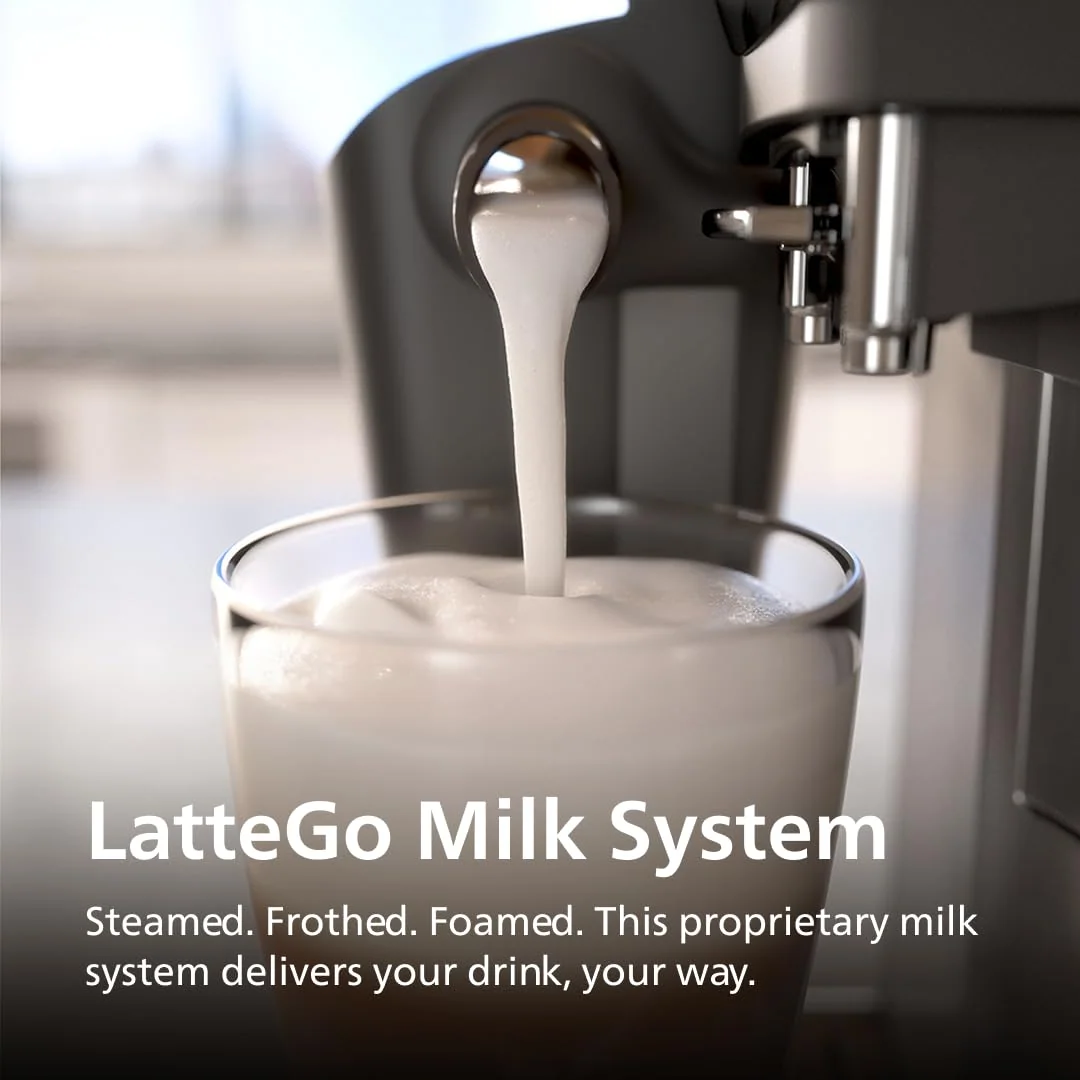
Philips 3200 LatteGo
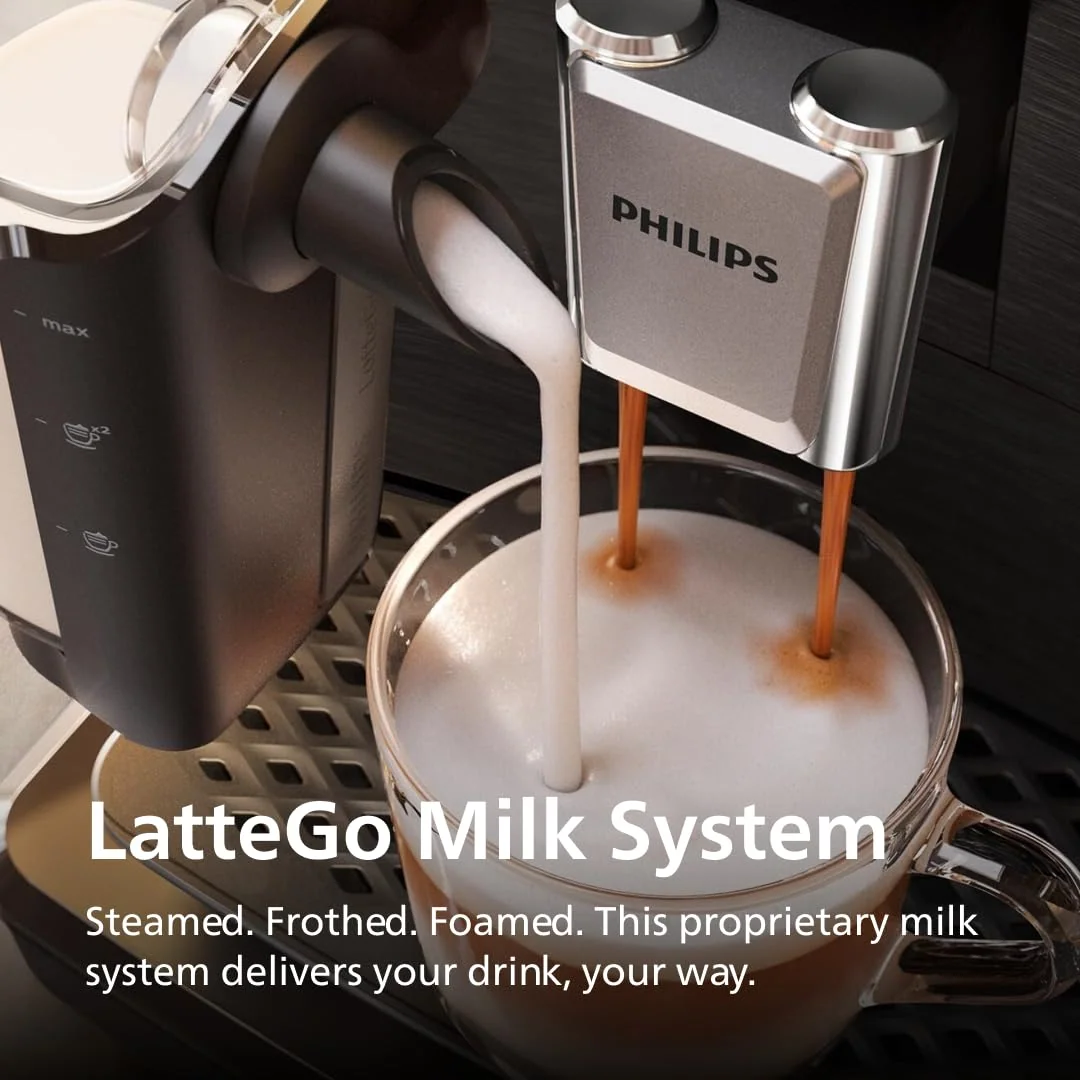
Philips 3300 LatteGo
Which of the two you should actually buy
The decision comes down to three questions and none of them are about coffee quality. Does anyone in your house get woken by the grinder? Do you press an americano button most mornings? And is the older machine's price genuinely lower, rather than the same money for a machine one generation behind? Answer those and the choice makes itself.
For anyone still weighing whether the LatteGo carafe is the right milk system at all, that question outranks this one, and steam wand against automatic frother settles it faster than either of these listings will. If you land on Philips, the carafe is the reason, and it is genuinely the easiest automatic milk system in the class to clean on both machines.
The outgoing machine, worth buying only when it is priced like one.
It is the same grinder, brew group and milk carafe as its successor with a one-touch americano instead of an iced setting, which makes it the better machine for a household that drinks long black coffee and the wrong one for a household that cares about noise.
The grinder is loud enough that a six o'clock espresso will be noticed by everyone in the house, and no setting on the machine changes that.
The default choice, and the quietest machine Philips has built on this platform.
A gasketed hopper makes the grind dramatically less disruptive, which is the single change most likely to alter how often you actually use the machine, and everything else about it is the LatteGo experience unchanged.
You lose the one-touch americano to an iced coffee setting that only brews cooler and slower, and one owner who ran both machines found the newer one dosing slightly less coffee per shot.
Two groups should buy neither. If two people in the house take their coffee differently, neither machine holds a meaningful profile, and the step up is where that gets solved: the 3300 against the 5500 lays out what saved profiles and a real display are worth, though the retailer selling both concedes they share the same brew unit and therefore the same coffee. And if you only ever drink two things, the money is better spent lower down, which is the argument on the 2200 against the 3200. The full ladder is on our guide to which Philips to buy.
The one comparison that genuinely threatens both of these is not a Philips at all. De'Longhi puts more coffee in the basket at this money, the owner forums are lopsided about it, and we do not dodge that on LatteGo against the Magnifica Evo. If milk is the whole point of the purchase, Philips still wins on the carafe. If the shot is the whole point, read that page before you spend anything here.
Frequently Asked Questions
Is the 3300 really quieter than the 3200?
Yes for grinding, measurably so and confirmed by an owner who ran both, but the pump during brewing and the milk frother are unchanged.
Does the newer machine make better coffee?
No, because both use the same grinder and the same brew group, and the only person to compare them directly thought the newer one dosed slightly less coffee rather than more.
Why did Philips take the americano button away?
It was traded for the iced coffee preset, the same swap Philips made once before between the EP3241/54 and the EP3241/74.
Does the iced coffee setting brew cold?
No, it brews hot coffee at a reduced temperature with a slowed flow and expects you to pour it over ice yourself.
Are the brew group and spare parts the same on both?
They come from the same Saeco-derived platform that runs across the LatteGo range, and the service parts and diagrams for it are publicly catalogued.
Can I still get a manual for an EP3241?
Yes, Philips maintains support pages for the 3200 variants and the LatteGo service manual circulates publicly, which is more documentation than the newer machine ships in its own box.
Why is water appearing under the machine?
Water in the drip tray is the automatic rinse doing its job, but warm water reaching the counter from underneath during brewing is a fault, most often a worn inlet nozzle O-ring on the older machine and a reason to return a new one.
How long before either machine starts making decent coffee?
Roughly twenty drinks, so start the throwaway shots with cheap beans on the day it arrives rather than at the end of your return window.
Why do my cappuccinos taste weaker than my espresso?
Both machines pull a single shot for milk drinks with no way to make a double the default, so brew a separate espresso into the same cup.
Is a renewed or open-box unit of either a safe buy?
It can be, provided you judge it at forty drinks rather than five and buy it somewhere that will take it back, which is the whole argument on our page about buying refurbished .
Ready to Choose?
Sources (10)
- Amazon listings and customer reviews — Philips 3200 Lattego and Philips 3300 Lattego
- Owner reports across r/superautomatic threads
- Owner and reviewer video, 6 channels
- Tomscoffeecorner — Article — tomscoffeecorner.com
- Coffeeness — Article — www.coffeeness.de
- Blogspot — Article — hackcorrelation.blogspot.com
- Seattlecoffeegear — Article — www.seattlecoffeegear.com
- Scribd — Article — www.scribd.com
- Ebay — Article — www.ebay.com
- Philips — Article — www.usa.philips.com