The Breville worth buying is the one that automates the part you would otherwise get wrong
Every machine on this page is filed by Amazon under Super-Automatic Espresso Machines, and the listings themselves cannot agree on what that means. The Barista Touch's own product copy calls it a semi-automatic espresso maker in the same breath as it promises café drinks in three easy steps. The Oracle's copy calls it a fully automatic espresso machine. The Oracle Touch is billed as the next generation of fully automatic espresso makers. Three descriptions, one design philosophy, and the reviewer at Coffeeness who bought a Barista Touch and used it as a trained barista would puts the truth more plainly than any of them: it is very much a semi-automatic, the tamping is on you, and for some people that is the end of the conversation.
What Breville automates is the middle of espresso. It will grind, it will dose, on the Oracles it will tamp, and on all four machines it will heat and texture your milk to a number you chose. What it never does is take the portafilter out of your hand. You still lock it into a group head, you still knock a spent puck into a bin, and you still choose a grind size and re-choose it every time you open a new bag. If you came here wanting a sealed box that pucks the coffee internally and drops it into a bin, our page on what Breville actually automates will save you an afternoon, and the difference between a bean-to-cup and a machine you tamp yourself explains why the distinction is worth this much fuss.
| Machine | It handles | You handle |
|---|---|---|
| Bambino Plus with the Encore ESP grinder | Milk temperature and texture, shot volume | Grinding into a cup, levelling, tamping, locking in, knocking out |
| Barista Touch | Grinding and dosing into the portafilter, shot timing, milk | Levelling and tamping, carrying the portafilter, knocking out |
| Oracle and Oracle Touch | Grinding, dosing, tamping to 22 grams, shot timing, milk | Carrying the portafilter, knocking out, choosing the grind |
Read that table honestly and one of two things happens. Either the remaining column looks like a pleasant two minutes, in which case Breville has built exactly what you want, or it looks like a chore, in which case the machine you are picturing is a genuine bean-to-cup and our roundup of the ones that do press a single button is the correct next page. The clearest account of that trade Espresso Den has read comes from someone who moved from a Breville with a separate grinder to a bean-to-cup machine: the Breville made better espresso, with much wider variance, while the push-button machine was consistently good rather than occasionally great, and the convenience won. Higher ceiling, lower floor. One or two drinks a day favours the Breville. Four or five favours the other thing, and we set the two philosophies against each other directly.
There is one feature underneath all four of these machines that explains their prices better than any spec sheet, and it is the automatic steam wand. Breville's specification for the Barista Touch gives milk temperature adjustable between 104 and 167 degrees Fahrenheit across eight levels of texture, with a sensor that stops the wand when the jug reaches your number. The striking thing is how consistently people who had every reason to sneer at it have given in. The Coffeeness reviewer went in expecting to beat the machine with his own technique and reported, with visible irritation, that his mind was blown. Epicurious, testing an Oracle Touch, said the automatic function produced better milk than the reviewer had ever managed by hand. Wirecutter, which has disliked plenty of automated wands, called the Bambino Plus result basically indistinguishable from a café. That is Breville's real product. Everything else on these machines is a way of packaging it.
Quick Picks at a Glance
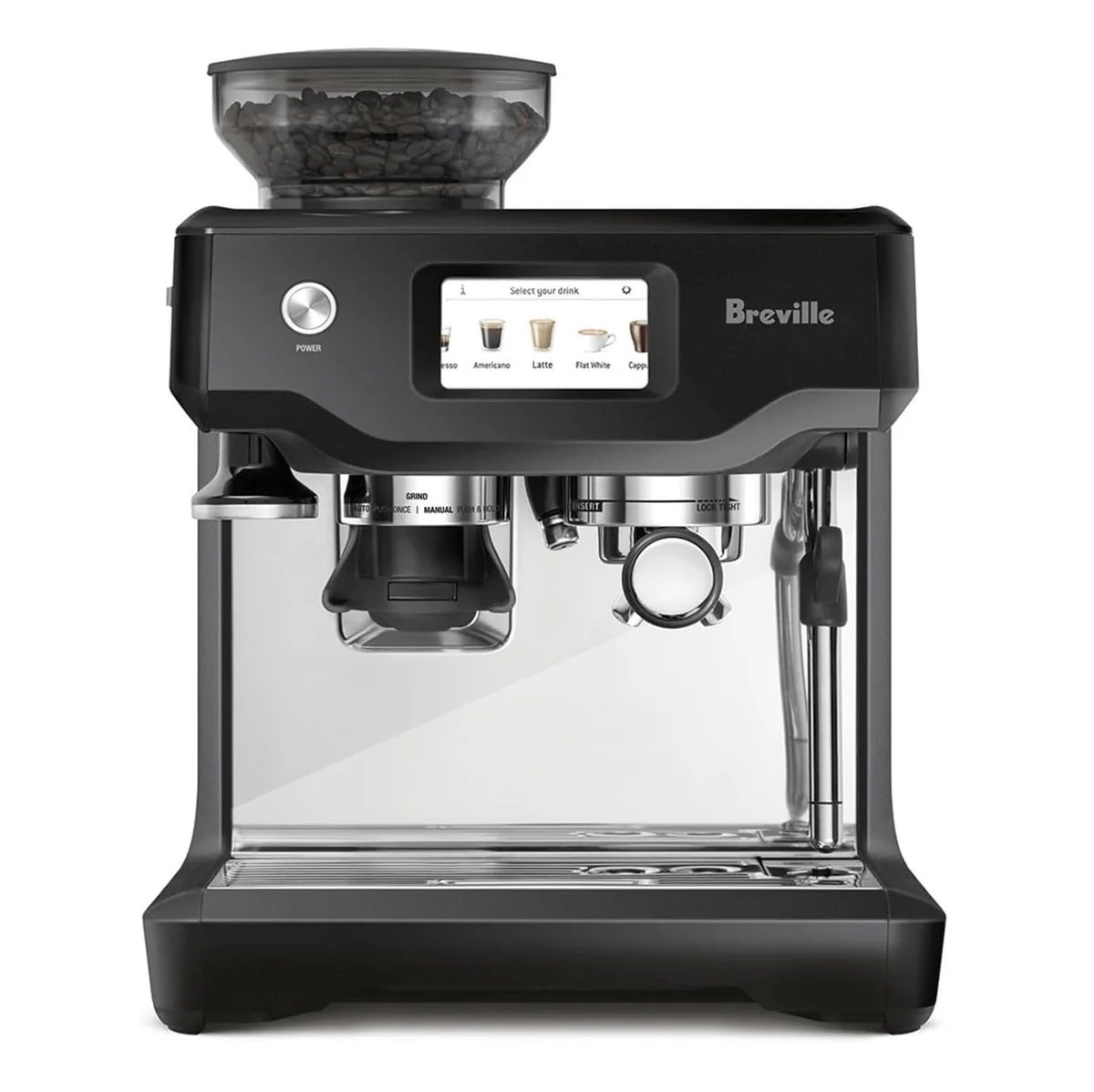
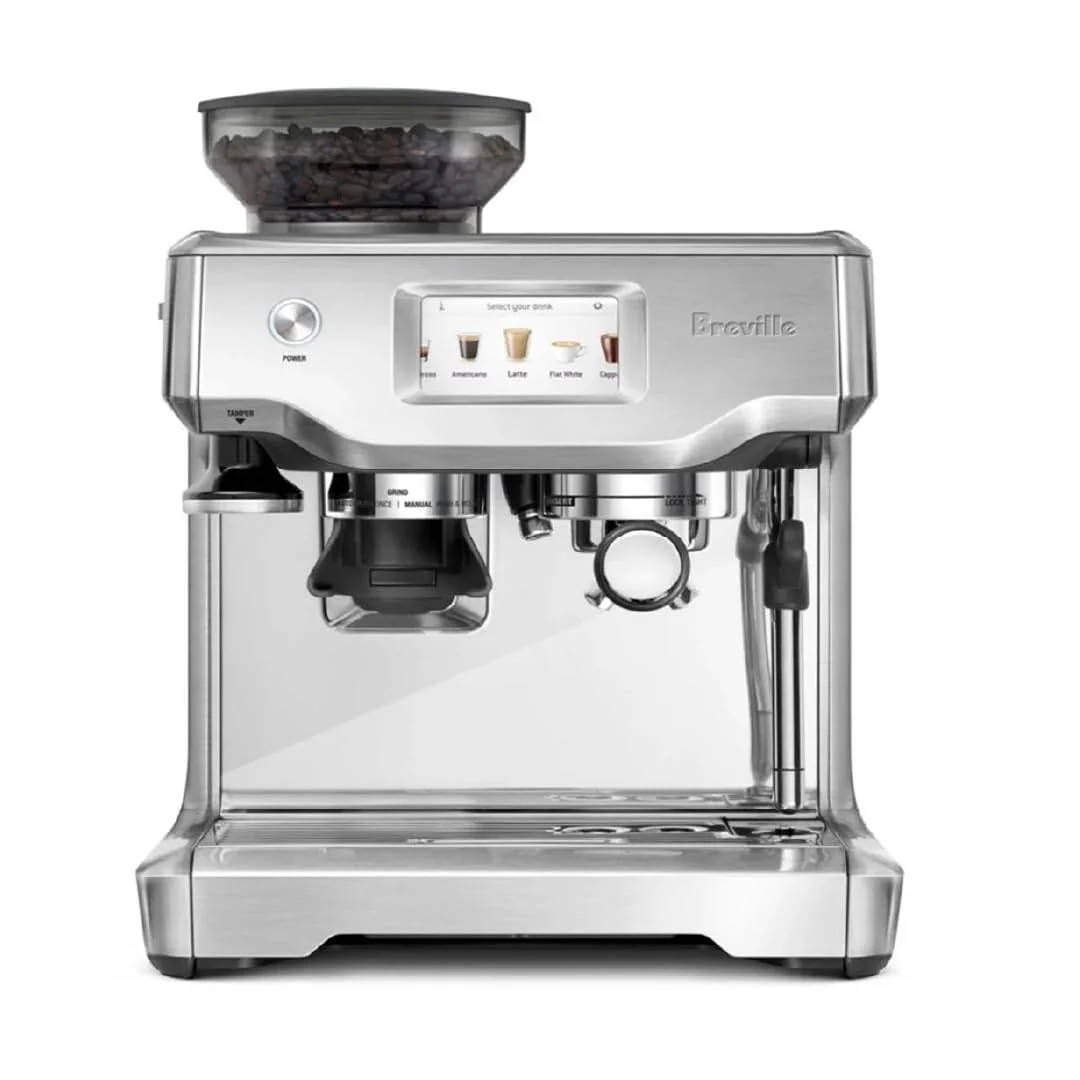
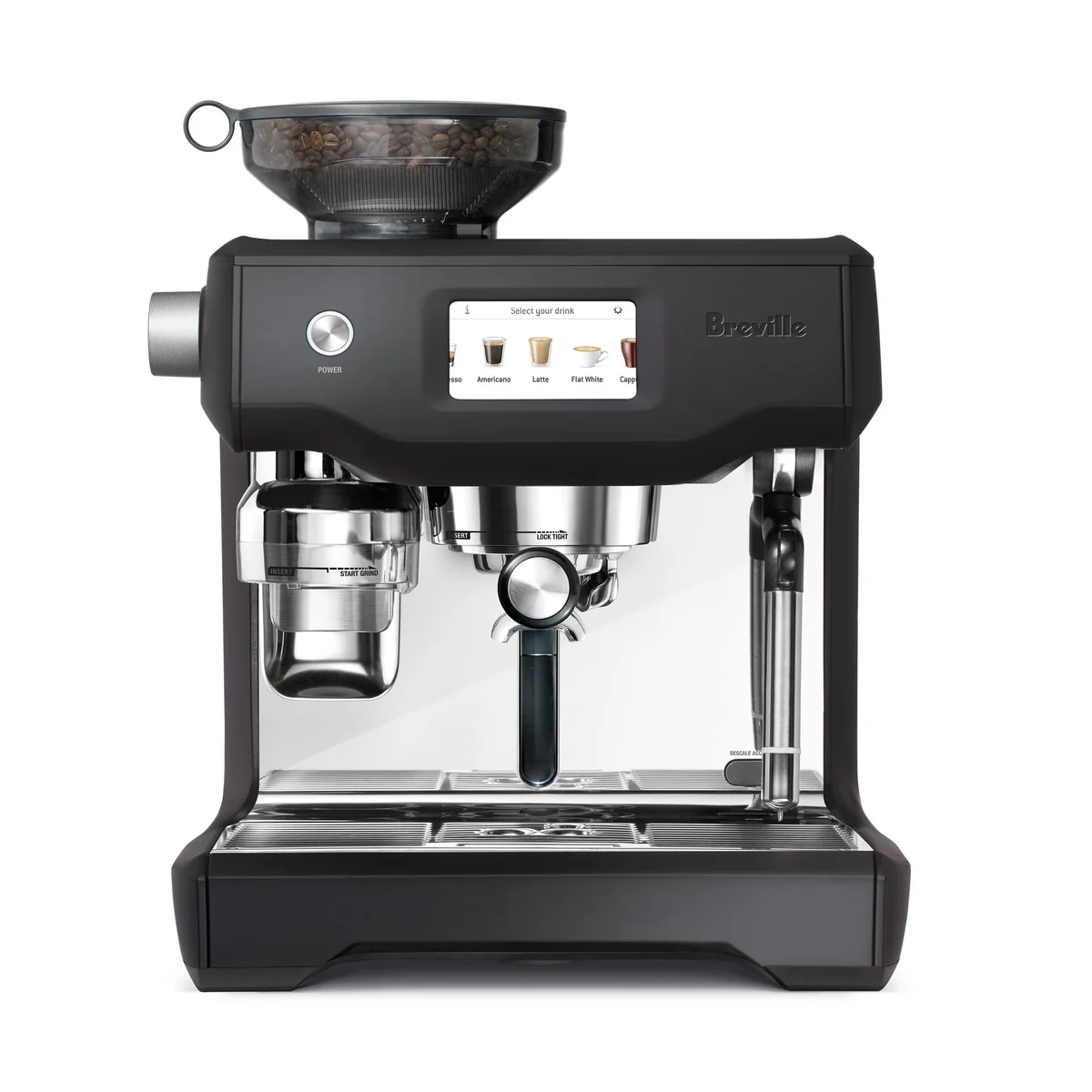
| Feature | Editor's Pick Breville Barista Touch Espresso Machine BES880BTR, Black Truffle | Breville RM-BES880BSS1BUS1 Barista Touch Espresso Machine, Brushed Stainless Steel (Certified Remanufactured) | Breville Oracle Touch Espresso Machine BES990BTR, Black Truffle | Breville Oracle Espresso Machine BES980XL, Brushed Stainless Steel | Breville Bambino Plus Espresso Machine Bundle w/ Baratza Encore ESP Espresso Grinder | Black | BEP501BTR1BNA1 |
|---|---|---|---|---|---|
| Price Range | $500–$1,000 | $500–$1,000 | $1,500–$3,000 | $1,500–$3,000 | $500–$1,000 |
| Configuration | Large | — | One Size | One Size | — |
| Finish | Black Truffle | Brushed Stainless Steek | Black Truffle | Silver | Black |
| Items In Box | 1 | 1 | 1 | 1 | — |
| Check Price on Amazon | Check Price on Amazon | Check Price on Amazon | Check Price on Amazon | Check Price on Amazon |
Four machines, and the mornings each of them suits
The order below runs from the machine that fits the most kitchens to the one that fits the most curious owner. None of these is a bad machine. They fail different people in different ways, and the failure modes are more useful to you than the feature lists.
The Breville most households should actually buy
It removes the grinding, the dosing and the milk texturing, which are three of the four things beginners get wrong, and leaves you a tamp you can learn in a fortnight.
Its grinder doses by time rather than by weight, so every grind adjustment quietly changes how much coffee lands in the basket until you go back and reset the timer.
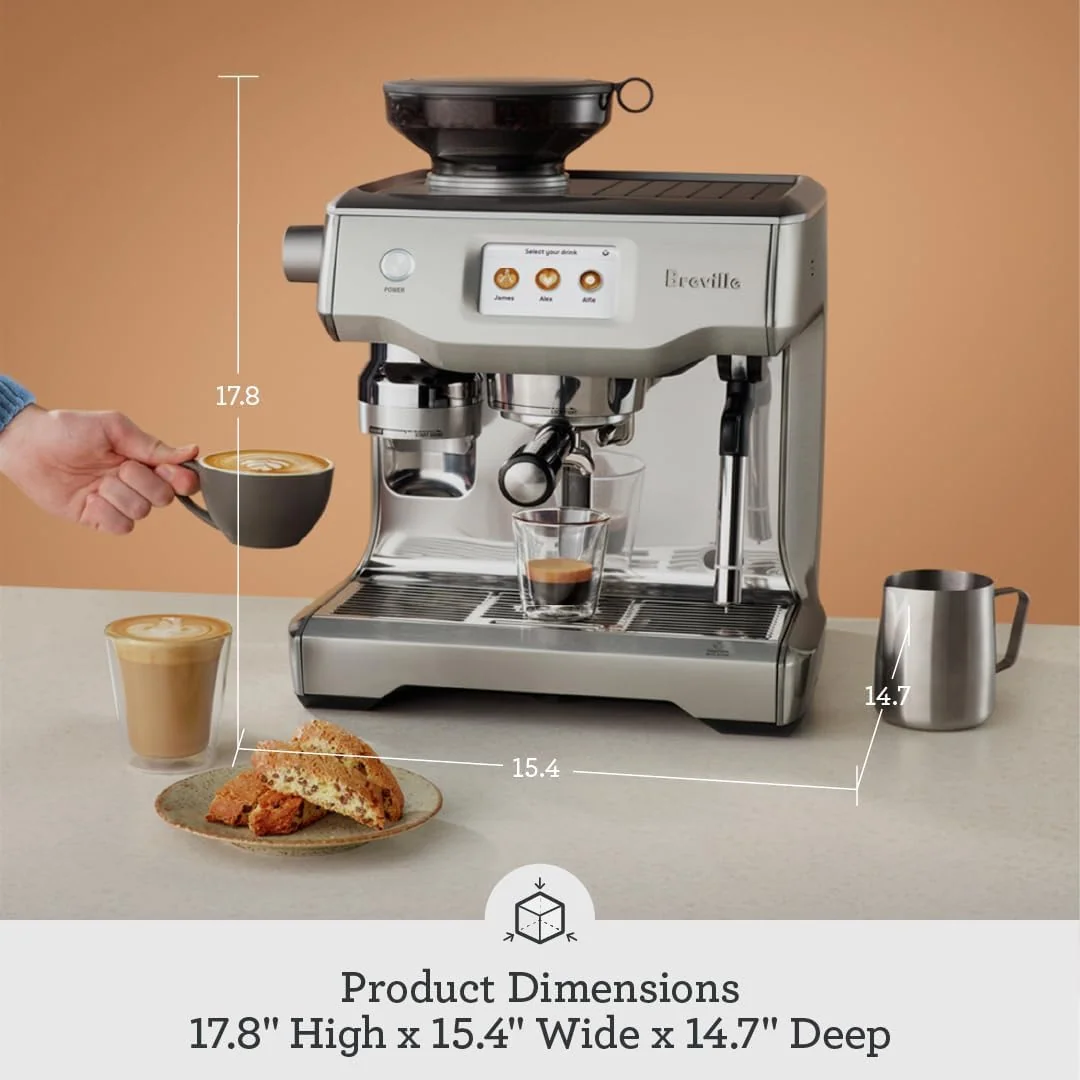
The Barista Touch is the machine the rest of this page keeps measuring itself against. Its screen holds five preset café drinks and eight slots you can name and save, which sounds like marketing until you own it and realise a saved profile per bag of beans is the difference between a two-minute drink and a ten-minute argument. The five-year owner writing for Food & Wine uses the wand for oat at 140 degrees, soy and almond at 130 and dairy at 150, and those four numbers are the most useful thing anyone has published about this machine, because they only mean anything on a wand where the temperature is a dial. The presets themselves are less impressive than they look, since the latte and the cappuccino differ by a single step of milk texture on a scale of eight, and most owners pick one and stay there.
The fairest limit on it comes from an Amazon reviewer who gave it three stars and meant it kindly: if you always add milk you will love it, and if you drink your espresso straight and know what a specialty bar tastes like, you will not. Hold onto that sentence, because it applies to every Breville here.
The same machine in brushed stainless, with warranty traded for discount
Breville's own certified remanufactured units are described as showing limited or no wear and arrive with the original accessories, so the finish and the paperwork are the only things separating this from the machine above it.
It carries six months of Breville warranty rather than two years, which lands short of the eighteen-month-to-three-year window in which owners most often report the milk wand's temperature sensor failing.
That warranty line is the entire trade and it is worth reading twice. The component owners report failing most often on a Barista Touch is the sensor behind the automatic wand, which is to say the very thing you paid the premium for: one owner of eighteen months calls it a design weakness that throws error code 5 and advises taking an extended warranty, and a buyer on this listing arrived here precisely because his three-year-old Touch had given an E05 thermistor code. That same buyer described the refurbished machine as beautiful and better than new. One data point in the right direction, not a pattern, and Espresso Den found no independent testing of the remanufactured units at all. Take this listing when the gap to a new one is genuinely wide on the day you look, and read our guide to renewed and remanufactured machines before you decide, because Breville discounts the new BES880 often enough that the gap is not a constant.
The one that tamps for you, and the one to be most careful with
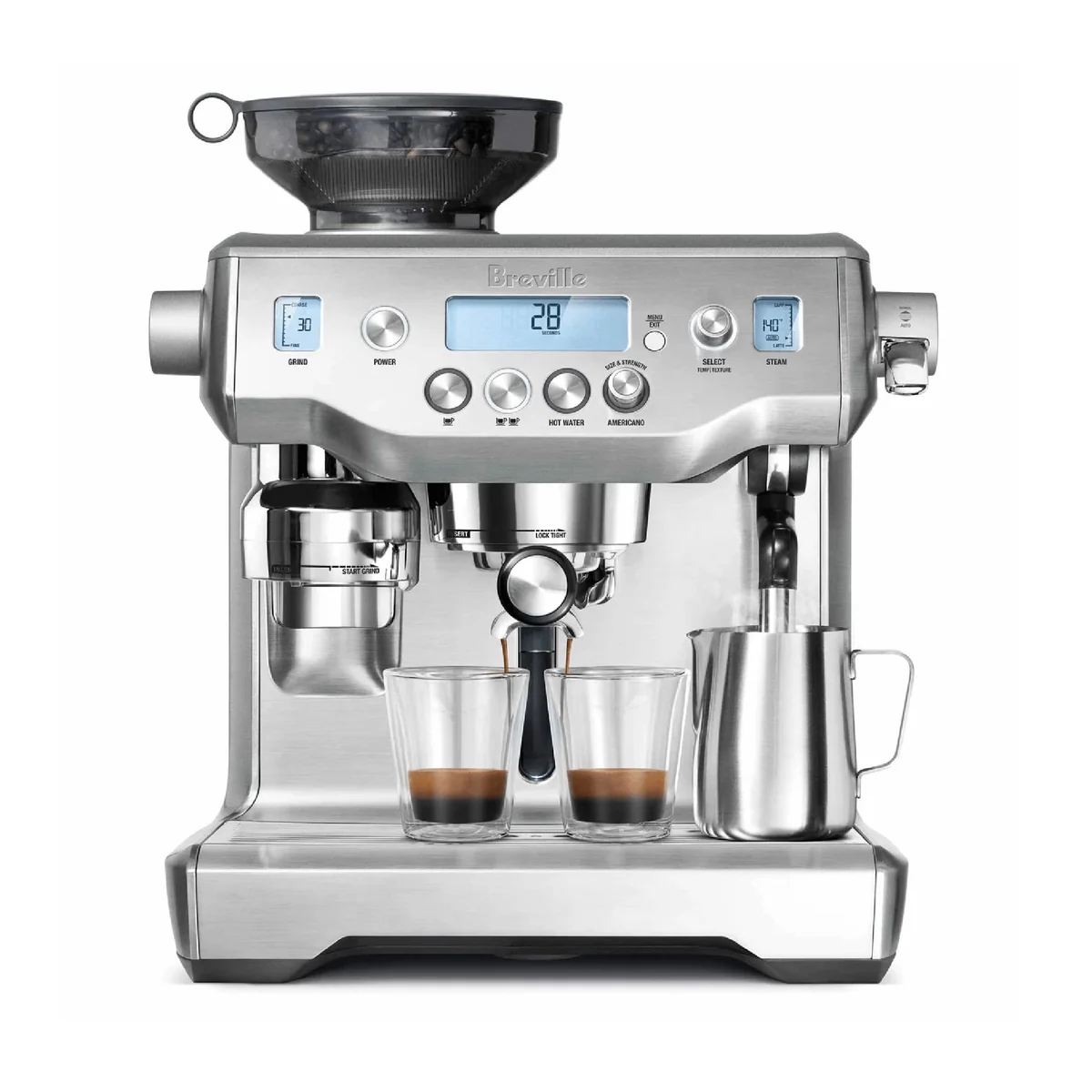
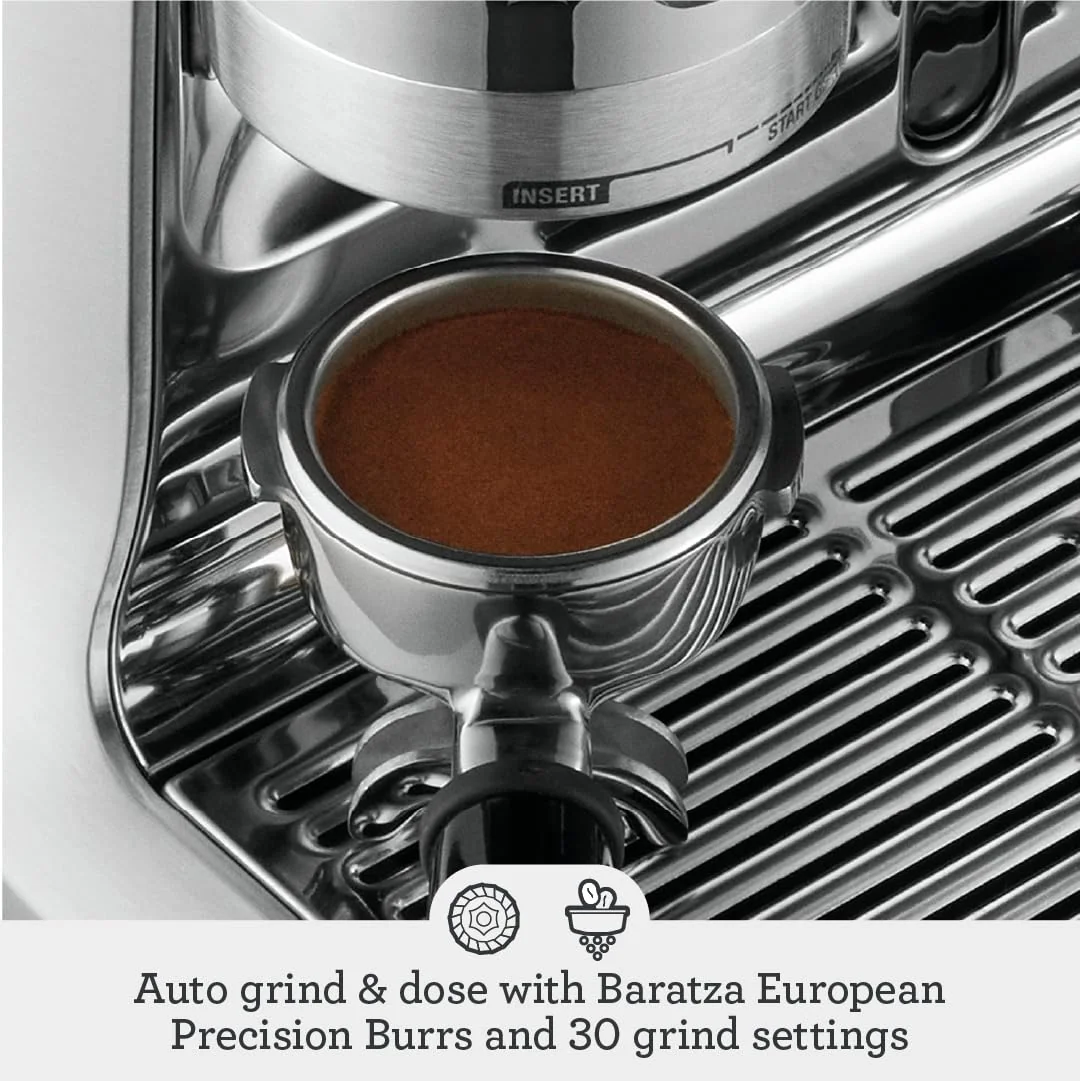
Nothing else here removes as much technique, because it grinds, doses and tamps 22 grams and then textures milk to a temperature you set to the degree, on two boilers that let it brew and steam at once.
The 22-gram dose cannot be changed from the touchscreen at all, so altering it means going inside the machine and turning a nut on the tamp fan.
Start with the numbers that should give any buyer pause. Amazon shows this machine at 3.4 stars from 596 ratings; Breville's own site shows 4.3 from 726 for the same model; published reviews from coffee sites are close to rapturous. A spread that wide is not noise, and the explanation in the owner record is consistent: almost nobody complains about what an Oracle Touch does on day one, and a great many people complain about what it does in year three. The absence of dose control on a machine at this level was described by the Coffeeness reviewer as astonishing, and it is. Owners who try to escape 22 grams do not get far; even an IMS competition basket, which physically fits, leaves the machine filling to roughly the same figure.
Then there is the fact that outranks the specification. Breville's own US page for the BES990 now carries a discontinued notice and points visitors instead to two newer Oracles, one cheaper and faster, one dearer and more capable. That does not make this a bad machine. It makes the price the whole argument, and it is why we take the touchscreen question apart on its own page. One more thing worth knowing before you pay for the screen: a reviewer who came from traditional machines and spent weeks with this one found the touchscreen a hindrance rather than a help, chiefly because it will not let you grind until you have selected a drink on it.
The same automation driven by buttons instead of a screen
It is the Oracle mechanism entire, dual boilers, automatic tamping and a self-purging steam wand included, run from an LCD by people who would rather press a button than a pane of glass.
The built-in grinder is roughly the class of Breville's own standalone Smart Grinder inside a machine costing many multiples of one, and it is the part long-term owners give up on first.
Breville's own launch material was more careful than the Amazon listing, calling this the world's first automatic manual espresso machine, and that phrase is the honest one. Watch a retailer dial a fresh one in on camera and the shape of ownership becomes clear: Breville suggests starting at grind 30, the machine on the bench settled at 18, and the shot that worked ran 22.5 grams in to 49 grams out over 27 seconds. That is a long way from the recommended number on ordinary beans, which tells you the starting point is a place to begin and nothing else.
The grinder is where every serious source converges, from different directions. The most detailed owner account anywhere rates the grind quality as good and then cannot explain why shot volume at a fixed setting climbs steadily through a day and resets overnight, suspecting heat. A repair technician who services these machines goes further and refuses to use the onboard grinder at all in his own testing. Both of those people have handled the machine, neither is lying, and they agree about the direction of the ceiling even where they disagree about its height.
The setup to buy if espresso is about to become a hobby
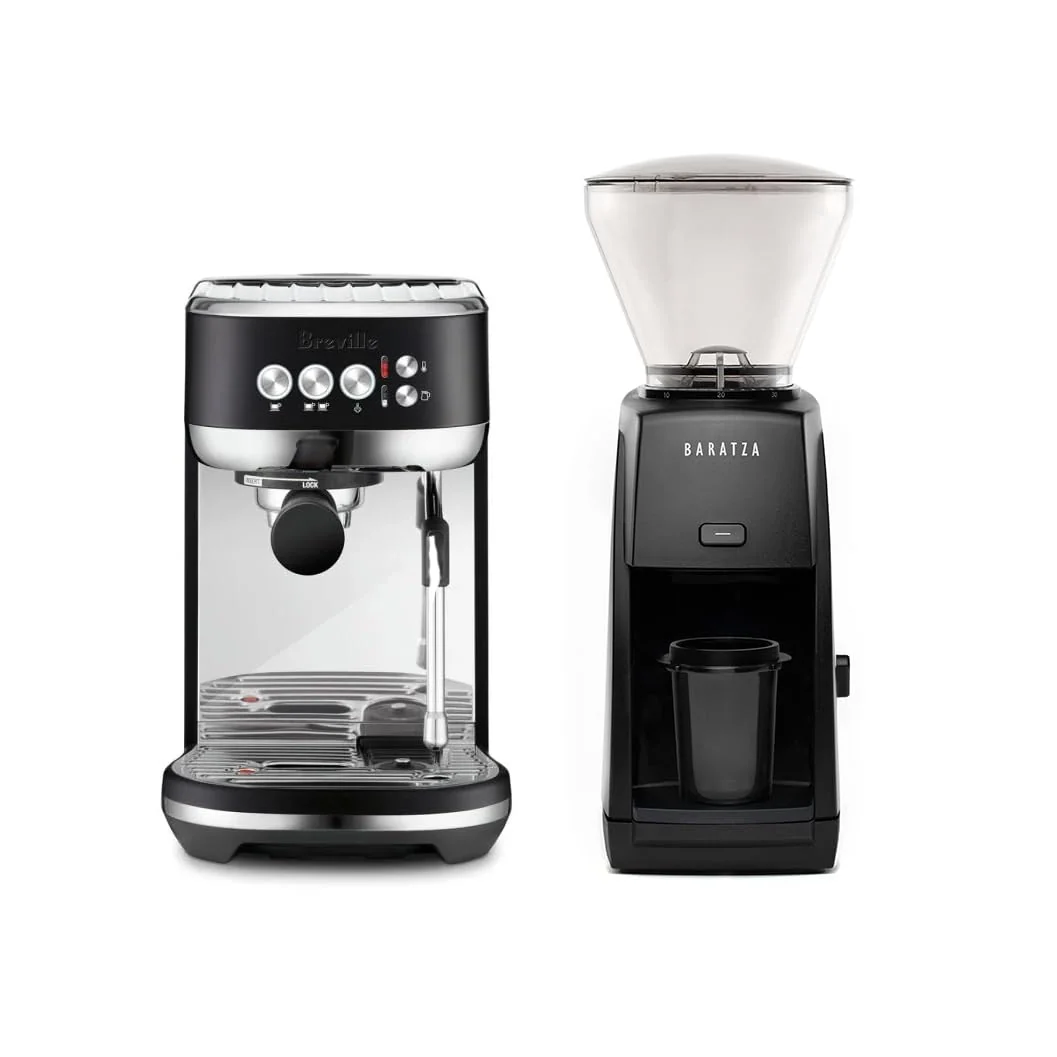
It puts a genuinely espresso-capable Baratza grinder in the same carton as the machine, which is the purchase beginners skip and then spend a year regretting.
One heater means it cannot brew and steam at the same time, and owners consistently report it losing its composure by the third drink in a row.
This is the most-recommended first setup in home espresso, sold as one box. In a hundred-reply thread from someone with a couple of hundred dollars and no idea where to start, the top answer by a wide margin named a Bambino and a Baratza ESP together, before anyone mentioned that Breville sells them as a pair. The grinder is the reason to be here: 40 settings with the first 20 given entirely to the espresso range, against the 30 steps inside a Barista Touch. Serious Eats found the machine forgiving, crediting the slow pressure ramp for widening the range of grind settings that work, and put the obvious cost in its own list of drawbacks: you have to buy a grinder too. A three-year owner clocks a double at 25 seconds and a finished latte from cold at about two minutes.
Two honest cautions. The bundle premium over the machine alone is close to what the grinder costs by itself, so you are buying a decision rather than a discount, and the grinder half carries one year of warranty against the machine's two. And Espresso Den could find almost no independent testing of the Encore ESP itself; the one owner comment we surfaced on Breville's own store says the machine is making nice coffee and the grinder has been a letdown. The machine half is among the most thoroughly reviewed espresso makers on the market. The half you are paying extra for is not, and the choice between the two Bambinos is worth settling before you commit to either.
What Espresso Den did and did not do here
We have not tested any of these machines. Nothing on this page is a measurement we took, an ownership experience we had, or a shot we pulled. This ranking is a reading of the public record: Breville's own specifications and dial-in instruction, the Amazon listings, hands-on reviews written by people who bought the machines, the customer reviews on the listings themselves, a repair technician's teardown, a retailer's unedited dial-in on a fresh Oracle, and the owner forums where faults get named, argued over and occasionally solved.
Two habits governed the order. First, evidence about a machine stays with that machine: complaints about the Barista Touch Impress, the Barista Pro and the newer Oracles have been kept out of the verdicts here, because they are different machines with different grinders and it is easy to launder a fault from one into a judgement about another. Second, where sources genuinely disagree, both positions are on the page. The clearest example is the Oracle Touch, where Amazon's 3.4 from 596 buyers sits a long way below the 4.3 from 726 on Breville's own site, and neither number can be dismissed.
We do not publish prices, because a figure written today is wrong by the time you read it, and because the interesting comparisons on this page are between machines rather than against a number. Where the record is thin, as it is for the certified remanufactured Barista Touch and for the Encore ESP grinder in the bundle, this page says so instead of inventing confidence. More about how this site works, and the rest of what we have published.
Where each machine is fixed, and where it lets you decide
| Control | Bambino Plus bundle | Barista Touch | Oracle and Oracle Touch |
|---|---|---|---|
| Dose | 18 g, weighed by you | Whatever a timed grind drops in | About 22 g, mechanical adjustment only |
| Shot ends on | A volume, or your finger | A shot time you program | A timer, 25 s single and 30 s double by default |
| Grind steps | 40, half of them espresso | 30 built in | 45 built in |
| Milk | Three temperatures, three textures | 104 to 167 °F, eight textures | A temperature you set, on a texture scale |
| Boilers | One flash heater | One | Two |
| Grinder replaceable on its own | Yes | No | No |
The dose is the thing nobody warns you about
Two different design decisions land in the same place. The Barista Touch's grinder runs for a set number of seconds and whatever falls into the basket is your dose, so every grind adjustment silently invalidates the dose setting you spent a week finding; Coffeeness names this his least favourite thing about the machine, and owners arrive at the same conclusion independently, one of them stating plainly that he weighs his beans every time rather than trusting the timer. The Oracles solve the dose and hand you the opposite problem: they will give you 22 grams whether or not your recipe wants 18, and the extraction runs on a clock rather than to a weight in the cup, which means every gram of drift lands directly in the glass as a different ratio.
The practical consequence is the same on all four machines. Buy a scale with the machine, not later. The real purchase price of any Breville on this page is the box plus a set of scales, and anyone who tells you otherwise has never tried to work out why Tuesday's shot tasted like Monday's mistake.
All of these grinders share one roast ceiling
Conical burrs at these prices struggle with dense light roasts, and Breville owners hit that wall repeatedly: medium to dark is where the built-in grinders are comfortable. This is not a defect, it is a ceiling, and it is printed nowhere on the box. If your favourite roaster works at the bright, floral end of the spectrum, the bundle is the only machine here that answers the problem, because its grinder is a separate appliance you can upgrade without replacing anything else. Our guide to which beans behave in a machine with a built-in grinder explains why the burrs mind so much, and the case for and against an all-in-one covers the structural version of the same argument.
The first fortnight, and the three things that look like faults
The first is heat. Breville's fast heating brings the water to temperature in seconds and does nothing for the group head or the portafilter, which is why Coffeeness had to flush the head before a Barista Touch performed, and why the same reviewer graded the Bambino Plus down for espresso arriving in the cup too cool. Pull a blank shot before the real one and most of it goes away; the mechanism is the same one described on our page about coffee that comes out lukewarm. The Oracles have the opposite habit, wanting five to ten minutes to reach temperature and longer to settle, which is precisely what their wake-up timer exists to hide.
The second is the pressurised basket. Every one of these machines ships with dual-wall baskets alongside the single-wall ones, and they are for pre-ground or stale coffee. Use them with beans you have just ground and you get impressive crema that collapses instantly and a flat, unfixable flavour, which is exactly what happened to one owner who spent months blaming himself, and they also explain pucks that weld themselves into the basket and refuse to knock out. If you cannot dial a machine in at any grind setting, check which basket is in the portafilter before you conclude anything else.
The third is your own expectations. One complete beginner got a latte better than her usual chain order out of the first shot on a Barista Touch, watched the second and third produce nothing at all after twenty seconds, and had the fourth and fifth come out better than the first. Two failures in the first five shots, and she kept the machine. That is the real first evening, and the beginner help threads that follow a Bambino Plus into a kitchen say the same thing in a different tone of voice. The milk is not magic either: one owner who regretted his purchase within a week reports the automatic wand leaving foam on top and plain hot milk underneath. If the milk system is the deciding factor, the argument between a wand and a one-touch carafe is worth an hour before you spend anything, and our pick for milk-drinking households covers the machines that pour without you holding a jug.
What tends to break, and roughly when
The durability record is decent rather than bulletproof, and the faults are specific enough to be useful. On the Barista Touch it is the milk temperature sensor, arriving well after the first year, alongside a one-star owner whose machine stopped outright at seven months and a long-term owner who developed a steady internal drip at four or five years that a Breville repair did not permanently fix. On the Oracles it is o-rings and the electronics they leak onto: a teardown of the same dual boiler platform traces the classic leak to the port where the steam boiler feeds the brew boiler, with thinner-walled o-rings cracking and aging badly, and owners chasing a machine that heats or pumps when it should not are pointed at the triac board. Grinders degrade too, quietly, until an owner posts that the machine no longer grinds well or squeals and sometimes produces nothing at all.
Two counterweights. Breville owners in general report three, five and eight years of daily use with nothing worse than a seal and a deep clean of the grinder, and one BES880 owner facing a dead machine was quoted a repair bill amounting to well under half the cost of buying it again, which the owners who weighed in broadly called fair; do not, from that same thread, attempt a factory reset to clear an error code, because the owner who tried it ended up stuck in setup mode on top of the original fault. Against that, an Australian consumer review site carries hundreds of Breville ratings averaging under two stars, dominated by warranty and service complaints. Espresso Den cannot reconcile those support stories into a single verdict, because they genuinely diverge: the same company has replaced machines quickly for some owners and left others emailing into a void. Our piece on what breaks first and what a repair costs puts the shape of it in context, and the descaling routine is the single largest lever you have over any of it.
One buying advantage nobody mentions: the Oracles carry a hidden service menu that reports shot count, minutes steamed, calcium level, descale cycles and stored error codes, which makes a second-hand one easier to vet than almost any other espresso machine. If you are shopping used, that menu plus a look under the top cover for weeping fittings is a better inspection than most people manage on a car.
The argument you will have with the internet
Ask an espresso forum what to buy in the Oracle's bracket and the answer comes back with unusual unanimity: buy the plain Breville Dual Boiler without a grinder and put the difference into the best standalone grinder you can afford, because the built-in grinder is the compromise you feel every day and the part that fails first. A recent thread asking for a machine in that price range produced suggestions running to Lelit, Rancilio, Profitec and Quick Mill, and nobody mentioned an Oracle at all. The same logic circulates in shorter form among people making coffee on camera: spend less on the machine and put the money where it changes the cup. That is why the Bambino Plus keeps being the machine enthusiasts recommend to strangers, and why this page rates the bundle as highly as it does.
The counter-argument is arithmetic, not taste, and it is a good one. A two-coffee-drinker household in New York that used to buy a latte most days found an Oracle Touch feeling like value after six months. A retailer who sells the whole Breville range pitches the Barista Touch at people coming off a super-automatic who want better coffee but are not ready to do everything themselves, which is exactly right and describes most of the traffic arriving at these listings. The inverse is just as clear: a reviewer who spent a week with the Barista Touch noted it will not be loved by anyone who enjoys playing with shots, steaming milk by hand and pouring latte art, because that person has paid a premium to have the interesting parts taken away. Decide which of those two people you are and the ranking above rearranges itself accordingly.
Frequently Asked Questions
Does Breville build a machine you can fill with beans and walk away from?
No, every Breville espresso machine sold under these listings uses a portafilter you lock in and knock out yourself, so the bean-to-cup box people picture when they type the word automatic is made by other manufacturers.
Which one should a first-time buyer get?
The Barista Touch, unless you already know you want to learn espresso properly, in which case the Bambino Plus and Encore ESP bundle spends the same money in a better place.
Is the Black Truffle BES880BTR a different machine from the brushed stainless one?
They are the same machine in different finishes, so every review of one applies exactly to the other.
What grind setting should you start on?
Breville suggests 14 of 30 on the Barista Touch and 30 of 45 on the Oracle, and on both machines treat the number as a first guess rather than an answer, because the retailer dialling in an Oracle on camera ended up at 18.
Can you change the 22-gram dose on an Oracle?
Only mechanically, by adjusting the auger nut on the tamp fan inside the grinding station, because there is no dose setting anywhere in the software.
Do any of these handle light roast beans?
Not comfortably on the built-in grinders, which owners consistently describe as medium-and-dark devices, so a light roast habit points you at the bundle with its separate and upgradeable grinder.
Is a certified remanufactured Breville a sensible way in?
It is when the saving is genuinely large on the day you look, because you are trading eighteen months of warranty against a machine whose best-documented fault tends to surface after the first year.
Which of these has the least to go wrong?
The Bambino Plus, because it has no touchscreen, no built-in grinder to seize and no second boiler, and because a dead grinder does not take the machine with it.
Can you still get parts for a BES980XL?
Yes, from Breville and from third-party specialists, though the 980XL is the 110 V machine and the 980 is the 230 V one, so nothing on the mains-voltage side interchanges between them.
Is the Oracle Touch still worth flagship money?
Only to a household that will never learn to tamp and drinks enough milk-based coffee to feel the saving, because Breville has already replaced it twice on its own site.
Our Top Pick
The Breville Barista Touch is our #1 recommendation — the bes880 grinds, times and textures for you, but you still tamp the coffee and pour the milk yourself, and almost everything that delights or disappoints an owner follows from that one fact..
Check Price on Amazon: Breville Barista TouchSources (15)
- Amazon listings and customer reviews
- Owner reports across r/superautomatic, r/BrevilleCoffee, r/espresso and 1 more threads
- Owner and reviewer video, 9 channels
- Coffeeness — Article — www.coffeeness.de
- Breville — Article — www.breville.com
- Epicurious — Article — www.epicurious.com
- Nytimes — Article — www.nytimes.com
- Foodandwine — Article — www.foodandwine.com
- Homecoffeeexpert — Article — homecoffeeexpert.com
- Home Barista — Article — www.home-barista.com
- Seriouseats — Article — www.seriouseats.com
- Tasteofhome — Article — www.tasteofhome.com
- Thingtesting — Article — thingtesting.com
- Au — Article — www.productreview.com.au
- Redditrecs — Article — redditrecs.com