De'Longhi Rivelia review: brilliant if two people drink two different beans, ordinary if not
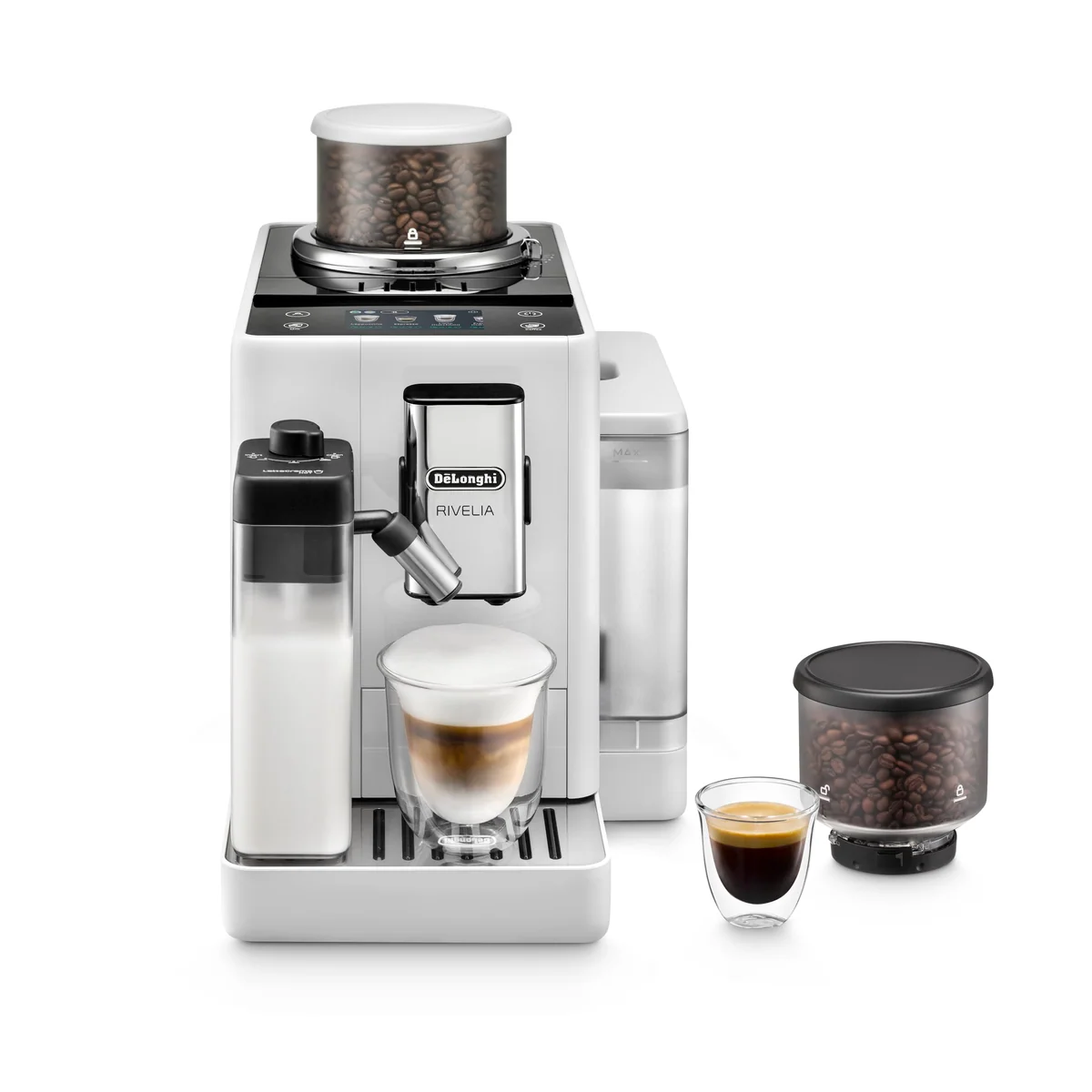
Buy the Rivelia for one reason, that two people in your kitchen want two different beans, because everything else it does is matched by cheaper De'Longhi machines and beaten by dearer ones.
Based on 126 owner ratings, 9 owner discussions and 6 other sources. We have not tested this machine ourselves.
We earn a commission if you buy through our links, which does not affect what we say.
Read how this site works →
So, is it worth it?
The fairest summary belongs to a reviewer who had the machine on his bench and weighed everything on it: it is not De'Longhi's best super-automatic, but it is a recommended purchase if what it offers is enough for you. That reads like a hedge and is not one. The Rivelia is a Magnifica-class brew group and a very good milk carafe wrapped in a smaller, quieter, better-looking body, sold at a premium for one feature that no cheaper machine has.
So the whole decision reduces to a single question, and a reviewer put it better than we can: what two coffees would you honestly alternate between, day to day? If the answer is a real one, regular and decaf, yours and theirs, then the premium buys you something you will use every day and appreciate for years, and the temperature and the thin Americanos become things you manage rather than things that ruin it. If the answer is that you would probably just keep one bean in it, you are paying for a hinge you will never open, and the money is better spent on an Eletta Explore, a Magnifica, or nothing at all.
Buy it for the hoppers. Set the temperature to maximum on day one, grind finer than the factory setting, learn where the extra shot button hides, and do not expect a scalding latte or a real cold brew. On those terms, it is a machine we would be happy to see on a counter.
Buy the Rivelia for one reason, that two people in your kitchen want two different beans, because everything else it does is matched by cheaper De'Longhi machines and beaten by dearer ones.
Best for: Two removable hoppers, one set of burrs, and a milk system that makes lovely foam at a temperature a fair number of owners describe as warm rather than hot.
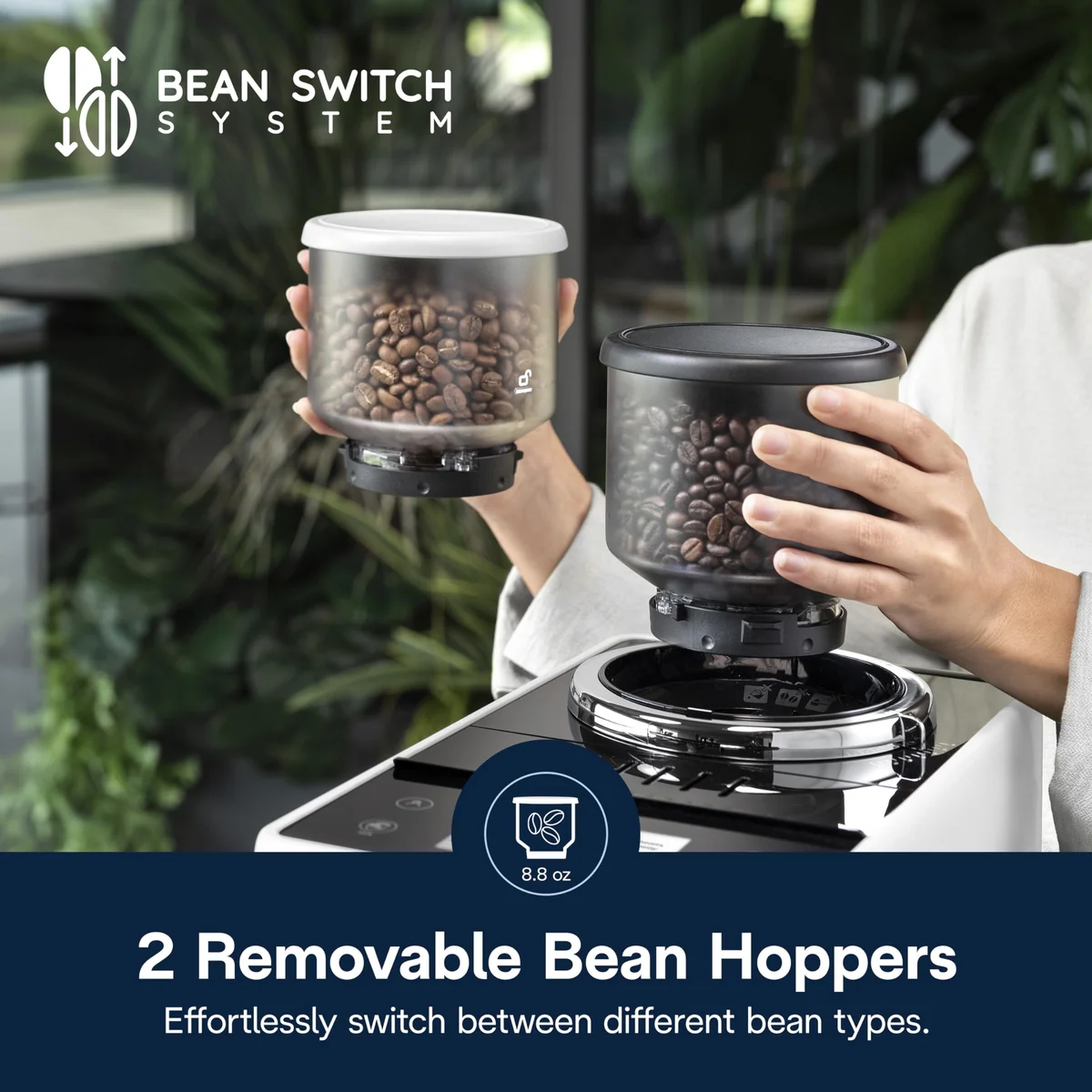
The Rivelia is sold on a single idea, and De'Longhi is not shy about it. Two 8.8-ounce bean hoppers sit on top of the machine. You lift one off, drop the other on, and the machine asks whether you want to clear the old beans out of the grinder. Regular in the morning, decaf after four. Your beans in one, your partner's in the other. Until this machine, that trick lived on a De'Longhi flagship several times the price, which is the honest reason the Rivelia costs what it costs.
The two listings this page covers, Arctic White and Sand Beige, are the same machine in different clothes. Same LatteCrema Hot carafe, same 3.5-inch touchscreen on the roof, same brew unit, same integrated burr grinder, same everything. Pick the colour that suits your counter and stop thinking about it.
Now the part the listing will not tell you. Milk drinks come out warm rather than properly hot, and no setting completely solves that. Large black coffees taste thin until you learn which buttons actually add coffee rather than water. Cup clearance is about 13 cm, so your tall travel tumbler will not fit under the spouts. Cold drinks on the menu are hot coffee poured over ice, and cold milk foam requires an accessory De'Longhi sells separately. And while most owners report a machine that simply works, the failure reports that do exist are ugly: a motor dead at ten weeks, a screen dead at nine months, and warranty handling that owners describe in language you would not put on a box.
If that list does not scare you off, the Rivelia is a genuinely likeable machine and the bean swap works exactly as advertised. If it does, the rest of this page is about which machine to buy instead.
Key Specifications
The bean swap works, and it costs about ten grams a time
Start with what is true: the headline feature is not marketing. Owners who bought the Rivelia for the hoppers describe them the way people describe a dishwasher after years of washing up. One calls the swappable containers the best thing about the machine outright; another says being able to change hopper was the whole reason for buying and that it works flawlessly. Households that split caffeinated and decaf, or that have one person on a low-acid bean, get something no cheaper bean-to-cup can offer: two fresh whole-bean options with no ground coffee going stale in a bypass chute.
The cost is small but real, and it is the thing most reviews skate past. Beans are already sitting in the grinder chute when you swap. Reviewers who measured it put that residue at roughly nine or ten grams, and the machine gives you two ways out: purge it into the grounds drawer, or use a switch mode that brews it as a drink. The clever move, from an owner who thought about it properly, is to unlock the hopper before you make your own coffee, brew the leftovers as your cup, then swap and make the decaf. Nobody drinks a throwaway and nothing goes in the bin.
The bigger limitation is quieter, and it is the one Espresso Den would want a buyer to understand before ordering. Two hoppers do not mean two grinders. Both feed the same burrs at the same setting, and the grind dial is a physical control you move by hand. A hands-on reviewer puts the consequence plainly: pair a dark Brazilian with a light Ethiopian and one of them will extract badly, because those two coffees want completely different grinds and an automatic machine is not going to change the burr gap between cups.
Bean Adapt, De'Longhi's guided dial-in, narrows that gap without closing it. You tell the machine the bean type and roast level, it brews an espresso, you say whether it tasted watery or harsh, and it adjusts temperature and dose and stores the result against that bean. What it cannot do is move the burrs; it recommends a grind number and you turn the dial yourself, one click at a time, while the grinder is running. So the honest answer to "how do you dial in for both beans" is that Bean Adapt handles everything except the one variable that matters most.
Which makes the Rivelia's real use case narrower than the advertising: two beans of similar roast, or the same roaster's regular and decaf. Not a rotating shelf of single origins.
| Pairing | Works? |
|---|---|
| Regular and decaf, same roaster, same roast level | Yes, this is the machine's home ground |
| Two people, two medium-roast blends | Yes, with a compromise grind that suits both |
| Low-acid or robusta blend alongside your usual | Yes, expect to re-check the grind when you switch |
| Light filter-roast single origin plus a dark espresso roast | No, one of the two will always be wrong |
| Flavoured beans in the second hopper | Possible, but De'Longhi's own guidance points flavoured coffee at the bypass chute instead |
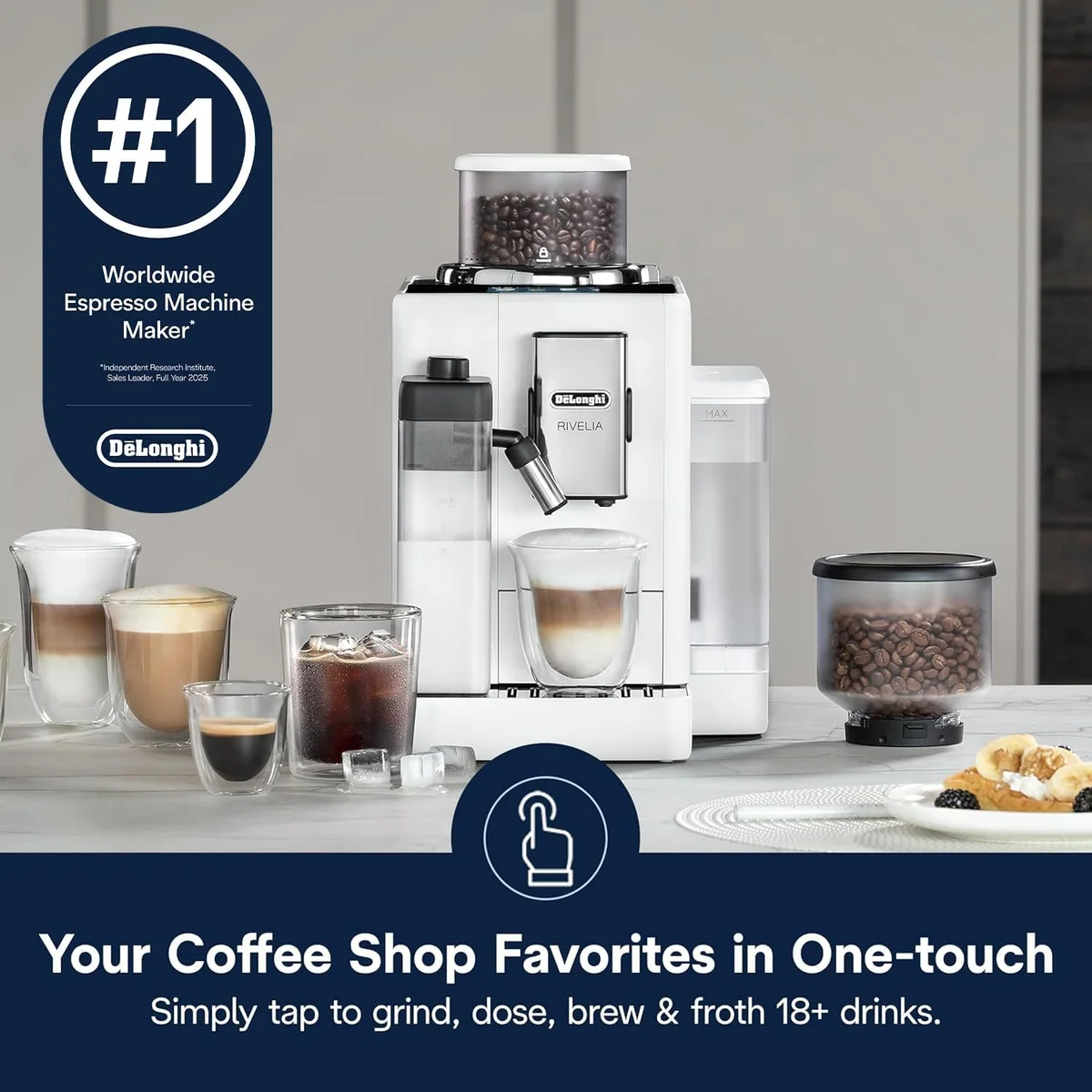
The recipe count on the box does not survive counting
The listing promises 18 preset recipes. De'Longhi's own specification tables, on its own product pages, enumerate five black coffee recipes, eight milk recipes and three cold ones, plus hot water. That is sixteen drinks, seventeen if hot water counts as a drink, and three of those sixteen are the cold recipes that need an accessory you buy separately. One reviewer who counted only the things that contain coffee and are not near-duplicates of each other got to eleven.
None of that makes the Rivelia a bad machine. Cappuccino and Cappuccino Mix are the same drink with the pour order reversed, which is a useful distinction if the milk landing first bothers you, and it does bother some owners. But if you are choosing between machines on the drink count printed in the bullet points, you are comparing marketing departments, not coffee makers.
Strengths & Limitations
Strengths
- The hopper swap does exactly what it claims, takes seconds, and is the only reason to choose this over a cheaper De'Longhi.
- LatteCrema foam is genuinely good, and the three-level texture dial finally lets a flat white and a cappuccino have different milk.
- Bean Adapt walks a beginner through dialling in on the machine itself rather than in a phone app.
- The touchscreen setup is guided well enough that owners coming from pod machines report being up and running in around ten minutes.
- It is narrow, and the hopper lifts off the top, so it can live under a wall cabinet more easily than its height suggests.
- Owners who moved from a Magnifica consistently say it is noticeably quieter, if not silent.
- The grind dial is on the outside of the machine where an adult hand can actually reach it.
- The side-mounted water tank refills in place, in view, without moving the machine.
Limitations
- Milk drinks arrive warm rather than hot, and raising the temperature setting mitigates it without solving it.
- Every hopper swap strands roughly ten grams of the previous bean in the grinder, which you either bin or drink.
- Both hoppers share one burr setting, so two beans that want different grinds cannot both be right.
- The standard large coffee and Americano recipes mostly add water to one puck, so a big cup tastes thin until you learn the extra shot and double-grind routes.
- Cup clearance of about 13 cm rules out most tall travel tumblers and thermal flasks.
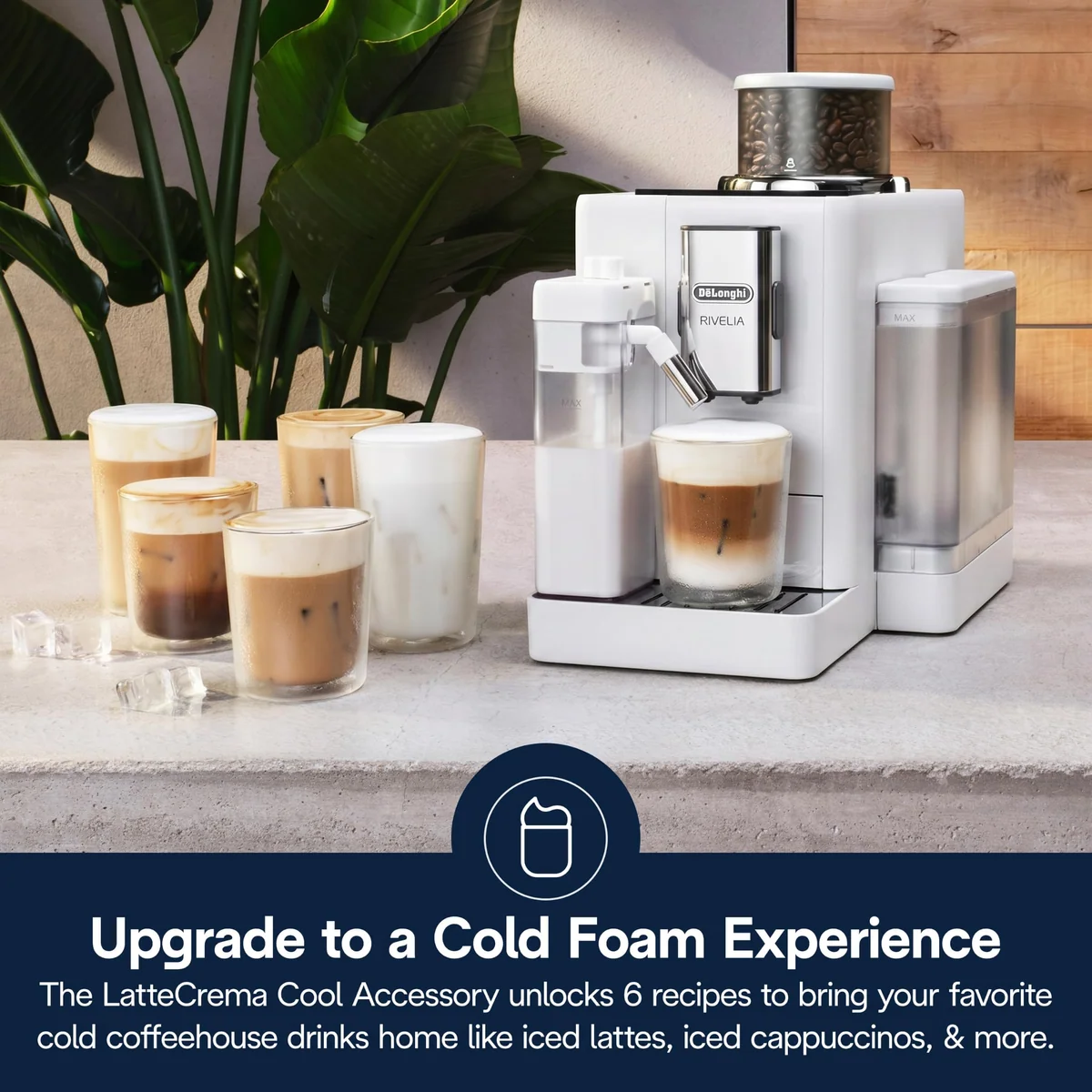
- The iced recipes are hot coffee over ice, and cold milk foam requires a carafe sold separately.
- The listing's plant-milk claim did not survive the one owner who tested three alternative milks and a replacement frother.
- The failure reports that exist are serious, including a motor at ten weeks and a screen at nine months, and owners describe De'Longhi's warranty handling as slow and unresolved.
- The screen runs everything, so a screen fault is a dead machine rather than a degraded one.
- The milk carafe bottle detaches too easily, including when you pull the drip tray out.
What actually comes out of it
The espresso is good for the category, and it responds to being dialled in. A reviewer who weighed and timed everything landed on grind setting 3, maximum strength, about 16 grams of coffee and a 22-second extraction, and rated the result well above the watery output of cheap super-automatics. A second hands-on reviewer, working with a medium-roast Ethiopian, ended up at maximum strength and the second-finest grind. The consistent finding across everyone who bothered to measure is that the factory grind is too coarse and the factory strength too low. Out of the box, this machine is set up to make a disappointing coffee.
That matters, because "the coffee is weak" is the second most common complaint about the Rivelia, and it has three separate causes stacked on top of each other. The first is the setup above. The second is the recipe design: Americano and the standard coffee stretch a single puck with more hot water, so scaling up the volume scales up the dilution. One owner, a month in, described enlarging an Americano and getting something that looked and tasted like murky water. The third is expectation. A super-automatic dosing around fifteen grams will never make a mug that tastes like a strong pot of filter coffee, no matter which button you press.
There are two real fixes inside the machine, and both are badly signposted. Every drink has an extra shot function that grinds a second dose. And the recipe called Long is not simply a bigger coffee: reviewers who filmed it show the machine grinding twice, so a large cup gets two pucks rather than one puck and a lot of water. Learn those two and the watery-large-drink problem mostly evaporates. There is also a trap: a button appears near the end of a brew that looks like an extra shot and only adds water, which is a fine way to turn a decent coffee into a weak one.
One hard limit is worth naming. Go finer than about setting 4 with fresh beans and the machine can choke, tell you so on the display, and refuse to push water through the puck. Owners have hit this, and so has at least one reviewer with a machine on the bench at grind 4.5. The dial goes down to 1; the machine does not reliably go with it. If you are chasing thin coffee down the grind scale, that ceiling is where the chase ends. Our page on why bean-to-cup espresso comes out watery covers the same ground for machines generally.
Great foam, at a temperature that will divide the room
The LatteCrema carafe is the best thing about the machine after the hoppers. The foam draws near-unanimous praise, and the three-position texture dial is a genuine improvement on older De'Longhis where a single foam setting had to serve both a flat white and a cappuccino badly. A reviewer who worked through all three settings recommends the middle one for most drinks and dismisses the densest as too airy and bubbly for anything but a traditional Italian cappuccino.
The temperature is the fault everybody hits. An owner with an instant-read thermometer measured milk alone, on the light froth setting, at 121.6°F. Reviewers testing the carafe generally put it at 60 to 65°C, and the froth level and the temperature are coupled, so choosing lighter foam gets you cooler milk. A retailer who sells every brand in this category says milk temperature is the largest single complaint he receives about automatic frothing systems from any vendor, because the milk only ever brushes past steam rather than being steamed.
Three things help, in order of how much difference they make. The machine ships with drink temperature on a medium default, and one owner reports that simply setting it to maximum made the coffee properly hot; a startling number of complaints may come from people who never opened that menu. Running the hot water function first warms the internal pipework. Pre-warming the mug does the rest, and it matters more than people think, because espresso poured onto frothed milk that is fifteen to twenty degrees cooler loses heat instantly. After all three, this is still not a scalding latte machine. If piping-hot milk is non-negotiable, read our comparison of steam wands and automatic frothers and buy a wand.
Two smaller milk gripes, both from long-term owners rather than reviewers passing through. The carafe bottle detaches from its head more easily than it should, including when you pull out the drip tray, which is a memorable way to redecorate a kitchen. And the volume markings on the bottle are printed rather than moulded, so they fade with wiping.
The plant milk claim did not survive one owner's testing
Both listings state that the LatteCrema system froths plant-based alternatives. An owner who bought the machine specifically for that, then tried three different alternative milks, reports that it does not froth them well. She assumed a faulty carafe and called De'Longhi, who sent a replacement free of charge; the replacement behaved identically, and the support agent told her it works best with regular 2% milk. She ended up buying a standalone frother. Espresso Den could not find a single owner report in the other direction, which is not the same as proof that it never works, but it is the only first-hand evidence available and it is unambiguous. If you drink oat lattes, treat that bullet point as unproven.
The cold drinks are not cold
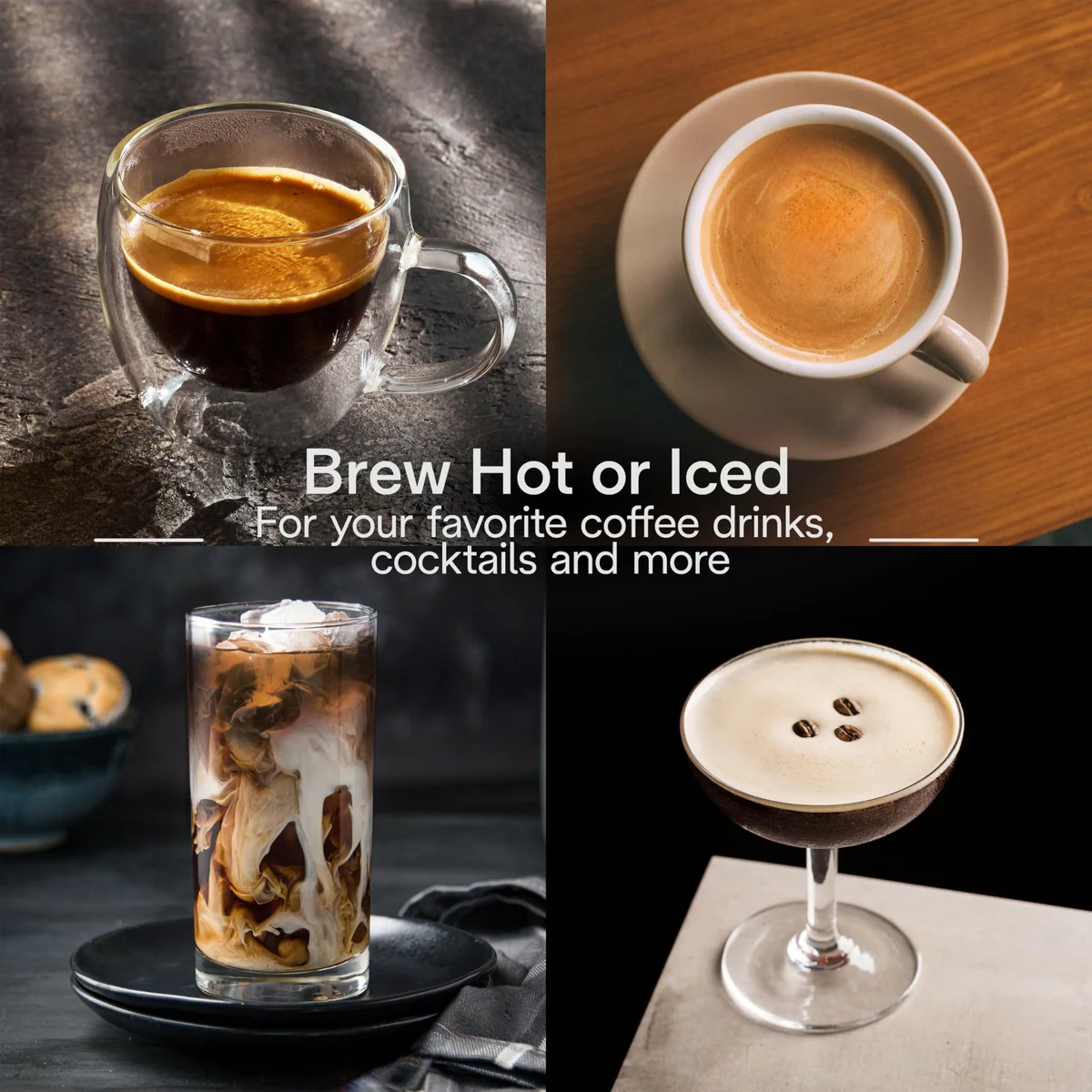
The touchscreen offers iced coffee and iced espresso. What those recipes do is brew hot coffee, at a somewhat lower extraction temperature, into a glass of ice you added yourself. There is no cold extraction and no cold brew. Cold milk foam is not in the box either; it needs the LatteCrema Cool carafe, which De'Longhi sells separately, and one owner who bought both the Rivelia and that accessory says outright that he would not recommend it, because the resulting cold drinks are worse than the ones his Eletta Explore makes.
An owner on r/superautomatic reports the useful workaround that the Eletta's cold carafe also unlocks the cold menu on a Rivelia and costs less than the Rivelia-branded kit. Espresso Den has not verified that with De'Longhi and you should not order on the strength of it. The safer conclusion: if iced coffee is a daily habit, this is the wrong machine, and our guide to what these iced modes actually do explains why that applies to more of the category than you would guess. The Eletta Explore is the De'Longhi that genuinely extracts cold.
What else your money buys
The Rivelia sits in an awkward spot in De'Longhi's own range, and it loses more of those internal comparisons than it wins. The Eletta Explore is the recurring one. Owners who have used both describe the internals as essentially the same, with the same brew unit and the same hot drinks, and the Eletta winning on water capacity, hopper capacity, drink options, real cold extraction and, oddly, temperature. The community verdict in a thread where someone was choosing between them was close to unanimous: if you are not going to swap hoppers, buy the Eletta.
Against the cheaper machines it is less clear-cut than the price gap suggests. One owner who upgraded from a Magnifica and stayed on the Rivelia is blunt about the result: the Magnifica made better-tasting coffee with more control over extraction, and while he does not regret the upgrade he would not do it again, because he lost an analogue strength dial in exchange for five digital steps. Another reviewer who tested the Rivelia hands-on rates the Magnifica Plus as the better machine at a lower price and lists "not as good as the Magnifica Plus" as a flat negative. Our comparison of De'Longhi's range sets those out side by side, and Rivelia versus Eletta Explore takes the main fork on its own.
| If this is you | Buy |
|---|---|
| Two people, two beans, or caffeine that has to stop at lunchtime | The Rivelia, and see our page on decaf-and-regular households |
| One bean, and you want the best cup for the money | A Magnifica-class De'Longhi, or the Eletta Explore if the budget stretches |
| Iced coffee most days | The Eletta Explore, not this |
| You hate cleaning milk carafes | A Philips 5500 LatteGo, whose two-part carafe is the easiest in the category |
| A very small counter, one bean | See the compact machines we rate |
Two people in the owner threads returned a Rivelia and bought a KitchenAid KF7 instead, one over a broken drip-tray sensor and one because he could not work out what the preset drink sizes meant and De'Longhi's own customer service could not tell him either. Worth knowing that the second of those buyers then said his main criticism of the KF7 is that it could be hotter. The temperature complaint follows you around this category. We compare the two directly, and the Philips 5500 comparison covers the cheaper cross-shop.
On price: the number on the listing is an anchor rather than a destination. Owners report meaningful discounts appearing regularly, and several bought theirs during Black Friday promotions at a large reduction off list, some of it stacked from De'Longhi's own email signup. Nobody in the material we read paid full list happily. If you are not in a hurry, do not be.
The reliability picture, held honestly in both hands
Most Rivelia owners are having a fine time. A UK owner who bought his own machine and filmed a six-month review lists the negatives as a set of things that did not happen: it has not stopped working, there has been no error, it has not clogged, it has not shut itself off. A two-year owner calls the machine solid. That is the majority experience and it deserves to be stated first.
The minority experience is bad enough that it changes the calculation. In one Facebook owners' group, a buyer whose machine was used for around ten coffees a week reported it dead at roughly ten weeks; De'Longhi declared the internal motor unrepairable and sent a replacement, and the replacement then developed a fault where neither bean hopper would engage properly. Her summary is the one to sit with, because it goes to the heart of the purchase: they chose this machine because they could switch hoppers, and it could not switch hoppers. In the same short thread, one owner had a machine start failing at four months and spent nearly an hour on the phone to get a replacement she then described as worse, and another had water leak across the counter on the fourth cup.
On Reddit, an owner reports a screen dead at nine months and a warranty process that left the machine sitting in a repair shop three months later with no repair, no refund and no replacement. A second owner replies that his made it to two years before failing, with no response at all from customer service. There is also a recurring, less catastrophic complaint about grounds and drip-tray sensors that get stuck insisting the machine needs emptying when it does not.
Two things worth adding rather than spinning. The machine is made in Italy and carries a two-year manufacturer warranty in the US. And the second of those Reddit failures happened at exactly the point that warranty ran out, which is why one prospective buyer's argument in the same corpus is hard to dismiss: at this price, with two years of cover, the machine has to earn back its cost against café coffee inside that window to be a sane purchase. For most households drinking several coffees a day it comfortably does. For a one-cup-a-day drinker it does not, and one long-term owner says so himself: at that rate, buy a pod machine. Our guide to how long these machines last puts the numbers in category context.
The cleaning is the price of the convenience
The best single line about owning this machine came from a four-star Amazon review titled, in full, that the time saved making drinks is returned when it is time to clean. His verdict: the machine makes fabulous coffee but "it is a diva when it comes to cleaning," and the disassembling, soaking, rinsing, drying and reassembling put him off using the more interesting menu items at his office, though he warmed to it once he took it home.
In practice the routine is: the machine rinses itself on startup and shutdown and after every milk drink, which means keeping a spare cup on the tray; the grounds drawer holds ten pucks; the milk carafe comes apart and wants washing at least weekly and realistically more often; the brew unit lifts out for a rinse roughly monthly; and descaling runs on a schedule the machine calculates from the water hardness strip in the box. That last point is the one people skip and should not: set the hardness wrongly and you will either descale pointlessly often or not nearly often enough. Our cleaning and descaling guide covers the whole cadence.
One design detail worth praising: the water tank is on the side, visible, and you can top it up with a jug without moving the machine or even stopping a brew. Owners who have wrestled a rear-mounted tank out from under a wall cabinet rate this highly, and it partly offsets a 1.4-litre capacity that is small by class standards and will have a busy household refilling every day or two.
Frequently Asked Questions
Does the Rivelia make real iced coffee or cold brew?
No, the iced recipes brew hot coffee into ice you add yourself, and cold milk foam needs the LatteCrema Cool carafe that De'Longhi sells separately.
Can the two hoppers hold beans that need different grind settings?
Not properly, because both hoppers feed one set of burrs at one setting, so the pairings that work are two beans of similar roast such as regular and decaf from the same roaster.
Why does a large coffee from it taste watery?
Because the standard large recipes stretch a single puck with more water, and the fixes are a finer grind, maximum strength, the extra shot function and the double-grind long recipe.
Are the milk drinks hot enough?
For most people yes and for anyone who likes a scalding latte no, and since the temperature setting ships on medium you should raise it to maximum before judging the machine.
Is there a Rivelia with a steam wand?
A manual-frother version of the Rivelia exists and European owners have it, but the machines on these listings are the automatic LatteCrema carafe version.
Will a travel mug fit under the spouts?
Only a short one, because clearance tops out at roughly 13 cm and owners report brewing into a normal mug and pouring across into a tumbler.
Does it froth oat milk?
The listing says it froths plant-based alternatives, but the one owner who tested three of them reported that it does not, and a replacement frother from De'Longhi behaved the same way.
How much cleaning does it actually need?
The rinses are automatic, the grounds drawer fills every ten pucks, the milk carafe should be stripped and hand-washed at least weekly, and the brew unit wants rinsing roughly monthly.
Should I get the white or the beige?
Whichever suits your kitchen, because the two listings are the same machine with the same components and the same specification.
Sources (8)
- Amazon listings and customer reviews — Delonghi Rivelia
- Owner reports across r/superautomatic threads
- Owner and reviewer video, 9 channels
- Homecoffeeexpert — Article — homecoffeeexpert.com
- De'Longhi — Article — www.delonghi.com
- Espressorabbithole — Article — espressorabbithole.com
- Facebook — Article — www.facebook.com
- Everythingkitchens — Article — www.everythingkitchens.com