The Philips 5500 brews exactly what the 4400 brews, so the only question is whether Extra Shot is worth the gap
Buy the 4400 unless you specifically want Extra Shot or more than two saved profiles, because those are the only two things the 5500 adds that you will ever notice in daily use.
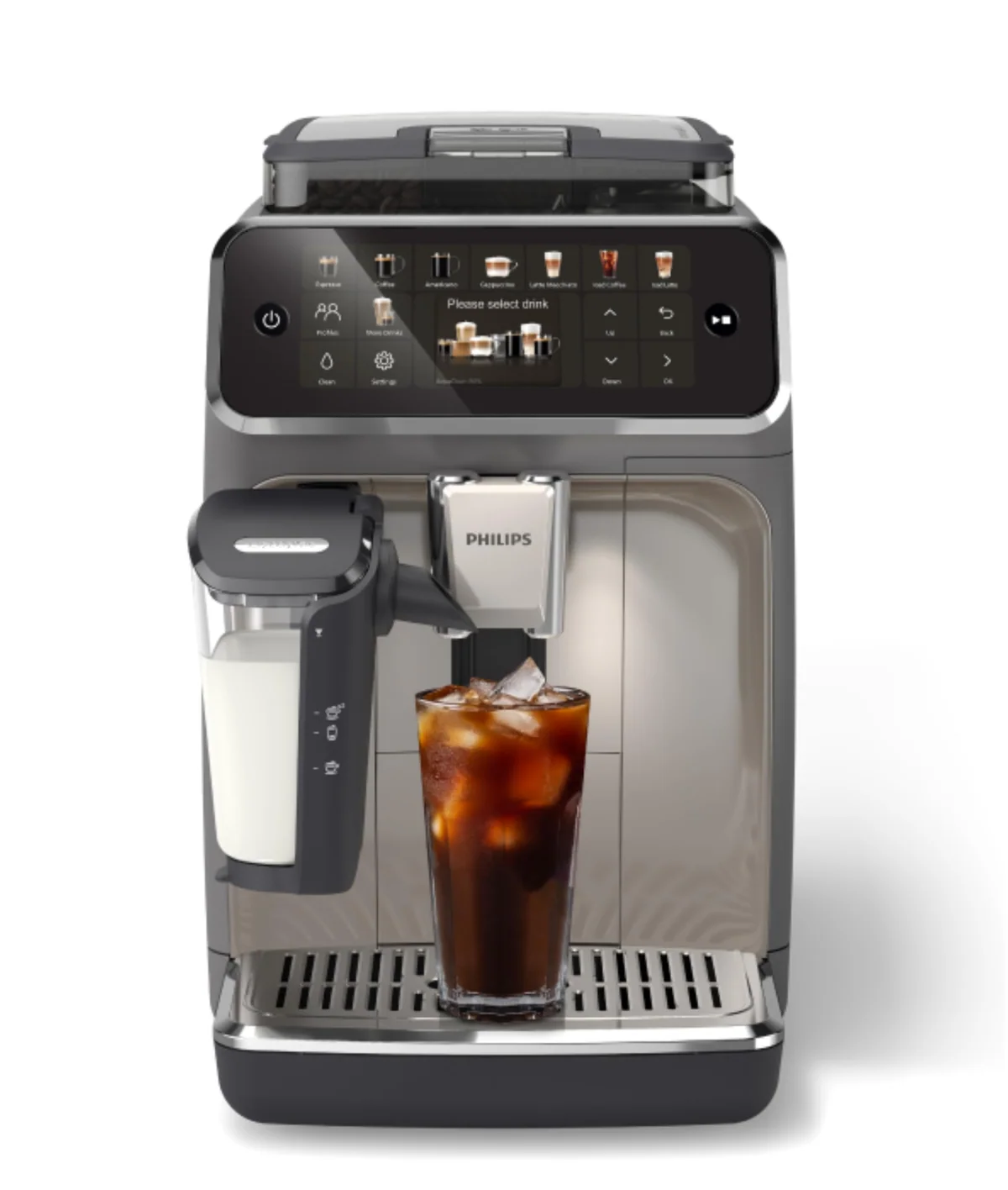
Philips 5500 LatteGo
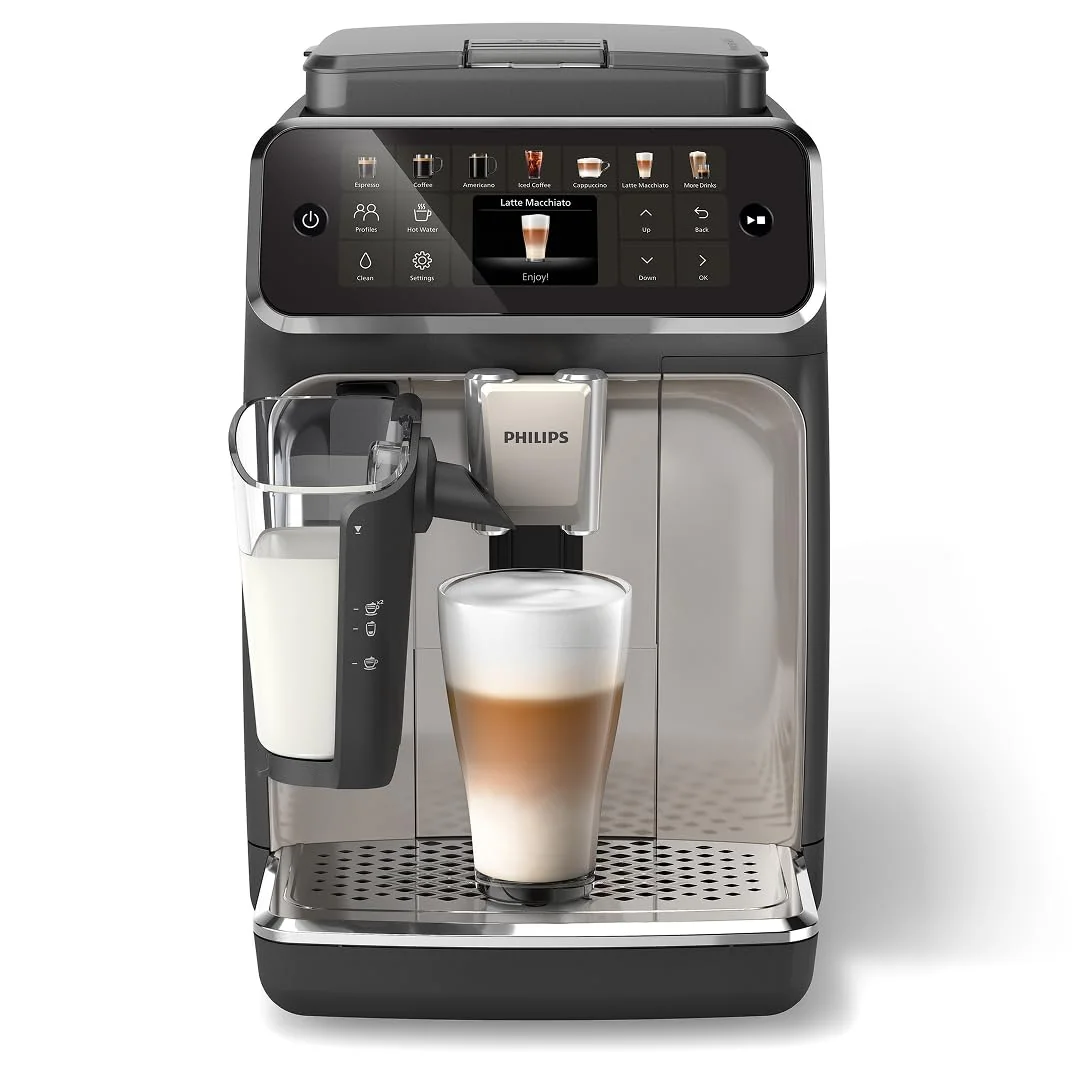
Philips 4400 LatteGo
Philips prices these two as though they were different classes of machine, and they are not. Seattle Coffee Gear put a 3300 and a 5500 on the same bench and reported the same grinder, the same heating element and the same brew unit, with coffee of very similar flavour in comparable time, adding that the 5500's five strength settings buy finer increments of the same ceiling rather than more coffee. The 4400 sits between those two rungs. If the bottom of the ladder and the top of it brew the same cup, the middle is not brewing a different one, and reviewers who have lined all four current LatteGo machines up together keep arriving at the same conclusion about what the climb actually buys.
Espresso Den has not had either machine on a bench, and nothing on this page is a measurement of ours. What follows is built from the six Amazon listings this comparison covers, from their customer reviews, from Philips's own support documentation, and from independent testers who weighed pucks and pointed sound meters at these machines. Our full write-ups sit behind the 5500 review and the 4400 review if you want either machine argued out on its own terms.
Start with the number that governs both of them. Philips's own support page for the 5500 states that the brew unit handles between six and nine grams of ground coffee across its strength settings. A café double is sixteen to eighteen. That single fact is why the one-star reviews on both machines say the same thing in the same words, and why a buyer of the black chrome 5500 wrote that the dosing in grams is very shy, the puck is small, and what lands in the cup is brown water rather than coffee. A 4400 buyer returned his under the heading "Very expensive brown water" after three days of trying every fix he could find online. Neither model number protects you from that, and our piece on watery bean-to-cup espresso covers what does and does not recover the cup.
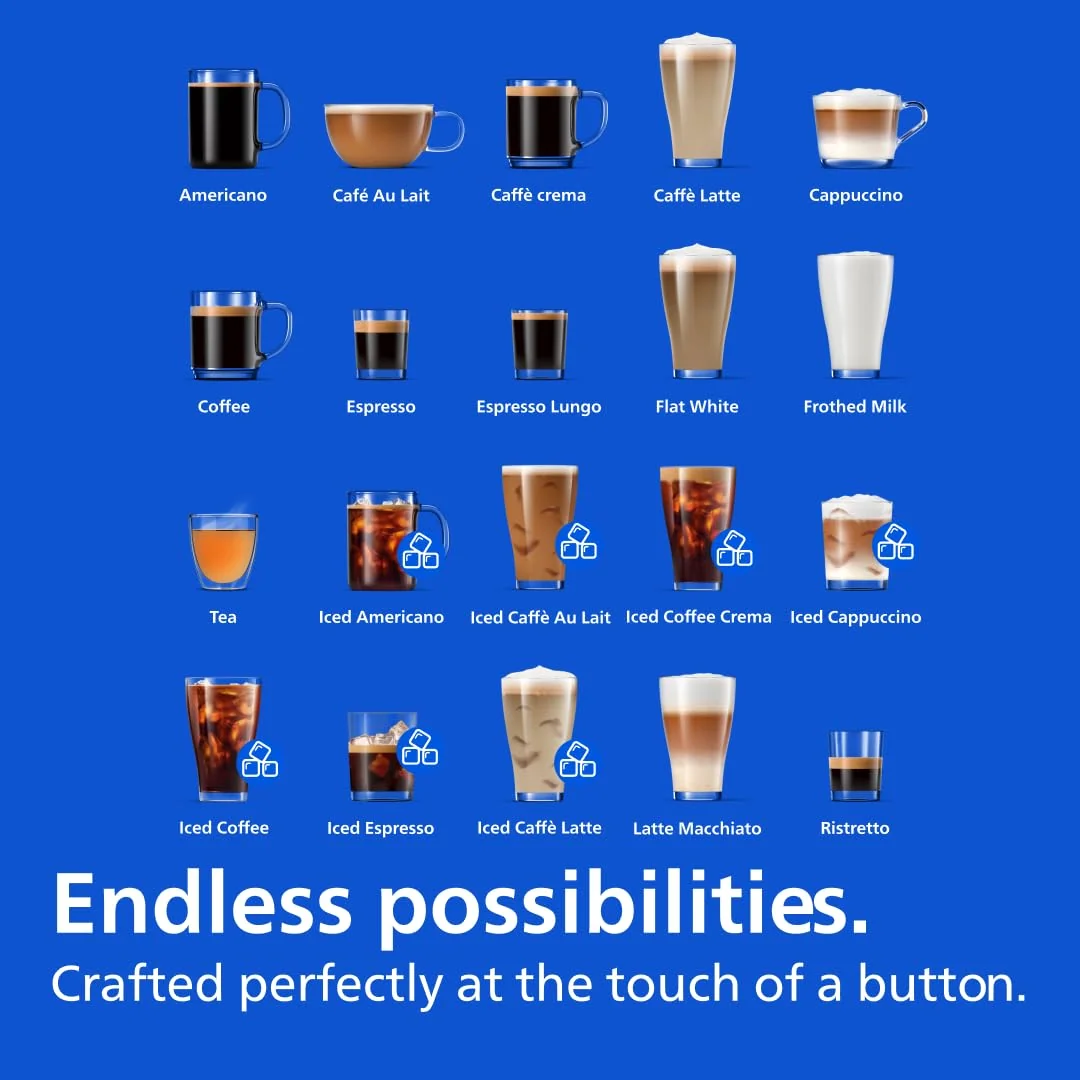
Philips 5500 LatteGo
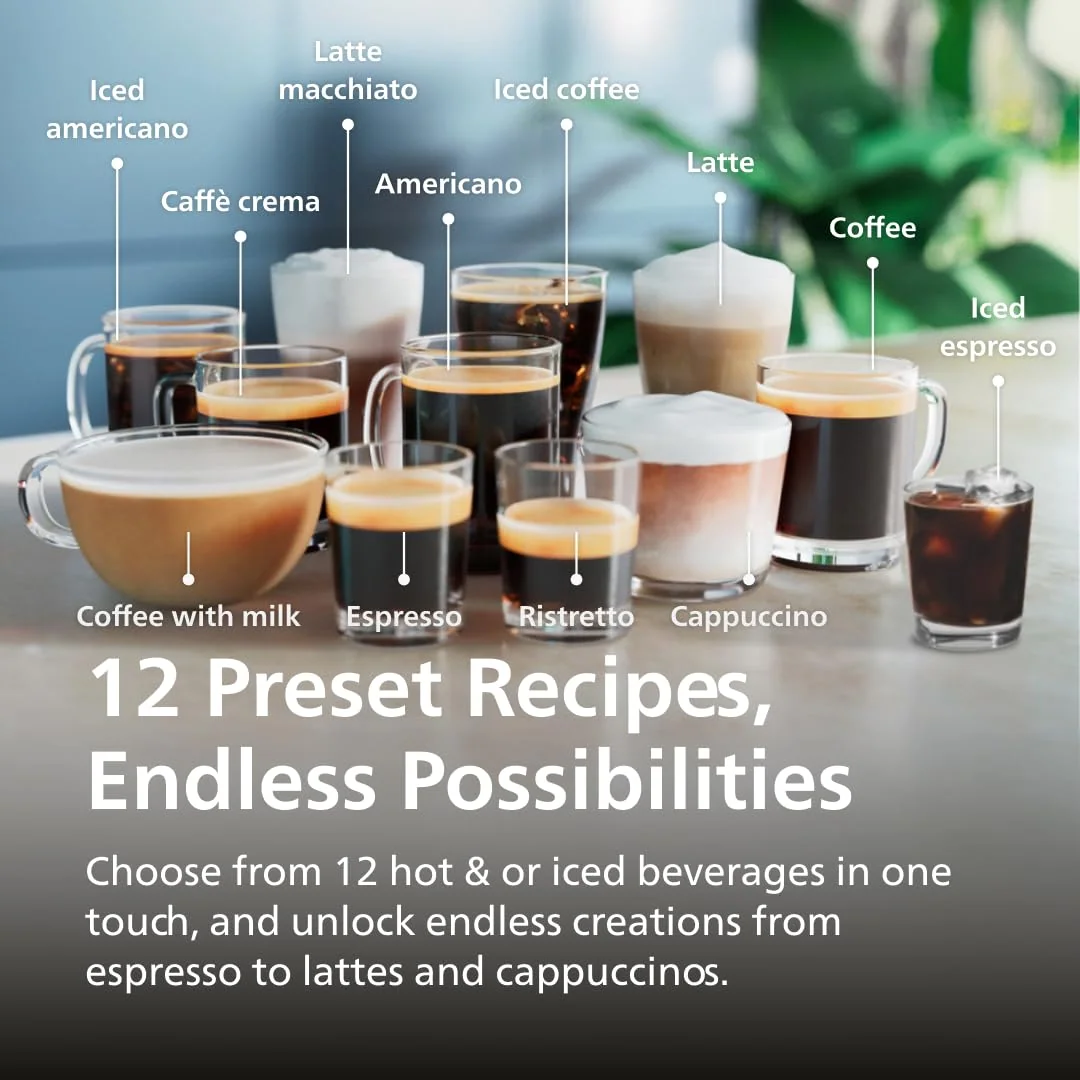
Philips 4400 LatteGo
At a Glance
| Feature | Philips 5500 Series Fully Automatic Espresso Machine, LatteGo Milk System, Integrated Grinder, 20 Hot & Iced Coffee Pre-Sets, Quick Start, SilentBrew, 15-Bar Pressure, Black Chrome (EP5544/94) | Philips 4400 Series Fully Automatic Espresso Machine – 12 Hot & Iced Coffees, Quick-to-Clean LatteGo Milk System, SilentBrew, QuickStart, Ceramic Grinder, Black Chrome (EP4447/90) |
|---|---|---|
| Price Range | $500–$1,000 | $500–$1,000 |
| Configuration | 8.3 kg | 12 beverages |
| Finish | Black, chromed | Black and Chrome |
| Items In Box | 1 | 1 |
| Listed Since | 2025-08-05T00:00:01Z | 2025-10-12T00:00:01Z |
| Check Price on Amazon | Check Price on Amazon |
The eight extra recipes, itemised
| What you get | 4400 (EP4447/90) | 5500 (EP5544) |
|---|---|---|
| Presets | 12 | 20 |
| Of which iced | 4 | 8 |
| Strength steps | 5 | 5 |
| Saved profiles | 2 plus a guest slot | 4 plus a guest slot |
| Extra Shot | Not fitted | Almost every coffee drink |
| Milk froth on its own | Yes | Yes |
| Display | Colour, physical buttons around it | Colour touch |
| Grinder and brew unit | The same ceramic burrs, twelve grind positions, one brew group | |
Read the top two rows honestly and the headline gap shrinks in your hands. Four of the eight extra recipes are iced versions of drinks already on the list, and Home Coffee Expert, counting the 5500's twenty, found hot water and milk froth among them and only seven with a dedicated button, everything else living a menu down. You are not buying eight new drinks. You are buying a longer menu of the same three ingredients arranged differently, and a machine that already makes an americano in one press does not become a different machine because it will also make an iced one.
Extra Shot is the only difference that reaches the cup
This is the one row in that table worth real money. Extra Shot grinds and brews a second puck, which is the only control on either machine that raises the dose rather than redistributing it, and 5500 owners use it exactly that way: one writes that she loves being able to add an extra shot to her latte macchiato, and another, four months in, reports setting the finest grind and running a double to get the strength she wanted. The 4400 has no such key. What it has instead is a workaround its owners find on their own within a week, which is to brew two drinks into the same mug: one man's favourite is a latte with a macchiato poured on top of it, which he arrived at because a single cycle did not fill a normal mug.
So the real 5500 premium is one button against thirty seconds and a second press. Before you decide that is worth it, take the sting out of the feature. Home Coffee Expert reached its best 5500 result on the second-finest grind, maximum temperature and a one-ounce volume, and was honest about the cost, which is twenty to twenty-two grams of beans per drink. Extra Shot is not a luxury on the 5500. It is the correction for a brew chamber that doses half a café double, and using it as standard roughly halves the bean-cost advantage the machine has over pods. Espresso Den would rather you knew that before you paid for it than after.
Four profiles, two profiles, and the person who is not you
Profiles are the other honest difference, and they are worth more in some kitchens than any coffee argument on this page. A 5500 owner describes guests helping themselves and custom programs covering a family with fussy and varied tastes, which is a real domestic benefit that has nothing to do with extraction. Two adults with settled habits are covered by the 4400's two slots and the guest slot that stops a visitor overwriting them. A house of four coffee drinkers who each want a different strength is the case where the 5500 pays, and it is a narrower case than the marketing implies.
One caveat before you count on either. A 4400 owner reports that the profiles are not one-touch recall of a finished drink: you go to the individual drink you want and it remembers what you last did to it. That is a saved-preferences system rather than a barista's memory, and it works the same way whether there are two slots or four. Our guide to the Philips menus covers where these settings actually hide, including the temperature step most owners never move.
Everything that does not change, which is most of it
The milk system is identical, and it is the best reason to buy either machine. LatteGo is two pieces with no tubes, milk never enters the body, and the whole thing rinses in seconds. It also makes exactly one texture. Coffeeness found the foam firm enough that a cappuccino keeps its layers and warned against expecting silky microfoam for a flat white, which means the presets on the 5500 that name the finer drinks are producing the same foam at different volumes as the 4400's shorter list. If milk drinks are the whole purchase, read our piece on which milk system you will live with and our latte picks before you choose between two machines that froth identically.
Noise is the same story with a twist. Coffeeness measured the 5500's grinder at 61 dB and called it the quietest Philips yet, and both machines carry the same SilentBrew claim. Owners of both agree the grinder is genuinely quiet and then say the same thing about the rest: a 5500 owner four months in writes that the grinding is quiet but the milk and brewing are very loud, and a 4400 owner puts it as loud when it grinds and heats and worth it anyway. The quiet you are buying is the quiet part of the cycle, on both. Our quietest picks compare that against machines that also attack pump noise.
The iced presets are the same on both and they are not what the copy says. The renewed 5500 listing promises that a calibrated system delivers the same rich flavour in iced drinks as in hot ones. An owner of that very listing describes what actually happens, which is that it pours lukewarm coffee that needs ice added to make it real iced coffee, and he is generous enough to credit Philips with calibrating the aroma for warm brewing. That is a fair description and it applies equally to the 4400's four iced settings. Our explainer on which machines brew cold saves you the disappointment.
Two physical annoyances also transfer intact. A 4400 buyer measured the maximum from the latte and latte macchiato presets at 2.7 ounces, rang Philips, was walked through the menu on a video call and told that was the maximum, and concluded that the listing photography is very deceiving. On the 5500, TechRadar's SCA-certified tester named the fixed milk spout angle as her biggest complaint, because the cup has to sit much further forward than you expect and a narrow one will have a spout miss it entirely. Neither is a reason to prefer one over the other. Both are reasons to buy a wide mug.
What the six listings are actually telling you
| Listing | Condition | Rating | Ratings behind it |
|---|---|---|---|
| 4400 EP4447/90, black chrome | New | 3.8 | 583 |
| 4400 EP4447/90, black chrome | Renewed | 4.5 | 26 |
| 5500 EP5544/94, black chrome | New | 4.1 | 354 |
| 5500 EP5544/90, grey chrome | New | 3.7 | 159 |
| 5500 EP5544/90, grey chrome | Renewed | 4.4 | 71 |
| 5500 EP5544/94, black chrome | Renewed | 4.3 | 43 |
Those scores are not measuring the coffee, because the coffee is the same across all six. They are measuring expectation, and expectation is set by the listing. The two renewed listings with small samples score highest because their buyers were braced for a used machine and got a clean one. The new listings score lowest because their copy is doing the most promising, and in several checkable places the copy is wrong: the black 5500 bullets offer four saved profiles while its own description offers two, the grey 5500 states 230 W for a machine Philips's support pages describe very differently, and the renewed 4400 advertises a colour touch screen and three profiles on a machine with buttons around its display and two profiles plus a guest.
The model numbers do not reliably order these two by price either. There have been stretches where a new 4400 has been listed above one of the new 5500 listings, which makes the whole argument on this page moot in the buyer's favour: if the 5500 is not the more expensive machine on the day you look, take the 5500 and enjoy the extra button. Check the actual gap yourself rather than assuming the ladder is priced like a ladder.
One comparison the money keeps inviting is sideways rather than up. Ask a forum whether to buy a 4400 or a De'Longhi Magnifica Evo and the room answers fast and one-sided, and the reason given is the dose rather than brand loyalty. We think that verdict overstates the case for anyone whose drinks are mostly milk, since no De'Longhi carafe is as simple to clean as LatteGo, but it is the honest alternative and our Magnifica Evo review and the head-to-head against a LatteGo machine lay out where each one wins. Looking down the Philips range instead, the 3300 brews the same cup again with three strength steps and no profiles, which is the argument in the 3300 against the 5500 and in our guide to the whole LatteGo line.
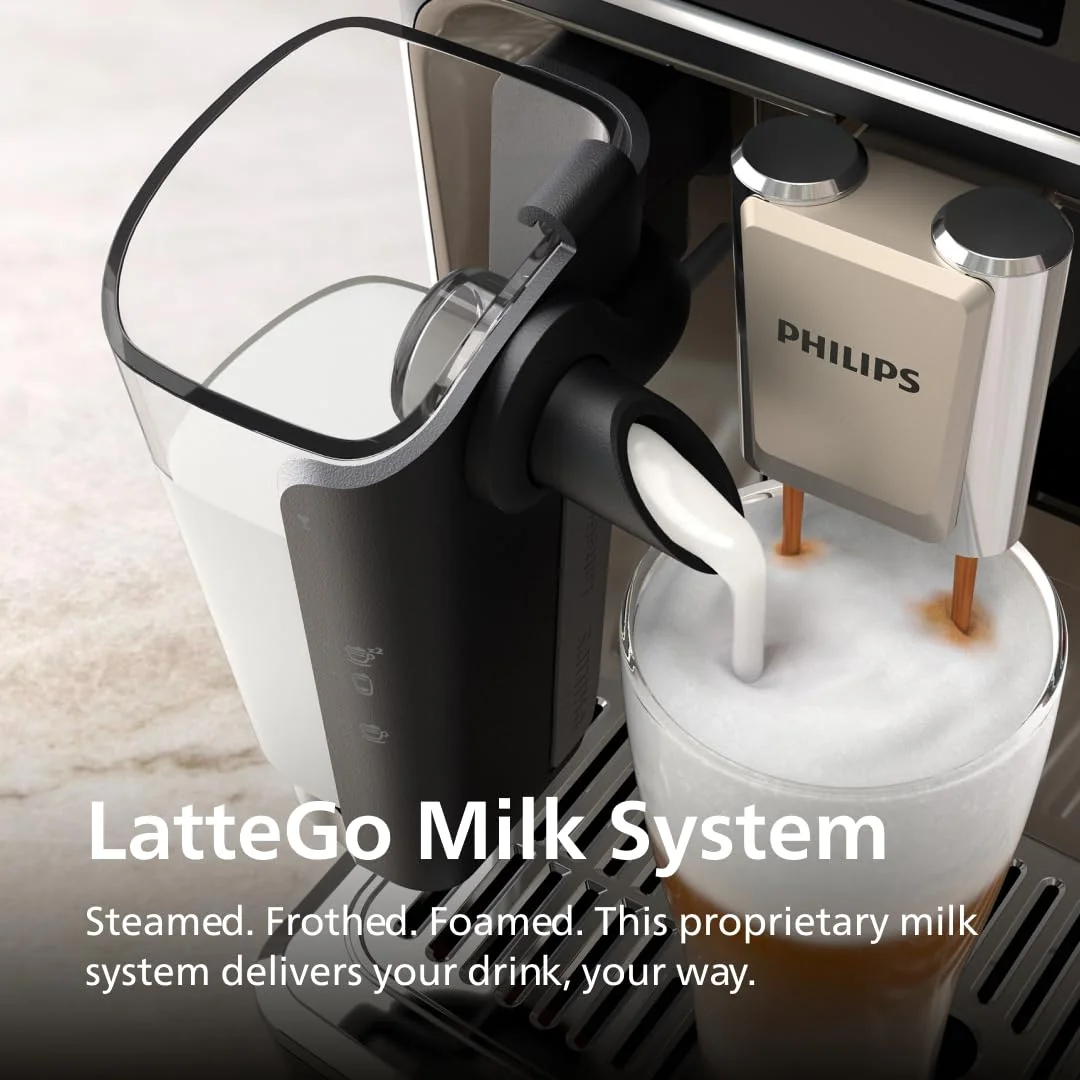
Philips 5500 LatteGo
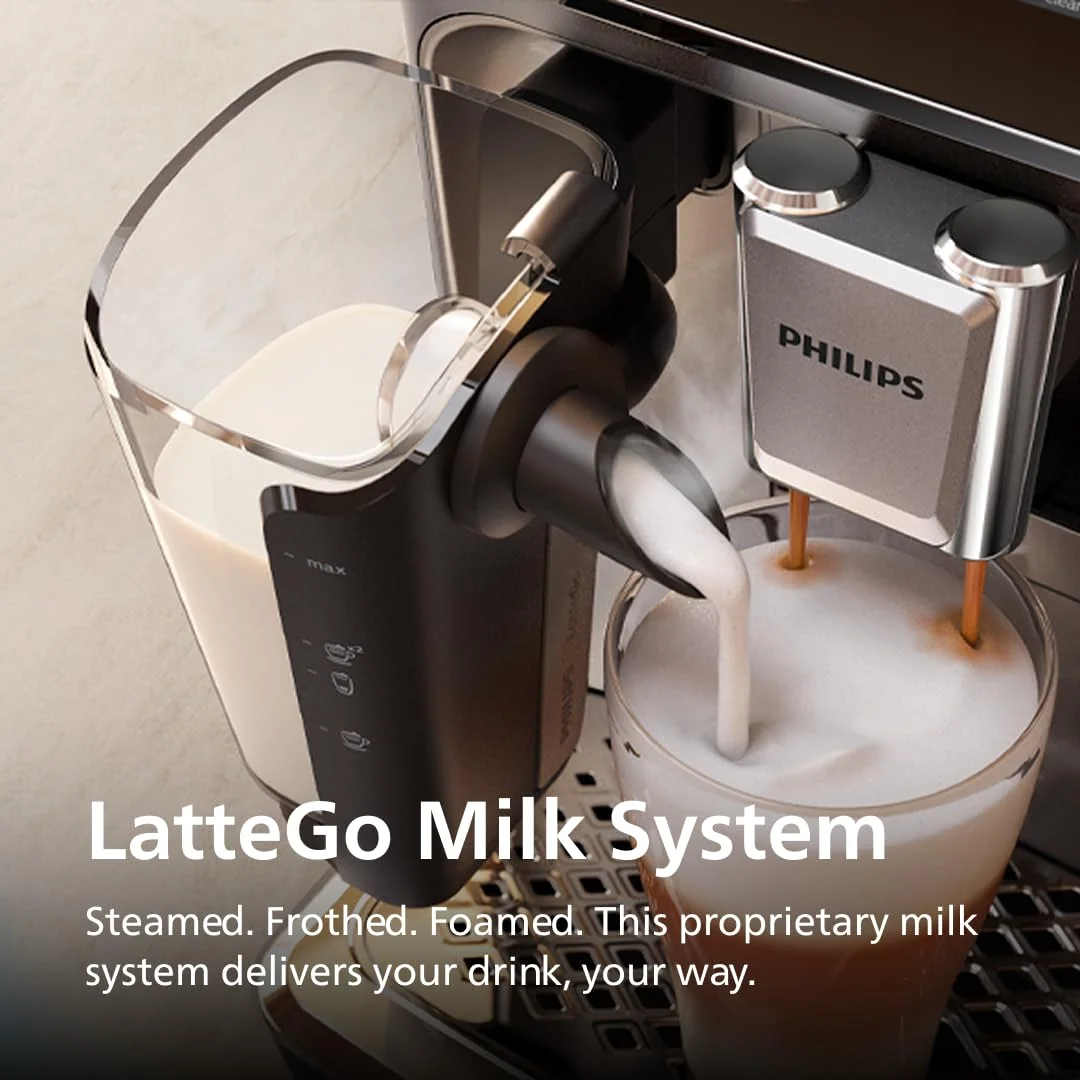
Philips 4400 LatteGo
Which of the six listings to actually buy
Two conditions and two colours across two model numbers is more choice than this decision deserves, so here is the short version before the detail. The new 4400 is the default. The renewed 5500 listings are the interesting outliers, because a renewed flagship and a new mid-range machine frequently land in the same territory and the flagship's advantage over the other is the interface rather than the drink. Whatever you choose, the same maintenance applies: rinse the brew group weekly, grease its rails, and treat the AquaClean filter's five-thousand-cup claim as a long interval that assumes you replace the filter every time the machine asks. Our descaling and AquaClean piece unpacks what that number depends on, and our longevity page covers what fails first on this platform.
The best-scoring way into a 5500
It carries the highest rating of any 5500 listing here, and seven of its eight retained reviews describe a machine indistinguishable from new, with one six-year Philips owner reporting no visible signs of prior use at all.
The eighth arrived leaking and went back, and a renewed unit's cover runs out well before the leaks and worn seals that owners actually report tend to appear.
The same renewed 5500 in black chrome
Nothing inside differs from the grey renewed unit, so choosing between them is a question of which colour suits the kitchen and which is the better deal on the day.
Its ninety-day limited warranty is the shortest cover of the six, and its own bullets offer two user profiles on a machine that saves four plus a guest.
The one most households should buy
It brews the identical cup to every 5500 on this page while keeping the colour screen, the five strength steps, the two profiles and the iced presets, which is the whole of what a normal kitchen touches.
It has no Extra Shot, the one control that genuinely raises the dose, and its 3.8 average across 583 ratings is the softest score of any listing here.
The 4400 for someone willing to carry their own risk
The machine underneath is the current EP4447/90 rather than an older 4300, and its buyers have so far rated it higher than any other listing on this page.
Twenty-six ratings is a rumour rather than a score, the bullets overstate the machine twice over, and there is no description field at all, so capacities and dimensions are simply absent.
The 5500 with the deepest review record behind it
At 354 ratings it is the most thoroughly tested listing here, and its reviews split cleanly between people leaving pods behind, who are delighted, and people arriving from better espresso, who are not.
Its bullets promise four saved profiles while its own description promises two, which tells you how much care the copy has had.
The listing to read most slowly
The hardware is the same grey chrome 5500 sold renewed further up this page, and its description is the only one that spells out the twelve grind positions, five aroma steps, three temperature settings and 1.8 litre tank.
It holds the lowest rating of the six at 3.7, and its copy states 230 W and two user profiles for a machine that saves four plus a guest.
If you are buying either machine renewed, be clear with yourself about what the discount is buying: a shorter warranty on a platform whose characteristic faults are leaks and perished seals, which arrive on a timescale ninety days does not cover. Run water through it on day one and watch underneath and at the base of the carafe. Our piece on renewed machines covers the rest of the day-one checklist, and the bean guide matters more here than on most machines, because a grinder this size punishes both light roasts and oily dark ones.
The closing argument is the one this page opened with, now that you have the evidence for it. These are the same coffee machine with different front panels, and the 5500's front panel is genuinely nicer to live with. It is worth paying for if a fourth profile solves a real argument in your house, or if you would rather press Extra Shot than brew twice. It is not worth paying for because twenty is a bigger number than twelve.
Frequently Asked Questions
Which model numbers am I actually comparing?
The 4400 here is the EP4447/90 in black chrome, and the 5500 is the EP5544, sold as /90 in grey chrome and /94 in black chrome, with the suffix marking colour rather than hardware.
Does the 5500 make stronger coffee than the 4400?
No, both use the same grinder and brew unit and both top out at the same small dose, though the 5500's Extra Shot brews a second puck to get around it.
What does Extra Shot actually do?
It grinds and brews a second charge of coffee into the same drink, which is the only thing on either machine that raises the dose rather than redistributing it.
Can I get the same result on a 4400?
Yes, by ordering two short drinks into the same mug, which is what its owners work out for themselves in the first week.
Is the extra pair of profiles worth it?
Only in a house where three or four people each want their coffee configured differently, because two adults are already covered by the 4400's two slots plus its guest slot.
Do either of them brew genuinely cold iced coffee?
No, both brew cooler and slower than usual and pour that onto ice you supply, which owners describe as lukewarm coffee that needs ice added.
Is one quieter than the other?
They share the same SilentBrew grinder treatment, and owners of both report the same split, a genuinely quiet grind followed by a loud brew and a louder milk system.
Will either make a proper flat white?
Neither will, because LatteGo produces one cappuccino-tuned texture on both machines and the presets that name finer drinks are pouring the same foam at different volumes.
Should I buy new or renewed?
Renewed is the better value only if the saving on the day is large enough to fund your own repairs, since the failures owners report on this platform mostly arrive after a renewed warranty has expired.
Ready to Choose?
Sources (8)
- Amazon listings and customer reviews — Philips 5500 Lattego and Philips 4400 Lattego
- Owner reports across r/superautomatic threads
- Owner and reviewer video, 2 channels
- Seattlecoffeegear — Article — www.seattlecoffeegear.com
- Philips — Article — www.usa.philips.com
- Homecoffeeexpert — Article — homecoffeeexpert.com
- Coffeeness — Article — www.coffeeness.de
- Techradar — Article — www.techradar.com