The bean that wrecks a bean-to-cup grinder is not a roast level, it is a shiny surface
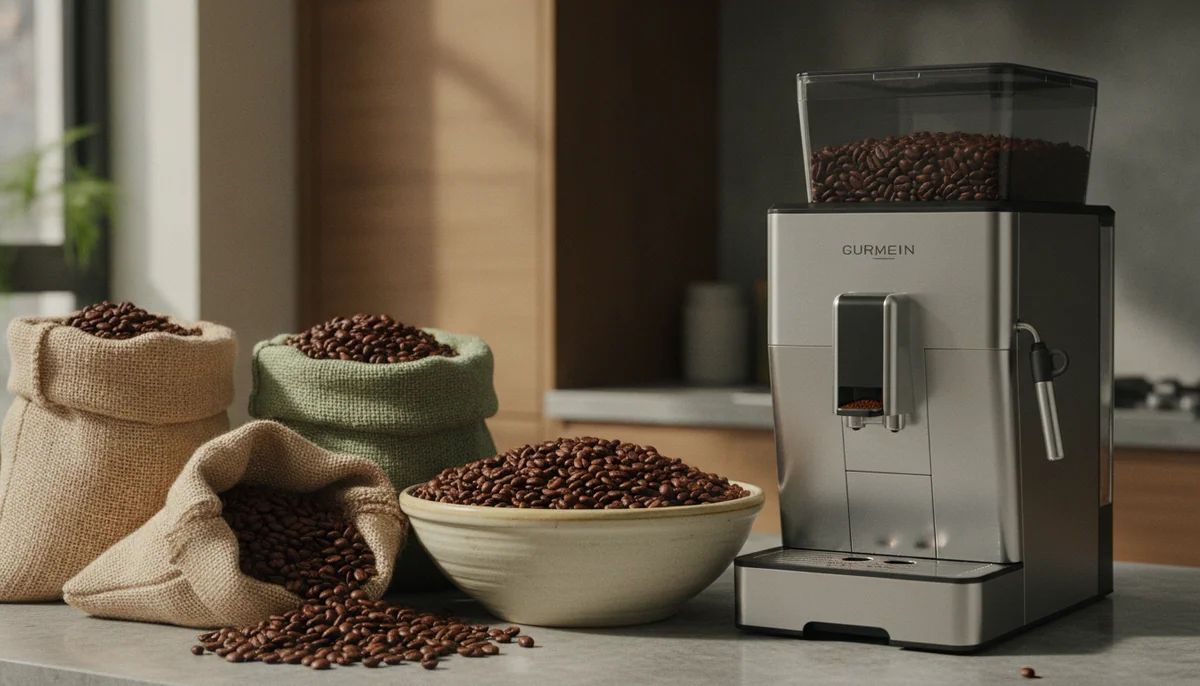
A super-automatic is the only coffee machine that never sees what it is about to grind. You tip beans into a hopper, close a lid, and for the next fortnight the machine feeds itself on gravity and a fixed grind setting, with no human standing over it noticing that the beans have started sticking to each other. That single fact explains almost every bean problem in this category, and it is why the advice below is narrower than the advice you would give someone with a separate grinder and a portafilter.
It also explains why the same sentence keeps appearing in owner reviews across five different brands. A Jura owner, a year in, volunteers unprompted that you do not want really oily beans, that oiliness is what she suspects is behind the clogging other people report, and that her sister has put over thirty thousand cups through a Jura on the same policy without trouble. A Philips 4400 owner ends an otherwise glowing review with an instruction rather than a compliment, telling readers to buy beans that are not oily because oily beans are not good for super-automatic machines. A Café Affetto owner puts it as a limitation of the product, that it cannot handle any oily beans, and adds, with some feeling, that those are usually the best kind of coffee.
Espresso Den went through the customer reviews for every machine on this site looking for beans specifically, and the pattern is unusually clean for consumer feedback. Nobody blames a roast level. They blame a surface. What follows is that evidence sorted into the order it will actually matter to you, starting with the one bean type that does mechanical damage and ending with the ones that merely disappoint.
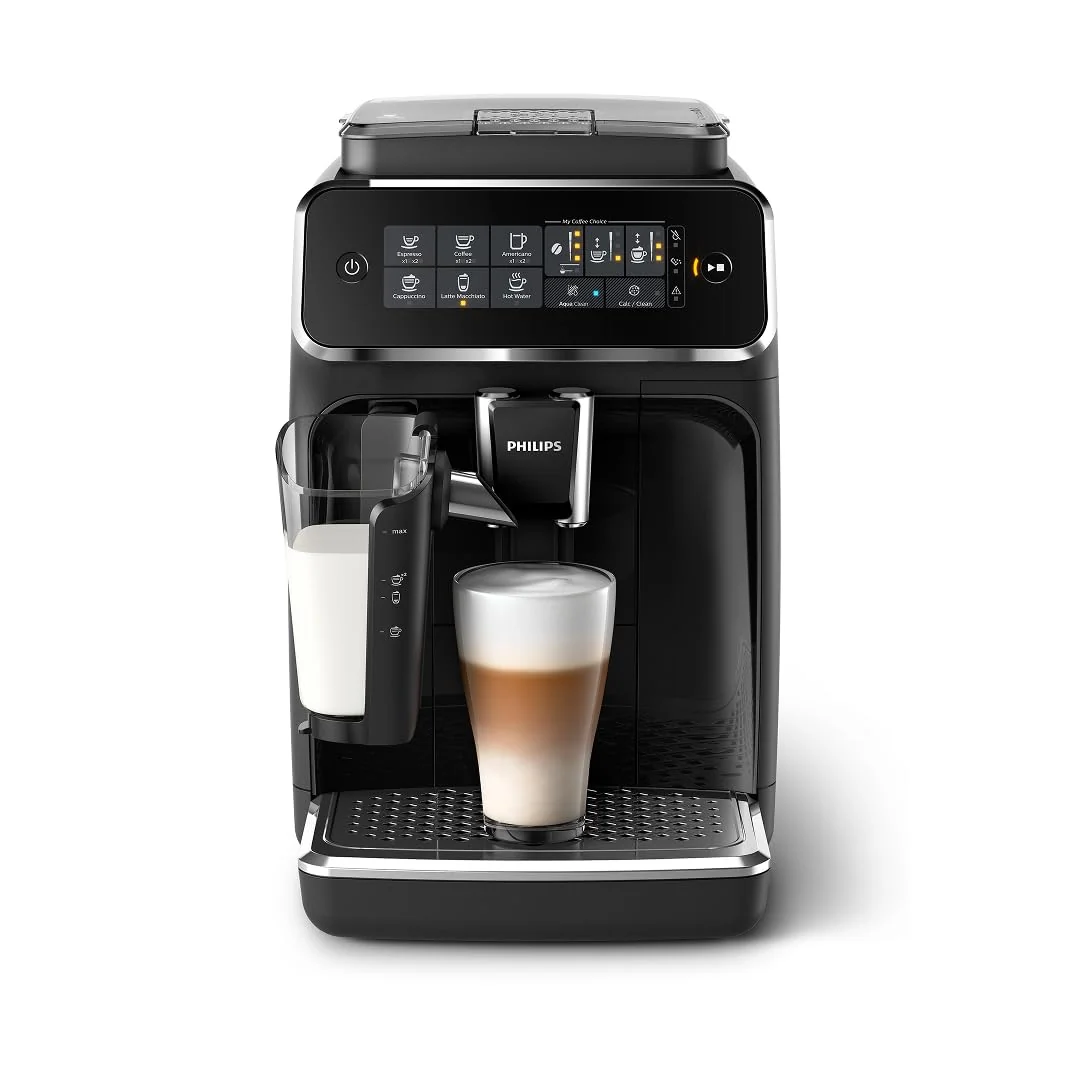
Oily beans are the only ones that break things
Hold a bag of dark Italian or French roast up to the light. If the beans glisten, if they leave a film on your fingers, if the inside of the bag looks slightly wet, that is coffee oil that has migrated to the surface during a long roast. In a manual grinder you would notice it, wipe the burrs, and move on. In a sealed hopper feeding a machine that grinds five to fifteen grams at a time, that oil does three things in sequence, and none of them announces itself.
First the beans stop sliding. They tack together into an arch above the grinder throat, which the trade calls bridging, and the machine happily runs its motor against an empty chamber. A Philips 2300 owner describes exactly that failure and the daily ritual it forces: the beans do not always feed, so she is forever removing the lid and pushing them down, and the grinder sometimes catches on a larger bean and sounds like it is working while grinding nothing. Her verdict on the consequence is the one worth reading twice, because it explains a whole genre of complaint about these machines: the number of watery drinks is ridiculous, and the machine has no way of knowing it is not grinding.
Jura owners report the same thing in gentler terms. One says the bean container decides it is empty when it is not; another has simply built swirling the beans into her routine after every cup, on the reasoning that it is not worth making a drink with too few grounds in it because the grinder did not fill. A Philips 4400 owner adds the same habit as a minor inconvenience rather than a fault, noting that very oily espresso beans occasionally need stirring in the hopper so they keep feeding. A Café Affetto owner reports it as a design complaint about the hopper shape. Four brands, one behaviour, one cause.
Second, the oil coats the burrs and the chute between the grinder and the brew chamber, which is a narrow plastic passage on almost every machine in this category and is not something you can reach with a brush. Third, and this is where the money goes, the residue reaches the brew group. On a Philips or a De'Longhi you can pull that group out and rinse it, which is the single best structural argument for those brands; our cleaning and descaling guide covers the routine. On a Jura you cannot, because the brew unit is sealed inside the machine and cleaned only by a tablet dropped through the bypass chute, which is why the sealed brew group question matters more to a Jura owner's bean choice than to anybody else's.
One honest caveat, because it is in the same evidence and deserves to be here. A frustrated Philips 4400 buyer went the other way, cleaned the machine out and tried two additional, drier bean varieties, and reported that it made no difference at all to his watery coffee. Beans are the first thing to change and they are not the only thing that can be wrong, which is the whole subject of why bean-to-cup espresso comes out thin.
The other end of the shelf: why your favourite light roast tastes sour
The opposite failure is quieter and does no damage, and it will still make you think you bought a bad machine. Every super-automatic grinds coarser than a portafilter machine does, because the pump behind it cannot push water through a genuinely espresso-fine bed of coffee, and the software will not let it try. The clearest statement of that ceiling anywhere in the owner record comes from a Philips 1200 buyer who set his grinder to its finest position and found it produced grounds about like grocery store drip coffee.
Dense, lightly roasted, third-wave single origins need a fine grind and a long contact time to give up anything at all. Give them a coarse grind and sixteen seconds and you get the sourness people describe as watery. A De'Longhi Dinamica Plus owner who now likes his machine started with a light roast and reports that it simply was not as good as the medium roast he switched to, and his advice to new buyers is to begin with a freshly roasted medium. That is not a criticism of light roasts. It is a statement about what a fifteen-bar pump and a twelve-position ceramic grinder can physically extract.
| The bag | What the machine does with it | Verdict |
|---|---|---|
| Dark roast, visibly shiny or greasy | Bridges in the hopper, coats the burrs and chute, eventually reaches the brew group | Keep it out |
| Medium-dark espresso roast, matte and dry | Feeds cleanly, grinds inside the machine's usable range, forms a firm puck | The target |
| Straight medium roast | Works, and needs a finer grind and maximum strength to avoid tasting thin | Fine, with dialling in |
| Light or Nordic filter roast | Too dense for a grinder that cannot go truly fine, so it under-extracts and reads as sour | Wrong machine for it |
| Flavoured or sugar-glazed beans | The coating melts under grinder friction and sets in the chute | Never in the hopper |
| Pre-ground coffee | Jams the burr chamber, and has its own separate chute for a reason | Use the bypass, one scoop |
| A bag opened two months ago | Grinds and brews perfectly, tastes of nothing much | Buy smaller bags |
The one review that contains this entire page
If you only take one owner's word for any of this, take a Philips 1200 buyer who wrote the cleanest before-and-after in the corpus. He replaced a pod machine, hit the same watery coffee everybody complains about, and traced it to the bag rather than the box. His account: he started with an oily medium roast, which produced nothing but sludge in the pucks and very weak, watery brew, and switching to a darker, less oily roast made a huge difference, with the pucks coming out as nice solid discs and the coffee turning rich and flavourful.
Two things in that sentence are worth pulling out. The first is that he read the pucks. The grounds bin is the best diagnostic instrument you own on a machine like this, and it is free: a firm, dry, liftable disc means the grind and the dose are working together, while wet slush with no formed edge means water is running past the coffee rather than through it. If your pucks are soup, change the beans before you change anything else.
The second is what he did after the swap, which is what most people skip. He set the grinder to its finest setting and adds the instruction that saves grinders, which is to adjust it while the grinder is actually running. That is not a Philips quirk, it is how every burr set in this category works, and forcing the dial with a full stationary hopper is one of the more expensive mistakes available to a new owner.
Everything that is not a bean and should not be in there
Two owner stories in the same corpus end with a screwdriver, and both start with something that was not coffee. A Philips 1200 owner in East Africa had his machine throw three error lights, worked out that a bean had become jammed in the grinder and the motor did not have enough torque to break it free, and then discovered that Philips had used star-shaped screws he could not undo; he ended up grinding down a screwdriver to get in, cleared the jam, and concluded that if it ever happens again he will simply throw the machine away. A De'Longhi Magnifica Evo owner had a small piece of plastic fall into the beans and jam the grinder, and calls the fix super simple, which tells you as much about the difference in access as it does about the two faults.
So: check a new bag by eye and by hand before it goes in. Roasters ship stones, husks and the occasional unroasted bean, and a stone will do to your burrs what it does to a blender. If the hopper has been sitting a while, do not tip a fresh bag on top of the old one and hope.
The other object that ends up in the wrong hole is coffee itself. Every machine here has a bypass chute for one scoop of pre-ground, and the machines are more forgiving about this than you would expect: a Jura E4 owner poured whole beans into the side chute by mistake, the machine sensed that they were beans rather than grounds, dumped them into the grounds bin and sat there waiting for what it had actually asked for. That is good design and it is not an invitation. Pre-ground in the bean hopper packs the burr chamber solid, and the correct routine, which takes practice, is covered in our guide to using pre-ground and decaf without wasting it.
Freshness, and the fact that the hopper is not a storage jar
Philips thinks the hopper lid matters enough to put the phrase Aroma Seal in the product name. A gasketed lid genuinely slows staling, and it does not stop it, because whole beans in a warm plastic box above a heating element are not in ideal conditions no matter what the marketing says.
The practical rule is to keep the hopper shallow rather than full. Fill it with roughly a week of drinking, keep the rest of the bag sealed and away from the machine, and you sidestep two problems at once: beans that have gone flat, and beans that have had a fortnight to weep oil onto each other and start bridging. Households running two beans on a machine like the De'Longhi Rivelia should be stricter still, because the second hopper is by definition the one that gets touched three times a week, which is exactly how a decaf container ends up half full of stale coffee that the machine certifies as freshly ground.
Break-in complicates this in a way nobody warns you about at the point of sale. Almost every machine in this category needs somewhere between twenty and a hundred drinks before the grind and the puck settle down, and a Philips 3200 owner offers the sensible response, which is to buy cheap beans specifically to run through that period rather than burning through a good bag learning nothing. Do that inside your return window rather than after it.
Decaf, and the second-bean problem
Decaf beans behave differently in a hopper and it is not your imagination. Decaffeination makes beans more brittle and porous, they tend to roast darker at the surface for the same internal development, and they grind faster for a given setting. On a machine with one hopper and one grind setting, that means the decaf you switch to at four in the afternoon will often need a slightly different grind from the regular you drank at eight, and you will not get one.
There are three honest ways out of that. The bypass chute, one scoop at a time, on any machine here. A machine with two hoppers, which is the entire reason the Rivelia exists and which our page on machines for decaf and regular households works through. Or, most simply, buying decaf and regular from the same roaster at the same roast level so that one grind setting suits both. That last option costs nothing and is the one most people never think of.
Which machines punish the wrong bean hardest
Bean choice is not equally consequential across the category, and it is worth knowing where your machine sits before you decide how careful to be. The variable is not price. It is whether you can reach the parts the oil gets into, and how much grind range the grinder has to work with.
| Machine | Why beans matter here | The honest drawback |
|---|---|---|
| Jura E4 and ENA 4 | Superb black coffee at a button, and the brew group is sealed, so oil that gets in there leaves by courier | You can never inspect or rinse the brew unit yourself, and out-of-warranty service is expensive |
| Philips LatteGo range | Brew group pulls out for a weekly rinse, so oil is recoverable rather than terminal | The dose is small enough that a stale or wrong bean shows up immediately as thin, pale coffee |
| De'Longhi Magnifica Evo | Removable brew group, cheap parts, and owners who stay on matte medium-dark roasts report years of service | Its finest grind settings can choke the pump outright, so the usable range is narrower than the dial suggests |
| Café Affetto | Only five grind steps, and owners say plainly that oily beans gum the burrs | Failure reports cluster around the twelve to fifteen month mark, just after the one-year warranty ends |
| Bosch 800 Series | Owners rate its cup above machines they traded in, so a good bean is repaid | There is no bypass chute, so a single decaf means emptying the whole hopper |
| Breville Barista Touch | You tamp it yourself, so the puck tells you the truth immediately | It is not a super-automatic at all, and its conical burrs are uncomfortable with dense light roasts |
The Café Affetto is the sharpest illustration of why you should not trust the box. Its own listing advertises a stainless steel conical burr grinder that delivers a consistent grind with any bean roast. Its owners report that oily beans gum it up and that the hopper needs stirring. Both statements are about the same appliance, and only one of them was written by somebody who lives with it. If you are still deciding whether an all-in-one is the right shape of machine at all, the case for and against a built-in grinder is the argument underneath this one.
How much of the cup is actually the bean
More than the marketing wants you to believe, and less than the enthusiasts do. A Bosch 800 owner who ran the same beans through his new machine and the Gaggia he had used daily for two and a half years put a number on it, saying that coffee beans matter more than the machine itself and that roughly seventy percent of the taste comes from the beans. A Philips 3300 owner who roasts his own says it more bluntly: no machine, regardless of price, can make a bad bean better, and if you are not going to home roast or buy from a reputable roaster you should not bother spending the money. A Philips 2200 owner in Mexico writes that the coffee you use has a great deal to do with the result, and that a quality bean is what makes the aroma and body worth having.
Set against that, a contented Bosch 300 owner ends a positive review with the flat statement that it works with all coffee beans. Espresso Den's reading is that both camps are describing something true. Almost any machine here will grind almost any bean once, which is what that owner observed. What separates them is the five hundredth cup, and by then the bean you chose has either kept the chute clean or quietly coated it, which is the same distinction our page on how long these machines last and what breaks first arrives at from the repair side.
On actual bags, the owner record is narrower than you would expect and it clusters hard on Italian supermarket espresso blends. Lavazza comes up more than anything else: Super Crema in a Jura that has never clogged, Super Crema and Top Class in a Dinamica Plus, Classico in a Philips 3200 where the owner calls it fantastic for the long coffee setting. A Philips 4400 owner running four to eight drinks a day names Tonino Lamborghini as his pick specifically on the not-oily criterion. A Jura ENA 4 owner drinks nothing but Jamaican Blue Mountain, which is a lighter, expensive bean, and reports that the machine does fine with it. A Philips 1200 owner blends a dark Italian espresso with a little Colombian. None of that is a shopping list so much as a shape: dry-surfaced blends built for espresso, from roasters that sell them by the kilo.
What to do the day a new bag arrives
The routine is short, and doing it turns bean choice from a source of anxiety into about ninety seconds of work.
Look at the beans before they go in, and put back anything that glistens. Fill the hopper with a week's worth rather than the whole bag. Start the grinder, and while it is running move the dial one step at a time toward finer, never with the burrs stationary and never more than one step at once. Throw away the next two drinks, because the previous grind is still sitting in the chute and the change you just made has not reached the cup yet. Then read the puck: a firm disc means you are done, and slush means go one step finer and repeat. A Magnifica Evo owner two years in describes this as simply part of the routine, saying he still fiddles with the grind settings whenever they switch beans, which is exactly the right expectation to have.
Two habits are worth adding. Listen to the grinder, because it changes pitch when it is running on air, and one Philips owner caught an empty hopper mid-brew purely because the noise was wrong. And rinse the brew group weekly on any machine that lets you, because a week of dark roast leaves a film that a rinse removes and a month of it leaves one that it does not.
Buy fresh, which every experienced owner in this evidence says in one form or another and which a Breville buyer puts most simply, that you should try to use the freshest beans possible. Then buy small, so that the fresh bean is still fresh when you reach the bottom of the bag. That is the whole discipline, and it costs nothing.
Frequently Asked Questions
What are the best beans for a super-automatic espresso machine?
A fresh medium to medium-dark espresso roast with a dry, matte surface, bought in bags small enough to finish inside a few weeks.
Will oily dark roast beans actually damage the grinder?
They rarely destroy it outright, but they bridge in the hopper so the grinder runs on air, and the oil they leave in the burrs and the chute is what owners across several brands blame for clogging.
How do I tell if a bean is too oily before I buy it?
Look for shine on the surface of the beans and a greasy film on the inside of the bag, because both mean coffee oil has already migrated outward during the roast.
Can I use light roast beans in a bean-to-cup machine?
You can, but these grinders cannot go fine enough to extract a dense light roast properly, so the result usually reads as sour and thin no matter how you set the machine.
Are flavoured coffee beans safe in the hopper?
No, because the sugar or flavour coating melts under grinder friction and sets in the chute, which is why manufacturers point flavoured coffee at the pre-ground bypass instead.
Why do my beans stop dropping into the grinder?
They have tacked together into an arch above the grinder throat, which is almost always an oil problem, and owners of Philips, Jura and Café machines all report stirring or swirling the hopper as a daily workaround.
How can I tell whether the beans or the machine are at fault?
Look at the spent grounds, because a firm dry puck means the machine is working and slush with no formed edge usually means the wrong bean or the wrong grind.
Do I have to change the grind when I switch beans?
Yes, and experienced owners treat it as routine rather than a nuisance, moving the dial one step at a time while the grinder is actually running and discarding two drinks before judging the change.
How long can beans sit in the hopper?
About a week is a sensible ceiling, because a sealed lid slows staling without stopping it and a fortnight gives oily beans time to start sticking to each other.
Can I put pre-ground coffee in the bean hopper?
No, it packs the burr chamber solid, and the bypass chute exists precisely so you can run one scoop of decaf or pre-ground without touching the beans.
Does the bean matter more than the machine?
One owner who ran identical beans through two very different machines put it at roughly seventy percent of the taste, and the corpus broadly agrees that no machine at any price rescues a poor bean.
Should I use cheap beans while the machine breaks in?
Yes, because the first twenty to a hundred drinks are unrepresentative while the grind and the puck settle, and there is no sense burning a good bag learning nothing.