The best super-automatic espresso machine under a thousand dollars is the one that grinds the most coffee, and most of them grind half a shot
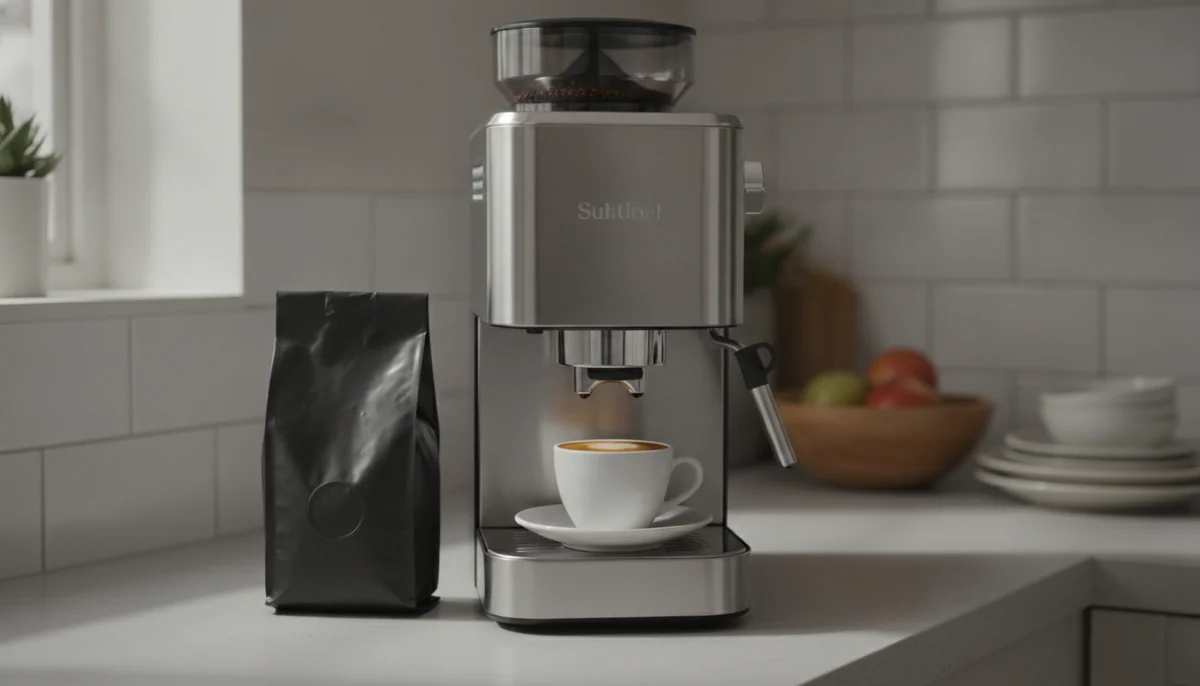
This price bracket is not the budget end of the category. It is the category. Almost every super-automatic a normal household actually buys lives here, and the eighteen listings on this page make the field look far wider than it is, because six of them are Philips LatteGo machines built around one Saeco brew group and one ceramic grinder. A reviewer who pulled shots on a 2200, a 3200 and a 5400 with identical beans and identical settings weighed 37, 32 and 35 grams into the cup and could not tell them apart. Seattle Coffee Gear, which sells both machines, put a 3300 next to a 5500 and reported the same grinder, the same heating element, the same brew unit and coffee of very similar flavour. Climbing the Philips ladder buys you a screen, saved profiles and more drink names. It does not buy you a better espresso.
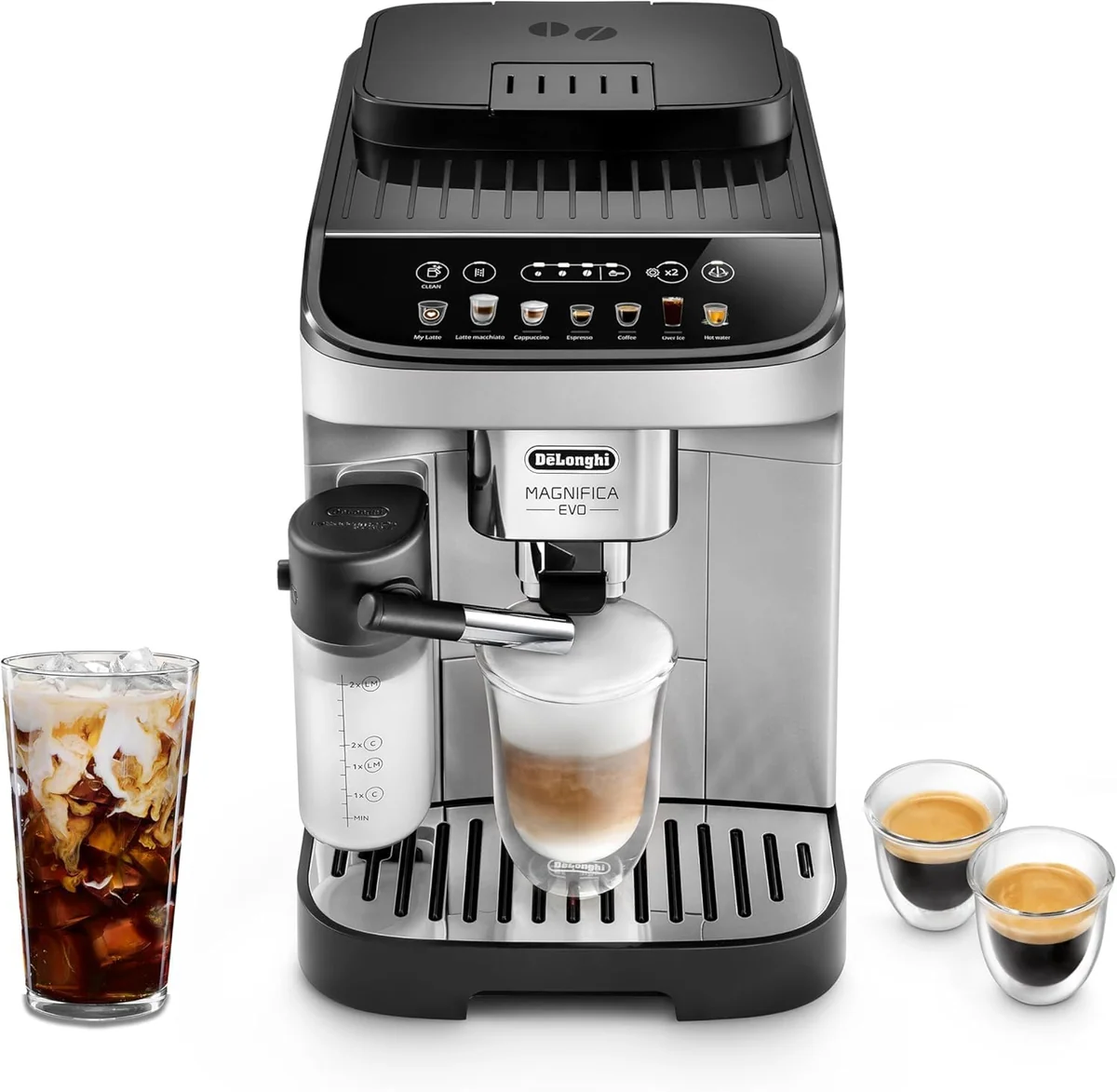
The market's own confusion about this shows up most clearly on the best-selling machine in the whole category. The De'Longhi Magnifica Evo sits at the top of the sales charts and only just clears 3.9 stars across nearly a thousand ratings at the same time. Neither figure is wrong. It is the cheapest honest way into De'Longhi's one-touch milk carafe, which is why it sells, and it ships configured in a way that reliably disappoints one particular kind of buyer, which is why the average sags. Every machine below behaves the same way: it is excellent for a describable person and irritating for everybody else, and the job of this page is to tell you which one you are before you spend the money rather than after.
So here are the three honest drawbacks of the whole bracket, stated once and then not repeated. The dose is small, everywhere, and no setting on any of these machines lifts it. The milk arrives warm rather than hot on almost all of them, and on several it cannot be adjusted at all. And the failure reports cluster after the warranty rather than inside it. If you have not owned one of these before, our explainer on what a super-automatic actually automates is the shorter road than this article, and if the Philips model numbers have already defeated you, the whole LatteGo ladder from 1200 to 5500 and the De'Longhi range in order untangle them properly.
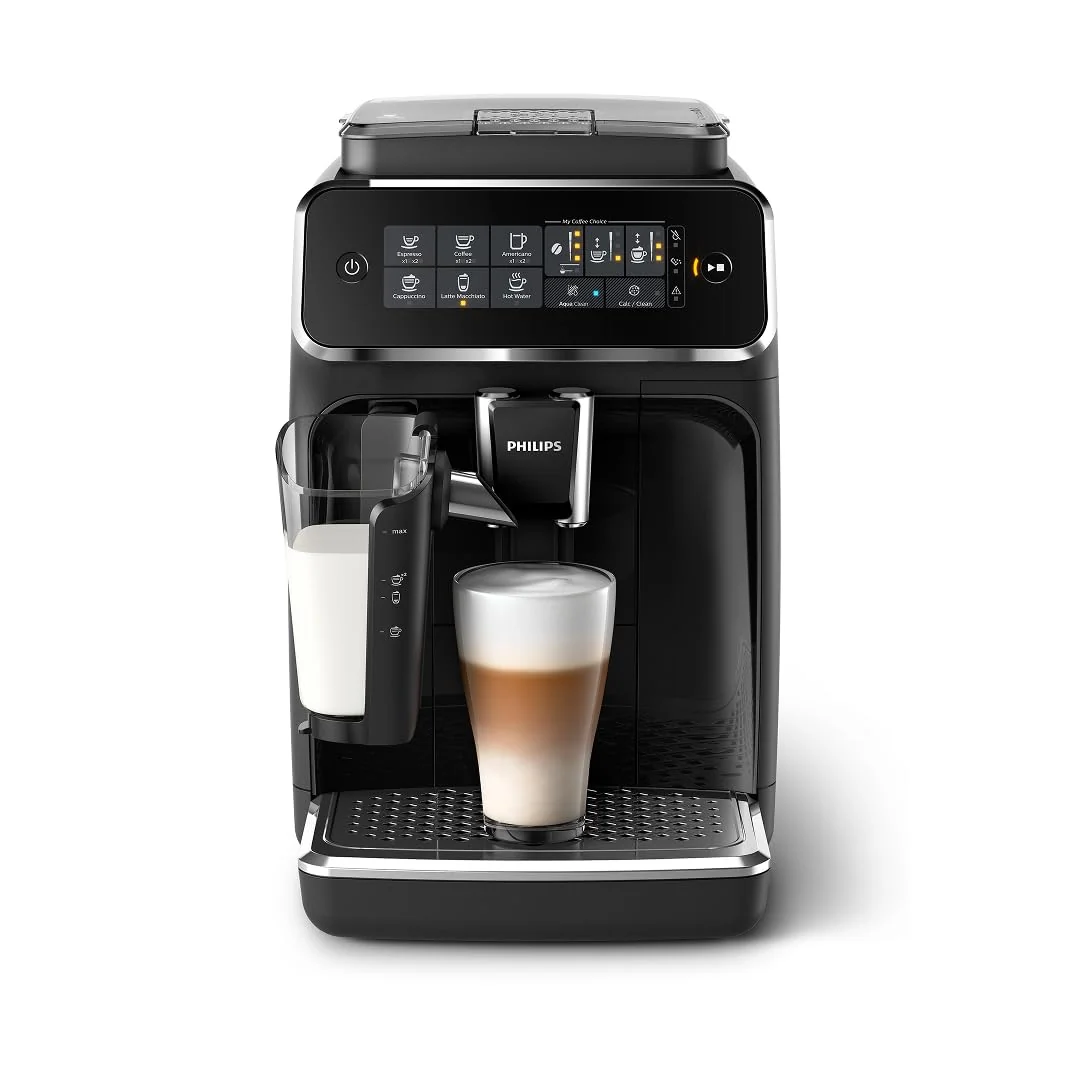
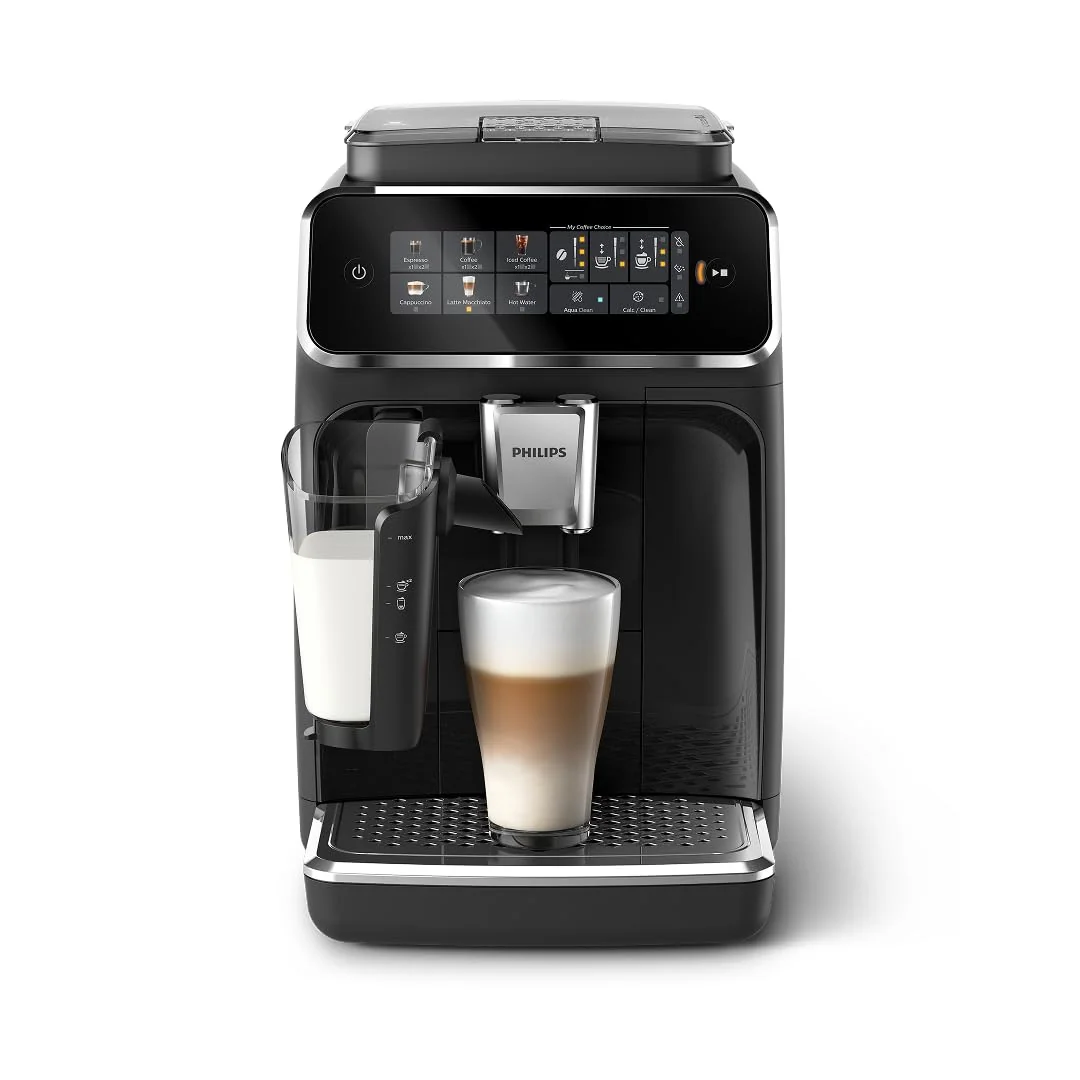
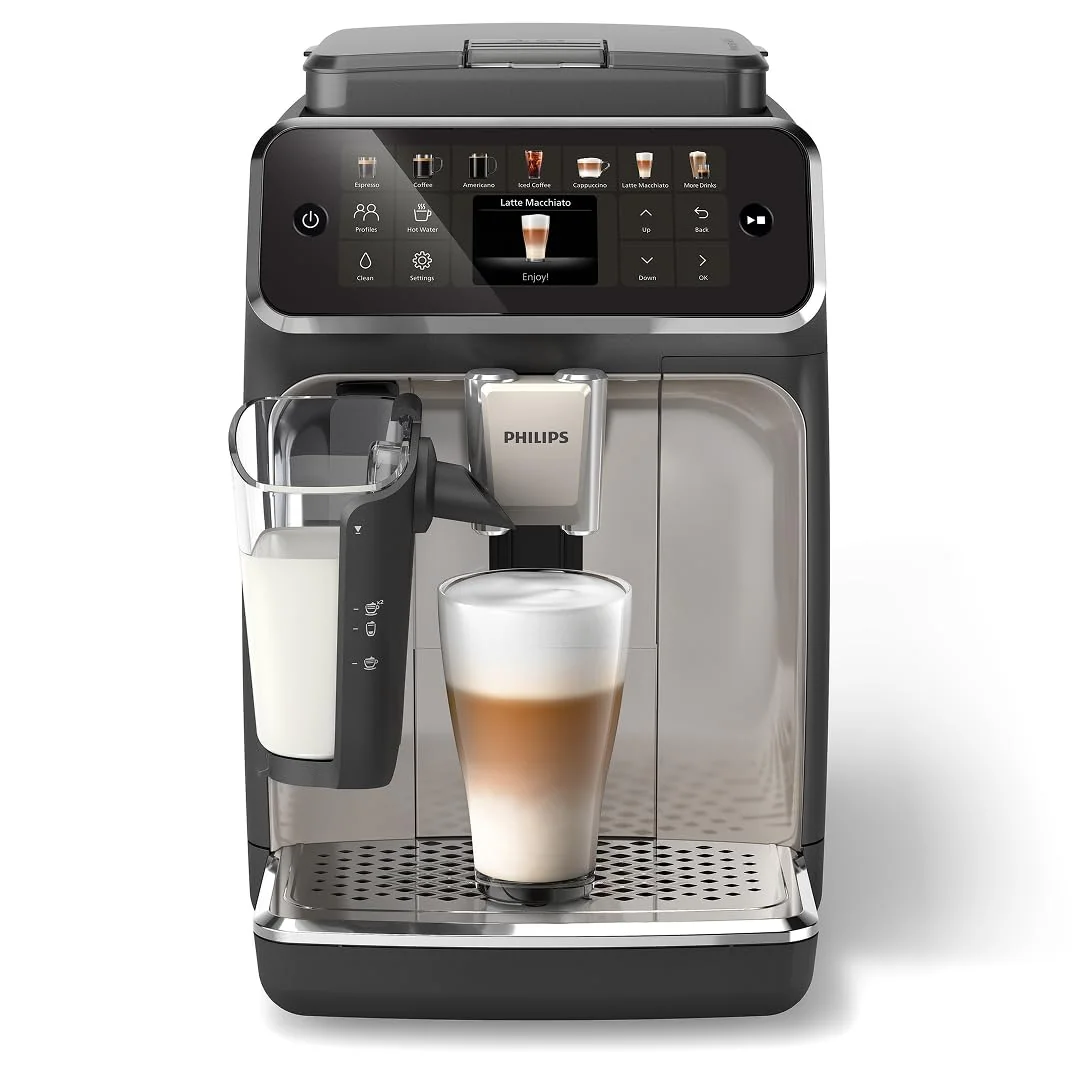
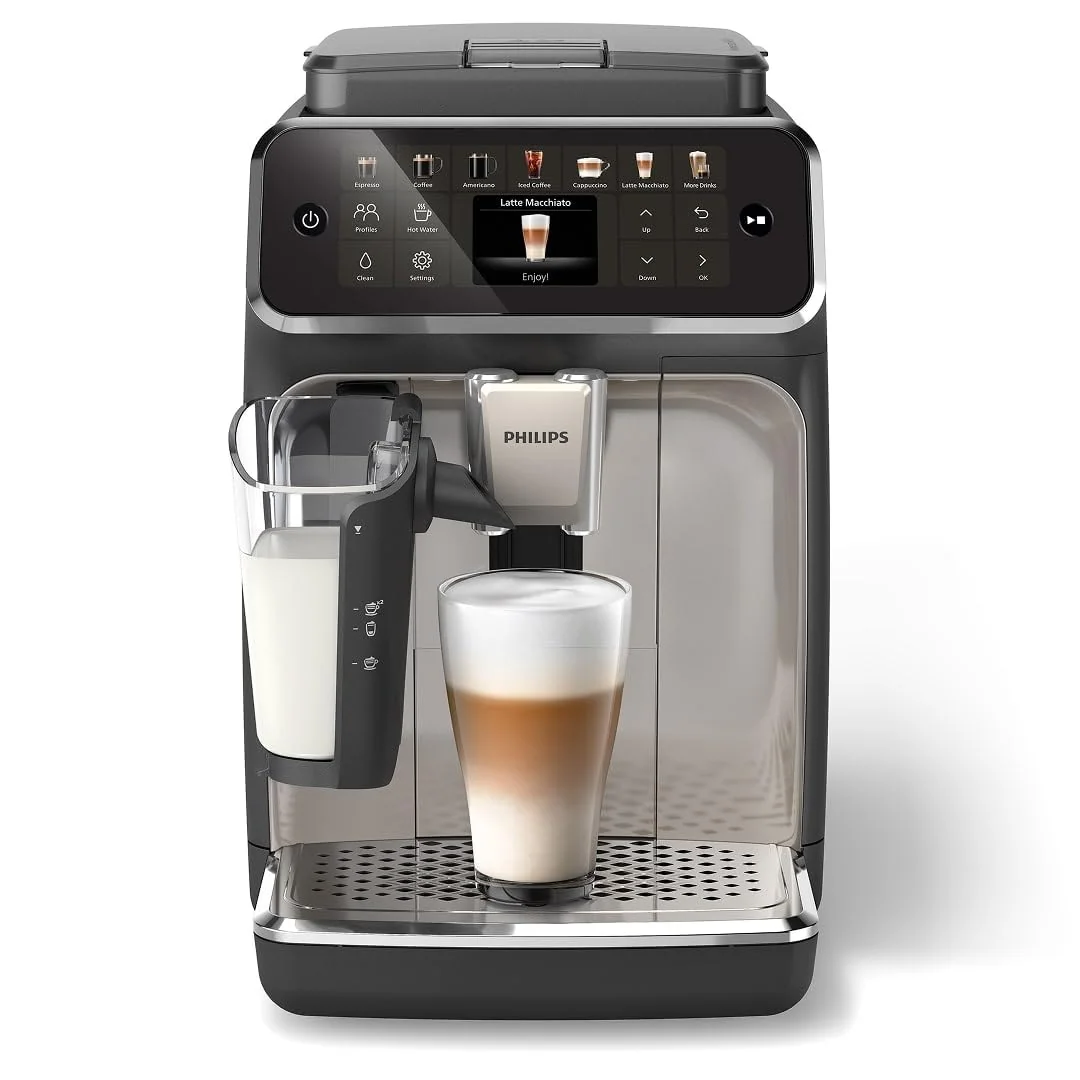
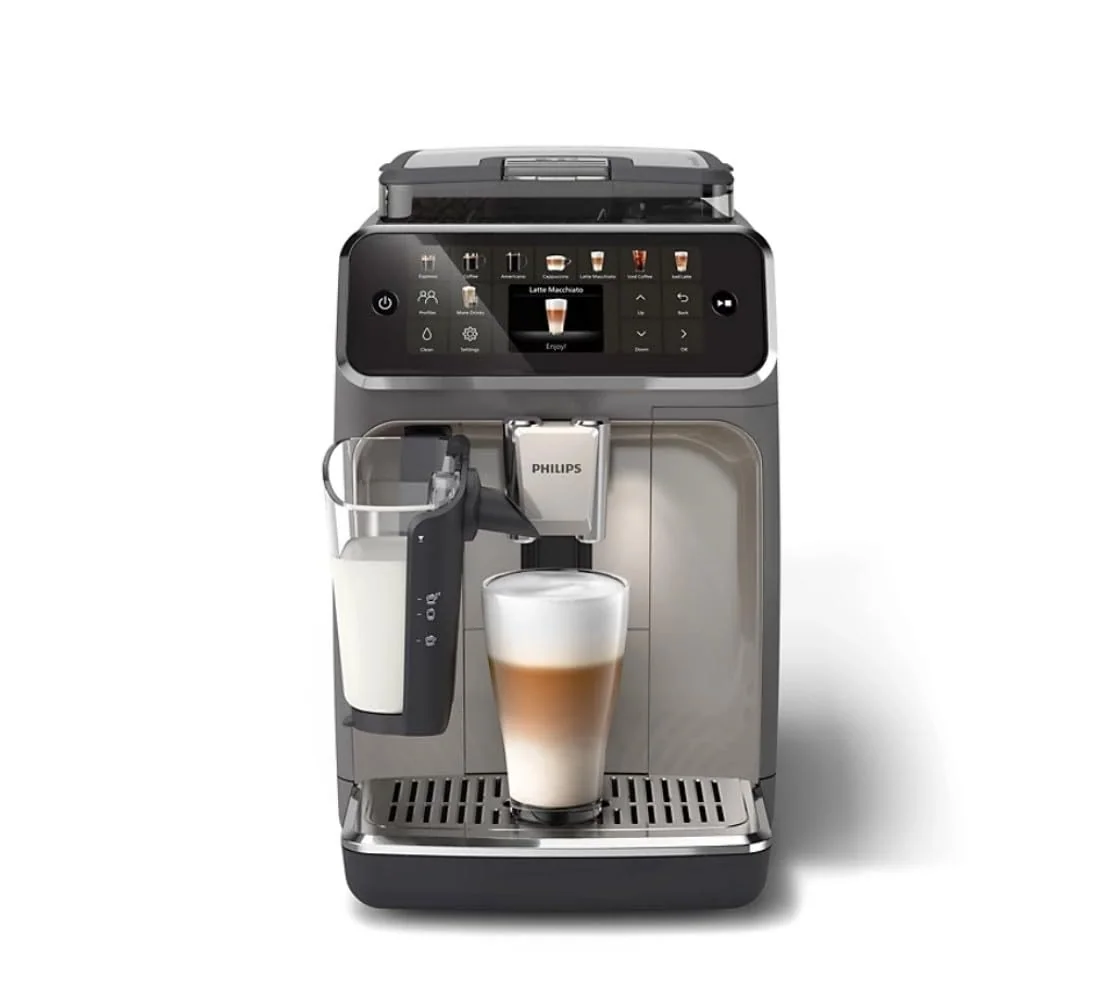
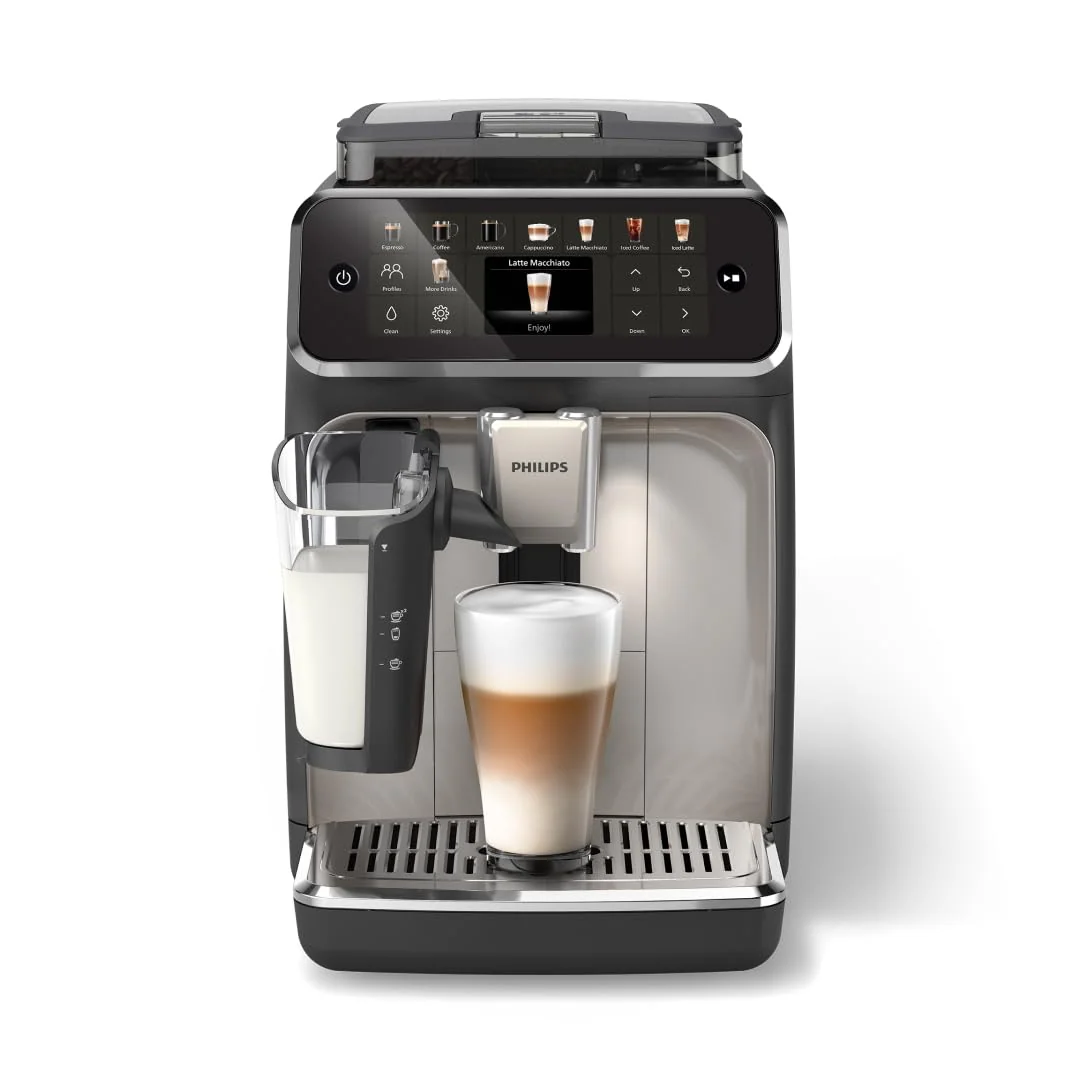
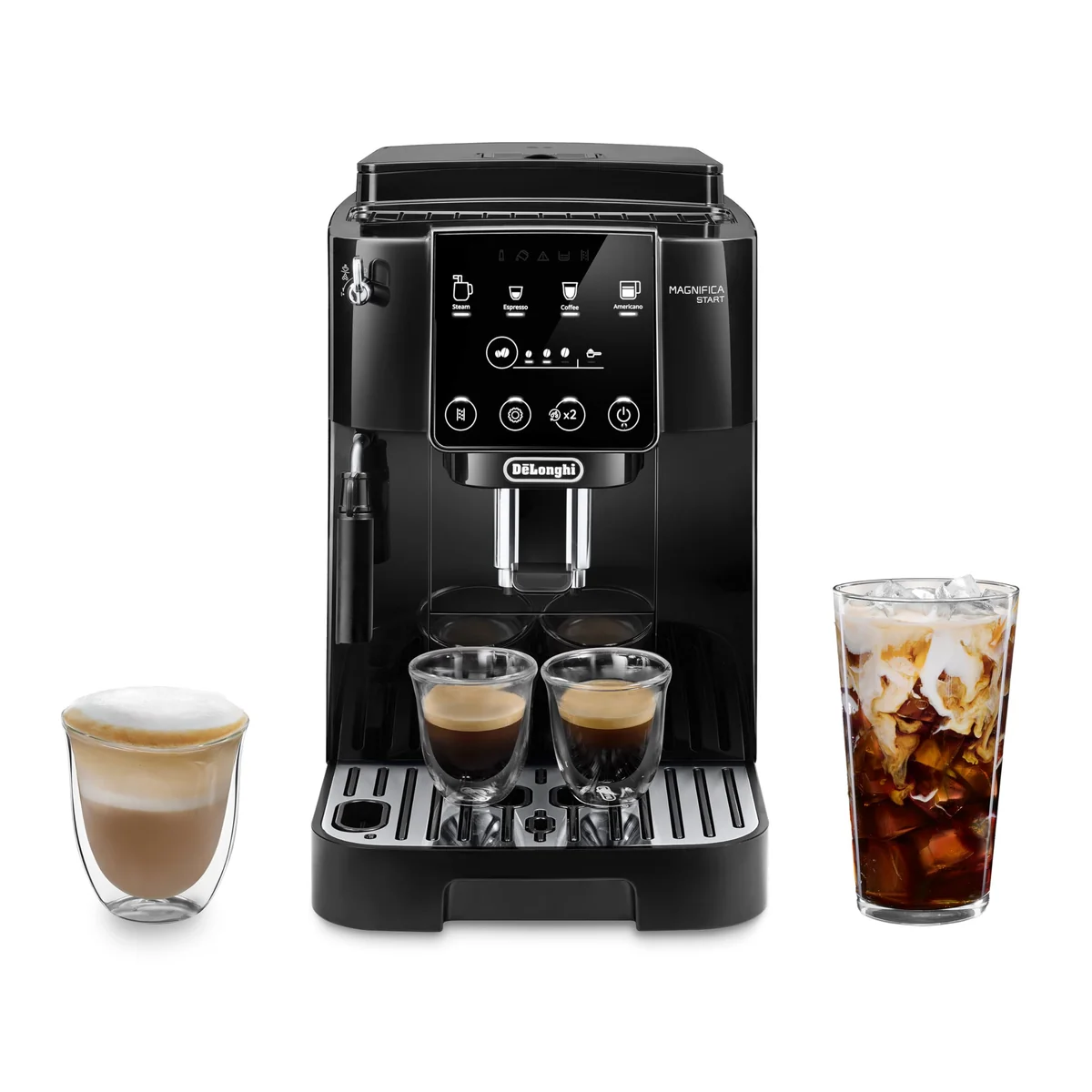
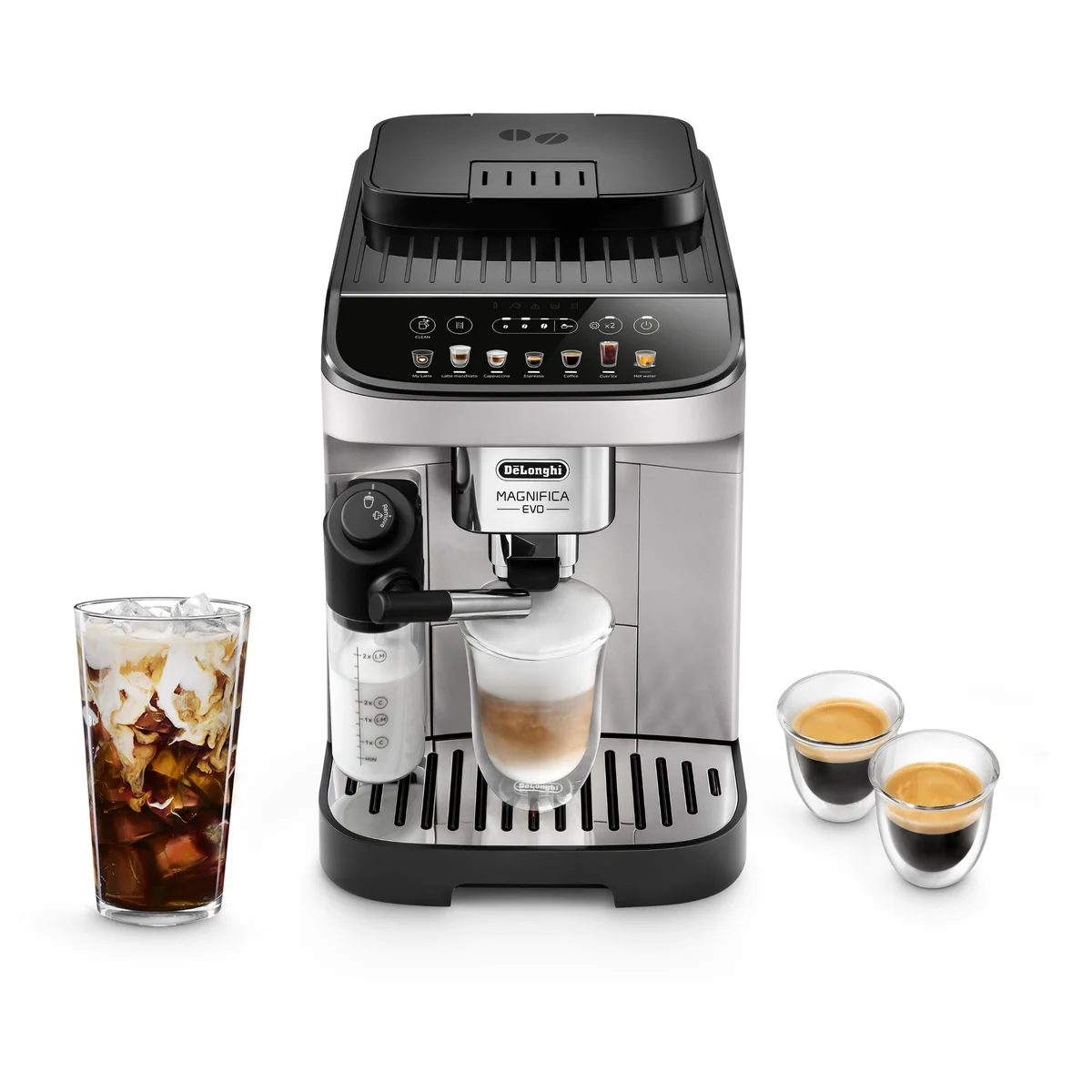
Quick Picks at a Glance
| Feature | Editor's Pick Philips 1200 Series Fully Automatic Espresso Machine, Classic Milk Frother, 2 Coffee Varieties, Intuitive Touch Display, 100% Ceramic Grinder, AquaClean Filter, Aroma Seal, Black (EP1220/04) | Philips 2200 Series Fully Automatic Espresso Machine, Classic Milk Frother, 2 Coffee Varieties, Intuitive Touch Display, 100% Ceramic Grinder, AquaClean Filter, Aroma Seal, Black (EP2220/14) | Philips 2300 Series Fully Automatic Espresso Machine with LatteGo milk system and integrated grinder, 4 Coffee Pre-Sets & Hot Water, 40% Quieter SilentBrew, 15-Bar Pressure, Matte Black (EP2330/10) | Philips 3200 Series Fully Automatic Espresso Machine, LatteGo Milk Frother, 5 Coffee Varieties, Intuitive Touch Display, 100% Ceramic Grinder, AquaClean Filter, My Coffee Choice, Black (EP3241/54) | Philips 3300 Series Fully Automatic Espresso Machine with LatteGo Milk System and integrated grinder, 6 Hot & Iced Coffee Pre-Sets, 40% Quieter SilentBrew, 15-Bar Pressure, Glossy Black (EP3341/50) | Philips 4400 Series Fully Automatic Espresso Machine – 12 Hot & Iced Coffees, Quick-to-Clean LatteGo Milk System, SilentBrew, QuickStart, Ceramic Grinder, Black Chrome (EP4447/90) | Philips 4400 Series Fully Automatic Espresso Machine – 12 Hot & Iced Coffees, Quick-to-Clean LatteGo Milk System, SilentBrew, QuickStart, Ceramic Grinder, Black Chrome (EP4447/90) (Renewed) | Philips 5500 LatteGo Automatic Espresso Machine - 20 Coffee Varieties, Intuitive Touch Display, SilentBrew, 100% Ceramic Grinder, AquaClean Filter, Grey Chromed (EP5544/90) (Renewed) | Philips 5500 Series Fully Automatic Espresso Machine, LatteGo Milk System, Integrated Grinder, 20 Hot & Iced Coffee Pre-Sets, SilentBrew, 15-Bar, Black Chrome (EP5544/94) (Renewed) | De'Longhi Magnifica Start Automatic Espresso Machine with Manual Milk Frother & Built in Grinder - 3 One-Touch Recipes, Easy-to-Clean, Home Barista Coffee Maker for Lattes, Cappuccino, Iced Coffee | De'Longhi Magnifica Evo Automatic Espresso & Coffee Machine with Auto Milk Frother, Built-in Grinder & Auto-Clean Function - For Latte, Cappuccino, Americano, Iced Coffee, ECAM29084SB , Silver | De'Longhi Magnifica Evo Espresso Machine with Automatic Frother, 7 Recipes, ECAM29084SB (Renewed) | Gaggia Brera Super-Automatic Espresso Machine, Small, 40 fluid ounces, Silver | Cafe Affetto Automatic Espresso Machine & Milk Frother with Built In & Adjustable Espresso Bean Grinder, One-Touch Brew in 90 Seconds, Wifi & Smart Connected, Removable 1.2L Water Tank, Matte White | Bosch Fully Automatic Coffee and Espresso Machine - One-Touch Drinks, Barista Style, Double Cup Super Coffee Maker - Large Bean Capacity - Easy Clean, Maintenance - Silver- TIU20307 | KitchenAid Fully Automatic Espresso Machine KF6, KES8556SX, Stainless Steel | Automatic Espresso Machine with 20 Bar Pressure – One-Touch Coffee Maker, Built-in Grinder & Milk Frother, 6 Custom Recipes, 1.5L Water Tank, Auto Self-Cleaning, 120V for Home & Office (Grey) | Kndko Automatic Espresso Machine, 20 Bar Coffee Maker with Grinder and Milk Frother Steam Wand, All-in-One Grind and Brew Coffee Maker, Auto Self-Cleaning, Cappuccino & Barista-Style |
|---|---|---|---|---|---|---|---|---|---|---|---|---|---|---|---|---|---|---|
| Price Range | $200–$500 | $200–$500 | $200–$500 | $500–$1,000 | $500–$1,000 | $500–$1,000 | $200–$500 | $500–$1,000 | $500–$1,000 | $200–$500 | $500–$1,000 | Under $200 | $500–$1,000 | $500–$1,000 | $500–$1,000 | $1,000–$1,500 | $200–$500 | $200–$500 |
| Configuration | Aquaclean Sold Separately | Large | 4 Beverages | (EP3241/54) | 9.68"D x 17.04"W x 14.6"H | 12 beverages | 12 beverages | 20 Drink | 8.3 kg | Magnifica Evo with Automatic Milk Frother | Magnifica Evo with Automatic Milk Frother | Colored Touch Display | Small | 1.2 Liter | without Cup Warmer | 2.2L | 7.10"W x 12.40"D x 17.20"H | 1.5L |
| Finish | Black | Black | Matte Black | Black | Glossy Black (Ep 3341/ 50) | Black and Chrome | Black and Chrome | Grey Chromed | Black, chromed | Silver | Silver | Silver, Black | Silver | Matte White | Silver | Stainless Steel | Grey | Black |
| Items In Box | 1 | 1 | 1 | 1 | 1 | 1 | 1 | 1 | 1 | 1 | 1 | 1 | 1 | 1 | 1 | 1 | 1 | 1 |
| Check Price on Amazon | Check Price on Amazon | Check Price on Amazon | Check Price on Amazon | Check Price on Amazon | Check Price on Amazon | Check Price on Amazon | Check Price on Amazon | Check Price on Amazon | Check Price on Amazon | Check Price on Amazon | Check Price on Amazon | Check Price on Amazon | Check Price on Amazon | Check Price on Amazon | Check Price on Amazon | Check Price on Amazon | Check Price on Amazon |
Every machine here, and the person each one is for
Nine Philips machines and one engine
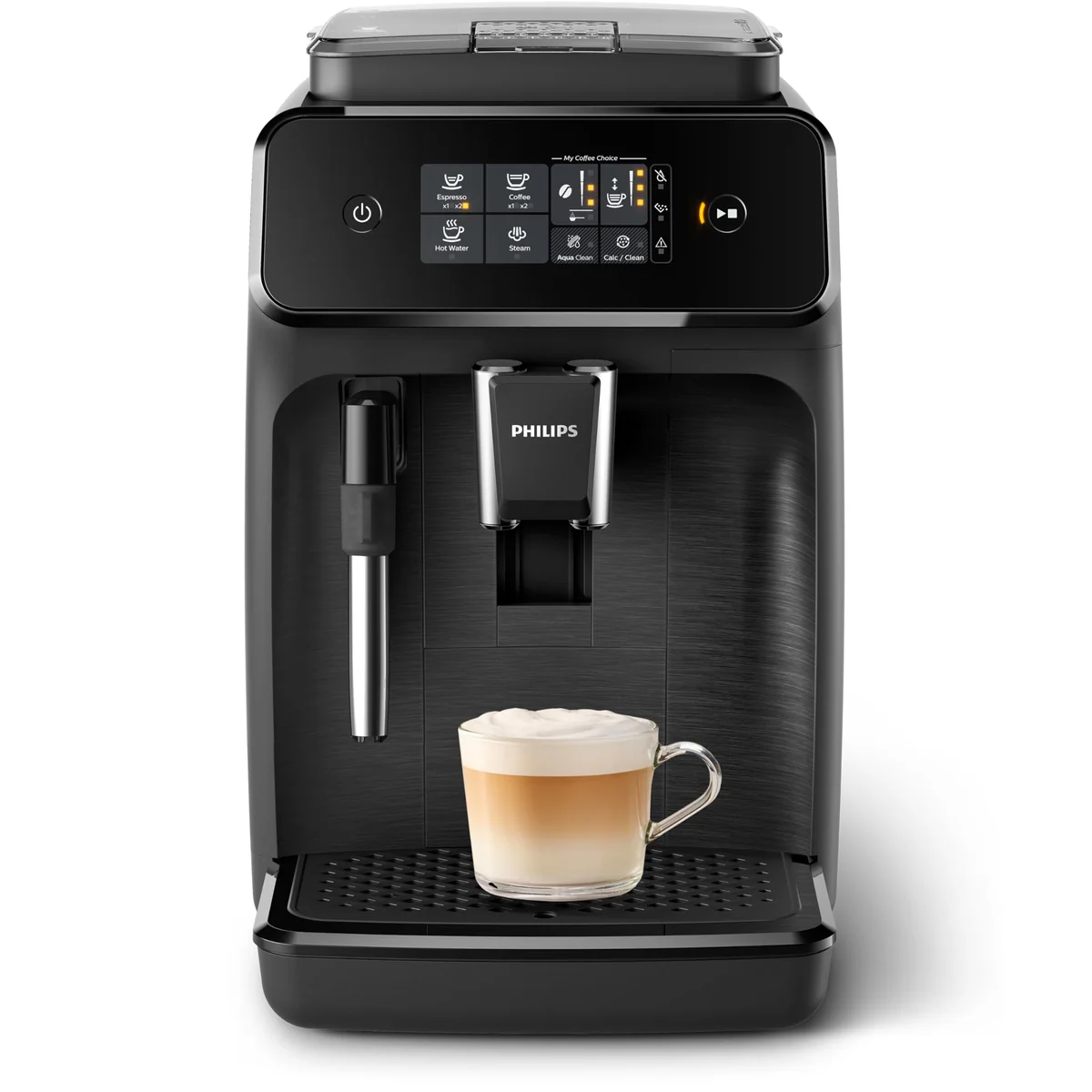
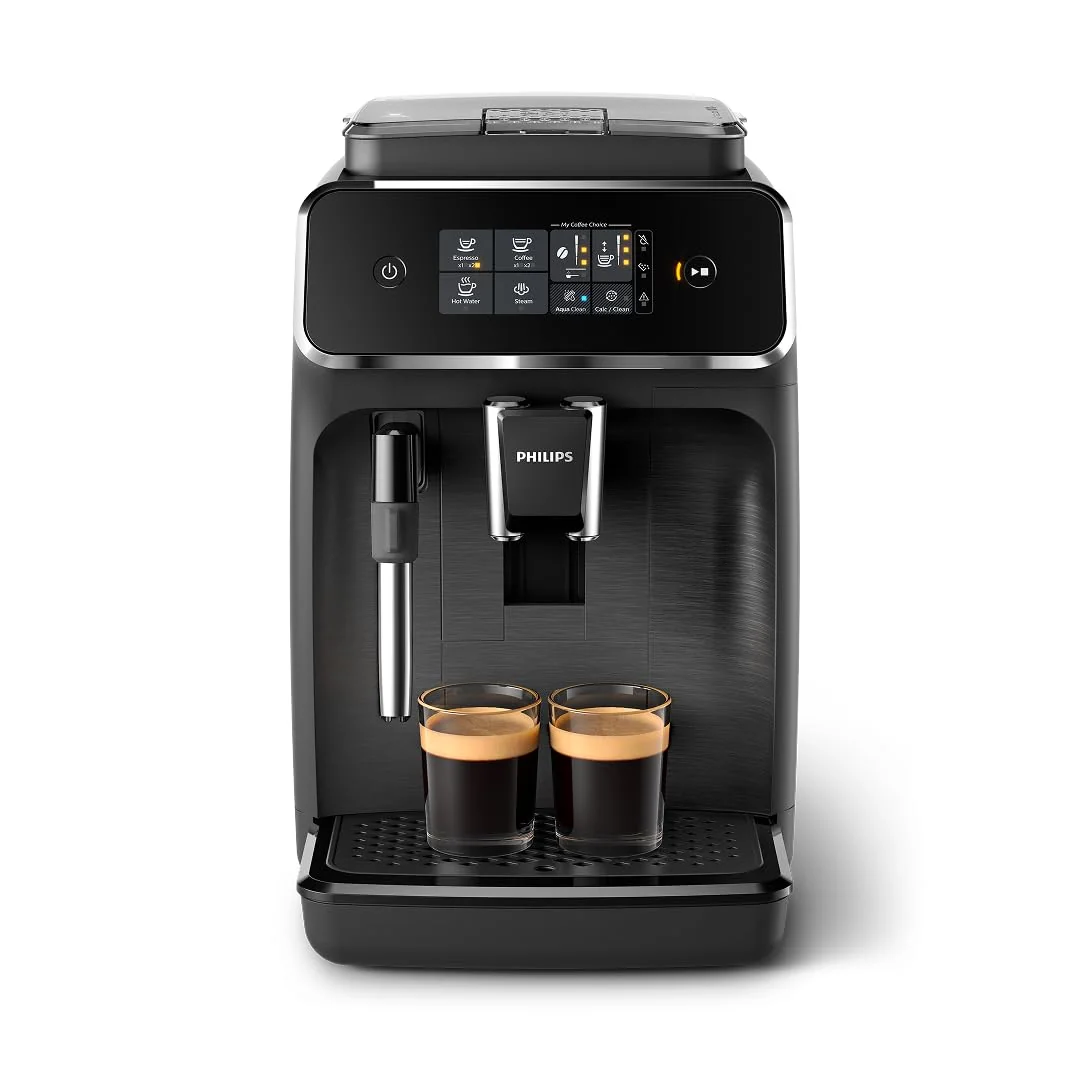
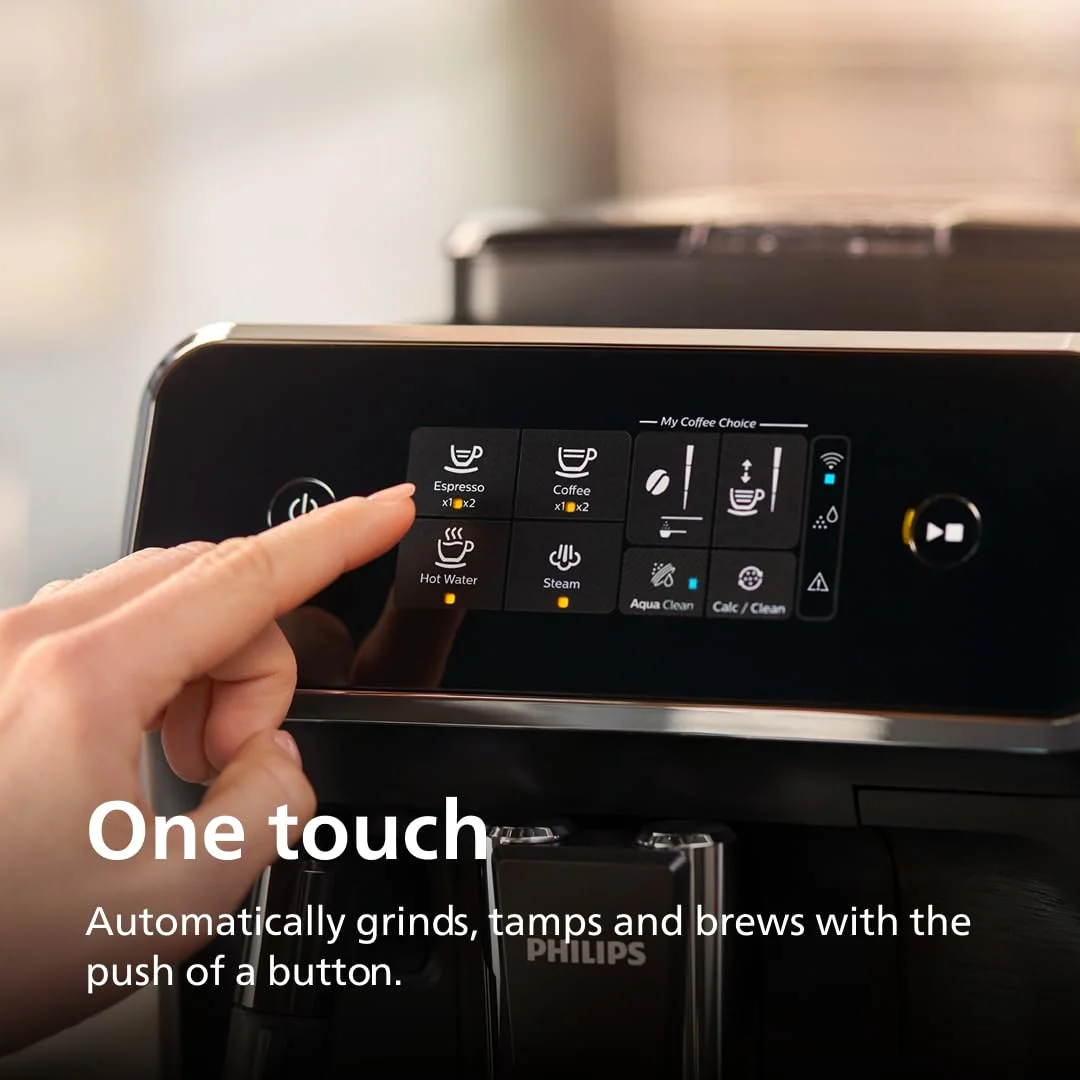
The three cheapest Philips machines on this page have no carafe at all. They give you espresso, coffee, hot water and a panarello steam wand, and the single most valuable thing anyone can tell you about that wand is that it becomes a genuinely good one the moment you slide the plastic sleeve off it and learn to steam on the bare tip. Below that, the differences are cosmetic. Philips's own listing for the 1200 refers to the machine as the 2200 Series halfway through its own description, which tells you how interchangeably even the manufacturer treats them.
The cheapest way into a Philips brew group, if you will dial it in yourself
It rinses its own circuit at every startup and shutdown, loads its water from the front so it can live under a wall cabinet, and pours the same mild espresso as Philips machines several rungs above it.
The AquaClean filter named in its own product title is not in the US box, and the dose is small enough that no grind setting rescues the crema.
That filter omission is not a rumour: Philips states plainly on its own specification page for this model that the filter is not included, while the five thousand cups the box promises assume you buy eight of them. The other thing worth knowing before you buy at this rung is that the first dozen shots will be bad. One owner who runs a Rocket as his daily machine bought this for quick afternoon coffees, made forty-five cups trying to get a solid puck, and gave up. Do your calibration shots on cheap beans in week one, not week four, because the break-in period and the return window are competing for the same thirty days. Our guide to the hidden Philips settings and what each warning light means is the shortcut through it.
The same machine as the 1200 with chrome trim and a metal drip tray
A sealed hopper large enough that one owner refills beans about every ten days, three buttons you can learn in an afternoon, and a steam wand that turns silky once the panarello sleeve comes off.
Every one-star review on its listing is a hardware fault rather than a complaint about coffee, and two owners describe water pooling underneath a machine on the day it was delivered.
Read those reviews in order and the pattern is unmistakable: the praise is about convenience and taste, and the stars come off for leaks. One buyer has ordered this model three times, and reports that the first arrived with an internal leak, the second ran about four years before developing one, and the third arrived dead with water under the machine and in the grounds bin. That is a reason to unbox it in front of a sink and brew immediately, not a reason to avoid it, but it is the single most useful thing the listing does not tell you. The same review set explains the search traffic: some US boxes arrive with no printed instructions at all and a QR code that lands on an empty page.
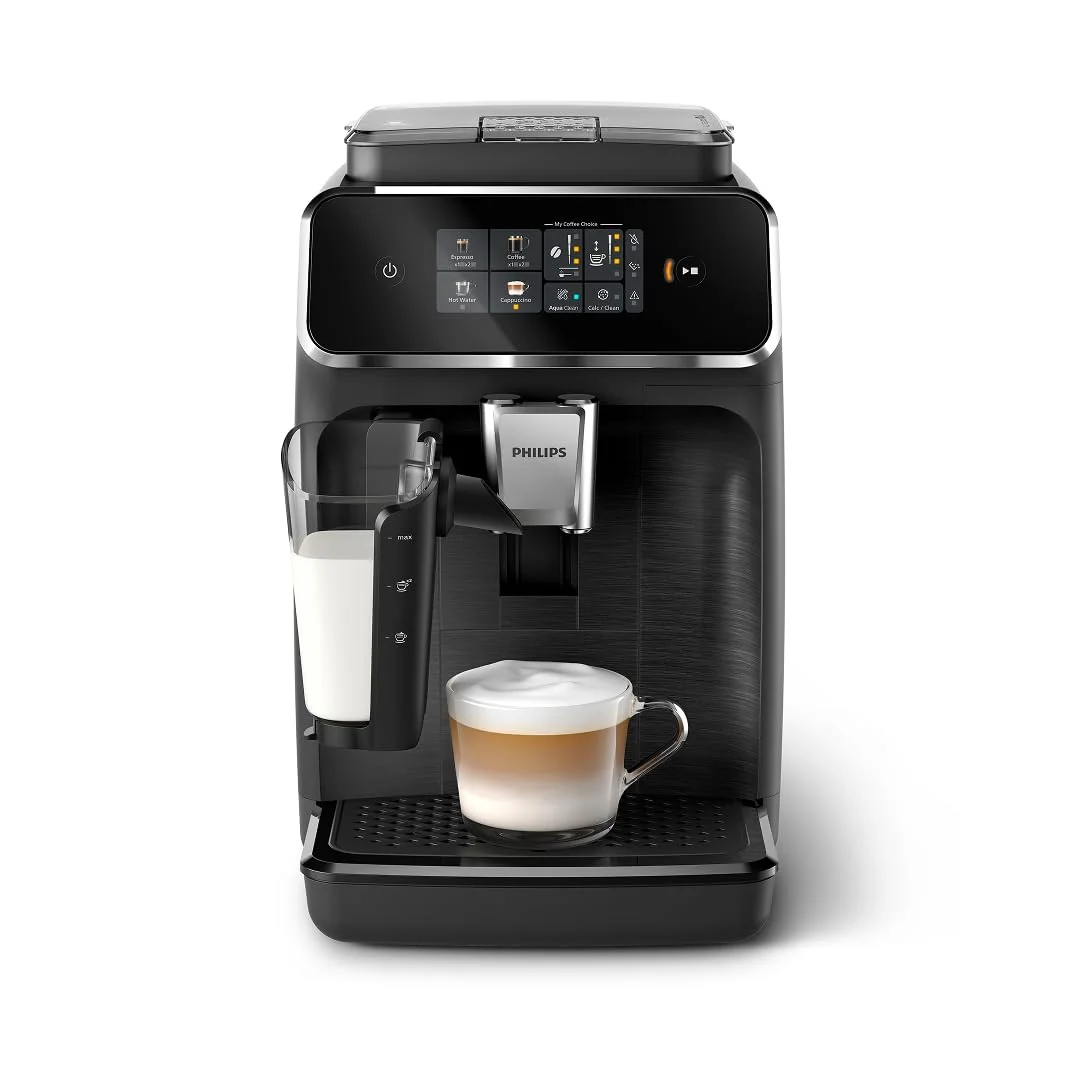
The next three rungs swap the wand for LatteGo, which is two pieces of plastic with no tube, no hidden channel and no part that lives permanently inside the machine. Milk never enters the body of the machine at all, and the whole thing rinses under a tap or goes in the dishwasher. It is the strongest single argument anyone makes for any automatic milk system, and it is why people who dislike everything else about Philips still defend this part.
The cheapest LatteGo carafe, on the thinnest drink list Philips sells
Four presets and a milk carafe that comes apart in your hands is the shortest route from a pod machine to a one-touch cappuccino nobody has to clean up after.
There is no americano button, milk drinks pull a single shot by default, and owners report water leaking from the rear of the machine during steaming where the drip tray cannot catch it.
One owner of this model documented the rear leak in detail: it began at six months, appeared during the steam cycle and again at the end-of-brew purge, soaked through a rubber mat and ruined a wooden coffee bar before anyone saw it. The same review lists the other daily irritations honestly, including beans that do not always feed into the grinder and a grounds sensor that asks to be emptied when the tray is empty. Espresso Den's advice on this whole platform is unglamorous and free: do not stand any of these machines on bare wood, and pull it forward once a week to look underneath.
The LatteGo machine to buy if you want an americano on a button
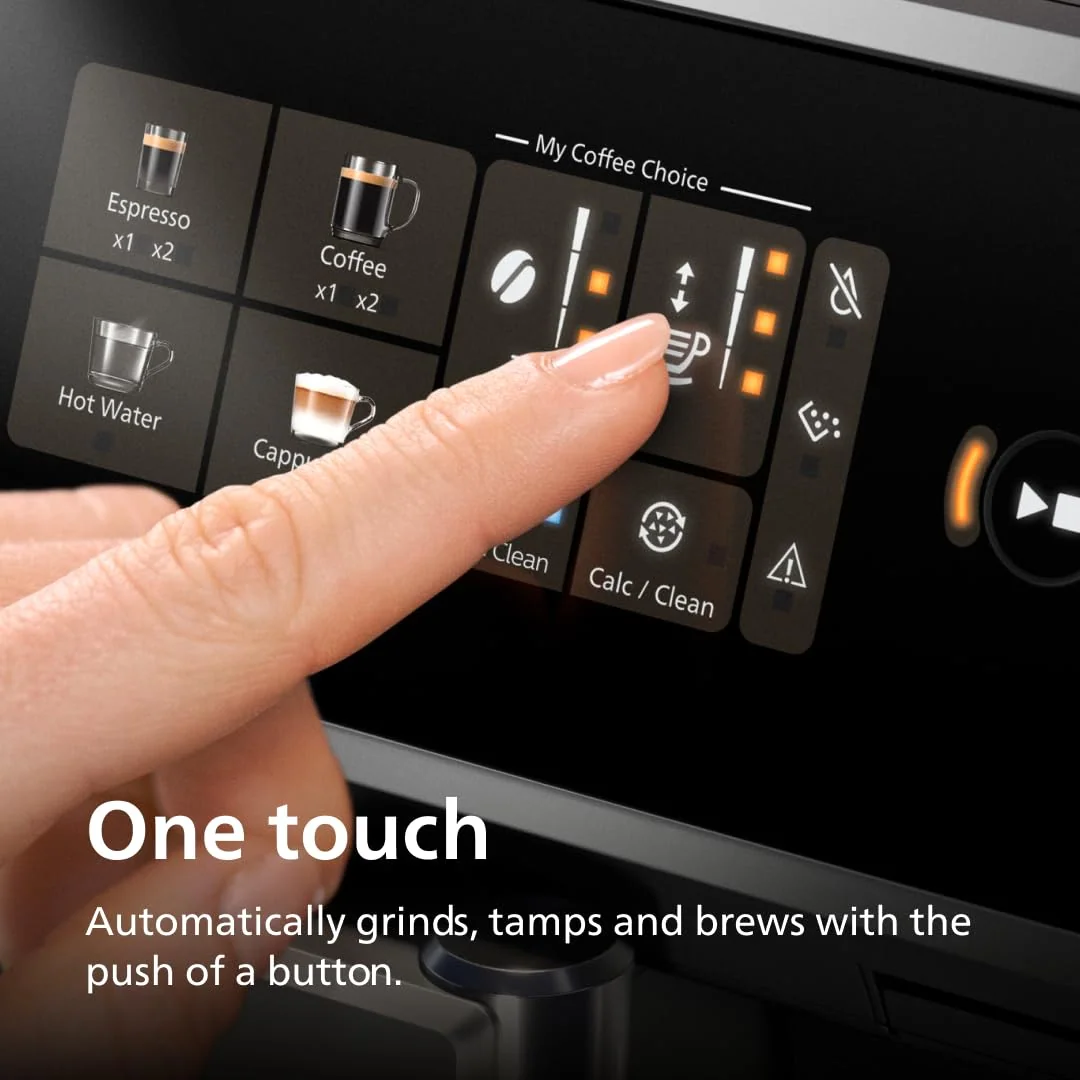
Five drinks including a genuine one-press americano, the same carafe as everything above it, and a 2x button that grinds and brews two real pucks in sequence rather than pushing extra water through one.
The cappuccino and latte macchiato buttons pull a single shot each and cannot be set to a double, which is why the milk drinks taste weaker than the espresso you spent a fortnight dialling in.
The maintenance schedule on this one is worth reading before you commit, because the most useful review on its listing is not the most enthusiastic one but the one that itemises the chores: roughly four minutes daily to empty and rinse the grounds bin, tray and carafe, about ten minutes weekly to pull the brew group out and wipe the cavity underneath it, oil tablets monthly and grease every couple of months. The same owner reports the consequence of skipping the weekly job, which is a smell from the cavity where used grounds fall. It is not a design defect and it does not go away on its own, and our week-by-week cleaning and descaling routine is what separates a five-year machine from a two-year one.
The best-value Philips, and the quietest grinder the company has built
A thick rubber gasket around the bean hopper drops the grinding noise noticeably below every earlier Philips, on exactly the same brew group the flagship uses.
The weighed dose sits under nine grams at maximum strength, and one owner returned a three-week-old machine that poured warm water onto the counter from underneath during the brew cycle.
An owner who upgraded from a 3200 confirmed the mechanism from the inside, noting the new seal, reporting that grinding was significantly quieter, and adding the correction the marketing does not make: the frother makes exactly the same racket as before. The same review is the source of the most annoying first evening in this whole product family, which is a pair of factory labels on the tank and hopper lid that refuse to peel and leave white residue behind. If a silent kitchen is the actual reason you are shopping, weigh it against the machines built specifically to be heard less, because SilentBrew acts on the grind and not on the pump.
A colour screen, two saved profiles and four iced presets on identical hardware
The screen names drinks in words instead of blinking pictograms, which is what finally gets a reluctant household using the machine without a tutorial.
One owner measured the latte and latte macchiato presets topping out at 2.7 ounces and was told on a video call with Philips that this was the maximum.
That measurement is the clearest statement anywhere of what these machines were designed around, which is a small European cup rather than the mug most American kitchens actually own. The workaround the happy owners of this model use is to build a latte and then run a macchiato on top of it into the same vessel, which works perfectly well and is not what you bought a one-touch machine for. The four iced presets, meanwhile, brew hot coffee cooler and slower and pour it over ice you supply yourself, which is a real function and not cold brew, as our piece on what these iced modes actually do sets out.
Three renewed listings follow, and they deserve to be judged as a different transaction rather than a cheaper machine. Nothing inside them differs. What differs is the cover: ninety days against the two years a new unit carries, on a platform whose characteristic faults, leaks and perished gaskets, tend to arrive after the first few months rather than in the first few weeks.
The same 4400 at a discount, with a fraction of the cover
If the saving against a new one is genuinely large, this is the cheapest route to a colour screen, saved profiles and iced presets on the LatteGo platform.
Its ninety days expire well before the failures owners report, and the listing itself advertises a colour touch screen and three saved profiles on a machine that has neither.
Both of those overstatements are checkable against the machine's own specification, and neither is a lie you would notice in use, but a listing that rounds up twice is a listing to read slowly. The single most useful thing you can do with a renewed unit on the day it lands is open the settings menu and read the product counter, which lists every drink the machine has ever made by type. That tells you in one screen whether renewed meant open-box or meant a year of somebody else's mornings, and our guide to renewed and certified machines covers what else to check inside the window.
The flagship interface bought second-hand, in grey chrome
Seven of the eight retained reviews on this listing describe a machine indistinguishable from new, with four saved profiles, a milk-froth-only option and an Extra Shot key the cheaper LatteGo machines simply do not have.
The eighth arrived leaking on Christmas Eve and went straight back, and Philips treats a leaking LatteGo frother as a documented fault rather than a freak event.
Read those seven and the words repeat: spotless, perfect condition, no signs of prior use. One buyer replaced a 3200 he had run for six years, found the refurbished unit visually untouched, and reported the coffee tasting the same while the machine ran noticeably quieter. The listing's own copy is where to apply scepticism instead, since the twenty coffee varieties it advertises include hot water, milk froth and eight iced versions of drinks already on the list.
The black chrome 5500, same machine, same short warranty
Extra Shot works on almost every coffee drink here, and it is the single most effective correction available for this brew unit's small dose.
Ninety days of limited cover is roughly a tenth of what a new unit carries, and the listing miscounts the machine's own user profiles.
It claims two profiles on a machine that has four plus a guest slot, and quotes a power figure every specification sheet contradicts. Using Extra Shot as standard is the right call on any of these, and it is worth being clear about what that costs: you are now brewing two pucks per drink, which roughly halves the running-cost advantage over pods that these machines are sold on. Whether the whole ladder is worth climbing is the argument in the 3300 against the 5500.
De'Longhi, which grinds more and cleans worse
The De'Longhi answer to Philips is mechanical rather than clever. The brew group comes out in your hand, the burr is steel and conical, and the machine puts more coffee in the chamber. What you pay for that is a milk carafe with considerably more pieces than a LatteGo and, on the models that have one, an optical sensor that decides whether the machine will make a milk drink at all.
The De'Longhi to buy if you are happy steaming your own milk
It carries the same removable brew group and steel conical burr as De'Longhi machines well above it and deletes the milk carafe sensor that generates most of their complaints.
Its dose ceiling makes a fine espresso and a genuinely thin mug of long coffee, so a household that lives on large black coffees is buying the wrong machine.
One caution about the star rating on this listing, because it is not describing this machine alone: Amazon pools the reviews with an automatic-frother sibling, and several of the most enthusiastic entries name the Evo, praise an automatic milk frother, or complain about a milk carafe this model does not have. Read the words and discard anything that mentions a carafe. What is left is a smaller, duller and much more useful pile. If the manual wand is the sticking point rather than the attraction, the Evo against the Start is the comparison that decides it.
The best-selling super-automatic in America, and a milk-drink machine first
Its LatteCrema carafe produced thicker foam than the adjustable carafes on two costlier De'Longhis in a side-by-side test, which is why so many people leaving pods land here and stay.
The carafe's seating sensor regularly refuses to recognise a properly fitted container, and De'Longhi deleted that part entirely when it built the cheaper Magnifica Start.
An owner describes the symptom precisely: the machine beeps when the frother goes in, never recognises it, and the milk drink buttons stay dark. Home Coffee Expert names the buyer this machine is for without flattery, saying it suits somebody graduating from a capsule machine and will not draw out the character of a delicate single origin. That is exactly right, and it is a recommendation rather than a criticism for most of the people reading this page. If plant milk is your default rather than an occasional swap, this is the one machine here where owners consistently point somewhere else.
The same LatteCrema machine, renewed
Worth taking when the discount against a new one is genuinely large, because the seven one-touch recipes and the carafe are identical to the machine above.
You are trading two to three years of manufacturer cover for ninety days on a machine whose failures cluster in year two around seals and leaks.
The renewed listing repeats the new one's bullets word for word, which is your reassurance that nothing was substituted and no help at all in judging condition. Use the ninety days deliberately rather than politely: confirm the carafe, filter, scoop and hot water spout are all in the box, run a milk drink on day one to prove the sensor sees it, take the grinder through its full range while it is actually running, and run a descale early so a previous owner's scale becomes your problem while you can still send it back.
Four one-offs, each solving one specific problem
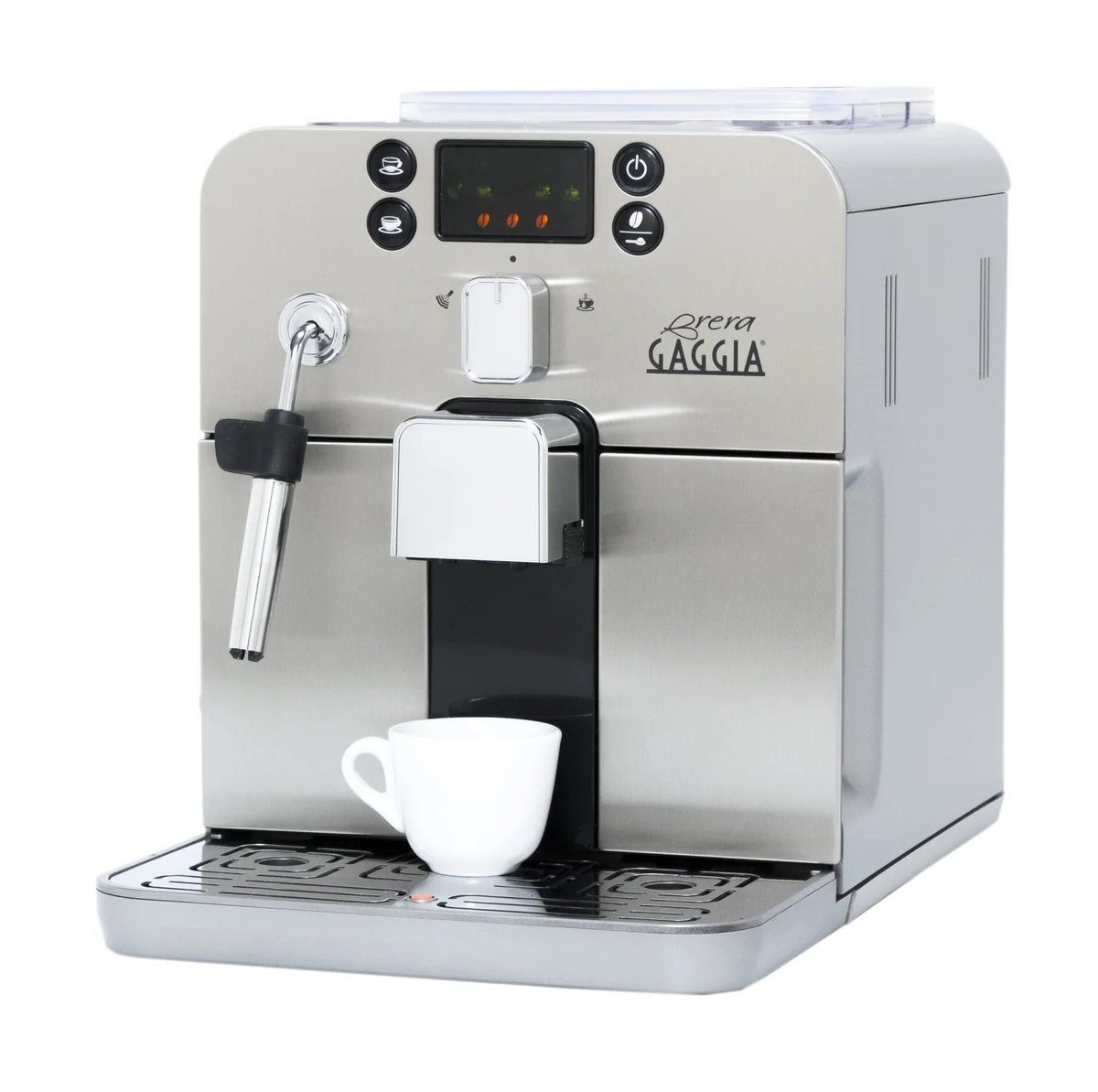
A 2010 design that still slides under a wall cabinet
Genuinely compact, front-loading and simple enough that the pod drinker who wants fresh beans and one button will get along with it immediately.
Cup clearance stops at four and a half inches, milk is entirely manual through a panarello sleeve, and the warranty runs a single year.
Those two numbers come from the manufacturer's own listing rather than from a critic, and the first of them rules out most travel mugs and a good many tall latte glasses. Measure your favourite mug before you buy. The other thing worth knowing is that the two brew buttons are the most misunderstood controls on any machine here: the long one pushes more water through the same puck, which is why owners describe their drink starting well and turning watery, while a real double is the espresso button pressed twice. Our full review of this machine works through the rest, and our compact picks put it against newer rivals of the same width.
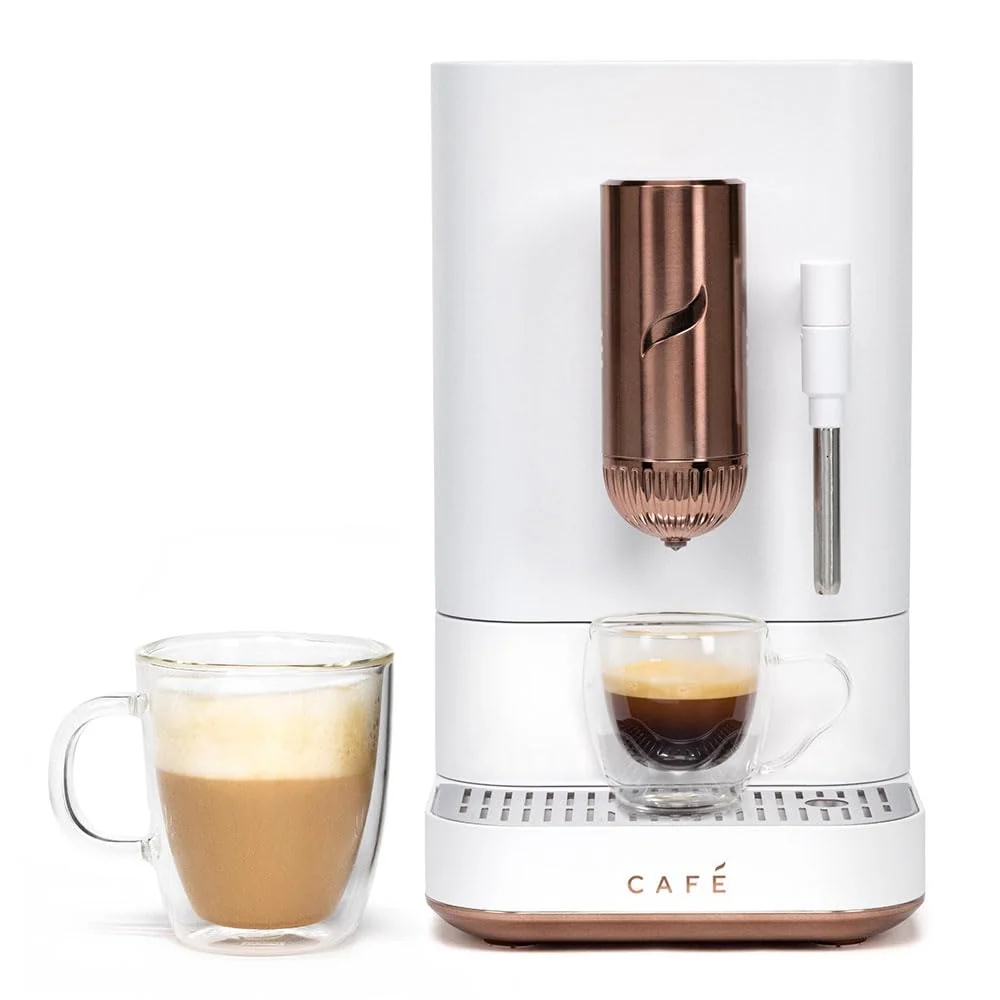
Seven inches wide, tuned through a phone, and covered for one year
Tuned properly through the app it makes a balanced shot in under ninety seconds and takes barely more counter than a pod machine, which is the whole reason people buy it.
Owner failure reports cluster at twelve to fifteen months, immediately after the warranty ends, and owners describe being told the brand does not service its small appliances.
Read the reviews by how long each machine lasted and the shape is unmistakable: a control board at just past a year, a spout clogging at fifteen months on filtered water and on-schedule descaling, two contented owners at two years, one failure at two days. The same file contains the most telling behaviour on this page, which is three separate buyers purchasing extended protection plans unprompted after reading the reliability complaints. Note also that the shots are watery until you rebuild the recipe in the app, because temperature, grind time and volume all live there rather than on the machine.
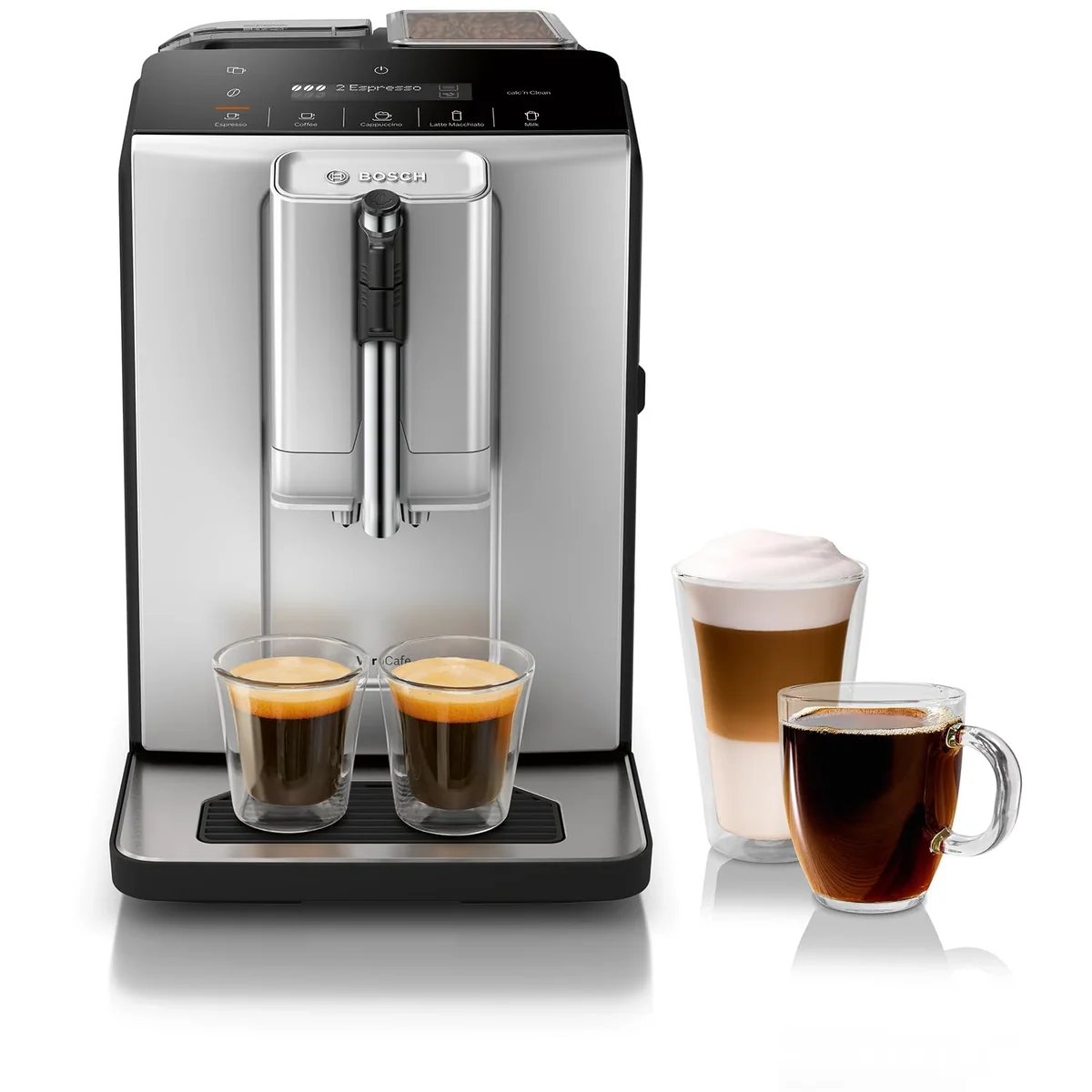
A narrow, quiet one-touch machine sold with the wrong words on the box
It grinds, brews and delivers froth straight into the cup at one press, and a cross-shopper who normally buys De'Longhi found it much quieter with fewer parts to break or lose.
The title promises a steam wand and the machine has an in-cup automatic frother with no temperature setting anywhere, which is why owner after owner describes the milk as warm rather than hot.
This is not a reviewer's inference. The product title sells a machine with a grinder and a steam wand, and the description underneath it, written by the same manufacturer about the same appliance, calls it a Milk Express in-cup frother making silky milk froth directly in your cup. Those are two different appliances for two different buyers. Four of the thirteen retained owner reviews raise milk temperature, including inside the five-star ones, and the partial workaround from a four-month owner is to lengthen the frothing time and run the cycle twice for a large glass. That is a dwell-time control, not a temperature dial, and our piece on why these machines run cool covers what else helps.
The biggest dose on this page, in a Swiss-built metal case
Built in Switzerland on the same platform as Miele and Melitta, with a brew unit you can pull out and hold, a hopper that twists off for decaf, and a dose high enough that owners dial the strength back down.
Milk arrives at a fixed temperature the manufacturer confirms is around 57 degrees Celsius and cannot be adjusted, there is no milk container in the box, and the foam is too light for a proper cappuccino.
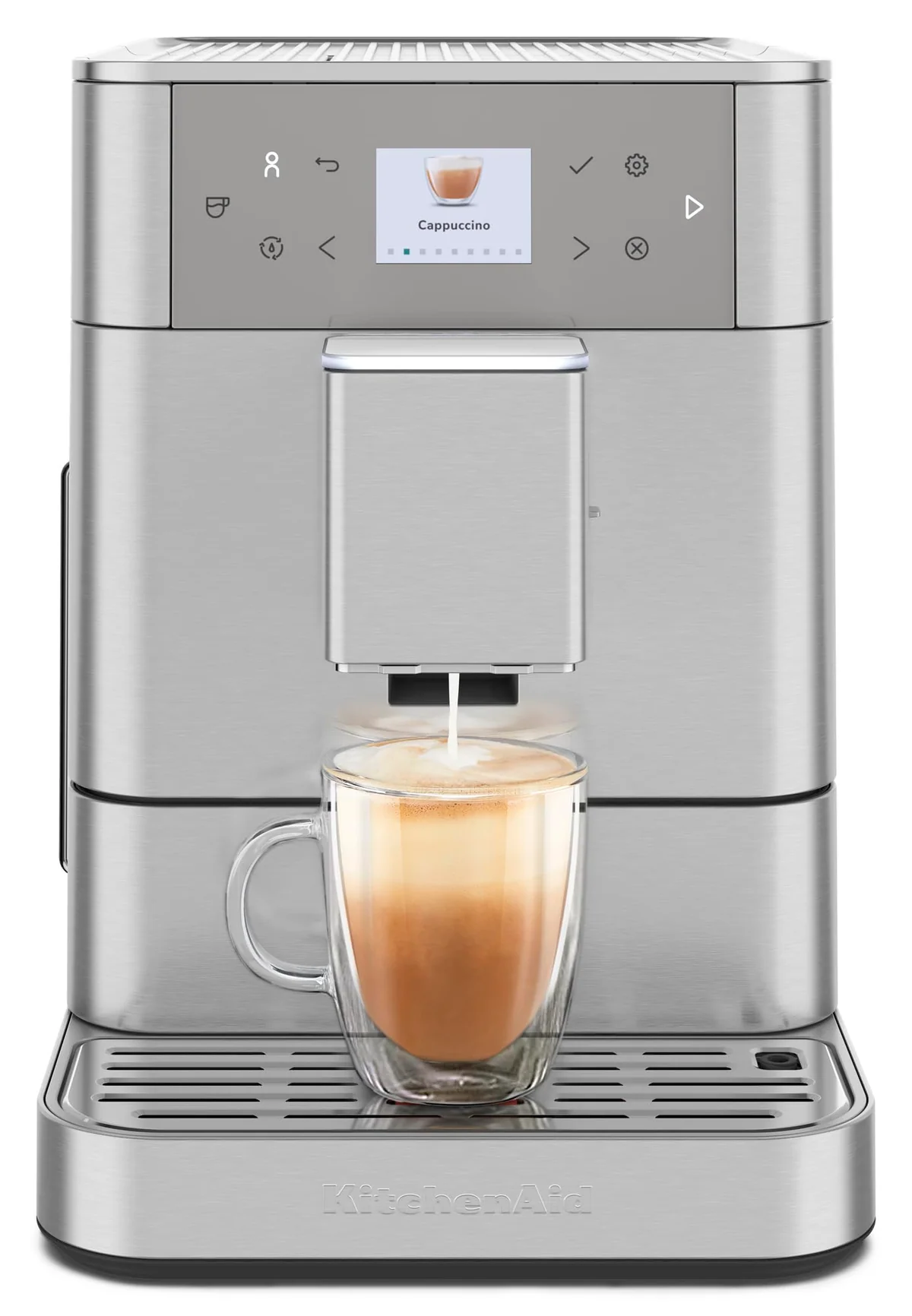
The listing puts that last omission gracefully, inviting you to place the milk hose into a separate container of your choice, which is a polite way of saying the carafe is on the model above. A reviewer who ran one for two months with a sound meter and a thermal camera recorded the grinder just above sixty decibels against a class norm in the high sixties, espresso landing in the cup around 170 Fahrenheit, and a heat-up of roughly forty seconds. This is the machine on this page for somebody who drinks espresso and americanos, keeps decaf in the house for the evening, and wants to see inside the part they are cleaning. Whether it clears the thousand-dollar line on the day you look is the whole question, since it is the priciest thing here by some distance, and the KF6 against the KF7 and KF8 covers what climbing that range does and does not buy.
Two machines with no track record at all
Both of these are Amazon house-brand bean-to-cup machines at the very bottom of the bracket, and both are genuinely what they claim to be mechanically: an automatic brew group that doses, tamps, brews and ejects a puck. What neither has is a history. Nobody outside the listing has tested either one, there are no parts diagrams, and the ratings rest on single-digit and low-double-digit samples where one unhappy buyer moves the average by a third of a star.
A real removable brew unit, from a brand with no coffee lineage
Six one-touch drinks and a brew unit that lifts out for cleaning is more machine than this end of the market usually delivers, and the owners who wanted a button rather than a craft are happy with it.
There is no temperature adjustment anywhere, one of the eight written reviews is a milk frother that died within a few weeks, and we could find no parts or service documentation for it at all.
The owner who rated it two stars ties those things together: a month of ownership, multiple funky-tasting drinks, and the conclusion that temperature control is what he needed to settle them. He also reports that the gasket on the brew unit's tamp face cannot be got properly clean, which matters because gaskets perish and there is currently nowhere to buy a replacement. The listing repeats its pressure figure ten times across a title and five bullets, and argues at one point that 1350 watts makes the machine quiet, which is not a thing wattage tells you.
A genuine bean-to-cup with a real steam wand and no history
A manual wand hands milk temperature and texture back to you, which is more control than any carafe machine on this page offers and considerably less to wash.
Its listing sells a one-click cappuccino two bullets away from a manual steam wand, publishes no dose, tank, hopper or warranty figures at all, and rests on a rating drawn from ten ratings.
Both halves of that contradiction are printed on the same page: bullet two offers one-click cappuccino, ristretto and americano, and bullet four describes a steam wand you use yourself to make slightly frothed milk. A machine with a manual wand cannot make a one-touch cappuccino, and the phrase is doing work it has not earned. The more useful line on that listing is the alarm list, which names four separate misassembly warnings, telling you exactly which four parts owners routinely put back wrong. If this end of the market is where your budget stops, the question of whether an unknown Amazon brand is a safe buy deserves ten minutes before you commit.
The one measurement that sorts the entire field
Espresso Den has not had any of these eighteen machines on a counter, and nothing on this page is presented as our own measurement. What this page is built from is the site's own review of every product on it, which in turn is built from the manufacturers' listings, the retained customer reviews on each one, and the published reviewers who put pucks on scales and thermometers in cups. Where those people disagree, and on dose and temperature they disagree constantly, the disagreement is reported rather than averaged into a tidier number.
Rank them by anything and you get a different answer. Rank them by how much coffee reaches the brew chamber and the field falls into three obvious tiers, because that single figure explains almost every complaint anyone makes about the drink.
| Machine | Weighed maximum | What that actually is |
|---|---|---|
| Philips LatteGo, 1200 through 5500 | about 6 g to 10 g | Roughly half a cafe double, stretched over a double's worth of water |
| De'Longhi Magnifica Start and Evo | about 10 g to 13 g | A generous single, and a thin mug of long coffee |
| KitchenAid KF6 | about 14 g to 15 g | Close enough to a real double that owners dial the strength back down |
| A cafe double, for scale | 18 g to 20 g | What the drink you are comparing it to is made from |
Tom's Coffee Corner published the De'Longhi ladder as grind duration and found the Magnifica machines stopping three rungs short of the models above them. Home Coffee Expert weighed the KitchenAid at fifteen grams and noted the metal casing at a price where rivals are still moulding plastic. Seattle Coffee Gear weighed Philips pucks from two different machines and got the same figure twice. Put a small dose under a long pour and you get a mild, pleasant, crema-topped drink that anyone leaving pods behind will love and anyone arriving from a portafilter will call brown water. That is the physics, not a defect, and the full diagnosis of thin bean-to-cup espresso is where to go if yours is already in the cup.
The second sort is the milk system, because it decides what you do every single morning rather than what you taste once. The third is the failure record, which is where the renewed listings on this page earn their discount and pay for it. Everything below is ordered by those three questions.
Three decisions, in the order they will actually matter
What to do about the dose, since you cannot change it
Every machine here gives you the same four levers and no more: strength to maximum, volume to the shortest setting you can drink, temperature to high, and grind two or three steps finer than the factory sends it. The grind adjuster on almost all of these must only be moved while the burrs are actually turning, one position at a time, and a change does not reach the cup for two or three shots, which is how owners conclude the adjuster is broken. Beyond that, bean choice does more than settings do. A light third-wave roast will go sour because none of these grinders travel fine enough to extract it, and an oily dark roast will gum the chute and bridge in the hopper, so medium to medium-dark and matte rather than shiny is the window described in our guide to beans that survive a bean-to-cup grinder.
Coffeeness wrote the fairest sentence anybody has written about the Philips-versus-De'Longhi question, calling the Philips a fraction unrefined in preparation and setting options, somewhat louder, not quite as convincing in beverage results, and much more modern in style and more intuitive to operate. Not better. Just as enjoyable. That is the honest shape of the whole bracket, and it is why the milk system decides more purchases here than the coffee does.
Which milk system you are choosing, whether you meant to or not
| System | Machines here | The daily trade |
|---|---|---|
| Two-piece LatteGo carafe | Philips 2300, 3200, 3300, 4400 and 5500 | Fastest to clean of anything on this page, one fixed cappuccino-style foam, no flat white |
| LatteCrema carafe | De'Longhi Magnifica Evo | Thickest foam here, a sensor that can refuse the drink, and more pieces to strip |
| Milk hose into your own jug | KitchenAid KF6 | Nothing to disassemble and leftover milk goes straight back in the fridge, but the carafe is an accessory |
| In-cup automatic frother | Bosch 300 Series | One press and it pours into the cup, at a temperature you cannot change |
| Manual steam wand | Philips 1200 and 2200, Magnifica Start, Gaggia Brera, Cafe Affetto, Kndko, GarveeTech | You control temperature and texture, and you are standing there holding a jug |
That table is the single most useful thing on this page for most readers, because it is the difference between a machine you use daily and one you resent by March. The wand machines are not the cheap option so much as the different option: the owners who choose them do it deliberately, and hot milk is the reason, since a wand is the only thing here that lets you decide when to stop. Our longer treatment of which milk system you will actually live with is worth reading before you narrow the shortlist, and if lattes are essentially all you drink, the milk-drink picks reorder this whole field.
The warranty, the return window and the break-in trap
Here is the structural problem with buying any machine in this bracket, and nobody selling one will tell you about it. These machines are not representative of themselves when they arrive. Home Coffee Expert puts it at twenty to thirty coffees before you get good results on a Philips and advises buying the cheapest beans you can find to run them, noting that the manufacturer explains this nowhere, which the reviewer believes gets perfectly good machines returned early. Owner estimates run from ten cups to a hundred. A thirty-day return window and a hundred-cup settling period are competing for the same calendar, and the calendar wins if you are polite about it.
So drink from it hard in week one. Set the temperature high, the strength to maximum and the volume short on day one rather than day thirty, decide early, and buy from somewhere with a generous returns policy rather than from whoever is cheapest, because the failures in this bracket do not arrive in week one. They arrive at four months, at seven months, at just past a year. That is the argument against every ninety-day renewed listing on this page, and it is the argument for registering a new machine the week it lands. Our piece on how long these machines last and what breaks first sets out where the distribution actually sits, and it is longer than the pessimists claim and shorter than the marketing implies.
Frequently Asked Questions
Is a machine at this money actually worth it over a pod machine?
Against pods it wins comfortably on both the cup and the running cost, and against a cafe habit it pays for itself faster than the box claims, but only if you were genuinely buying coffee out most days rather than making one cup at home already.
Why does the espresso taste weak on almost all of them?
Because the brew chamber holds roughly half a cafe double on most machines in this bracket and the factory volume setting is generous, so the fix is a shorter pour and a finer grind rather than a bigger cup.
Which milk system is the least work?
The two-piece LatteGo carafe on the Philips machines, because it has no tubes and no hidden channels and milk never enters the body of the machine at all.
Is a renewed machine a safe buy?
It is the same machine with about a tenth of the warranty, so it is worth it only at a real discount and only if you test the milk system, the grinder and a full descale inside the first ninety days.
Does the AquaClean filter really mean you never descale?
No, it defers descaling substantially, and the five thousand cup figure carries a footnote saying it assumes you buy and fit eight filters on the machine's own schedule.
Can any of these make a normal mug of black coffee?
They make a long espresso drink rather than filter-style coffee, and the small dose is exactly why a big mug comes out thin, which is covered properly in our piece on getting a normal cup out of a bean-to-cup machine .
Do the iced presets brew cold?
No, they brew hot coffee at a lower temperature and a slower flow and expect you to pour it over ice you supplied yourself.
Can two people run decaf and regular beans in the same machine?
Only with a pre-ground bypass chute a scoop at a time on most machines here, or by twisting off the removable hopper on the KitchenAid, and our two-bean recommendations cover the machines that do it properly.
Which machine here is genuinely the quietest?
The KitchenAid KF6 on the only published measurements, with the Philips 3300 the quietest of the LatteGo machines thanks to a gasketed hopper lid that acts on the grinder rather than the pump.
Our Top Pick
The Philips 1200 Series espresso machine is our #1 recommendation — the carina grinds fresh, rinses itself and asks almost nothing of you, and it will hand you a pale, watery shot for the first fortnight unless somebody tells you exactly what to change..
Check Price on Amazon: Philips 1200 Series espresso machineSources (7)
- Amazon listings and customer reviews
- Owner and reviewer video, 2 channels
- Seattlecoffeegear — Article — www.seattlecoffeegear.com
- Tomscoffeecorner — Article — tomscoffeecorner.com
- Homecoffeeexpert — Article — homecoffeeexpert.com
- Philips — Article — www.usa.philips.com
- Coffeeness — Article — www.coffeeness.de