Steam wand, milk hose or one-touch carafe: pick the one you will still be cleaning in March
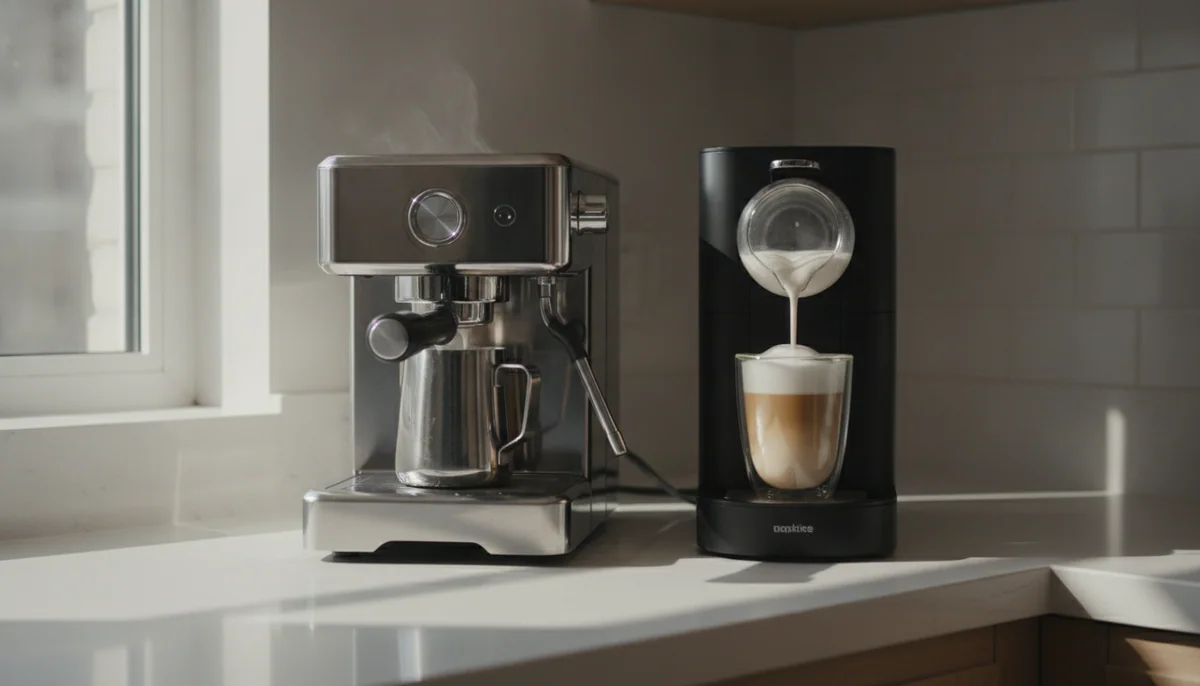
Almost every argument about bean-to-cup machines is really an argument about milk. The brew group is broadly the same story at every price: a small puck, a fast shot, a mild coffee. What actually differs from machine to machine, and what actually determines whether a machine gets used on a Tuesday in February, is what happens to the milk and who does it. Philips sells the LatteGo carafe on the promise that it splits into a couple of pieces and rinses under a tap in seconds. Bosch sells a hose you drop into whatever carton is already open. De'Longhi sells a thermal jug that goes back in the fridge with the milk still in it. KitchenAid, on its cheapest fully automatic machine, does not sell you a container at all and tells you to use one of your own.
Those are four genuinely different appliances wearing the same category name, and the marketing is not much help in telling them apart. Bosch's 300 Series carries the words "Steam Wand" in its product title and then describes, four lines down, an in-cup frother that delivers foam straight into your cup. A cheap Amazon machine sells one-click cappuccino in one bullet and a manual steam wand you operate yourself two bullets later, which cannot both be true in the sense a buyer will read them. If you are not yet sure which of these you are shopping for, our page on what a super-automatic actually automates is the shorter road than this one.
Espresso Den's reading of the whole owner record is that people do not abandon machines over the coffee. They abandon them over a carafe they cannot face stripping down, over milk that arrives at a temperature they describe as warm, and over a wand they bought in a burst of enthusiasm and stopped using by the second month. So this page is organised around the chore rather than the spec sheet.
Four systems, and what each one actually asks of you
Strip away the trade names and there are four mechanisms in this market, plus one hybrid that behaves like a fifth.
| System | You do | Cleaning | Where it wins |
|---|---|---|---|
| Manual steam wand | Hold a jug, judge the texture, stop when you like | Purge and wipe the wand, wash one jug | Temperature and texture, and milk-only drinks |
| Automatic steam wand | Fill a jug, set temperature and foam, walk away | Self-purge plus a wipe, wash one jug | Microfoam without the skill |
| Milk hose | Drop the hose into any container of milk | Flush the hose, put the carton back | Least washing-up, any milk you like |
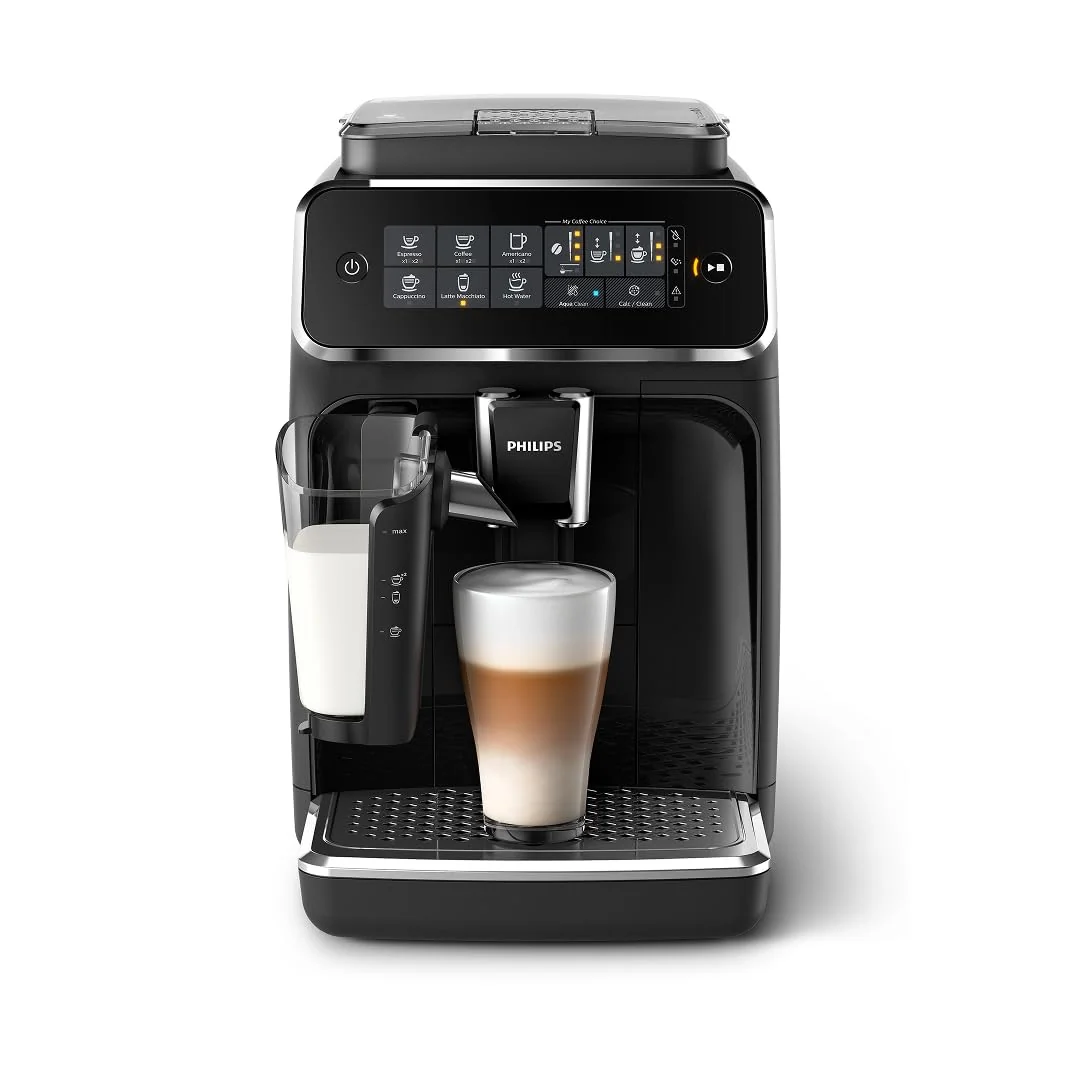
| One-touch carafe | Press one button | Strip and wash a jug, store it in the fridge | Speed, and a machine anyone can operate |
| In-cup frother | Press one button, milk arrives in the cup | Unclip a small arm and rinse it | Simplicity, on a small machine |
Nothing in that table is a value judgement. The reason the choice is hard is that the system with the best milk is the one that asks for the most attention, and the system that asks for nothing is the one that puts the most plastic in your dishwasher.
The steam wand: total control, on condition that you turn up
A wand is a pipe. Whether it is any good depends almost entirely on one piece of plastic slid over the end of it. That sleeve, the panarello, drags air into the milk continuously while it heats, which makes stiff cappuccino foam nearly foolproof and silky flat-white microfoam nearly impossible. Reviewers of Philips's classic frother describe the result as acceptable and not much more, big-bubbled rather than glossy.
The sleeve also comes off, and this is the single highest-value fact on this page. Underneath is a bare single-hole tip that behaves like a proper wand, and reviewers who have pulled the sleeve and steamed on the naked pipe describe milk that is close to what a real espresso machine produces, silky enough to pour a heart into. That applies across the family: the Philips 2200 is a genuinely good machine whose one-touch drink list is the shortest in its range, and its wand is the reason to consider it; the 1200 Carina is the same frother on a cheaper body, and the price of that is a shot so mild that crema barely forms.
Two wand faults recur and both look like a dead machine. If the silver outer part of a Philips frother is pushed on too tightly it blocks the small air hole and the thing simply will not froth, which one owner discovered only after concluding the unit was defective. And weak or absent steam on any machine is a descaling symptom before it is a fault, which is covered properly in our cleaning and descaling guide.
The wand's least advertised advantage is that it makes milk on its own terms. Philips's own copy for the classic frother points out that you can use it for hot chocolate, tea or matcha, which is precisely the thing a LatteGo cannot do, because everything that passes through a carafe gets textured and dispensed as part of a coffee drink. The Gaggia Brera takes the same idea further by making its pannarello double as the hot water spout for americanos and tea, which is a real convenience on a machine that is otherwise a fifteen-year-old design with a one-year warranty.
The cost is a two-stage morning, and on cheap machines it is worse than that. A UDI owner returned theirs with a complaint that has nothing to do with the wand's quality and everything to do with the machine behind it: the espresso is cold by the time the milk is warm. That is single-boiler behaviour, and it is why a wand on a thermally undersized machine is a worse buy than a carafe on a competent one. The Kndko grind-and-brew has the best-shaped milk system at the bottom of this market and no track record at all to tell you whether the rest of the machine can keep up.
Against all that, put the sentence that made Espresso Den take manual frothing seriously. A Philips 2200 owner, comparing it with the carafe machines she had considered, wrote that it is very easy to pop the steamer off and rinse it, and that this is the way to go against a steamer cup that would be a nightmare to clean. A De'Longhi Magnifica Start owner made the same point in a list of likes: no milk carafe and no pipes to clean, with the tradeoff being that you are the one holding the jug. The Start is the machine Espresso Den would point most people at in this category, and its honest drawback is the dose ceiling that leaves long black coffees thin.
The automatic wand is a different animal, and Breville owns it
An automatic wand is still a wand, so the milk still goes into a jug and the jug still gets washed. What is automated is the judgement: you set a temperature and a foam level, put the jug on a sensor, and the machine stops when it is done and purges itself. On the Breville Oracle this is the least controversial thing about the machine, and the reviewer at Epicurious went further than most, saying the automatic steam function produced better milk than she had ever managed by hand. A reviewer who went in sceptical of automated frothing at Coffeeness came out converted. The Oracle's drawback is not the milk at all: its built-in grinder is the part long-term owners replace first.
The cheaper route to the same trick is the Bambino Plus, whose wand offers three milk temperatures and three textures and produces microfoam that testers describe as close to indistinguishable from a café's. Two honest caveats travel with it. The foam tends to sit as an island in the middle of the jug, so you still swirl before you pour. And the machine is a portafilter machine that you dose and tamp yourself, which is the opposite of what most people reading this page are shopping for; what Breville actually automates sets out that distinction, and the plain Bambino against the Plus is the question of whether the auto wand is worth the difference at all.
The hose is the most sensible system nobody asks for
Drop a tube into a jug of milk, make the drink, then plug the tube into a port in the drip tray and let the machine flush hot water through it. There is no carafe to store, no enzyme tablet to buy, and the milk goes back in the fridge in whatever it was already in. KitchenAid builds the KF6, KF7 and KF8 around this, and on the cheapest of the three the container is not even in the box, which is the honest reason it costs less. Bosch offers the choice inside one model number: the black 800 Series ships with a connection hose for the milk frother and the stainless one ships with an integrated milk container instead.
Owners of the Bosch overwhelmingly recommend the hose over the carafe, and the reason is not laziness. One household running whole milk, soy and almond at once deliberately skipped the container version because a single fixed carafe made no sense for them, and praised the little holder that keeps the hose off the counter between drinks. If two people in your kitchen drink different milks, this is the only system that does not force one of them to wash something first. The Bosch 800 Series makes arguably the best coffee in its bracket and asks you to forgive milk that arrives warm and a machine that only goes on promotion in cycles.
The KitchenAid version of the hose is the same idea with better hardware around it, and owners who came from Jura consistently rate it above a carafe. The KF8 is the quietest thing in this market and carries a brew unit that clogs if you do not pull it out and rinse it roughly weekly; the KF7 is the one its own advocates keep recommending instead, and the risk you take with either is a service operation whose good days and bad days are both well documented. Note also that the KF8's plant-milk mode, the main reason to pay for it over a KF7, is disputed by owners as a menu label rather than different hardware, even though oat milk does froth on it.
The in-cup frother is the hose idea shrunk down. On the Bosch 300 Series a small arm attaches magnetically and delivers frothed milk straight into the cup, and owners single out how easy it is to unclip and rinse. It is a good, cheap, narrow machine whose cappuccino and latte macchiato settings are locked to a single shot, so a large milk drink comes out weak unless you run the cycle twice. Against the obvious one-touch alternative at similar money, we set the two out in Bosch 300 against the Philips 2300 LatteGo.
The one-touch carafe, and the two schools that build it
This is the system most people picture when they imagine a bean-to-cup machine, and it splits cleanly into two philosophies. Philips's LatteGo snaps together from a couple of plastic pieces with no tube and no hidden channel, so milk never enters the body of the machine at all, and it goes under a tap or into a dishwasher. De'Longhi's LatteCrema is a more complex assembly that makes better foam and takes longer to strip.
Nobody seriously disputes which is easier. Owners who dislike everything else about a Philips still defend the carafe, and one 5500 owner volunteers the small trick of plugging the reservoir with a rolled paper towel for fridge storage. The 5500 is the easiest machine in its range to live with and the espresso in it is the same as the cheap one's. The 3200 earns the carafe its reputation, and pays for it with a shot so mild that owners arriving from a portafilter machine notice immediately; the 3300 that replaced it is the quietest grinder Philips has built and sits on the same small brew group.
Two limits apply to the whole LatteGo family and both matter more than the marketing suggests. There is one milk texture, tuned for cappuccino, so the preset names that promise a flat white are producing the same foam at a different volume; testers describe it as fine at home and airy rather than tight. And there is no milk-only button on the cheaper models, so a hot chocolate means starting a latte macchiato and cancelling it before the coffee arrives.
De'Longhi wins on foam and loses on parts count. The Dinamica Plus offers three frothing settings, light, creamy and dense, which is the control a Philips does not give you, and it is the cheapest way into a fifteen-gram puck. Its drawback is physical and daily: owners report the carafe port gripping so hard after a hot cycle that they expect to snap the connector every time they pull the jug out for the fridge. The Magnifica Evo is the cheapest honest route into the same carafe, and the part you are paying extra for is the part owners complain about most, because the optical sensor that confirms the jug is seated regularly refuses to light the milk drinks at all.
Then there is the carafe count. The Eletta Explore ships with two, one for hot foam and one for cold, and refuses to brew if the wrong one is fitted. The machine's own reviewers call this the worst part of owning it, because a household that drinks hot and cold now has two jugs of milk slowly going off in the fridge, and an owner who dropped one discovered the plastic bottle is not sold separately from the frothing head. The Rivelia solves that by shipping only the hot carafe and selling the cold one as an accessory, which is a cleaner arrangement and also means the cold drinks on its menu are not in the box. Buy the Rivelia for its swappable bean hoppers, not its milk, and expect drinks that owners describe as warm rather than hot.
The temperature ceiling, which is the wand's real argument
Here is the finding that recurs across every brand and every price, and the one nobody raises at the point of sale. An Eletta Explore owner measured a flat white at 125°F on a calibrated thermometer, called De'Longhi, followed their instructions, sent video evidence, was sent a replacement machine, and measured the replacement at 125°F as well. A Rivelia owner names cooler milk drinks as a common drawback of automatic machines generally rather than a fault in his. A Bosch 300 owner says plainly that if you like your drinks really hot you will not like the machine, because the temperature is not adjustable.
The mechanism is the same everywhere. Automated frothers pass milk quickly past steam rather than steaming it, and manufacturers cap the temperature deliberately so that skimmed, oat and almond milk all survive the same program. On the Philips line a cross-model comparison measured cappuccino milk at 45°C on one unit and 54°C on another minutes apart, while the same family's manual wand produced roughly 65°C in the pitcher landing at 53 to 55°C in the glass, which is the wand doing better on purpose because a human decided when to stop.
Three things help and none of them fixes it: raise the machine's temperature setting, which almost always ships in the middle; preheat the cup, which owners repeatedly report is the difference between unacceptable and fine; and use less milk, since a sixteen-ounce latte is where the ceiling shows worst. If a genuinely hot latte is non-negotiable for you, that is an argument for a wand rather than an argument for a different carafe, and why these machines run cool goes through the rest of it.
So which one do you buy
If milk drinks are the main event and nobody in the house wants a lesson, buy a carafe machine and buy the LatteGo version of it, because the system you rinse in ten seconds is the system you will actually rinse. That points at the 3300 or the 5500, and the price of admission is a mild shot and a foam that will never pass for a flat white; our picks for latte-first households weigh them against each other.
If two people drink two different milks, buy the hose and skip the carafe entirely, which in Bosch's case means choosing the black 800 over the stainless one and in KitchenAid's case means accepting that the cheapest model expects you to supply a jug. If your drink is a cortado, a flat white or anything where the milk is the point, buy a wand, take the sleeve off in the first week, and accept a two-stage morning. And if you are choosing between a good machine with a wand and a mediocre one with a carafe, choose the wand, because a machine that cannot get the coffee hot will not be rescued by automating the milk.
The verdict has not moved: the milk system is the part of a bean-to-cup machine you interact with most and the part reviews discuss least, and the right one is whichever chore you can imagine doing on the worst morning of your week rather than the best.
Frequently Asked Questions
Is a steam wand better than an automatic milk system?
It is better on temperature and texture and worse on effort, so it wins for anyone who drinks flat whites and loses for anyone who wants to press one button and walk away.
Why does the panarello sleeve on my wand only make big bubbles?
Because it drags air into the milk the whole time it heats, which is why reviewers who slide the sleeve off and steam on the bare tip get milk close to what a proper espresso machine produces.
Which milk system is genuinely the easiest to clean?
A hose is, because you flush it into the drip tray and put the carton back in the fridge with nothing to disassemble, with Philips's two-piece LatteGo carafe close behind it.
Why is the milk from my one-touch machine only warm?
Automated frothers pass milk past steam rather than steaming it and cap the temperature so that dairy and plant milks survive the same program, which is why owners keep measuring milk drinks in the low 120s Fahrenheit.
Can a one-touch carafe make hot milk on its own for a hot chocolate?
Not on most of the cheaper machines, where the workaround is to start a milk drink and cancel it before the coffee arrives, which is one of the quiet advantages a manual wand keeps.
Do automatic milk systems handle oat and almond milk?
Most of them will froth barista-formulated plant milk acceptably, but the results are less stable than dairy and a hose has the practical edge because it draws from whichever carton you dip it into.
Does the milk carafe need to live in the fridge?
Yes on the De'Longhi and Philips carafes, which are designed to be lifted off with the milk still in them, and that is exactly why a household drinking hot and cold drinks on an Eletta Explore ends up with two jugs going off at once.
Can you pour latte art from a super-automatic?
Not from a carafe or an in-cup frother, because the foam is one fixed cappuccino-grade texture, and the machines that make it possible are the ones with a wand you point into a jug yourself.