The Oracle Touch is the Oracle with a screen on the front, and the screen is most of what the extra money buys
Buy the cheaper BES980XL unless several people share the machine and will genuinely use the touchscreen's saved profiles, because everything that decides what lands in the cup, the fixed 22-gram dose, the timed shot and the grinder, is common to both.
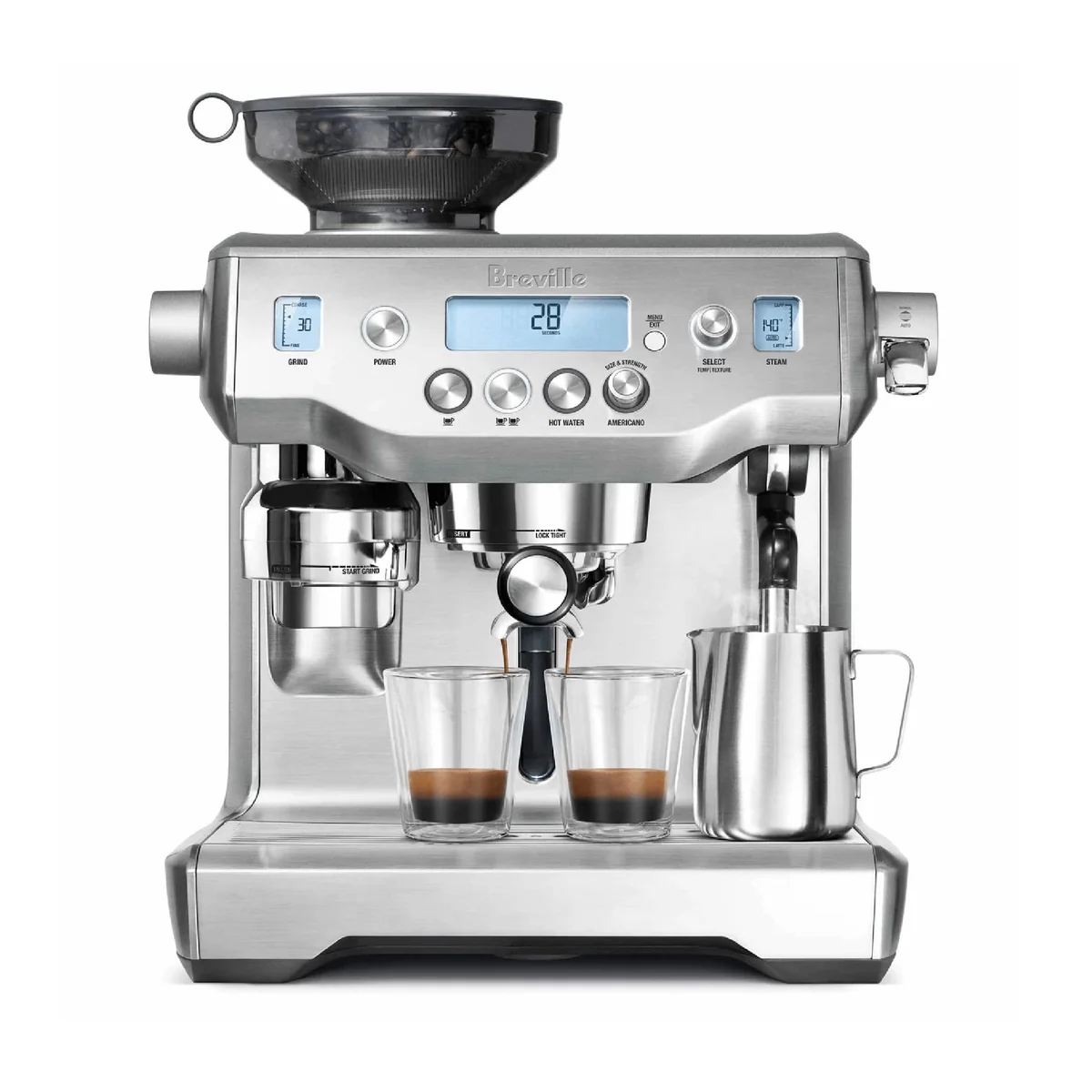
Breville Oracle BES980XL
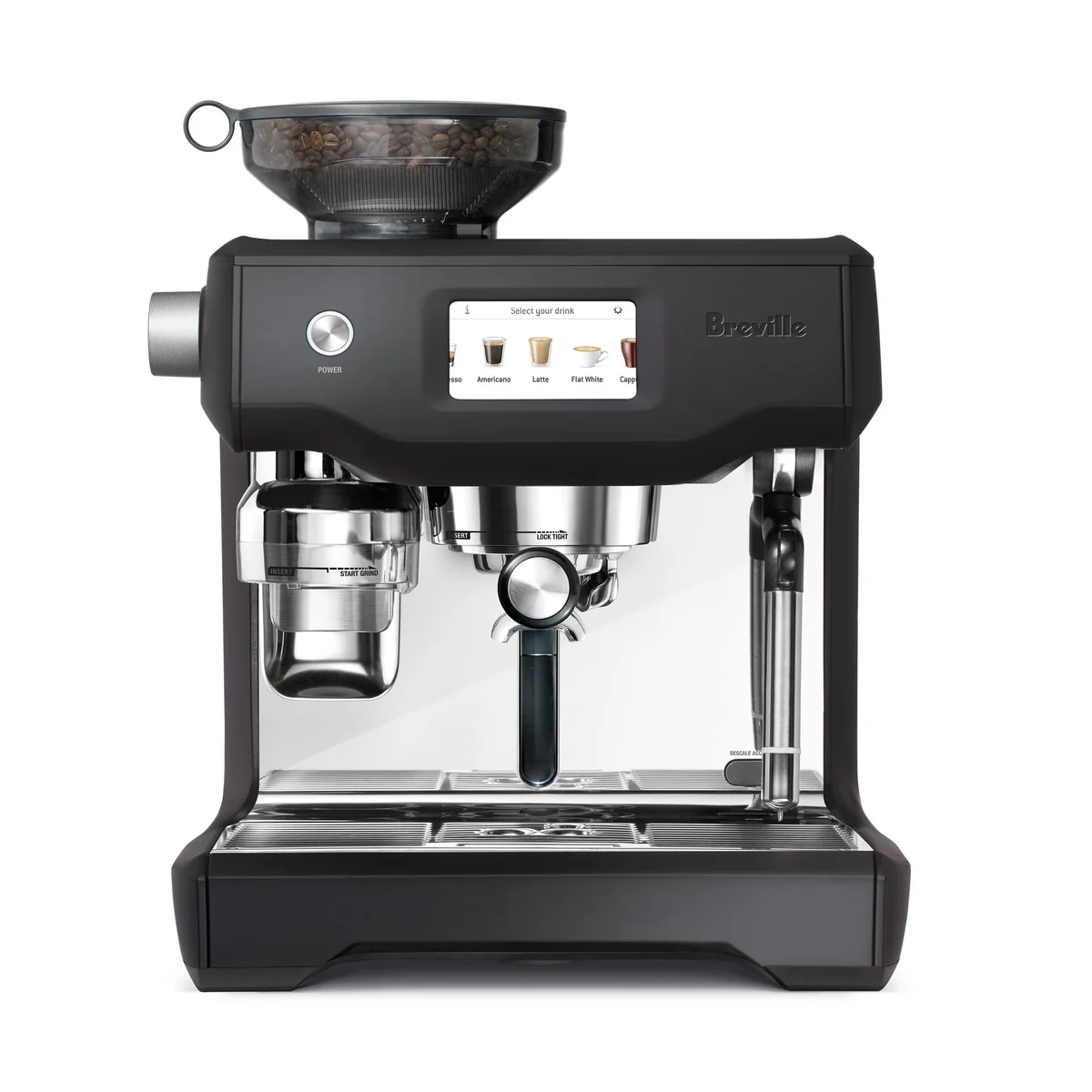
Breville Oracle Touch
Espresso Den does not publish prices, because they move and this page will outlive them. What does not move is the shape of the decision: the Oracle Touch sits several hundred dollars above the original Oracle, which is roughly what a very good standalone grinder costs, and the buyer wants to know what that money is doing. The honest answer is that it is buying an interface. It is not buying a better boiler, a better group head, a better grinder or a better shot.
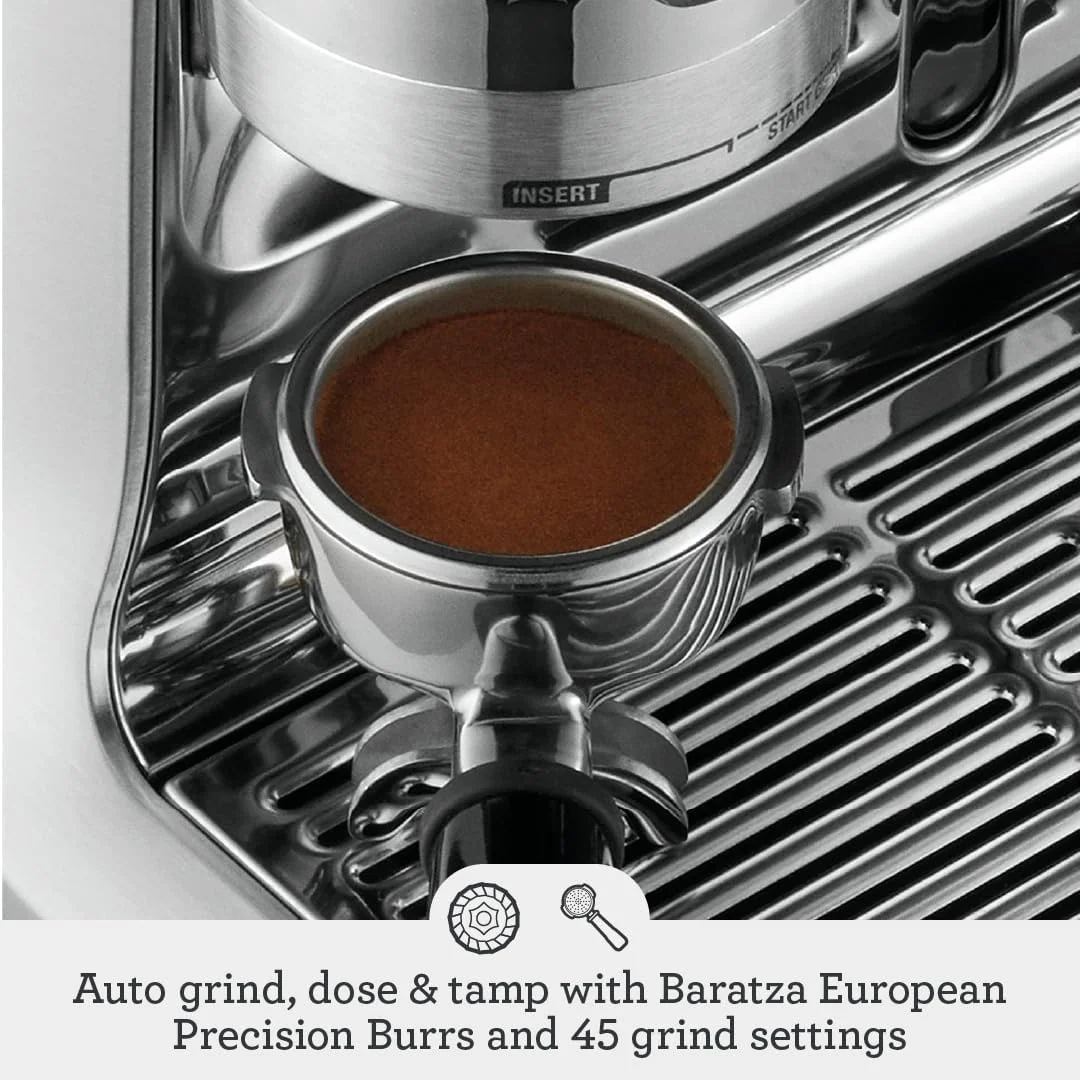
The strongest evidence for that comes from an owner who was weighing exactly this decision, phoned Breville, and was told the internals are identical, making the gap roughly the cost of a screen. That is one unverified report from a manufacturer's phone line rather than a teardown, so treat it as the best available evidence and not as proof. Everything that can be checked independently agrees with it. Both listings describe dual boiler construction with digital temperature regulation, a 58 mm full stainless portafilter with single-wall baskets, an integrated conical burr grinder that grinds, doses and tamps 22 grams, and a self-cleaning steam wand on its own boiler. Coffeeness, reviewing the Touch, confirms the two boilers with PID control on the brew boiler and the group head, which is the same specification the LCD machine is sold on.
One thing to settle before the rest of it, because Amazon files both machines under super-automatics and the category name has cost people money. Neither of these is a bean-to-cup box. You dock a portafilter under the grinder, carry it three inches to the left, lock it into a group head and knock a spent puck out afterwards. If that is not the workflow you had in mind, what a super-automatic actually is and what Breville's machines really automate will save you a great deal more than the price difference on this page.
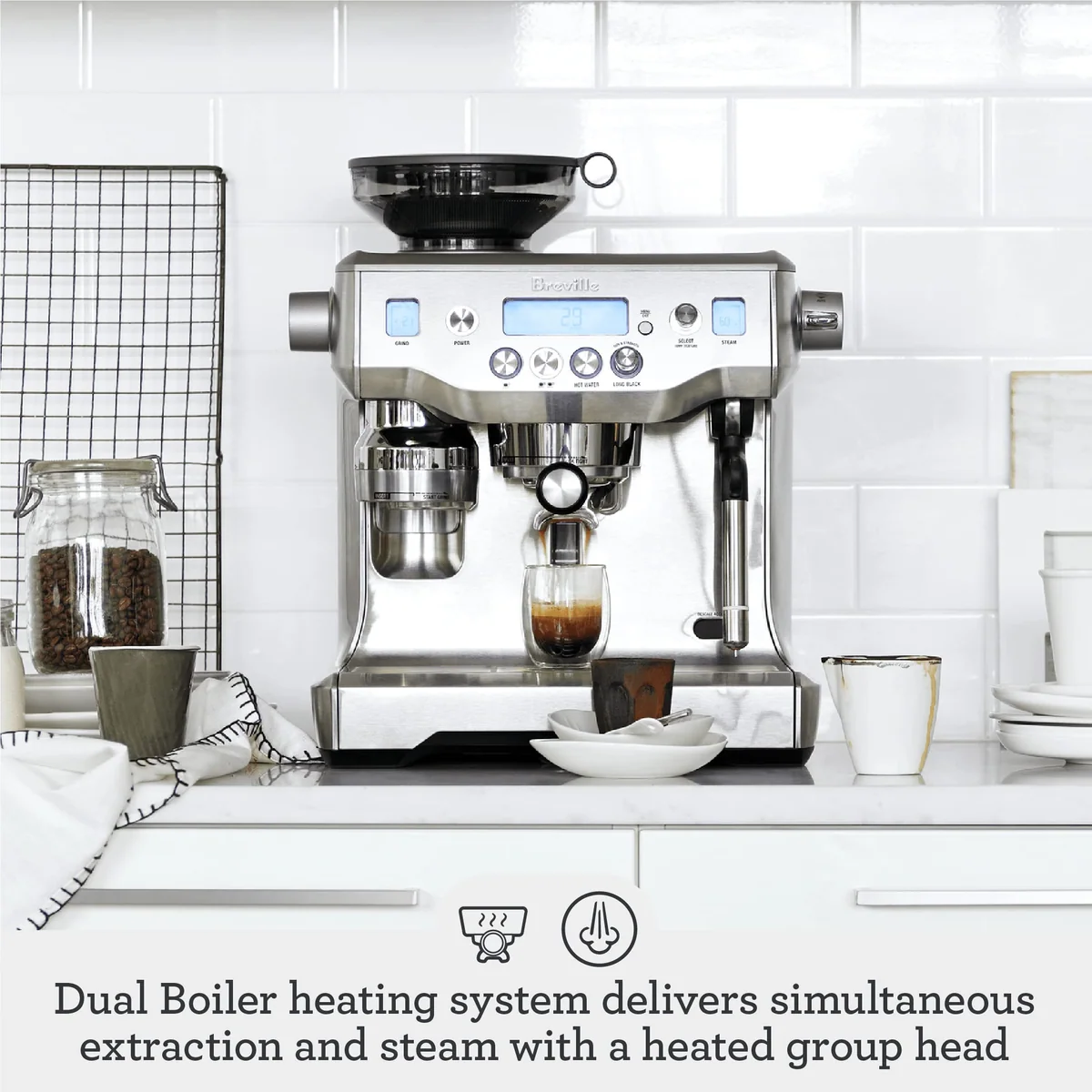
Breville Oracle BES980XL
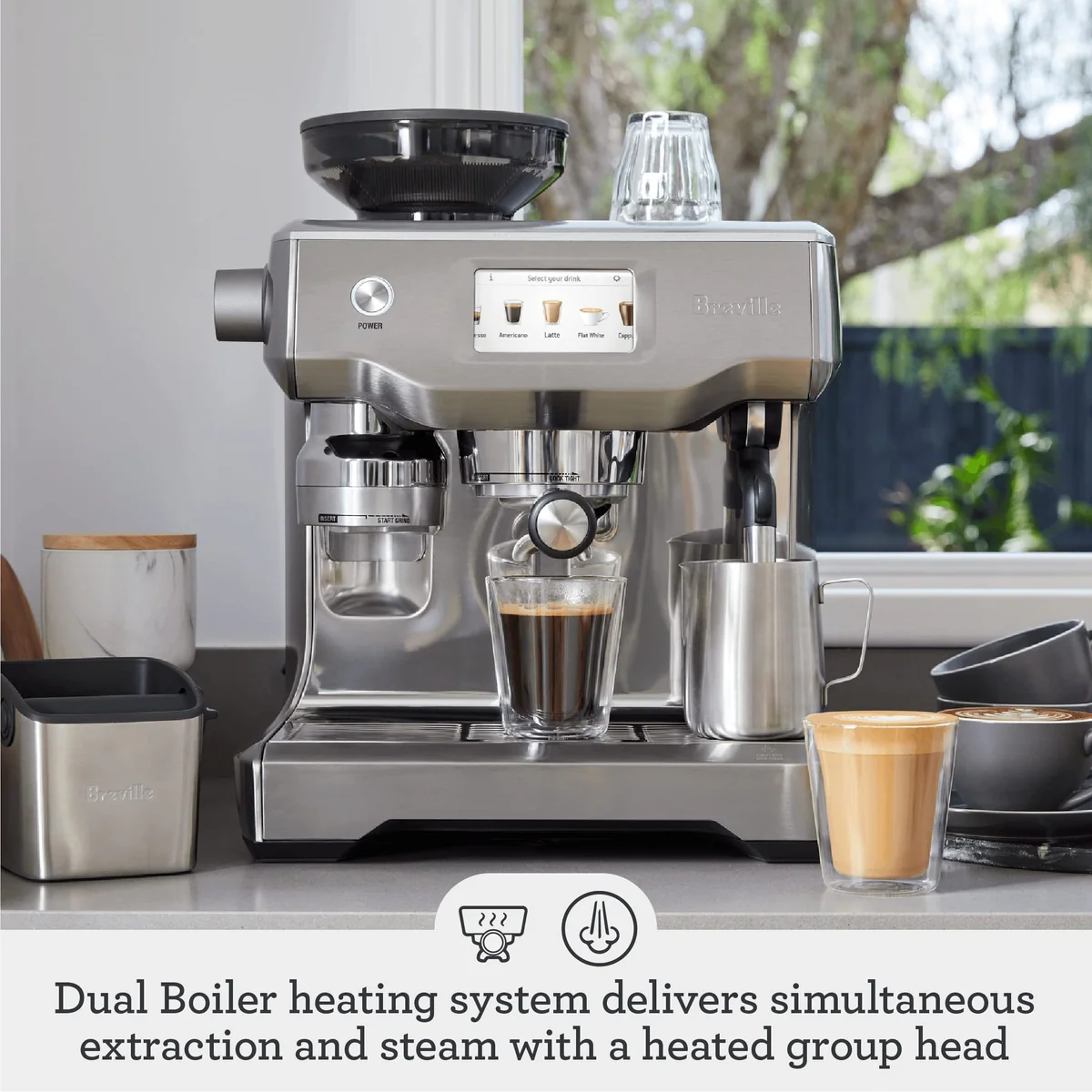
Breville Oracle Touch
At a Glance
| Feature | Editor's Pick Breville Oracle Espresso Machine BES980XL, Brushed Stainless Steel | Breville Oracle Touch Espresso Machine BES990BTR, Black Truffle |
|---|---|---|
| Price Range | $1,500–$3,000 | $1,500–$3,000 |
| Configuration | One Size | One Size |
| Finish | Silver | Black Truffle |
| Items In Box | 1 | 1 |
| Check Price on Amazon | Check Price on Amazon |
What the screen actually gives you
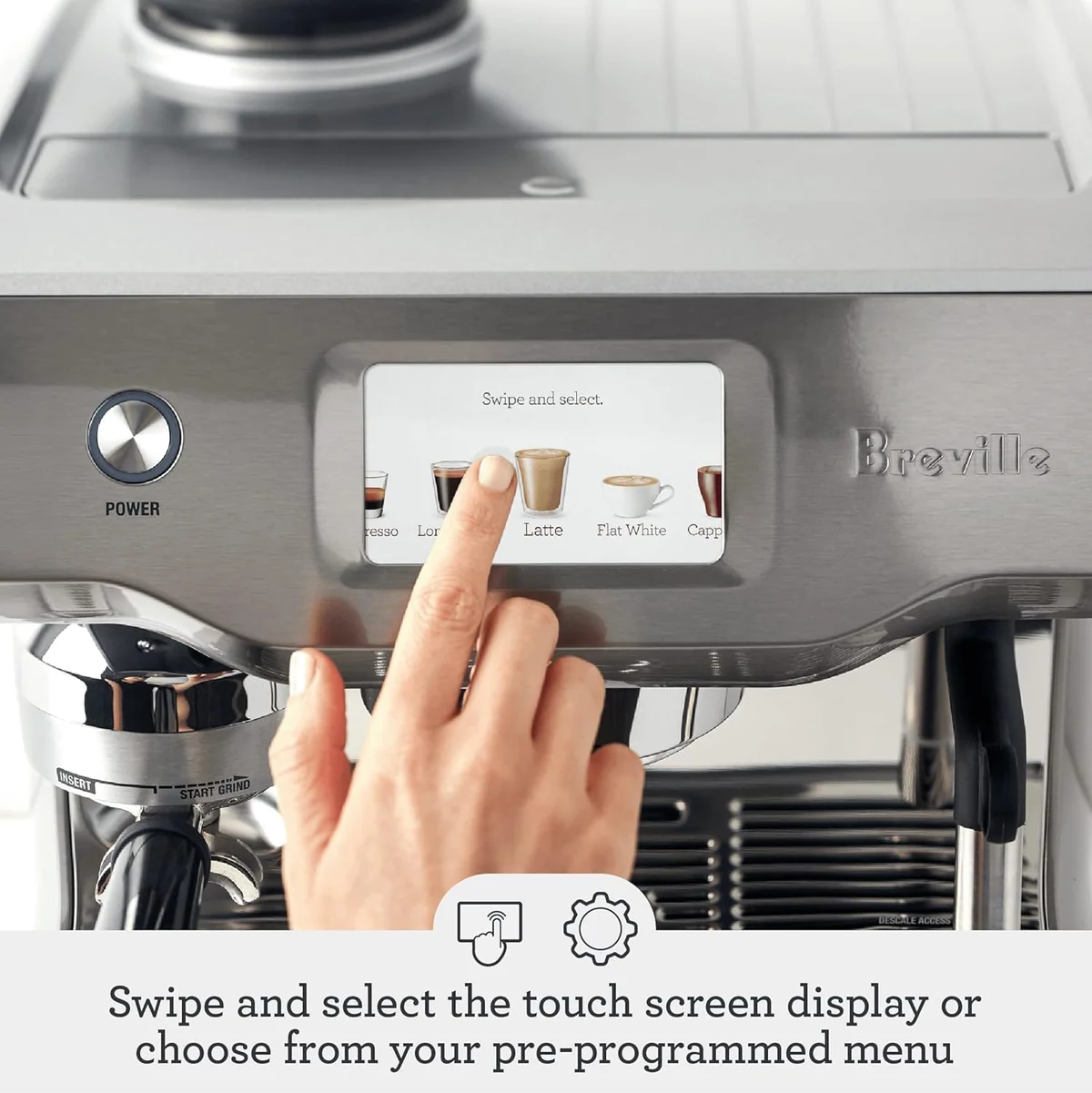
Be fair to it first, because there is a real feature here and it is not decoration. The Touch's screen carries five preset drinks and lets you build and save up to eight of your own, each with its own strength, milk temperature and milk texture, stored under a name you choose. That is the one capability the older machine has no route to. The LCD Oracle gives you one shot, two shots or manual control, a grind dial, a froth slider that runs from flat-white texture at one end to cappuccino at the other, and a single milk temperature default sitting around 60 °C.
Put those side by side in a kitchen with four people in it and the difference stops being cosmetic. On the Touch, the person who wants a 55 °C flat white and the person who wants a scalding cappuccino each press their own name and walk away. Published reviews of the Touch put the latte-art window somewhere in the low 130s Fahrenheit and warn that the top of the texture scale produces a bubble bath rather than microfoam, while the Epicurious reviewer settled on 152 °F because she wanted a hot drink more than a rosetta. Those two people can share a Touch without touching each other's settings. On the Oracle they share a slider.
| Oracle BES980XL | Oracle Touch BES990 | |
|---|---|---|
| Interface | LCD, buttons, grind dial | Colour touchscreen |
| Saved drinks | None by name | Five presets plus eight you build and name |
| Milk control | Froth slider and a temperature default | Temperature and texture set per drink and saved |
| Dose | About 22 g, no software control | About 22 g, no software control |
| Extraction | Timed, 25 s and 30 s defaults | Timed, same defaults |
| Portafilter | 58 mm, single-wall baskets | 58 mm, single-wall baskets |
| Boilers | Two, plus PID group head | Two, plus PID group head |
| Grinder | Integrated conical burr, grind-dose-tamp | Integrated conical burr, grind-dose-tamp |
| Status on Breville's US site | Still in the range alongside newer Oracles | Carries a discontinued notice |
Everything the screen does not fix
The dose is 22 grams on both machines and there is no dose setting in software on either. Changing it means going into the grind and tamp station and turning the auger lock nut, which Coffeeness calls astonishing at this price and which is exactly as pleasant as it sounds. Owners who arrive with a modern 16 to 18 gram recipe do not get to keep it: one Oracle Touch owner looking at an IMS competition basket found the smaller size physically fits and then sits half empty, with the auto-tamp turning unreliable once the tamp fan is dropped far enough to suit it.
That matters more than it sounds because neither machine brews to a weight. The pump runs for a set number of seconds, 25 for a single and 30 for a double by default, and it does not care how much liquid comes out in that time. Coffeeness rates those defaults as right on the money, which they are, but the mechanism means every gram of dose drift and every scrap of grind drift lands in the cup as a different ratio. A touchscreen does not weigh anything. Machines now cross-shopped against both of these have a scale in the drip tray and stop on a number.
Then the grinder, which is the fault line running through every serious account of this platform. A Team HB member puts the built-in unit at roughly Breville Smart Grinder class, which is a couple of hundred dollars of grinder inside a machine costing many multiples of that, and the same owner documented shot volume climbing steadily through a day at a fixed grind setting and resetting only from cold the next morning. Coffeeness independently describes the grinder becoming less stable as the machine warms. Another owner names bean changes as where it shows first. And when it degrades, it degrades the same way on both machines: an owner whose Oracle had stopped grinding well was told the upper burr may need replacing, the interior is probably caked, the felt ring may have perished, and that a wire brush will damage the burrs, which is precisely the tool most people reach for.
The wear items are shared too. Leaking o-rings are the platform's signature failure, and an owner in an appliance repair forum working a machine that would not stop heating had the triac board and the o-rings named as the suspects. A second-hand Oracle Touch of unknown history squealed whenever water ran through the head, portafilter in or out, and sometimes produced nothing at all, which is the classic scale presentation. An eleven-year-old Oracle in daily service, cleaned the week before, did the same thing. A repair technician who services these calls the internal plastic diffusion plate brittle and never reuses one. None of that is a Touch problem or an Oracle problem. It is a Breville dual boiler problem, and you inherit it either way, which is why what breaks first on machines like these is worth reading before you choose between them rather than after. The upkeep is identical as well: backflush with a blind basket, run the cleaning cycle, wipe the wand the machine has already purged, and strip the grinder periodically.
The uncomfortable part of paying more
Breville's own US product page for the BES990 now carries a discontinued notice and points visitors to two newer Oracles instead, one positioned below it on speed and one above it on performance. The cheaper machine on this page carries no such notice. So the higher price here buys the model its maker has already retired, and the successor's feature list reads like a point-by-point answer to the complaints above, which is itself a statement about what was wrong.
The ratings are worth putting on the table honestly rather than as a gotcha. Amazon shows the Touch at 3.4 stars from 596 ratings and the Oracle at 4 from 346. Neither number is clean. Three hundred and forty-six ratings on a decade-old flagship reads as low sales velocity more than as quality, and some share of any low marketplace score on a thirty-five-pound, expensive item is shipping damage and seller trouble rather than the product. What the gap does not support is the idea that the more expensive machine is the more loved one.
There is also a live case against the screen from someone who used one for weeks. A reviewer who came to the Touch from traditional machines found it a hindrance rather than a help, citing presses that do nothing and the requirement to select a drink on screen before the machine will let you grind, and his own conclusion was that a non-barista will probably prefer it and a barista probably will not. That is the cleanest way to sort yourself into one column or the other, and it costs nothing.
Breville Oracle BES980XL
Breville Oracle Touch
Which one, and who should buy neither
The best-calibrated line anyone has written about this platform came from an owner who moved on to manual machines: it makes it easier to produce good shots because the temperatures are stable and the parameters are controllable, but less satisfying. That sentence is both machines. Coffeeness reaches the same place from the reviewer's chair, calling it the middle ground where super-automatic devotees and portafilter obsessives can drink from the same cup, while warning that anyone serious will feel the ceiling. If your house contains one person who wants to dial in shots and three who want a flat white before school, that is a real problem this machine solves. The touchscreen is a solution to the second half of that sentence, not the first.
The one to buy if you want the Oracle and not the interface
Same dual boiler, same PID group head, same 58 mm portafilter, same automatic grind, dose and tamp and the same self-purging steam wand as the Touch, driven by buttons and a small LCD.
The built-in grinder is roughly Smart Grinder class inside a machine priced far above that, and it is the part long-term owners replace first.
The one to buy if several people share the machine and none of them want to learn it
The touchscreen stores five presets plus eight drinks you build and name, each holding its own strength, milk temperature and milk texture, which is the single thing the LCD Oracle cannot do at any setting.
Breville's own US page lists this model as discontinued and sends buyers to two newer Oracles, so the higher price here buys the design its maker has already replaced.
Now the two exits, because for a good number of readers the right answer is on neither card. The enthusiast consensus is emphatic and it is not either Oracle: buy the plain Breville Dual Boiler without a grinder and put the difference into the best standalone grinder you can afford, on the reasoning that a failure in a combined unit costs you both halves. The counter is better than it looks, and it comes from an owner who pointed out that an Oracle whose grinder you have stopped using is a Dual Boiler you overpaid for. Our view on that trade is in whether a grind-and-brew all-in-one is a good idea, and the closest thing to the separates route on this site is the Bambino Plus with a Baratza Encore ESP, which is the same philosophy for a fraction of the outlay.
The other exit is downward within Breville. The Barista Touch keeps the touchscreen and the automatic milk, drops to a 54 mm portafilter, one boiler and your own hand on the tamper, and Coffeeness's own conclusion is that if you are happy tamping it is worth considering at a fraction of the price. That decision runs in full in Barista Touch against Oracle Touch and in our Barista Touch review, with the rest of the range placed here. And if what you actually wanted was a machine you walk up to and press once, with no portafilter at all, the proper super-automatics are the right list; five to ten minutes of warm-up and a puck to knock out is not that machine.
The money argument that redeems either one is arithmetic rather than taste. A two-coffee-drinker household in New York buying a latte most days found the machine feeling like value after six months, and at café prices that is thousands of dollars a year walking out the door. That sum works identically on both machines, which is the point: the touchscreen does not shorten the payback, it just makes the machine friendlier while you wait for it. Our full write-ups sit at the Oracle BES980XL and the Oracle Touch if you want the long version of either.
Frequently Asked Questions
Is the Oracle Touch just an Oracle with a touchscreen?
As far as the public record goes, yes: an owner who rang Breville was told the internals are identical, and every published specification for the two machines matches on boilers, portafilter, dose and grinder.
Does the Touch make better coffee?
No, because the dose, the grinder and the timed extraction that decide what ends up in the cup are the same on both, and the screen changes only how you ask for it.
Can either machine be set to less than 22 grams?
Only mechanically, by adjusting the auger lock nut inside the tamp fan assembly, and owners report the results are inconsistent enough that both are best treated as 20 to 22 gram machines.
Which one is better for milk drinks?
The Touch, but only because it saves a temperature and a texture per drink and per person, since the wand and the boiler behind it are the same hardware.
Has the Oracle Touch been discontinued?
Breville's own US product page for the BES990 carries a discontinued notice and points to two newer Oracles in its place.
Do both handle light roasts?
The brew group is not the limit on either machine, the shared grinder is, and owners who chase light roasts are the ones who end up buying a standalone grinder within the year.
Is a used Oracle a smarter buy than a new Touch?
It can be, because the hidden service menu reports shot count, steam minutes, calcium level, descale cycles and stored error codes, which is a level of provenance almost no other espresso machine offers, though the usual checks on renewed machines still apply.
How long does either take to warm up?
Both need several minutes to reach temperature and longer to settle thermally, which is what the auto-on scheduler on each machine exists to hide.
Is the Sage-branded version a different machine?
No, Sage is simply the name Breville trades under in Europe, and the machine underneath is the same one.
Ready to Choose?
Sources (8)
- Amazon listings and customer reviews — Breville Oracle Bes980xl and Breville Oracle Touch
- Owner reports across r/espresso, r/BrevilleCoffee, r/appliancerepair threads
- Owner and reviewer video, 4 channels
- Coffeeness — Article — www.coffeeness.de
- Homecoffeeexpert — Article — homecoffeeexpert.com
- Epicurious — Article — www.epicurious.com
- Home Barista — Article — www.home-barista.com
- Breville — Article — www.breville.com