The Magnifica Evo and the Magnifica Start make the same espresso, so what you are really choosing is a milk system
Buy the Start if you will hold a milk jug for ninety seconds or drink your coffee black, and pay up for the Evo only if a one-touch cappuccino is worth a carafe you strip and wash every single day.
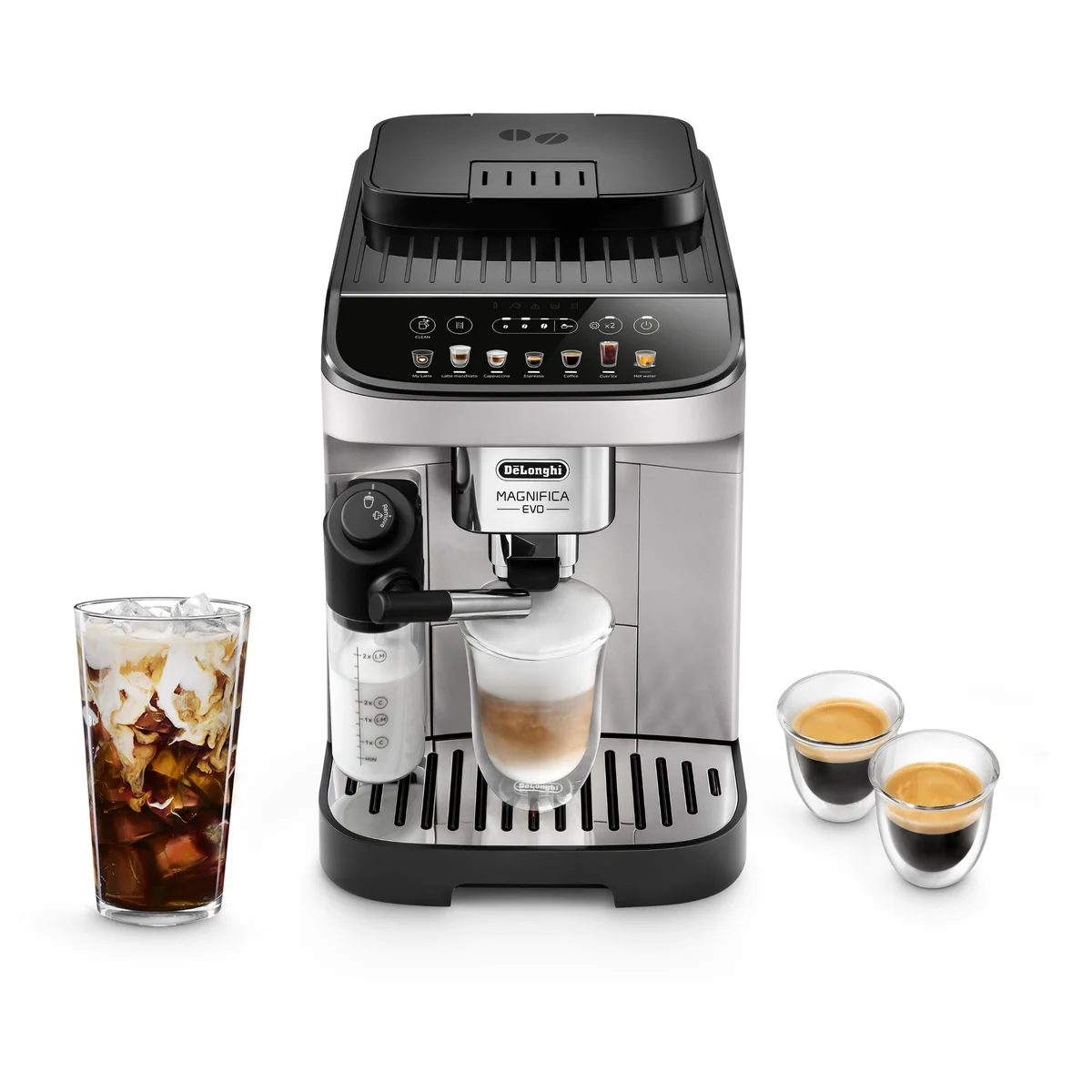
De'Longhi Magnifica Evo
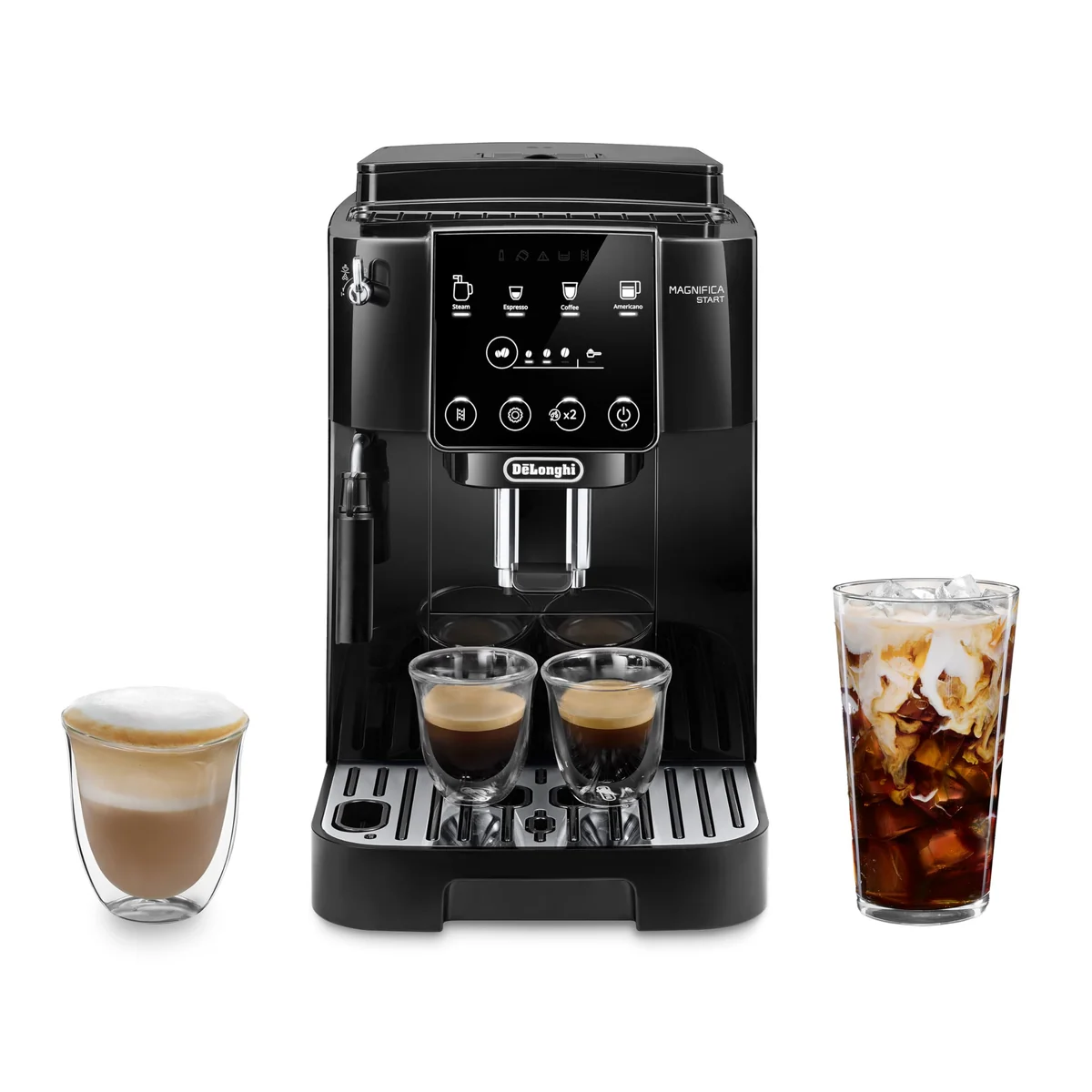
De'Longhi Magnifica Start
De'Longhi has made this harder than it needs to be by giving two quite different machines nearly the same name and very nearly the same insides. Both listings advertise the same steel conical burr, the same thirteen grind settings and the same removable brewing unit. That is not marketing overlap, it is one set of coffee hardware in two shells, and Tom's Coffee Corner, which has measured the dose across the range by timing how long the grinder runs, puts the pair on the same rung of the ladder, several steps below the Dinamica Plus and its relatives. A buyer who worked the decision through himself reached the same place, concluding that the plainer machine would make the exact same espresso and americano and that the glossier one simply looked better. The espresso is not the variable here. The milk is, and so is everything you have to do around it.
The star ratings will not settle it for you either, and it is worth knowing why before you go and read them. The Evo listing shows 3.9 stars from 961 ratings. The Start shows 4.0 from 249. Espresso Den read both sets of retained customer reviews and found the same reviews sitting on both pages: the rave about the automatic milk frother, the praise for a self-cleaning milk nozzle, and the one-star complaint that the machine beeps when the frother is inserted but never recognises it, with the drink options staying dark. That last one describes a sensor the Start does not have. Amazon pools the family, so both averages are an average of two machines. Read the words rather than the number, discard anything mentioning a carafe when you are looking at the Start, and what remains is a smaller and considerably more useful pile.
So the honest framing is this. The extra money does not buy better coffee, more coffee, hotter coffee or a longer-lived machine. It buys a milk carafe that works without you, and that carafe is simultaneously the best thing about the Evo and the part its owners complain about most.
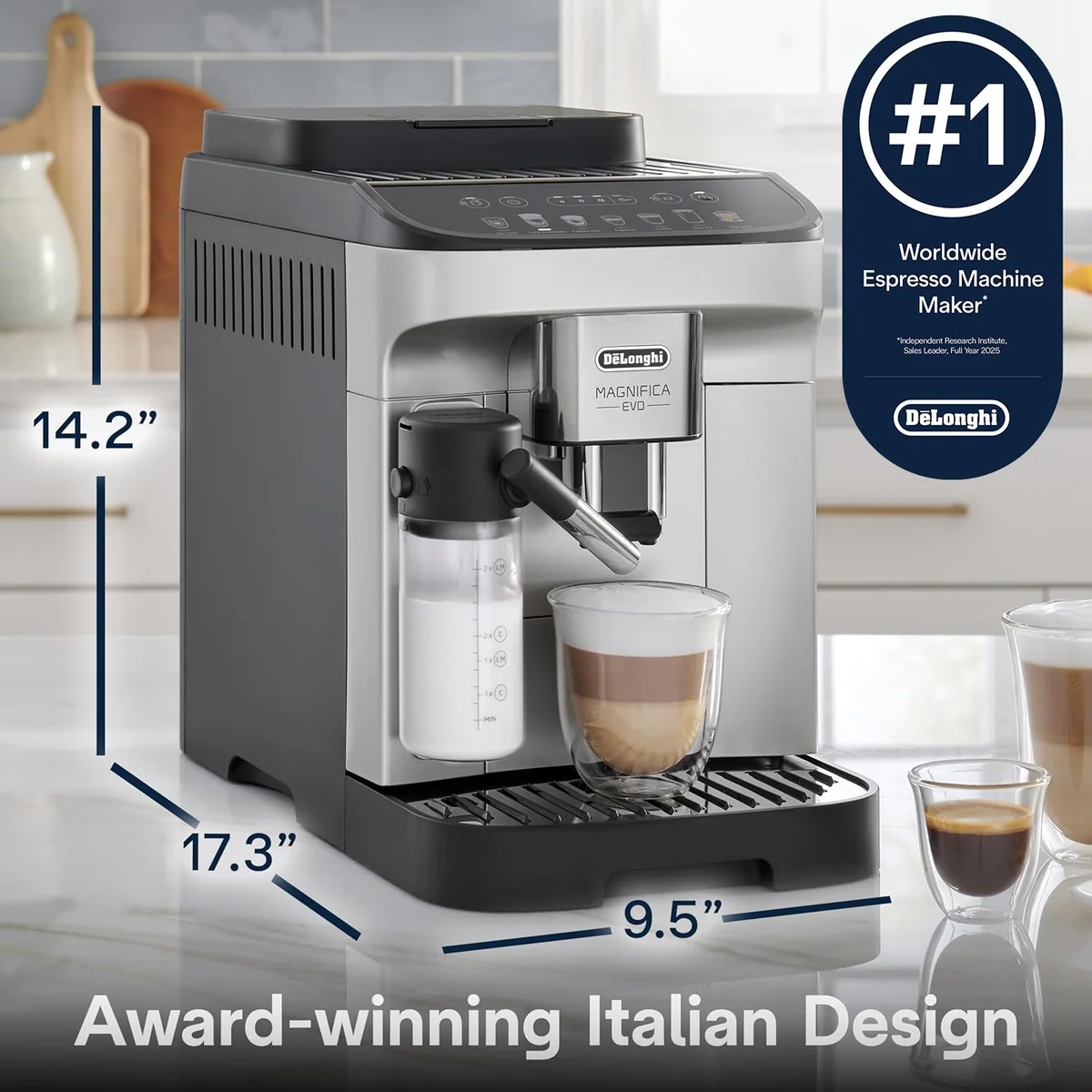
De'Longhi Magnifica Evo
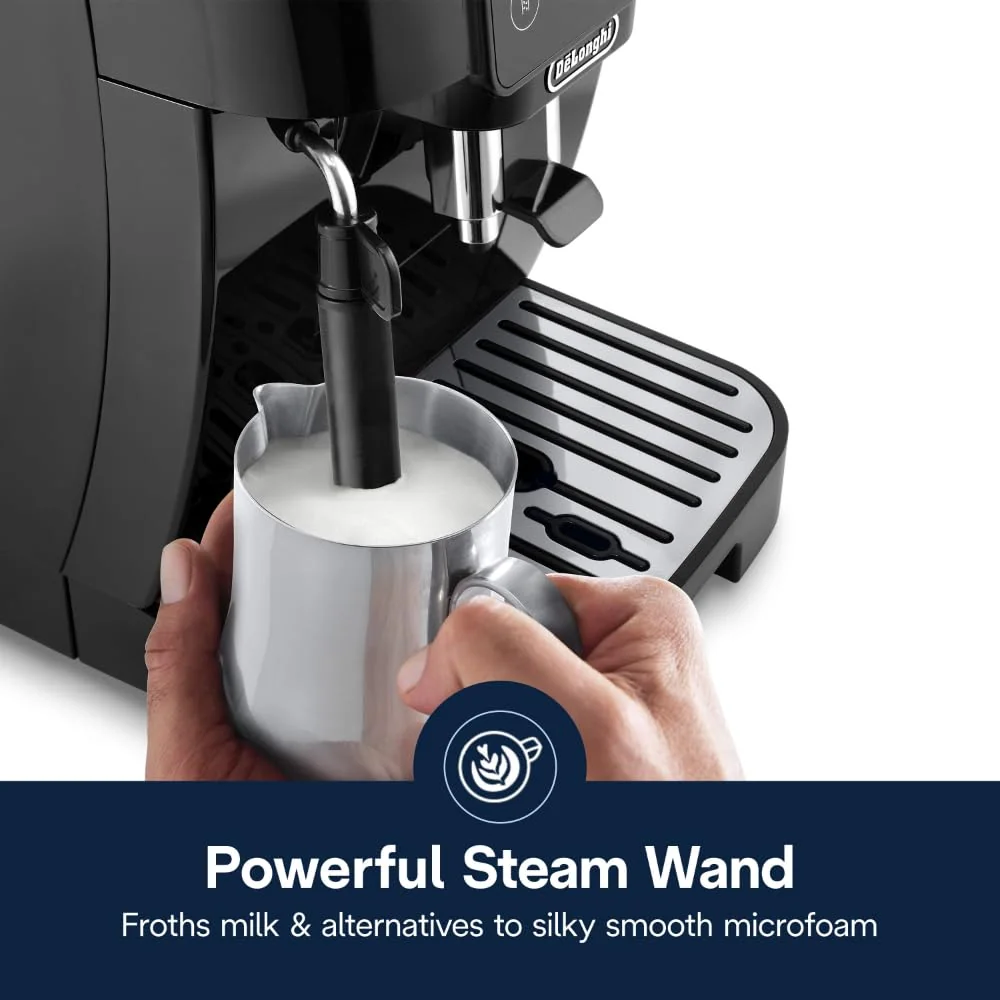
De'Longhi Magnifica Start
At a Glance
| Feature | De'Longhi Magnifica Evo Automatic Espresso & Coffee Machine with Auto Milk Frother, Built-in Grinder & Auto-Clean Function - For Latte, Cappuccino, Americano, Iced Coffee, ECAM29084SB , Silver | De'Longhi Magnifica Start Automatic Espresso Machine with Manual Milk Frother & Built in Grinder - 3 One-Touch Recipes, Easy-to-Clean, Home Barista Coffee Maker for Lattes, Cappuccino, Iced Coffee |
|---|---|---|
| Price Range | $500–$1,000 | $200–$500 |
| Configuration | Magnifica Evo with Automatic Milk Frother | Magnifica Evo with Automatic Milk Frother |
| Finish | Silver | Silver |
| Items In Box | 1 | 1 |
| Check Price on Amazon | Check Price on Amazon |
The ceiling both machines hit, before anything else is decided
Whichever one you buy, the dose is small. Tom's reads the top strength setting as roughly ten grams, a reviewer who put each setting on a scale got 6.8, 10.1 and 13.2 grams, and a Reddit tester reporting 9, 12 and 15 was contradicted within the hour by an owner who weighed 7, 9 and 11. Nobody agrees on the number and everybody agrees on the shape of it: this is a single dose, not a double, and it is the mechanical reason a well-made machine keeps producing cups that people call thin. Ten to twelve grams under thirty millilitres is a fine ratio. The same ten to twelve grams stretched across a mug is not, which is why the clearest complaint in the whole record comes from a buyer chasing a 230 millilitre mug who ended up combining hot water with two shots and called the result anonymous, worse than the instant he had been drinking. Reaching for the 2x button does not help, because it runs more water through the same puck rather than grinding more coffee. If your household drinks black mug coffee, this is the wrong pair of machines and our piece on what these machines can do with filter-style coffee will save you the money; if you are already staring at a weak shot, start with the guide to watery bean-to-cup espresso.
Neither machine is ready on the day it arrives, either. Owners of both describe a first week of cups that taste like dishwater before the grind, the strength and the programmed volume are anywhere near right, and the thread that captures it best belongs to a new owner who had burned through an entire bag of beans in three days trying to produce one decent espresso. That is a shared tax. It is also the reason a rating average on either listing tells you as much about how many buyers gave up in week one as about the machine.
What the extra money actually changes
| Magnifica Evo | Magnifica Start | |
|---|---|---|
| Milk | LatteCrema carafe, one touch, sensor-gated | Panarello wand, you hold the jug |
| One-touch drinks | Seven listed, of which five are real drinks | Three: espresso, coffee, americano |
| Iced coffee | Over Ice recipe, a cooled hot brew | None on the panel |
| Milk temperature | Not adjustable at all | Entirely yours |
| Daily milk chore | Strip the carafe and wash it by hand | Rinse the wand and the jug |
| Grinder, brew group, dose ceiling | Identical across both | |
Take the carafe on its merits first, because they are real. Seattle Coffee Gear, setting the Evo against two costlier De'Longhis, found its fixed carafe produced the thickest milk texture of the three, and testers have had good results from oat in it. Then take the conditions attached. The foam density cannot be changed, which Whole Latte Love put bluntly when it noted there is no way to adjust the froth in any way at all, so a low-foam latte is out of reach. The pour order is fixed, milk first and coffee after. There is no extra-shot button, so a stronger cappuccino means waiting out the cycle and then pressing espresso by hand. And the drinks arrive cooler than people expect, because the coffee temperature setting does not touch the milk: the specification lists no adjustable milk temperature, owners of the older automatic-frother machines identified the mechanism years ago, and one Evo owner reports coffee and milk both landing around 60°C with a preheated cup making no difference. Our page on why these machines serve lukewarm milk has the fixes that actually work, and none of them raise the milk.
Then there is the sensor. The Evo uses a photo-eye to confirm the carafe is seated and holding milk, and when it is not satisfied the milk drinks simply refuse to light up: an Amazon owner described the beep without the recognition, owners of the sibling Magnifica Plus describe a full carafe being heavy enough to drag the connector out of alignment, and a reviewer hit the fault live on camera and could not make a cappuccino. When De'Longhi built the Start, it deleted that sensor, reportedly because users had complained about it. A manufacturer removing a part from the next machine is about as plain a verdict on that part as anyone is going to get, and it is why a commenter watching people arrive in the forums with the wrong box told a buyer who had ordered the Start by accident that he had accidentally bought the better of the two. The daily cost is separate again: the auto-clean rinses the spout, not the carafe, and the most useful ownership document on the Evo reads like a chore list, with the milk carafe washed daily alongside the water refills and the grounds bin.
The Start's answer to all of that is to not have any of it. There is no carafe, no tube, no detection, nothing to strip. What arrives instead is a panarello sleeve over the steam pipe, which drags air into the milk the whole time it heats and produces foam that is thick and bubbly rather than glossy, and the widely repeated fix is to pull the sleeve off and steam on the bare pipe like a barista would, which our full review of the Start sets out with the sources behind it. That is a genuine skill you have to acquire, and some mornings you will not want to. It also hands you the two things the carafe will never give you, which are the milk temperature and the foam density, and it is worth noticing that owners who bought the automatic version are the ones raising both. If you have never had to make this choice before, our argument about wands, hoses and one-touch carafes is the honest version of it.
The Start is not the free lunch that makes it sound like, and the sharpest dissent in the record is aimed at exactly this configuration. Coffeeness, having tested it, wrote that "There is no reason to buy the manual milk frother DeLonghi Magnifica Start", and the same review measured its grinder at 75.9 dB, several decibels above the older Magnifica it descends from, with a shrill note on every cycle. The noise is real and undisputed by anyone. Judged against a carafe machine costing considerably more, the wand does look like a subtraction; judged as the cheapest way into this hardware, it looks like the version with fewer things to fail. If a silent kitchen is a requirement rather than a preference, neither of these belongs on your shortlist and the quietest super-automatics we know of are a different list entirely. Both machines also spit a little water onto the drip tray at the start and end of every cycle, which TechGearLab called an annoying design flaw and which owners solve with a saucer.
Which listing to press
The one to buy if the milk has to happen without you
It is the cheapest honest route into De'Longhi's LatteCrema carafe, which poured thicker foam in a side-by-side test than the adjustable carafes on two costlier machines in the same family.
The carafe's seating sensor is the most complained-about part on the machine, and De'Longhi evidently agreed, because it deleted the sensor from the Start.
There is a second way to buy the Evo, and it is a different transaction rather than a different machine. The renewed listing carries 3.5 stars from 47 ratings, a small and recent sample nobody has explained, and a ninety-day limited warranty. A new Evo carries two years from De'Longhi, extended to three if you register it. For context on the language, De'Longhi's own factory-refurbished machines have been sold with six months, and a specialist retailer's B-class grade means a working machine that may carry more cosmetic marks than a standard refurbished unit. On a device with a pump, a boiler and a gearbox that has now been shipped at least twice, ninety days is a short window in which to discover a seal, so use it deliberately: run a milk drink on day one to prove the carafe sensor sees it, take the grinder through its whole range while it is running, and run a descale early. Our page on whether renewed bean-to-cup machines are a safe buy goes through the grading properly.
The same Evo for less, if the discount is genuinely large
Nothing about the machine changes in this box, so it is worth taking whenever the renewed unit is clearly cheaper than a new one at the moment you look.
Ninety days of warranty covers only a fraction of the window in which these machines actually fail, which clusters in the second and third year around seals, leaks and the milk system.
The one to buy if you will steam your own milk
Same brew group, same burr, same espresso, with the carafe and its sensor removed and the milk temperature handed back to you, which is the single most common complaint about the machine above it.
The panarello sleeve produces stiff, big-bubbled foam until you take it off and learn to steam, and the grinder is measurably louder than the Magnifica it replaces.
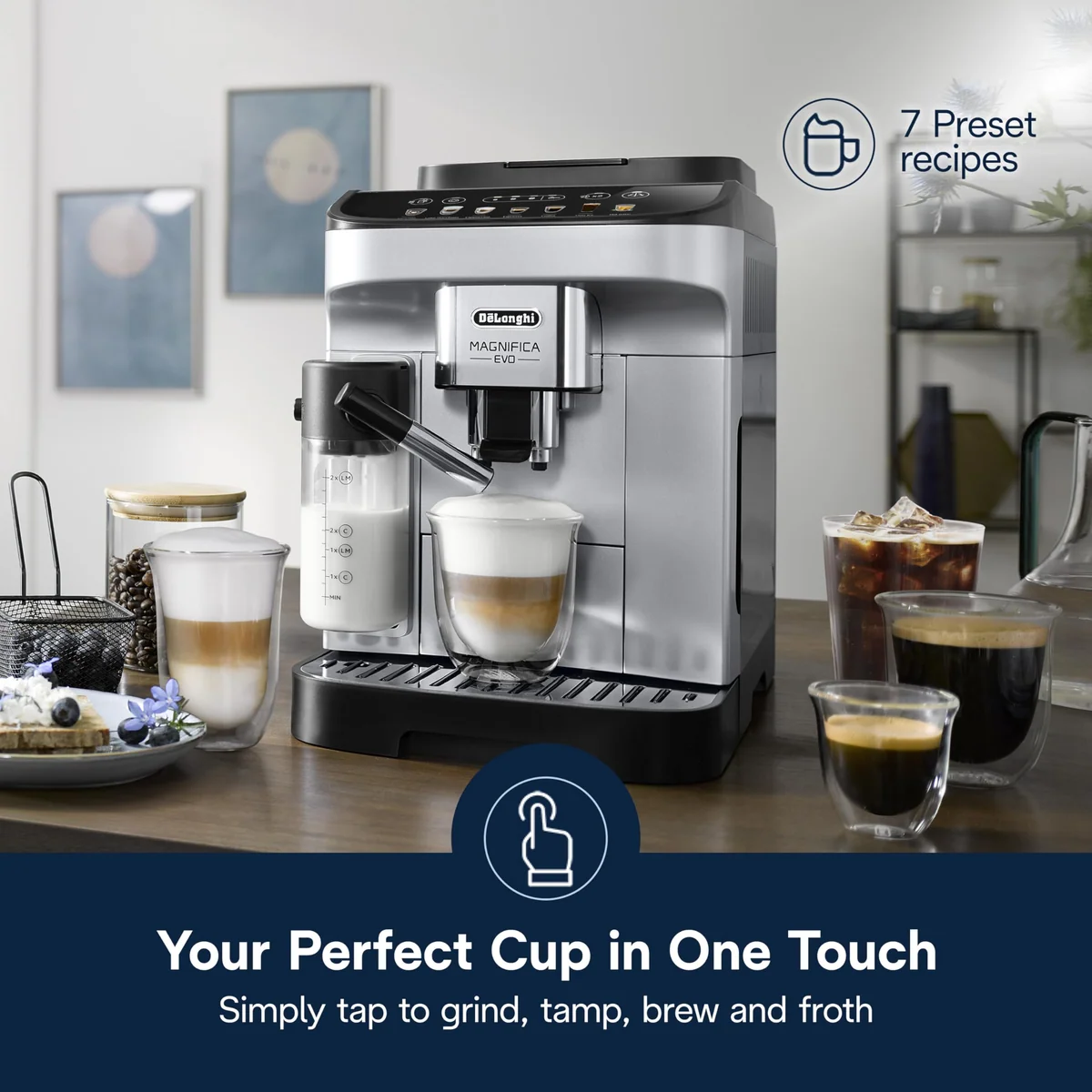
De'Longhi Magnifica Evo
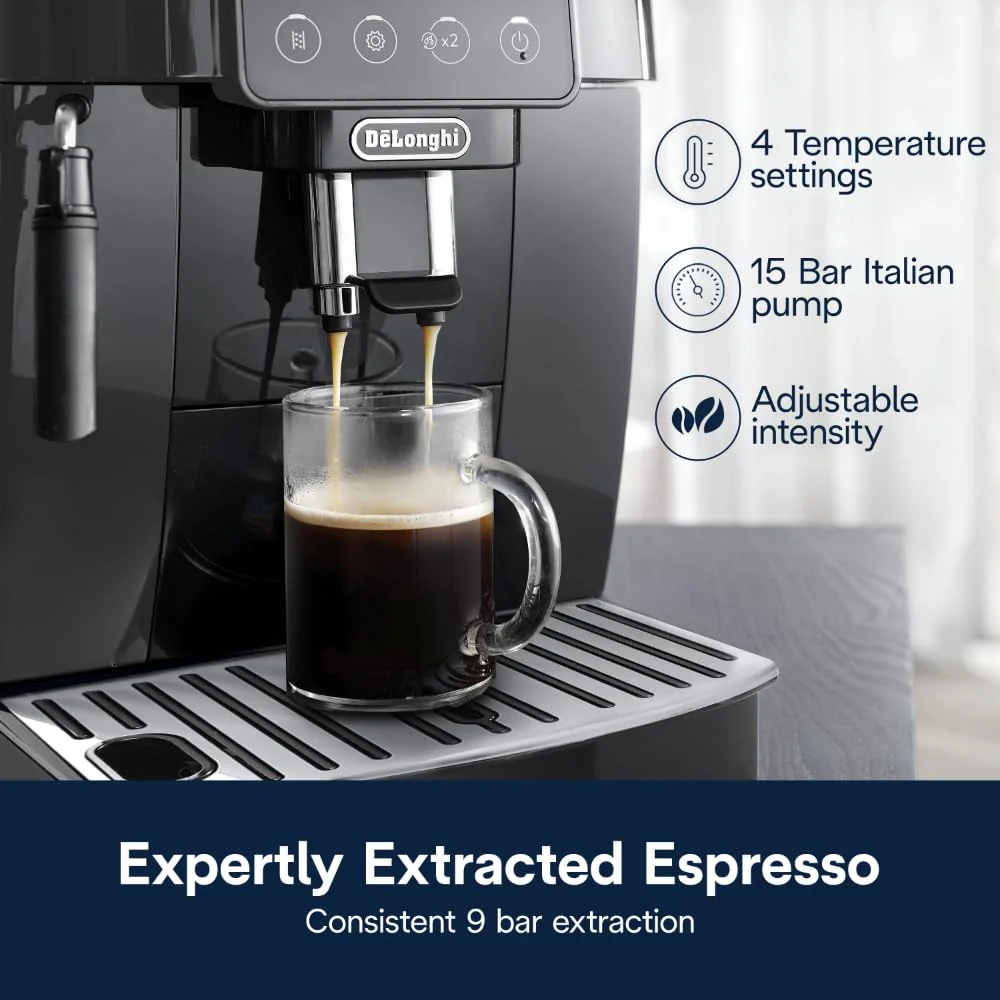
De'Longhi Magnifica Start
Who each one is for
Buy the Evo if the household drinks cappuccinos and lattes, wants them at a button, and is coming off pods, drip or a café habit. That buyer is not being sold a compromise. The fairest sentence anyone has written about it belongs to a long-term owner who said it is not life-changing espresso, but it is good and it is easy, and for a machine that will pour a drink in under two minutes with almost no mess that is a perfectly good deal. Accept the carafe as a daily chore rather than a feature, and understand that if the sensor is going to sulk it will sulk within the return window.
Buy the Start if you drink espresso, cortados, cappuccinos or anything short, or if you drink your coffee black and the milk system was never the point. It gives up nothing that makes the coffee, keeps the removable brew group and the cheap, widely stocked spare parts that are the real reason people keep buying De'Longhi rather than something sealed and Swiss, and it deletes the component most likely to strand you. Home Coffee Expert, reviewing the Evo, went out of its way to say the Start brews a better-tasting cup at a similar price, which is a strange thing for a review to admit and worth repeating for that reason. It sits at the entry point of the budget tier we would shop in.
Buy neither if one of three things is true. If you want a big mug of black coffee, the dose ceiling is the one thing no setting fixes, and the machines built for black coffee handle it properly. If oat milk is the default in your house and you still want it automated, the Dinamica Plus is where owners with that problem consistently end up, and we have set it against the Evo directly. And if the thought of hand-washing a milk carafe every evening is what is putting you off the Evo, the Philips answer to that carafe is two dishwasher-safe pieces with no tubes, which is the whole substance of the LatteGo comparison. If the model names have stopped meaning anything at all, our guide to the whole De'Longhi range puts them in order, and the Evo has its own review here.
Frequently Asked Questions
Is the Magnifica Start just a cheaper Magnifica Evo?
It is the same grinder, brew group and dose ceiling in a plainer shell, with the automatic milk carafe replaced by a wand you operate yourself and the carafe's optical sensor removed entirely.
Which of them makes the better espresso?
Neither, in any way you could taste blind, because the coffee path is identical and both stop at the same modest dose.
Can the Start make a cappuccino at all?
Yes, but you steam and pour the milk yourself, and the drink is only as good as the ninety seconds of practice you are prepared to put in.
Does the Start do iced coffee?
No, it lists three one-touch drinks and none of them is the Evo's Over Ice recipe, which in any case is a hot brew poured over ice rather than anything cold-extracted.
Why are my drinks lukewarm on the Evo?
The temperature control reaches the coffee and never the milk, so the more milk a drink contains the cooler it lands, and that is the one problem the Start's wand genuinely solves.
Which is less work to live with day to day?
The Start, by a distance, because a rinsed wand and a jug take seconds where the Evo's carafe comes apart and gets washed by hand every day the machine is used.
Is the Evo worth the difference in money?
Only if one-touch milk is the reason you are buying a super-automatic at all, since that is the entire thing the extra buys.
Should I trust the star ratings on these two listings?
Not as a comparison, because Amazon pools the family and the same customer reviews appear on both pages, including complaints about a milk carafe the Start does not have.
Ready to Choose?
Sources (10)
- Amazon listings and customer reviews — Delonghi Magnifica Evo and Delonghi Magnifica Start
- Owner reports across r/espresso, r/superautomatic threads
- Owner and reviewer video, 4 channels
- Tomscoffeecorner — Article — tomscoffeecorner.com
- Wholelattelove — Article — www.wholelattelove.com
- Coffeeness — Article — www.coffeeness.de
- Au — Article — www.productreview.com.au
- Techgearlab — Article — www.techgearlab.com
- Homecoffeeexpert — Article — homecoffeeexpert.com
- Seattlecoffeegear — Article — www.seattlecoffeegear.com