Jura versus KitchenAid: the Swiss machine wins, and it does not win by the size of the price gap
The KitchenAid KF7 is the machine most people in this comparison should buy, because the Jura's advantages are real but narrow, they concentrate almost entirely in milk foam and dose, and they do not add up to the size of the gap between the two stickers.
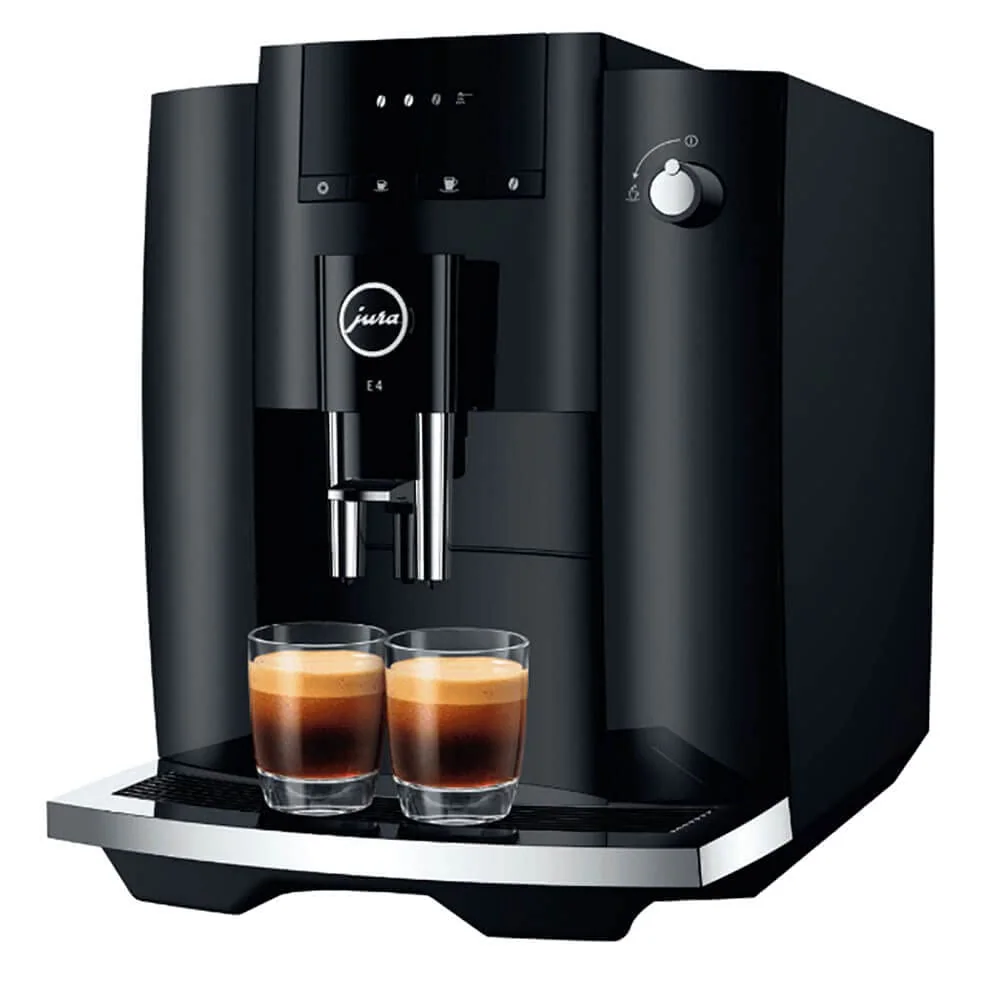
Jura E4
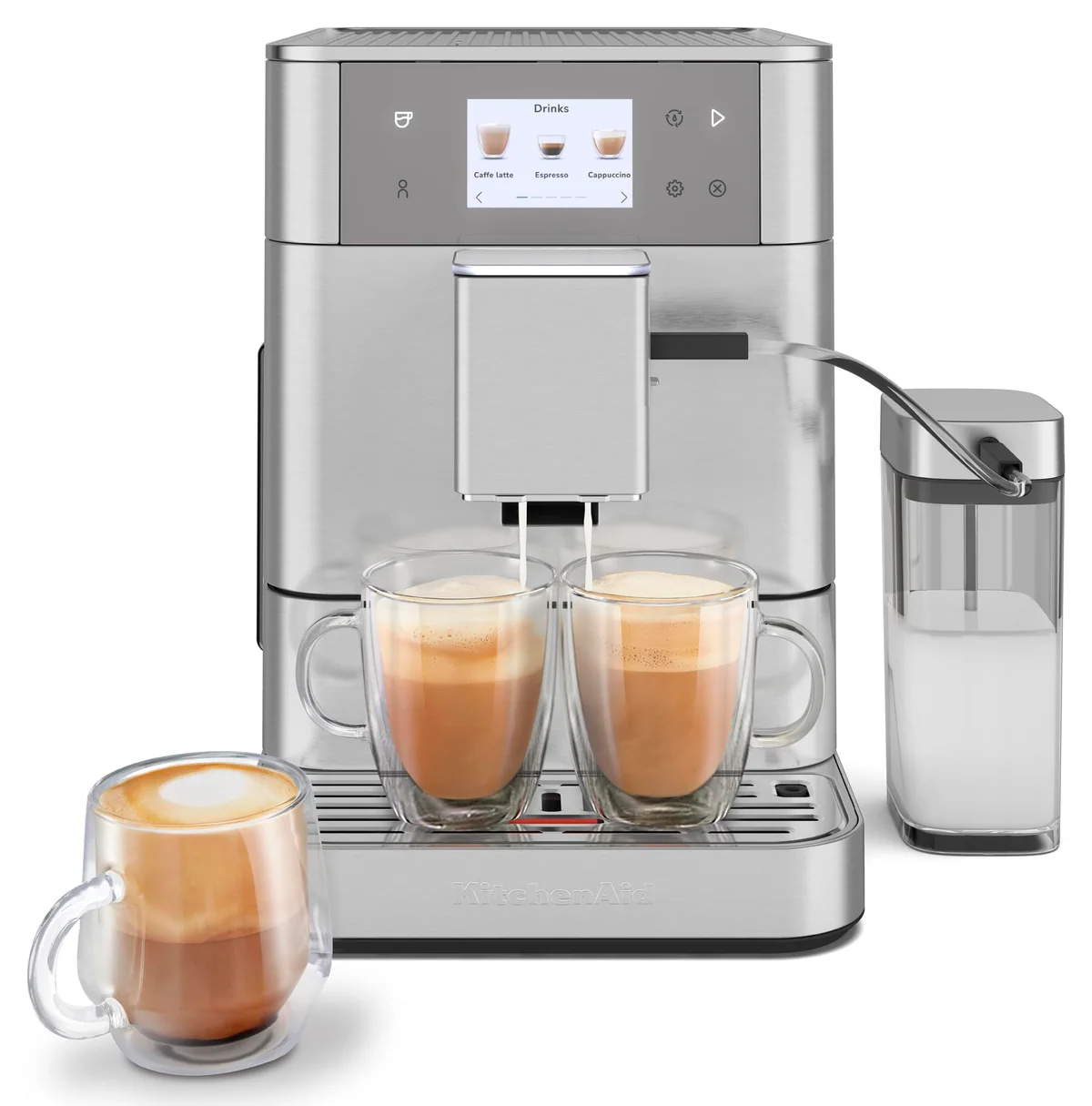
KitchenAid KF7
The question arrives in one particular shape. A KitchenAid KF8 is on the shelf, a Jura is standing next to it wearing a Swiss flag and a considerably larger number, and the buyer wants to know what that number is for. The answer starts with something the shop floor is unlikely to volunteer, which is that both machines were built in Switzerland. KitchenAid did not design this platform in a hurry to chase Jura. Espresso Den reached the same conclusion separately in our KF6, KF7 and KF8 reviews, from owners who have had the side panel off and found a brew unit that interchanges with Miele's. The badge on the front is American. Almost nothing behind it is.
That fact has consequences in the thread where this argument actually gets had. One shopper walked into a store intending to buy Jura's flagship and walked out with a KitchenAid, on the reasoning that the Jura made better coffee but not that much better coffee. Another owner, who has both, pointed out that the cheaper KitchenAid shares its brew unit with the dearer one. Neither of those people is a KitchenAid partisan; they are people who tasted both and did arithmetic.
So the honest framing is not Swiss against American. It is a mid-range Swiss machine with a large screen against a premium Swiss machine with a better milk system, a bigger dose and a service model you cannot opt out of. Prices move, so treat any ratio you read as a snapshot rather than a law, but the shape of the market has been stable: the Jura that matches the KF8 on features costs meaningfully more, and Jura's twin-grinder machine costs a great deal more than that. What follows is what that money buys, itemised, and what it does not.
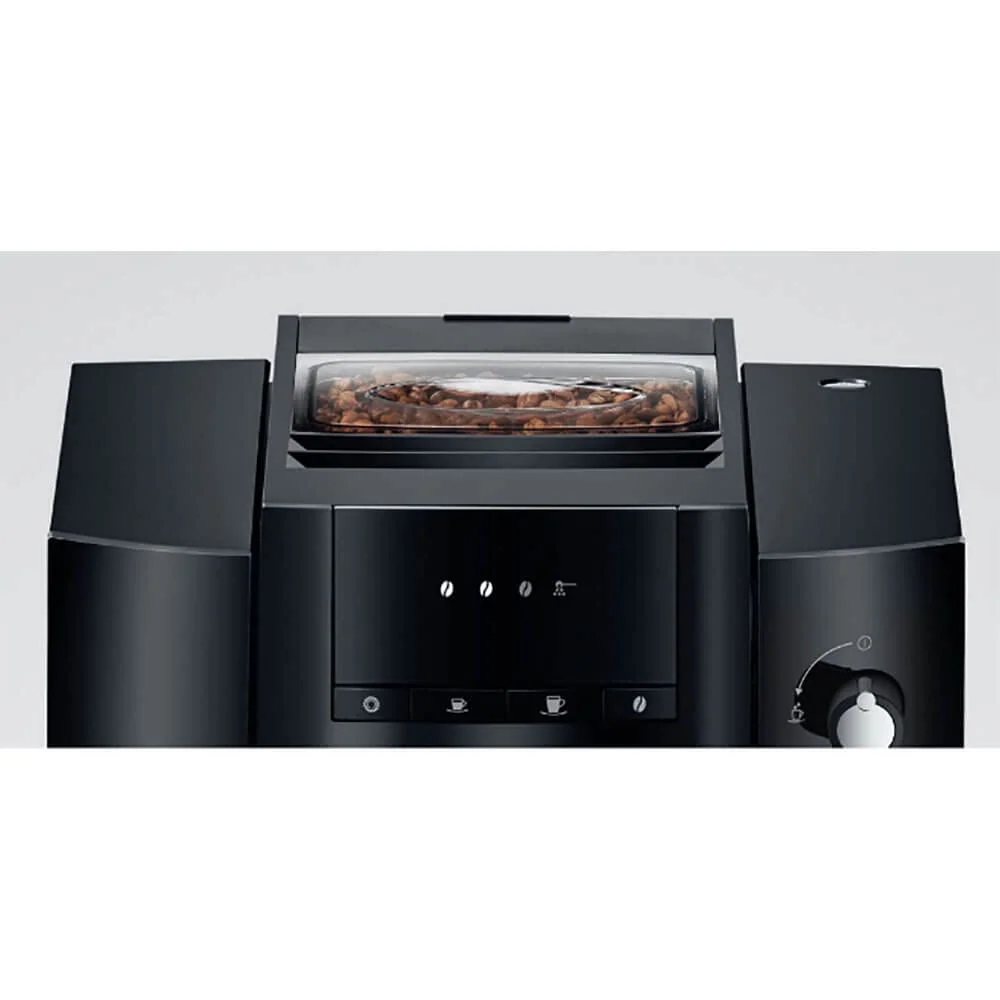
Jura E4
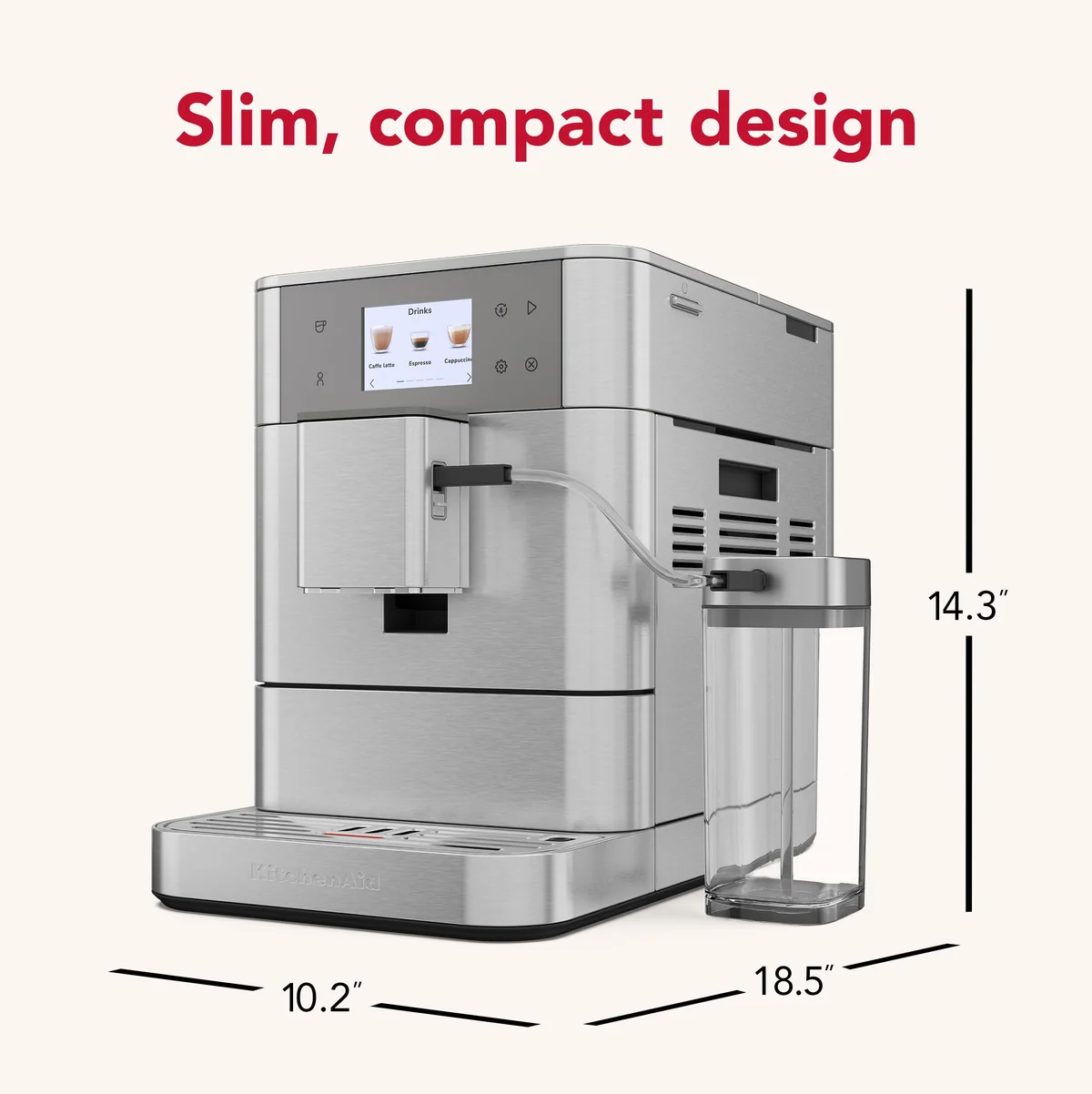
KitchenAid KF7
At a Glance
| Feature | Jura E4 Piano Black Automatic Coffee Machine | KitchenAid Fully Automatic Espresso Machine KF7 with Milk Attachment, KES8557SX, Stainless Steel |
|---|---|---|
| Price Range | $1,000–$1,500 | Under $200 |
| Configuration | One Size | 2.2L With Milk Attachment |
| Finish | Piano Black | Stainless Steel |
| Items In Box | 1 | 1 |
| Check Price on Amazon | Check Price on Amazon |
Where the extra money actually goes
The dose, which is the number nobody prints on the box
No super-automatic can grind as fine as a machine you tamp yourself without choking, so every machine in this class brews coarser than a barista would and compensates with dose and clever water handling. Jura's compensation is the Pulse Extraction Process, which pulses water through the bed instead of pushing it steadily, and which appears on everything the company sells from the smallest machine upward.
What separates the machines inside each range is how much coffee ends up in the puck. Jura's full-size E line takes around sixteen grams, which is the top of this category. The compact ENA drops to roughly ten, which is about what sits inside a single espresso pod, and which is why owners who come down to it from a larger Jura describe the long drinks as thin. KitchenAid sits between the two, with owner reports clustering somewhere in the high teens of grams at maximum strength and one hands-on reviewer putting it at fifteen. Crucially, that dose does not change as you climb KitchenAid's ladder: the KF6, KF7 and KF8 put the same coffee in the same puck, and the extra money buys screen and presets.
| Machine | Dose, as reported | Milk | Brew unit | Cup ceiling |
|---|---|---|---|---|
| Jura E4 | Full-size, around 16 g | None | Sealed | About 8 oz |
| Jura ENA 4 | About 10 g | None | Sealed | Short cups only |
| Jura J8 twin | Full-size, two grinders | Hose and container | Sealed | About 8 oz per press |
| KitchenAid KF6 to KF8 | Roughly 14 to 15 g, identical across all three | Hose, container on KF7 and KF8 | Removable | Around 7.4 oz |
There is a second thing worth knowing before you judge a Jura by the look of the cup. In an independent six-machine test, the Jura poured the best-looking shots of the group, and the reviewer explained why: the machine aerates the crema, so some of what you are admiring is foamed coffee rather than classical crema. He still rated the shot at or near the top of the six. Both halves of that matter, and the second half is the one that should stop you using crema as evidence of anything.
Milk is where the Swiss premium is genuinely real
This is the part of the comparison Jura wins cleanly. Jura's foam is the best of any mainstream super-automatic, and it holds up on a flat white, which is the drink that exposes a weak frother. KitchenAid's foam is the recurring complaint in its own reviews: fine and silky enough for a latte, too light and too airy for a proper cappuccino, and in the words of one published review of the platform, not quite up to De'Longhi or Jura standards. Three separate reviewers reached that verdict independently, which is about as settled as this kind of judgement gets.
Temperature is the opposite story, because neither brand will give you a scalding latte. Owners with thermometers put Jura's milk in the low 140s Fahrenheit, and a Jura repair centre told one of them the machine was in specification rather than faulty. KitchenAid's frothed milk lands in much the same place, its warm-milk recipes lower still, and KitchenAid's own customer service has replied in public to say the temperature is fixed by design so that every milk type heats without burning, with a preheated cup as the recommended fix. If you were hoping one of these brands solved the lukewarm problem, neither did, and the reason is structural to the category.
Where KitchenAid takes points back is the chore. Its milk system is a hose you drop into any container you like, flushed with hot water into the drip tray when you are done, with no carafe to store and no enzyme tablets to buy.
Owners who have run both consistently prefer that arrangement, and it is worth weighing against the foam gap rather than after it, because you will do the cleaning every day and taste the foam every day too. If you have not settled that question generally, our piece on which milk system you can actually live with is the argument in full. And note that two of the Juras on this page have no milk hardware whatsoever, which removes the comparison entirely and is the point of them.
One of these you can open, and one of these you cannot
This is the structural difference, and it cuts in both directions. A Jura brew group is fixed inside the machine, cleaned by a tablet dropped through the pre-ground chute, and never visible. Some buyers cannot accept that: one returned an E8 almost immediately over it, despite saying the machine made excellent espresso, because he had cleaned the brew group weekly on every machine he had ever owned. His most useful admission was that he did his research and still had no idea a sealed brew group existed until he opened the box. The counter-evidence is real too, and we set it out in whether anything actually grows inside a sealed Jura.
The KitchenAid brew unit slides out into your hand, and here is the twist: that is not merely a feature, it is a duty. The most useful review on the KF8's own listing comes from an owner whose first machine clogged daily, delivering almost nothing during extraction before letting go with a loud pop and venting steam out of the side of the case. KitchenAid replaced it on one call. His replacement clogs too, more slowly, and he keeps it healthy by pulling the brew unit and rinsing it in the sink every week. His diagnosis of the machine's angriest reviews is that the smoke, the leaks and the missing espresso are all the same fault, and that the machine's own automated cleaning cycle does not clear it.
Read those two paragraphs together and you have the real trade. Jura asks you to trust a box you will never see inside. KitchenAid hands you the box and expects you to rinse it, and punishes you if you do not.
What each of them costs you after the box is open
Jura's consumables are a lock as much as a cost. The water filter carries a chip the machine reads, so a non-Jura cartridge can leave the warning light on or drop the machine into descaling, and long-time owners put the genuine cartridges at around twenty dollars a time changed every couple of months, with no refillable option recognised by current machines.
Even buyers who like their machine grumble about the cadence: one otherwise positive Amazon reviewer docked a star purely because the filter light arrives far too often for the usage. The same listing carries the other Jura cost in its bluntest form, an owner whose machine broke internally at five months, produced a shard of white plastic in the collection tray, and was quoted four hundred dollars by Jura to repair it. The detail that turned that into a one-star review is the part every buyer should copy down: he had bought from a third-party seller who was not an authorised dealer, so there was no warranty at all, even though Jura's dealers describe two years of comprehensive parts and labour across the range.
That is not an isolated hazard. An ENA 4 buyer whose machine failed inside a year was told there was no cover because Amazon is not a certified dealer, and quoted a repair bill in the hundreds, while another buyer on the same listing had a defective unit replaced by Jura without difficulty. Which of those two experiences you get appears to be a property of the seller box rather than of the machine, and the full accounting sits in what a Jura really costs to run.
KitchenAid's aftercare is not a reason to choose it either. Several owners describe replacements shipped the same day on one phone call, before the faulty machine was even returned. Against that, one KF8 owner making two lattes a day lost a machine at three months, waited three weeks, lost the replacement at three months, and was then told the stainless finish was unavailable, with nobody having contacted them proactively.
The most detailed warranty account anywhere in the record is Australian and concerns a KF7 that spent six weeks with an authorised repairer waiting on parts approval, came back without its milk hose, and threw the identical error two days later. That is one owner in one country and it is not a failure rate, but it is the kind of detail a buyer is entitled to weigh, and it rhymes with the split ratings on these listings: the machine that works is delightful, and the tail that fails is bleak. Neither brand's service organisation is a reason to spend more, which is a strange thing to write about two machines at this money.
Both companies count their drinks the same way
Jura's twin-grinder machine advertises thirty-one options, and a reviewer who sat down and counted what was actually on the panorama screen found sixteen, with the rest being the same recipes counted again with sweet foam, with an extra shot, or as two cups at once.
KitchenAid advertises more than forty recipes on the KF8, and an owner three months in explains that the same drink is counted twice for dairy and plant milk, with the balance made up by a printed booklet of things you assemble yourself; a dealer reading the menu tile by tile counted sixteen programs.
Even the KF6's fifteen options resolve to about seven drinks counted with their single and double versions, plus hot water and warm milk.
The point is not that either brand is lying. It is that the menu number is the one specification on both boxes that tells you nothing, and if you were choosing between them on drink count you were choosing on marketing arithmetic.
The ceiling neither of them clears
If you drink a mug of black coffee, this entire comparison may be the wrong one to be having. Jura E4 owners put the useful single-cup ceiling at around seven or eight ounces, with one of them running his at seven and calling that already watered down; the advice from inside that thread was to set five ounces and run it twice, and the blunter advice was that somebody who only wants a ten-ounce black coffee probably does not want a super-automatic at all.
The twin-grinder Jura behaves the same way: an owner puts the maximum at about eight ounces per press and describes a large Americano as roughly two and a half machine cycles, with most travel mugs not fitting comfortably under the spouts in the first place.
KitchenAid tops out around seven and a half ounces on the coffee setting and will not go below about 2.7 ounces of water on the Americano, and owners who fill an American mug describe the result as weak, because the dose is fixed while the water is not. Neither brand solves this, and what a bean-to-cup can honestly do with a normal mug is worth reading before you spend anything at all.
The two things only one of them does
KitchenAid's is the removable bean hopper. Twist, lift, swap, purge the grinder, and you have changed roasts in under a minute, which no Philips or De'Longhi offers at this money and which no Jura offers at all below the twin-grinder machine. The cost is a shot's worth of coffee thrown away on each purge, and the honest limit is that two people are not going to swap hoppers before work.
Jura's is the second grinder itself. On the J8 twin, decaf and regular coexist permanently, each with its own burr set, assignable per drink and nameable on screen so nobody guesses which black lid is which, and owners of that machine say so in almost identical words.
It is the cleanest answer to the two-bean household problem that either brand sells, and it is also, by some distance, the most expensive machine on this page. If two beans is genuinely the reason you are shopping, that is the one place where the Jura premium buys something a KitchenAid cannot do at any price.
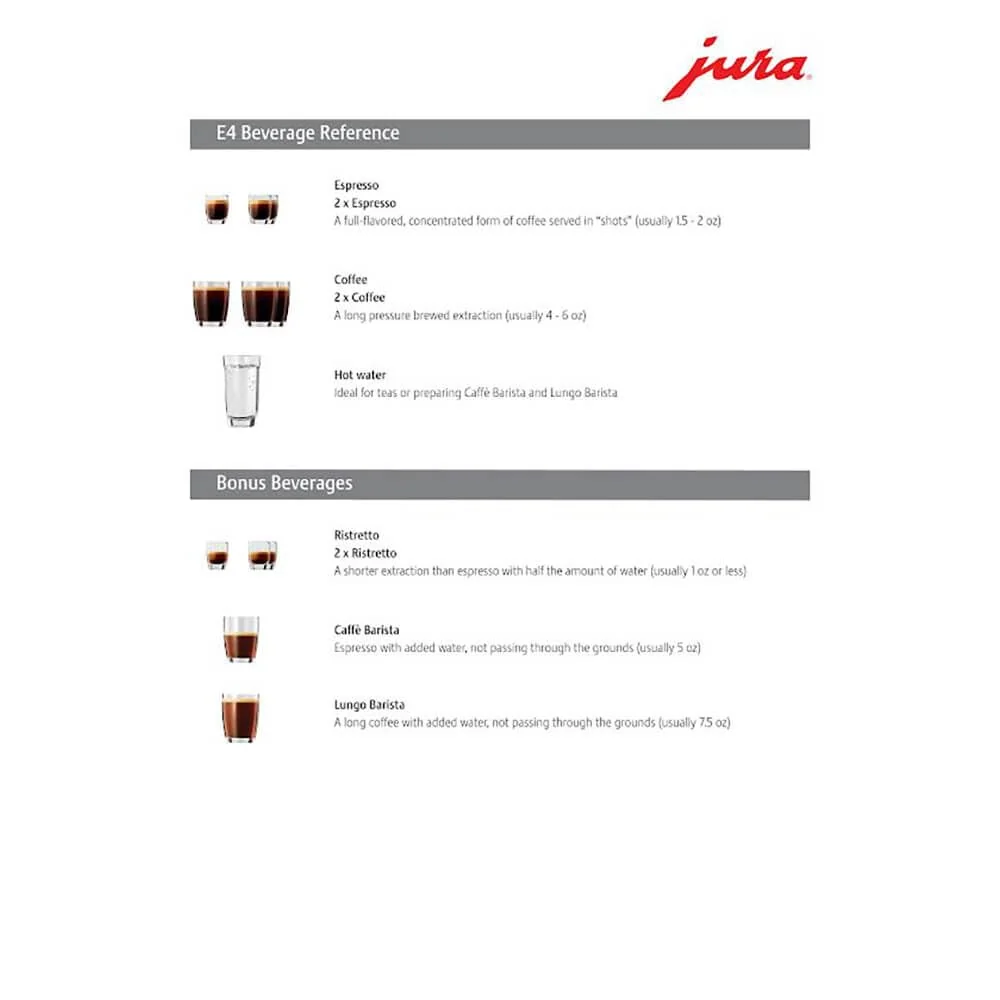
Jura E4
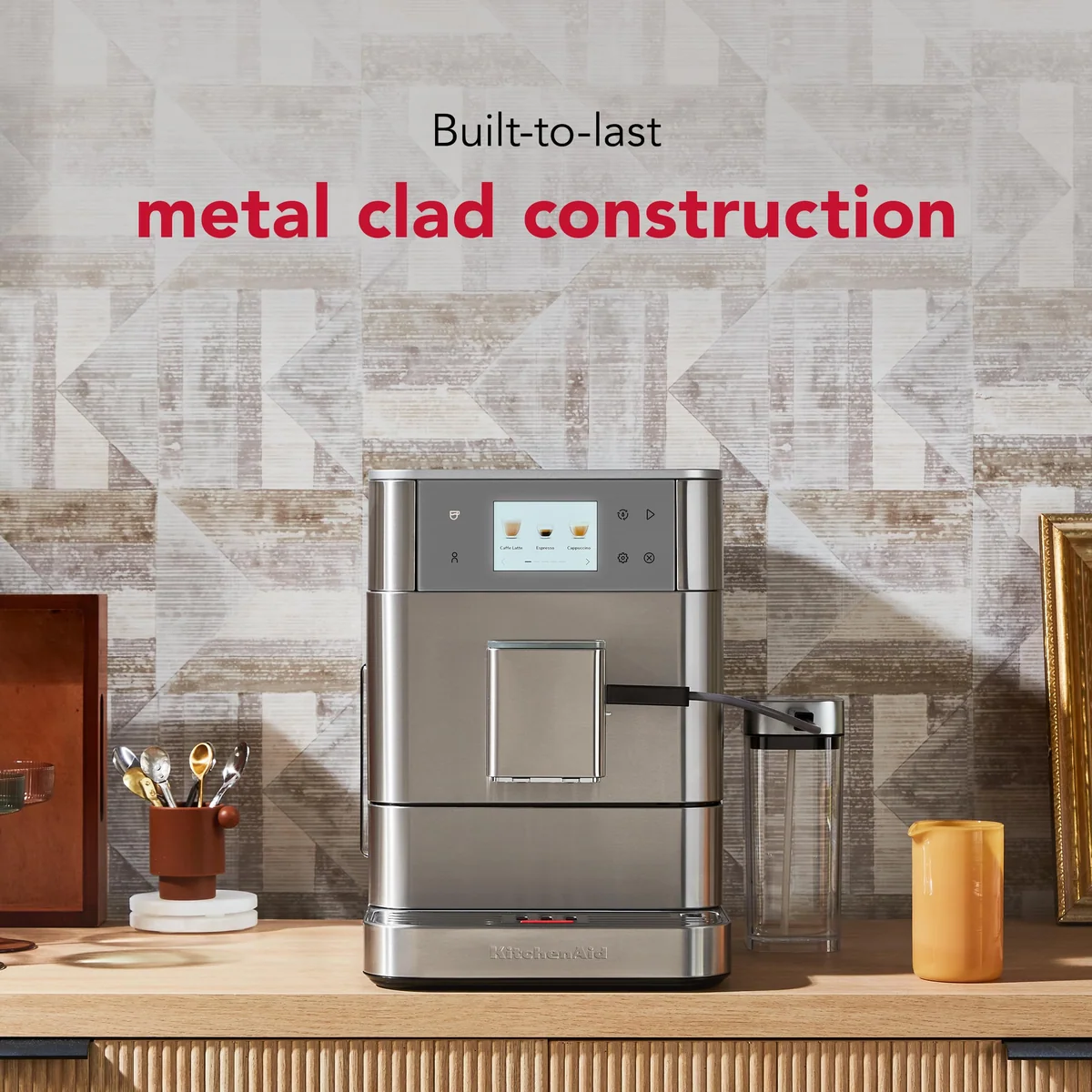
KitchenAid KF7
Which machine to buy, and in what order
Espresso Den's ranking here is not a ranking of coffee quality, because on black coffee the gap between these machines is smaller than either brand would like you to believe. It is a ranking of what each machine is for, and how much you are being asked to pay for the part that actually differs.
The cheapest way into a full-size Jura, for people who never want milk
You get the sixteen-gram dose, the full-size tank and hopper and a real hot water spout for Americanos, with the milk hardware deleted on purpose rather than left out to save money.
The front panel speaks only in symbols, and a five-year owner reported still reaching for the manual before descaling.
The same machine in white, chosen on looks alone
The finish is the only thing that separates this from the Piano Black, so if the white suits your kitchen there is nothing else to weigh.
Its slightly higher listing score rests on a far smaller group of buyers than the black one's, so read it as thinner evidence rather than a better machine.
The compact Jura for a small kitchen and short black drinks
It is the narrowest, best-looking machine here and it does one job, a short well-extracted black coffee, properly.
The brewing unit tops out near ten grams, so anything longer than a short drink thins out no matter what you set, and owners coming down from a larger Jura say so loudly.
The only machine on this page that ends the decaf argument permanently
Two hoppers and two grinders, per-drink blending and the best screen Jura currently ships make this the one Jura whose premium buys a capability rather than a finish.
Black coffee still stops at about eight ounces per press, the milk still arrives around 141°F, and nobody who owns one claims the cup is better in proportion to what it costs.
KitchenAid's flagship, and the quietest thing on this list
It pairs a near-silent grinder with a metal-clad body, a swappable hopper and a brew unit you can hold in your hand, which is more machine than the sticker implies.
It needs that brew unit pulled and rinsed under the tap roughly weekly, because the machine's own cleaning cycle does not clear the clogging that produces its angriest reviews.
The machine most people in this comparison should actually buy
It is the same Swiss brewing hardware as the KF8 with the milk container included and a screen you will not outgrow, at the point on the ladder where the money stops buying anything that reaches the cup.
The early-failure reports are frequent enough to notice, and the one detailed warranty account runs to six weeks at a repairer and the same fault two days after it came back.
The cheapest route onto this platform, for espresso and Americano drinkers
The dose, the grinder and the brew unit are identical to the machines above it, so the espresso is the same and only the interface is smaller.
No milk container comes in the box, the foam is too light for a proper cappuccino, and the cappuccino recipe pours milk before coffee with no way to reverse it.
If this whole comparison has left you wondering whether either brand earns its money, that is a reasonable place to land. The independent reviewer who tested six of these machines side by side and picked the Jura as his unlimited-budget choice also said, in the same breath, that the same money would buy a very nice grinder and a very good espresso machine and give better results to anyone willing to do more work.
The cheaper honest answers on this site are the Philips 5500 LatteGo, whose owners keep saying the drinks are not a great deal worse, and the rest of the field under a thousand dollars. If you want the KitchenAid's nearest rival with cold drinks and more milk control, we run that fight in Eletta Explore against the KF8. If you have decided the Swiss badge is the point, the Jura range guide maps the ladder, and the E4 against the ENA 4 settles the one comparison inside it that trips people up.
Frequently Asked Questions
Is a Jura worth roughly twice a KitchenAid KF8?
Not on the evidence in our own reviews, where the Jura's advantages concentrate in milk foam, dose and finish, and where nobody who owns both claims the cup is better in proportion to the gap.
Is the KitchenAid really made by the same kind of Swiss manufacturer as Jura?
Owners who have had the panels off report a Swiss-built machine whose brew unit interchanges with Miele's, which is why the KF6, KF7 and KF8 behave like a mature European platform rather than a first attempt.
Which one makes better milk drinks?
Jura, clearly, because its foam holds up on a flat white where KitchenAid's is repeatedly described as too light and airy for a proper cappuccino.
Which one is less work to live with?
KitchenAid, because the milk hose flushes itself into the drip tray with no carafe to store and no tablets to buy, provided you accept the weekly brew-unit rinse it needs in exchange.
Can either of them fill a large mug of black coffee in one press?
No, since both brands stop somewhere around seven to eight ounces and owners of both describe anything larger as watered down.
Does the sealed Jura brew group mean mould?
Not on its own, since owners who dismantled Juras after years of use have found them clean, but it does mean any internal problem becomes a shipping job rather than a Sunday task.
Does buying from Amazon affect the warranty on either brand?
It can on the Jura, where two buyers were told there was no cover because their seller was not an authorised dealer, so check who is filling the order before you commit.
Do either of these make iced coffee or cold brew?
None of the machines on this page do, so if cold drinks matter you are shopping in the wrong comparison entirely.
Ready to Choose?
Sources (6)
- Amazon listings and customer reviews — Jura E4 and Kitchenaid Kf7
- Owner reports across r/superautomatic threads
- Owner and reviewer video, 2 channels
- Homecoffeeexpert — Article — homecoffeeexpert.com
- Coffeeness — Article — www.coffeeness.de
- Au — Article — www.productreview.com.au