Jura E4 vs ENA 4: two machines that refuse to make milk drinks, built around two very different doses
Buy the E4 unless the ENA 4's narrower body is solving a real problem on your counter, because the bigger dose, the bigger tank and the hot water knob are the entire difference between them and the ENA surrenders all three to save about an inch of width.
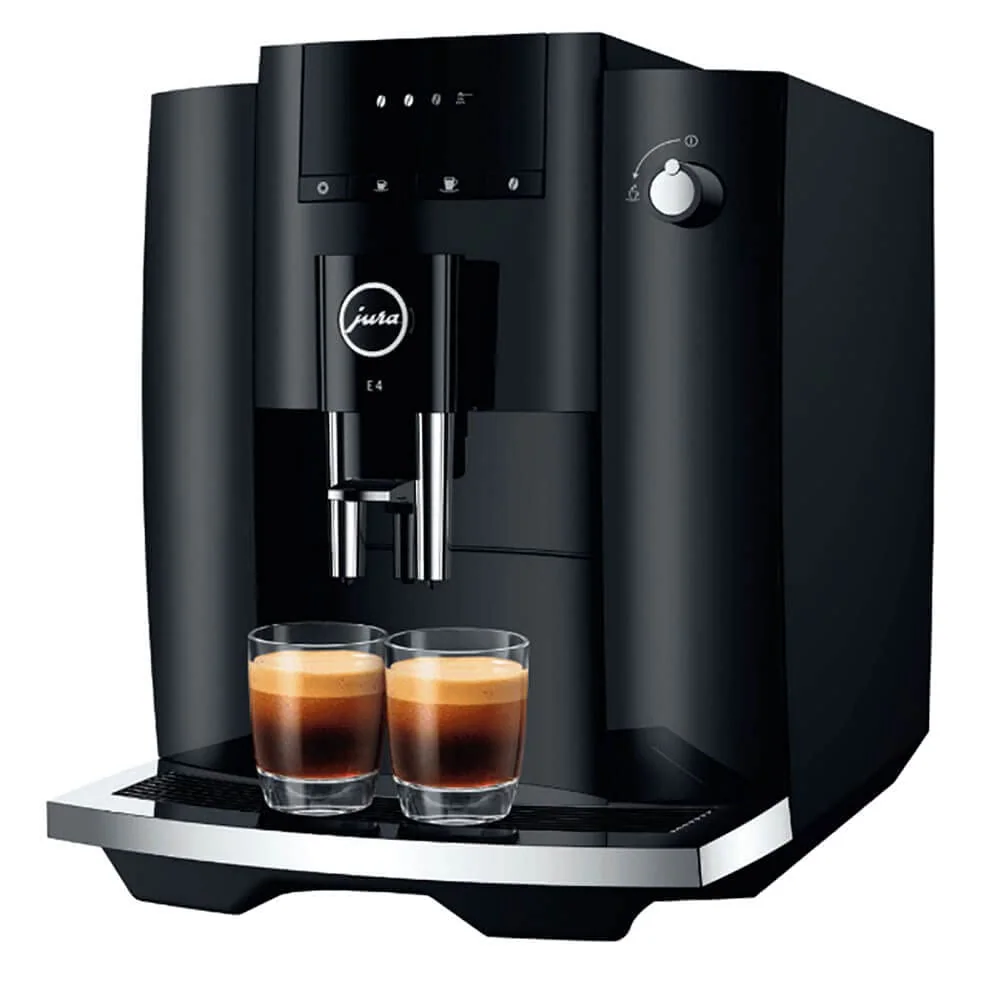
Jura E4
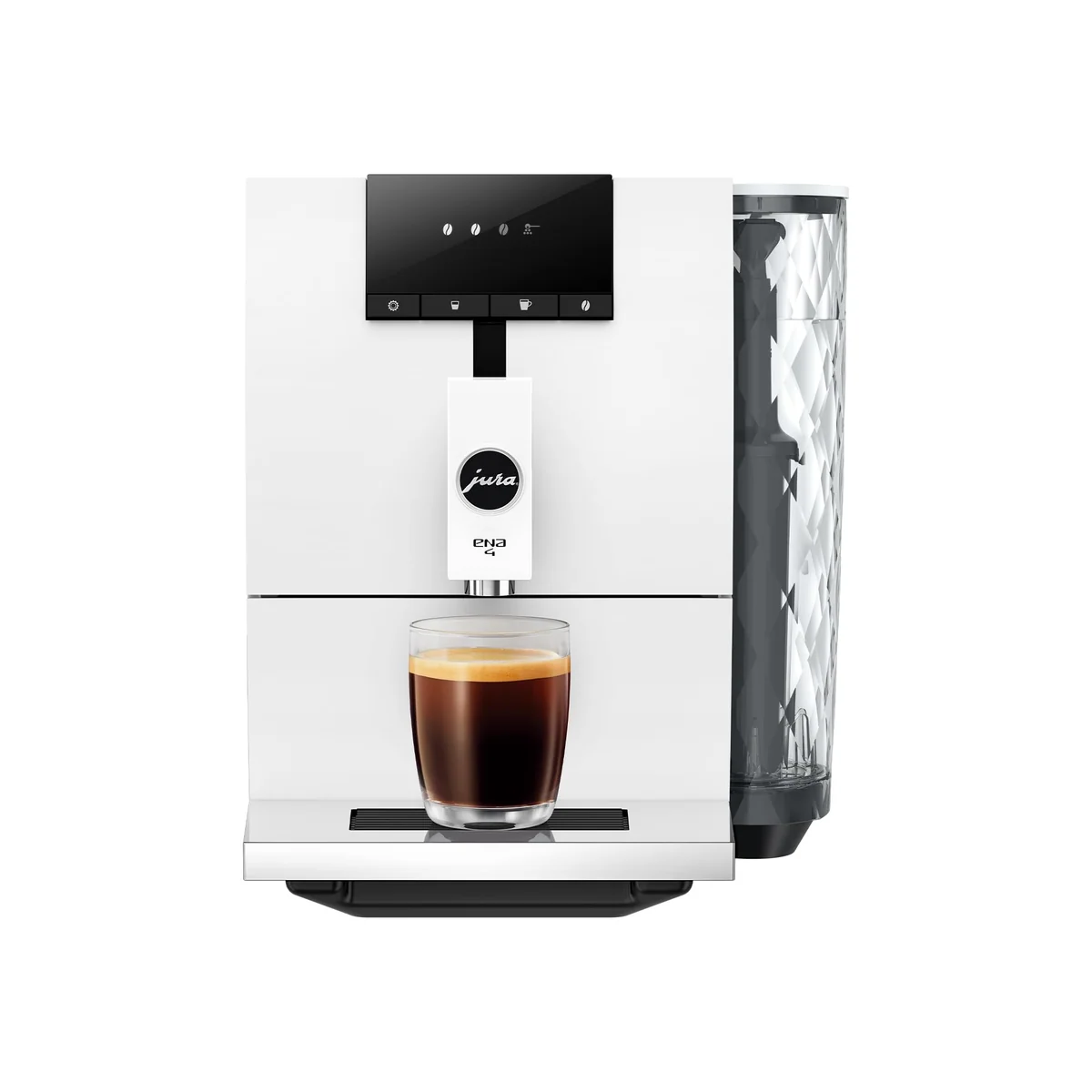
Jura ENA 4
These two machines are usually presented as a ladder, cheap Jura and slightly less cheap Jura, and that framing gets people into trouble. They are not two rungs of the same idea. They are the same idea at two sizes, and Jura's own copy is careful never to put the two size numbers next to each other. The ENA 4 is sold as a compact automatic machine for the espresso and coffee connoisseur, with four presets, a symbol display and a Doppio function for a true double shot.
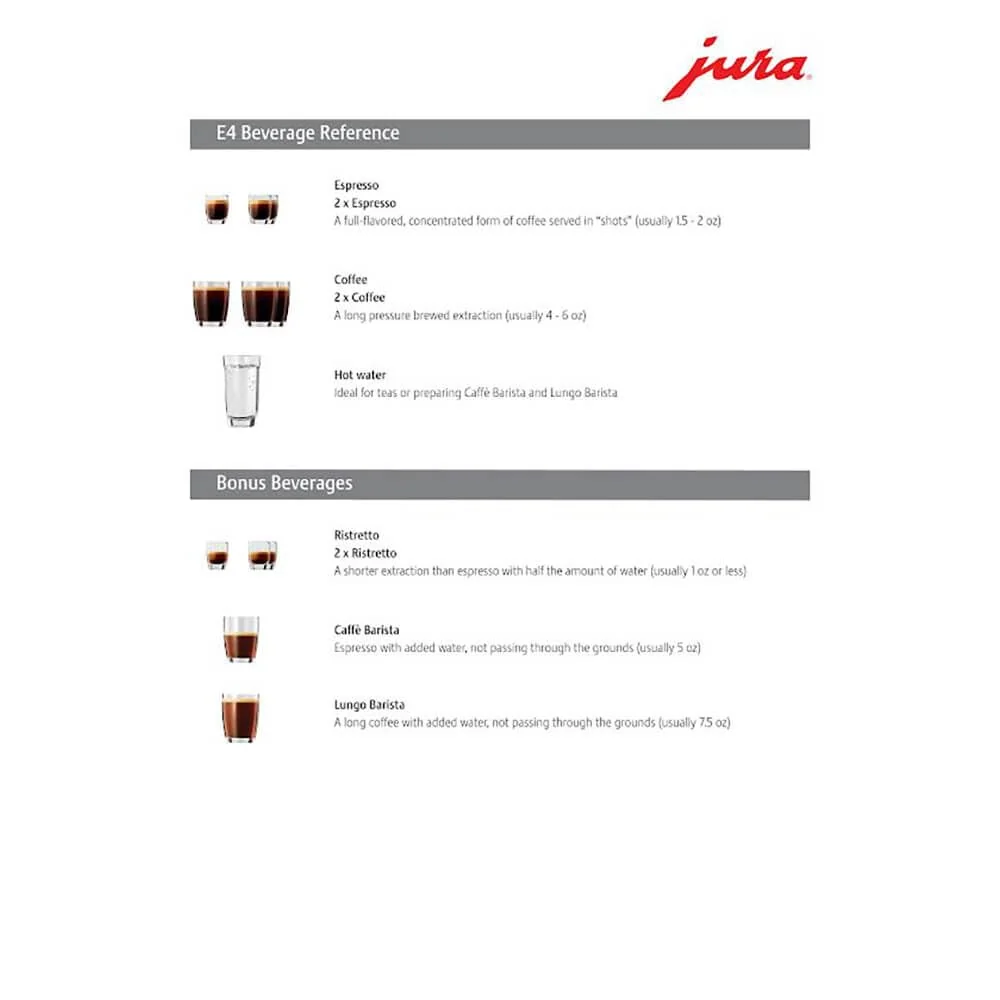
The E4 is sold as five barista quality specialties at the touch of a button, which sounds like a wider machine until you read the five and find that espresso, coffee, ristretto, Café Barista and Lungo Barista are all black coffee, sitting behind a 64 ounce tank and a 10 ounce bean container.
Neither machine has a milk system. Not a bad one, not a fiddly one, none at all, and no amount of squinting at the word specialties will produce a cappuccino from either. So the drinks menu is not the comparison. The comparison is capacity and dose, and a dealer walking Jura's range from the bottom groups these two together as the coffee-only pair before separating them exactly there: the ENA 4 gets a 1.1 litre tank and a small hopper suited to somebody making one or two drinks a day, while the E4 gets the full-size 1.9 litre tank, the full-size bean container, the deep rear drip tray, a hot water spout, and the ability to grind and pull two espressos in one go.
That is a full-size chassis with the milk hardware removed on one side, and a genuinely small machine on the other. Espresso Den's position is that most people who arrive at this comparison are trying to buy the second one and would be happier owning the first, and the rest of this page is the argument for why, along with the narrow set of kitchens where the opposite is true.
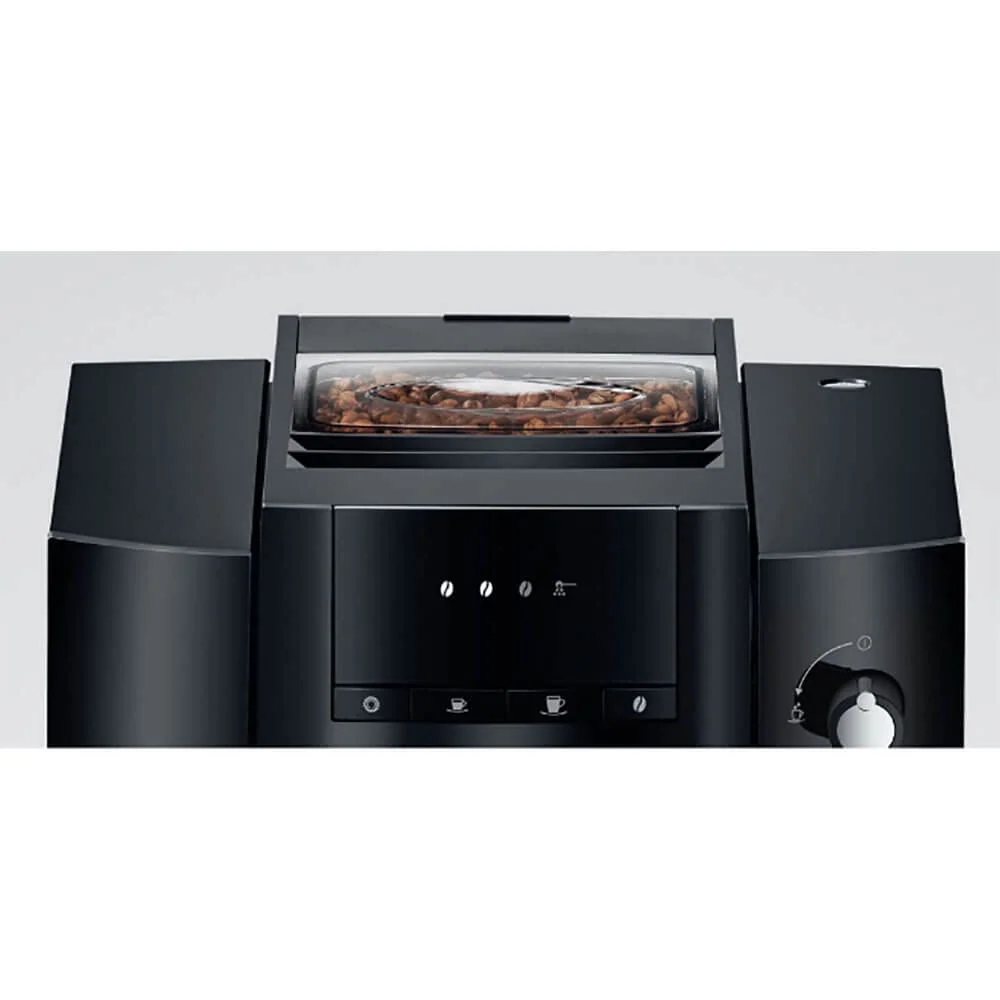
Jura E4
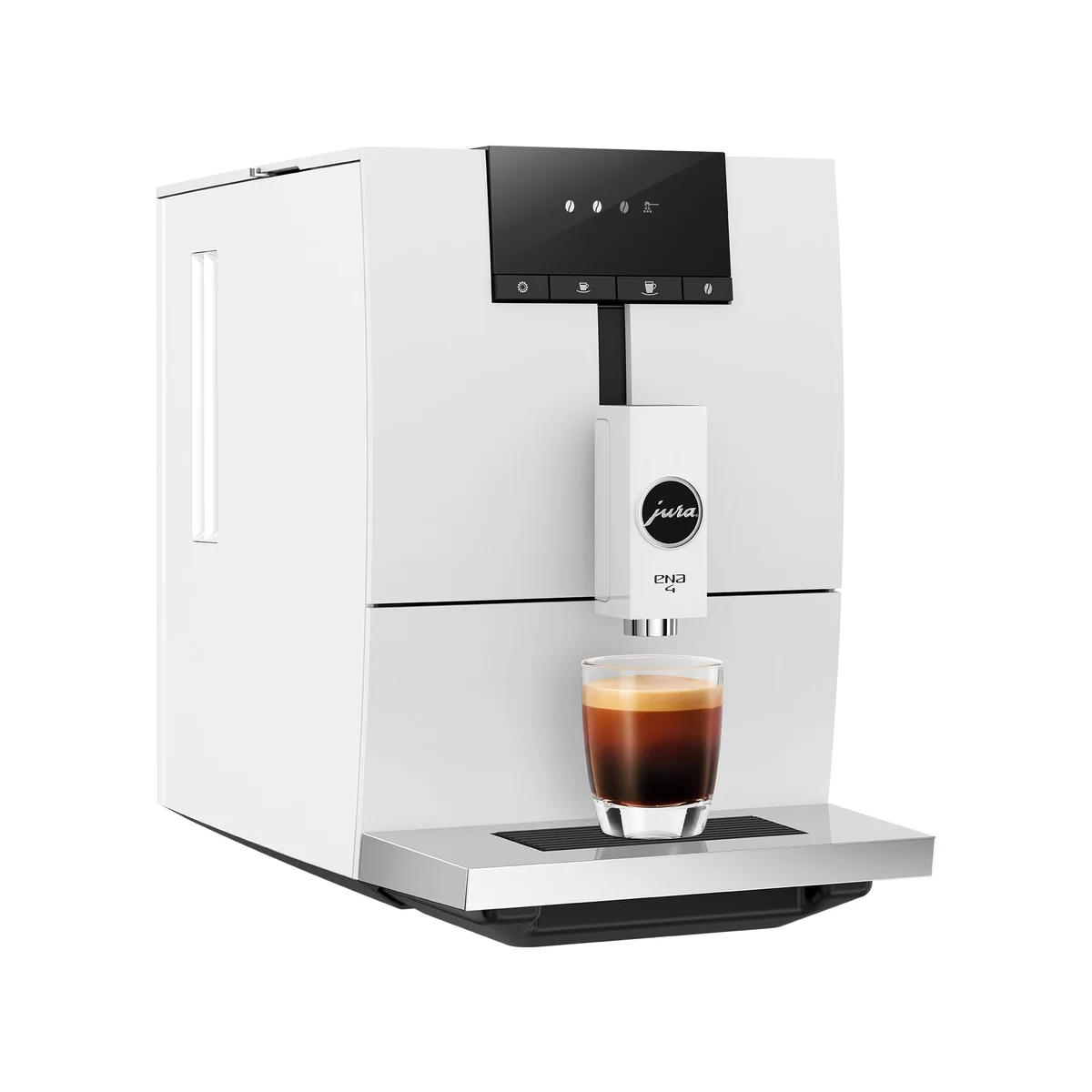
Jura ENA 4
At a Glance
| Feature | Jura E4 Piano Black Automatic Coffee Machine | Jura ENA 4 Full Nordic White Automatic Coffee Machine |
|---|---|---|
| Price Range | $1,000–$1,500 | $1,000–$1,500 |
| Configuration | One Size | 1 |
| Finish | Piano Black | Nordic White |
| Items In Box | 1 | 1 |
| Check Price on Amazon | Check Price on Amazon |
The number that decides it appears on neither listing
Jura's E line brews with a chamber that takes up to about sixteen grams of ground coffee. The ENA brewing unit tops out near ten. That single figure explains nearly everything owners praise and nearly everything they complain about, and it is not printed anywhere a shopper will see it. The people who feel it most are the ones with a bigger Jura already in the house: one heavy user with several machines behind him could not imagine dropping to the small dose, and said buying the compact machine struck him as buying the badge rather than the engineering.
He is right about the hardware and wrong about the customer, which is the useful thing to understand before you spend. Ten grams is roughly what sits inside a single espresso pod. Keep the water proportional to that and the ENA 4 makes a genuinely good short black coffee. Ask ten grams to fill a mug and physics gives you a thin brown drink, and no strength setting will rescue it, because strength on these machines adjusts the grind and the dose within a range that still ends below the E4's ceiling. The E4 has the same problem waiting at a longer volume, just further out: owners put its useful single coffee at four to eight ounces, and one of them, running his at seven, said that was already drifting towards watered down and advised setting five and running it twice.
| What changes | ENA 4 | E4 |
|---|---|---|
| Coffee per shot | About 6 to 10 g | About 5 to 16 g |
| Water tank | Around 1.1 L | 1.9 L, listed as 64 oz |
| Bean hopper | Small, sized for one or two drinks a day | Listed at 10 oz, roughly double |
| Hot water spout | Not fitted | Fitted, on a physical knob |
| Two cups at once | Doppio into one cup, second grind required | Grinds and brews two in succession |
| Presets | Four, all black | Five, all black |
| Milk system | None | None |
| Display | Symbols | Symbols |
| Body | 10.7 x 12.7 x 17.5 in, 19 lb | 11 x 13.8 x 17.6 in, 22 lb |
| Spout height | Lower, short of a full-size mug | Tops out around 4.4 in |
Read the bottom row against the top one, because that is the whole trade in two lines. You are giving up six grams of dose and nearly half the water tank to save about an inch of width and three pounds. If your machine has to live under a wall cabinet or in a run of counter where an inch is the difference between fitting and not fitting, that is a defensible purchase and the ENA belongs on your list of machines chosen for small kitchens. If you are choosing the smaller one because it looks tidier and costs less, you are paying real money to remove the thing you are buying the brand for.
What the hot water knob is actually for
The single feature gap most people underrate is the E4's hot water spout, because it reads on a spec sheet like a kettle nobody needs. It is not that. It is what makes an Americano into espresso topped with fresh hot water rather than a long stream flushed through the same tired puck, and that is a real difference in the cup rather than a marketing distinction. One E4 owner describes it in the plainest possible terms: the grinds land in a little bin inside, and if you like tea, a turn of a knob spits out hot water.
The ENA 4 has no such outlet. Every drink it makes comes through the coffee, which means the long presets on a ten gram dose are the only route to a longer drink, and that is exactly the route that thins out. If you drink Americanos daily, the E4 is not marginally better at them. It is doing something the ENA cannot do at all.
Two honest caveats on that knob. The water is warm rather than boiling: a Jura customer service line told one long-term owner the hot water temperature is not adjustable on any of their machines, and she wishes it were hotter for tea, while her husband finds it perfectly fine for Americanos.
Espresso Den's reading of the whole pile of accounts on that subject is the same one we reached in the E4 review: good enough for coffee, marginal for tea, keep a kettle if tea matters to you. It is the standard version of the complaint we untangle in why these machines run cool, and it applies to the E4 only because the ENA does not offer the function to be disappointed by.
Everything they share, including the parts you will resent
Below the dose, these machines are more alike than the price gap suggests, and that cuts both ways. An ex-dealer who spent his days doing warranty checks on Juras explains that across the E line the brew unit is basically the same and the grinder is the same, with the differences between models coming down to software, the second spout, the frother and the ceramic valve that steers water and steam between them.
The extraction technology is common to both. Jura's Pulse Extraction Process pulses water through the bed instead of pushing it steadily, and it exists because super-automatics cannot grind as fine as a portafilter machine without choking themselves, so the whole category brews coarser than a barista would.
Neither machine gives you a screen. Both speak entirely in symbols, and this is the complaint that outlives every other one: a five-year Jura owner wrote that the icon-based display is cryptic beyond all belief and that he still reaches for the manual before cleaning and descaling. That is not a reason to choose one of these over the other. It is a reason to know what you are buying, because the pictograms are the price of admission on both.
Neither brew group comes out. It is sealed inside the machine and cleaned by a tablet dropped through the same chute that takes pre-ground coffee, which both machines have, so a scoop of decaf in the afternoon works the same way on either and neither wins the two-bean household problem outright. The sealed unit is the most common unpleasant surprise in the whole brand, and we have argued it out at length in whether a sealed Jura brew group is really a hygiene problem. What it means practically is that internal maintenance is a shipping job rather than a Sunday task, on both machines equally.
Both take the chipped water filter, and the chip is a lock as much as a convenience. A non-Jura cartridge can leave the filter warning showing, or make the machine behave as though nothing is fitted and drop into descaling.
Owners put the chipped cartridges at around twenty dollars each, changed every couple of months, with no third-party or refillable option recognised by current machines, and one Amazon buyer who otherwise liked his E4 docked a star purely because it calls for a replacement far too often for his usage.
An ENA owner reached the opposite accommodation, using Jura's filter specifically so she never has to descale and calling it worth the money.
Both figures are true, and neither machine is cheaper to run than the other on consumables; the filter is a convenience purchase either way, and the rest of the arithmetic sits in what a Jura actually costs to run.
The shared advantage is worth stating as loudly as the shared irritations. There is no milk circuit inside either machine, which removes the single biggest daily chore in this category. That is not our invention: an owner of the milk-equipped E8 wrote that his only regret was not buying the version without the cappuccino option, because the milk system is enough of a nuisance to clean that he avoids making cappuccinos with it.
If you have never had to live with one, settle that question honestly in which milk system you would actually tolerate before you decide these two are too basic for you.
Both need dialling in, and one needs watching
Factory defaults on Jura machines are wrong, and every experienced owner says so. One dialling guide that other owners then replicated on different models ended at a mid-range grind with strength at maximum, and its author reported the first coffees on default settings were dreadful; the habit worth stealing is to throw away two shots after any grind change, because old grounds sit in the chute.
Do not use the crema as your evidence that it worked. An independent reviewer who bought six bean-to-cup machines and tested them together found the Jura produced the best-looking shots of the group, then explained why: the machine aerates the crema, so what you are admiring is closer to foamed coffee than to the classical article.
The ENA 4 carries one extra failure mode that will masquerade as a dose problem, and it is the most useful thing on this page for anyone who buys one. Two separate owners report that beans do not reliably drop into the grinder from the small hopper. One says the bean container thinks it is empty when it is not, and notes that his parents' larger Jura does not do this; the other has developed a habit of swirling the beans after every cup to reset things, on the grounds that it is not worth making a cup with too few beans in it because the grinder did not fill properly.
An underfilled grinder produces a weak shot that tastes exactly like a machine that cannot brew, and a buyer who has never been told to tap the hopper will conclude, wrongly, that he bought a lemon. That is worth knowing before you go hunting through the usual causes of watery bean-to-cup espresso. Both machines also agree on beans: keep dark, oily roasts out of them, which is the one point every source on this brand agrees about and the reason one E4 owner's sister has run more than thirty thousand cups through a single machine without a clog.
Our full guidance on that is in which beans survive a bean-to-cup hopper, and it matters more here than any setting on either front panel.
The three listings are not equally safe
This is the part a spec comparison misses entirely, and it may cost you more than the dose difference ever will. The E4 in Piano Black holds a 4.3 average across roughly a hundred and seventy ratings.
The Piano White carries a slightly higher 4.5, drawn from about fifty ratings, which is a much thinner pile of evidence for a marginally better number.
The ENA 4 in Nordic White sits at 3.9 across nearly three hundred ratings.
That gap is real, and it is not entirely about coffee. Of the thirteen customer reviews retained on the ENA listing, five concern a machine that arrived broken, dirty or dead: one dusty, wet and unable to complete water hardness setup, one returned with a cracked water tank, one that arrived half broken and leaking before the leak stopped on its own, one whose grinder a technician confirmed was broken after the return window had closed, and one defective unit that needed a warranty replacement. Thirteen retained reviews out of a rating count in the hundreds cannot be turned into a failure rate, so read that as recurring rather than common, and note which parts recur: the water tank and the grinder.
The warranty is the sharper risk, and it belongs to the seller box rather than to the machine. One ENA buyer had a defective unit replaced and describes Jura's warranty process as a breeze; another on the same listing was told that because Amazon is not a certified dealer there was no warranty at all, and was quoted five hundred dollars for the repair, adding that a local shop would have given two years.
The E4 has the identical story attached to it. The one negative Amazon review on the Piano Black is a buyer whose machine broke internally at five months, dropped a piece of white plastic into the collection tray, and drew a four hundred dollar repair quote, and what turned that into a one-star review is the second half: he had bought from a third-party seller who was not an authorised dealer, so no warranty applied.
Jura's dealers describe two years of comprehensive parts and labour across the range, and that cover is worth nothing if the box shipped from the wrong seller.
Whichever machine you land on, look at who is filling the order before you look at the star rating, and if you are tempted by a refurbished route instead, read what a renewed machine actually buys you and get the warranty terms in writing. One more piece of timing, specific to these machines: owners describe a week or two of bean and setting experiments before either machine starts performing, and the standard return window is thirty days, so unbox on the day it lands and run it hard in week one rather than saving the dialling in for when life is calmer.
Jura E4
Jura ENA 4
Which of these three you should actually put in the basket
The two E4 listings are the same machine in different lacquer, so choosing between them on looks is entirely legitimate and there is nothing else to weigh. Espresso Den found no source that has tested either finish for marks or wear, though one reviewer working through the range prefers the darker colours for exactly that reason.
The default answer for anyone who drinks their coffee black
It gives you the full-size dose, the 1.9 litre tank, the deep drip tray, a hot water knob and two shots in one go, which is every part of the comparison the ENA gives up.
The front panel speaks only in symbols, and a five-year Jura owner still opens the manual before descaling.
The same machine for a kitchen that wants the pale finish
Mechanically it is the Piano Black in a different colour, so if white suits the counter you lose nothing at all by taking it.
Its slightly higher star average rests on roughly a third as many ratings as the black listing's, so treat it as thinner evidence rather than a better machine.
The narrow one, for a tight counter and small cups
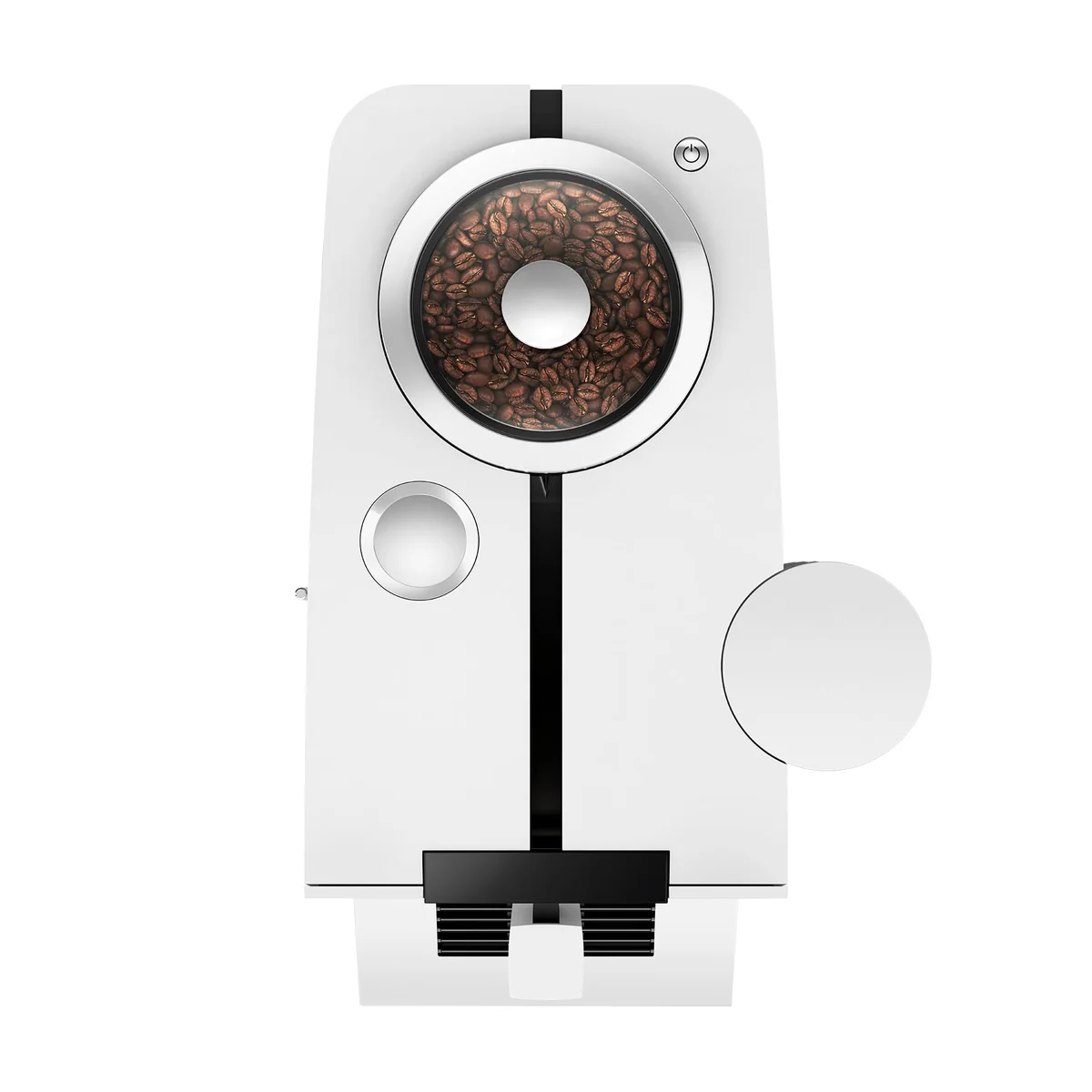
It is the only machine here that will slip into a genuinely cramped run of worktop while still brewing like a Jura, and owners who drink short black coffee describe it in the same admiring terms people use for the bigger machines.
The brewing chamber tops out near ten grams, so anything longer than a short drink thins out no matter what you set, beans bridge in the small hopper and hand you weak shots you will blame on the machine, and the spout sits too low for a full-size American mug.
The mug point deserves one more sentence, because it is the most common way people buy the wrong machine here. An ENA owner reports flatly that he cannot get an American-sized coffee mug under the spout and jokes that the Swiss must be laughing at him.
The E4 is taller and still not generous, and its ceiling in the cup is that seven or eight ounce mark. If you came here wanting a big mug of black coffee, the honest answer, offered in the same thread by somebody who owns one of these, is that a person who mainly wants a ten-ounce black coffee probably does not want a super-automatic at all.
Our workarounds are in getting a normal mug out of a bean-to-cup machine, and the ratio logic behind them runs through everything we recommend for people who drink it black.
When the right answer is neither of them
If there is any realistic chance you will want a cappuccino, stop here, because neither machine will ever make one and no accessory changes that; the machines built for that job are covered in our guide for milk drinkers, and the rest of Jura's ladder is mapped in which Jura to buy.
If you are cross-shopping on price rather than on brand, the pressure on both of these is severe and we are not going to pretend otherwise. In the same conversations where Juras get recommended, so do KitchenAid's machines, at meaningfully less money, by people who have tasted both: one shopper who walked into a store intending to buy the Jura flagship walked out with a KitchenAid on the reasoning that the Jura made better coffee but not that much better coffee, and another owner of both pointed out that the cheaper KitchenAid shares its brew unit with the dearer one.
We took that seriously in Jura against KitchenAid, and the individual machines are reviewed on the KF6 and the KF7 pages.
Where either Jura wins decisively is against capsules, and it is the small dose that makes that sum work rather than breaks it, since one shot of coffee is about what sits in a single pod. Owners of both machines arrive at the same place: no more pods, no more burnt drip coffee, a single fresh cup with no plastic and no bean ecosystem to be locked into.
If that is your starting point, the ENA 4 is a real machine rather than a compromise, and it is the one place where its ceiling never gets tested. If you are stepping down from a sixteen gram Jura or a portafilter, it is the wrong purchase at any price, and the E4 is the one that will not disappoint you on the second week. Either way, expect to think about a service somewhere in years five to seven rather than being blindsided by it, which is the pattern we set out in how long these machines last and what breaks first. Our longer verdicts on each sit in the E4 review and the ENA 4 review.
Frequently Asked Questions
Is the ENA 4 just a smaller version of the E4?
Physically yes, but the brewing chamber shrinks with it, so the ENA puts roughly ten grams of coffee into a shot where the E4 can put sixteen.
Does either machine make cappuccinos or lattes?
No, neither has any milk hardware inside it at all, which is the entire reason both exist.
Which one should I buy if I mainly drink Americanos?
The E4, because it has a hot water spout and the ENA has none, so an ENA Americano can only be made by pushing more water through the same small puck.
Will a full-size mug fit under either of them?
Not comfortably, since an ENA owner reports that an American-sized mug will not go under the spout and the taller E4 only reaches about 4.4 inches.
Is the coffee from the ENA 4 actually weak?
It is short by design rather than weak, and it goes thin the moment you ask a ten gram dose to fill mug volume.
Do both machines use the same expensive water filter?
Yes, both read a chip in Jura's own cartridge, so an unrecognised filter can leave the warning showing or push the machine into descaling.
Does it matter which Amazon seller I buy from?
It matters more than any specification on this page, because buyers of both machines have been told there is no warranty at all when the seller turned out not to be an authorised Jura dealer.
Is the Piano White E4 a better machine than the Piano Black?
No, the finish is the only difference, and the white listing's marginally higher rating comes from far fewer ratings.
Can I clean the brew group on either one?
No, both are sealed inside the machine and your only access is a cleaning tablet dropped through the ground coffee chute.
Ready to Choose?
Sources (4)
- Amazon listings and customer reviews — Jura E4 and Jura Ena 4
- Owner reports across r/superautomatic threads
- Owner and reviewer video, 4 channels
- Coffeeness — Article — www.coffeeness.de