No, you cannot open a Jura brew group, and the mould you are picturing is almost certainly in the milk hose
The question arrives in a very particular order. Somebody researches a Swiss bean-to-cup machine for a fortnight, likes what they read about the coffee, gets as far as the checkout, and then finds a forum post explaining that the part where the coffee is actually made cannot be removed. From that moment on it is the only thing they can think about.
One buyer got further than that. He had already opened the box. He liked the espresso the machine made, said so plainly, and returned it almost immediately anyway, because he had pulled the brew group out and rinsed it weekly on every machine he had ever owned and could not accept one he was forbidden to touch. The detail worth keeping from his account is not the return. It is his admission that he had done his research and still had no idea a sealed brew group was a thing until the machine was on his counter.
So the anxiety is reasonable and it is also, on the evidence, misdirected. The single most direct piece of testimony anybody has produced runs the other way: a reviewer who has followed this brand for years reports that a fellow coffee obsessive ran a Jura daily for a year, then took the brew group apart specifically to find out what was festering in there, and found it spotless.
One teardown is not a warranty, and Espresso Den will not dress it up as one. We have not opened a Jura, we have not swabbed one, and nothing on this page is a measurement we took. What follows is the whole of the public record on the subject, sorted into the part of your machine that genuinely needs watching and the part everybody worries about instead.
What the tablet actually reaches
Jura's own copy calls the mechanism an eighth-generation brewing unit running a 3D brewing process, and the same unit is described in the listings for machines at both ends of the range, from the coffee-only models up to the twin-grinder flagship.
Picture what it does. Beans drop into the grinder, the grounds are compressed into a puck inside a sealed chamber, hot water is pushed through under pressure, and the spent puck is ejected into a bin you pull out from the front. Nothing about that path is exposed to the room. The chamber that worries you is wet only while it is working, and it sits in the middle of a circuit that gets flushed every time the machine wakes up and every time it shuts down.
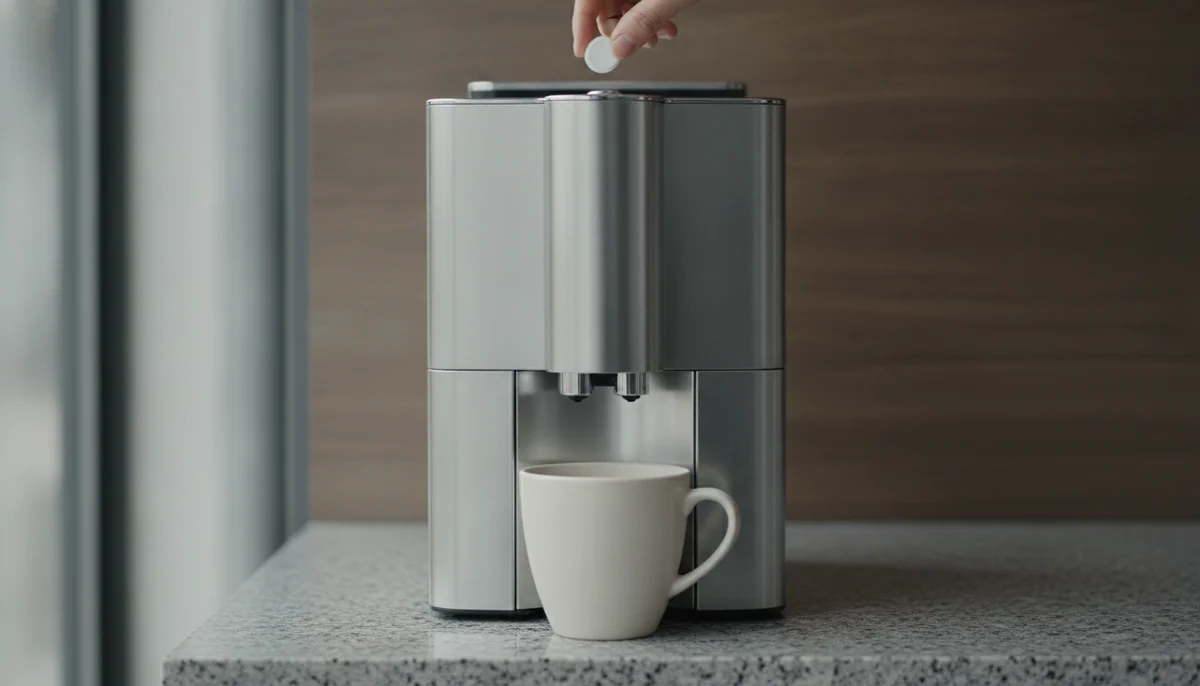
The cleaning you are offered is a tablet, dropped into the same side chute that takes a scoop of pre-ground coffee or decaf, followed by a cycle you walk away from. Owners consistently describe that as the entire ritual rather than the first step of one. An Amazon buyer of the E4 mentioned in passing that his previous workplace had been running a sixteen-year-old Jura with no issues at all other than occasionally putting some tablet things through it, and an ENA 4 owner several months in reports simply that cleaning is pretty easy using their little tablet things.
Here is the honest limit, stated plainly because it is the real cost of the design. You never get visual confirmation. On a machine with a removable brew group you can hold the thing up to the light and satisfy yourself; on a Jura you are trusting a cycle you cannot inspect, run by a machine that has every commercial reason to tell you it went fine. That is not the same as the machine being dirty. It is the same as being asked to take something on faith, and some people will never be comfortable with that, which is a legitimate reason to buy elsewhere rather than a reason to argue.
Mould needs milk, and half the range does not have any
Follow the actual complaints rather than the rumour and they land in one place. The J8 twin owner who wrote the longest and most affectionate review of that machine on Amazon describes the milk side as the part that becomes a daily routine: without a chiller you are constantly returning the milk container to the fridge and cleaning the milk hose, which she calls not difficult but genuinely part of every day.
An owner of the E8, a machine several people in these threads would describe as the sweet spot of the range, went further. His only stated regret was that he had not bought the version without the cappuccino function, because the milk system is unpleasant enough to clean that he avoids making cappuccinos with it at all.
And on the other side of the same coin, an ENA 4 buyer explains her purchase in one line: she already owns a separate milk foamer, so she deliberately bought the simpler model, because there is less cleaning than with a foamer or a milk attachment built in.
That is the whole geography of the problem. Milk is protein and fat sitting in a narrow tube at room temperature. Coffee residue in a chamber that gets flushed with near-boiling water several times a day is a different substance in a different environment, and treating the two as one anxiety is how a perfectly clean machine acquires a reputation. If you have not yet decided which milk arrangement you want to live with, that decision matters far more to your kitchen hygiene than the brew group does, and we have argued it out in full in steam wand against automatic frother.
Two parts nobody writes forum posts about deserve more of your attention than the sealed unit: the grounds bin and the drip tray. The bin holds compressed wet pucks, the tray catches every rinse the machine performs on its own, and both are entirely within your reach. Empty them daily and the machine has nowhere unpleasant left to be. Leave them through a long weekend in August and you will find exactly the thing you were afraid of, in the one place you could have prevented it.
What actually kills a sealed brew unit is oil, not mould
Every source in this file that raises the subject of beans agrees on one instruction, and it is the only instruction on this page that is genuinely non-negotiable: keep dark, oily roasts out of the grinder.
The clearest owner account of why comes from an E4 buyer a year in. She suspects oily beans are the source of the clogging problems other people report, says her household runs a mainstream medium roast and has never had one, and adds the detail that makes the advice stick: her sister owns three of these machines, and the one at home has passed thirty thousand cups and is still going. That sister's standing advice, passed on unprompted, was to use a less oily bean and you will never have trouble with clogging.
Think about what a clog means on this particular architecture. On a machine with a removable brew group, gummed-up internals are a bad evening with a bottle brush. On a Jura they are a shipping label. The bean you put in the hopper is therefore a maintenance decision rather than a taste decision, and it is worth reading which beans survive a bean-to-cup machine before you buy a sack of anything glossy.
The parts list, sorted by whether your hands can get there
| Part | Can you reach it | What the job actually is |
|---|---|---|
| Brew unit | No | Cleaning tablet through the side chute when the machine asks, then a cycle you walk away from |
| Milk hose and frother | Yes | The one genuinely daily job on any machine that has one, and the part the mould stories are really about |
| Grounds bin | Yes | Wet spent pucks, so empty it daily rather than when the machine nags |
| Drip tray | Yes | Catches every automatic rinse, which is more liquid than new owners expect |
| Water tank | Yes | Rinse and refill; standing water is standing water in any brand |
| Water circuit | Indirectly | Either run Jura's chipped filter or skip it and descale on a schedule |
| Grinder | No | Nothing to do except keep oily beans out of it |
| Spouts | Yes | Wipe them, because this is the part guests actually look at |
Filter or descale, and the chip that makes it Jura's choice
The one meaningful decision left to you concerns water, and owners split cleanly down the middle. An ENA 4 buyer uses Jura's own filter specifically so that she never has to descale, and considers it worth the money without qualification.
The other camp objects to the cadence and the cost. An E4 buyer who otherwise liked his machine docked a star purely because it calls for a filter replacement far too often for the amount of coffee he makes, and a long-standing owner elsewhere put the chipped cartridges at roughly twenty dollars a time, changed every couple of months, with nothing third-party or refillable recognised by current machines.
The chip is the part that turns a preference into a lock. Because the machine reads the cartridge electronically, an unrecognised filter can leave the warning showing or make the machine behave as though no filter is fitted at all and drop into descaling mode.
You can also simply decline. The J8 twin owner above removed the filter entirely on the sensible grounds that her house water is already filtered and there is no point filtering filtered water, which is a perfectly good decision as long as you understand that you have quietly opted back into descaling on a schedule you now own.
Either route works. What does not work is drifting between them, and the running arithmetic of both is set out in what a Jura actually costs to run, with the wider rhythm of the chore in cleaning and descaling a bean-to-cup machine.
When the sealed box does go wrong, it is a shipping job
This is the drawback that deserves your attention, and it is not hygiene. It is what happens on the day something inside that chamber breaks.
The single negative Amazon review of the E4 is the whole story in miniature. Something failed internally at five months, a piece of white plastic turned up in the collection tray, and Jura quoted four hundred dollars for the repair. What turned that into a one-star review rather than a shrug was the second half: he had bought from a third-party seller who was not an authorised dealer, so there was no warranty at all.
The same pattern repeats on the ENA 4, where one buyer did every piece of maintenance the machine asked for, hit an error inside a year, and was told that because the seller was not a certified dealer there was no cover and the repair would run to five hundred dollars, adding that a local shop would have given two years. A different buyer on that same listing had a defective unit replaced and describes Jura's warranty process as a breeze.
Of the eight retained reviews on the J8 twin, seven are five stars and one says the machine was broken after a month of use, with no account of what happened next.
None of that is a failure rate, and Espresso Den will not pretend it is: these are handfuls of reviews against listings with hundreds of ratings. What they establish is the shape of the risk rather than its frequency. On a machine you can open, a bad day is an inconvenience. On a machine you cannot, a bad day is a box, a courier and a bill, and whether that bill is yours depends on a warranty that appears to be a property of the seller rather than of the product. Look at who is actually filling the order before you look at anything else, and read how long these machines last and what breaks first alongside what a renewed or factory-serviced unit really buys you.
Which Jura this question should push you towards
If the sealed brew unit is what brought you here, the useful move is not to abandon the brand. It is to buy the version of it with the least hidden plumbing.
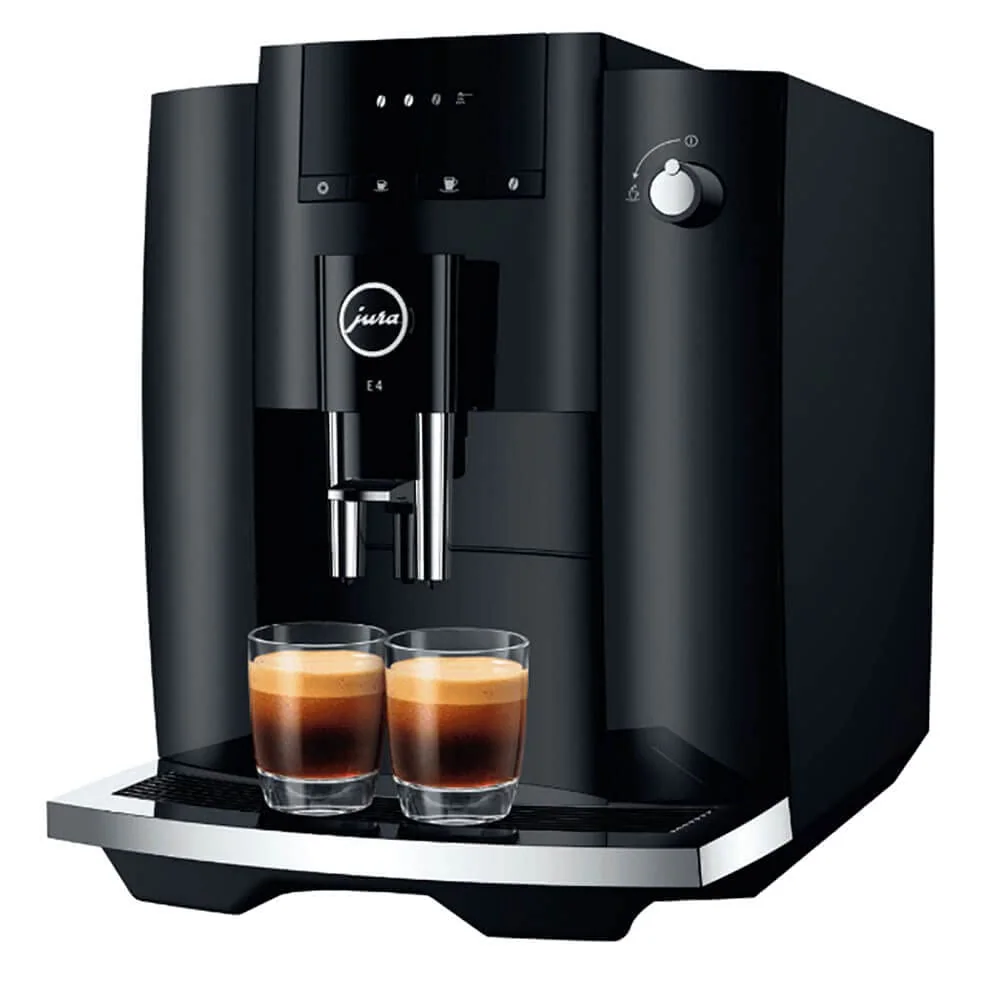
The E4 is the cleanest answer in the range for exactly this worry, because it has no milk circuit of any kind. Full-size tank, full-size hopper, a proper hot water spout, five drinks that are all black, and nothing anywhere in the machine that has ever contained dairy. The Piano Black and Piano White listings carry word-for-word identical copy and identical capacities, so that choice really is only lacquer.
Its drawbacks are real and we have never softened them. The front panel speaks only in symbols, and a five-year owner still called the icon menu cryptic beyond all belief and reached for the manual before descaling.
Add to that a single cup that tops out around eight ounces, and the four hundred dollar repair story above, and you have a machine with a very specific customer rather than a general recommendation.
The ENA 4 applies the same logic in a narrower body: four presets, no milk system, a Professional Aroma Grinder and an optional pre-ground route.
Its honest limitation is the dose. The brewing chamber is small, long drinks thin out no matter what you set, and the record on that listing also includes beans that fail to drop into the grinder, a spout too low for an American mug, and several machines that arrived with a cracked or leaking water tank.
If you are torn between the two milk-free machines, we have set them side by side, and the rest of the range maps out from there.
If you want milk from a Jura, buy it knowing that you are buying the daily hose clean as well. The J8 twin earns its place for a reason that has nothing to do with hygiene: two bean containers, each with its own conical grinder, which ends the decaf argument in a two-drinker household permanently.
The drawback is the one nobody who owns one disputes. It costs several times what a competent super-automatic costs and it does not make coffee several times better, the sealed brew unit is sealed here too, and the milk routine that owners describe as manageable is still a job you do every single day. If two grinders are aspirational rather than daily for you, that money is better spent elsewhere, and the case against paying Jura prices at all is worth reading before you commit.
And if none of this settles it, that is a real answer too. The buyer who wants to hold the brew group in his hands and see for himself is not being irrational, he is describing a requirement, and machines built around a brew group that lifts out and rinses under the tap are covered on this site in our guide to the Philips range. Buying the machine whose maintenance you actually trust is a better decision than buying the one with the better shot and quietly resenting it, and it belongs in the same conversation as whether this whole category earns its keep.
The short version
You cannot open it, you can clean it, and the fear is aimed at the wrong component. Run the tablet when the machine asks, empty the bin and the tray daily, treat the milk hose as the genuine hygiene job it is, keep oily beans out of the grinder, pick the filter or the descaling schedule and stick to it, and check that whoever ships you the machine is an authorised dealer. Do those six things and the sealed chamber will be the least interesting part of owning the machine, which is exactly what Jura designed it to be.
Frequently Asked Questions
Can you take the brew group out of a Jura?
No, it is fixed inside the machine and there is no owner-serviceable route to it.
Does mould actually grow inside a sealed Jura?
The one published teardown in this record found a brew group spotless after a year of daily use, and the buildup owners genuinely complain about is in the milk hose rather than the brew unit.
So how do you clean the inside of one?
A cleaning tablet goes into the side chute when the machine asks for it, and a cycle you walk away from does the rest.
Which parts do I have to clean by hand?
The milk hose and frother if the machine has them, plus the grounds bin, the drip tray, the water tank and the spouts.
How often should the grounds bin be emptied?
Daily, because it holds wet spent pucks and it is the one part of the machine that will genuinely turn unpleasant if you forget it over a long weekend.
Do I have to use Jura's own filters?
In practice yes, because the cartridge carries a chip and an unrecognised filter can leave the warning showing or push the machine into descaling.
Can I skip the filter entirely?
Yes, and at least one owner does exactly that because her house water is already filtered, but skipping it means you have taken on descaling as your own scheduled job.
What happens if something breaks inside the brew unit?
The machine goes back to Jura, and owners report quotes in the hundreds of dollars for repairs on machines only months old.
Does buying a coffee-only Jura remove the problem?
It removes the larger half of it, because a machine with no milk circuit has nothing in it that ever held dairy.
Do oily beans really matter that much?
Yes, and on a machine you cannot open they matter more than on any other kind, because a clogged internal is a shipping job rather than an evening with a brush.
Is there a Jura with a removable brew group?
No, so if lifting the unit out and rinsing it is non-negotiable for you, that requirement points at a different brand rather than a different Jura.
Sources (4)
- Amazon listings and customer reviews
- Owner reports across r/superautomatic threads
- Owner and reviewer video, 1 channel
- Homecoffeeexpert — Article — homecoffeeexpert.com