Philips 5500 LatteGo vs De’Longhi Rivelia: one is the easiest machine in the kitchen, the other is the only one that holds two beans
Buy the Philips 5500 unless two people in your kitchen genuinely want two different beans, because the swappable hoppers are the only thing the Rivelia does that the Philips cannot, and the De'Longhi asks a great deal more money for them.
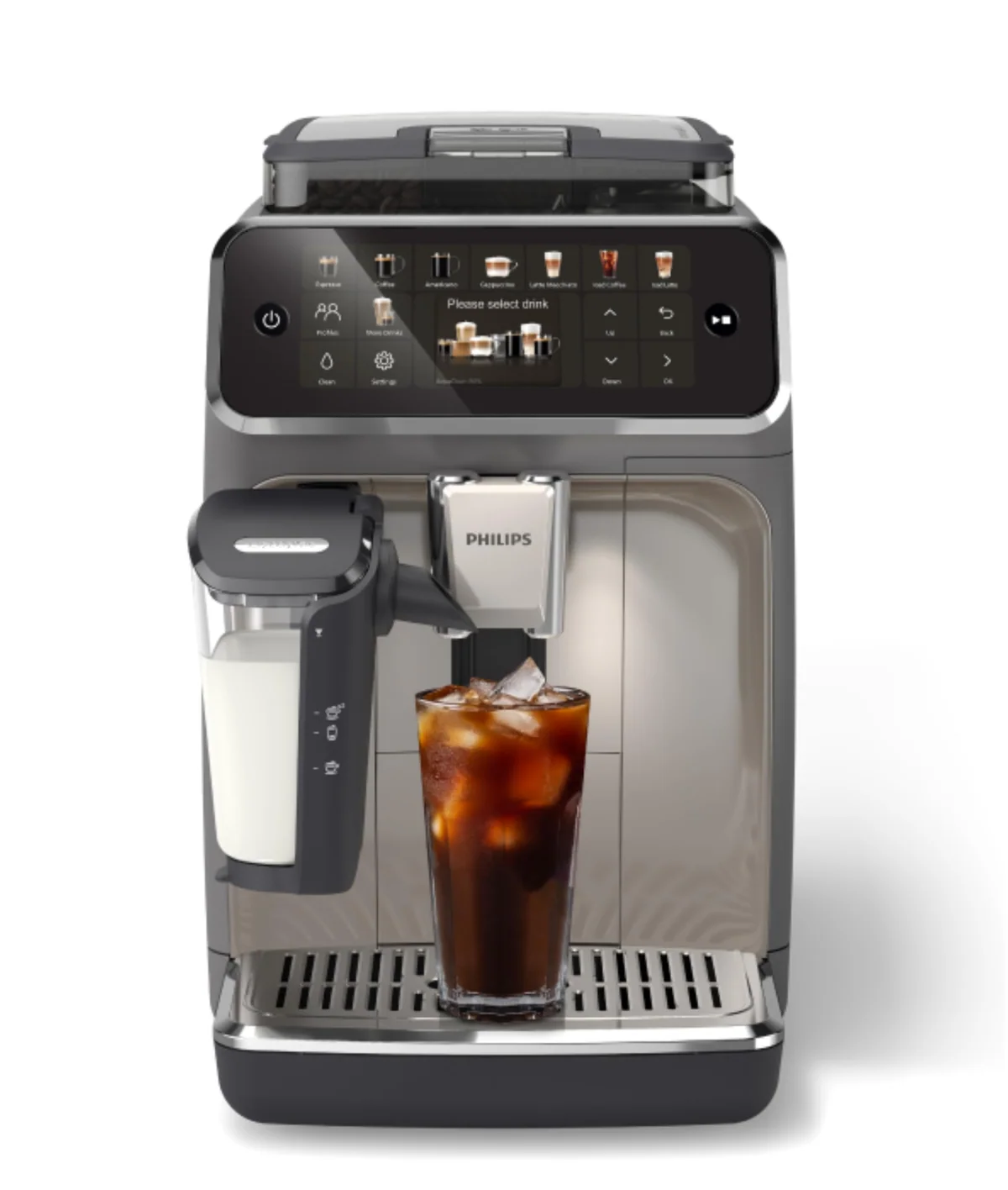
Philips 5500 LatteGo
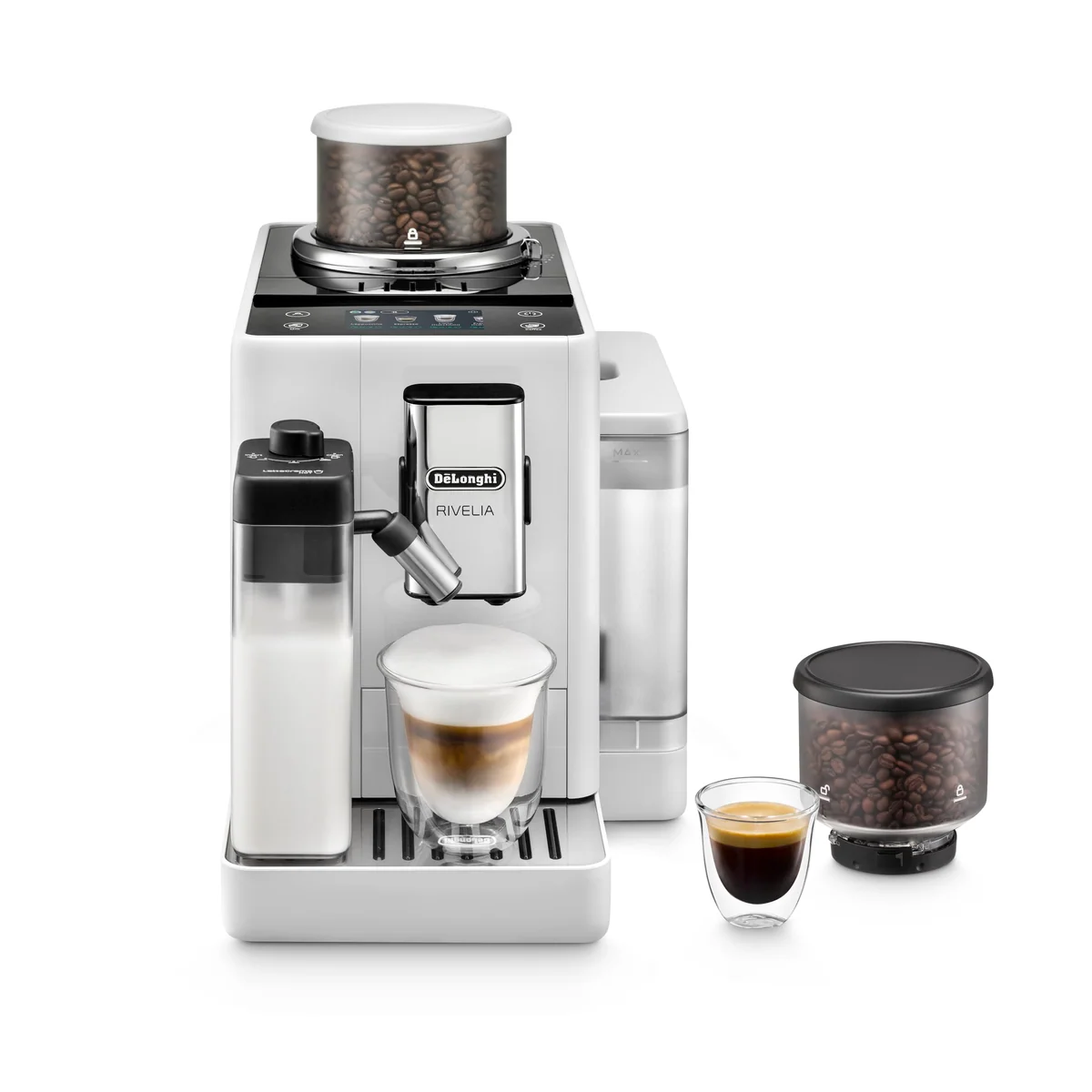
De'Longhi Rivelia
On paper these machines should never meet. The Philips sits in the middle of the super-automatic market and the Rivelia sits near the top of De'Longhi's consumer range, and the gap between them is not a rounding error. They meet anyway, constantly, because they are shopped for the same reason: someone wants a cappuccino at the push of a button, wants the milk part to be automatic, and does not want to spend Sunday morning with a bottle brush. Both machines answer that. They answer it in almost opposite ways.
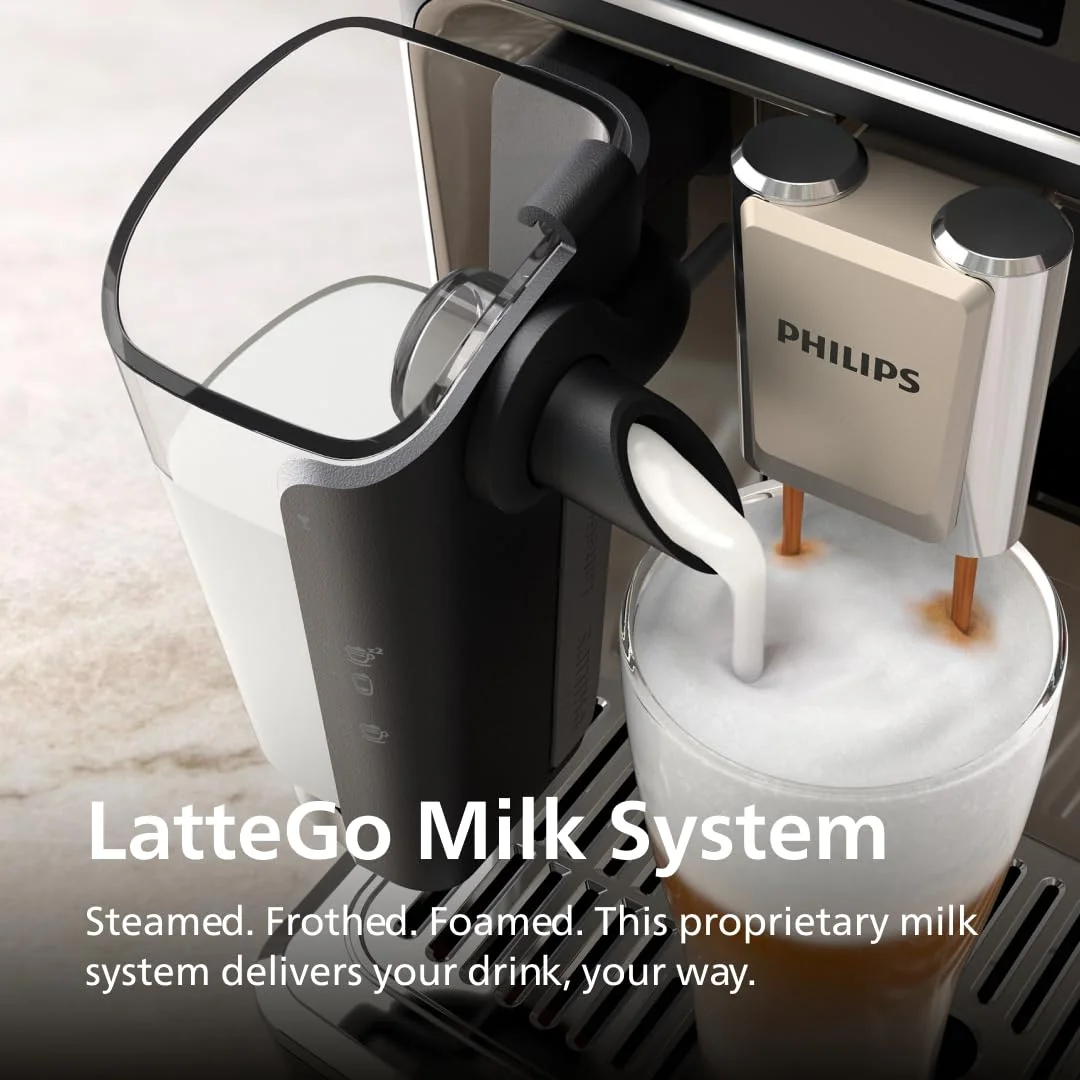
The Philips answer is the LatteGo carafe, three parts with no internal tubes, dishwasher safe or rinsed under a tap in seconds. The De'Longhi answer is the LatteCrema carafe, which makes better foam and asks more of you afterwards. That trade is real, but it is not the trade this page is about, because it is not the reason anyone pays the Rivelia premium. That reason is a pair of 8.8-ounce bean hoppers that lift off the roof and swap places, feeding a 13-setting burr grinder underneath. Regular before noon, decaf after four. Your beans, then theirs.
Both machines have a fault worth knowing before the money moves, and neither fault is hidden if you read the right reviews. The Philips brews a small puck and then, on its longer presets, pushes a lot of water through it, which is why the one-star reviews on its listing all say the same thing in different words: one buyer described a shy dose, a small puck and brown water rather than coffee, and returned it for a De'Longhi. The Rivelia's fault is temperature. Milk drinks land warm rather than properly hot, an owner-reported flaw common enough that the machine's own five-star reviewers keep volunteering it unprompted, and no menu setting fully closes it.
Espresso Den has not had either machine on a bench, and nothing below is presented as our measurement. What follows is built from both listings, from the owners writing at three months and at six, and from reviewers who weighed pucks and put meters on the noise and the milk.
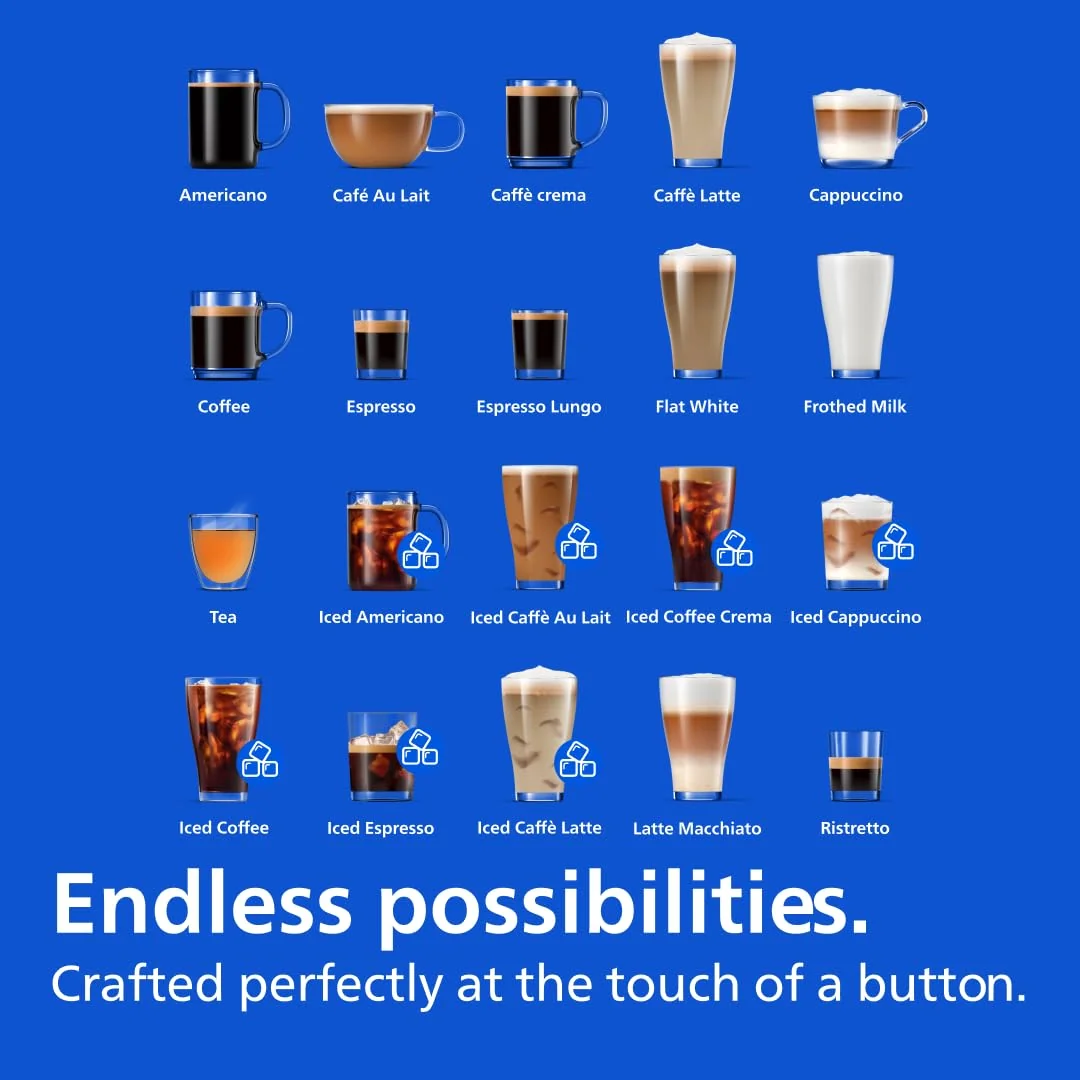
Philips 5500 LatteGo
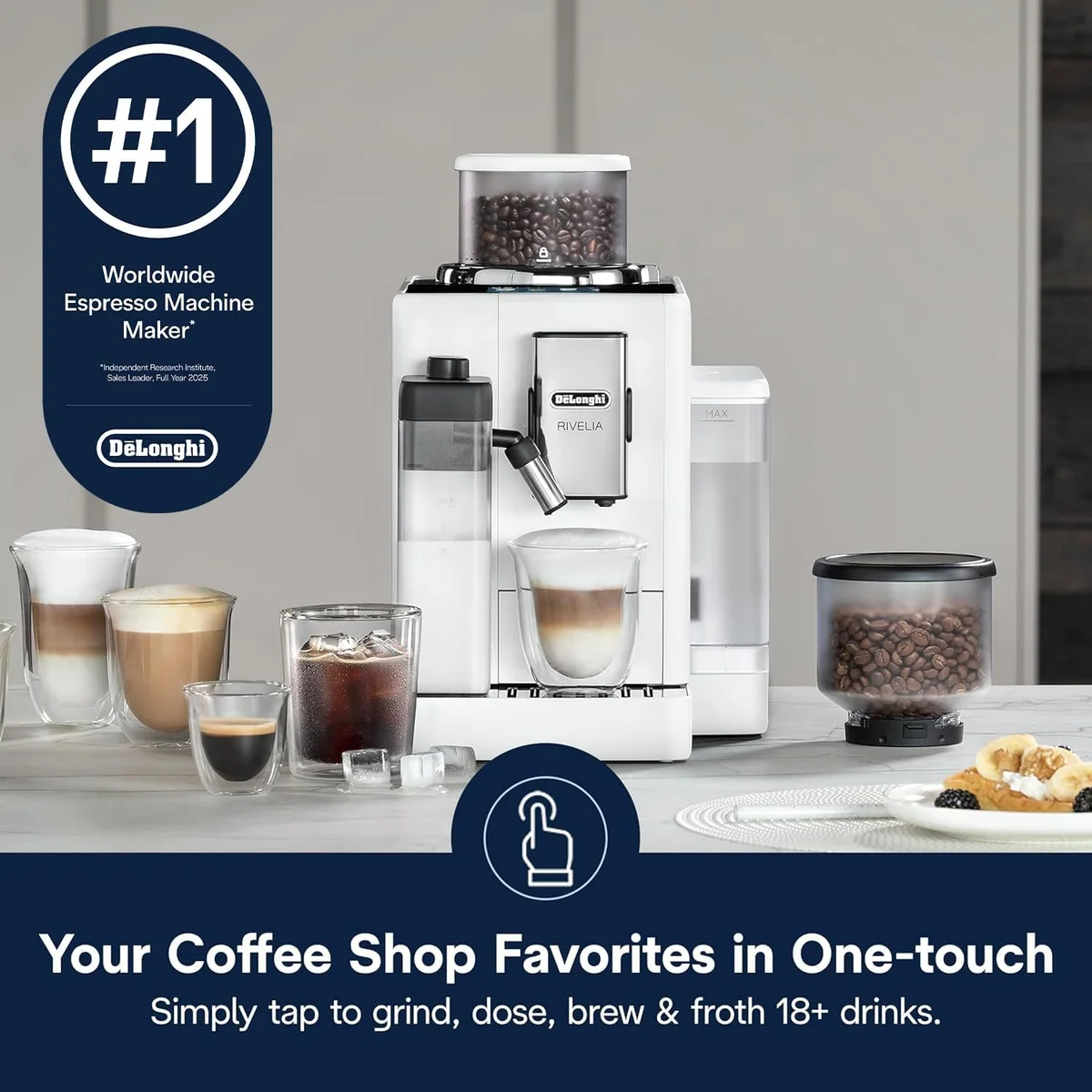
De'Longhi Rivelia
At a Glance
| Feature | Philips 5500 Series Fully Automatic Espresso Machine, LatteGo Milk System, Integrated Grinder, 20 Hot & Iced Coffee Pre-Sets, Quick Start, SilentBrew, 15-Bar Pressure, Black Chrome (EP5544/94) | Editor's Pick De'Longhi Rivelia Automatic Espresso Machine with Grinder & Milk Frother – All-in-One Coffee Maker, Hot & Iced Latte, Cappuccino, Bean Switch System, Burr Grinder, Compact Italian Design, White |
|---|---|---|
| Price Range | $500–$1,000 | $1,000–$1,500 |
| Configuration | 8.3 kg | Rivelia White |
| Finish | Black, chromed | Arctic White |
| Items In Box | 1 | 1 |
| Listed Since | 2025-08-05T00:00:01Z | 2025-05-01T00:00:01Z |
| Check Price on Amazon | Check Price on Amazon |
Everything comes back to how much coffee goes in the basket
Strip away the screens and the preset counts and the two machines differ most in a number neither of them prints on the box. The Philips brew unit works with a small charge, somewhere in the region of nine grams, which is roughly half a café double, and no setting on the machine lifts that ceiling. The De'Longhi holds meaningfully more, which is the whole substance of the long-running argument that De'Longhi beats Philips on intensity: put the two brands side by side and the pucks are different sizes before anything else happens.
Owners feel this without ever weighing anything. Two separate four-star reviewers of the 5500 arrived at the same workaround independently, one setting the finest grind and running double shots as standard, the other switching to a darker roast and doubling every drink to get flavour they recognised. That is not a machine being used wrongly. That is a machine being corrected. Extra Shot on the Philips is not a luxury button, it is the fix for the brew chamber, and using it every time roughly doubles the beans per cup. If you want the general version of this problem rather than this machine's version, we have written about why bean-to-cup espresso comes out watery, and there is a good walkthrough of the specific Philips settings that recover the cup.
The Rivelia is not immune, and it would be dishonest to pretend otherwise. Its standard large coffee and its Americano stretch one puck with more hot water in exactly the same way, and a three-star owner on the white listing says flatly that no combination of beans and settings has produced a large coffee she and her husband find strong enough. The difference is that the De'Longhi has a way out that the Philips does not. Its Coffee Bold recipe grinds twice, brewing one puck, ejecting it and brewing a second, so a big cup gets two doses of coffee instead of one dose and a lot of water. An owner who had moved up from a Magnifica singled that recipe out as the reason he prefers the Rivelia's black coffee.
So: at their default settings, both machines make a mild cup and the Rivelia makes the less mild one. Corrected, with the strength up and the grind finer, the Rivelia goes somewhere the Philips cannot follow. Whether that matters depends entirely on what you drink. Under a cappuccino's worth of milk, mild is fine and a great many happy 5500 owners have never thought about it once.
Two carafes, two different kinds of easy
The LatteGo is the best argument in the category for buying Philips. Milk never enters the body of the machine, the carafe is two pieces that snap apart, and the whole cleanup is over before you have found the washing-up brush. What it will not do is texture. Reviewers who have tested it describe the foam consistently as firm, generous and noticeably bubbly rather than silky, which is fine under a cappuccino and wrong under a flat white; one review lists milk that is too foamy for flat whites as a reason to skip the machine outright.
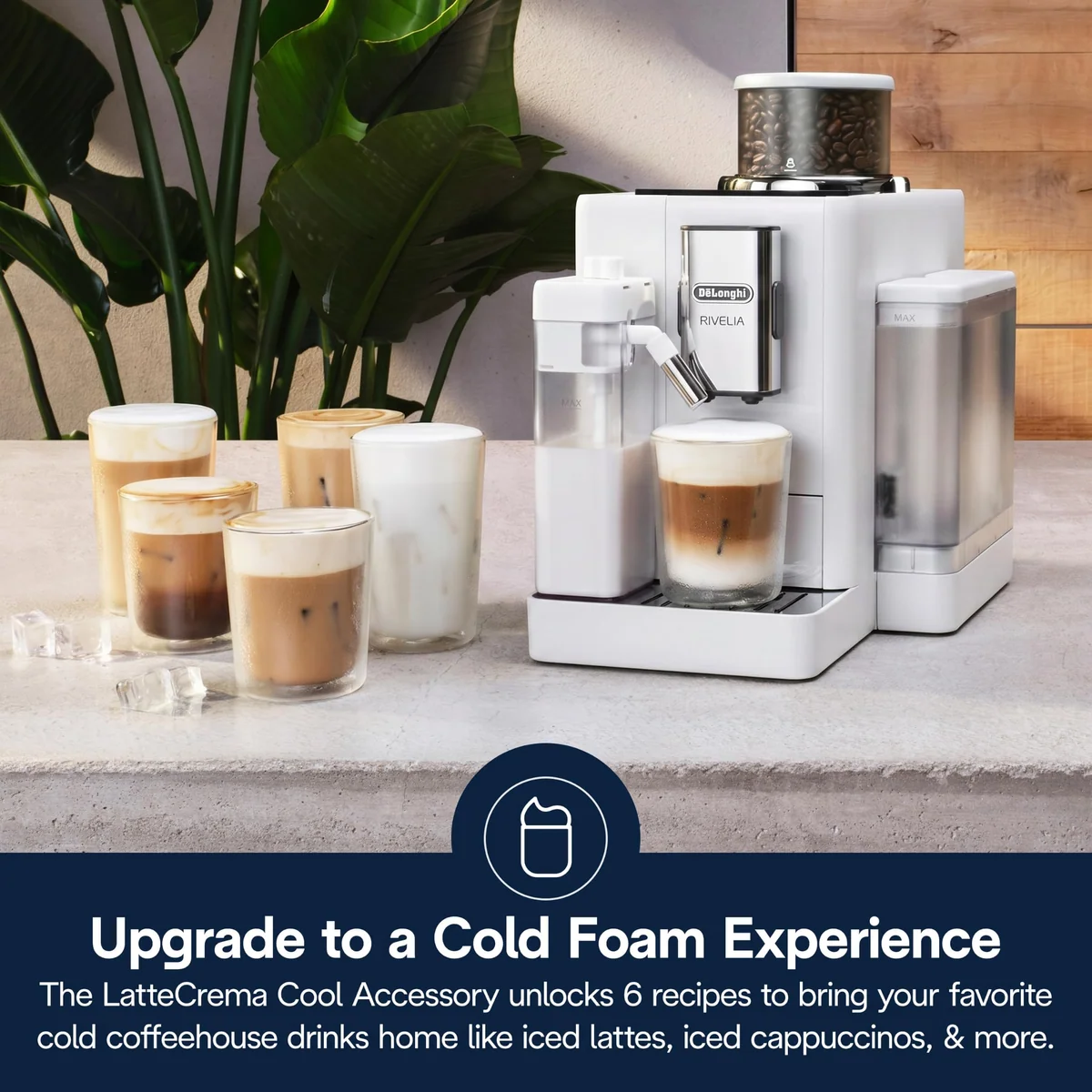
The LatteCrema goes the other way. It has a three-position texture dial, so a flat white and a cappuccino can genuinely have different milk, and the foam draws close to unanimous praise from people who have owned other automatic frothers. It also comes apart into more pieces and wants that doing more often. The best line anyone has written about living with a Rivelia came from a four-star Amazon reviewer whose title was that the time saved making drinks is returned when it is time to clean, and whose verdict was that the machine makes fabulous coffee but is a diva about cleaning.
Then there is heat, and here the Philips wins a round it did not have to fight for. The Rivelia's milk arrives in the low sixties Celsius, and the froth level and the temperature are coupled, so choosing lighter foam gets you cooler milk. Setting drink temperature to maximum on day one, running the hot water function first and pre-warming the mug together get most of the way there, and a Rivelia owner who did all three still described the foam as not the hottest. If scalding milk is the thing you cannot live without, neither of these is your machine and our piece on wands versus carafes explains why that is a property of the whole approach rather than of one brand.
| Question | Philips 5500 LatteGo | De'Longhi Rivelia |
|---|---|---|
| Two beans at once | No, one hopper and a bypass chute for pre-ground | Yes, and it is the entire reason to buy it |
| Milk cleanup | Fastest in the category | More pieces, more often, better result |
| Foam texture | Firm and bubbly, no texture control | Three-position texture dial |
| Strong black coffee | Extra Shot every time, or accept mild | Coffee Bold grinds twice for a large cup |
| Genuinely cold coffee | No | No, and cold foam needs an accessory sold separately |
| Refilling beans under a wall cabinet | Awkward, the hopper fills from the top of the machine | Easier, the hopper lifts off |
| Profiles | Four plus a guest slot | Four |
The hoppers are the whole case, and they have one limit
Everything else on this page is a matter of degree. The bean switch is a matter of kind, and it works exactly as advertised: lift one hopper off, drop the other on, decide whether to purge the grams of the old bean still sitting in the chute or drink them as your next cup. Households where one person stops caffeine at lunchtime, or where two people want two roasts, get something no cheaper bean-to-cup offers, and our page on decaf-and-regular households is built around exactly that need.
The limit is that two hoppers do not mean two grinders. Both feed the same burrs at the same setting, and the grind dial is a physical control you turn by hand. Pair a dark espresso roast with a light filter roast and one of the two will always be wrong, because those coffees want different grinds and the machine cannot change the burr gap between cups. The pairings that actually work are two beans of similar roast, most obviously the same roaster's regular and decaf.
Which is worth saying plainly, because it narrows the case. If your honest answer to "which two coffees would you alternate between, day to day" is a real answer, the Rivelia earns its premium every morning. If the answer is that you would probably just keep one bean in it, you are paying for a hinge you will never open, and the money buys a better cup elsewhere in De'Longhi's own range: reviewers who have lined the family up put the cheaper Magnifica Plus above the Rivelia on coffee, and owners choosing between the Rivelia and the Eletta Explore keep landing on the Eletta unless the hoppers are the point. A five-star Rivelia reviewer who owns both says so in his own headline: nice super-automatic, but get the Eletta if you can afford it. We take that fork properly in Rivelia versus Eletta Explore.
Two things neither machine will do
Neither one makes cold coffee, whatever the menus imply. The Philips brews cooler and slower and you pour that over ice you supplied, a gap between the marketing and the operating instructions that one reviewer docked the machine half a star for. The Rivelia does the same thing, and its cold milk foam needs a carafe De'Longhi sells separately. If iced coffee is a daily habit rather than an occasional one, our explainer on what these iced modes actually do will save you a disappointment, and neither of these is the machine.
Neither one is silent either, though the Philips gets closer. Its grinder measures around sixty decibels and is the quietest Philips has made, which is what the SilentBrew claim is really about. The milk system is the loud part, and a four-month owner puts it bluntly: the grinding is quiet, the milk and brewing are very loud. Rivelia owners moving up from a Magnifica consistently describe a noticeable improvement without calling it quiet.
What goes wrong, and how the makers behave when it does
Both records contain failures and both contain far more owners having a perfectly good time. On the Philips listing, one owner had a machine simply stop after eight months despite following every cleaning and descaling instruction, another had a supposedly sealed box arrive open with the milk container missing, and a third found the small tube of food-grade grease for the brew unit absent from an otherwise complete machine. That grease is not optional; skipping the monthly greasing is how a machine that was fine at four months starts misbehaving.
On the Rivelia listings the recurring complaint is a grounds container that insists it needs emptying when it does not, and the owner who reported it was more damning about the response than the fault, describing a customer service process that outlasted the Amazon return window. Another owner reports the frother simply ceasing to froth after a few months and merely pouring milk into the cup, which is a hard thing to accept on a machine bought largely for its milk. Set against those, one Rivelia buyer's account is worth holding in the other hand: she bought the Philips 5500 first, returned it, and called the De'Longhi a big step up on arrival.
The pattern across both is that faults cluster after the first month or two rather than in week one. That matters most if you are looking at a renewed unit of either machine, where the warranty can expire before the characteristic problems appear, and our piece on renewed machines is the fuller version of that argument. It also matters for the Philips specifically, because the first twenty to thirty cups from a new one are not representative of the machine, and on a short return window that break-in can eat most of your decision time.
Philips 5500 LatteGo
De'Longhi Rivelia
Which one belongs on your counter
Answer one question and the rest follows. Will you actually keep two different beans in the house? If yes, the Rivelia is the only machine here that serves them properly and the premium is buying something you will use daily. If no, the Philips does ninety per cent of the same job, cleans up faster, and leaves a serious amount of money on the table for beans.
The bean-switching machine, in the colour that hides fingerprints better than white
Two lift-off hoppers over one 13-setting grinder make this the only machine on the page that will serve regular and decaf without a stale bypass chute, and the LatteCrema foam is the better milk of the two.
Milk drinks arrive warm rather than hot, and raising the temperature setting to maximum mitigates that without solving it.
The one to buy if the milk carafe is what decides whether you use the machine on a Tuesday
The three-part LatteGo carafe rinses clean in seconds with no internal tubes, the grinder is genuinely quiet, and four profiles plus a guest slot keep a visitor from overwriting the settings you spent a fortnight finding.
The brew unit doses around half a café double, so every drink worth drinking needs maximum strength and Extra Shot, which roughly doubles the beans you get through.
The same bean-switching machine for a kitchen that wants the brighter finish
Identical hardware, carafe, brew unit and touchscreen to the beige listing, so the choice between them is a decorating decision and nothing more.
The large black coffee recipes stretch a single puck with water, and you will not get a strong big cup until you find the double-grind Coffee Bold recipe.
Two groups should buy neither. If what you want is an intense espresso you can taste through the milk, look further along De'Longhi's range or read our comparison of the 5500 against the Dinamica Plus, which is the cross-shop the owner forums keep pushing people toward. If the Philips appeals and the money does not, note that the 5500's advantage over the cheaper LatteGo machines is the interface rather than the drink, since the brew unit and grinder do not change as you climb the ladder. That argument is set out in full in 3300 versus 5500 and across our guide to the whole Philips range.
One practical note before you clear a space. The Philips fills its bean hopper from the top and its milk spout does not swivel, so the cup has to sit further forward than you expect and a narrow cup will have one spout miss it entirely. The Rivelia's screen lives on the roof, which is superb on an island and awkward on a tall counter, and its hoppers lift off, so it copes better under a wall cabinet than its shape suggests. Measure before you order, on both counts.
The full detail on each machine lives in our Philips 5500 LatteGo review and our De'Longhi Rivelia review, and the machine that keeps beating the Rivelia inside its own brand gets its own page at the Eletta Explore review. Back where we started: the hoppers decide this, and if you would never open them, the Philips is the sane purchase.
Frequently Asked Questions
Is the De'Longhi worth roughly twice the Philips?
Only if you will genuinely keep two different beans in the house, because that is the single capability the extra money buys and everything else is a matter of degree.
Which one makes the stronger coffee?
The De'Longhi, because it holds a larger dose and its Coffee Bold recipe grinds twice for a big cup, where the Philips stretches one small puck with water.
Which milk system is less work?
The Philips LatteGo by a wide margin, since it is three parts with no internal tubes and rinses clean in seconds.
Which one makes better foam?
The De'Longhi, whose three-position texture dial produces milk suited to a flat white as well as a cappuccino, where the LatteGo foam is firm and bubbly whatever you select.
Do either of them make real iced coffee?
No, both brew warm coffee onto ice you supply yourself, and the De'Longhi needs a separately sold carafe before it will make cold foam at all.
Can the Philips handle decaf without emptying the hopper?
Yes, through its bypass chute using a scoop of pre-ground, which works but means the decaf is never as fresh as the beans in the hopper.
Can the two Rivelia hoppers hold beans that need different grind settings?
Not properly, because both feed the same burrs at the same setting, so the pairings that work are two beans of similar roast such as one roaster's regular and decaf.
Is the coffee from a new Philips representative straight out of the box?
No, reviewers who have set several of these up expect twenty to thirty cups before the puck forms properly and the coffee settles down.
Does the beige Rivelia differ from the white one in any way that matters?
No, they are the same machine with the same brew unit, carafe, grinder and touchscreen, so pick the one that suits your kitchen.
Which is quieter first thing in the morning?
The Philips grinder is the quietest part of either machine at around sixty decibels, but its milk system is loud, so the practical difference on a milk drink is smaller than the marketing suggests.
Ready to Choose?
Sources (7)
- Amazon listings and customer reviews — Philips 5500 Lattego and Delonghi Rivelia
- Owner reports across r/superautomatic threads
- Owner and reviewer video, 5 channels
- Homeoutletdirect — Article — homeoutletdirect.com
- Homecoffeeexpert — Article — homecoffeeexpert.com
- Coffeeness — Article — www.coffeeness.de
- Techradar — Article — www.techradar.com