The Philips 5500 and the Magnifica Start disagree about one thing only: whether you should be the one holding the milk jug
Buy the Philips 5500 if one-touch milk and saved profiles are what will actually get the machine used every morning, and buy the Magnifica Start if you would rather steam your own milk and put nothing between the beans and the cup.
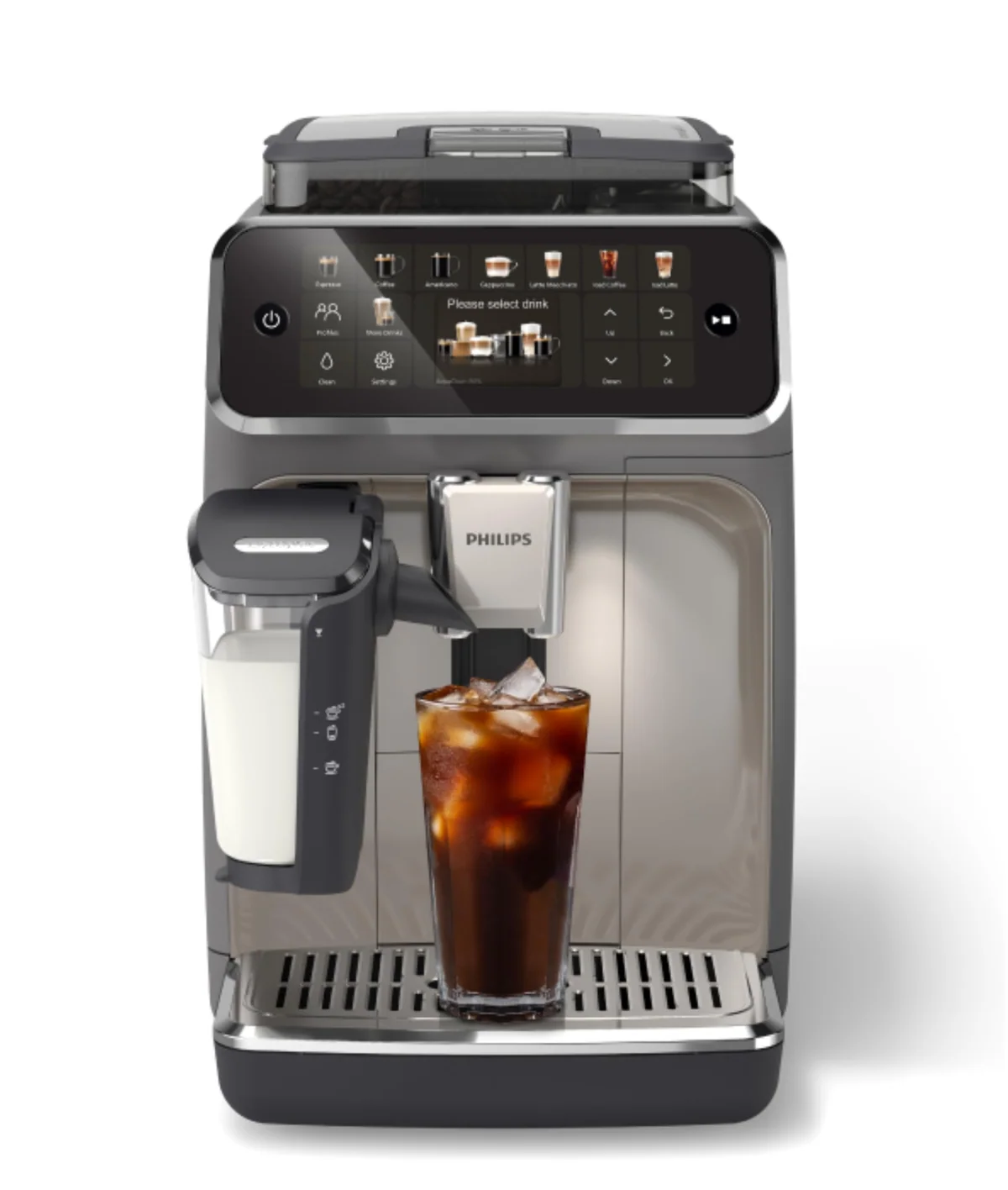
Philips 5500 LatteGo
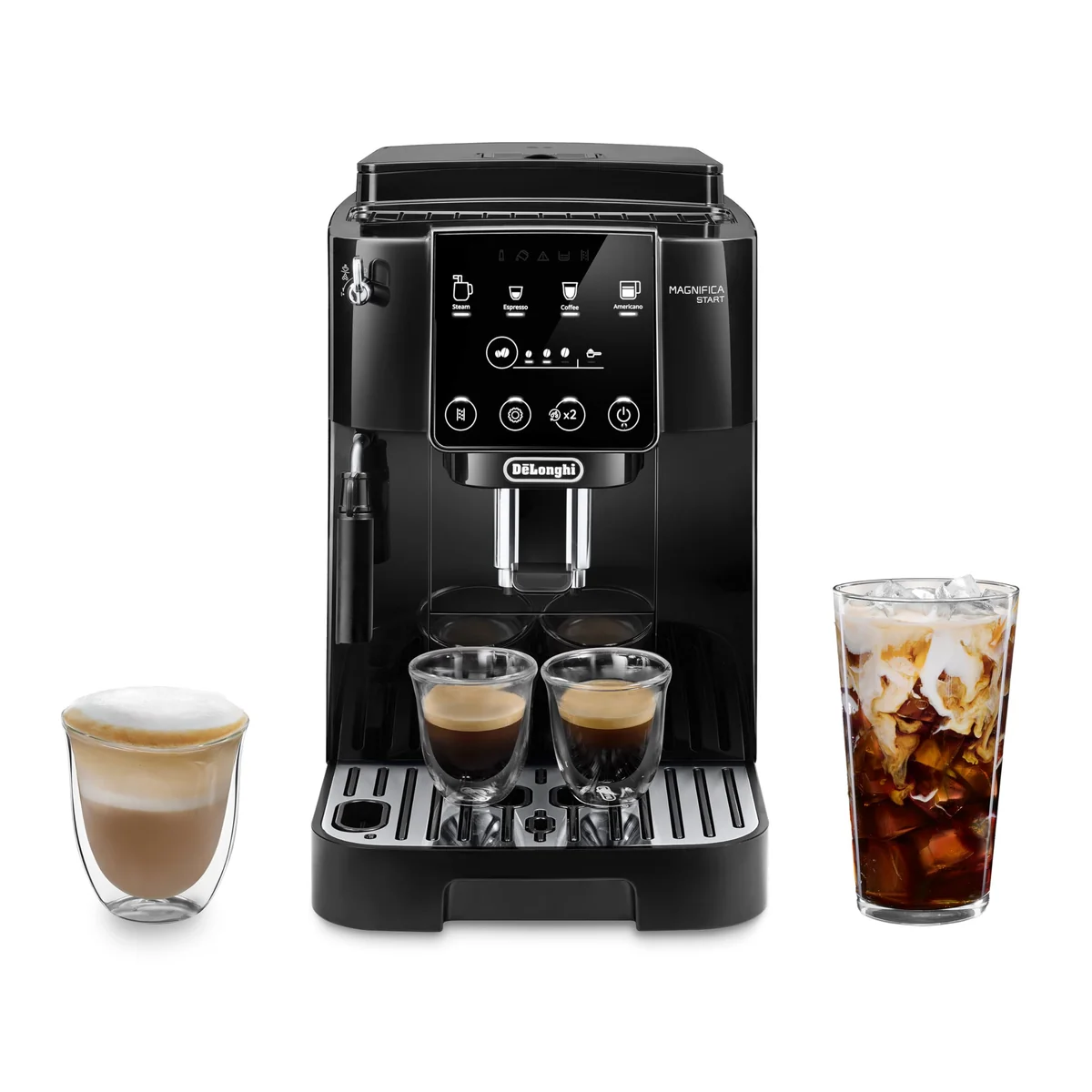
De'Longhi Magnifica Start
On paper this is a mismatch. The Philips EP5544 is the top of its maker's LatteGo range, with a colour screen, twenty listed presets and a milk carafe that does the whole drink for you. The De'Longhi Magnifica Start with the manual frother is the entry point to its range: three lit icons on the front, thirteen grind steps, and a steam wand you work yourself with a knob. These two are not rivals on price, and the tiers on the cards below describe that more reliably than any sentence written weeks earlier could. The reason people cross-shop them anyway is that they are both bean-to-cup machines aimed at the same morning, and the buyer is trying to work out whether the extra hardware buys better coffee or just less work.
It buys less work. That is the honest answer and it is worth having before the argument starts, because the assumption underneath most of these comparisons is that the more expensive machine must brew a better shot, and the measurements do not support it. Seattle Coffee Gear weighed pucks out of a 5500 and found them coming out at roughly nine and a half to ten and a half grams. A reviewer who cut power mid-cycle on the closely related Philips 5400 and weighed the charge got 8.6 grams, against 12.7 grams from a De'Longhi on its double setting. On the De'Longhi side, Tom's Coffee Corner timed the Start's grinder and found its three strength steps topping out around seven seconds, in the region of ten grams, well short of the Dinamica-class machines it sits below. So the Start holds a little more coffee than the Philips, the gap is real, and it is a gap between two single-dose machines rather than between a weak one and a strong one. A cafe double is sixteen to eighteen grams; neither of these is going near that.
What follows from that matters more than any feature list. Both machines are good at espresso and at short milk drinks built on espresso, and both fall apart when you stretch that small dose across a mug of black coffee, which is the single most common complaint attached to either of them. If a large americano first thing is the drink your household actually makes, the mechanics of why bean-to-cup coffee comes out watery explain why neither of these will fix it, and the machines we would pick for black coffee drinkers is a different shortlist. Everyone else can carry on, because from here the two machines diverge sharply, and it happens almost entirely outside the brew unit.
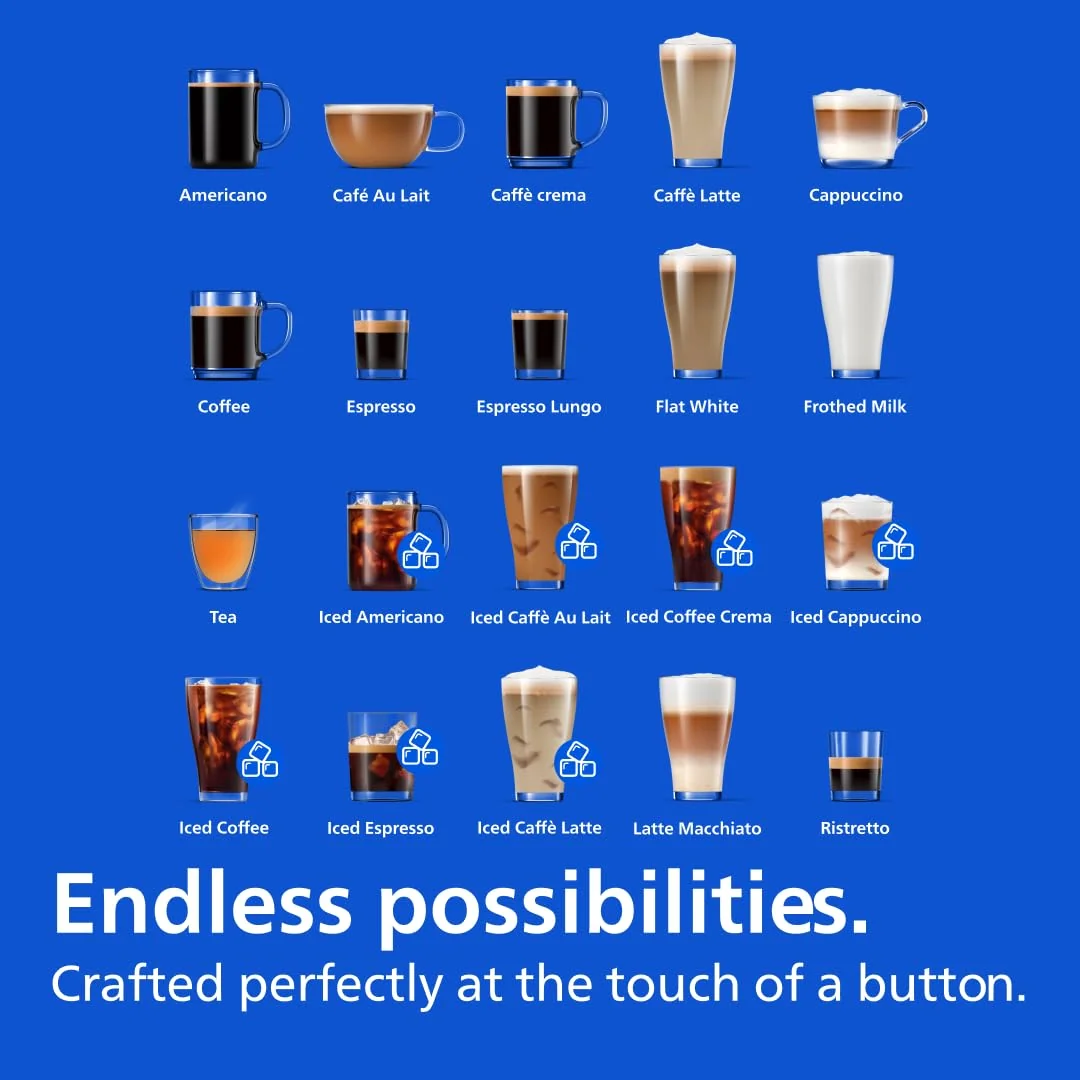
Philips 5500 LatteGo
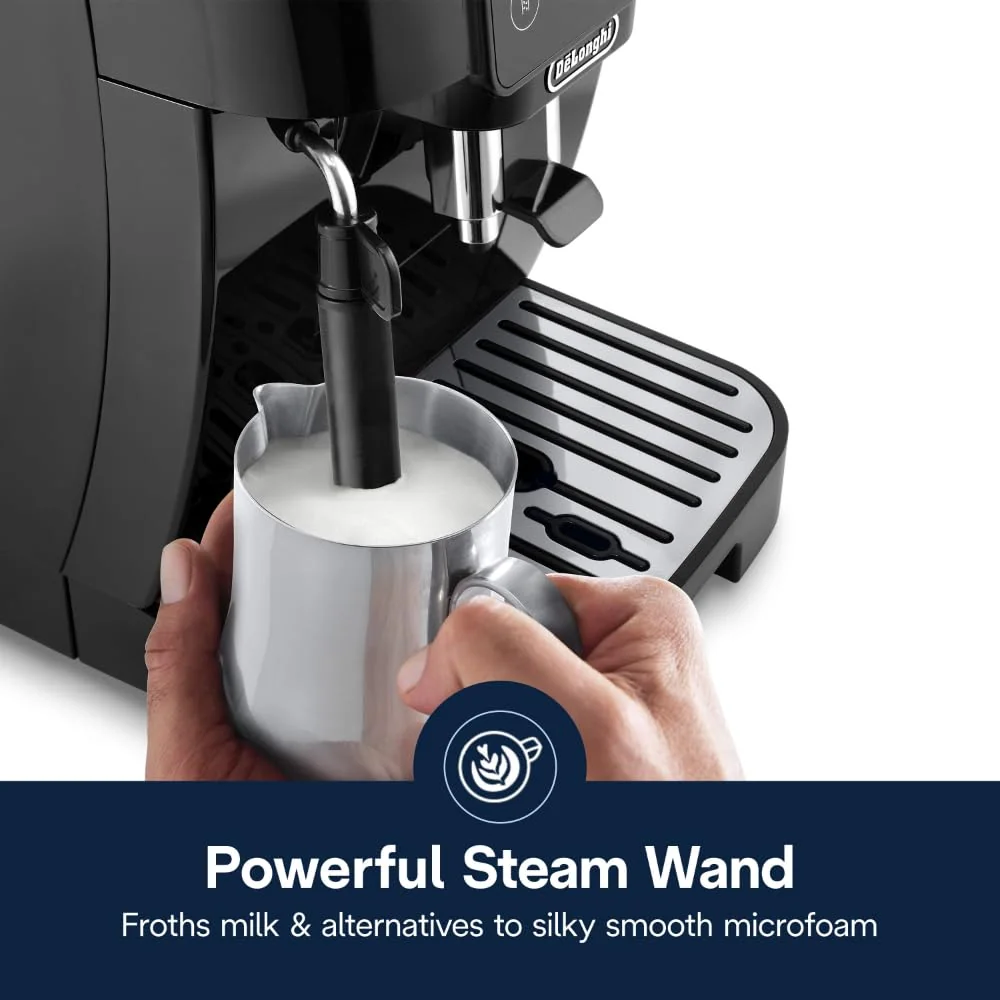
De'Longhi Magnifica Start
At a Glance
| Feature | Philips 5500 Series Fully Automatic Espresso Machine, LatteGo Milk System, Integrated Grinder, 20 Hot & Iced Coffee Pre-Sets, Quick Start, SilentBrew, 15-Bar Pressure, Black Chrome (EP5544/94) | De'Longhi Magnifica Start Automatic Espresso Machine with Manual Milk Frother & Built in Grinder - 3 One-Touch Recipes, Easy-to-Clean, Home Barista Coffee Maker for Lattes, Cappuccino, Iced Coffee |
|---|---|---|
| Price Range | $500–$1,000 | $200–$500 |
| Configuration | 8.3 kg | Magnifica Evo with Automatic Milk Frother |
| Finish | Black, chromed | Silver |
| Items In Box | 1 | 1 |
| Listed Since | 2025-08-05T00:00:01Z | — |
| Check Price on Amazon | Check Price on Amazon |
Milk is the whole argument
The LatteGo carafe is the best reason in this category to buy a Philips, and Espresso Den will say that even while being rude about the coffee. It snaps together from a handful of parts with no internal tubes and no hidden channels, milk never enters the body of the machine, and it rinses under a tap in seconds or goes in the dishwasher. Testers who prefer other brands on flavour still call it the easiest milk system on the market. Press a button, walk away, come back to a cappuccino.
What it will not give you is texture. Coffeeness found the foam firm enough that a cappuccino keeps its layers and warned against expecting silky microfoam for a flat white, and Home Coffee Expert lists milk that is too foamy for flat whites as an outright reason to skip the machine. A third tester measured the milk arriving at around 75 degrees Celsius and called the bubbles frankly large. There is also a physical annoyance nobody mentions until you own one: TechRadar's tester named the fixed milk spout angle as her biggest complaint, because the cup has to sit much further forward than you expect and a narrow cup will have one of the two spouts miss it entirely.
The Start hands all of that back to you. Its frother is a panarello, a plastic sleeve over the steam pipe that drags air into the milk the entire time it is heating, which is why its foam out of the box is stiff and bubbly rather than glossy. The widely repeated fix, which our review of the machine sets out in full, is to slide the sleeve off and treat the bare pipe as a proper wand, at which point the milk becomes genuinely better than anything the LatteGo produces. It also becomes as hot as you decide to make it, which quietly answers the complaint that follows one-touch machines around: the carafe machines heat milk to a fixed target and their owners spend a lot of time online asking why the latte is lukewarm, a problem covered in our piece on machines that run cool.
So the trade is not milk quality against milk convenience in the way the marketing implies. It is a ceiling against a floor. The Philips guarantees you an acceptable cappuccino forever with no skill and no washing up worth the name. The Start gives you a worse drink on day one, a better one on day thirty, and a jug to scrub every morning in between. Our guide to which milk system you will actually live with is the honest version of that choice, and it is worth being truthful with yourself about which sort of person you are before the money moves.
Noise, and a claim that survives contact with a decibel meter
This is the one specification where the gap is enormous and nobody argues about it. Coffeeness measured the Philips grinder at 61 dB and called it the quietest Philips yet; a second tester got 59 to 60 dB with the bean hopper lid on, and 71 dB with it off, which tells you that a meaningful share of the SilentBrew claim is a gasket. Coffeeness put the Start's grinder at 75.9 dB, above the older Magnifica it replaces, with a shrill note on every cycle. Owners on the De'Longhi listing agree without much resentment, calling it noisy and then saying they do not care.
The caveat is that the Philips is quiet at the grinder and not everywhere else. One tester recorded its milk system peaking at 83 dB at the start of frothing, and an owner four months in wrote that the grinding is quiet but the milk and brewing are very loud. If the reason you are buying at all is a sleeping household or an open-plan kitchen, the Philips is clearly the better of these two and still not the best answer available, which is what our quietest picks exist for.
One machine talks to you, the other blinks
The Philips has a colour display that tells you what is wrong in words, four saved profiles plus a guest slot so a visitor cannot overwrite settings you spent a fortnight finding, and a milk-froth-only button. Two qualifications, both of them the listing's own fault. The twenty presets are padded: a large share of them are iced versions of drinks already on the list, plus hot water and milk froth counted as coffees, and only a handful get a dedicated button. And the same Amazon listing that advertises four profiles in its bullet points says two in its description a few lines further down, which is a useful reminder of how much weight the copy will bear.
The Start has no screen at all, and this is where it is genuinely weak rather than merely basic. Settings live behind held buttons and icon combinations, its printed manual covers first-time setup and maintenance and says nothing about making or configuring drinks, and owners on the listing name confusing warnings and needing the manual to decipher the flashing lights as their standing complaint. There are no profiles and no timer that wakes the machine before you do. The hardware is right and the software is unfriendly, which is a fair summary of most of De'Longhi's entry tier. Philips has a version of the same problem, incidentally, since half its useful settings are a menu down, and our guide to operating a Philips exists because the manual does not do the job either.
The cup, once you stop comparing spec sheets
Reviewers who cover De'Longhi full time rate the Start's espresso well for where it sits. Home Coffee Expert, reviewing the pricier Evo, went out of its way to say the Start brews a better-tasting cup; Coffeeness found the internals genuinely improved over the Magnifica S it descends from and the coffee deeper, with the qualifier that this applies to the espresso and not to the long drinks. The Philips draws more polarised verdicts. Coffeeness, testing with fresh medium-roast beans, called the espresso really good and full-bodied; the one-star reviews on its listing are consistently the same complaint, and one buyer put it as bluntly as anyone, that the dosing in grams is very shy, the puck is small, and what lands in the cup is brown water.
Both camps are describing the same machine honestly. People arriving from pods and drip are delighted; people arriving from a De'Longhi or a portafilter are not. The Philips does have a real answer, which is Extra Shot: it grinds and brews a second puck, and it is the only control on the machine that raises the dose. Home Coffee Expert reached its best result with the second-finest grind, maximum temperature and a one-ounce volume, and was honest about the cost, which is twenty to twenty-two grams of beans per drink. Owners land in the same place from the other direction, setting the finest grind and doing a double as standard. The Start's equivalent is to pull two separate espressos rather than lean on its volume button, and on both machines the bean you choose matters more than any setting, which our guide to what works in a bean-to-cup grinder covers before you buy a kilo of something expensive.
| What you are deciding | Philips 5500 LatteGo | Magnifica Start, manual frother |
|---|---|---|
| Milk | One-touch carafe, no tubes, dishwasher safe, foam stiff and bubbly | Panarello wand you operate; better milk once the sleeve comes off, worse before that |
| Milk temperature | Fixed by the machine, measured around 75 degrees Celsius | Entirely yours |
| Measured dose | Around nine to ten and a half grams per puck | Around ten grams at maximum strength, contested up to about twelve |
| Grinder noise | 59 to 61 dB with the hopper lid seated | 75.9 dB, with a shrill note |
| Loudest moment | Milk system, recorded peaking at 83 dB | The grind, and then it is over |
| Household | Four profiles plus a guest slot | One saved volume per drink for everyone |
| Interface | Colour screen with written prompts, deeper settings a menu down | Three icons, held buttons, a manual that omits drink-making |
| Iced drinks | Presets that brew warm coffee for you to pour over ice | No pretence of one |
One presets-related warning, because it is the Philips claim most likely to mislead a buyer. The listing says the calibrated system ensures iced coffees deliver the same rich flavour as hot drinks. Coffeeness read the same machine's operating instructions and found them saying the coffee is prepared with warm water and best poured over ice cubes, and took half a star off for the gap between those two sentences; a second tester measured the iced setting delivering coffee at roughly 60 degrees Celsius rather than the usual 80. That is not cold extraction, and our explainer on which machines actually brew cold will save you the disappointment. The Start makes no such claim, which is a small mercy.
What each one is like to live with
Neither is maintenance-free and they fail in different directions. On the Philips the weekly job is pulling the brew group and rinsing it, plus a thin line of food-grade grease on its rails every couple of months, and forgetting that grease is how a machine that was fine at four months starts misbehaving. That grease tube is meant to be in the box, and at least one buyer found his missing and had to source it separately, alongside another whose supposedly sealed unit arrived opened with the milk container gone. On the De'Longhi the brew group also comes out, which is the structural reason people keep buying the brand, though on the Start part of it stays behind in the machine so the cavity needs cleaning more thoroughly than on the older models.
Two smaller things that will annoy you daily. TechGearLab, testing a wand-equipped Magnifica, found it spitting water onto the counter rather than into the drip tray during warm-up and called it an annoying design flaw, which matches the owner who keeps a saucer under the grate. And the Start will happily start a drink on a low tank and hand you half a cup, where an owner expected it to check first. Set water hardness on both machines on day one, or you will be descaling to a schedule your water never justified. Our piece on how long these machines last and what breaks first sets the odds out for both platforms.
A word on the De'Longhi listing before you read its reviews as evidence. Amazon pools them across a family that includes a sibling with the automatic milk carafe, so several of the warmest entries name the Evo outright or praise a self-cleaning milk nozzle, and one one-star review complains about a frother the machine never recognises, which is a sensor this model does not have. Read the words and discard anything mentioning a carafe. The Philips listing has the opposite distortion: its rating is not mediocre so much as split, with a large block of five stars and a stubborn block of one stars saying the same thing about thin coffee.
The two machines, in one line each
The one to buy when the milk has to look after itself
It is the only one of these two that will make a cappuccino while you are in another room, and the LatteGo carafe is the single best reason in this category to choose Philips over a rival that extracts better.
Independent weighing puts its puck somewhere around nine to ten grams, so the espresso stays mild until Extra Shot becomes part of your normal routine, which roughly doubles what the machine costs you in beans.
The one to buy when you would rather do the milk yourself
It puts De'Longhi's real brew group and steel conical burr in the plainest box the company makes, holds a slightly larger dose than the Philips, and leaves the milk entirely in your hands, which is exactly where the good milk on this machine comes from.
Its grinder was measured at nearly seventy-six decibels, its settings hide behind held buttons and icon combinations, and its printed manual never gets around to explaining how to make a drink.
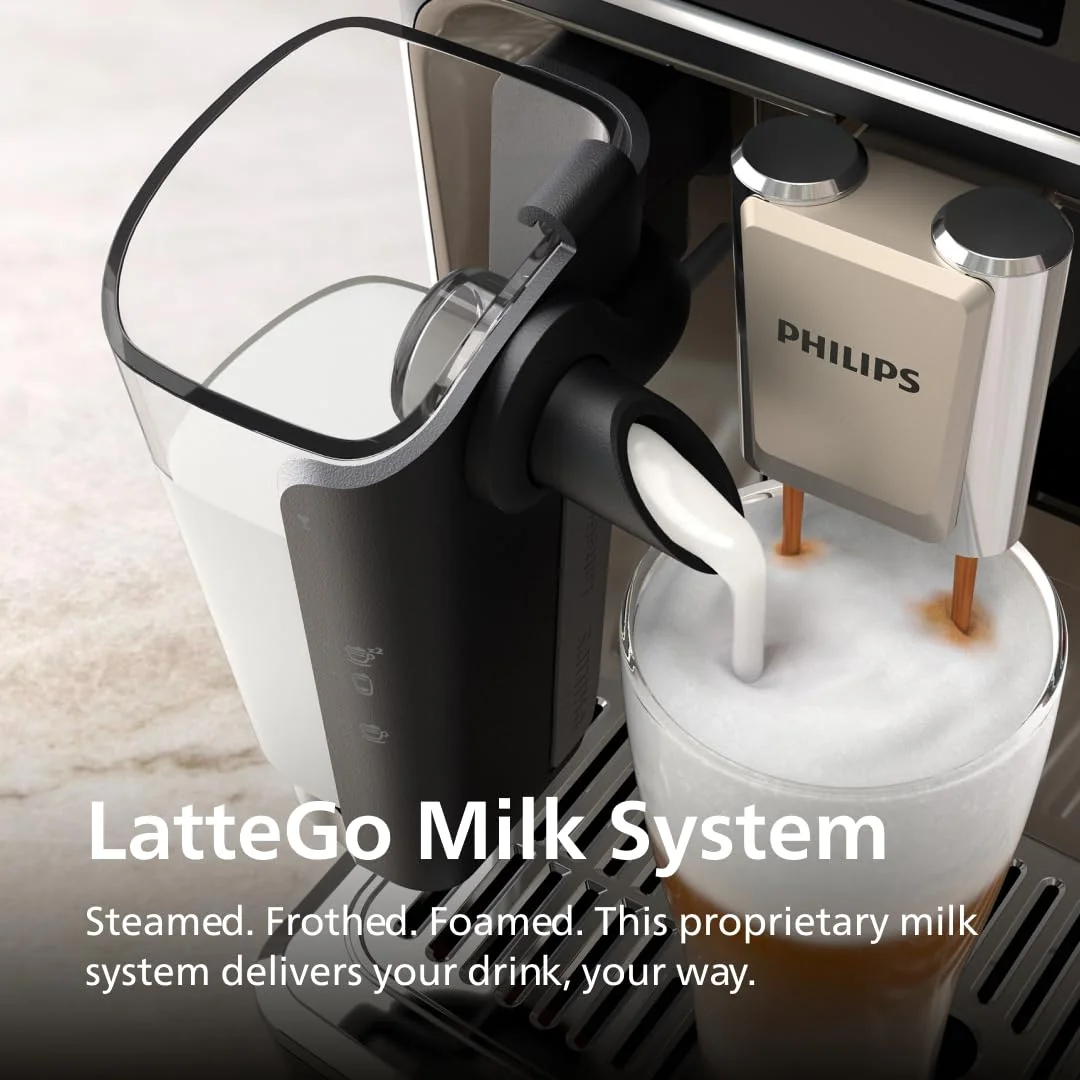
Philips 5500 LatteGo
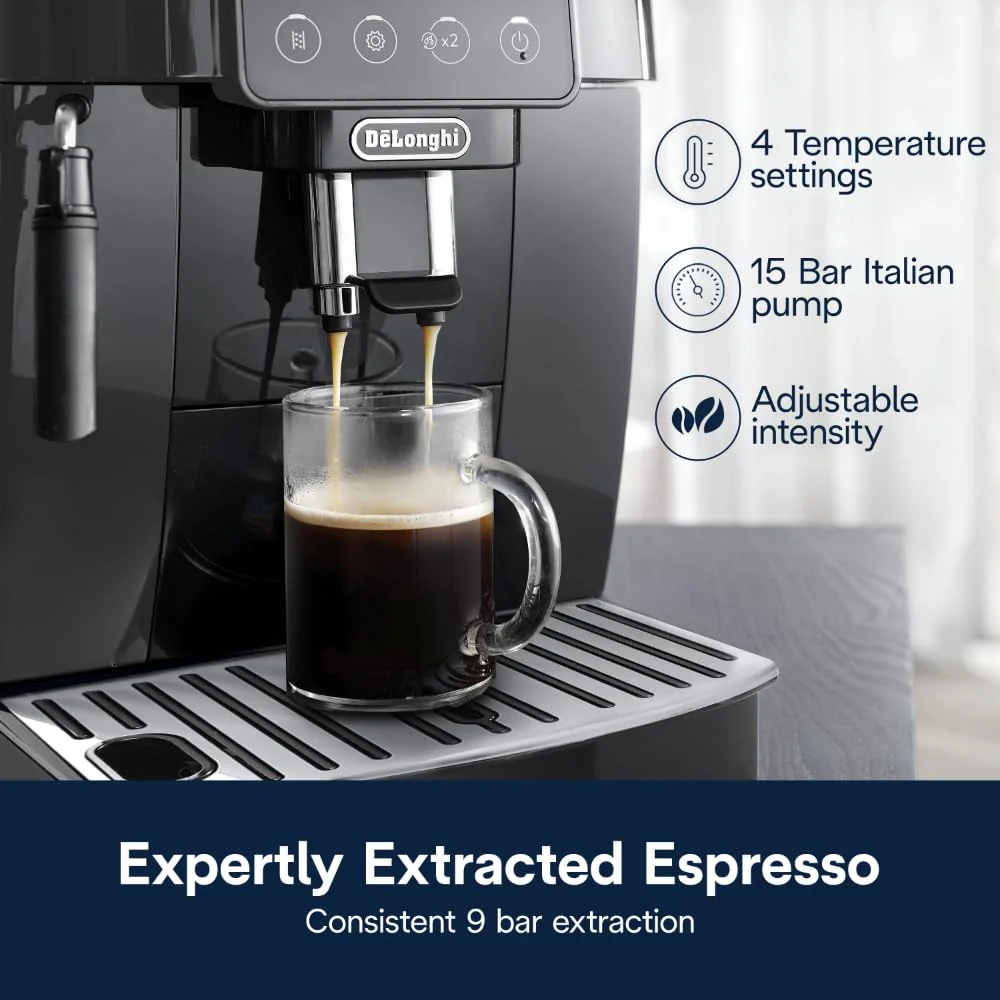
De'Longhi Magnifica Start
Which one belongs in your kitchen
If two or more people in the house drink milk drinks and want them differently, the Philips wins and it is not close. Four saved profiles plus a guest slot is a real feature rather than a spec-sheet line, the carafe means nobody has to learn anything, and a machine that anyone can operate is a machine that gets used. That is also the case for spending the money at all, since the parts of the 5500 that justify its position are the screen, the profiles and the milk, and none of them touch the cup. Our latte-focused guide weighs it against the rest of the field.
If you are one or two people who mostly drink espresso, cappuccino or a short flat white, and the idea of holding a jug for thirty seconds sounds like part of the fun rather than a chore, the Start is the better purchase and the better coffee. You are buying De'Longhi's espresso hardware with the decoration removed, and the component that generates most of the complaints on its siblings, the automatic milk carafe, is simply not fitted. Accept the noise, save the manual to your phone, and set the grind while the grinder is actually running, which is the mistake almost every new owner makes.
If neither quite fits, three neighbours are worth a look before you commit. Someone who wants the Philips interface and does not need the flagship can put the money into the 3300 LatteGo, because it carries the same brew unit and the same grinder, an argument we make at length in the 3300 against the 5500 and place in the wider range in our guide to which LatteGo to buy. Someone who wants one-touch milk and a genuinely larger dose has to go up a class rather than sideways, which is the 5500 against the Dinamica Plus. And someone drawn to the Start but tempted by its glossier sibling should read the Evo against the Start first, since the Start deletes the optical milk sensor that causes a good deal of Evo frustration. The rest of the range is untangled in our comparison of the whole De'Longhi line.
What neither machine will do, whatever you spend, is fill a large mug with strong black coffee. Both are single-dose machines, both stretch that dose thin the moment you ask for volume, and no grind setting recovers it. Our piece on filter-style coffee from a bean-to-cup machine is the one to read if that is the drink your morning actually revolves around. For everyone else the decision stands where it started: the Philips sells you the absence of work, the De'Longhi sells you the presence of control, and the coffee underneath is closer than the gap between them suggests.
Frequently Asked Questions
Which one actually makes the stronger espresso?
The De'Longhi, by a small and measurable margin, because its maximum dose is around ten grams against roughly nine to ten on the Philips, though both are single-dose machines well short of a cafe double.
Is the Philips really the quieter machine?
At the grinder yes, with independent readings of 59 to 61 decibels against 75.9 for the Start, but its milk system is the loud part and one tester recorded it peaking above eighty.
Can I get a proper flat white out of either?
Only out of the De'Longhi, and only after you slide the panarello sleeve off and learn to steam, because the LatteGo carafe produces foam that reviewers consistently describe as bubbly rather than silky.
Does the Philips iced coffee setting brew cold?
No, it brews cooler and slower than the hot settings and you pour that over ice you supply, which one tester measured arriving at roughly sixty degrees Celsius.
Why do the reviews on the De'Longhi listing mention a milk carafe?
Because Amazon pools that listing's reviews with an automatic-frother sibling, so the star average describes two different machines and anything referring to a carafe or a milk sensor is not about this one.
Which is less work day to day?
The Philips, comfortably, since its milk carafe rinses in seconds or goes in the dishwasher while the De'Longhi asks you to clean a jug and purge a wand every single time.
Is either one right for a house that drinks big mugs of black coffee?
No, both stretch a small dose across the cup and produce exactly the thin, anonymous coffee their owners complain about.
Will the Philips profiles matter if only one person uses the machine?
Barely, which is a large part of why a single-user household should think carefully about whether the flagship is the right rung of the Philips ladder at all.
Ready to Choose?
Sources (7)
- Amazon listings and customer reviews — Philips 5500 Lattego and Delonghi Magnifica Start
- Owner and reviewer video, 4 channels
- Tomscoffeecorner — Article — tomscoffeecorner.com
- Coffeeness — Article — www.coffeeness.de
- Homecoffeeexpert — Article — homecoffeeexpert.com
- Techradar — Article — www.techradar.com
- Techgearlab — Article — www.techgearlab.com