The Oracle Touch automates one thing the Barista Touch leaves you, and it is the tamp
Buy the Barista Touch unless you specifically want the tamp taken out of your hands, because Breville already automated the part most buyers actually struggle with, the milk, on the cheaper machine, and the Oracle Touch asks flagship money for a design its own maker has since discontinued.
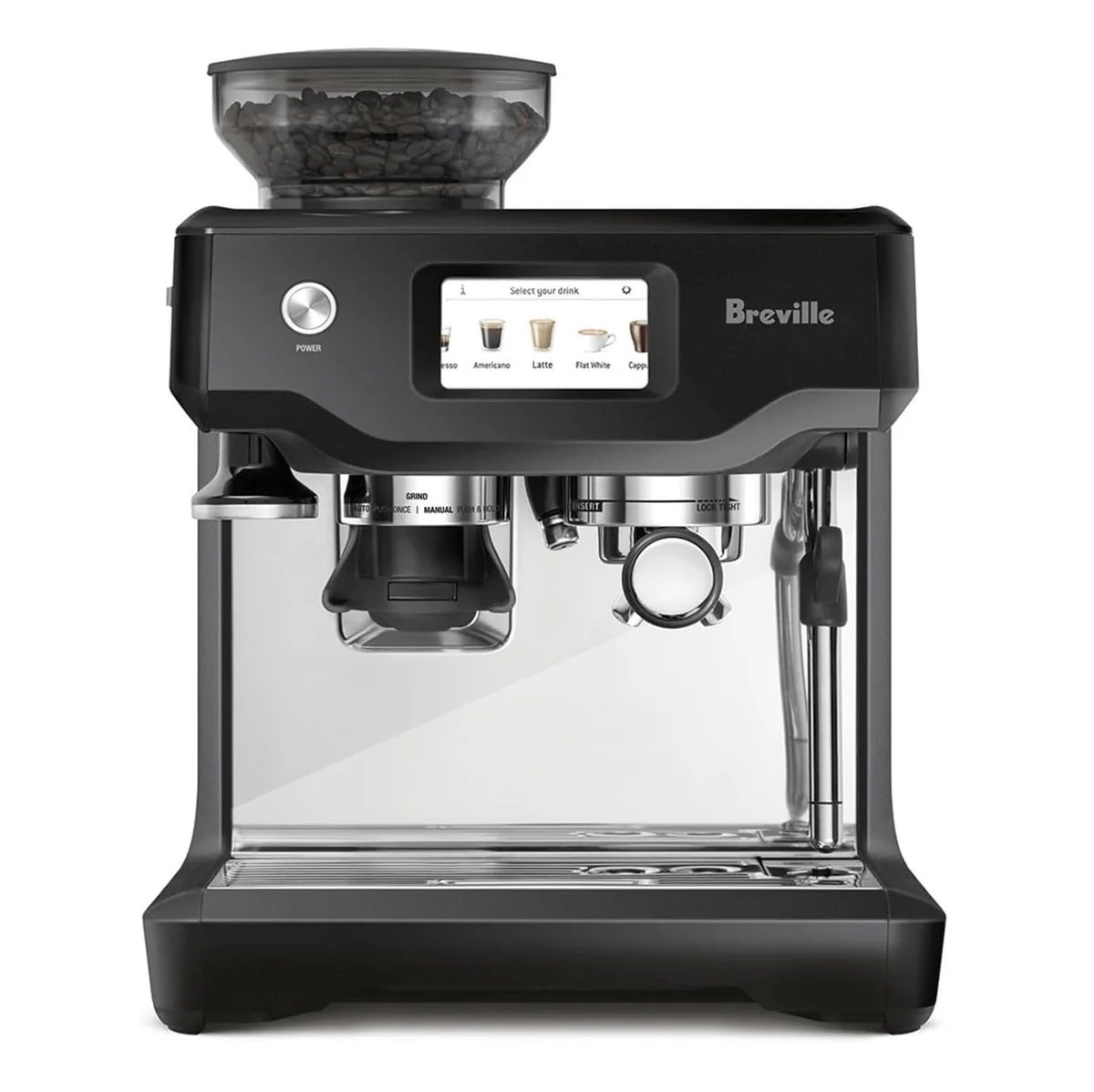
Breville Barista Touch
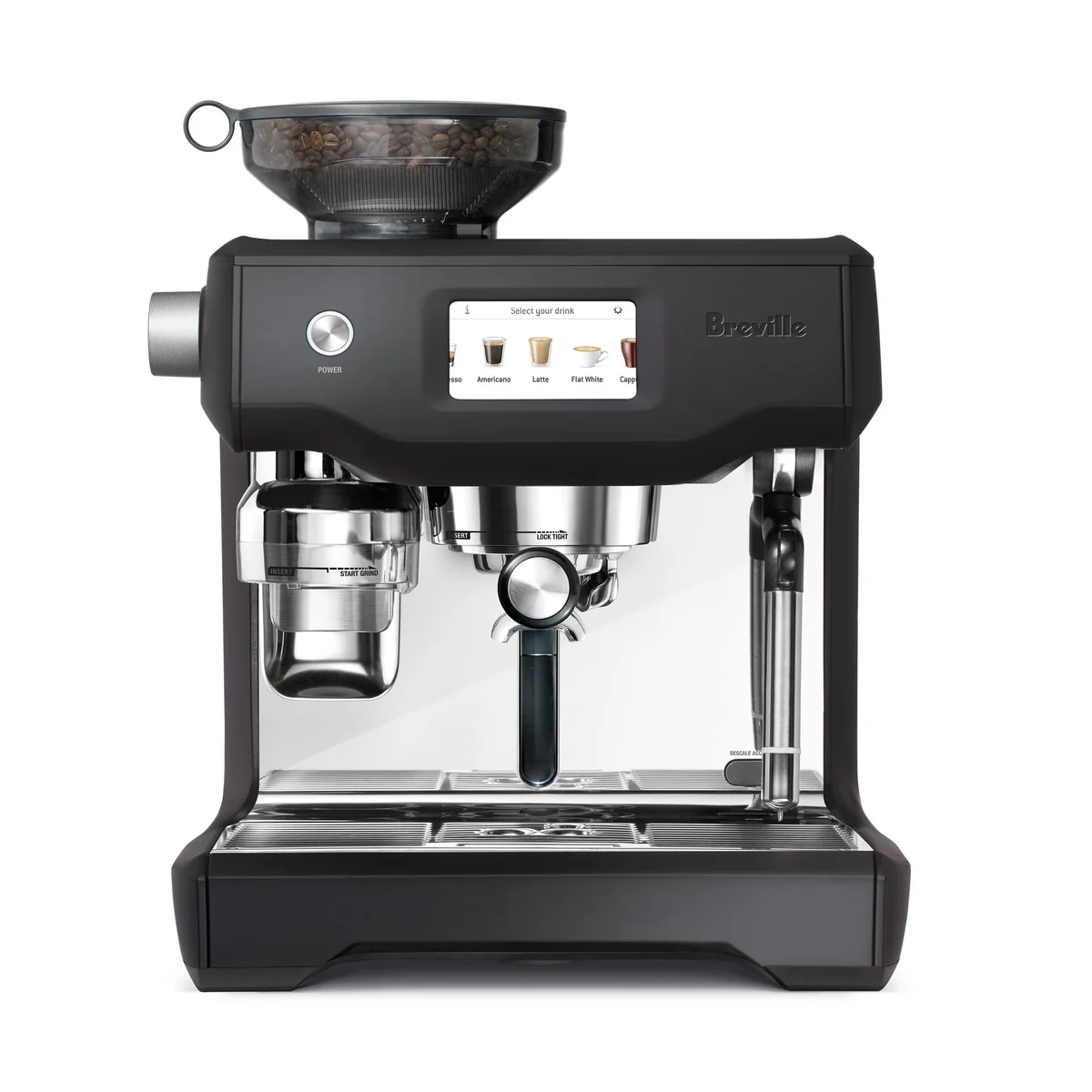
Breville Oracle Touch
Amazon files both of these under Super-Automatic Espresso Machines, and neither one is a super-automatic. The Barista Touch listing calls itself a semi-automatic espresso maker in the same paragraph that promises café drinks in three easy steps. The Oracle Touch listing goes the other way and calls itself the next generation of fully automatic espresso makers, which is marketing rather than category. The reviewer at Epicurious put the truth of it more usefully than either: the Oracle Touch is not quite a super-automatic, but it is as close as Breville gets. If the machine in your head is a sealed box you load with beans and walk away from, read what a super-automatic actually is and then what Breville does and does not automate, because neither of these is that machine and no Breville is.
Here is the whole comparison in one image. On both machines you dock a portafilter under the grinder, press a button, carry the portafilter three inches to the left, lock it in and press the drink. On the Barista Touch, between those two moves, you level the grounds and lean on a tamper. On the Oracle Touch you do not, because the grinder doses and tamps twenty-two grams for you and turns the button green when it is satisfied. Everything else that separates them, and there is real engineering in it, follows from Breville building a machine around that one omission.
Breville Barista Touch
Breville Oracle Touch
At a Glance
| Feature | Breville Barista Touch Espresso Machine BES880BTR, Black Truffle | Breville Oracle Touch Espresso Machine BES990BTR, Black Truffle |
|---|---|---|
| Price Range | $500–$1,000 | $1,500–$3,000 |
| Configuration | Large | One Size |
| Finish | Black Truffle | Black Truffle |
| Items In Box | 1 | 1 |
| Check Price on Amazon | Check Price on Amazon |
What the extra money buys, line by line
| The job | Barista Touch (BES880) | Oracle Touch (BES990) |
|---|---|---|
| Grinding and dosing | Doses by time into the basket, you set the seconds | Doses and tamps 22 g, and re-times itself if the basket looks wrong |
| Tamping | Yours, every single drink | The machine's |
| Portafilter | 54 mm | 58 mm, the commercial size |
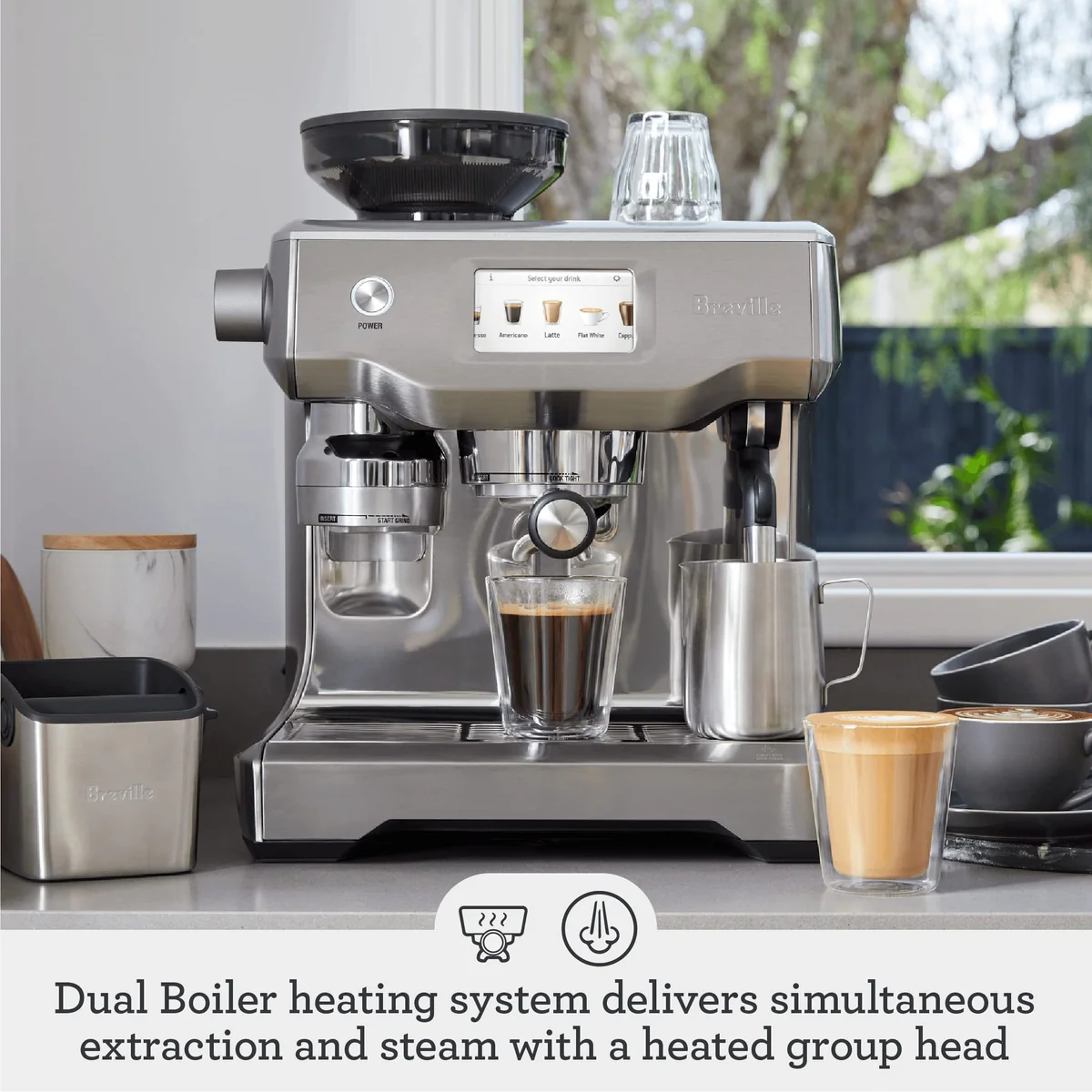
| Boilers | One, so brewing and steaming take turns | Two, so extraction and steaming run at once |
| Milk | Automatic wand, temperature and texture set by you | Automatic wand on its own boiler, self-purging |
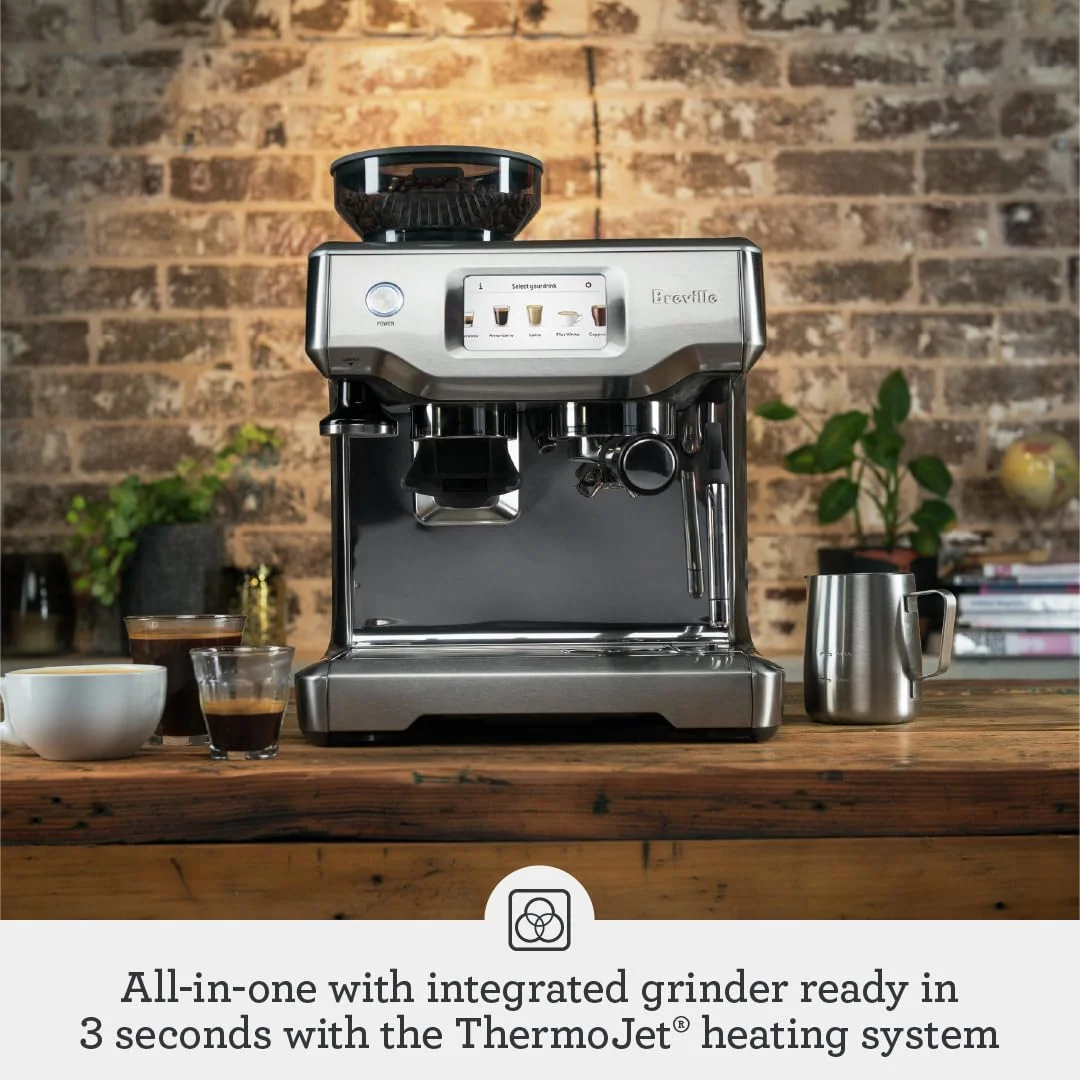
| Heat from cold | Water at extraction temperature in about three seconds | Conventional warm-up, with a scheduler to hide it |
| Warranty as sold new | Two years | Two years |
The milk is already solved on the cheaper machine
This is the part of the argument that decides most of these purchases, because milk technique is the actual barrier between a person and a flat white, and it is the part where the Oracle Touch's advantage is smallest. The Barista Touch's wand runs from 104 to 167 degrees Fahrenheit across eight texture levels, with a sensor that stops it at your number. The reviewer at Coffeeness went into that machine expecting to beat it with his own hands and admitted, with visible irritation, that it produced sublime froth time after time. A five-year owner writing for Food & Wine runs soy at 130, oat at 140, almond at 130 and dairy at 150, which is only possible because the temperature is a dial rather than a fixed setting. The same reviewer who tested the Oracle Touch reached the same verdict about its wand, which tells you what you need to know: two machines, one milk result, one price.
The Oracle Touch's genuine milk advantage is the dedicated steam boiler, which means it can pull a shot and steam at the same time rather than making you wait between the two. That is worth having when you are making four drinks for four people on a Sunday morning, and it is worth almost nothing when you are making two on a Tuesday. Be honest with yourself about which household you live in. If the answer is that you want to hold nothing at all, neither of these is your machine and the wand-versus-carafe question is the one to settle first, with our pick for milk drinkers at the end of it.
Automatic tamping costs you the dose, and time-dosing costs you the weight
Both machines are flawed here, in exactly opposite directions, and this is the most useful thing on this page. The Oracle Touch will give you twenty-two grams and it will not be argued down, because there is no dose control on the screen at all: changing it means going into the grinding and tamping station and turning the auger nut on the tamp fan, which the reviewer who found it called astonishing at this price. Owners who have tried, including one working through a set of competition baskets, report the machine still putting roughly twenty-two grams in with the coupling wound out as far as it goes. That matters more than it sounds, because extraction here runs for a set number of seconds rather than to a target weight in the cup, so any drift in the dose lands directly in your cup as a different ratio.
The Barista Touch has the reverse problem. Its grinder runs for a set number of seconds and whatever falls out is your dose, so every grind adjustment silently invalidates the dose you set last week, and Coffeeness names this as his least favourite thing about the machine. Owners work it out on their own and reach for a scale: one Amazon reviewer says plainly that he weighs beans every time rather than trusting the timer. So the Oracle Touch holds a dose you cannot choose, and the Barista Touch lets you choose a dose it does not hold. Budget for a scale either way, and note that on the cheaper machine the scale actually fixes the problem.
The grinders share a ceiling, and one of them is a service item
Neither of these conical burr grinders is happy with dense light roasts, and Breville owners hit that wall repeatedly: medium to dark is where these grinders are comfortable. Espresso Den reached the same conclusion independently in the Oracle Touch review and in the Barista Touch review, and it is not printed on either box. If your roaster works at the bright end of the spectrum, the extra money buys you nothing at all here, and our guide to beans that behave in a machine with a built-in grinder explains why the burrs mind so much.
What the Oracle Touch adds is maintenance. Its grinder assembly is meant to come apart monthly, which the published reviews sell as a convenience. It is a convenience right up to the day it becomes a diagnosis: when an owner posted that their Oracle had stopped grinding well, the answers came back as a worn upper burr, a caked interior, a perished felt ring and a warning that the wire brush you are about to reach for will damage the burr. Nobody tells you that procedure until something has already gone wrong.
What happens after year two, which is where the ratings diverge
Both machines carry two years of Breville warranty when bought new. Both have a documented fault that tends to arrive after it. On the Barista Touch it is the temperature sensor behind the automatic milk wand, which is to say the feature you paid the premium for: an eighteen-month owner names it as a design weakness that throws error code 5, and a buyer on the remanufactured listing describes his three-year-old machine giving an E05 thermistor code. There are worse stories too, including a unit that stopped outright at seven months whose owner rated it one star for the support rather than the fault.
The Oracle Touch's version of this is louder and shows up in the numbers. Amazon has it at 3.4 stars from 596 ratings, while Breville's own site shows 4.3 from its reviewers, and a gap that wide on one machine is not noise. Two things sit behind it. Breville's own US page for the BES990 now carries a discontinued notice and points buyers to newer Oracles instead, so this is a nine-year-old flagship still being sold at flagship money. And Breville stocks something like seventy replacement parts for it, mostly o-rings, seals and screens, which is genuinely good news if you intend to keep the machine for a decade and a fairly clear statement about what is expected to wear out. Neither of those facts applies to the Barista Touch, and the general shape of how long these machines last and what a repair costs is worth reading before you spend at this level.
Espresso Den has not had either machine on a bench and has taken no measurement on this page. What is here is a reading of both listings, Breville's own specifications, the published hands-on reviews, and the owner threads where faults get named and argued over, which is the same evidence base as the two full reviews linked above.
The screen is the same idea twice
Do not let the touchscreen decide this for you, because both machines have one and neither one is transformative. On the Barista Touch, the five preset drinks are barely distinct from each other: put the latte and the cappuccino side by side and the difference is one step of milk texture on a scale of eight, so most people pick one and stay there. On the Oracle Touch, a reviewer who came from traditional machines actively disliked it after weeks of use, because presses do nothing and the machine will not let you grind until you have chosen a drink on screen. His conclusion is the fair one: if you have owned espresso machines before, the screen may be a hindrance, and if you have not, you will probably like it. If you want the Oracle's automation with buttons instead, that is what the original Oracle is, and the Oracle against the Oracle Touch is that argument in full.
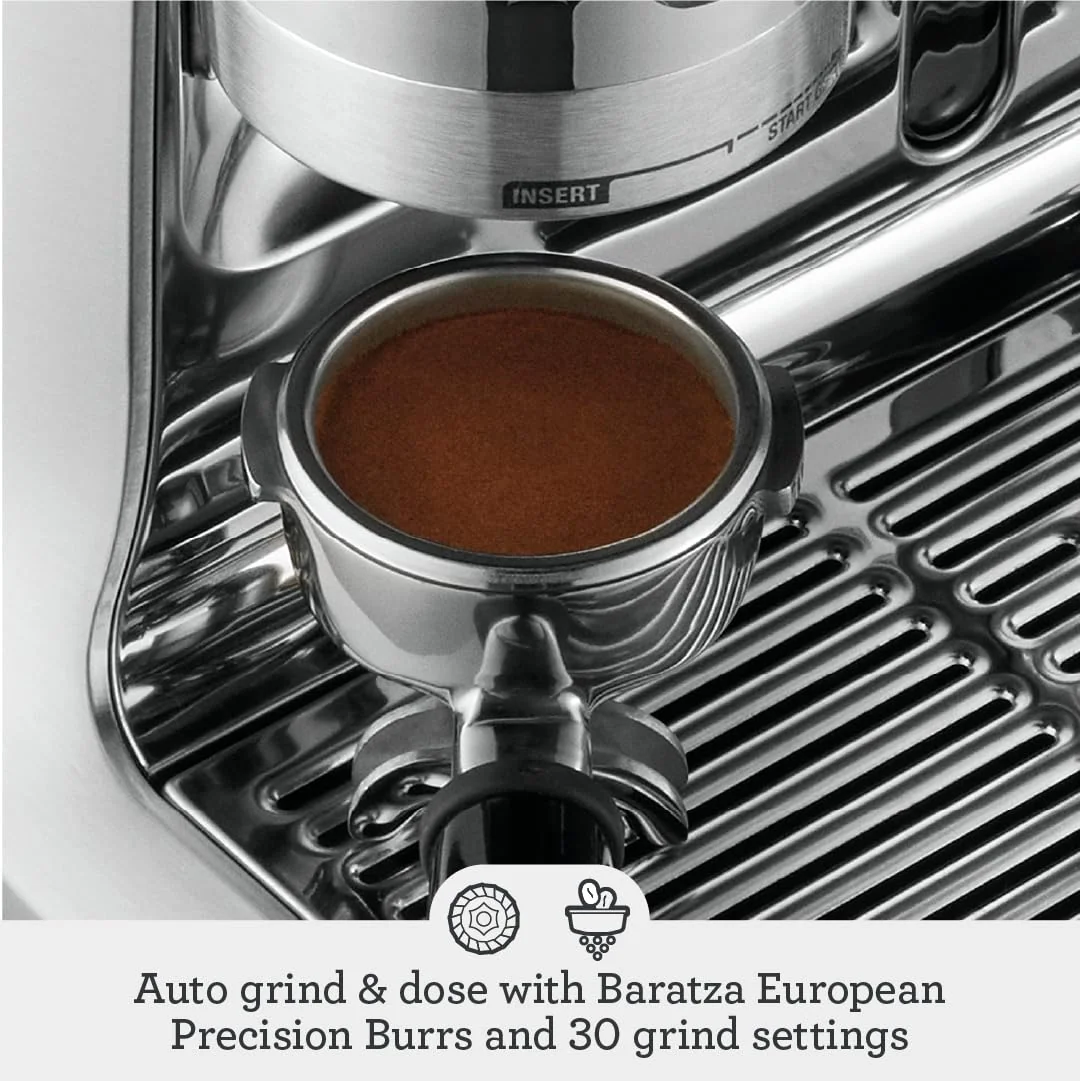
Breville Barista Touch
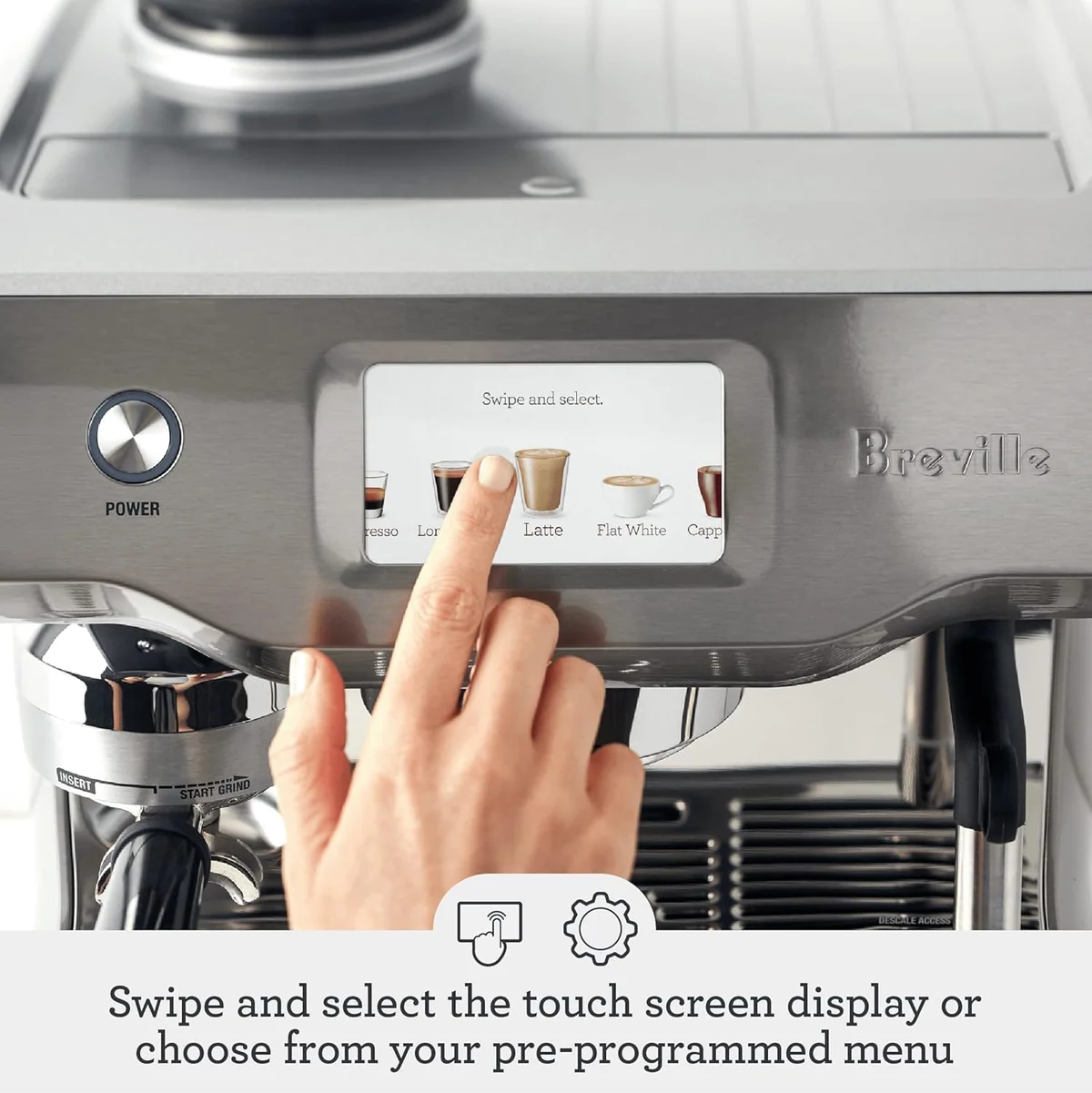
Breville Oracle Touch
Which one belongs in your kitchen
The clearest description of the Barista Touch's buyer comes from a retailer who sells the whole Breville ladder: people coming off a pod machine or a super-automatic who want better coffee but are not ready to do everything themselves. The Oracle Touch's buyer is that same person plus one condition, which is that somebody in the house will flatly refuse to tamp, and the household drinks enough milk drinks back to back for the second boiler to earn its keep. Epicurious is direct about the limit of that: this machine is at its best for milk drinks, and asked whether it will produce a flawless straight espresso, the answer was probably not. An Amazon reviewer said the same thing about the cheaper machine in fewer words: if you always add milk you will love it, and if you drink your espresso straight and know what a specialty bar tastes like, you will not. If black coffee is the whole habit, the machines built around espresso and long blacks are the better shortlist.
The one almost everybody reading this page should buy
It automates the two things that actually defeat beginners, the grind and the milk, and hands you back the one job you can learn in a fortnight.
It doses by time rather than weight, so a scale is effectively mandatory and the real cost of ownership is higher than the listing suggests.
The same machine with warranty traded for discount
Breville's certified remanufactured units are described as showing limited or no wear and arrive with the original accessories, and one buyer who already owned a three-year-old Barista Touch called his refurbished one better than new.
It carries six months of Breville warranty rather than two years, which runs out well before the window in which this machine's best-documented fault tends to appear.
The flagship for a household that will not tamp
Nothing else grinds, doses, tamps and textures with this little skill required while still being a real 58 mm dual boiler machine underneath.
The 22-gram dose cannot be changed from the screen, the model is discontinued on Breville's own site, and the recognised service work on it lands just after the warranty ends.
Two notes on the middle listing before you take it. The saving is not a constant, and the new Barista Touch is discounted often enough that the gap can narrow to almost nothing, so check both on the same day rather than assuming; our guide to renewed and remanufactured machines covers what the label is worth in this category generally. And read the title twice, because several buyers on that listing docked stars purely because they had not registered they were buying a refurbished machine.
Three honest exits. If you enjoy the idea of playing with shots, steaming milk by hand and pouring latte art, a reviewer who spent a week with the Barista Touch noted it will not be loved by that person, who has just paid a premium to have the interesting parts taken away, and a Bambino Plus with a real grinder puts the money where it belongs. If what you actually want is to press one button and walk away with no portafilter in your hand at any point, buy a genuine bean-to-cup machine from our roundup of proper super-automatics, or read the Barista Touch set directly against a Dinamica Plus for the two philosophies side by side. And if you are simply working out where each Breville sits, the range ranked is the shorter route.
The verdict, with all of that behind it: the tamp is a fortnight's learning, the milk is the hard part, and Breville sells the milk solved at the lower price. Pay the difference only if you have a specific reason, not because the flagship is the flagship.
Frequently Asked Questions
What is the actual difference between the BES880 and the BES990?
The Oracle Touch adds automatic tamping, a 58 mm portafilter and a second boiler so it can brew and steam at once, while the Barista Touch uses a 54 mm portafilter, one boiler and your own hand on the tamper.
Is either of these a true super-automatic?
No, both put ground coffee in a portafilter that you carry to the group head yourself, which is the one thing a real bean-to-cup machine never asks of you.
Does the Barista Touch make worse milk than the Oracle Touch?
Not meaningfully, since both use an adjustable automatic wand that reviewers who steam by hand admit they cannot beat, and the Oracle's real edge is the dedicated steam boiler that lets it texture and extract simultaneously.
Can I change the Oracle Touch's 22-gram dose?
Only by turning the auger nut on the tamp fan inside the machine, because there is no dose control on the touchscreen at all.
Is the Oracle Touch discontinued?
Breville's own US product page for the BES990 carries a discontinued notice and points visitors to newer Oracles instead.
Will either machine handle light roast beans?
Not comfortably, because both grinders are medium-and-dark-roast devices and dense light roasts push them past their usable range.
Is the BES880BTR different from the brushed stainless version?
They are the same machine in different finishes, so every review of one applies to the other.
Which one should I buy if two people in the house make coffee?
Both save eight named drink profiles, so the deciding factor is whether either of those people will refuse to tamp, which is the only job the Oracle Touch takes off them.
Ready to Choose?
Sources (8)
- Amazon listings and customer reviews — Breville Barista Touch and Breville Oracle Touch
- Owner reports across r/espresso, r/BrevilleCoffee threads
- Owner and reviewer video, 4 channels
- Epicurious — Article — www.epicurious.com
- Breville — Article — www.breville.com
- Coffeeness — Article — www.coffeeness.de
- Foodandwine — Article — www.foodandwine.com
- Homecoffeeexpert — Article — homecoffeeexpert.com